A plumbing service in Calgary keeps a new home safe by catching the faults each season creates. Hard water scales pipes and fixtures, sub-zero winters split poorly insulated lines, and older neighbourhoods still run aging poly-B. Know where the main shut-off valve sits, confirm it turns, hold water pressure between 40 and 60 psi, and book licensed inspections before small problems become bursts.
Introduction
Household leaks waste close to 37,850 litres a year in the average home, and roughly one home in ten drips 340 litres or more each day, by the Environmental Protection Agency’s count. For a new owner, those figures rarely arrive as figures. They surface instead as a stained ceiling, or a utility bill that climbs without any obvious cause.
Local water adds its own pressures to that ordinary risk, since the mineral-heavy municipal supply scales the inside of pipes and heaters while deep cold can crack an exposed line within hours. The habits that hold this at bay are modest, and most cost only a few minutes each month. The diagnostic work an owner cannot see, from camera drain inspections to leak location behind finished drywall, is where a licensed crew like Cedar Mechanical earns its place.
What Every New Homeowner Should Know About the Home Water System
Residential plumbing Calgary moves water through two networks that run in opposite directions, and picturing that split turns guesswork into diagnosis. Supply lines carry fresh water in under pressure, while the drains let used water fall away by gravity. Between them sit traps that block sewer gas and vents that keep the air balanced so lines empty cleanly.
Find the Main Shut-Off Before You Need It
Every adult in the household should know where the main shut-off valve sits, usually near the meter on an interior wall facing the street. The handle also has to move when asked, because one seized by corrosion is useless during a burst pipe at 2 a.m., the exact moment it matters most. A gentle quarter-turn once a year stops it locking shut, and a small label spares everyone a frantic hunt in a flooding basement.
Read Water Pressure and Watch for Early Faults
Pressure that runs too high strains every joint and shortens the working life of each fixture in the house. A gauge threaded onto an outdoor tap returns a reading in seconds, and the healthy window falls between 40 and 60 psi. While the gauge is out, a short walk-through surfaces the faults worth catching early, listed here from most to least visible:
- Water stains creeping across cabinet floors or ceilings
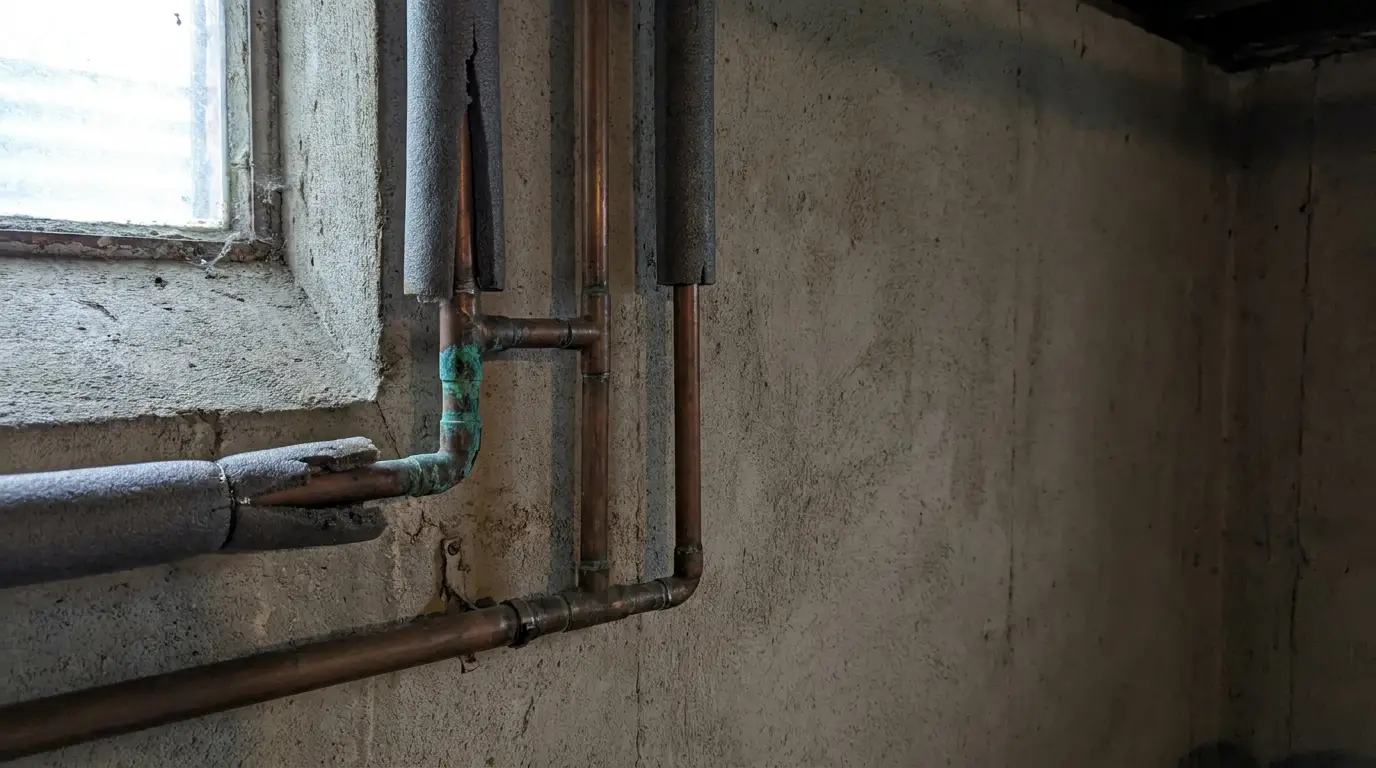
- Green or orange corrosion blooming on pipe joints
- A toilet that keeps running once the flush should have stopped
- Damp, musty air trapped inside a vanity cabinet
- Hot water that fades sooner than it used to
Spotted at this stage, any one of them stays a minor repair rather than a costly invoice.
The Seasonal Maintenance Routine a Plumbing Company Runs
Most water failures are seasonal well before they turn sudden, following a clock a homeowner can read. Scale thickens through the warm months, freezes threaten through the cold ones, and tired parts give out on cue. A good deal of the upkeep needs no licence at all.
Flush the Heater and Slow Hard Water Scaling
The municipal supply here carries heavy mineral content, so calcium and magnesium settle in the tank and coat the heating elements. Left alone, that sediment shortens the unit’s lifespan and quietly lifts heating costs across the year. Draining a few litres from the tank each year clears the worst of the buildup, and the same attention keeps aerators from choking as deposits narrow the flow.
Winterize Supply Lines Before the First Deep Freeze
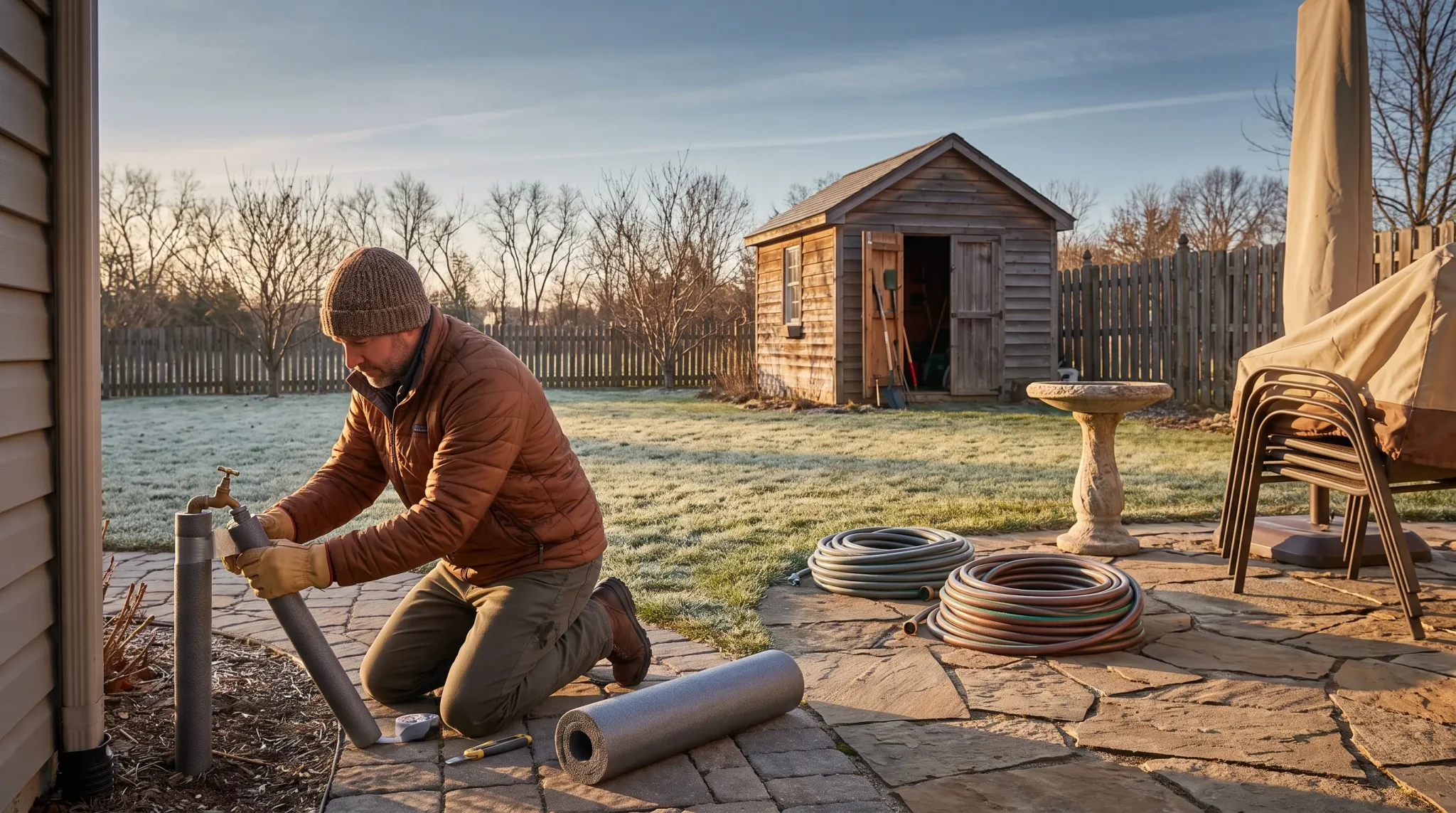
Sub-zero air can split an exposed or thinly insulated line within hours, so this preventive work repays its small effort many times over:
- Disconnect and drain garden hoses, then close the interior valve feeding each outdoor tap
- Sleeve piping in unheated zones, meaning the garage, the crawlspace, and any run along an outside wall
- Seal the gaps where cold reaches plumbing and chills it toward the freezing point
- Leave a slow trickle moving through vulnerable taps on the coldest nights
Know What Stays in Your Hands
Routine flushing and insulation rest safely with the owner, and that boundary is worth keeping. A booked plumbing service in Calgary takes the diagnostic side instead, running camera drain inspections that locate structural faults and leak detection that pins a hidden drip without opening every wall to find it.
When to Call a Mechanical Contractor Instead of Fixing It Yourself
Homeowner upkeep ends where safety and building code begin, and a handful of faults look minor while carrying real risk. Reading that boundary correctly protects both the house itself and the warranty tied to professional work.
The Thermal Expansion Problem Most Guides Miss
Once a home carries a backflow preventer or a check valve on the main line, the supply becomes a sealed loop with no outlet. Heated water expands against that closed system, so pressure climbs, and the relief valve on the heater begins to weep. A correctly sized expansion tank absorbs the surge, and in many closed systems it stands as a code requirement that almost no owner’s guide bothers to name.
Faults That Belong to a Licensed Team
In practice, code defines certain jobs as professional work rather than personal preference. A mechanical contractor brings the licence, the diagnostic instruments, and the backing warranty that no self-directed repair can match. The table below sorts the common tasks by who should own each one:
| Task | Homeowner | Licensed professional |
|---|---|---|
| Draining the water heater | Yes | Optional |
| Insulating exposed pipes | Yes | Optional |
| Gas line work or appliance hookups | No | Required |
| Poly-B replacement | No | Required |
| Backflow testing | No | Required |
| Hidden leak behind drywall | No | Recommended |
Once every risk is named plainly, the pattern behind that division is hard to miss.
Pro Tip: In houses raised between the 1970s and 1990s, confirm whether the distribution lines are poly-B before a leak makes the call for you, since the material fails from the inside and a proactive assessment always beats a 2 a.m. flood.
Why the Warranty and the Code Both Matter
Professional repairs arrive backed by a parts and labour warranty and stay compliant with provincial safety codes, which is the reason gas fitting and backflow work stay off the DIY list. A booked assessment turns an anxious guessing game into a documented, code-compliant fix that holds.
Building Habits That Protect the System for Years
Steady upkeep is what separates a home that ages gracefully from one that ambushes its owner. Watch the pressure, respect the seasons, and pass the licensed jobs to licensed hands. Do that with any consistency, and most emergencies never take shape. A dependable plumbing service in Calgary then becomes something you schedule on your own terms, months ahead of trouble, rather than something you summon in a 2 a.m. panic.