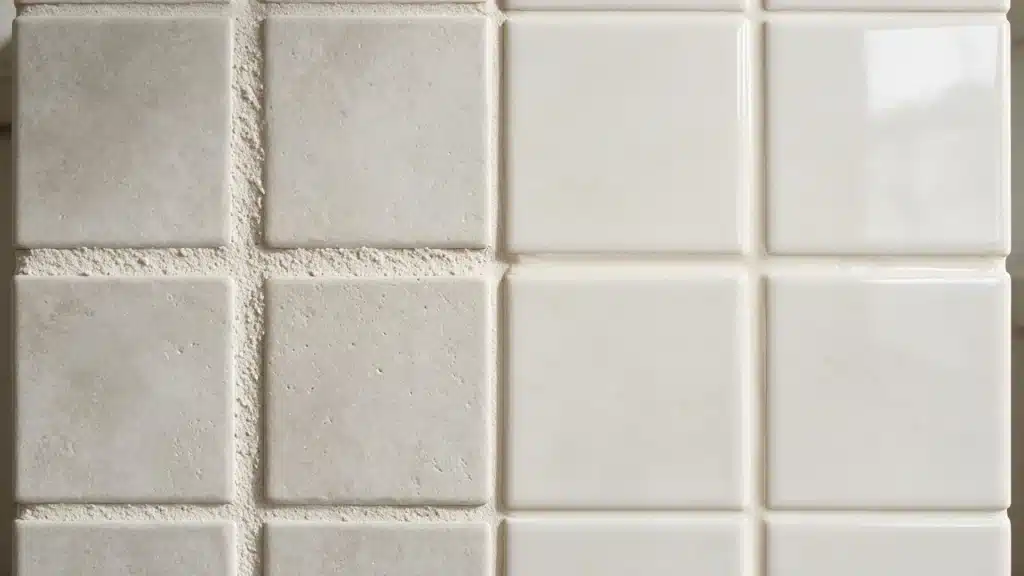
Sanded vs unsanded grout comes down to joint width first.
Under ⅛ inch almost always needs unsanded. ⅛ inch and wider almost always needs sanded.
Tile surface and location matter next. Soft or polished stone, glass, and vertical walls all push the choice further toward unsanded when the joint width allows it. Everything else follows from those three factors.
By the end you will know exactly where each type holds up and where it fails, so you can match the bag to the job before you mix anything.
Sanded vs Unsanded Grout
If your joints are 1/8 inch or wider, go sanded. If they are narrower than that, go unsanded.
- Sanded grout has fine sand mixed in. That sand gives it body and stops it from shrinking or cracking in wider joints.
- Unsanded grout is smoother and thinner. It works into narrow joints cleanly and will not scratch surfaces the way sand can.
- Some newer high-performance grouts do not follow the old rules exactly. Always check the joint width range printed on the bag before you buy, since formulas vary by brand.
What is Sanded Grout?
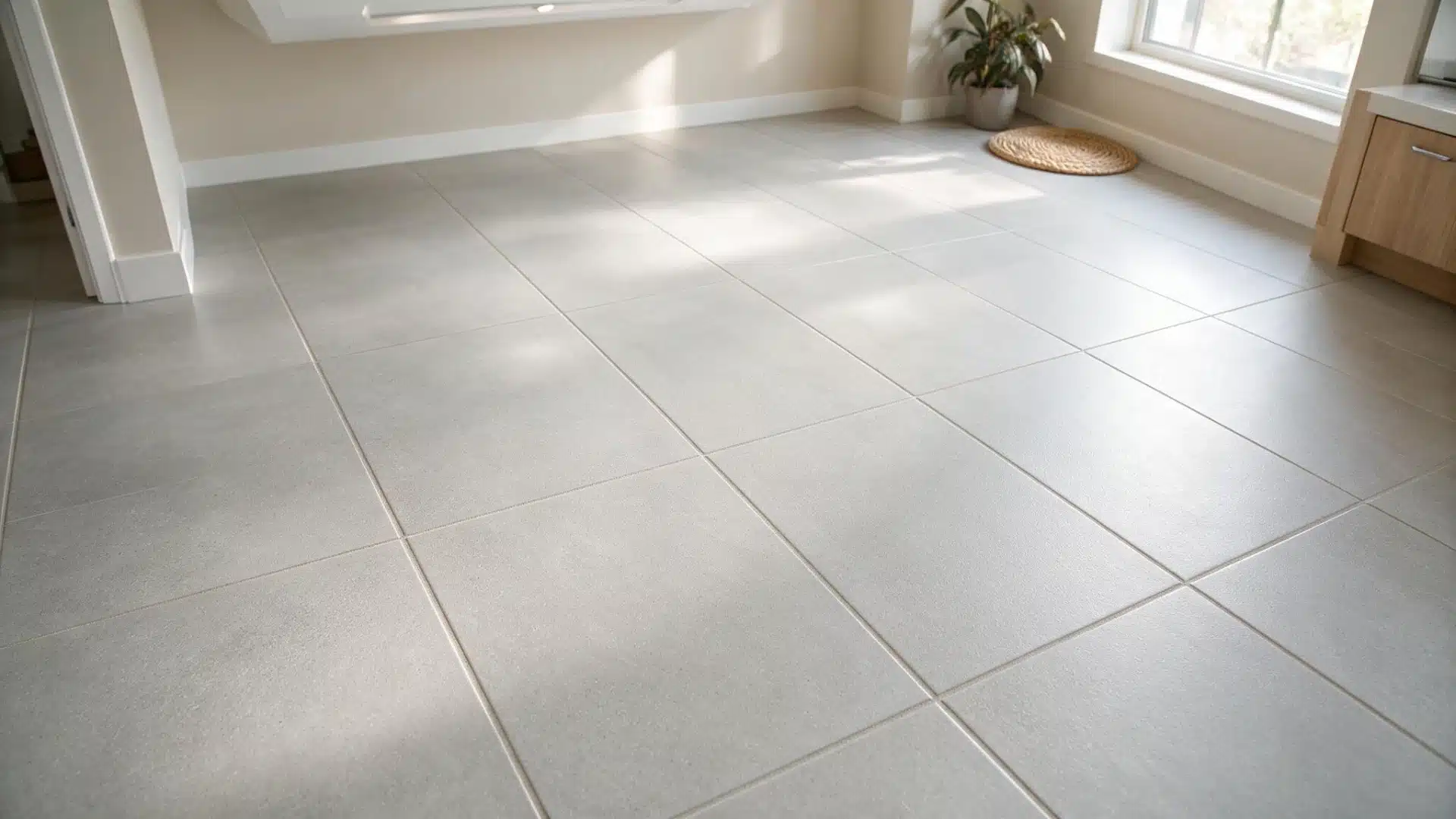
Sanded grout is basically cement mixed with fine silica sand. That sand is not just filler. It gives the cured grout something to grab onto as it dries, which keeps it from pulling apart and cracking the way plain cement can.
The sand also fills space. In a wide joint, plain cement grout has too much room to shrink as it cures. Add sand, and the joint holds its shape and its size stays consistent from edge to edge.
You will notice the texture right away. It looks a little grainy once it cures, and it feels slightly rough if you run a finger across it. That texture is normal and it is part of what makes the grout strong in busy areas.
Sanded grout shows up most often on floors, kitchen floors, and any wall or floor with joints on the wider side.
Related read: White tile with white grout.
Where Does Sanded Grout Work Best?
- Tile floors, especially in kitchens and entryways
- Grout joints of 1/8 inch or wider
- High traffic areas like hallways and living rooms
- Large format tile, where joints tend to run wider by design
- Bathroom floors, as long as the tile surface is not soft or polished
What is Unsanded Grout?
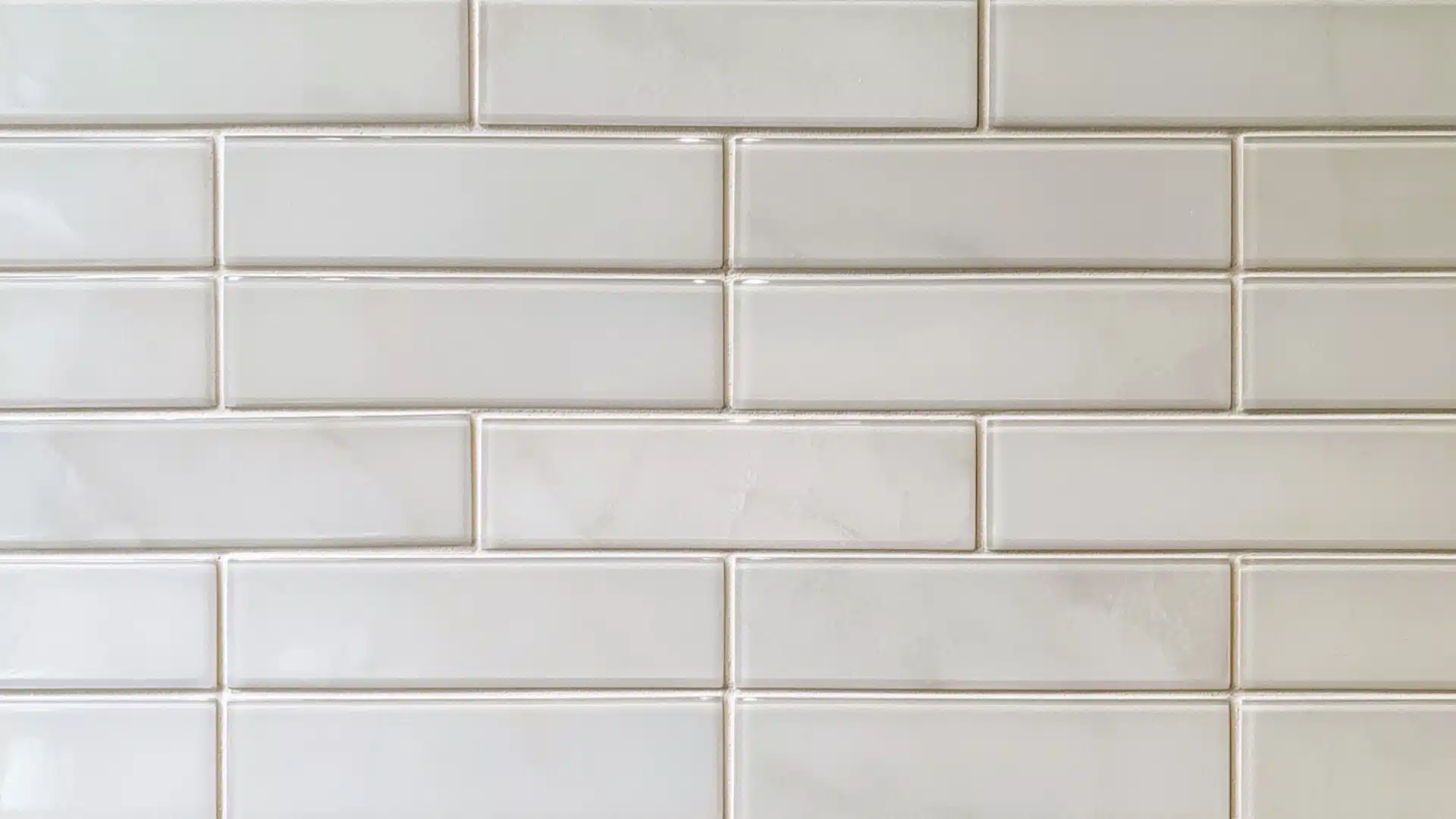
Unsanded grout contains no sand. It’s just cement, pigment, and water. Once cured it has a smooth, fine surface with none of the grit you get from sanded grout.
That lack of grit lets it pack cleanly into narrow joints. Sanded grout often sits on top of a joint under ⅛ inch and leaves gaps underneath. Unsanded fills the full depth instead of bridging over it.
It also stays put on vertical surfaces better than sanded versions. Sand adds weight, and that weight can make the mix slide down a wall before it sets. Unsanded holds in narrow vertical joints, which is why it’s the usual choice for shower walls and backsplashes.
Soft or scratch sensitive tile is another reason to use it. Sand particles can scratch marble, glass, or highly polished stone during application. Unsanded removes that risk, provided the joint width still fits the product’s range.
Where Does Unsanded Grout Work Best?
- Narrow grout joints, generally under 1/8 inch
- Shower walls
- Backsplashes
- Bathroom walls
- Polished or soft tile, when the tile manufacturer allows it and the joint width fits
What is your preference while choosing grout color with white tiles?
Quick Comparison Table
| Feature | Sanded Grout | Unsanded Grout |
|---|---|---|
| Texture | Grainy, slightly rough | Smooth, almost creamy |
| Typical joint width | 1/8 inch to 1/2 inch (wider with speciality mixes) | Under 1/8 inch |
| Best tile applications | Floor tile, large-format tile, porcelain, ceramic | Narrow grout lines, glass tile, polished stone |
| Vertical surface use | Can slump if joints are very narrow | Holds well on walls and narrow vertical joints |
| Scratch risk | Higher on soft or polished surfaces | Low, safer for soft tile |
| Shrinkage | Low, sand limits shrinkage | Higher in joints wider than recommended |
| Durability | Strong in wide joints and busy floors | Strong only when joint width matches the product |
| Ease of application | Straightforward on floors | Easier to pack into thin joints |
Sanded vs Unsanded Grout: Key Differences
1. Grout Joint Width
This is the first thing to check before anything else. A narrow joint under 1/8 inch usually calls for unsanded grout. A joint at 1/8 inch or wider usually calls for sanded grout, since it needs the bulk to fill the space properly.
Exact limits shift a bit by brand and formula, so treat 1/8 inch as a general line rather than a fixed rule.
Some manufacturers rate their sanded products down to 1/16 inch, and some unsanded formulas stretch a little wider. Check the label.
2. Strength and Shrinkage
Sand acts as a filler that keeps grout stable as it dries. Without it, cement can shrink as the water evaporates, and that shrinkage gets worse the wider the joint is.
Push unsanded grout into a joint it was never meant for and you may see hairline cracks or small gaps form later, sometimes weeks after the job looks finished. That is the shrinkage catching up with you.
3. Texture and Finished Look
Sanded grout cures with a visible grain. Unsanded grout cures smooth. On a large tile with wide joints, that grain barely registers.
On small mosaic tile or polished stone, the difference in texture becomes part of the look, and a lot of installers pick unsanded grout there simply because it reads cleaner up close.
4. Scratch Risk
Sand is abrasive by nature, and dragging it across a soft surface during application can leave marks that are hard to buff out later. This matters most with:
- Polished marble
- Glass tile
- Certain natural stone
- Highly polished tile finishes
If you are not sure how a tile will react, test the grout on a spare tile or an offcut first. It takes a few minutes and it can save you from redoing an entire wall.
5. Application on Walls
Unsanded grout has traditionally been the easier choice for narrow vertical joints, since it has less weight to fight and packs into tight spaces without much effort.
That said, plenty of modern grout products are now formulated to work on both walls and floors, so check the label instead of assuming based on the old rule alone.
6. Durability
Neither type is simply the stronger one across the board. Durability depends on whether the joint width matches the product.
Sanded grout in a joint that is too narrow will not compact properly and can crack or leave gaps. Unsanded grout in a joint that is too wide will shrink and eventually show cracks of its own.
Match the product to the joint first, and durability tends to follow.
Which One Should You Go For? Grout for Walls, Backsplashes, and Floors
For most tile floors with standard or wide joints, sanded grout is the practical choice. It handles foot traffic and holds its shape over time.
For shower walls, backsplashes, and any area with narrow joints, unsanded grout is usually the better fit, since it fills tight spaces without shrinking.
If your tile is soft or polished, let the tile guide the decision more than the surface type does. A narrow joint on marble still points to unsanded grout, even if that marble happens to be on the floor.
When you are still unsure, check the joint width on your spacers against the range printed on the grout bag. That single number solves most of the guesswork.
Fixtures matter here too. Brushed nickel hardware reads differently against sanded and unsanded finishes, so it helps to know what color is brushed nickel before you buy.
Conclusion
Sanded vs unsanded grout is really a question about joint width and tile surface, not personal preference.
Wide joints and standard tile lean sanded. Narrow joints and soft or polished tile lean unsanded.
Check your joint width, check your tile, and check the label on the bag before you commit.
Get those three things right and the rest of the job tends to go smoothly.
Frequently Asked Questions (FAQs)
1. Can You Use Unsanded Grout on a Floor?
Yes, but only if the joints are narrow, generally under 1/8 inch. Wider floor joints need sanded grout for strength.
2. Can You Use Sanded Grout in a Shower?
Yes, if the joints are 1/8 inch or wider and the tile is not soft or polished. Check the tile first.
3. Does Sanded Grout Scratch Tile?
It can, mainly on soft or polished surfaces like marble or glass. Standard ceramic and porcelain are usually fine.
4. Is Sanded Grout Stronger Than Unsanded Grout?
Only when the joint width matches. Sanded resists shrinkage in wide joints, but unsanded is fine and stable in narrow ones.
5. Which Grout Is Better for 1/8 Inch Joints?
1/8 inch sits right on the line. Check your grout brand’s label, since formulas vary on which side they recommend.