Ever brought home a sofa that looked perfect in the store, only to swallow half the room? That sizing mismatch happens more often than people expect, and it rarely has to do with style.
The problem is usually a mismatch between the sofa’s dimensions and the room, doorway, or daily traffic flow.
Below are standard measurements and size charts for loveseats, 2-seaters, 3-seaters, and sectionals.
Simple steps for measuring a sofa and its space are also included.
What is the Standard Size for a Sofa?
So, what actually counts as a “standard” sofa? There’s no single fixed number. But most sofas fall within a few common ranges, and knowing them makes shopping much easier.
On average, a standard sofa measures around 84 inches wide, though many fall between 78 and 90 inches.
A couch’s dimensions fall within the same range, since both words refer to the same piece of furniture.
Depth usually ranges from 34 to 40 inches, with 36 to 38 inches being most common. Height typically runs from 32 to 36 inches, measured from the floor to the backrest.
Sofa Dimensions According to Different Types
The standard size numbers work best as a starting point, not a strict rule. Design style, arm thickness, and cushion construction can all shift a sofa slightly outside these ranges.
1. Loveseat Sofa
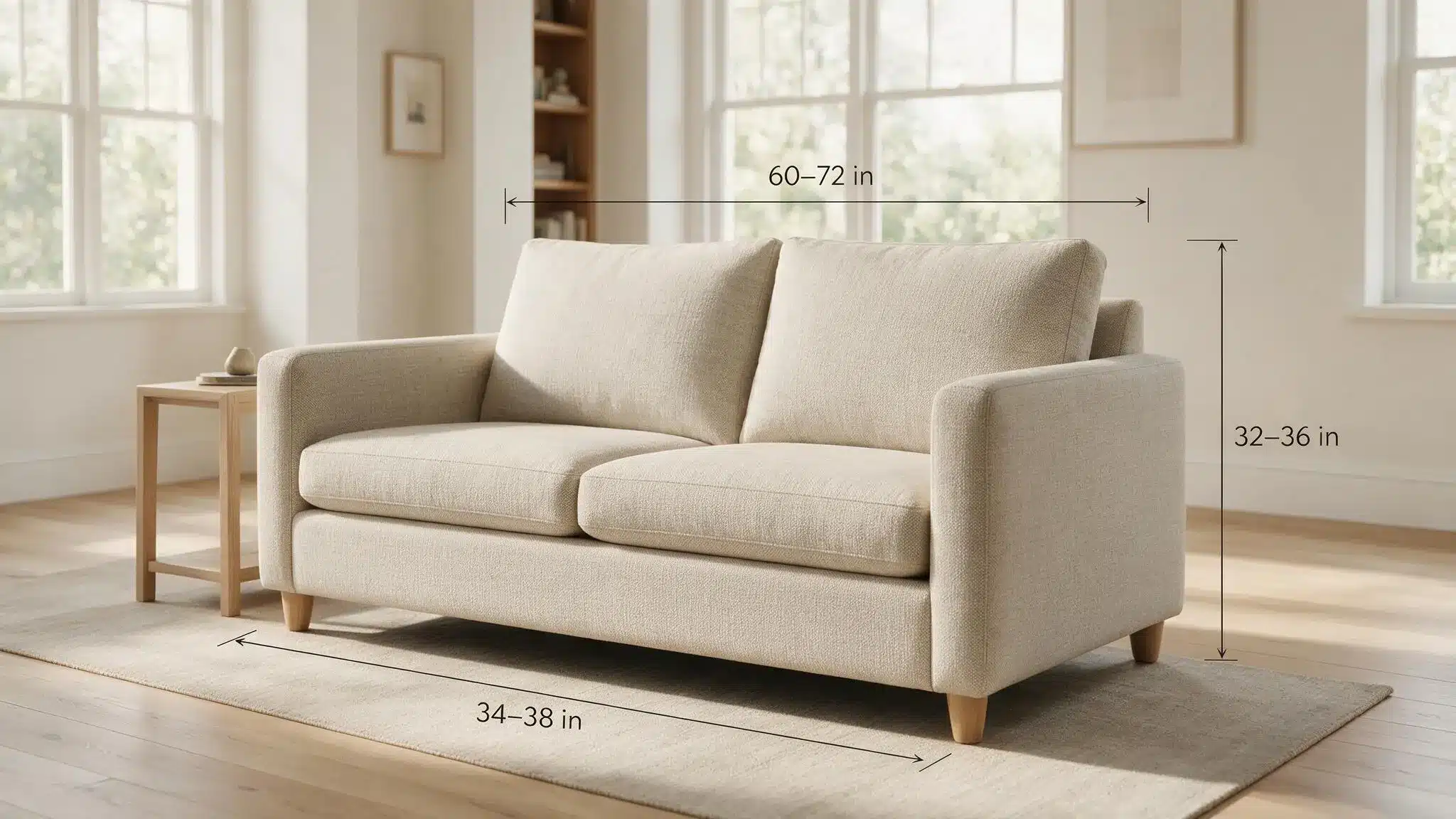
A loveseat seats two people and usually runs 60 to 72 inches wide, 34 to 38 inches deep, and 32 to 36 inches tall.
That’s a shorter, tighter frame than most other sofas. Buyers generally pick a loveseat as a second seat, not the main sofa in the room.
Try pairing it with an armchair for extra seating without added bulk.
Rooms under 12 by 12 feet work best with a loveseat. Go wider than 78 inches, and you’ll crowd the walls.
2. Seater Sofa
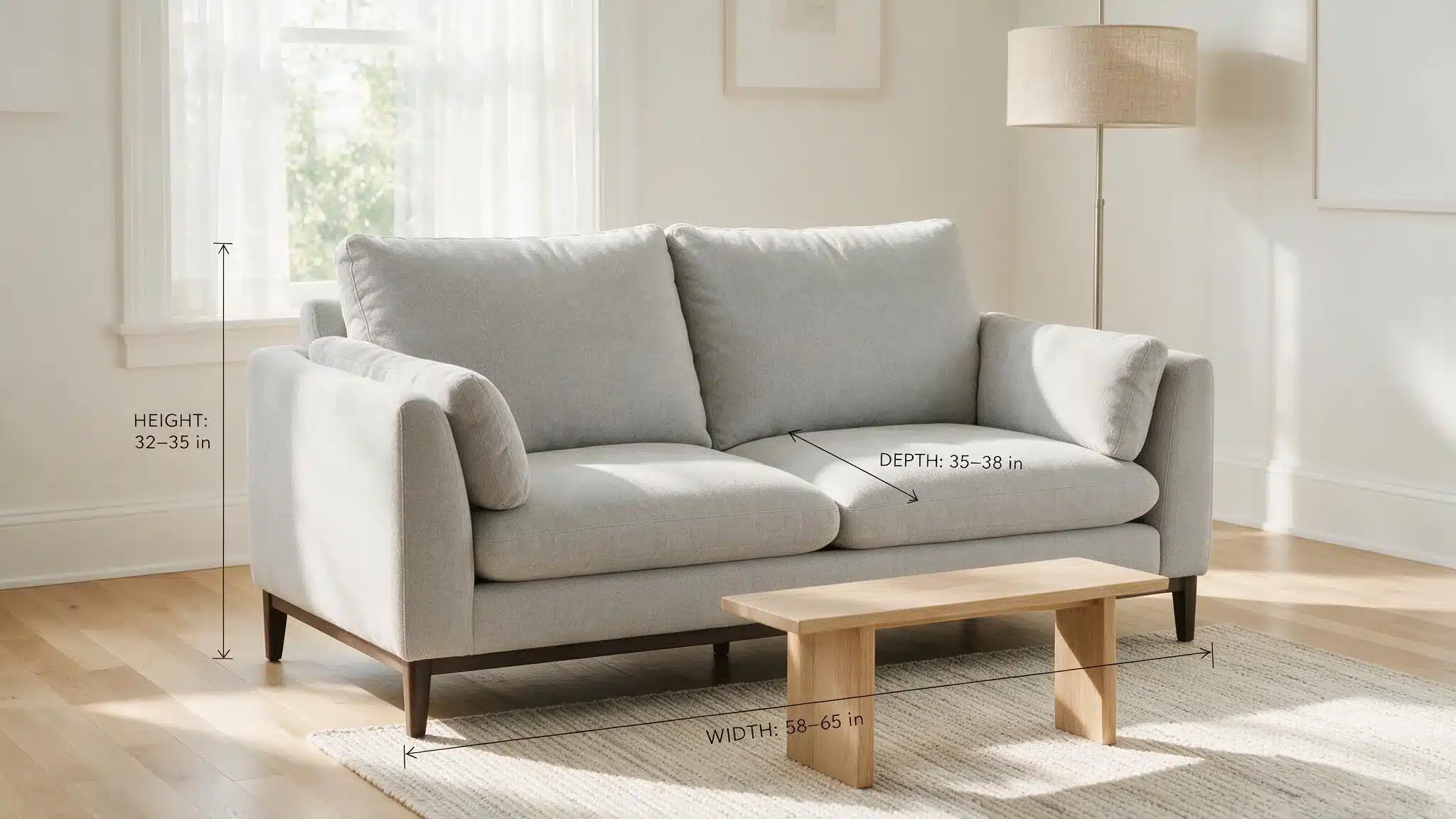
A 2-seater measures close to a loveseat, at 58 to 65 inches wide and 35 to 38 inches deep. Height falls between 32 and 35 inches. It often has a slightly wider frame and fuller cushions.
This style usually works on its own, not as part of a bigger seating set.
A 2-seater with deeper cushions can double as a cozy spot to stretch out, not just sit upright.
3. Seater Sofa
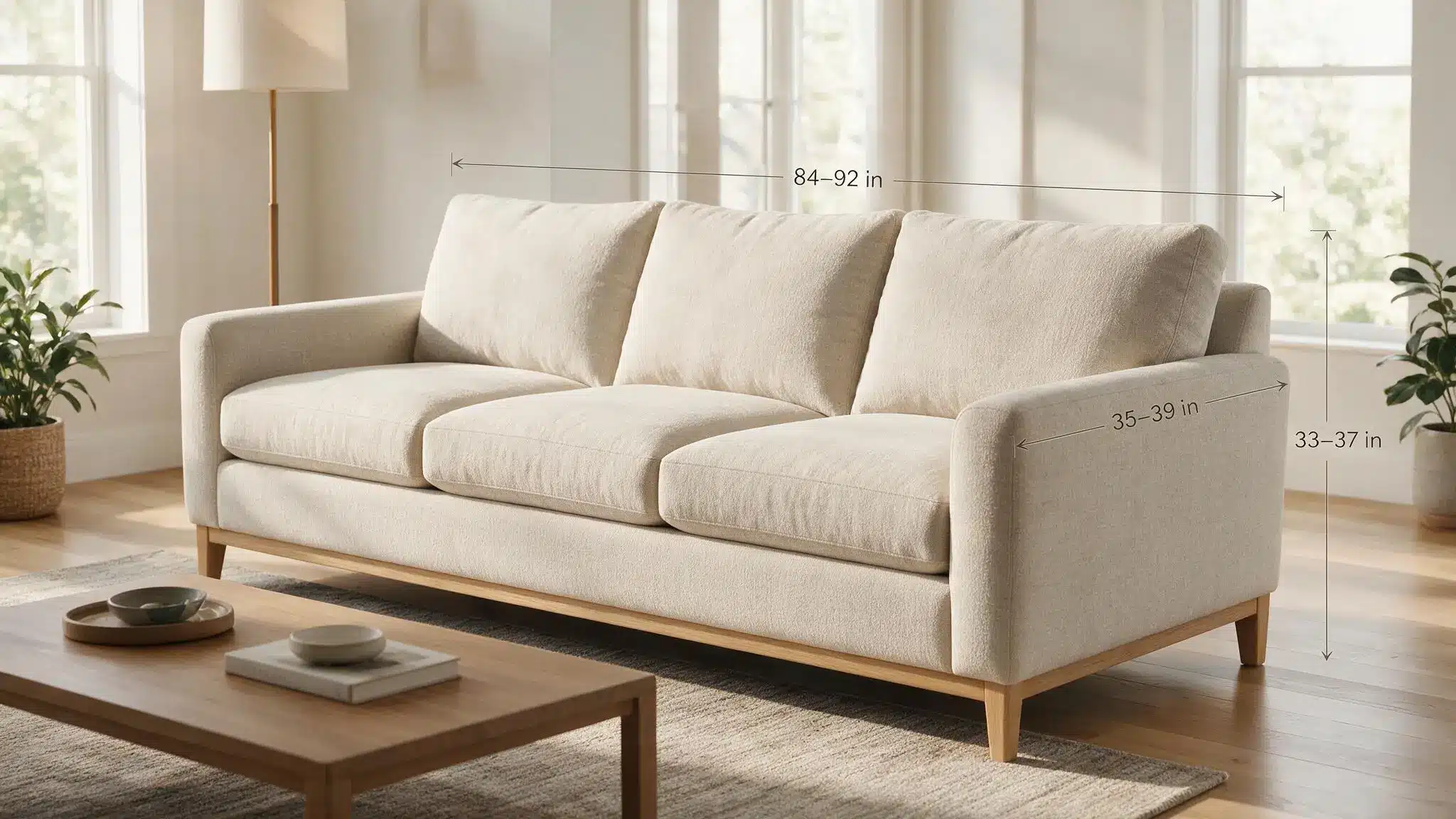
This is the most common sofa size, typically 84 to 92 inches wide, 35 to 39 inches deep, and 33 to 37 inches tall. It’s built to seat three people side by side, comfortably.
Most 3-seaters become the main sofa in the home, with everything else arranged around it. Since it carries daily use, put cushion support high on your checklist.
Spaces of 12 by 15 feet or larger fit a 3-seater well. It anchors the room, with space left for a coffee table too.
4. Seater Sofa
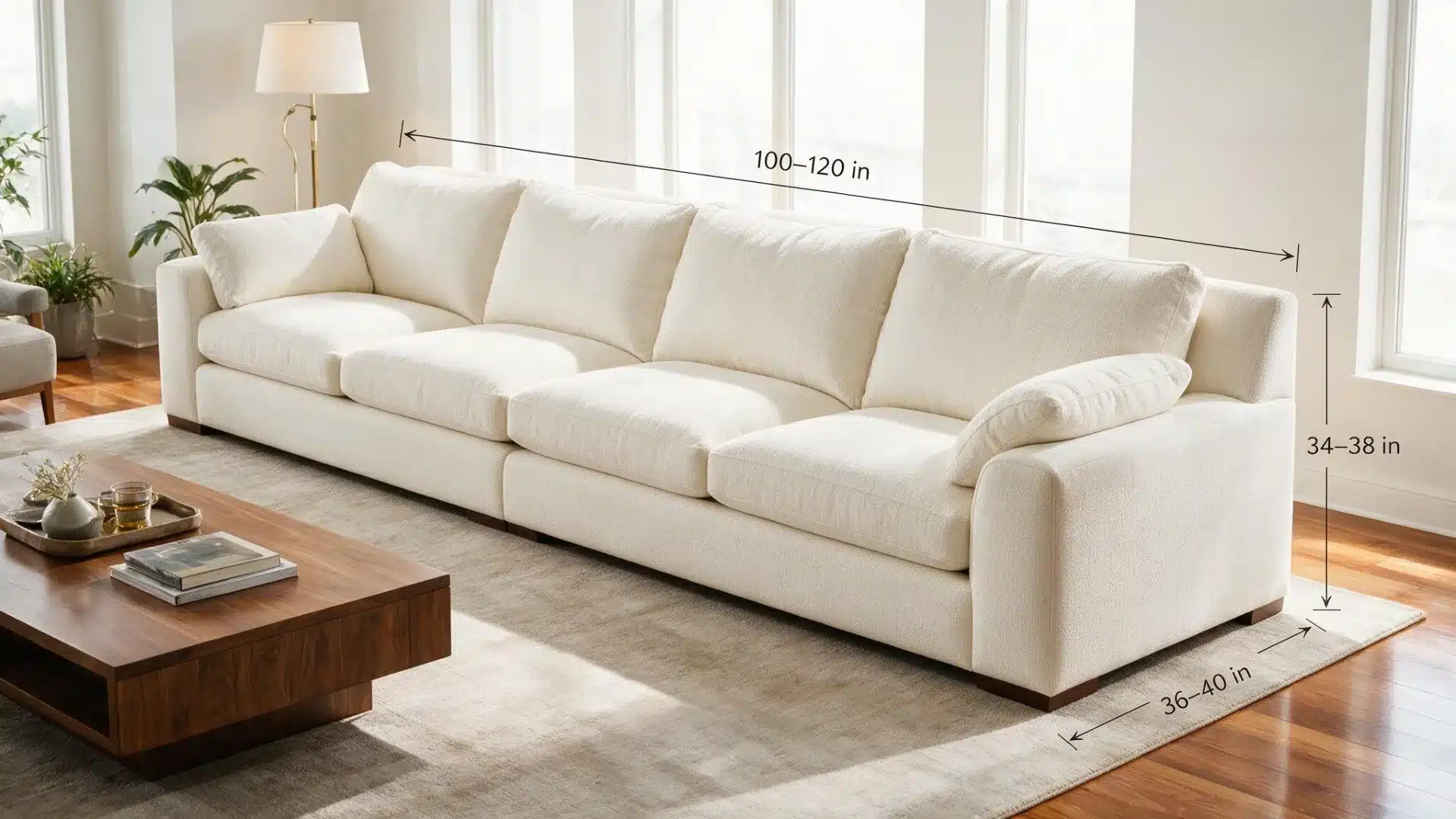
A 4-seater runs 100 to 120 inches wide, 36 to 40 inches deep, and 34 to 38 inches tall.
Built for bigger families or frequent get-togethers, this size gives more shared seating than a standard sofa.
It often takes the place of a 3-seater and a chair combo, rolling both into one piece. Check the frame’s weight limit if several adults sit on it often.
Rooms larger than 14 by 16 feet can handle a 4-seater or sectional. Leave some open floor around it so the room doesn’t feel packed.
5. Sectional Sofa
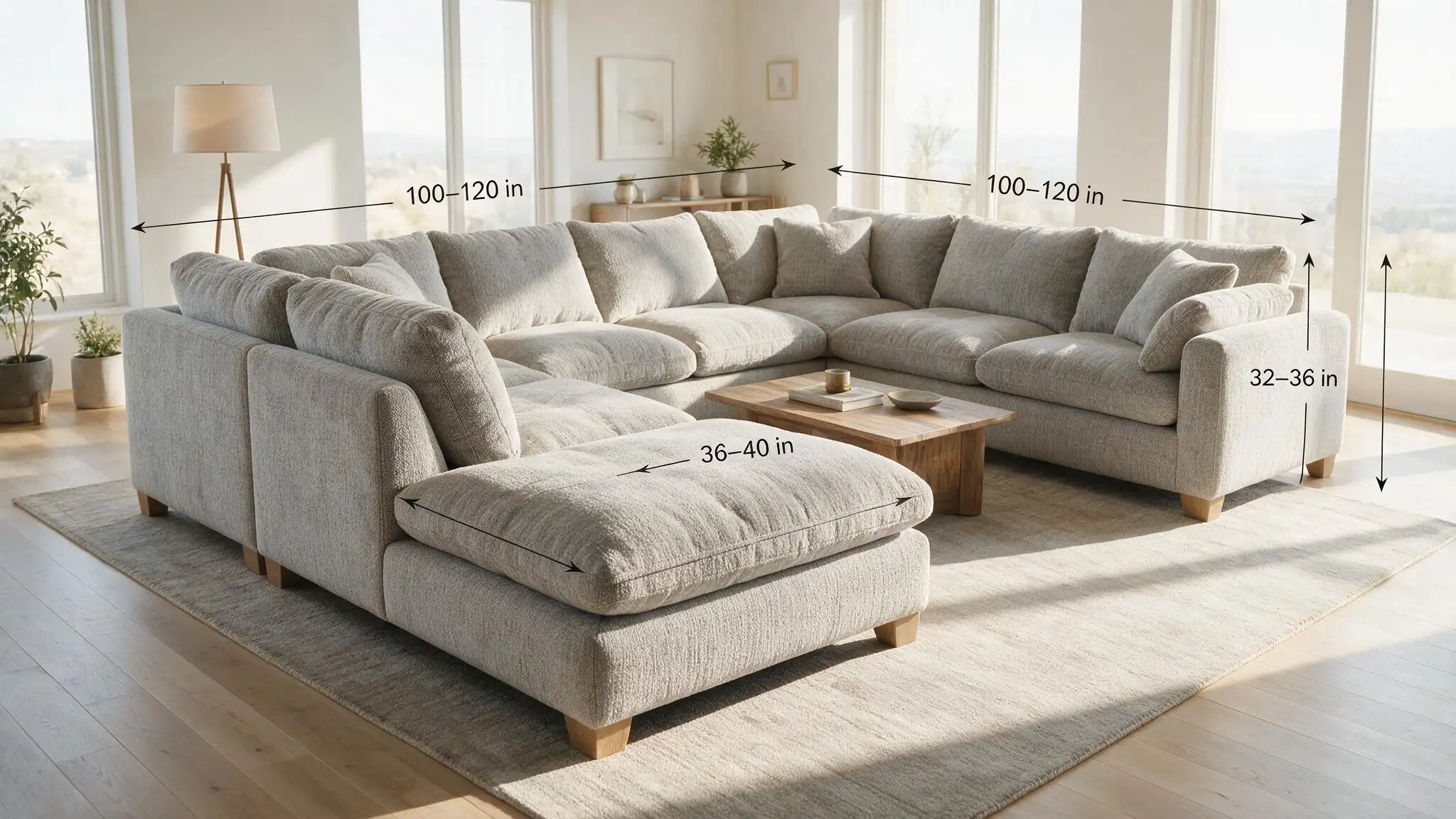
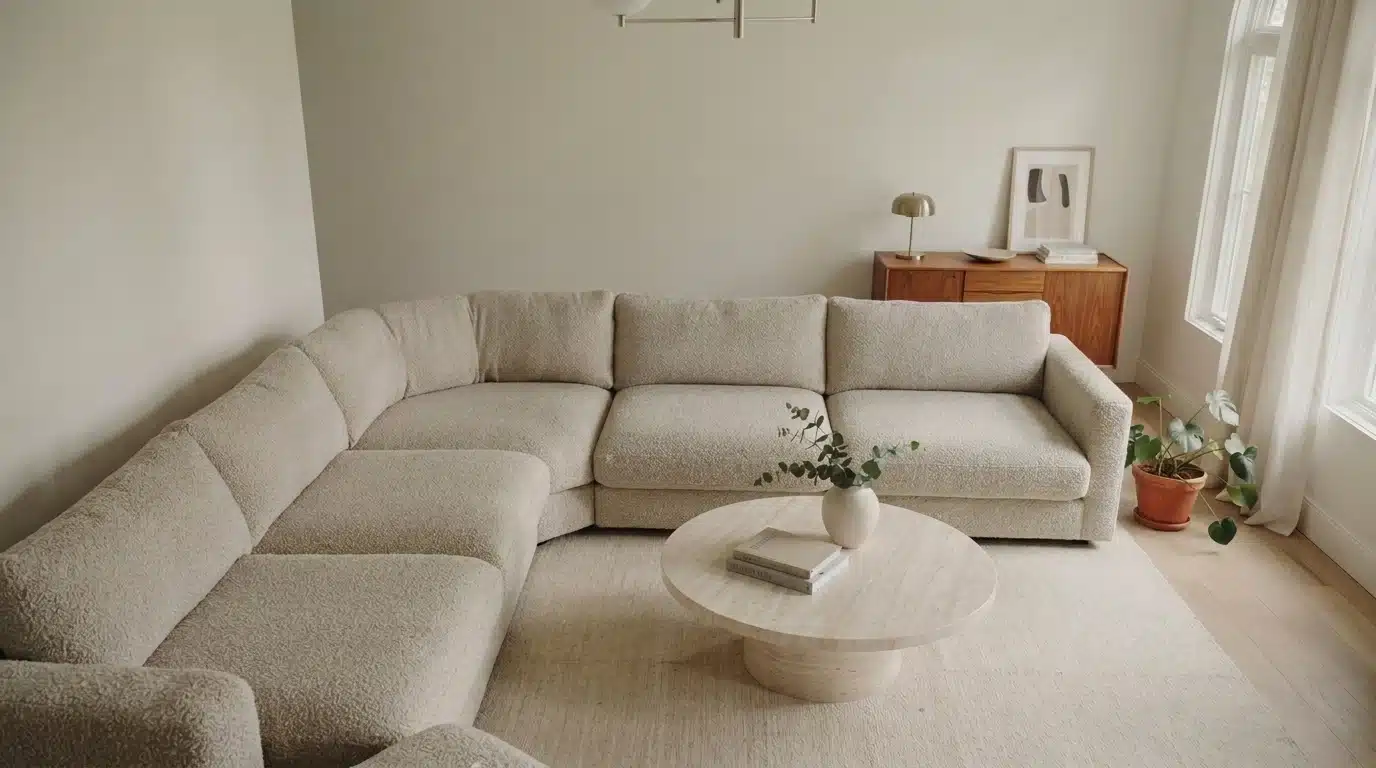
Sectional sofas typically run 100 to 120 inches per side, 36 to 40 inches deep, and 32 to 36 inches tall.
They wrap around a room in an L- or U-shape, combining several seating sections into one connected piece.
This style often includes a chaise, giving both seating and lounging space. Some sectionals come with modular pieces you can rearrange later if needs change.
Keep at least 30 to 36 inches for walkways. Sectionals need closer to 42 to 48 inches, since they stretch further into the room.
6. Sleeper Sofa
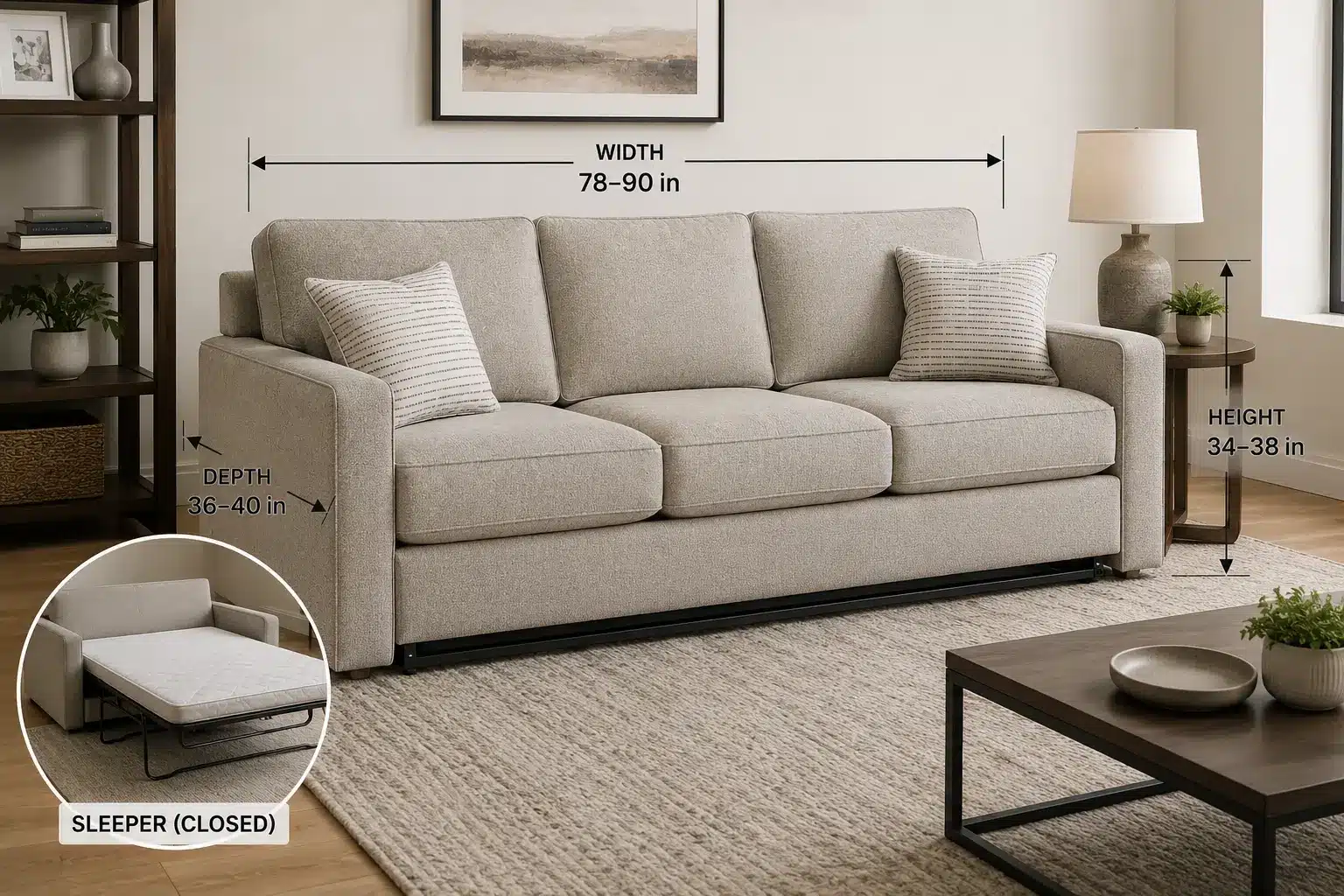
A sleeper sofa measures 78 to 90 inches wide, 36 to 40 inches deep, and 34 to 38 inches tall when closed. By day, it works like a standard sofa.
By night, the frame folds out into a mattress, doubling as a guest bed when needed.
Mattress thickness changes by brand, so test the actual sleeping surface, not just the seating cushions.
Keep 16 to 18 inches between the sofa and coffee table. For rugs, rest the front legs of the sofa on top.
At a Glance: Sofa Dimensions by Type
Not every sofa serves the same purpose, and size varies widely depending on seating count and style. Picking the right type starts with knowing how each one fits into a room.
| Sofa Type | Width | Depth | Height | Best Room Size |
|---|---|---|---|---|
| Loveseat | 60–72 in | 34–38 in | 32–36 in | 10 × 12 ft |
| 2-seater | 58–65 in | 35–38 in | 32–35 in | 10 × 12 ft |
| 3-seater | 84–92 in | 35–39 in | 33–37 in | 12 × 15 ft |
| 4-seater | 100–120 in | 36–40 in | 34–38 in | 14 × 16 ft |
| Sectional | 100–120 in (per side) | 36–40 in | 32–36 in | 14 × 16 ft |
| Sleeper (closed) | 78–90 in | 36–40 in | 34–38 in | 13 × 15 ft |
How to Measure a Sofa?
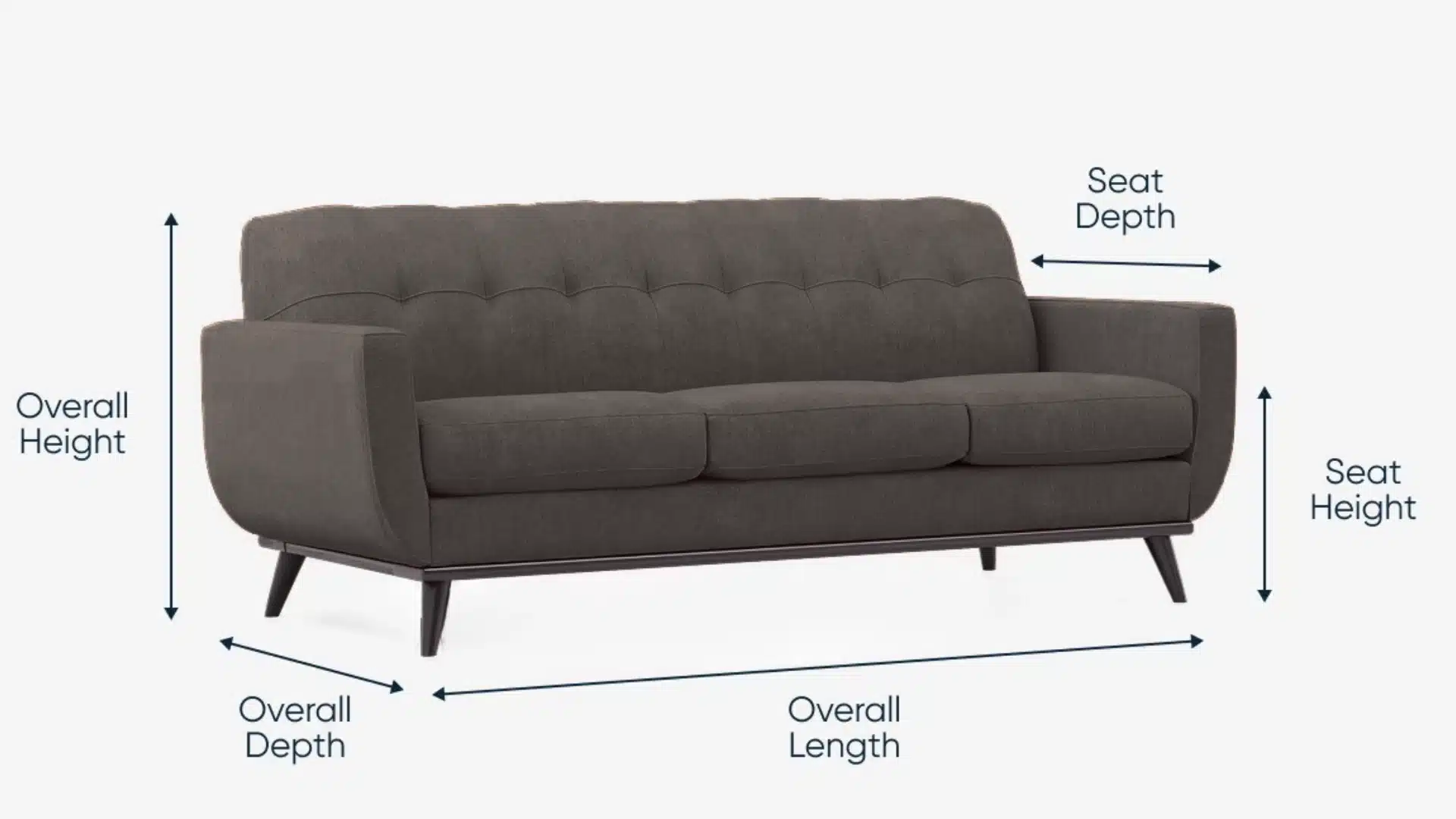
Getting the numbers right takes more than a glance.
Each measurement tells a different part of the comfort story. Here’s what to check, how to measure it, and how it plays into the final decision.
Width: Width runs from the outer edge of one arm to the outer edge of the other. Stretch the tape flat across the front of the sofa to get this number.
Overall Depth: Depth runs from the front edge of the seat cushion to the back of the frame. Place the tape at the cushion’s edge and pull it straight back to the rear. Most standard sofas are 34 to 40 inches deep.
Height and Back Height: Overall height runs from the floor to the highest point of the backrest. Back height, though, starts at the seat cushion instead of the floor.
Seat Depth According to Height: Seat depth runs along the cushion itself, from the front edge to the back edge. This number has a big effect on comfort, especially over time.
Seat Height: Seat height runs from the floor to the top of the seat cushion. This number affects how easy it feels to sit down and stand back up. Most sofas fall between 17 and 18.5 inches.
Arm Height and Arm Width: Arm width runs across the top of the armrest, from the inner edge to the outer edge. Arm height runs from the seat cushion up to the top of the arm. Most arms measure 4 to 8 inches wide and 22 to 26 inches high.
Have a small living room? We have the solution.
Final Thoughts
By now, choosing a sofa should feel far less like guesswork. Standard sizes, type comparisons, and simple measuring steps make sofa dimensions easier to judge against any room.
Matching size to space is what turns a good-looking piece into one that actually fits daily life.
That question of “will this actually work in my space” now has a clear answer, backed by real numbers instead of guesswork.
Whether the listing says sofa or couch dimensions, the same steps apply every time.
Frequently Asked Questions (FAQs)
1. Can Two Different Sofa Brands with The Same Listed Dimensions Still Feel Different in A Room?
Yes, since arm thickness, cushion firmness, and leg style all affect how a sofa visually reads.
2. Does a Sofa’s Weight Matter when Planning for an Upstairs Apartment or a Tricky Staircase?
Yes, heavier frames may need disassembly or professional movers for tight turns and narrow stairwells.
3. Should I Choose a Sofa Size Based on My Current Room or My Next Home?
Base it on your current space, since oversized furniture rarely transfers well to a new layout.
4. Do Sofa Dimensions Typically Include the Legs, or Are Those Measured Separately?
Most listed dimensions include legs unless stated otherwise, so always check the product description first.