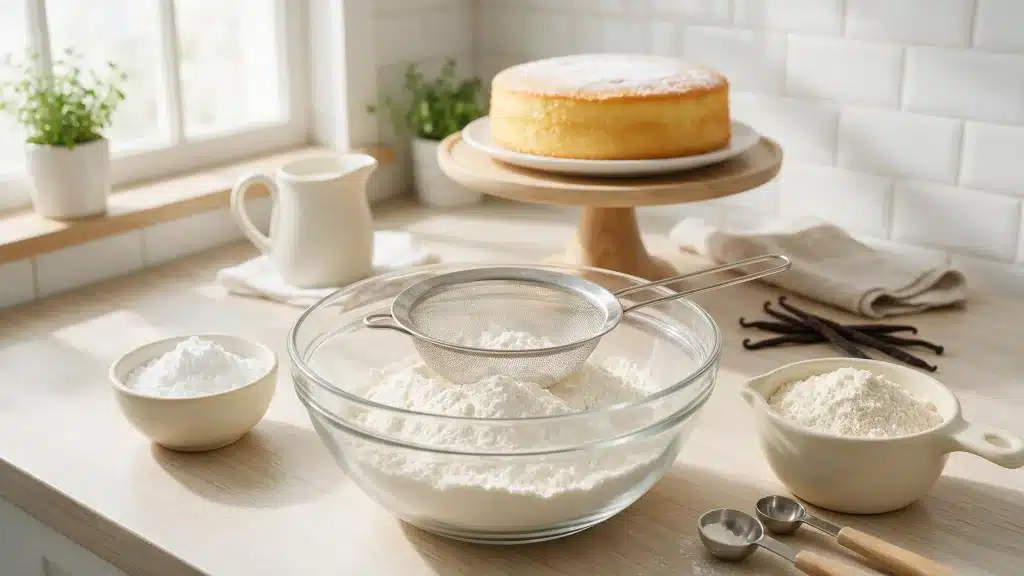
You don’t need to put a cake on hold if you run out of cake flour.
You can use another flour as a substitute for cake flour, which can provide a closer alternative.
Keep in mind that the resulting mixture may not behave exactly like cake flour, but it can provide a softer crumb while retaining some structure.
Can You Use All-Purpose Flour Instead of Cake Flour?
All-purpose flour can replace cake flour, but the result won’t be quite the same. Cake flour has less protein, so it makes cakes soft and light.
All-purpose flour has more protein, which builds more gluten. That extra gluten can make a cake denser and a bit chewier. Still, it works fine in a pinch, especially for recipes that don’t need a delicate crumb.
Different muffins, quick breads, and heartier cakes usually turn out just fine with all-purpose flour alone. For a more tender bake, though, a small tweak helps.
Swapping out a couple of tablespoons of flour for cornstarch in each cup gets much closer to the real thing. Plain flour works, but a small adjustment makes it even better.
The Best Cake Flour Substitute
The easiest and most basic substitute for cake flour is to mix cornstarch with AP flour.
The cornstarch replaces part of the AP flour, reducing the proportion of protein-containing flour and helping create a more tender crumb.
AP flour generally contains more protein than cake flour, so replacing part of it with cornstarch helps lower the protein content of the mixture.
Plain AP flour can work well when an especially tender crumb isn’t important.
How to Make a Cake Flour Substitute at Home?
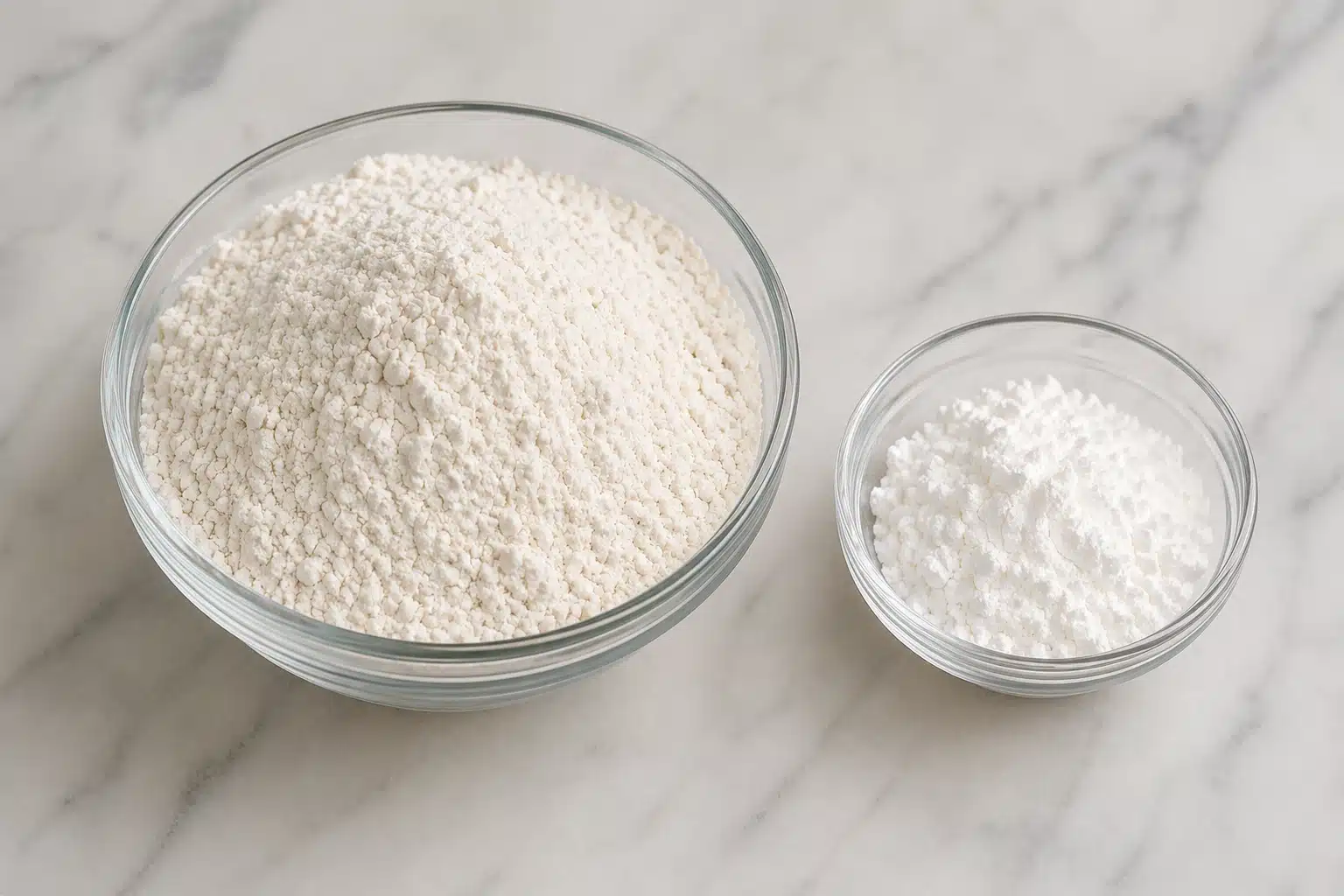
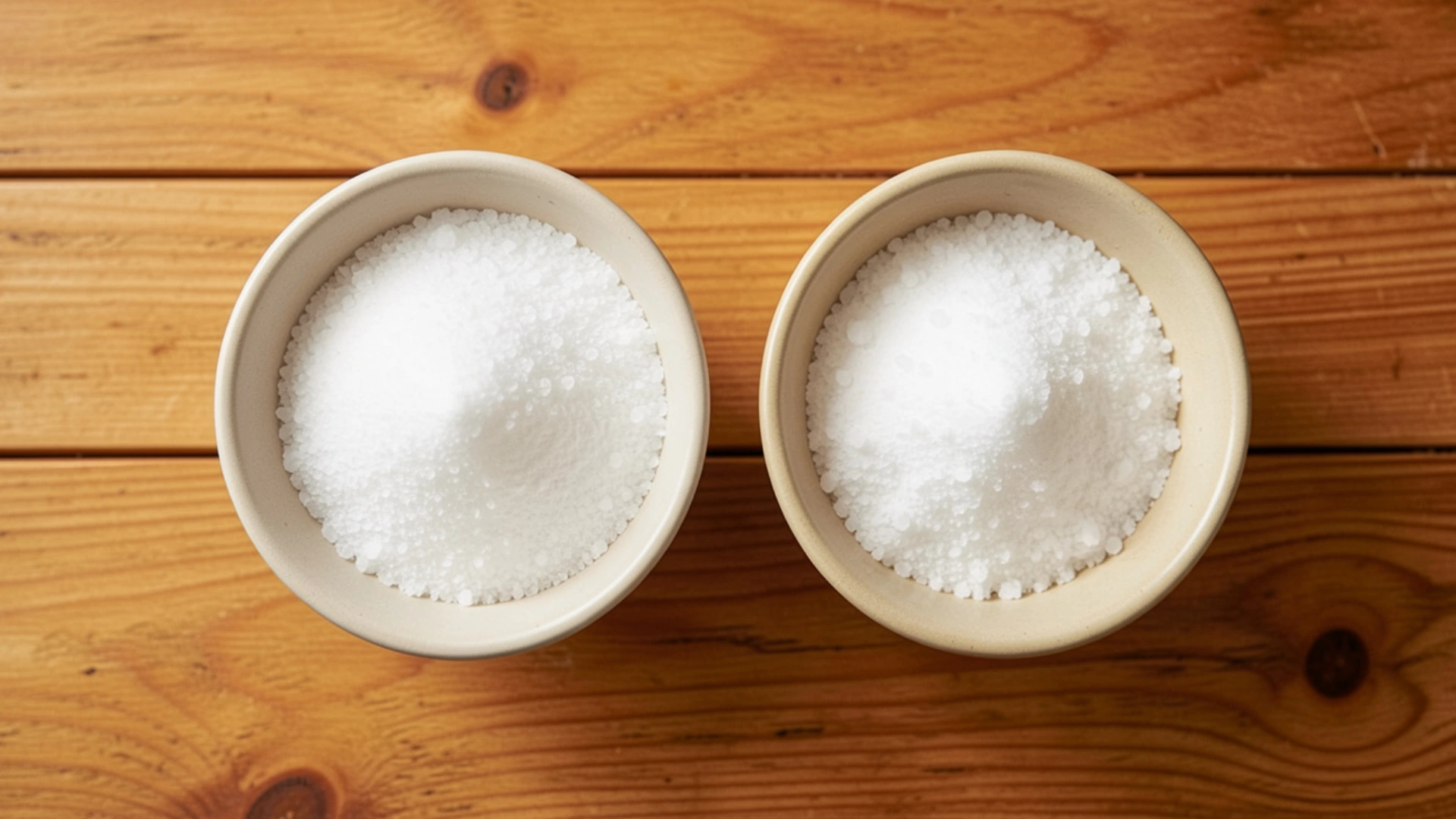
Making a cake flour substitute takes just two ingredients and a few minutes. Mix all-purpose flour and cornstarch to create a light, soft texture.
A simple mix in the kitchen does the job.
Ingredients
- 1 cup all-purpose flour
- 2 tablespoons cornstarch
Step 1: Measure the Flour
Start by measuring 1 cup of all-purpose flour. Use a dry measuring cup for accuracy. Spoon the flour into the cup instead of scooping it straight from the bag.
Scooping packs the flour down, which throws off the measurement.
Scooping flour straight from the bag adds extra flour without realizing it. That extra flour makes the batter dense and dry.
Step 2: Remove 2 Tablespoons
Take out 2 tablespoons of flour from that same cup.
This step matters more than it seems. Removing flour makes room for the cornstarch, which lowers the overall protein content.
Skipping this step and just adding cornstarch on top is a common mistake. That leaves too much flour in the mix, and the substitute won’t act like real cake flour.
Step 3: Add the Cornstarch
Add 2 tablespoons of cornstarch to the flour. Cornstarch has no gluten at all. That’s exactly what makes this mix act like real cake flour.
Using baking powder or baking soda instead of cornstarch won’t work. Those are leaveners, not starches, and they won’t copy the same texture.
Step 4: Whisk Thoroughly
Whisk the flour and cornstarch together for about a minute.
Mix until no white streaks of cornstarch remain. A thorough whisk keeps the texture even throughout the batter later.
Under-mixing and leaving clumps of cornstarch behind will show up as dense spots in the finished cake.
Step 5: Sift the Mixture
Sift the blend through a fine sieve. Sifting breaks up any clumps and adds air to the mix. This last step helps the batter turn out light and smooth.
Skipping the sift and pouring the mix straight into the batter shortchanges the texture. That skips the extra air, and the cake loses some of its lightness.
You can use the same quantity of this substitute as the recipe calls for in cake flour, or, if the recipe calls for weights, measure to the correct weight.
Best Cake Flour Substitutes Based on What You Have
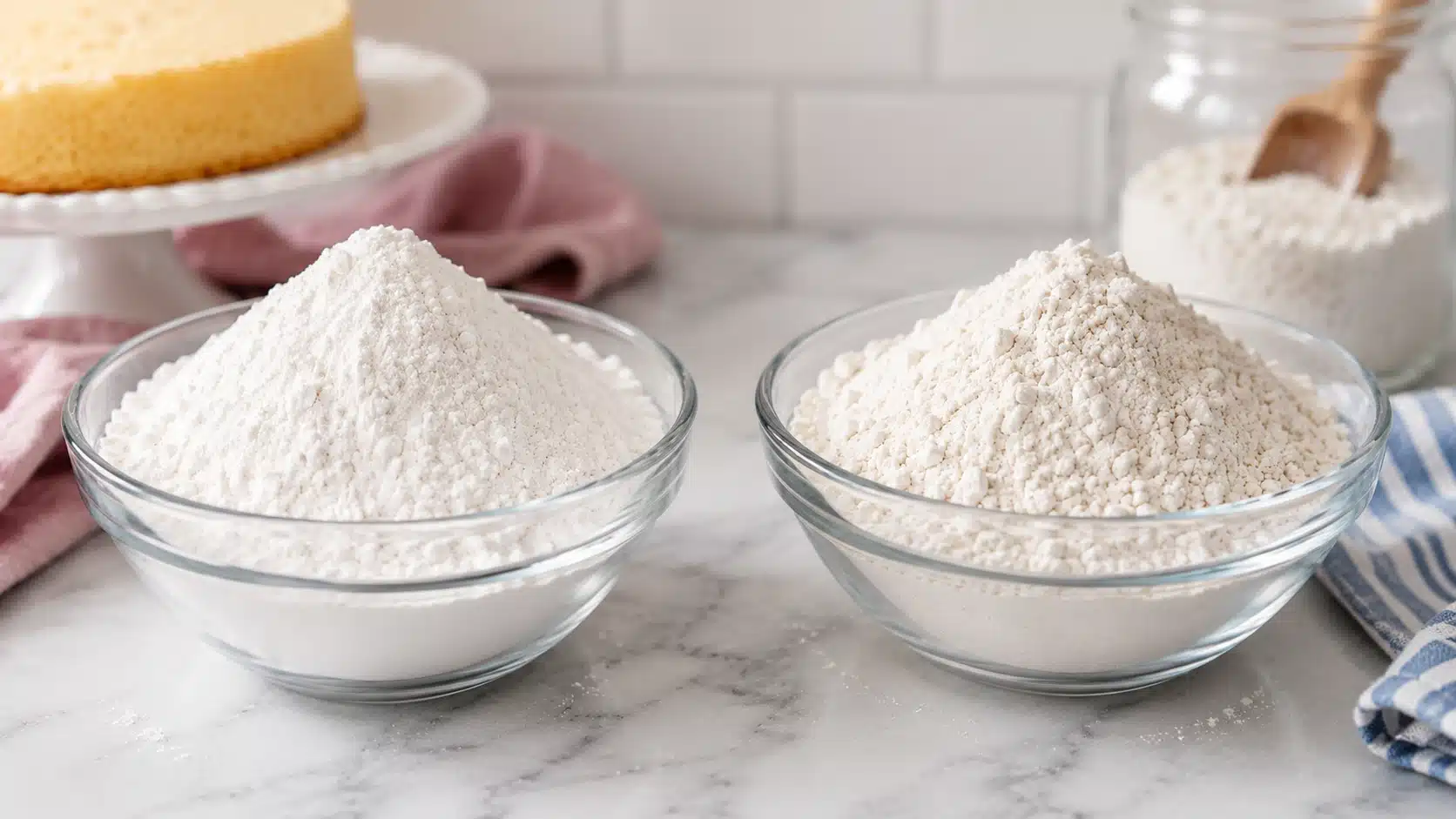
Baking rarely waits for a store run. So it helps to look at the pantry first. What’s already on the shelf often decides the best fix. So, pick the right one based on what’s on hand.
1. All-Purpose Flour Alone
This is the fastest fix of them all. No mixing, no extra ingredients, just flour straight from the bag. But the higher protein content means more gluten forms in the batter.
That leads to a firmer, denser crumb. It works well for sturdier bakes, but tender cakes may fall a bit flat.
Save this option for pound cakes, snack cakes, or anything that doesn’t need a soft, airy bite.
2. Pastry Flour
Pastry flour sits between cake flour and all-purpose flour on the protein scale. It’s naturally low in protein, just not quite as low as cake flour.
That makes it a solid stand-in when it’s available. Cakes made with pastry flour turn out tender, though slightly less light than ones made with true cake flour.
Pastry flour works especially well in pie crusts and cookies, too, so it’s a useful one to keep around.
3. Self-Rising Cake Flour
Self-rising cake flour already has baking powder and salt mixed in. That makes it a poor swap unless the recipe’s leavening lines up.
Adding the recipe’s full amount of baking powder and salt on top leads to over-leavening. That can make a cake rise too fast, then collapse. Always check the flour label first, and adjust the added leaveners to match.
Avoid treating self-rising cake flour the same as regular cake flour. Skipping this check can throw off the whole bake.
4. Other Low-Protein Flours
A few specialty flours also have lower protein content, depending on where they’re sold. Availability shifts from country to country, so these options aren’t always easy to find.
When available, they can work similarly to cake flour. It’s worth checking local baking shops for regional options.
Bread flour might seem like a fix since it’s still wheat flour, but its high protein content makes cakes tough, not tender. Skip it for this purpose.
Cake Flour vs. All-Purpose Flour
The main difference between cake and all-purpose flours comes down to protein content. Protein contributes to gluten formation, and gluten helps provide structure to baked goods.
| Feature | Cake Flour | All-Purpose Flour |
|---|---|---|
| Protein | Lower | Higher |
| Gluten development | Lower | Higher |
| Crumb | Fine and tender | More structured |
| Texture | Soft and delicate | Slightly firmer |
| Best suited to | Delicate cakes and cupcakes | General-purpose baking |
When Should You Not Substitute Cake Flour?
Some cakes lean on cake flour more than others. In these recipes, the flour isn’t just an ingredient. It’s the reason the cake holds its shape and texture at all.
Angel Food Cake
Angel cake relies on a delicate structure built almost entirely from whipped egg whites. Cake flour keeps that structure light. Any extra protein from a substitute can weigh it down.
Very Delicate Sponge Cakes
Sponge cakes need a fine, even crumb. That crumb depends on low-protein flour. A substitute can come close, but the texture may turn out slightly denser.
Certain Chiffon Cakes
Chiffon cakes combine a soft crumb with real height. Cake flour supports both. A substitute may hold the height fine but lose a bit of that soft bite.
Highly Airy White Cakes
These cakes depend on a light structure to stay fluffy. Swapping in a substitute can still work, but the cake may end up a touch heavier.
Recipes Specifically Developed For Cake Flour
Some are tested and designed with cake flour’s exact protein level in mind. Swapping it out changes the balance the recipe was designed around, even if the result still tastes good.
Bake Well!
Running out of cake flour doesn’t have to stop a bake in its tracks.
A cake flour substitute, such as a quick mix of all-purpose flour and cornstarch, gets close to the real thing, and plain flour alone works fine for sturdier treats.
The right choice really depends on the cake.
So next time the cake flour runs low, there’s no need to postpone the bake. Grab what’s already in the pantry, measure it out, and get baking.
Frequently Asked Questions (FAQs)
1. Does Using a Substitute Change the Baking Time of a Cake?
Usually not by much. Baking time stays close to the original recipe, though checking a few minutes early helps.
2. Can I Use This Substitute in Pancakes or Waffles?
Yes, it works well there too. It gives pancakes and waffles a softer, lighter texture than all-purpose flour alone.
3. Can I Use Bread Flour Instead of Cake Flour?
No. Bread flour contains more protein and develops stronger gluten, which can make cakes denser, chewier, and less tender.