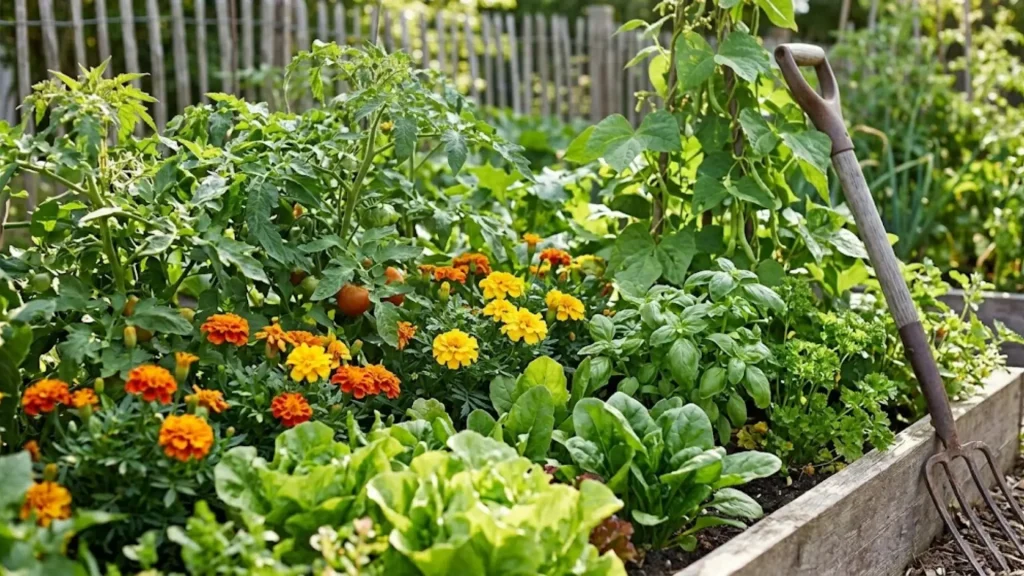
Planting marigolds next to your vegetables will not automatically fix your pest problem.
I used to believe it would. Every spring I’d tuck a few French marigolds around the tomatoes because half the internet swore they kept the bugs away.
The aphids still arrived. The hornworms still arrived. The marigolds just sat there looking cheerful while I still had to pick pests off by hand.
A companion planting chart works better than that kind of wishful thinking.
It shows which pairings actually help with space, soil, or insects, and which ones create more problems than they solve.
Use it as a starting map, then watch what happens in your own beds.
What is Companion Planting?
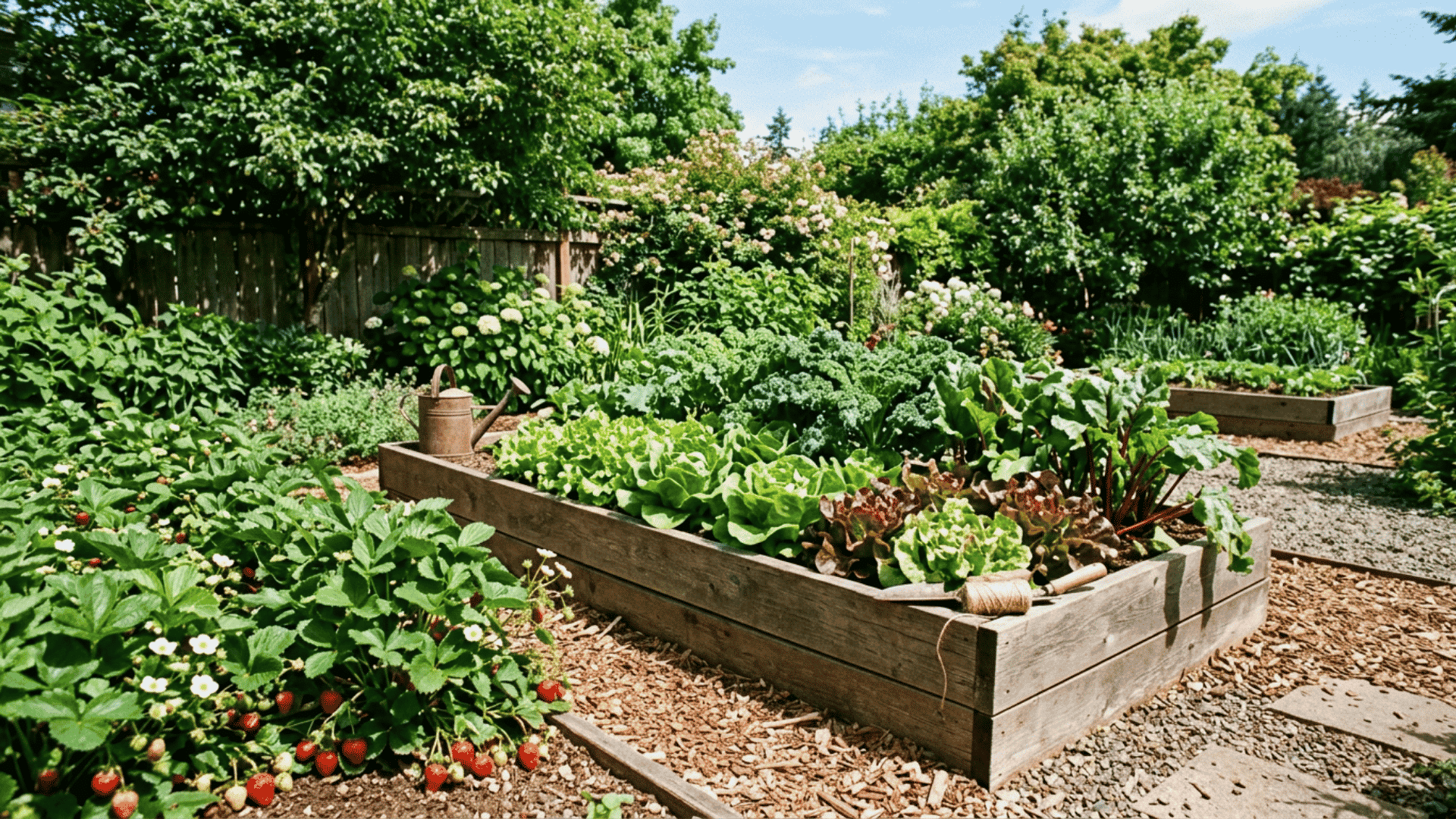
Gardeners have mixed vegetables, herbs, and flowers for a long time because some combinations make practical sense.
Beans climb corn and feed the soil nitrogen. Tall plants throw a little shade that keeps lettuce from bolting. Strong-smelling herbs can make it harder for certain pests to find their favorite crop.
Mixing things also uses the bed more efficiently.
One myth to drop, though, is the idea that one plant makes another grow faster or taste better just by sitting nearby. That claim has limited scientific evidence behind it.
Companion Planting for Vegetables
Click to get a printable PDF of vegetables companion plants.
Tomatoes
- Basil: Its scent may help confuse pests that hunt tomatoes by smell, and it grows well in the same conditions as tomato plants.
- Marigolds: These bring in more pollinators and beneficial insects, which helps keep pest numbers down around the bed.
- Lettuce: Grows low and quick, so it fills space under taller tomato plants without competing for light.
Did you know you can grow tomatoes from their seeds, learn how.
Cucumbers
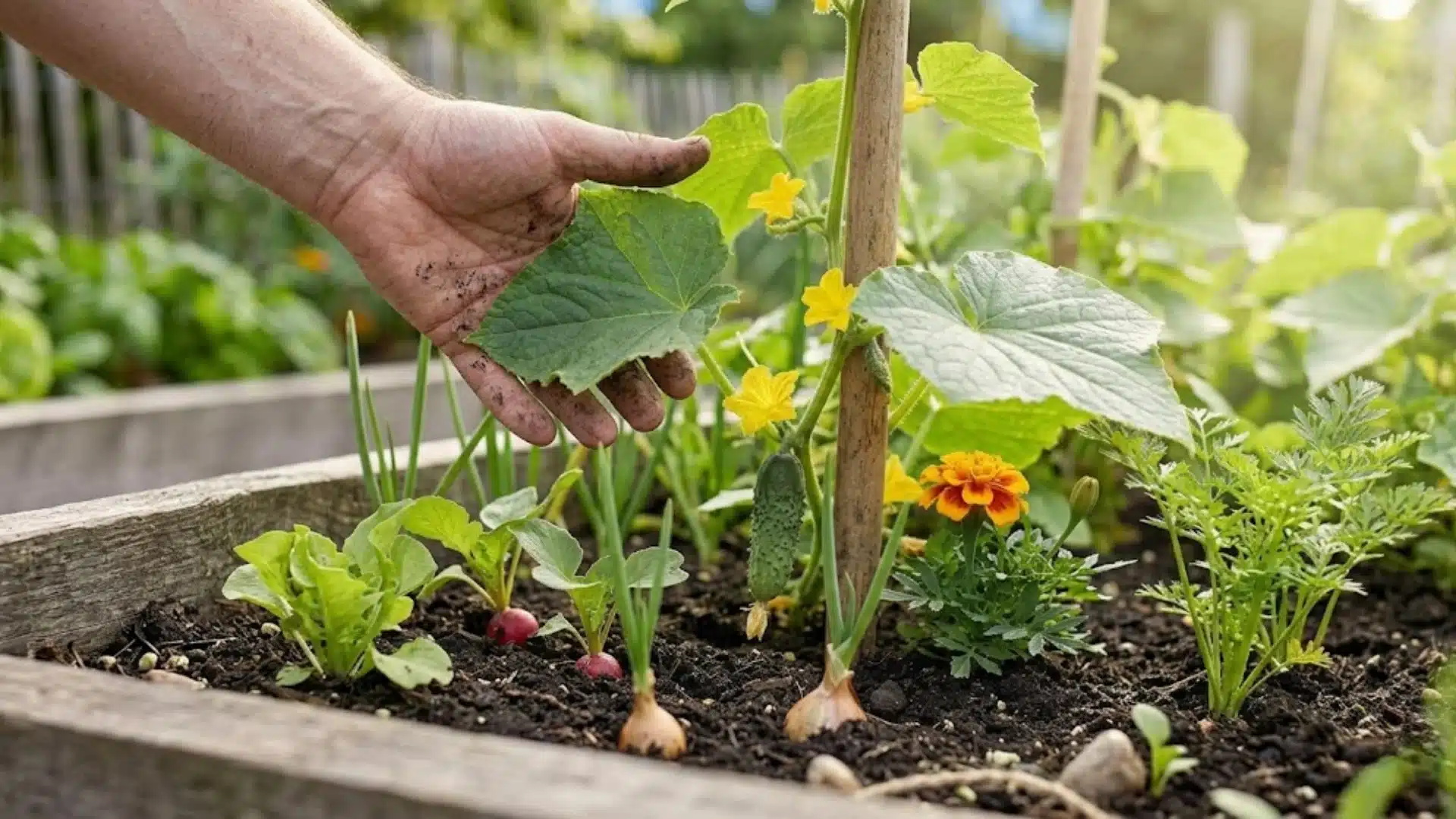
- Beans: Beans add nitrogen back into the soil, which cucumbers use heavily as they grow and produce fruit.
- Peas: Like beans, peas help build up nitrogen levels and share similar watering needs with cucumbers.
- Radishes: These grow fast and can be pulled early, acting as a trap crop that draws certain pests away from cucumber vines.
Taller crops or trellises work well nearby since cucumbers are vining plants that need support without getting shaded out. Flowers that attract pollinators, such as marigolds or calendula, also help because cucumbers need good pollination to produce well.
Plants to keep separate:
- Aromatic herbs in tight spaces: When crowded too close, herbs like sage or rosemary can compete for airflow and light that cucumber vines need to stay healthy.
Peppers
- Basil: Grows well in similar warm, sunny conditions as peppers and may help keep certain pests away.
- Onions: Their strong scent can help mask peppers from pests that locate plants by smell.
- Carrots: Since carrots grow underground and peppers grow above, they do not compete much for space or light.
Flowers nearby, like marigolds or calendula, bring in more pollinators and beneficial insects, which matters since pepper plants rely on good pollination to set fruit.
Plants to keep separate:
- Overcrowded plantings in general: Peppers need decent airflow around their leaves. Packing too many plants close together raises the risk of fungal issues and slows fruit production.
Keep peppers spaced enough that air can move freely between plants, especially in humid climates.
Carrots
- Onions: Their scent can help confuse pests looking for carrots, and since onions grow shallow while carrots grow deep, they do not compete much underground.
- Lettuce: Grows quickly above ground while carrots develop below, so both can share a bed without crowding root space.
- Peas: Peas add nitrogen to the soil as they grow, which benefits carrots planted nearby.
Good above ground companions include low growing herbs like chives, which do not shade out the carrot tops as they mature. Find more about Carrort’s companion plants.
Plants to keep separate:
- Dill: Mature dill can stunt carrot growth and may attract pests that also target carrots, so it is better kept in a separate bed.
Lettuce
- Carrots: Carrots grow underground while lettuce grows above, so both share space well without competing for root room.
- Radishes: Fast growing radishes can be harvested early, freeing up space for lettuce to spread out as it matures.
- Cucumbers: Taller cucumber vines can offer some afternoon shade, which helps lettuce avoid bolting in warmer weather.
Fast growing crops in general work well next to lettuce since they share the bed for a short time before being harvested, making room for lettuce to fill in.
Plants to keep separate:
- Large shading plants: Anything that grows tall and dense enough to block most sunlight can slow lettuce growth, since lettuce still needs a decent amount of light even in cooler weather.
A little afternoon shade helps in hot climates, but too much blocks growth completely, so balance matters here.
Beans
- Corn: Corn stalks give climbing pole beans something to grow on, saving space and skipping the need for a separate trellis.
- Cucumbers: Both share similar watering needs and beans add nitrogen to the soil, which cucumbers use heavily.
- Carrots: Beans fix nitrogen in the soil as they grow, which benefits root vegetables like carrots planted nearby.
While pole beans require something to climb, such as maize or a trellis, bush beans remain compact and perform well in smaller places.
When choosing where to put climbing beans in the bed, bear in mind that they may shadow off surrounding shorter plants.
Plants to keep separate:
- Onions and garlic: These can stunt bean growth and interfere with the nitrogen fixing process beans are known for
Peas
It is advisable to combine peas with other early-season crops that have similar moisture and temperature requirements rather than combining them with heat-loving veggies because peas prefer colder growth circumstances.
- Carrots: Peas add nitrogen to the soil, which benefits carrots as they grow below the surface.
- Radishes: Both grow quickly in cooler weather and share similar watering needs without competing much for space.
- Cucumbers: Peas finish early in the season, often freeing up space just as cucumbers start needing more room.
Plants to keep separate:
- Onions and garlic: Similar to beans, these can interfere with the nitrogen fixing bacteria that live on pea roots, reducing the benefit peas normally add to the soil
Cabbage
- Dill: Its flowers attract beneficial insects like parasitic wasps, which help control cabbage worms and other common pests.
- Onions: Their strong scent can help mask cabbage from pests that hunt by smell.
- Thyme: Low growing and aromatic, thyme can help deter some pests that target cabbage without competing for space.
Cabbage needs a fair amount of room to develop full heads, so pairing it with plants that stay low or finish quickly works better than crowding it with other large crops.
Plants to keep separate:
- Other large competing crops: Planting cabbage too close to other space hungry vegetables leads to competition for nutrients and light, which can slow head formation
Broccoli
Broccoli needs decent spacing to form full heads, so it works best next to plants that either stay low or finish quickly, freeing up room as broccoli matures.
- Dill: Its flowers attract beneficial insects like hoverflies and parasitic wasps, which help keep cabbage worms and aphids under control.
- Onions: Their scent can help confuse pests that target broccoli by smell.
- Lettuce: Grows low and fills space around broccoli without competing much for light or root room.
Plants to keep separate:
- Crowded brassica plantings: Growing too many cabbage family plants close together, like broccoli next to cauliflower or kale, concentrates the same pests and diseases in one spot, making outbreaks harder to control
Potatoes
- Beans: Beans add nitrogen to the soil, which benefits potatoes as they grow and form tubers underground.
- Peas: Similar to beans, peas help build up nitrogen levels in the soil without competing much for space with potato plants.
Potatoes need loose, well draining soil to form tubers properly, so pairing them with plants that do not require heavy watering works better in most beds.
Plants to keep separate:
- Tomatoes: Both belong to the same plant family and can share blight and other diseases. Planting them close together raises the risk of both crops getting affected if one shows signs of disease
Companion Planting Chart for Herbs
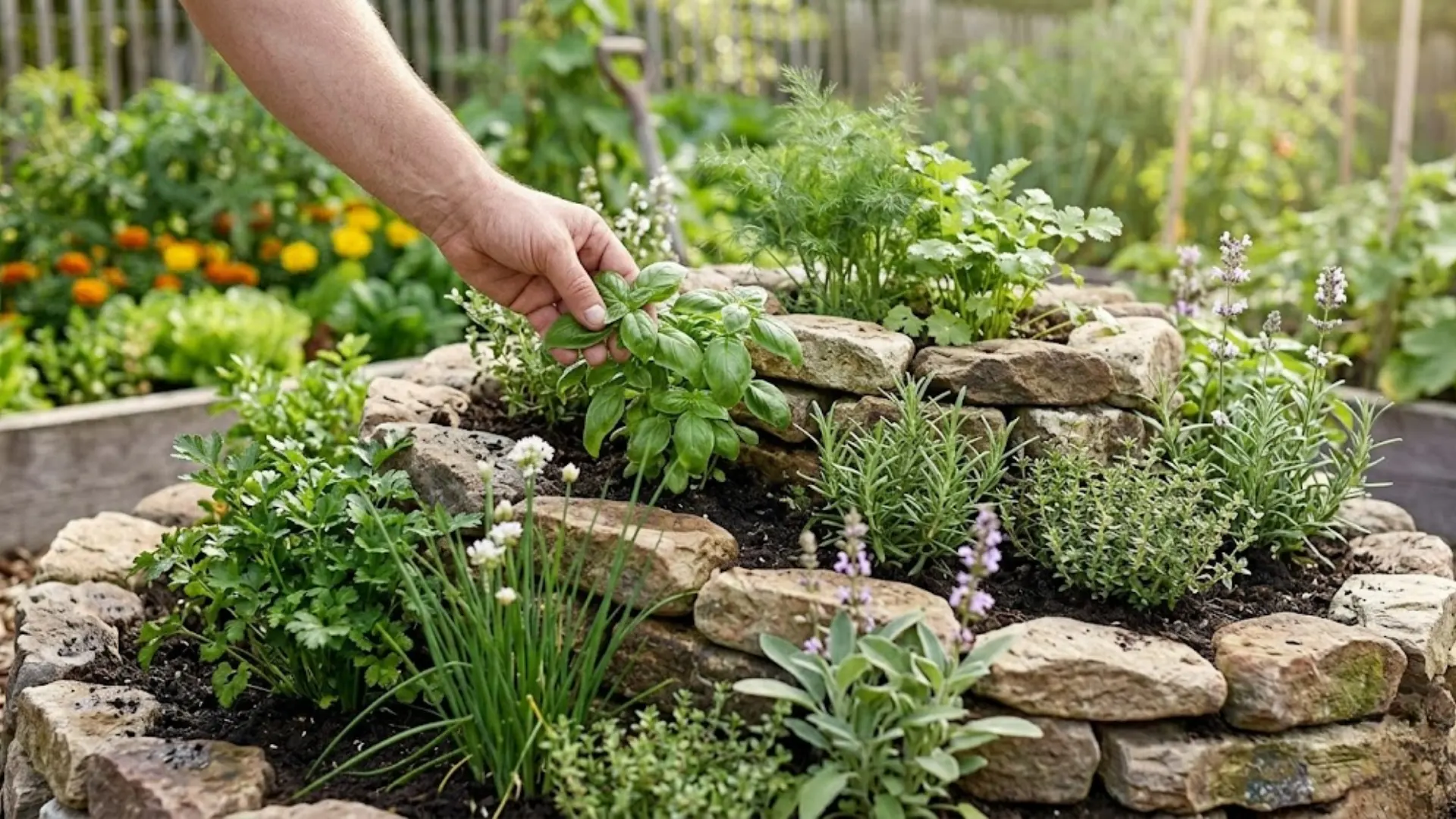
Click to get a printable PDF of herbs' companion plants.
Herbs aren’t just fillers for empty corners. Put them in the right spots and they pull in beneficial insects, help you use small spaces better, and stop the aggressive ones from taking over the bed.
Some belong right next to your vegetables. Others need a bit of distance so they don’t fight for water or spread out of control.
Here’s how the most common ones actually behave in the garden
Basil
Basil flowers attract bees and other pollinators once left to bloom, which helps nearby vegetables that rely on good pollination.
Regular harvesting matters here too, since basil can quickly outgrow its space in a small bed if left untrimmed.
- Tomatoes: Basil often grows in the same warm, sunny conditions as tomatoes, and its scent may help confuse pests hunting tomato plants.
- Peppers: Similar growing needs make basil a natural fit next to peppers, without much competition for light or space.
Dill
- Cucumbers: Dill flowers attract beneficial insects like hoverflies and parasitic wasps, which help control common cucumber pests.
- Brassicas: Cabbage, broccoli, and similar plants benefit from the same beneficial insects dill draws in, helping manage pests like cabbage worms.
Young dill plants look compact, but mature dill needs more room than it first suggests, often growing tall and wide by the end of the season.
Dill also self seeds easily, which can turn into a problem if it spreads into spaces meant for other crops
Parsley
- Tomatoes: Parsley grows well in the partial shade taller tomato plants provide, without competing much for space or light.
- Other taller vegetables: Parsley fits easily around the base of taller crops, filling in bed space that would otherwise go unused.
Chives
- Carrots: Chives can help mask carrots from pests that locate them by smell, without competing much for root space since chives grow shallow.
- Tomatoes: Their scent may help deter some common pests that target tomato plants.
Chives stay compact, which makes them a good fit along the edges of garden beds where space is limited. Once chives flower, they attract pollinators that benefit nearby vegetables as well.
Plants to keep separate:
- Smaller, slower growing plants: Chives form clumps over time, and if left unchecked, those clumps can crowd out smaller plants nearby. Dividing chive clumps every so often helps keep this in check
Cilantro
- Lettuce: Both prefer cooler growing conditions and can share bed space without competing much for light or root room.
- Spinach: Similar to lettuce, spinach grows well alongside cilantro since both finish before hot weather sets in
Rosemary
Sun-loving vegetables: These need to be grown in sun with well-draining soil. They are most suitable to grow in Mediterranean type of crops.
Drought-tolerant herbs: Rosemary pairs cleanly with thyme and sage since they all prefer the same drier conditions and can share one section of the bed.
Plants to keep separate:
- Vegetables needing consistent moisture: Crops like lettuce or cucumbers need more frequent watering than rosemary can tolerate, which can lead to root issues if planted too close together.
Sage
- Cabbage and brassicas: Sage can help deter some pests that target cabbage family plants, making it a useful border plant near these crops.
- Rosemary and thyme: These share similar drier soil preferences, so grouping them together makes watering easier to manage.
Plants to keep separate:
- Moisture loving vegetables: Crops like cucumbers or lettuce need more consistent watering than sage prefers, which can cause problems for one plant or the other over time
Herbs That Can Spread Quickly
Mint, Oregano, and Lemon Balm
These spread by underground runners and will take over a bed if you let them. I keep them in pots or give them a corner where I don’t mind the takeover.
Flower Companion Planting Chart
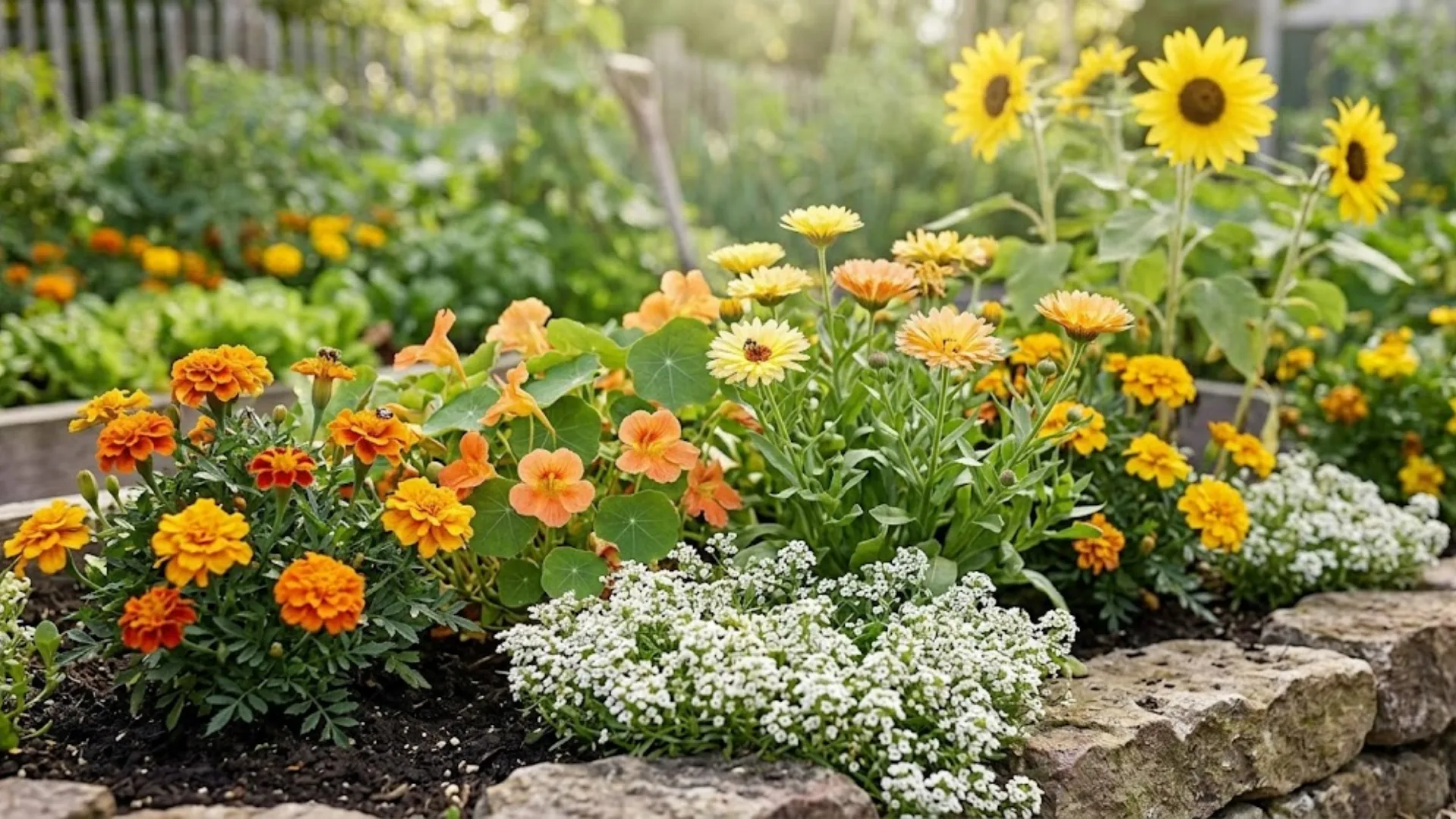
Download the printable PDF of companion plants for flowers.
Flowers are not just for looks in a vegetable bed. Some pull in pollinators, others confuse pests, and a few genuinely earn their spot next to your crops.
Marigolds
French marigolds can reduce root-knot nematodes, but only when planted densely for a full season. A single plant next to a tomato does almost nothing for pests. I use them mainly along borders for the beneficial insects they attract.
Nasturtiums
Good near squash, cucumbers, or beans. They draw aphids away as a trap crop and the flowers are edible. Spreading types need room to sprawl.
Calendula
Draws in hoverflies that help control aphids. Fits easily into beds without competing for space and tolerates cooler weather better than most flowers.
Sweet Alyssum
Low ground cover that brings in hoverflies and lacewings. Useful under taller plants where bare soil would otherwise grow weeds.
Sunflowers
Bring in a wide range of pollinators and give climbing beans something to grow on. Keep them at a distance from shorter crops since their height can block light.
If you want to know how to take care of your sunflowers at home, you must a tead to this.
Garden Layout for Companion Planting (What I Did)
Pairing the right plants only gets you so far if the bed layout works against them. Two approaches have saved me the most space and headaches.
Block Layout
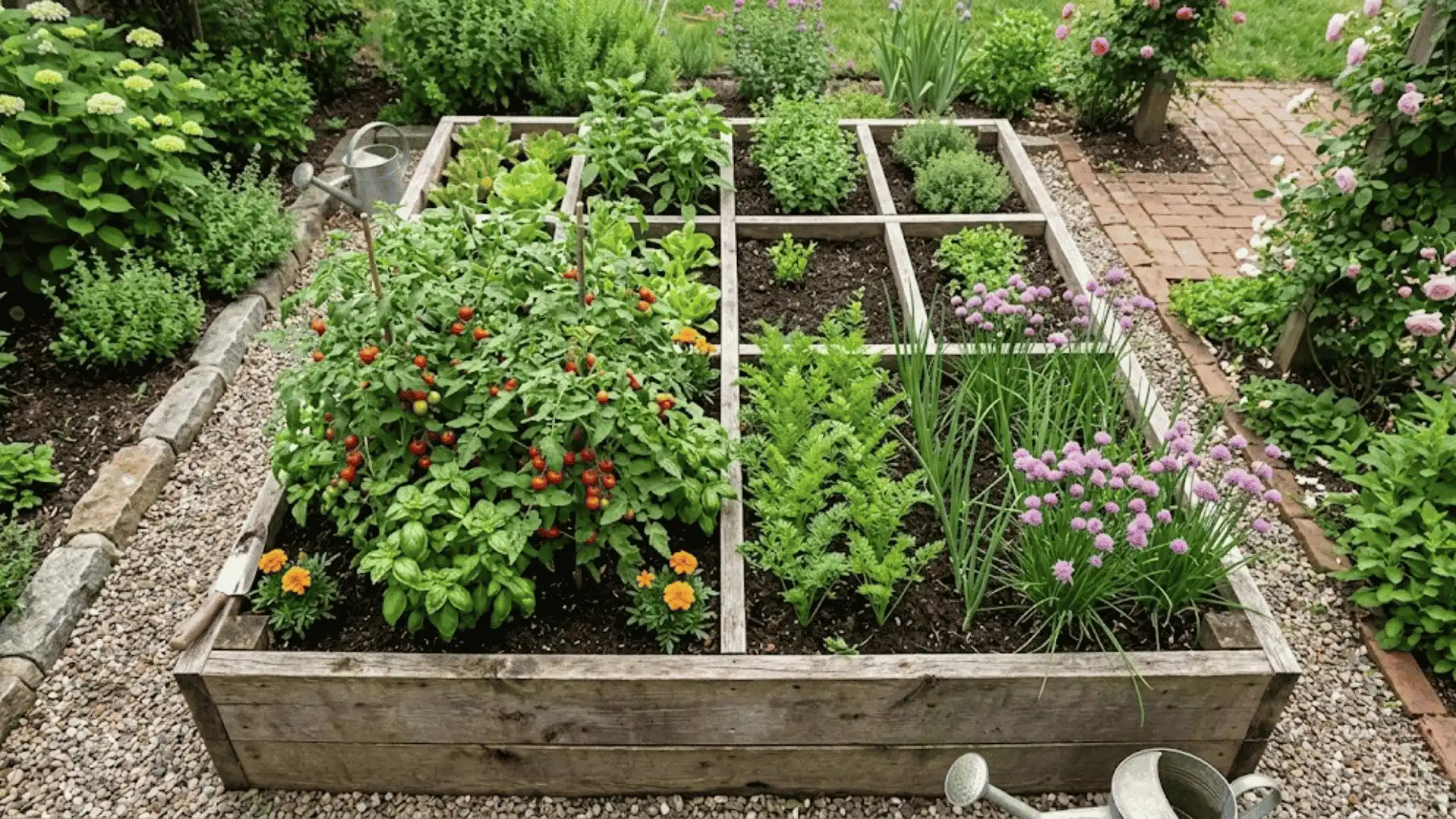
Instead of long single rows, I break the bed into small blocks.
One block might be tomatoes with basil and a couple of marigolds tucked in the corners. Next to it, carrots, onions, and chives share another block.
This way the smaller companions actually fit instead of getting squeezed out or left with empty soil around them.
Height Layout
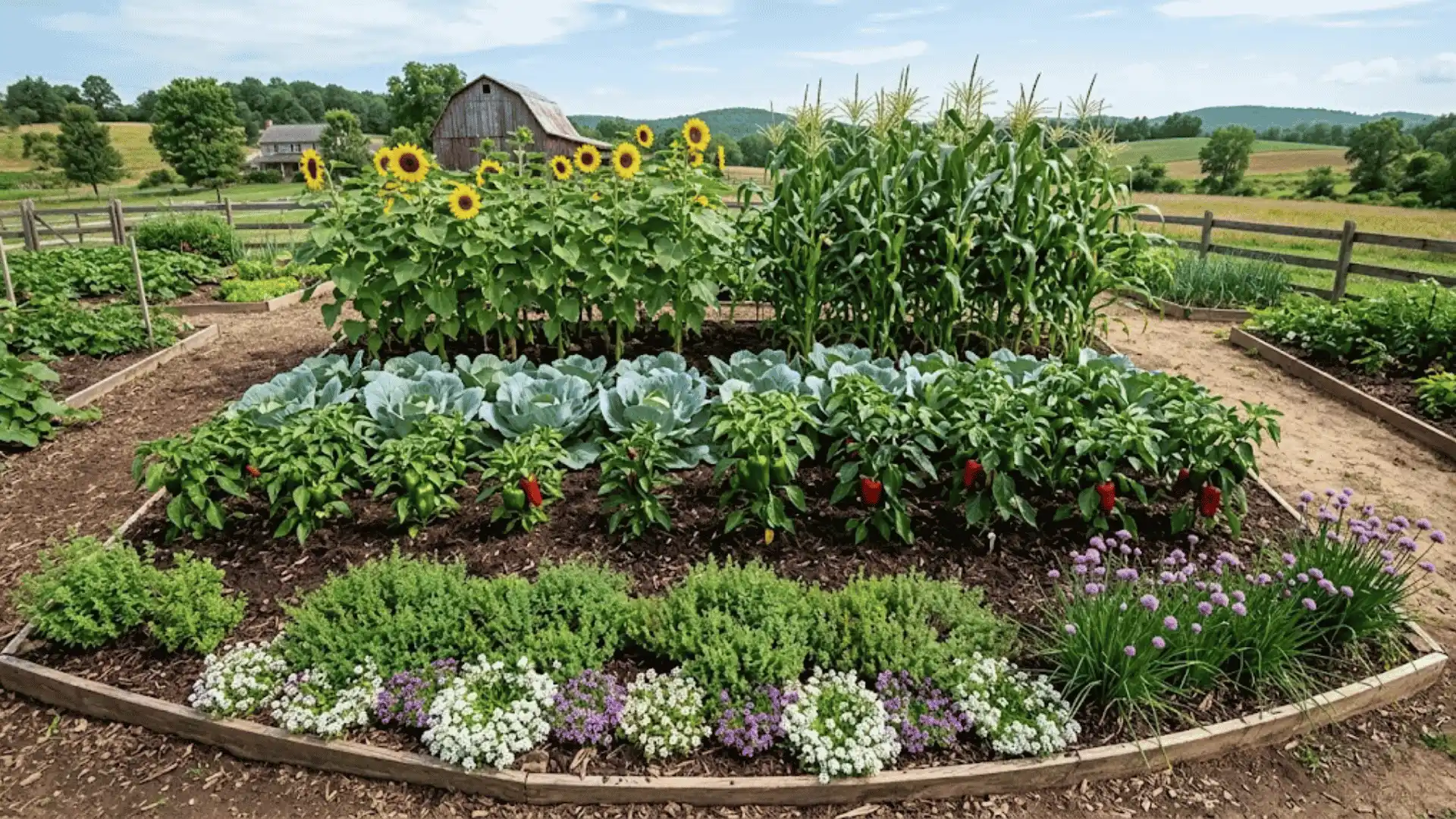
Tall crops (corn, sunflowers, or beans on a trellis) go on the north side so they don’t shade the rest of the bed all afternoon.
Medium plants like peppers or cabbage sit in the middle. Low-growing thyme, sweet alyssum, and chives run along the front edge where they won’t get buried.
One thing I learned the hard way: keep plants with similar water needs together. Rosemary and thyme hate the frequent watering that lettuce and cucumbers demand. Mixing them in the same block usually ends with one plant sulking.
Benefits of Companion Planting
Fewer chemical sprays: You use sprays less frequently because beneficial insects and companion plants’ scent confusion manage some of the pest burden.
Less bare soil and fewer weeds: Ground covers and low-growing plants fill up gaps, making it harder for weeds to develop.
Improved nutrient utilisation: Rather than vying for the same zone year after year, plants with varying root levels draw nutrients from multiple soil strata.
Healthier soil over time: Rotating and mixing plant families keeps the same pests and diseases from building up in one spot.
None of this is magic. Some seasons the pairings work beautifully. Other seasons a heat wave or an unexpected pest wave still forces you to intervene.
Final Notes
A companion chart is only a starting map.
Every garden has different light, soil, and space, so what works in one bed can flop in another.
Watch what actually happens over a couple of seasons and adjust.
In my own garden, small moves like giving the cucumbers better airflow or keeping the tomatoes well away from the potatoes have made a bigger difference than any single “miracle” pairing I ever read about online.
Frequently Asked Questions
1. What Can’t Be Placed Next to Potatoes?
Tomatoes. Blight and other diseases are common to both plants. Keep them in different sections of the garden.
2. Do Vegetable Gardens Actually Benefit from Marigolds?
Only when planted intensively for the whole growing season will French marigolds reduce root-knot nematodes. Almost little happens when one or two flowers are placed close to a tomato.
3. How Near Should Companion Plants Be?
As long as light and air can still pass between them, most pairs function best within a foot or two.
4. Can Pests Be Prevented by Companion Planting?
By using beneficial insects and scent confusion, it can reduce pest pressure. It doesn’t stop pests by itself.