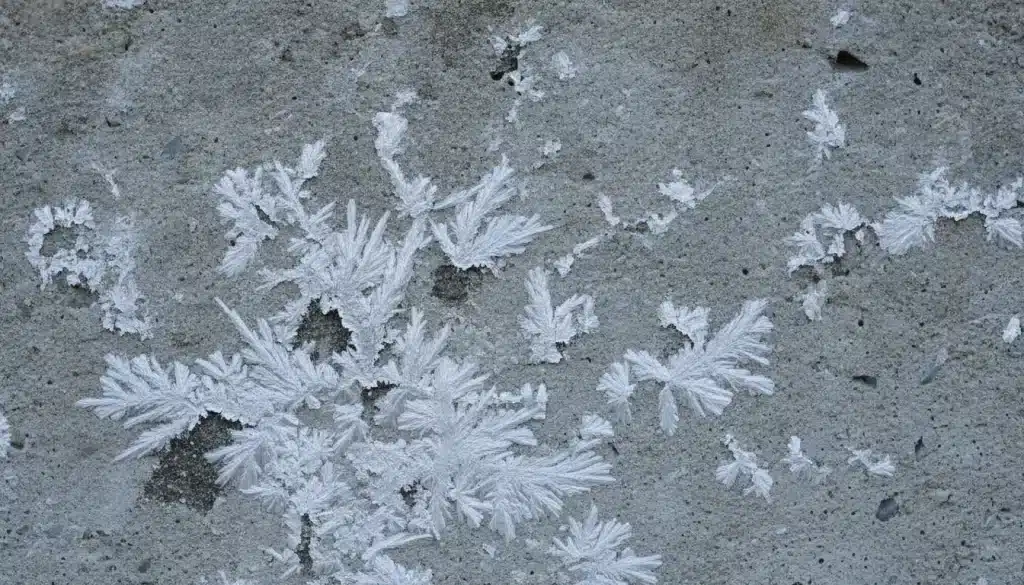
White efflorescence stains can gradually appear on concrete surfaces without any real obvious warning. This chalky white discoloration often confuses homeowners who quickly assume something is seriously wrong.
Many sealants only mask surface cracks. TSS Pro Concrete Sealants stop moisture before it ever reaches the surface. Its formula blocks the moisture pathways that slowly carry dissolved minerals to outer surfaces.
Stopping this mineral movement early on helps prevent staining before it ever really begins.
Not every sealer works on every surface. Match your concrete to the right stain-resistant sealers, and the staining problem goes away for good.
What Causes Efflorescence Formation
Efflorescence typically begins when water slowly enters porous concrete and dissolves natural mineral salts.
These dissolved salts then slowly travel outward toward the surface as excess water evaporates. Once fully at the outer surface, minerals crystallize into that familiar white chalky powder.
New poured concrete is especially prone to this since it contains excess mixing water. Salt keeps migrating deeper into concrete whenever rain, sprinklers, or rising groundwater add extra moisture. This entire cycle can repeat many times before most homeowners even notice the problem.
The Science Behind Mineral Migration
Concrete naturally contains calcium hydroxide, a common byproduct of the cement curing process itself. Water slowly carries this compound steadily upward through tiny capillary channels within the structure.
At the outer surface, this compound quickly reacts with carbon dioxide in the air. This chemical reaction forms calcium carbonate, the white mineral mostly responsible for visible efflorescence.
Sulfates and other soluble salts can also contribute many additional white deposits over time. Once calcium carbonate crystallizes on the surface, no amount of scrubbing dissolves it back into the slab. Sealing has to happen before that reaction starts.
Concrete Age and Vulnerability Factors
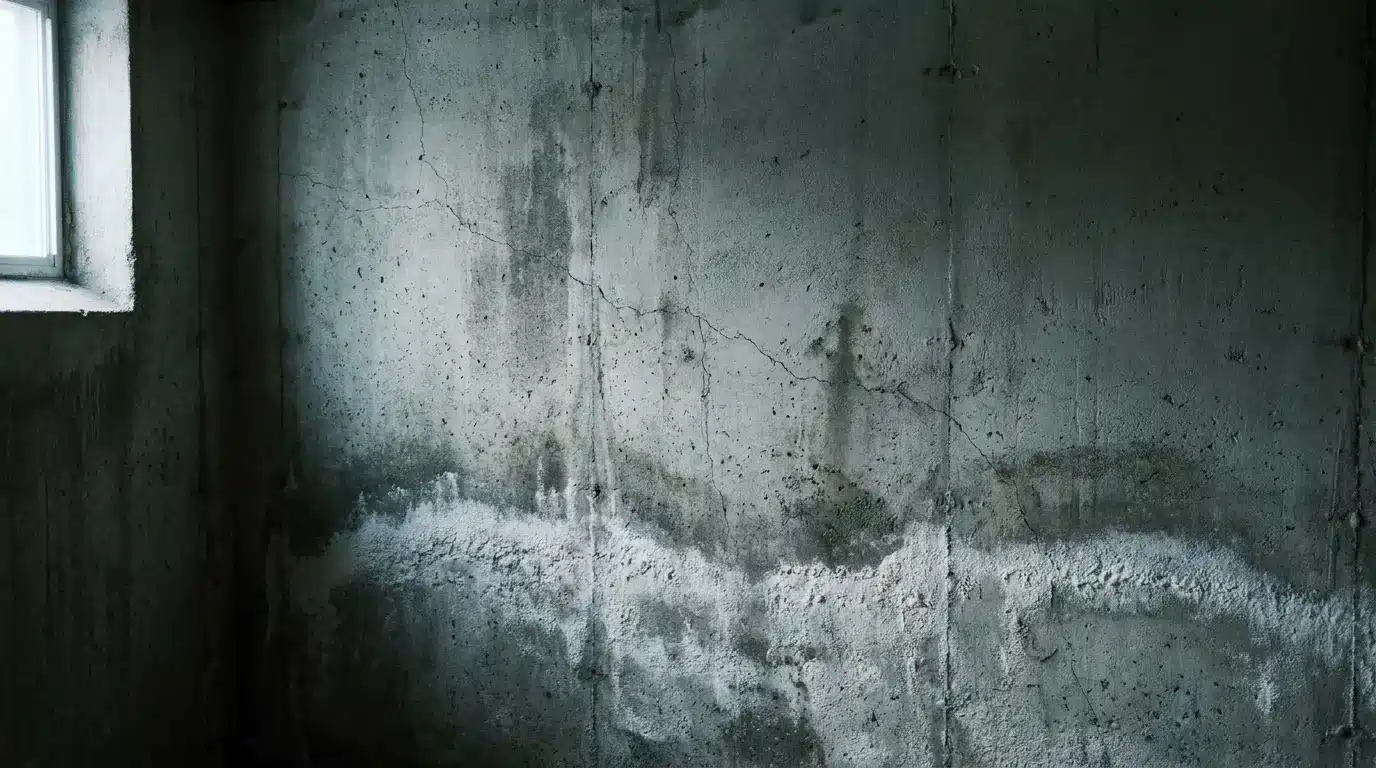
New poured concrete faces the highest efflorescence risk during its first year of curing. Excess water used during mixing often greatly increases the overall likelihood of early staining.
Older concrete surfaces can still develop efflorescence if drainage or moisture problems persist longer.
Basements and retaining walls face much higher risk due to constant nearby ground contact. Climate also plays a big role, since humid regions often see more frequent occurrences. A basement wall that stays damp through its first six months is already a candidate for sealing. Don’t wait for the white powder to show up first.
Preventing Future Efflorescence Buildup
A quality penetrating sealer blocks water before it can ever dissolve those mineral salts.
Proper site drainage around structures greatly reduces how much water reaches vulnerable concrete surfaces. Waiting for new concrete to fully cure before sealing always improves long term results.
Gutters and downspouts should always direct water safely away from all foundation walls entirely. Sealing joints and cracks quickly prevents any additional pathways for water to enter easily. Concrete resists efflorescence best when sealing, grading, and regular cleaning all happen together.
Cleaning and Long Term Solutions
Light efflorescence often comes off fairly easily with a stiff brush and clean water. Diluted vinegar solutions can often help dissolve stubborn deposits without damaging most concrete surfaces. Strong acids can permanently damage concrete and should almost always be completely avoided entirely.
Testing any cleaner on a small hidden area first always helps avoid unwanted damage.
Cleaning alone without proper sealing usually invites the exact same staining problem right back. Pairing thorough cleanup with a quality sealer offers the most complete long term fix.
White efflorescence forms when water draws salts through the pores of concrete to the surface as it evaporates. Efflorescence forms underground, where groundwater and rainwater dissolve minerals in the concrete mix.
Good drainage keeps water away from the slab and reduces the salt movement that causes staining. Proper curing strengthens concrete early, closing off the pores that salts would otherwise travel through later. Sealing blocks moisture from entering the surface, stopping the cycle before efflorescence can form. A slab on sandy soil in Florida needs different drainage work than a basement wall in Ohio clay.