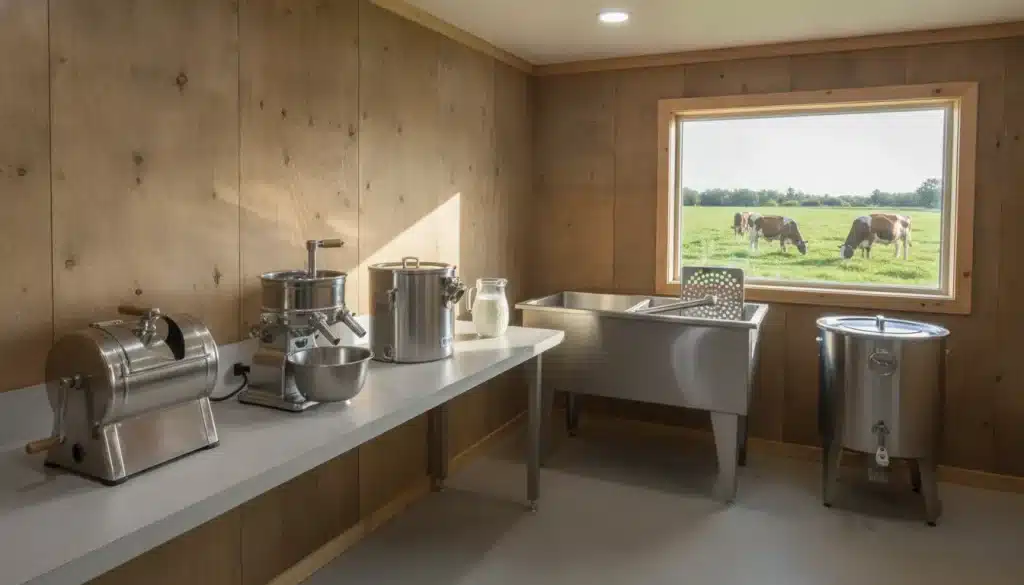
Raw milk is perishable, versatile, and genuinely useful, but only if you handle it right. Without proper equipment, you’re losing product to spoilage, missing out on higher-margin goods like butter and cheese, and struggling to stay compliant with food safety standards. The milk processing equipment for small-scale dairy farm operations doesn’t need to be industrial-grade, but it does need to be purpose-built.
Here are five pieces of equipment that make the difference between a farm that sells raw milk and one that produces a full line of dairy products.
1. Butter Churn
A butter churner machine converts cream into butter by agitating it until the fat globules break apart and clump together. At small-farm scale, electric barrel churns are the most practical option. You load cream into the barrel, dial in the speed, and the machine does the work; the timeline from cream to finished butter runs roughly 20 to 45 minutes, depending on fat content and temperature.
Barrel churns for home and small-farm use typically hold 1 to 10 liters. That’s a reasonable batch size for a farm stand or a small CSA (community-supported agriculture) share program. The butter still needs to be washed in cold water and worked to remove residual buttermilk, but that’s minimal effort compared to hand-churning.
Don’t skip the temperature step. Cream that’s too warm turns greasy before it fully churns; cream that’s too cold takes far longer to break. Aim for 60°F to 65°F before you start, and you’ll get consistent results. The leftover buttermilk is worth saving for baking or drinking; honestly, nothing from a well-run churn needs to go to waste.
2. Electric Cream Separator
Once milk leaves the pasteurizer, a cream separator splits it into skim milk and heavy cream.
The machine spins milk at high speed; because cream is less dense than the watery portion, centrifugal force drives the cream inward while skim milk moves outward, with each stream exiting through its own spout.
For a small farm, an electric separator rated for 26 to 50 gallons per hour is generally enough. Manual hand-crank separators exist, but they’re slow and physically punishing. Electric models pay back the time savings within a single season. Most units in the $150 to $600 range handle fresh whole milk well, though you’ll get the cleanest separation from milk warmed to around 95°F to 100°F first.
The cream you pull from a separator becomes the raw material for butter, sour cream, and heavy whipping cream. So this machine sits upstream of several other processes. And skim milk doesn’t go to waste either; it’s useful for feeding calves or making low-fat cheeses.
3. Milk Pasteurizer
A pasteurizer is the foundation of any small-scale dairy operation. It heats raw milk to a specific temperature long enough to destroy harmful bacteria, so the final product is safe to consume and stays fresh longer.
Most small farms go with a batch pasteurizer, holding milk at 145°F for 30 minutes, rather than the high-temperature short-time (HTST) systems that commercial plants rely on. A butter churner machine needs cream as its input, and that cream has to come from pasteurized milk if your products are headed to retail or farmers’ market customers.
Batch pasteurizers built for small farms typically handle 10 to 50 gallons per cycle.
That range works whether you’re running two or three cows or a modest goat herd. Stainless steel construction is standard, and most units ship with a built-in thermometer and timer so you’re not standing over the machine the whole time.
Decent entry-level batch pasteurizers run $800 to $2,500, depending on capacity and brand. It’s not cheap, but here’s the thing: it’s the one piece of equipment that unlocks almost everything else. Without pasteurization, your ability to sell processed dairy products across most U.S. states gets severely clipped.
4. Cheese Vat
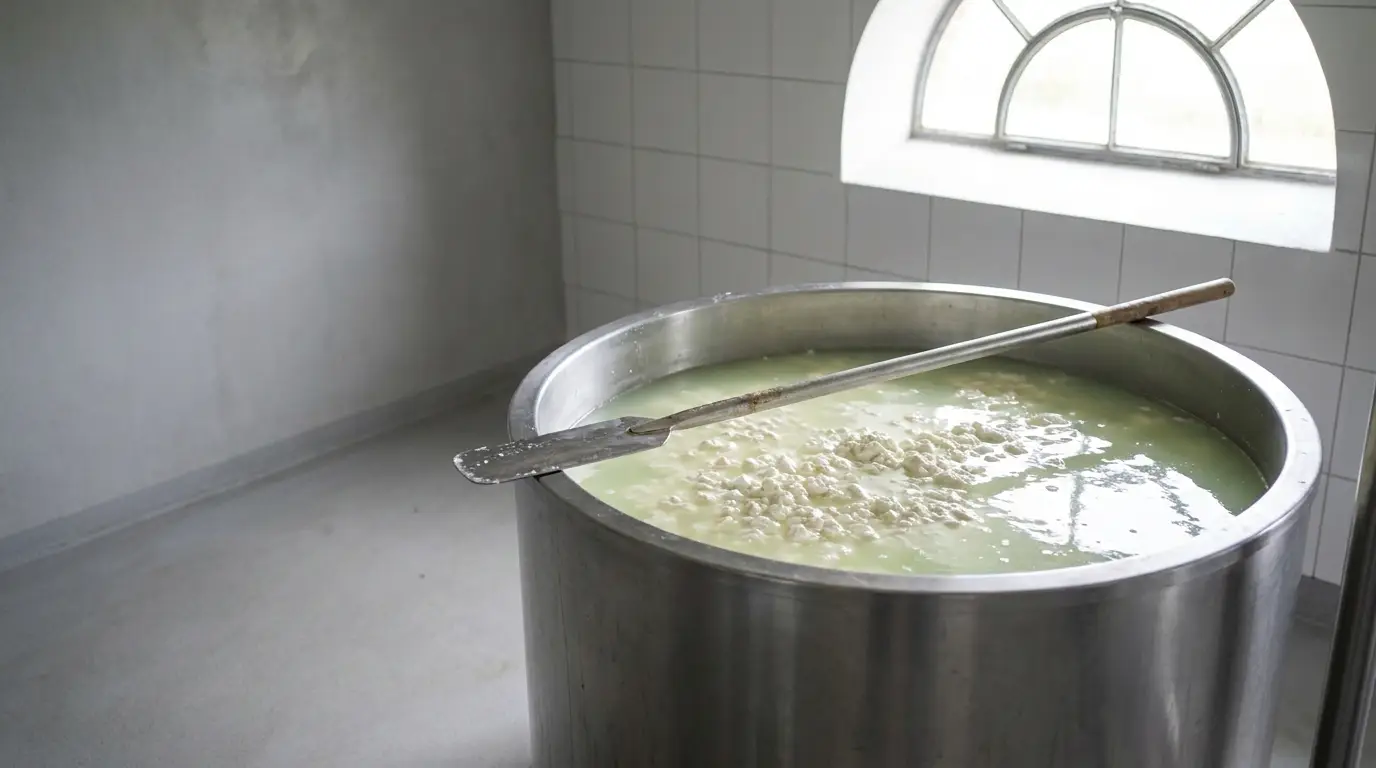
A cheese vat is a temperature-controlled tank where milk gets cultured, coagulated, cut, and stirred during the early stages of cheesemaking. For small farms, a 10 to 30 gallon stainless steel vat with a double-wall water jacket gives you the precise temperature control you absolutely need for consistent results.
Cheese cultures and rennet are sensitive to even small temperature swings, and a few degrees off can ruin an entire batch.
Most small-scale vats include an agitator or paddle to keep milk moving evenly while it heats. Some models come with a built-in spigot for draining whey. By adjusting cultures, temperatures, and cutting times, you can produce a wide range of cheeses from the same vessel, cheddar, mozzarella, feta, and fresh farmer’s cheese all start here.
Budget-friendly vats start around $300 to $500 for simpler models.
More advanced units with digital temperature controllers and stainless paddles run $1,000 to $3,000. But if you plan to produce multiple varieties, the investment in solid temperature stability pays back quickly in fewer failed batches and more predictable flavor.
5. Milk Cooling Tank (Bulk Tank)
Raw milk degrades fast at room temperature. A bulk cooling tank drops the temperature of fresh milk from around 100°F, roughly what it is when it leaves the cow, down to 38°F to 40°F within a set window. That’s typically two hours for the first milking, and one hour when subsequent milkings are added to the same tank. That cooling window isn’t optional; it’s a legal requirement under most U.S. state dairy regulations.
Small-farm bulk tanks range from 25 to 200 gallon capacity. A direct-expansion cooling tank uses a refrigeration coil built into the tank wall to chill milk quickly and evenly. An ice-water bath tank is cheaper up front, but it’s slower to cool and tends to cost more over time. For farms milking twice daily, the direct-expansion unit is the smarter call.
Milk cooling tanks are among the pricier investments on this list, new units in the 50 to 100 gallon range sell for $2,000 to $6,000. Used tanks are widely available and often in solid condition, since dairy farms tend to keep their equipment well-maintained.
The trick is to check the refrigeration compressor and the agitator motor carefully before you commit. Buying used is a practical way to cut upfront costs without giving up function.
Conclusion
The right milk processing equipment for small-scale dairy farm operations turns raw milk into sellable products and keeps your farm inside food safety requirements.
A pasteurizer, cream separator, butter churn, cheese vat, and bulk cooling tank cover what most small farms need.
You don’t need all five from day one; start with pasteurization and cooling, then add separating and churning as your product line grows. Each piece builds on the last; together, they give a small dairy farm the tools to produce clean, quality products worth selling.