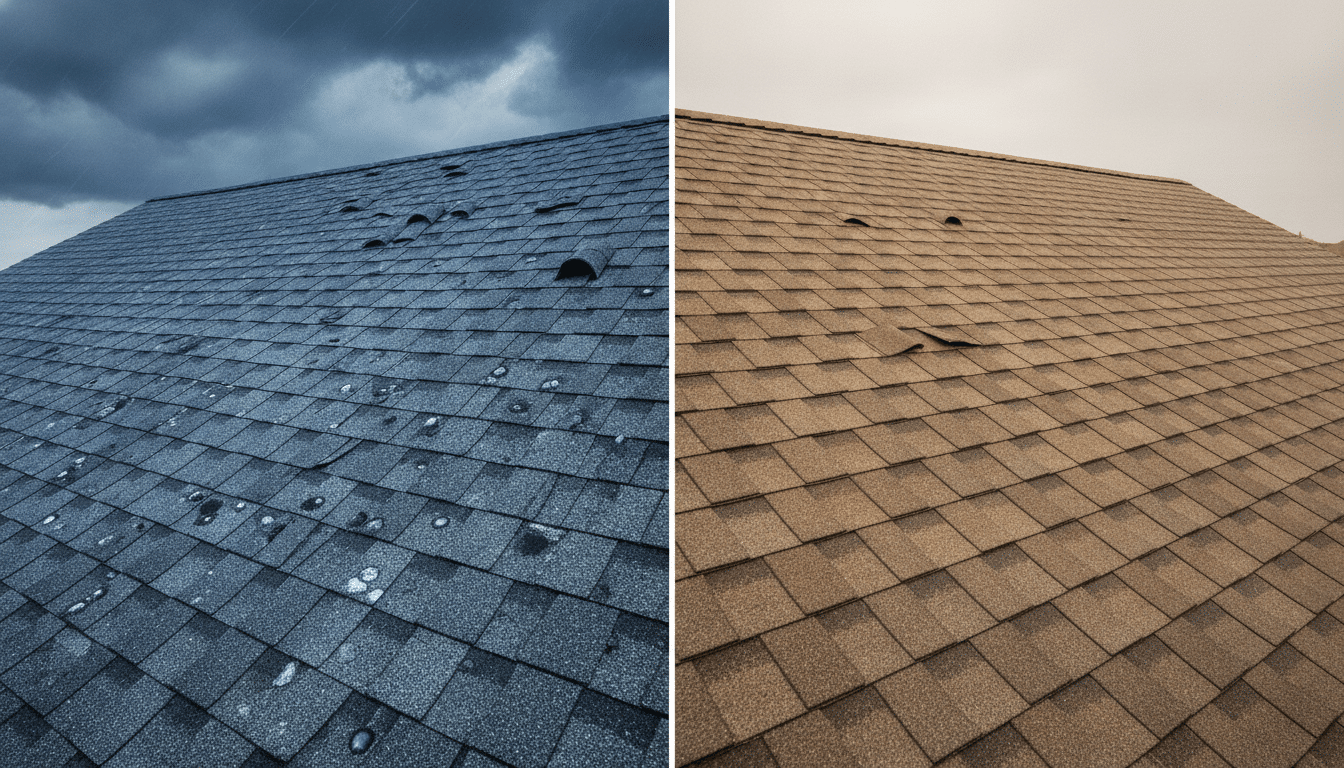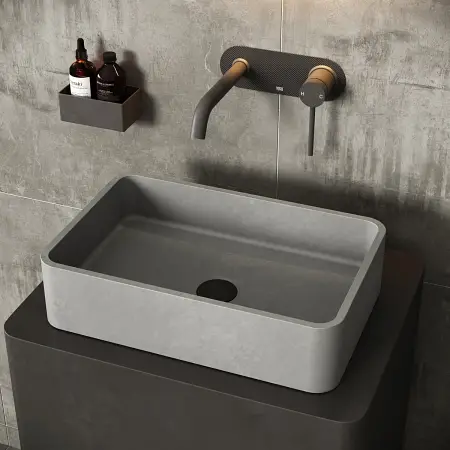
For decades, the vessel sink options in most bathrooms boiled down to variations on the same theme: white, glossy, ceramic, and eventually cracked. I didn’t think much about it until I noticed the hairline crack running through my mother’s guest bathroom sink — the kind that starts as a thin gray line near the drain and slowly spreads until you’re one dropped toothbrush away from a real problem. That sink was maybe eight years old. It had been “fine” the whole time, right up until it wasn’t.
That’s the thing about glossy ceramic. It looks polished and clean in a showroom, but it’s also a fired, glazed material that’s fundamentally brittle. Drop something solid into it — a heavy soap dispenser, a glass tumbler, a curling iron — and you’re rolling the dice on a chip or a crack that only gets worse. It also shows every water spot the second it dries, which means a sink that looks spotless costs you more wiping than it should.
Quick answer: Homeowners are moving away from glossy ceramic vessel sinks toward matte stone and concrete composite (Concreto Stone) sinks because they resist chipping, cracking, and yellowing far better than fired, glazed ceramic — and because their matte surface hides water spots instead of showing every droplet.
The Shift Toward Matte, and Why It’s Not Just a Trend
Walk through any recent bathroom renovation and you’ll notice the finish has changed. Glossy white ceramic is giving way to matte stone — a composite material that looks and feels closer to natural stone, without the glare, without the same fragility, and without showing every water droplet like a mirror.
The appeal isn’t purely aesthetic, though matte finishes do photograph beautifully and pair well with the warm, textured, natural-material trend that’s dominated bathroom design for the last few years. The bigger draw is practical. Matte stone sinks are engineered to resist scratching and fading in a way traditional glazed ceramic simply isn’t built for, and because the color runs through the material rather than sitting in a thin glaze layer on top, small surface marks don’t expose a different-colored material underneath the way a chipped ceramic sink does.
VIGO’s matte stone vessel sink collection is a good example of where this category has landed. The sinks are handcrafted with natural variation in texture from piece to piece, so no two look quite identical, which is part of the appeal for anyone tired of the uniform, mass-produced look of standard ceramic basins. The matte finish resists the fading and yellowing that glossy ceramic is prone to over time, and because the surface doesn’t have that high-gloss shine, it hides water spots and soap residue far better between cleanings — a small thing that matters a lot when you’re the one wiping the counter down every morning.
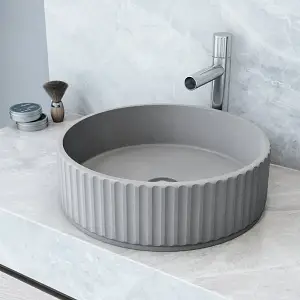
Concreto Stone: The Other Shift Happening in Bathrooms
Alongside the move to matte finishes, there’s a second, related shift: more homeowners choosing concrete-look vessel sinks over polished stone or ceramic entirely. It’s part of a broader move toward industrial and organic materials in home design — the same instinct behind exposed brick, raw wood counters, and unlacquered brass fixtures. People want their homes to look like they’re made of something real.
Concrete has a reputation problem it doesn’t really deserve anymore. The old assumption is that a concrete sink means a porous surface that stains and needs constant sealing. Modern concrete composite sinks address that directly.
VIGO’s Concreto Stone vessel sink collection uses a treated concrete composite that’s considerably more water- and stain-resistant than raw poured concrete, while keeping the texture and tonal variation that makes concrete visually interesting in the first place. Every piece is individually formed, so the color and grain vary naturally from sink to sink — which is exactly the point, since a perfectly uniform “concrete” surface tends to look more like plastic pretending to be concrete than the real thing.
The color stability is the detail that gets undersold. Ceramic sinks with a glaze can yellow over time, especially with certain cleaning products or well water with high mineral content. A well-made concrete composite sink, treated properly, holds its tone for years rather than gradually shifting to a dingy off-white nobody chose on purpose.
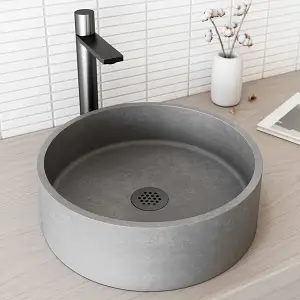
What This Actually Means If You’re Renovating
If you’re picking a vessel sink right now, the decision usually comes down to three things: how it looks with your vanity and fixtures, how it holds up to daily use, and how much maintenance you’re willing to do.
Glossy ceramic still has a place — it’s familiar, widely available, and inexpensive at the low end. But it’s also the option most likely to show a hairline crack a few years in, most likely to yellow with certain water conditions, and most likely to make every water spot visible the moment the tap turns off.
Matte stone sinks solve the surface problem directly: less glare, less visible residue, a finish that resists fading rather than yellowing quietly over a decade. Concrete composite sinks solve a different problem — they bring texture and individuality to a fixture that’s traditionally been the most uniform, mass-produced object in the room, while still holding up to daily water exposure far better than most people assume.
Neither is really about chasing a trend for its own sake. Both are responses to the same underlying complaint people have had about ceramic vessel sinks for years: they crack, they yellow, they show every spot, and they all look the same. Matte stone and concrete composite sinks are, in different ways, a direct answer to that.
Frequently Asked Questions
Why are ceramic vessel sinks prone to cracking?
Ceramic vessel sinks are made from a fired, glazed material that’s fundamentally brittle. A direct impact from a heavy object — a soap dispenser, a glass, a curling iron — can chip or crack the glaze, and that damage tends to spread over time rather than staying contained.
Is a matte stone sink more durable than ceramic?
Yes. Matte stone composite sinks are engineered to resist scratching, chipping, and fading better than glazed ceramic. Because the color runs through the material rather than sitting in a surface glaze, minor surface marks don’t expose a different-colored layer underneath.
Do concrete sinks need to be sealed constantly?
Modern concrete composite sinks, like VIGO’s Concreto Stone line, use a treated composite that’s significantly more water- and stain-resistant than raw poured concrete, reducing the maintenance concerns associated with traditional concrete.
Why do ceramic sinks yellow over time?
The glaze on ceramic sinks can discolor with prolonged exposure to certain cleaning products or hard water with high mineral content. Matte stone and concrete composite sinks are less prone to this gradual yellowing.
The Takeaway
A vessel sink isn’t a fixture most people replace often, which is exactly why the material choice matters more than it seems to at purchase time. If you’ve been eyeing a glossy ceramic sink out of habit more than preference, it’s worth spending a few minutes looking at matte stone and concrete composite options first — not because they’re trendier, but because they’re built to hold up to the exact things that make ceramic sinks look tired within a few years: hairline cracks, water spots, and a glaze that doesn’t stay white forever.
Image credit: Product photography provided by VIGO Industries.