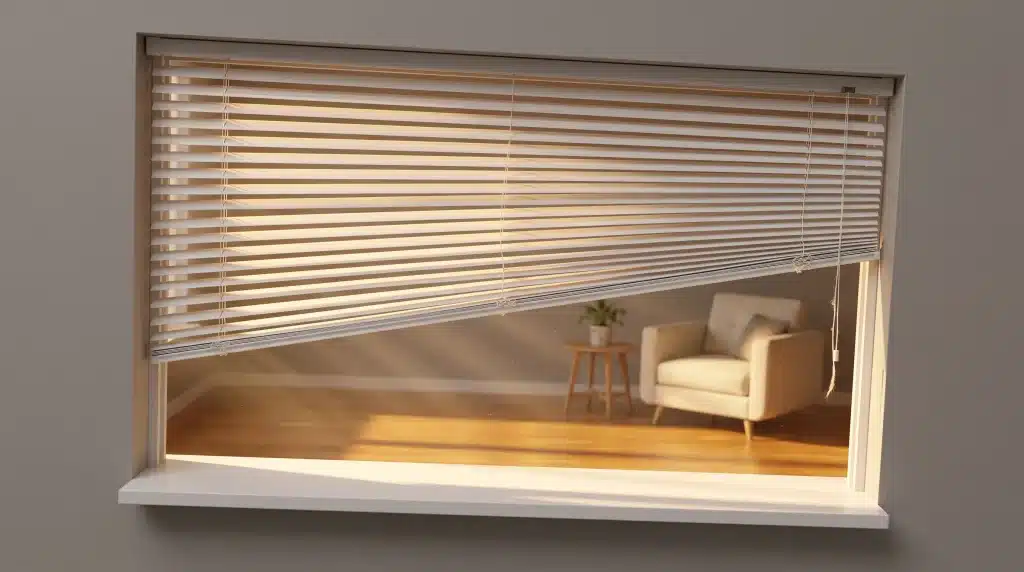
A new blind can be the right color, the right material, and exactly the right width, yet still look slightly wrong once it is installed. One side may sit lower. The slats may close neatly in the morning but catch by late afternoon. A shade may brush the sill even though the measurements seemed correct.
It is tempting to blame the window treatment. Sometimes that is where the problem begins. In other cases, the blind is simply revealing something about the window behind it. Knowing which one you are looking at can prevent another purchase that solves nothing.
Start With the Direction of the Problem
Look at what is crooked and where the change begins. If the headrail is level but the bottom rail tilts, the lift cords, internal hardware, or slats may be the issue. If the entire treatment appears to lean in the same direction as the sill or frame, the mounting surface may be uneven.
Do not rely on a view from across the room. Lower the blind halfway, stand directly in front of it, and compare the gap on both sides. Then raise it and look at the top rail. This quick change in position often shows whether the problem follows the blind or the opening.
A small visual clue can save a surprising amount of guesswork: if the gap changes as the blind moves, focus on the treatment. If the same uneven line remains at every height, look more closely at the window or mounting points.
Repeat the check after the blind has been still for a few minutes. A rail that slowly slips on one side tells a different story from one that was mounted unevenly from the start.
Check the Window Without Forcing It
Raise the blind fully and operate the window as you normally would. It should open, close, and lock without needing a special push, lift, or twist. A sash that needs to be raised by one corner can shift the way an inside-mounted blind sits. A crank handle that meets the bottom rail can also turn a good product into an everyday annoyance.
Paint buildup, dirt in an accessible track, or an object on the sill may be obvious enough to address safely. Stop, however, if the window binds, the hardware feels loose, or the glass moves in the frame. Forcing a stubborn window can damage the hardware and does not explain why the movement changed.
This is also the moment to check whether the blind was mounted to a solid, suitable surface. A bracket that has loosened can let one end of the headrail drop. Tightening an appropriate exposed screw may be simple, but drilling new holes without knowing what is behind the trim can create a larger problem.
Notice What Happens to Light and Air
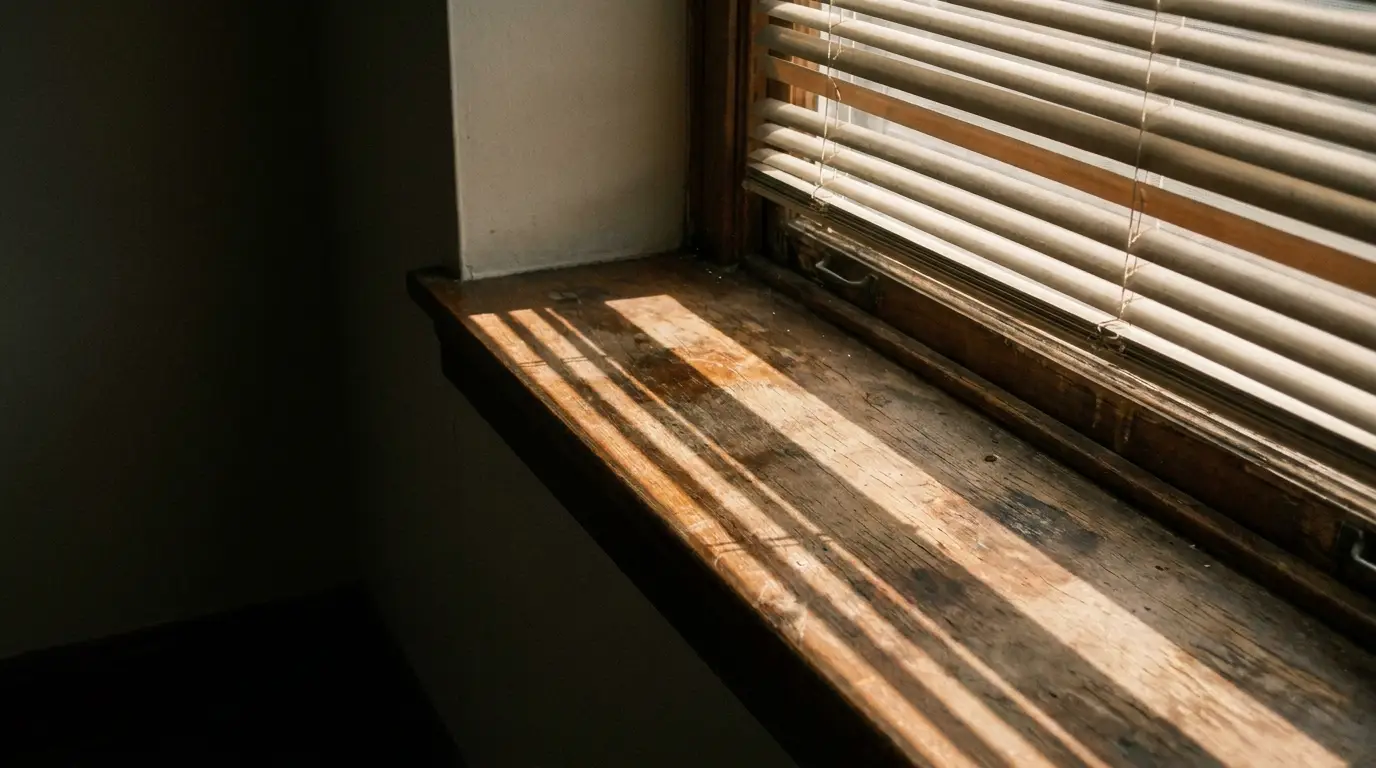
Appearance is only part of the test. Close the blind during the brightest part of the day. Narrow beams of light at one edge may show that the treatment is not centered, while a wider wedge of light can point to an opening that is not square. Neither observation identifies the cause on its own, but each tells you where to look next.
Air movement deserves the same attention. A blind that taps the trim or shifts while the window is closed may be reacting to a draft. Before choosing heavier curtains to hide it, consider whether the gap should be addressed. When cold air is part of the problem, window insulation services may be worth discussing, and Chicago-area homeowners can get help with insulating an existing window after the source of the draft has been checked.
Heavy fabric can make a draft less noticeable from the room, but it does not correct the window. It can also make it harder to see moisture, peeling paint, or a changing gap around the frame. Let the treatment improve comfort and style after the opening is working as intended.
Decide What Actually Needs to Change
Once you have observed the blind at several heights and operated the window, sort the next step by what you found:
- If only the blind tilts or lifts unevenly, inspect its cords, wand, slats, and brackets.
- If the treatment is level but brushes one side, confirm the measurements and mounting position.
- If the window sticks, shifts, or fails to lock normally, address the window before replacing the blind.
- If air moves around a closed window, find the source before adding another decorative layer.
The goal is not to diagnose every part yourself. It is to avoid treating a functional problem as a shopping problem. A clear description such as “the left side drops only when the shade is halfway down” is more useful than saying the whole window looks crooked.
If the window and blind seem to be contributing to the same problem, Chicago-area homeowners can ask Capahome to look at the opening and the window-treatment hardware. That keeps the conversation focused on what can be repaired instead of assuming that every visible part needs replacement.
Let Function Guide the Final Look
Once the window opens and closes normally and the treatment moves evenly, decorating becomes much easier. You can judge the drop, stack height, light control, and relationship to the trim without compensating for a fault underneath.
This matters most when the blind is part of a larger room update. Repainting trim, adding drapery panels, or installing a decorative cornice can reduce access to brackets and hardware. Resolve movement problems first, then build the finished look around an opening that behaves predictably.
A good blind should do more than match the room. It should rise, tilt, and settle without calling attention to itself. When it does not, take a minute to determine whether the treatment is the problem or the messenger. The answer can protect both the design and the budget.