Loft rooms have a particular kind of appeal. They’re tucked away, often quieter than the rest of the house, and full of character thanks to their angled ceilings and unusual proportions. But anyone who has spent time planning or living in a loft conversion knows the trade-off: what should feel airy and distinctive can sometimes end up feeling enclosed, dim, and smaller than the floorplan suggests.
That’s where roof windows make such a noticeable difference. They do more than simply add daylight. Used well, they can change how a loft room feels, how it functions, and even how large it appears to the eye. In many cases, the right roof window is what turns a loft from “usable extra space” into one of the most enjoyable rooms in the house.
Why Loft Rooms Often Feel Smaller Than They Are
A loft room can have a respectable footprint on paper and still feel compact in real life. The reason usually comes down to geometry and light.
Sloping Ceilings Alter How We Read Space
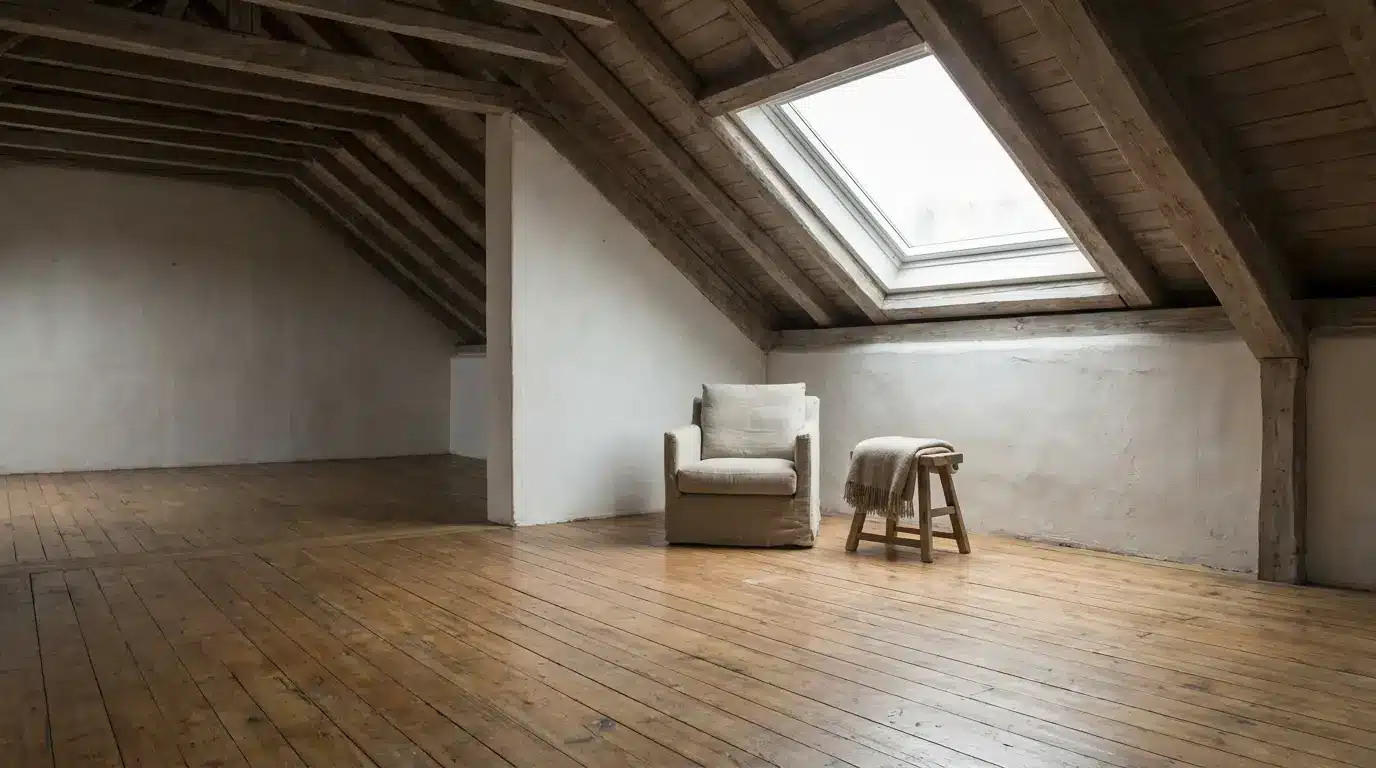
In a standard room, vertical walls create a clear sense of height and openness. In a loft, sloping ceilings interrupt that familiar structure. The eye meets angled surfaces sooner, which can make the room feel visually compressed, even when there’s plenty of usable floor area below.
This is especially true when furniture is pushed into the eaves or when the ceiling line dominates the room. The space may not actually be small, but it can feel that way because the visual boundaries are more complex and more immediate.
Dark Corners Make the Room Feel Tighter
Lofts also tend to have uneven light distribution. A dormer or gable-end window may brighten one end of the room while leaving the centre or the lower edges in shadow. And shadow, more than most people realise, affects perceived size. When corners disappear into darkness, the eye reads the room as shallower and more closed in.
That’s why overhead glazing is so effective. Light entering from above reaches deeper into the space and softens the contrast between bright and dark zones. If you’re comparing options, looking at well-designed high-performance rooflights for sloping roofs is a useful starting point because thermal performance, frame profile, and glazing area all influence how open and comfortable the finished room feels.
How Roof Windows Change the Perception of Space
The biggest misconception about roof windows is that their main job is simply to “let more light in”. They do that, of course, but their impact is more psychological than many homeowners expect.
Daylight From Above Feels More Expansive
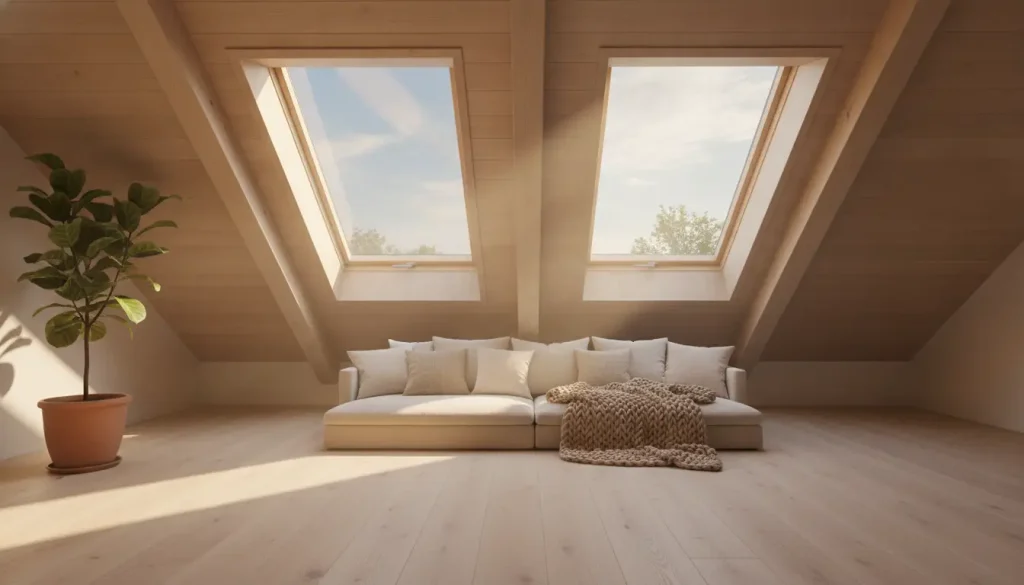
Natural light from a vertical window enters at an angle and tends to illuminate one side of a room most strongly. Light from a roof window behaves differently. It spreads more evenly across walls, floors, and ceilings, reducing visual dead zones and creating a brighter overall field of view.
In practical terms, that means the room feels less boxed in. Surfaces become more legible. Ceiling lines soften. The full shape of the room is easier to perceive.
There’s also a measurable effect here. Depending on orientation, roof pitch, and glazing size, roof windows can deliver significantly more daylight than a similarly sized vertical window. More importantly, that light reaches the middle of the room, which is often where loft spaces struggle most.
They Draw the Eye Upward and Outward
Space isn’t only about dimensions; it’s also about sightlines. A well-positioned roof window gives the eye somewhere to travel. Instead of stopping at a low ceiling, your view moves upward toward the sky, treetops, or surrounding rooftops. That subtle shift makes the room feel less contained.
It’s a simple design principle: when visual boundaries extend beyond the room itself, the room feels larger. That’s one reason even compact attic bedrooms can feel surprisingly generous once a roof window is installed in the right place.
They Add a Sense of Movement and Air
Brightness helps, but freshness matters too. Loft spaces are prone to overheating because warm air rises and collects at the top of the house. An opening roof window allows that heat to escape, improving airflow and making the room feel less stuffy.
This has a knock-on effect on comfort. A room that is bright, ventilated, and thermally balanced always feels more pleasant and spacious than one that is hot and stagnant, even if the dimensions are identical.
Design Choices That Make the Biggest Difference
Not all roof window layouts have the same effect. The best results usually come from careful placement rather than simply adding glazing wherever it fits.
Position Matters as Much as Size
A single large roof window can work beautifully, but in many lofts, two smaller windows placed thoughtfully will create a more balanced spread of daylight. Positioning windows higher up the roof slope can also help pull light deeper into the room.
When planning, it’s worth considering:
- where the darkest parts of the room fall during the day
- how the window will interact with the ceiling line
- whether the view from the window adds to the sense of openness
- how ventilation will work in summer
These decisions affect far more than appearance. They shape the way the room is experienced hour by hour.
Glazing and Frame Design Influence the Result
Slimmer frames allow more glass area, which usually improves both daylight levels and outlook. Glazing performance matters too, particularly in a loft where solar gain and heat loss are more noticeable than in other parts of the house.
That’s why the most successful loft schemes balance light with insulation, solar control, and ease of operation. A bright room loses its appeal quickly if it becomes too cold in winter or too hot in July.
Beyond Brightness: Why Roof Windows Improve Liveability
The visual benefits often get the spotlight, but the practical gains are just as valuable. A loft room with good daylight is easier to use as a bedroom, office, studio, or guest space because it feels less like an afterthought. You’re more likely to spend time there, and more likely to use it flexibly.
There’s also the matter of mood. Natural daylight supports focus, comfort, and general wellbeing in a way artificial lighting can’t fully replicate. In a loft, where unusual angles can otherwise feel slightly enclosed, that connection to the outside world makes a real difference.
The Takeaway
Loft rooms rarely need magic to feel bigger and brighter. They need better light, better sightlines, and a stronger relationship with the sky above them. Roof windows provide exactly that.
Done well, they lighten dark corners, make sloping ceilings feel less dominant, improve ventilation, and help the full volume of the room read more clearly. The effect is both practical and perceptual, which is why roof windows so often punch above their weight in loft design. They don’t just add daylight. They reshape the experience of the space.