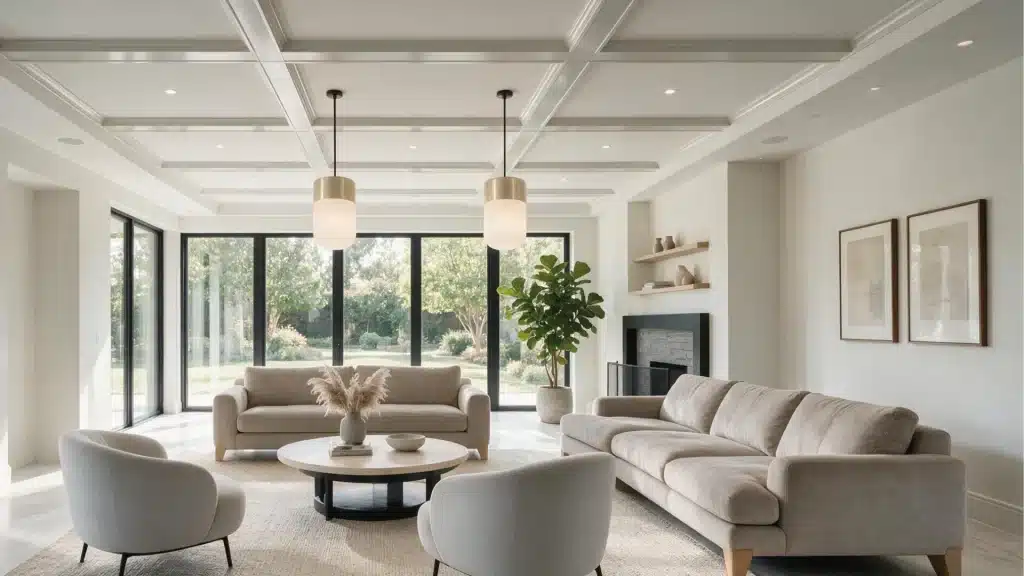
A plain ceiling rarely gets a second glance until a beamed grid changes the whole feel of a room. Flat drywall works, but it adds nothing extra to look at.
Coffered ceiling ideas keep showing up in renovation photos for exactly that reason, especially in dining rooms and living rooms.
A grid of beams and recessed panels brings texture that paint alone cannot create.
Styles ahead include modern grids, wood beams, layered lighting, and decorative finishes suited to almost any room in a home.
Why Use a Coffered Ceiling?
A coffered ceiling boxes the surface into panels using a grid of beams across the top of a room.
Some grids use squares; others use rectangles or diamonds, depending on the room. A light fixture tucked into one of those panels adds a nice finishing touch.
Large rooms also benefit from the pattern, since the beams create a sense of division without new walls.
Echo drops slightly as well, because the recessed sections break up flat surfaces that usually bounce sound around. Formal homes often pair solid wood beams with heavy crown molding.
A modern coffered ceiling trims that down to shallow beams and simple lines instead.
Coffered Ceiling Ideas for Living Rooms
Living rooms take especially well to coffered ceilings, since the grid can align directly with furniture, fireplaces, or open floor plans below it.
1. Coffers Framing the Fireplace
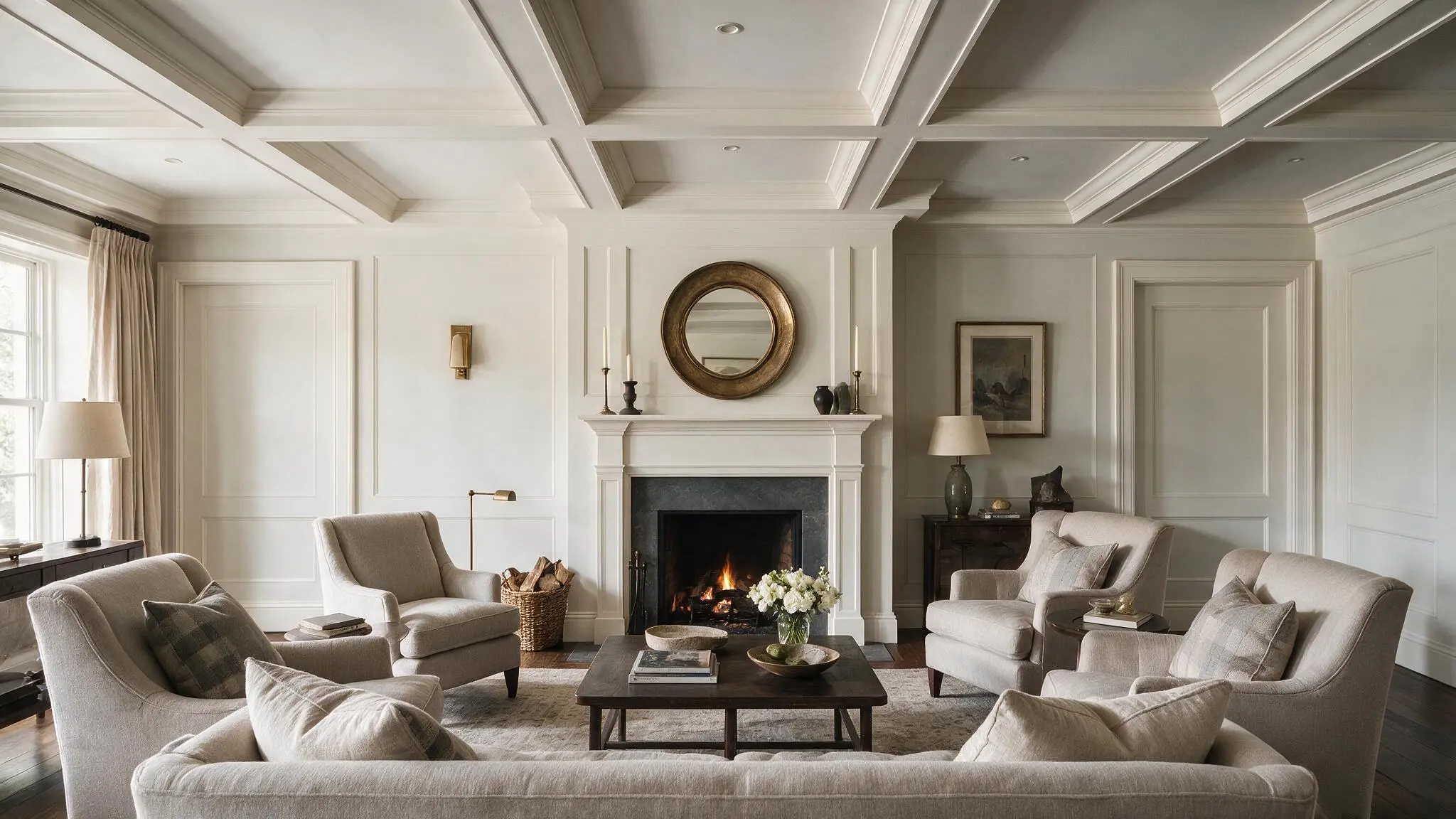
A beam pattern built symmetrically around the fireplace turns the mantel into the room’s clear anchor point. Furniture angled toward the hearth reinforces the fireplace as the room’s focal point.
2. Coffers Centered Over Seating
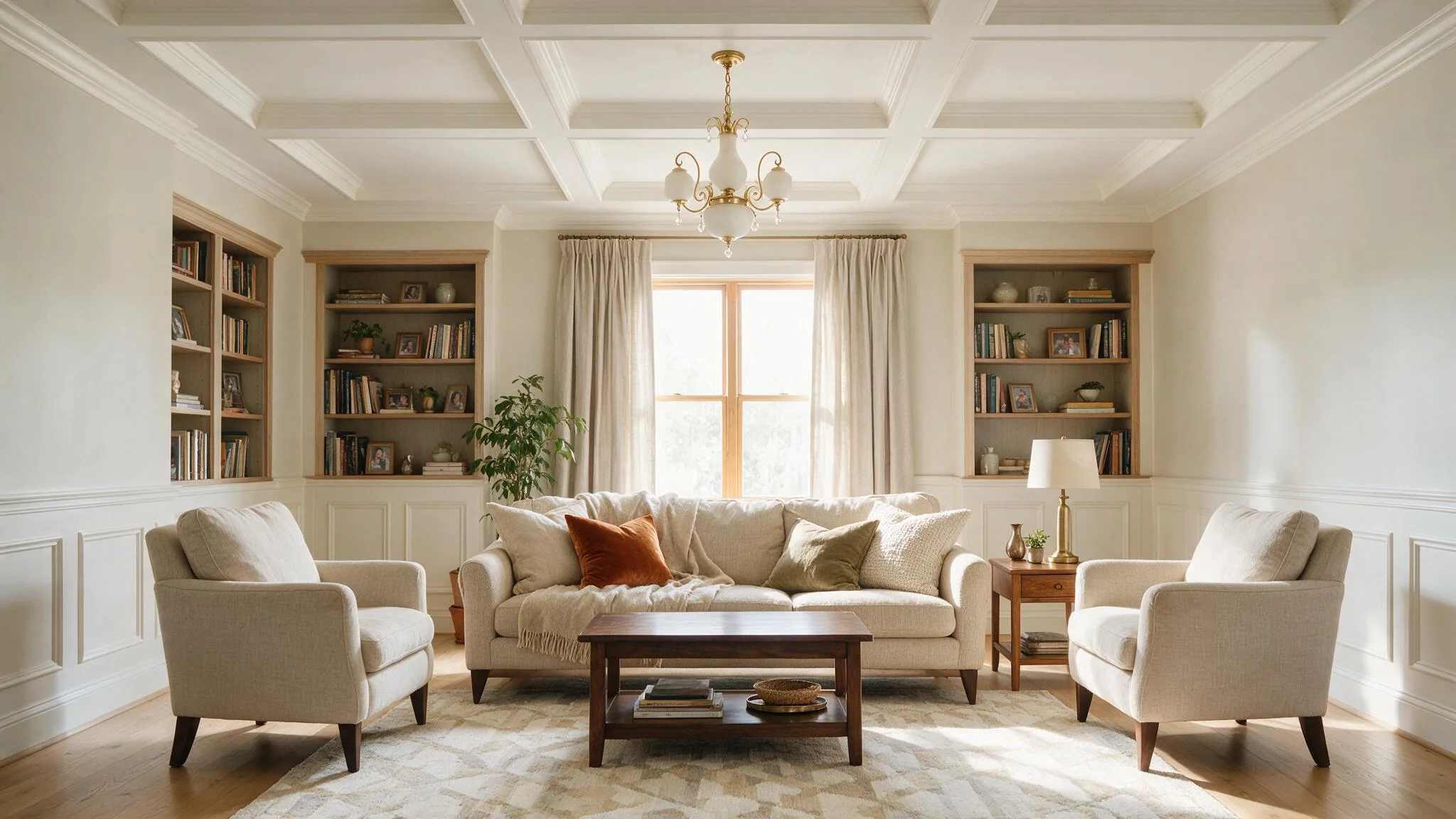
Placing the grid directly above a sofa or seating group shifts attention downward, right to where people actually spend time. A small chandelier fitted at the center finishes the look.
Furniture and ceiling start to feel like one connected layout. Rooms built around a single seating arrangement gain the most from this pairing.
3. Large Coffers in Open Rooms
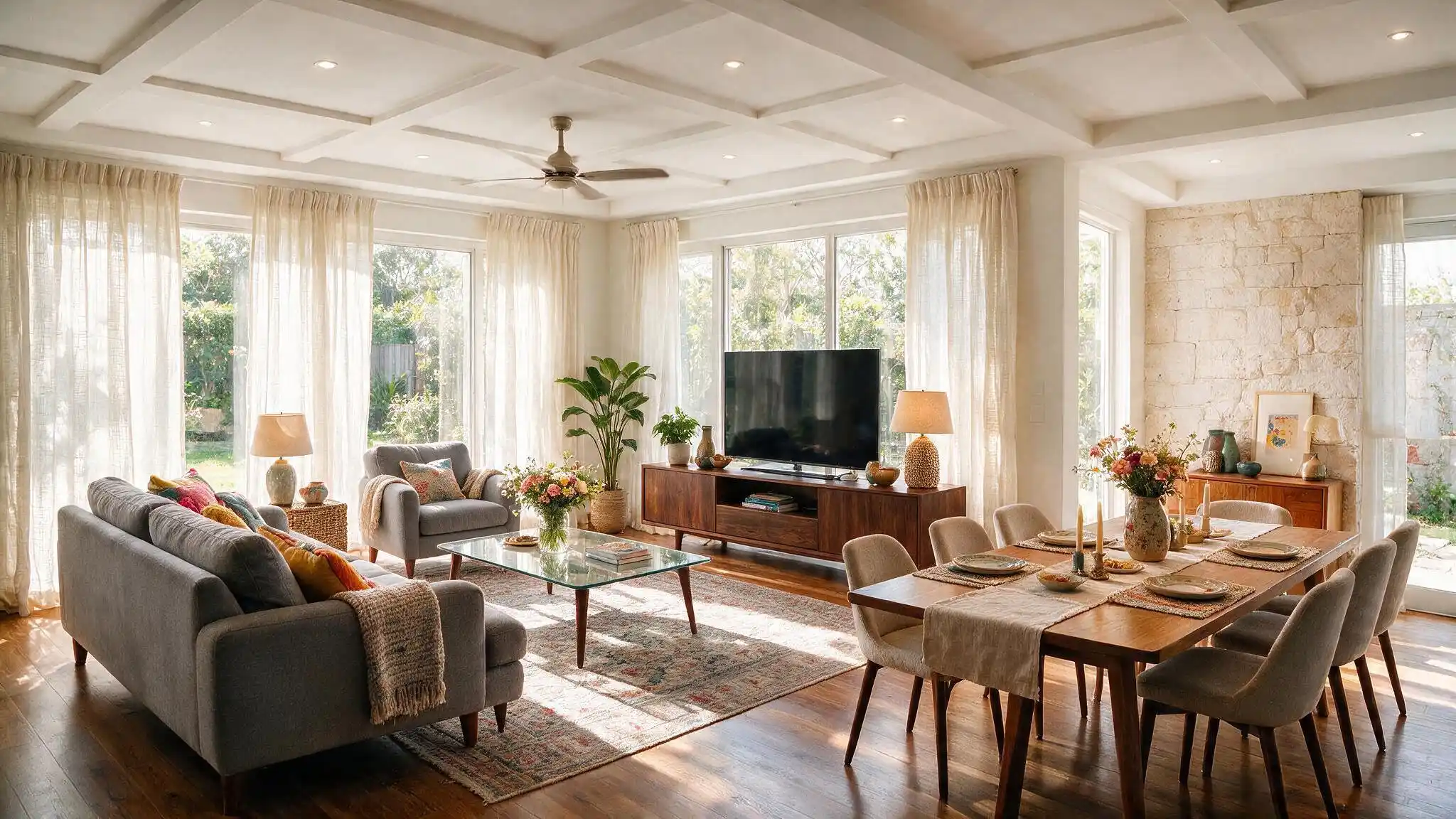
One coffered section can mark off a living area from a nearby dining space. No wall needs to go up for that separation. The distinction alone gives each zone its own identity within a larger room.
4. Deep Beams for High Ceilings
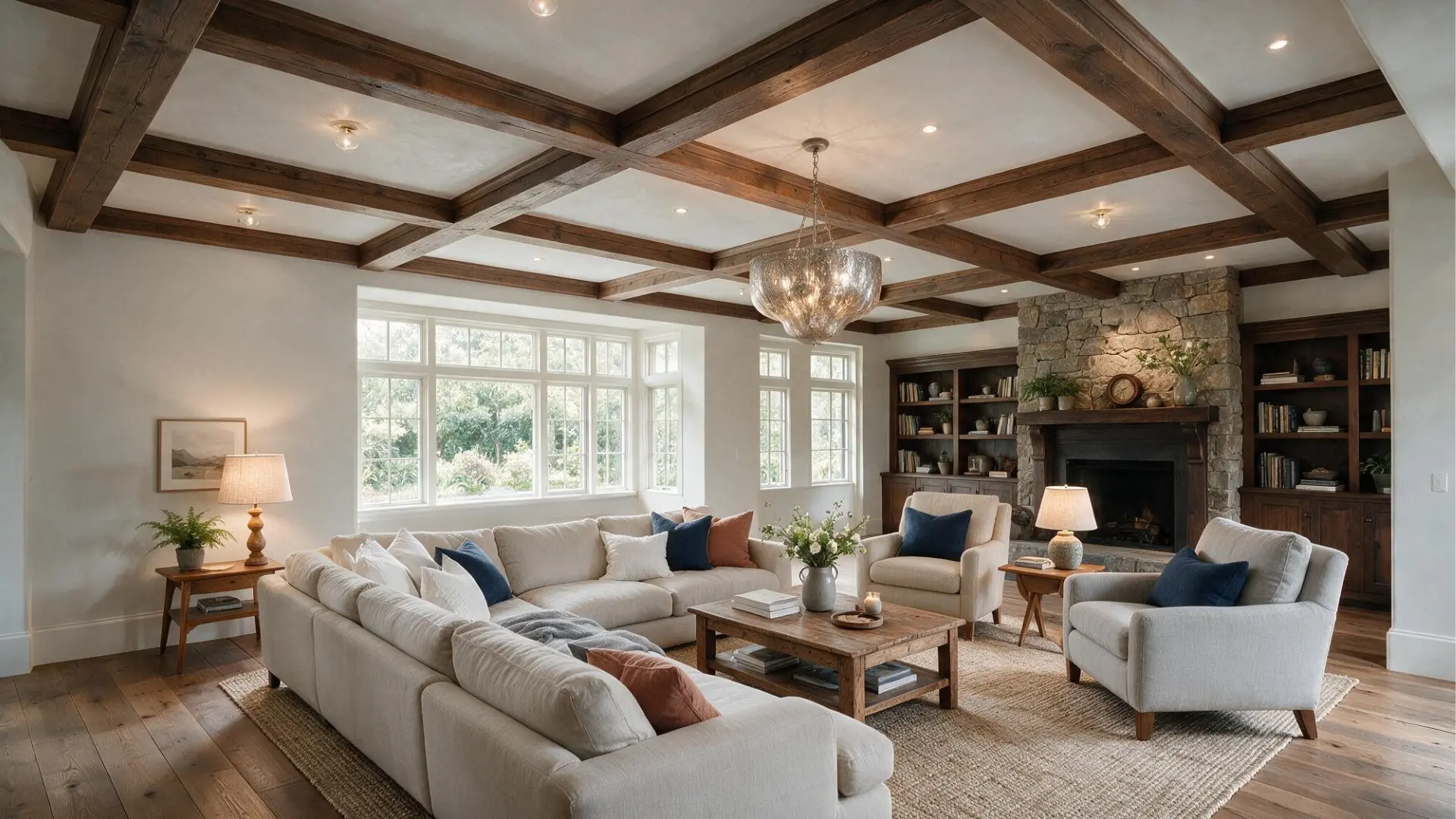
Heavier, more substantial beams give a tall ceiling something to hold onto instead of feeling empty overhead.
Rooms with nine- or ten-foot ceilings, like larger living rooms, can carry this weight without trouble. That extra vertical space lets the beams read as a real structural feature, not an afterthought.
Modern Coffered Ceiling Styles
These coffered ceiling styles lean toward simple grids, calm colors, and shallow beams instead of heavy, ornate detail.
5. Clean White Coffered Ceiling
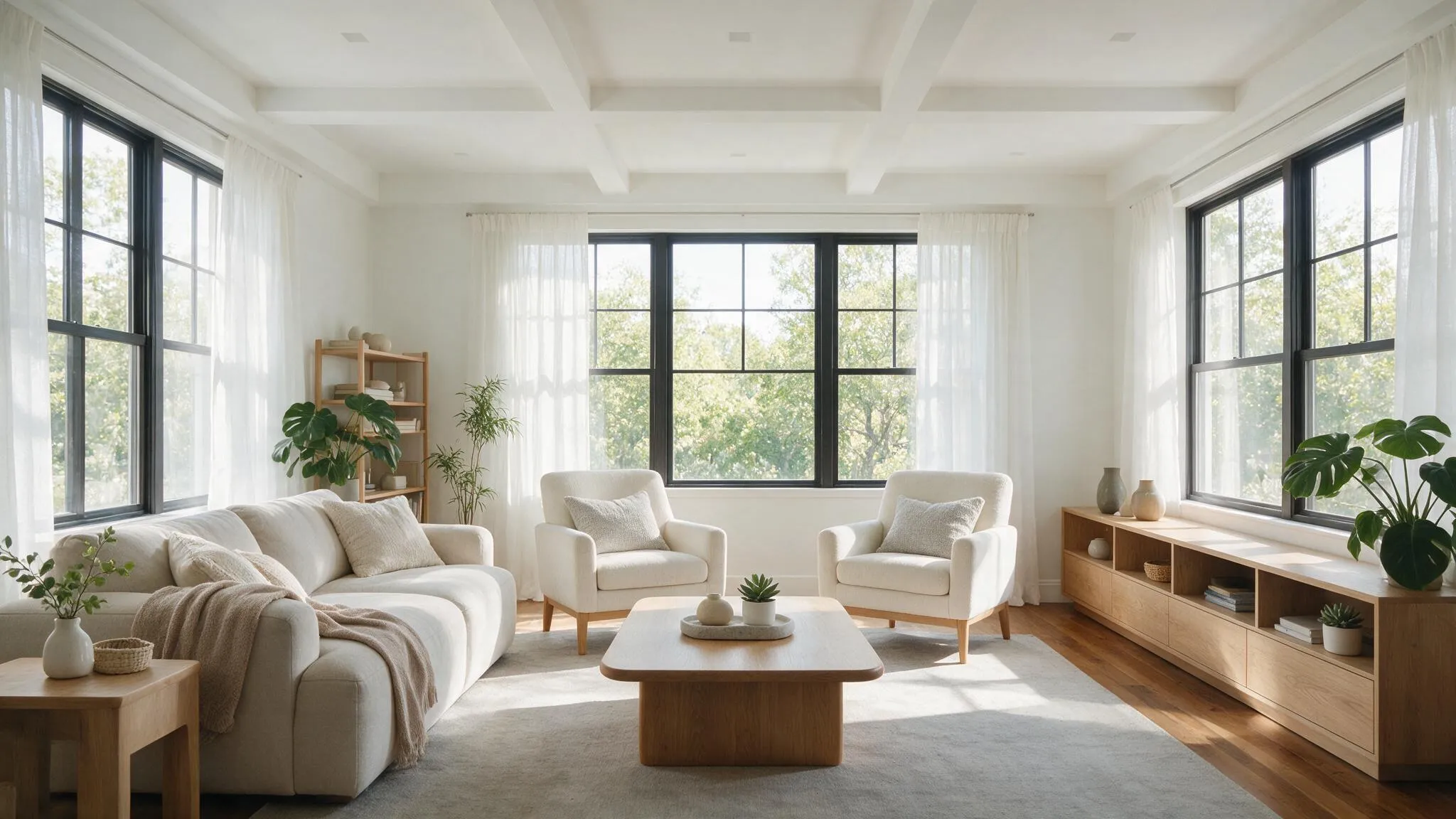
Matching white beams to white panels keeps the grid pattern visible without piling on extra visual weight.
Smaller rooms and kitchens handle this shade well, since a bolder color would pull focus from everything else nearby. The pale surface also reflects light into the room, keeping it airy.
6. Black or Charcoal Beam Coffered Ceiling
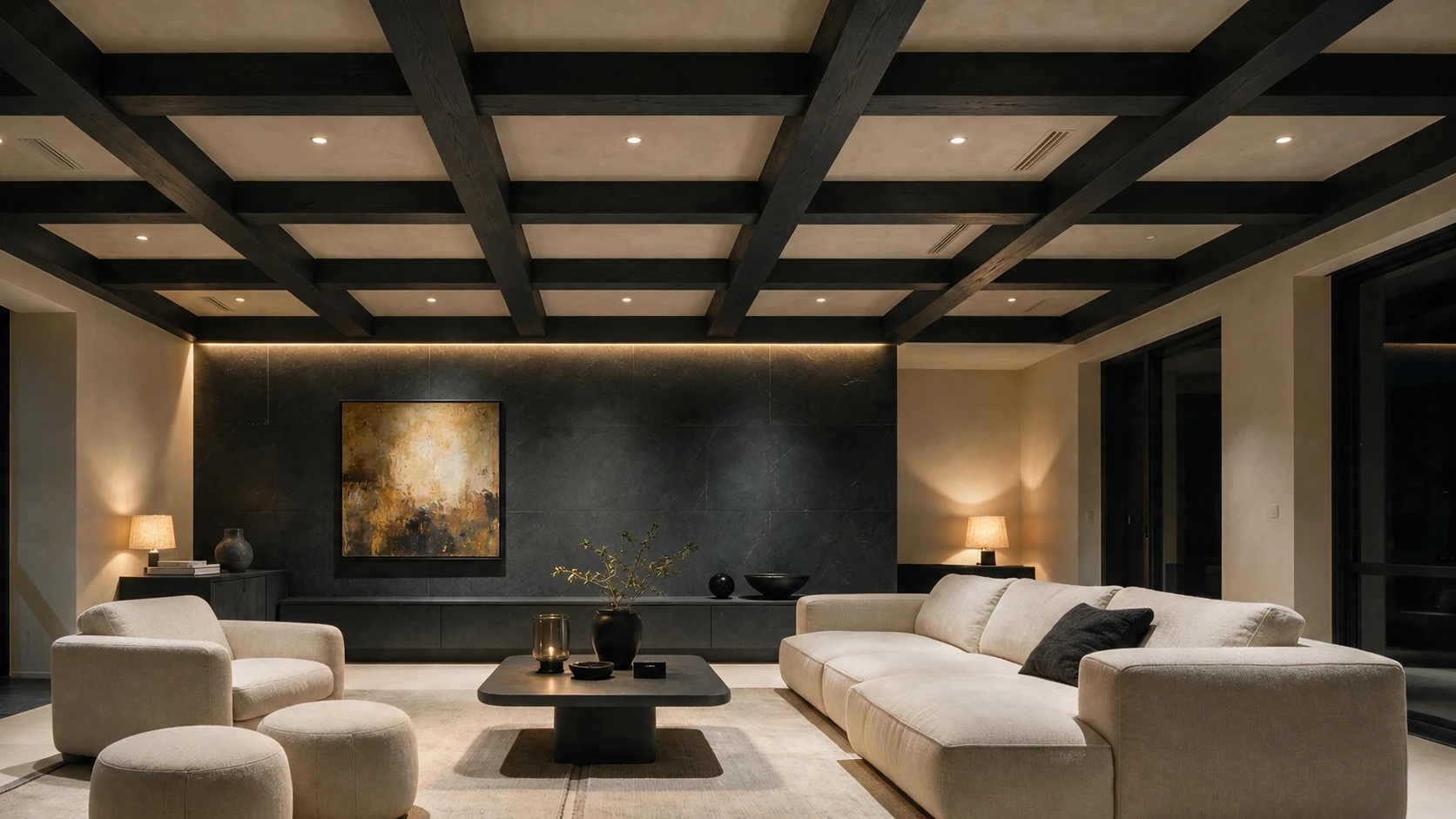
Dark beams set against lighter panels create instant contrast that draws the eye upward.
This pairing gives living rooms a bolder character, while dining rooms gain a more dramatic edge overhead.
Keeping furniture simple below lets the beams carry the visual load.
7. Two-Tone Coffered Ceiling
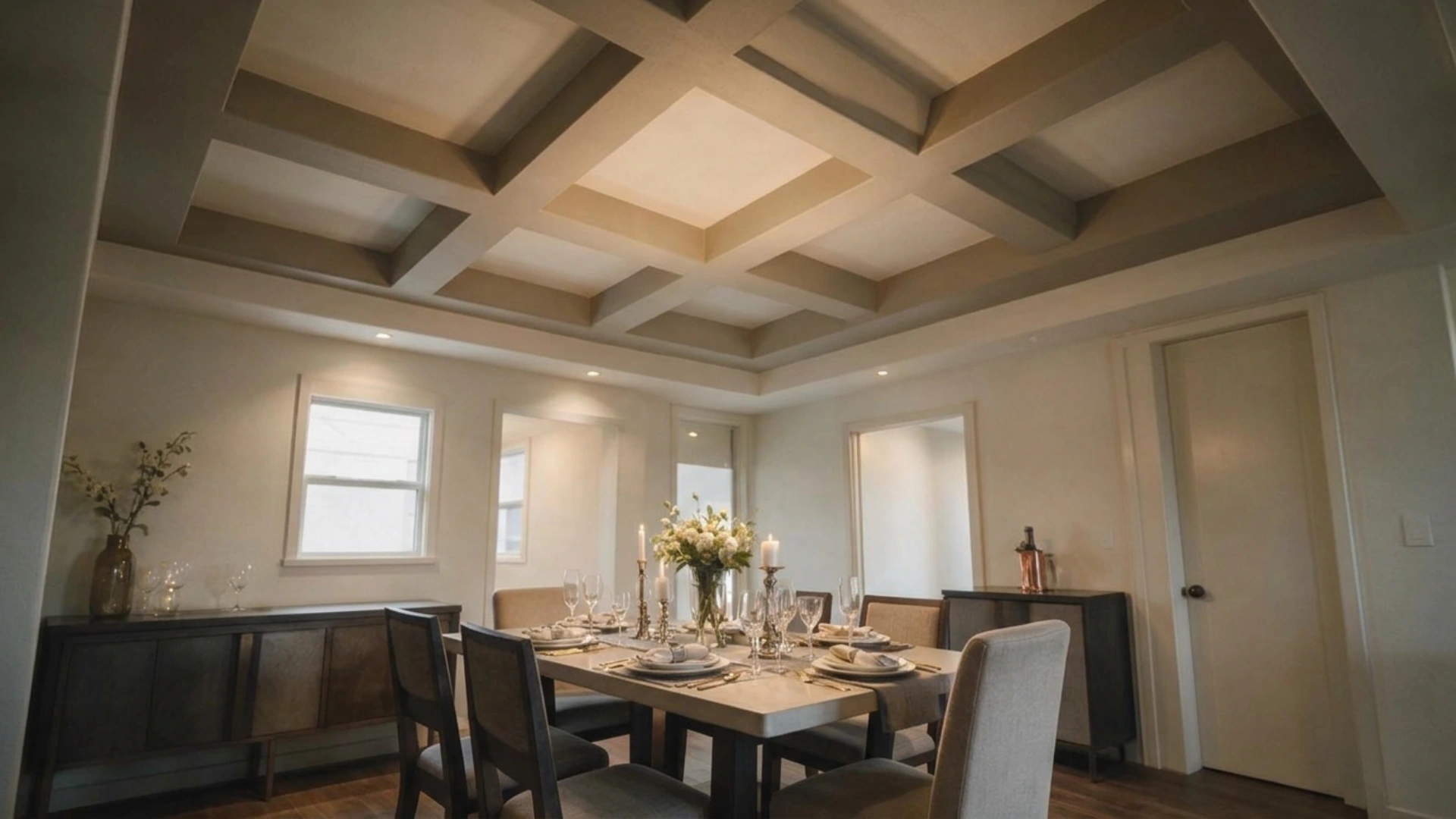
Two closely related shades build quiet depth into the ceiling. One tone covers the beams. The other fills the panels.
Home offices and dining rooms often reach for this pairing when a calmer finish feels more appropriate.
8. Fully Painted Coffered Ceiling
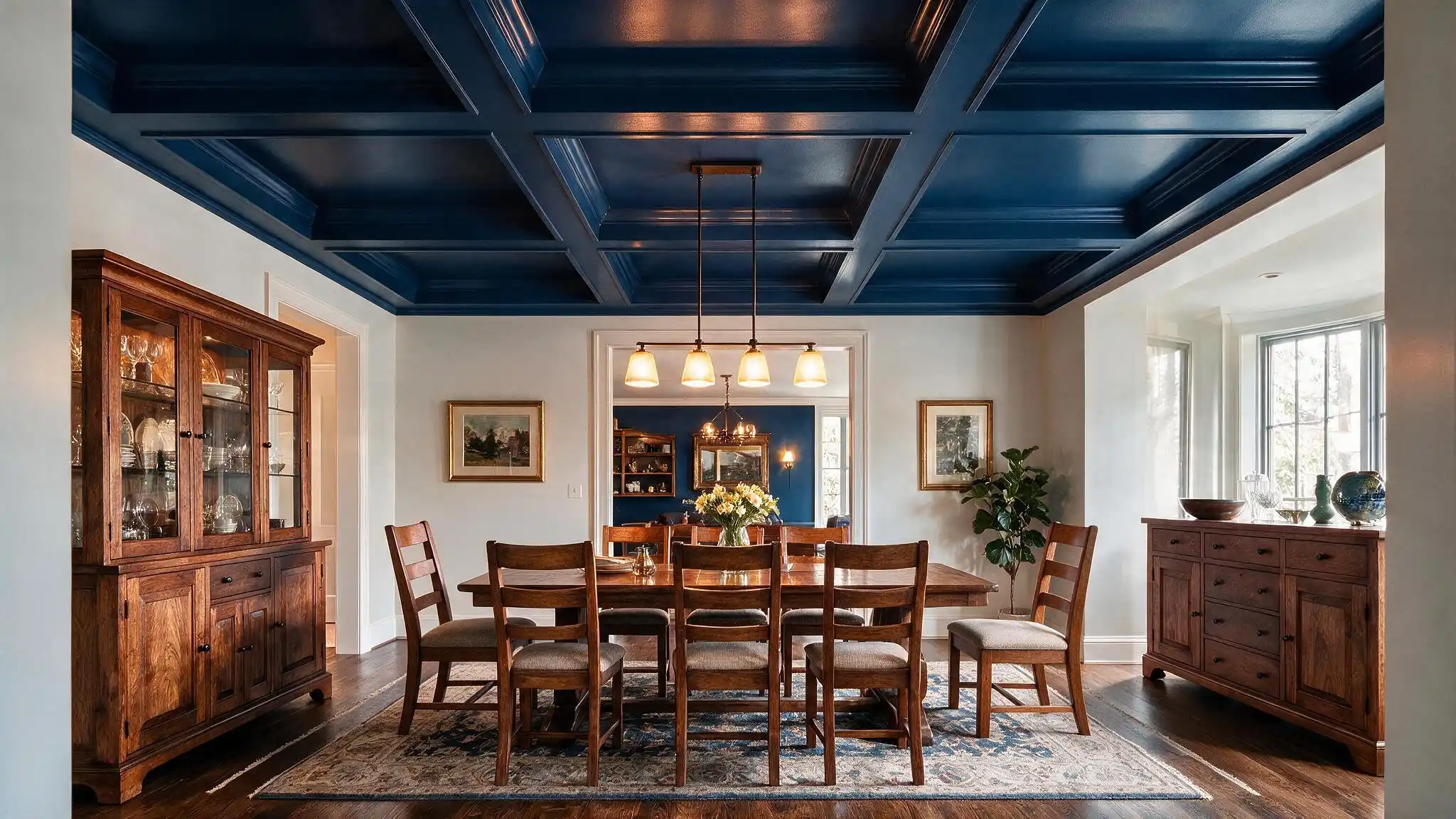
Covering both beams and panels in one saturated color, like deep green or navy, gives the ceiling a bold, enclosed character.
Studies and formal dining spaces carry this well, particularly with low, amber-toned lighting and substantial furniture to fill out the room around it.
Skip those supporting pieces, and the same dark ceiling can start to feel flat rather than rich.
9. Oversized Coffers for Open Floor Plans
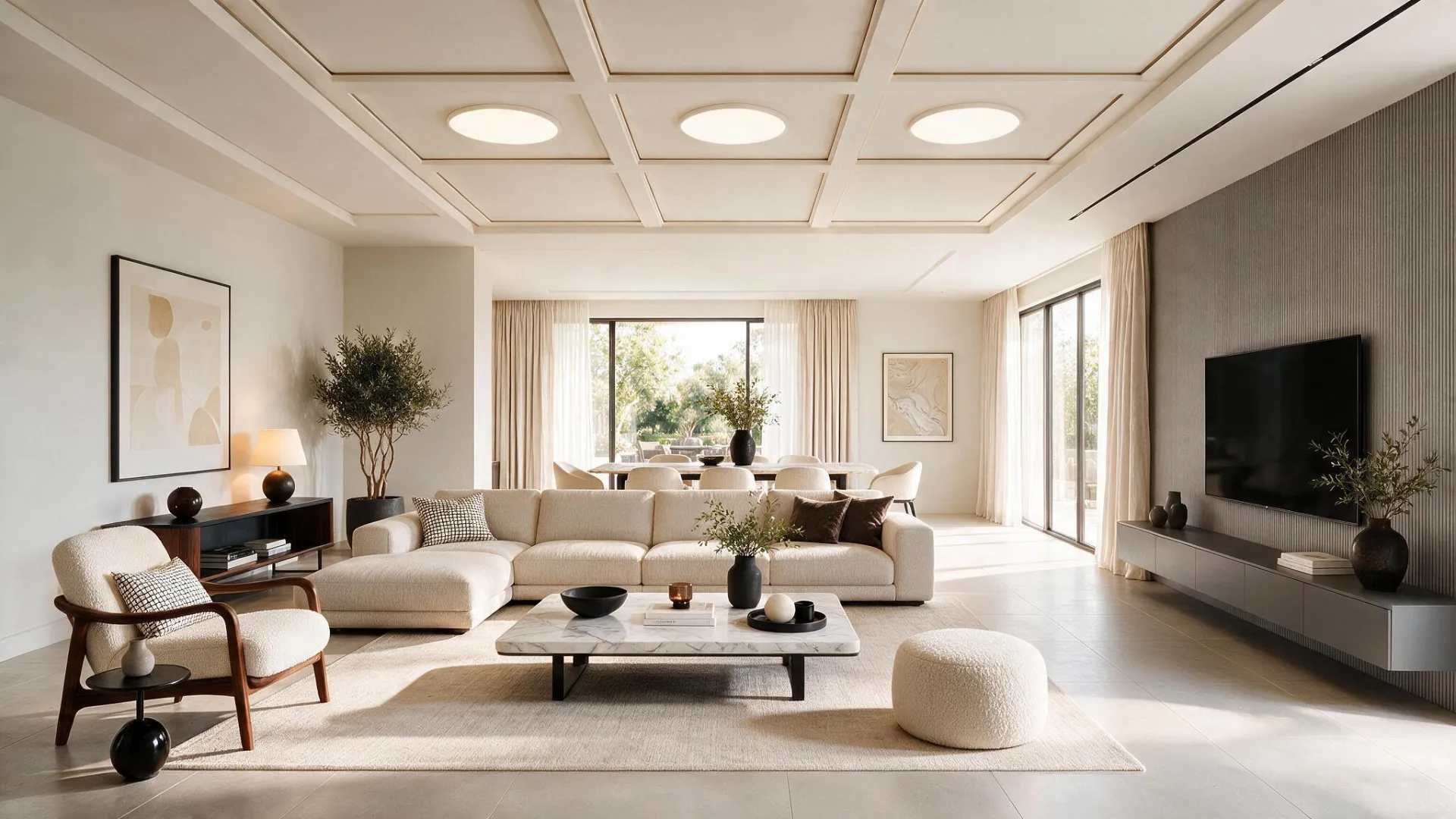
Bigger panels scale naturally to match wide-open, open-concept layouts. A tighter grid would look busy in that same space.
Open living and dining areas take to this scaled-up version easily. As a result, proportions stay balanced across the whole footprint.
10. Diamond Pattern Coffered Ceiling
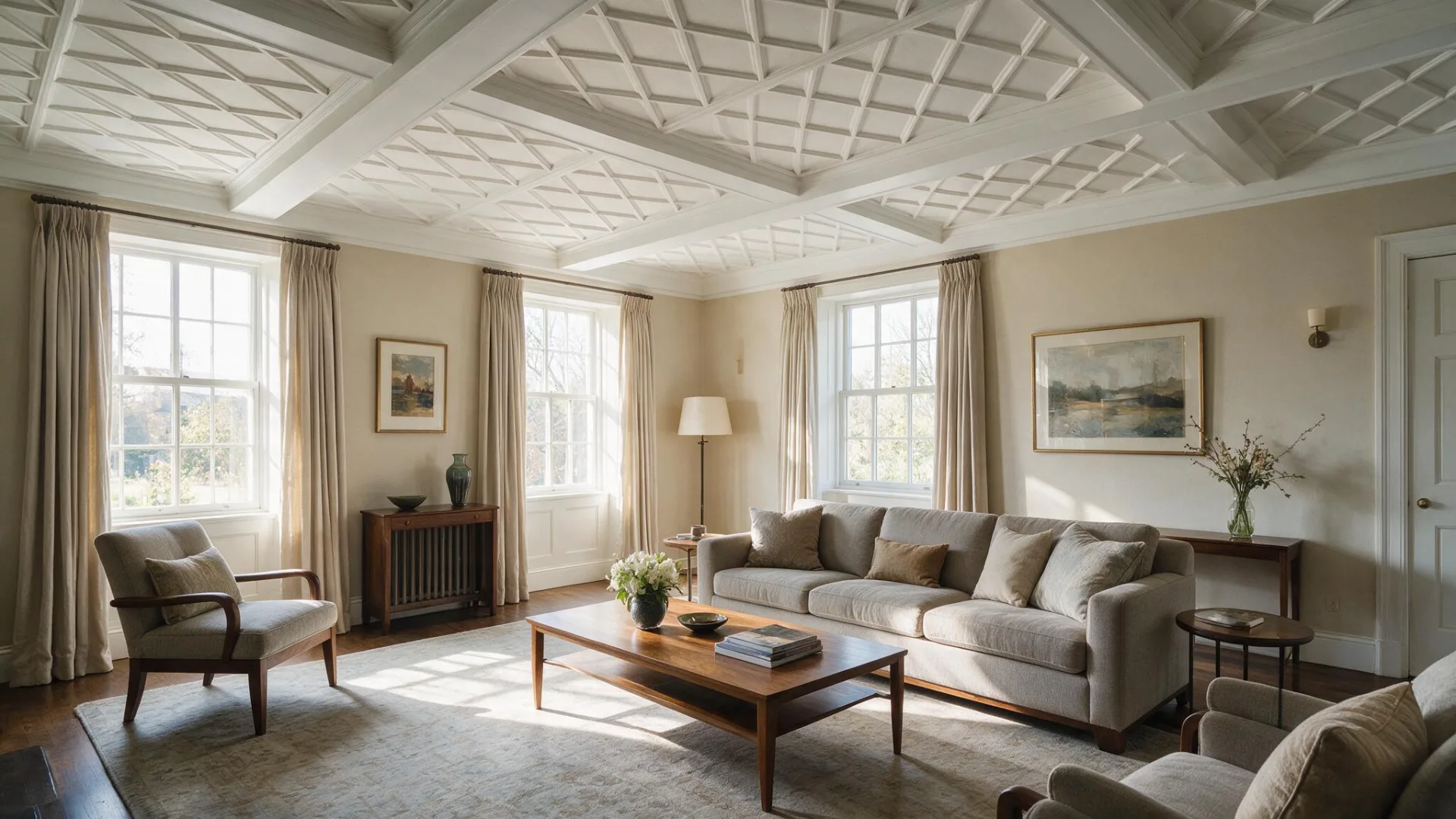
Rotating the standard grid 45 degrees into a diamond shape breaks up the predictability of a square layout.
Entryways and living rooms with mostly straight-lined furniture gain real contrast from that rotation.
The shift alone gives an otherwise ordinary coffered ceiling a sharper, more current feel.
Wood Coffered Ceiling Styles
Wood brings texture and richness paint alone cannot match, and these finishes cover a wide range of looks.
11. Natural Wood Coffered Ceiling
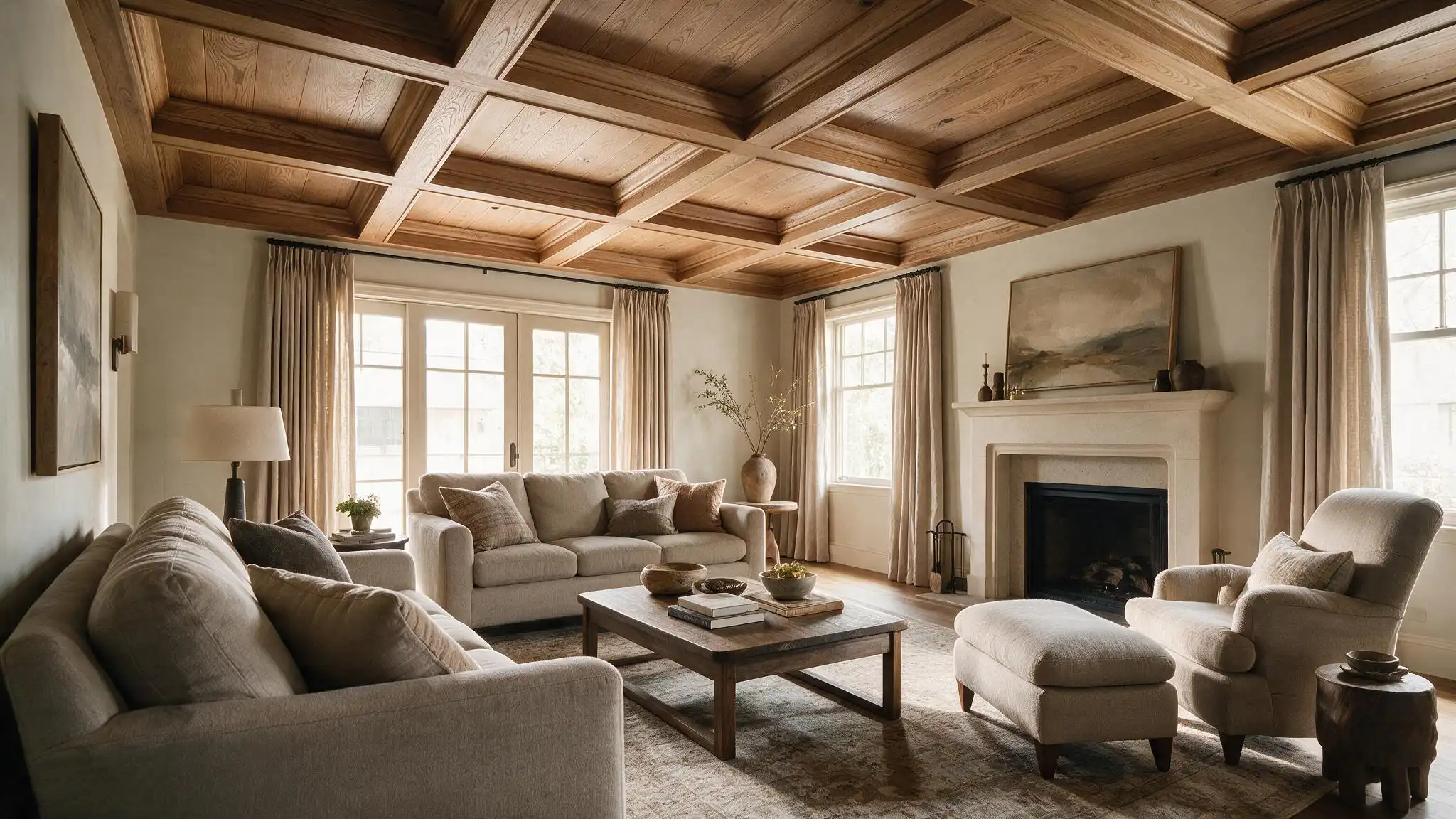
Leaving the beams unstained keeps the natural grain front and center, along with an earthy, sun-baked tone. This finish gives family rooms a grounded feel without ever tipping into something heavy.
12. Light Oak Coffered Ceiling
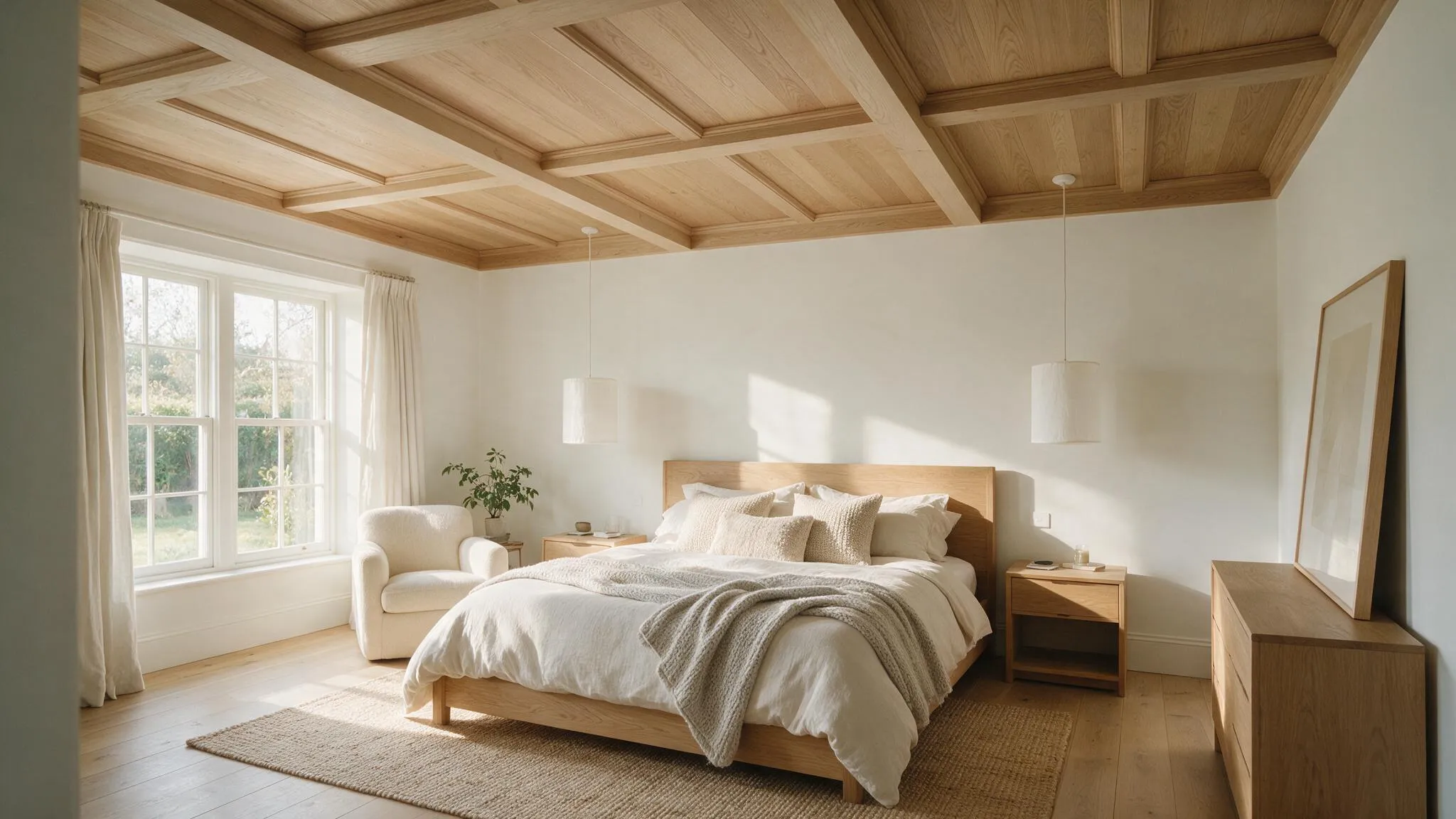
Pale oak tones lift the whole ceiling while keeping real wood texture intact. Nothing about the finish reads as heavy or overdone. Bedrooms pick up a soft, calming quality from this shade.
A Scandinavian-style living room leans into it just as easily. Darker stains tend to weigh a space down, and this lighter option sidesteps that entirely.
13. Dark Stained Wood Coffered Ceiling
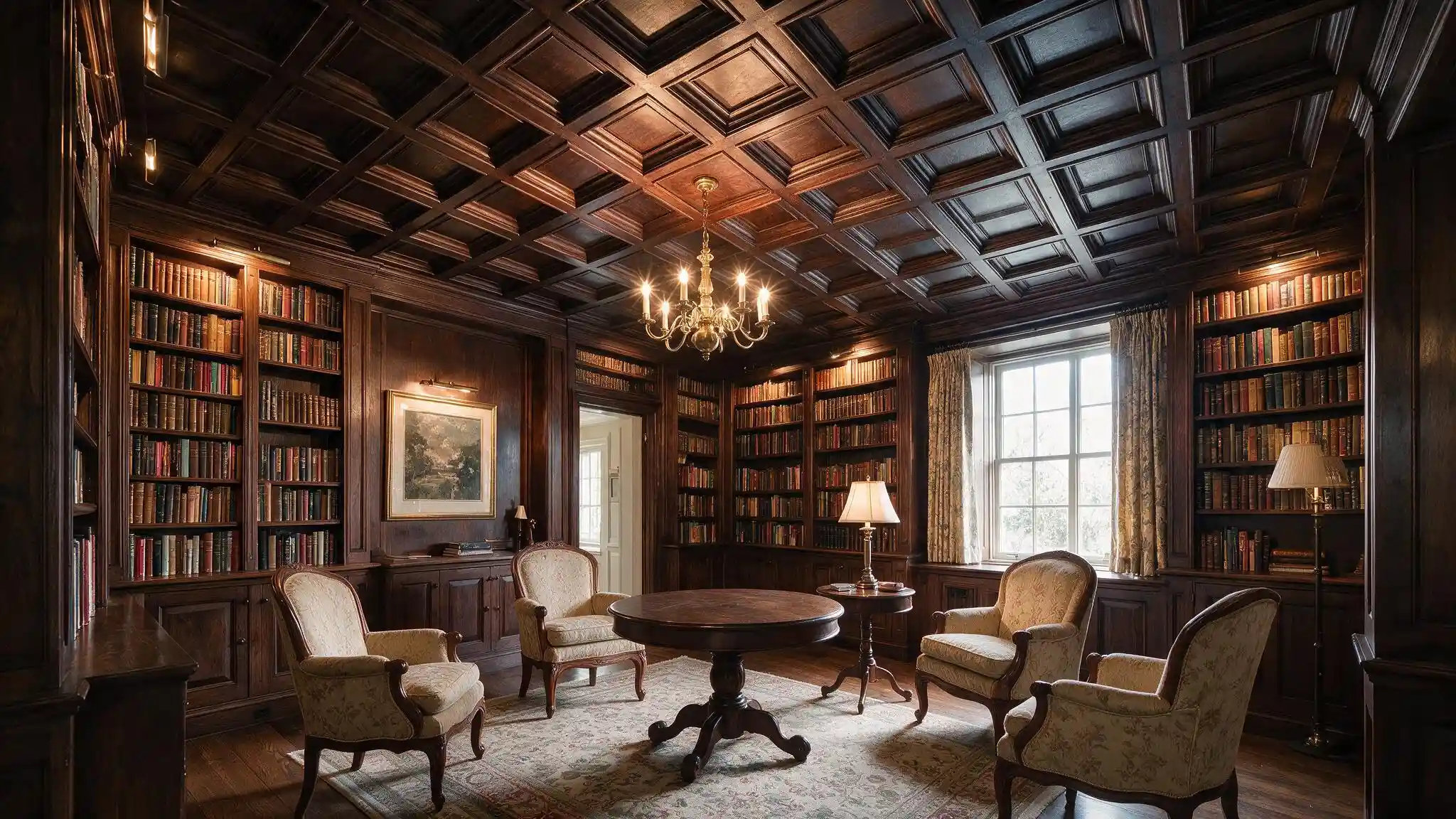
A deep, rich stain gives the ceiling a formal weight suited to home offices or a quiet library.
Larger rooms carry this finish best, where the density of the wood reads as purposeful rather than crowding the space.
Warm lighting placed underneath keeps the whole room from tipping into something too enclosed.
Decorative Coffered Ceiling Ideas
Texture, pattern, and trim work bring detail to a coffered ceiling beyond color or wood tone alone.
14. Wallpapered Coffer Panels
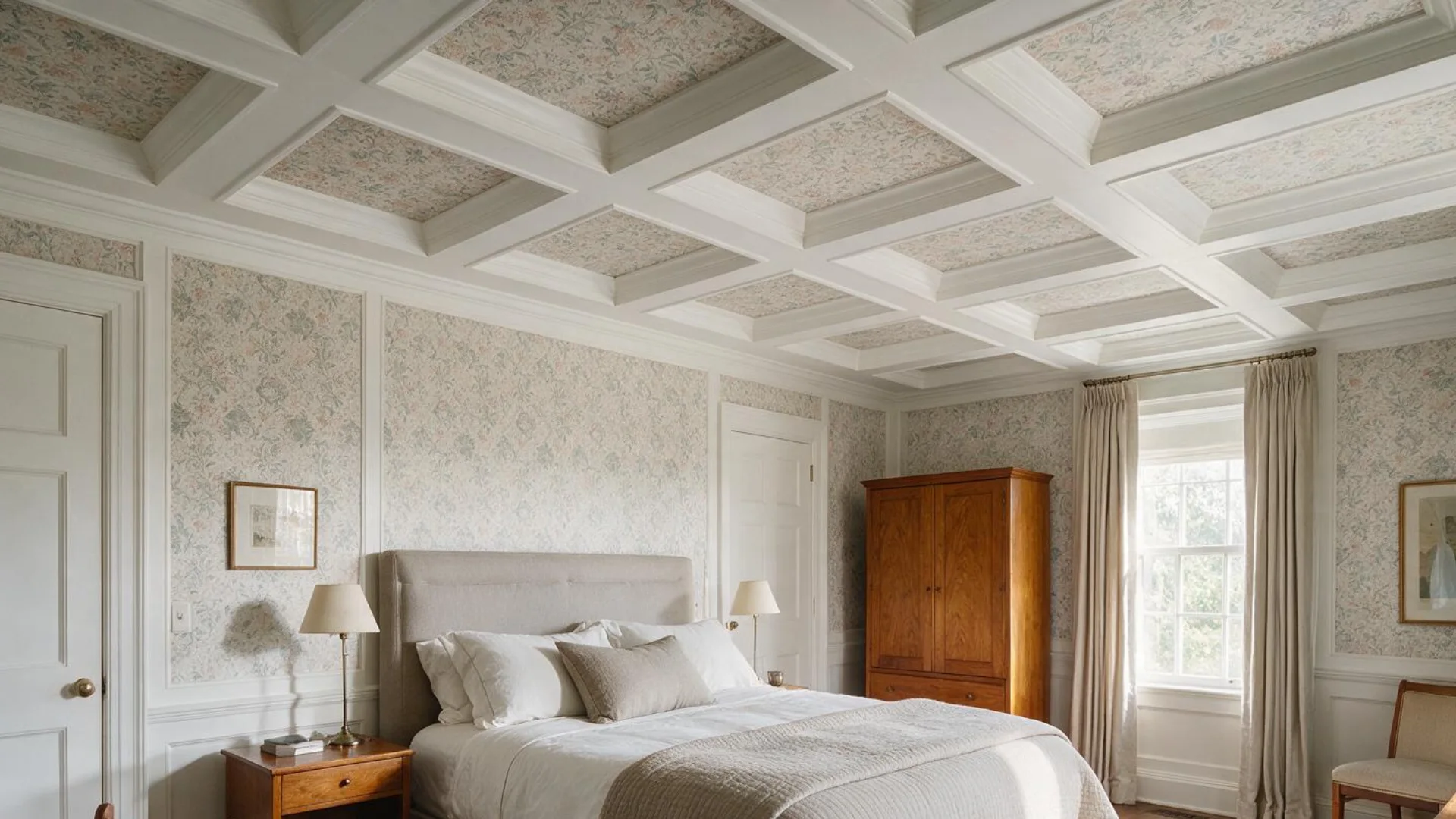
Fitting patterned wallpaper inside each recessed panel adds detail in a contained way.
The rest of the ceiling stays untouched. Bedrooms handle this treatment nicely, since the print never spreads past its own frame.
15. Beadboard or Shiplap Coffered Panels
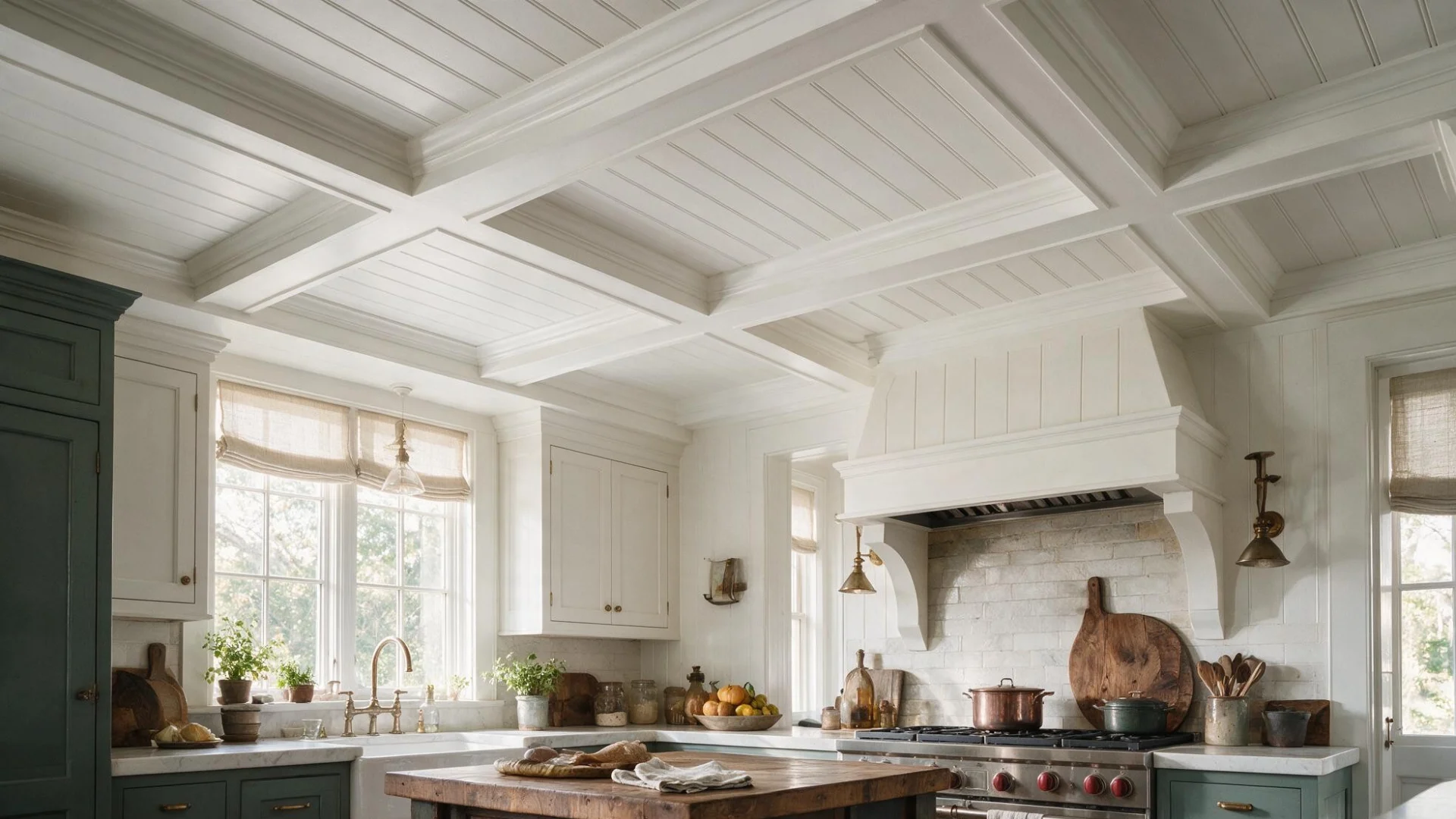
Lining the coffers with textured wood paneling gives off a distinct cottage character. A flat, painted panel could never quite replicate that same texture.
Kitchens reach for this detail often. Cottage-style living rooms pick up this same detail too, especially when the walls already carry a matching treatment.
Light catches the grooves differently than it would on a smooth surface.
16. Decorative Molding Coffered Ceiling
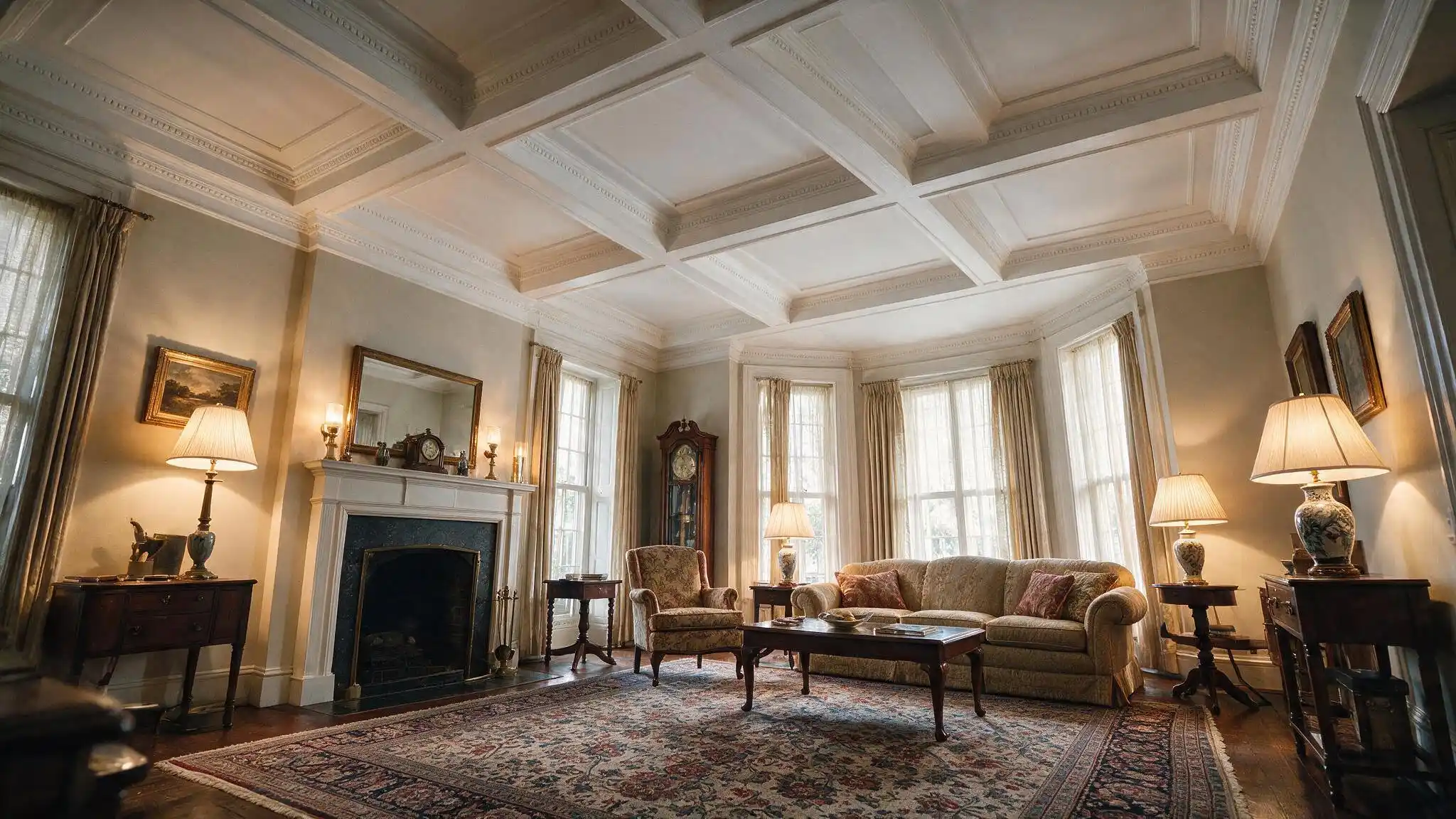
Adding crown molding around the grid pushes the whole look toward something more formal and historic. Older homes with matching period trim already in place carry this detail especially well.
17. Coffers With Matching Wall Millwork
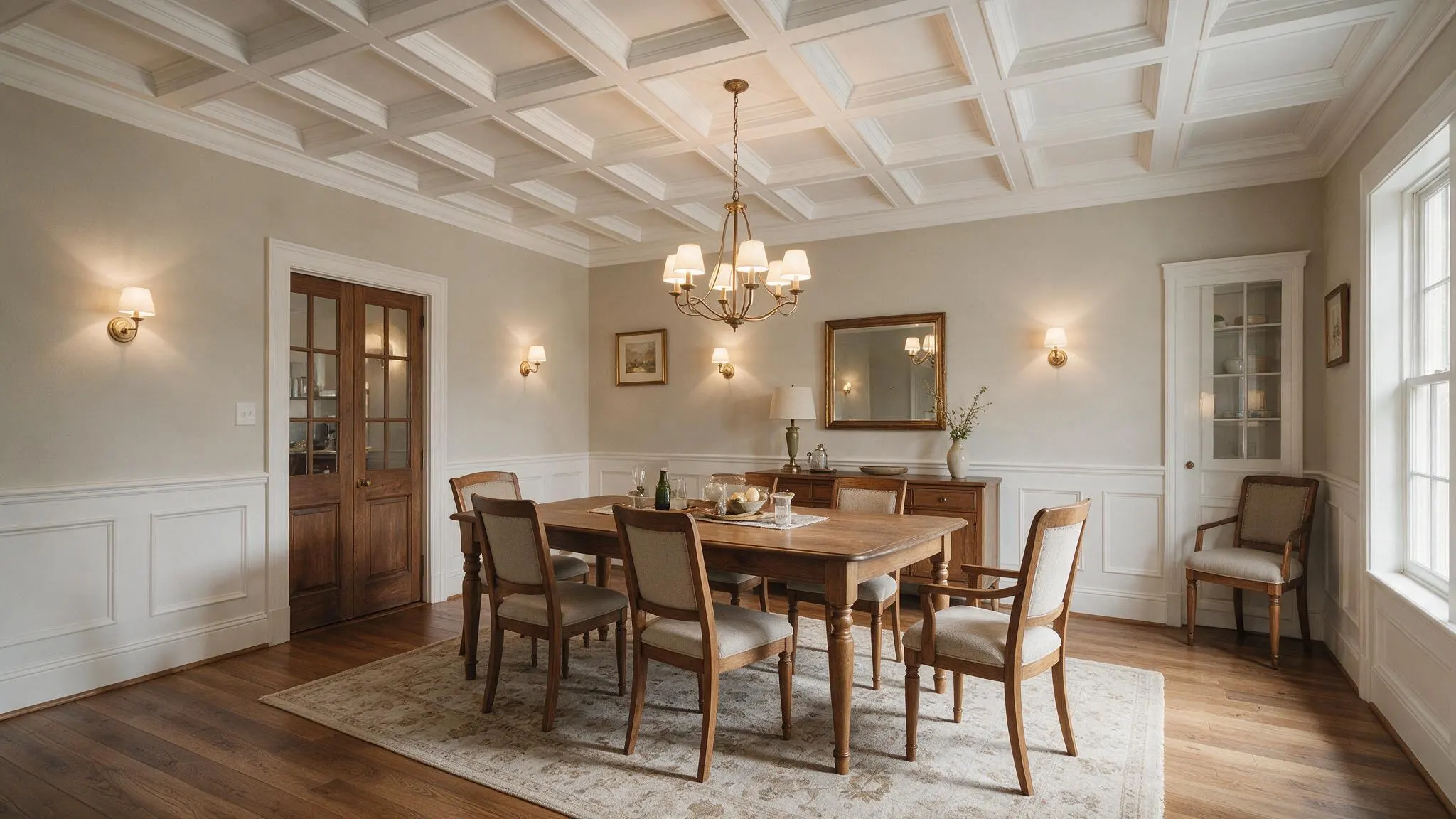
Coordinating the ceiling trim with wainscoting on the walls links the room from top to bottom.
Dining rooms and living rooms come across as fully considered once that match is in place, rather than assembled in pieces. Homes with existing wall trim make this pairing easier to pull off.
Coffered Ceiling Lighting Ideas
Lighting placement changes how much attention a coffered ceiling draws, whether the goal is subtle or dramatic.
18. Coffered Ceiling With Recessed Lighting
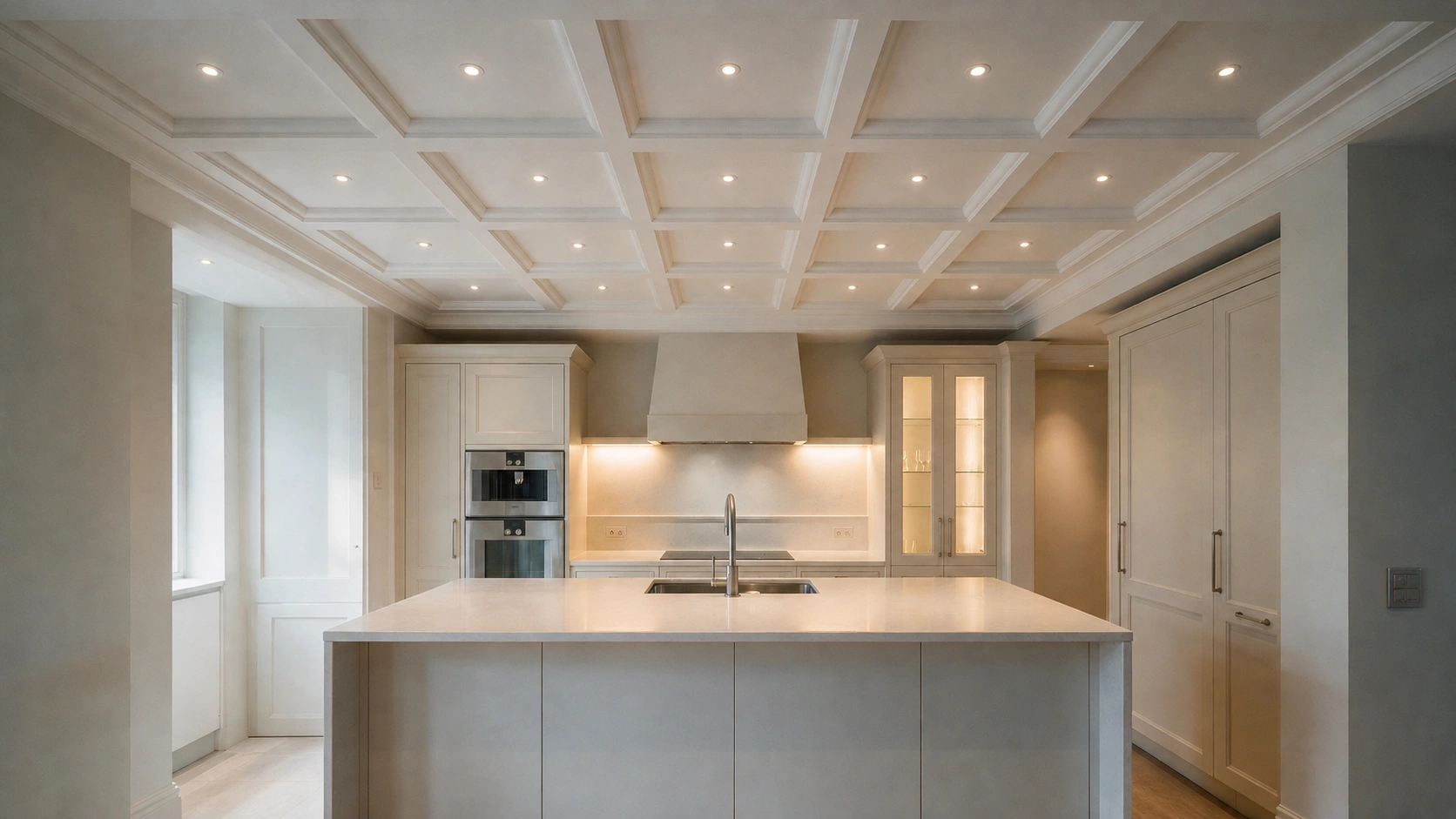
Small fixtures set into each panel add soft, ambient light without breaking up the beam lines. Kitchens and hallways often lean on this option, since the lights stay nearly invisible.
19. Coffered Ceiling With a Centered Chandelier
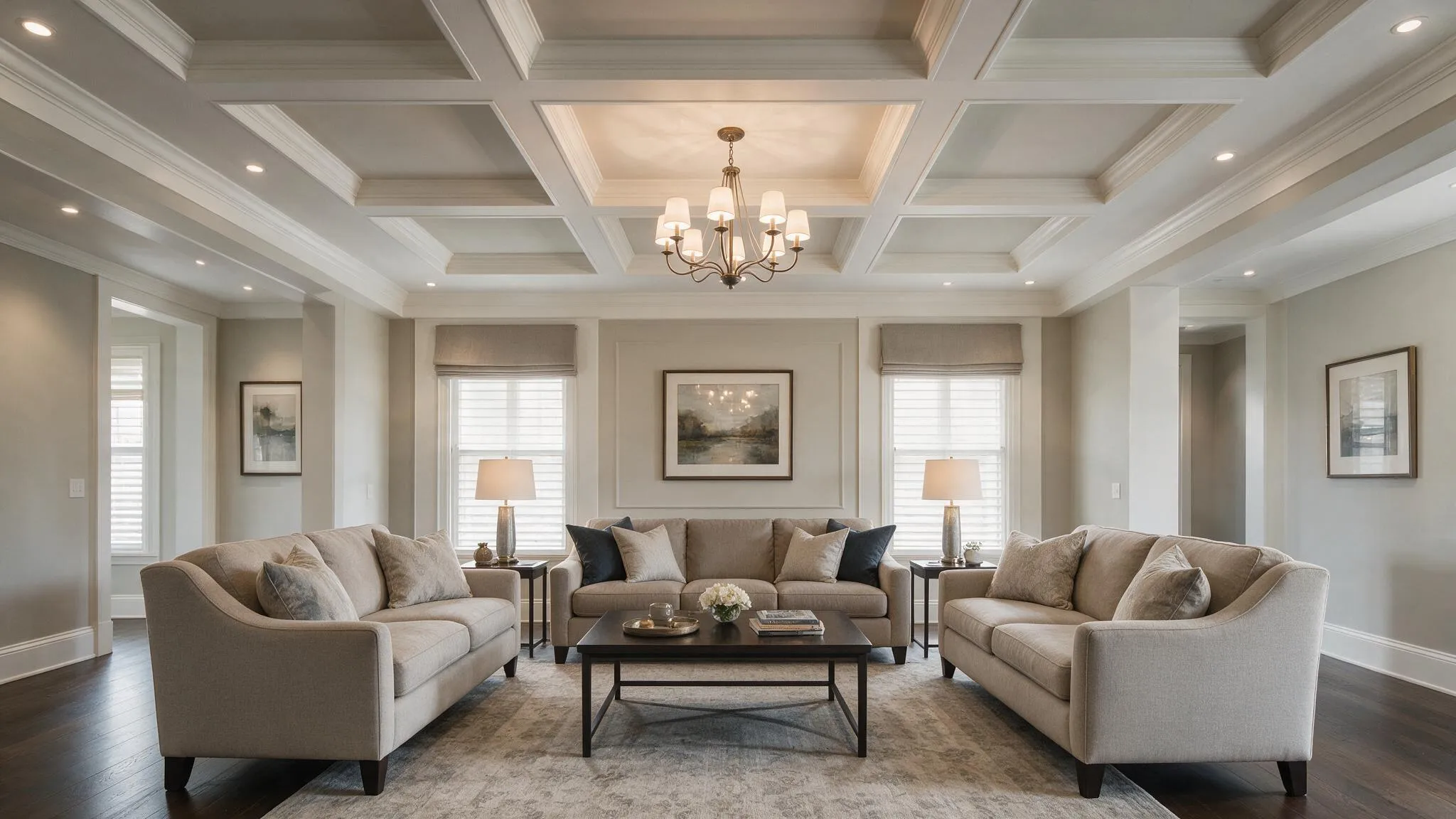
Lining a chandelier up with the grid pattern makes the ceiling read as one complete design. Nothing about the fixture feels added on later.
Dining rooms and living rooms pair especially well with this kind of alignment.
How Much Do Coffered Ceilings Cost?
Cost depends on material choice, room size, and how detailed the beam pattern gets. A standard 150-square-foot room typically runs $1,500 to $6,000 installed.
| Material | Approximate Cost per Sq. Ft. |
|---|---|
| Drywall or plywood | $2–$3 |
| MDF or PVC | $2–$15 |
| Hollow poplar beams | $8–$15 |
| Solid hardwood (walnut, cherry) | Up to $30 |
A few factors push the price higher:
- Complex grid patterns, like diamond or mixed shapes, need more cuts and labor
- Deeper beams for tall ceilings use more material overall
- Larger rooms need more beams and panels throughout
- Solid wood requires more skilled carpentry than MDF or faux beams
- Recessed lighting or LED strips add extra wiring costs
- Local quotes remain the most reliable way to get an accurate number for a specific room.
How to Maintain Coffered Ceilings so They Stay Clean for a Long Time?
Dust hides in the corners of a coffered ceiling long before it shows up anywhere else. A microfiber duster gets into those recessed spots, or use a vacuum with the brush attachment if the beams sit higher up.
For painted beams, water and a cloth do the job. Harsh chemical cleaners wear paint down fast, and the damage often goes unnoticed until it’s already patchy.
Wood beams near a kitchen or bathroom can absorb moisture. That often shows up as warping or small splits along the grain.
Checking those spots now and then catches a small crack before it turns into something that needs replacing.
Nothing stays perfectly painted forever. When the ceiling starts looking a little tired, a fresh coat brings it right back.
The Bottom Line
Picking a favorite is harder than it sounds, since a black grid and a wallpapered panel solve two completely different problems.
Living rooms came up again and again, whether it was a fireplace tying into the beams or a chandelier centered above the main seating area.
Cost, lighting, and upkeep all factor into which of these coffered ceiling ideas make sense for a given room.
A modern coffered ceiling suits one space, a heavier wood version suits another, and neither choice has to be a guess anymore.
Frequently Asked Questions (FAQs)
1. Can a Coffered Ceiling Go Into a Room That’s Already Built?
Yes, as long as there’s enough ceiling height left for the beams.
2. Do Coffered Ceilings Hold Up in Bathrooms?
Not really, since humidity gets into the wood and warps it over time.
3. Is This Something to Try as a DIY Project?
A basic MDF grid, sure, but anything more detailed needs a professional.
4. How Long Does Installation Usually Take?
One to three days for most rooms, sometimes longer with a complex pattern.
5. Could a Coffered Ceiling Hurt Resale Value?
Unlikely, since most buyers view it as an upgrade, not something to fix later.