Plenty of people cook with onion, carrot, and celery without ever knowing the trio has a name.
That’s mirepoix, and it sits quietly under half the dishes you already love, quietly holding soups, stews, and sauces together.
French kitchens built an entire technique around it, and home cooks can use the same trick just as easily. This walks you through what Mirepoix is made of, how to make it at home, and what to do with it once it’s ready.
What is Mirepoix in French Cooking?
The term “mirepoix” might sound fancy, but in fact, it consists of nothing more than onion, carrot, and celery that are cooked in butter until tender.
This process is when the magic happens, since the cooking releases all of the sweet flavor from these vegetables.
The French use this combination to start preparing soups, stews, sauces, and stocks as a base flavor.
This mixture will not be the star of the dish, but it will be an indispensable part of any other dish.
What is Mirepoix Made Of?
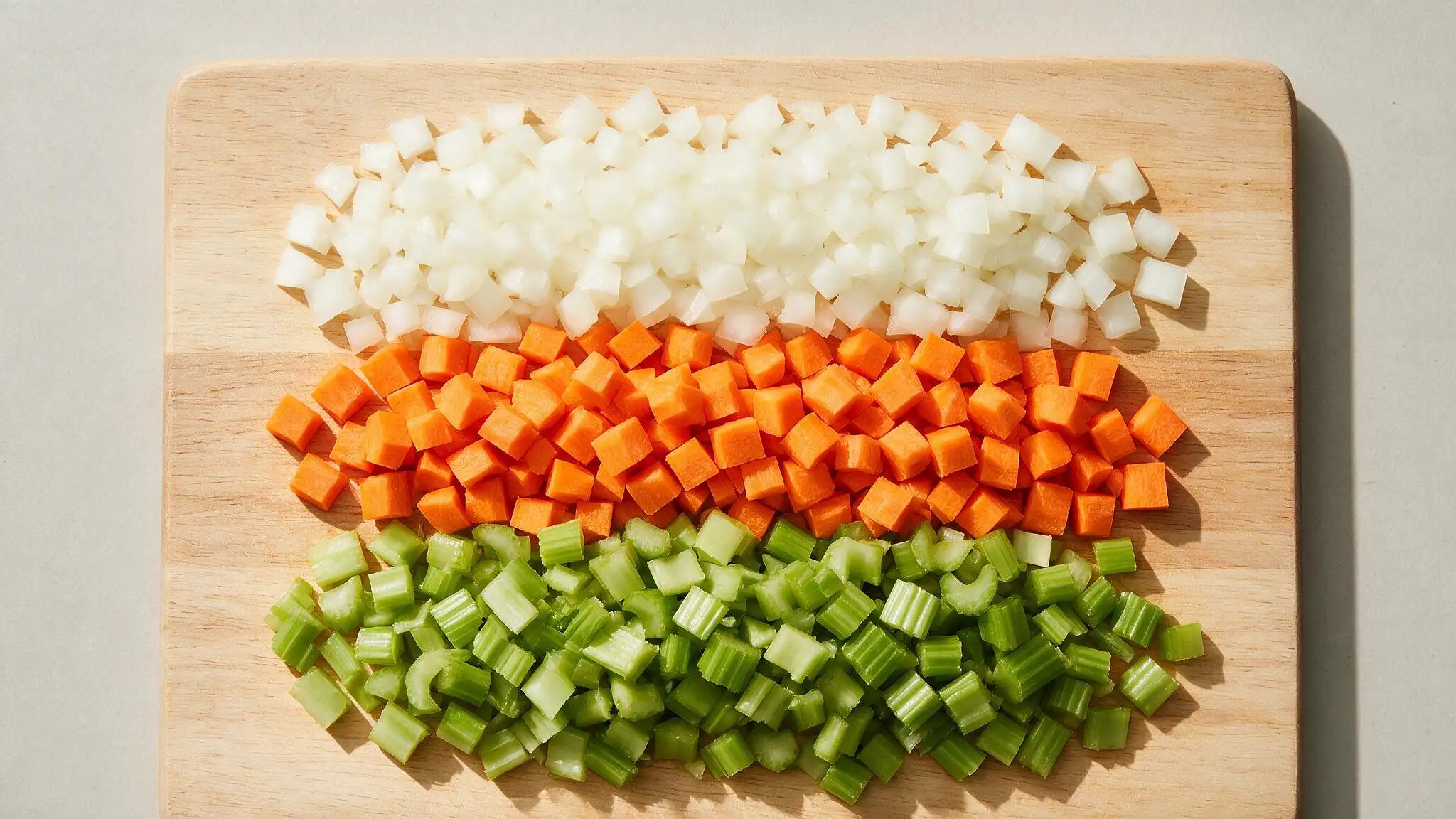
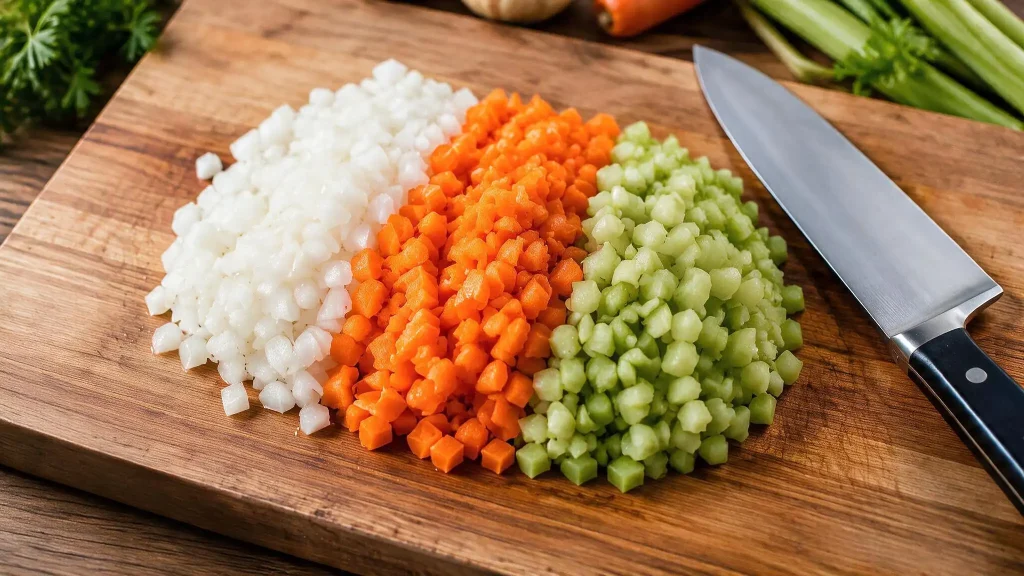
All that’s required to form a perfect mirepoix is just three types of vegetables: onions, carrots, and celery.
The traditional French kitchen calls for an approximate ratio of onions to carrots of two to one, with celery added. Each serves a particular purpose when added to the pot.
Onion
This is where you begin, because the onion provides the robust and savory foundation that ties all the ingredients together.
It gets sweeter and softer as it cooks, as the pungent flavor dissipates during the cooking process. Mirepoix isn’t complete without onion.
Carrot
Carrot adds a mellow sweetness that balances out the onion’s richness.
You’ll also notice carrot brings color, turning your base into a warm, golden mix. It softens slowly, releasing flavor without ever overpowering the pot.
Celery
Celery brings a sharp, herbal note that keeps your mirepoix from tasting too sweet. You’ll get a slight bitterness here, cutting through the richness of the other two.
It rounds out the mix, giving your base real depth.
How to Make Mirepoix at Home?
No skills are required to do this in your own kitchen.
All you will require is an onion, a carrot, celery, a knife, and a pan with butter or oil. After this, it’s pretty much all chopping and heat, with the latter being the trickiest part.
Step 1: Choose Your Cut Size
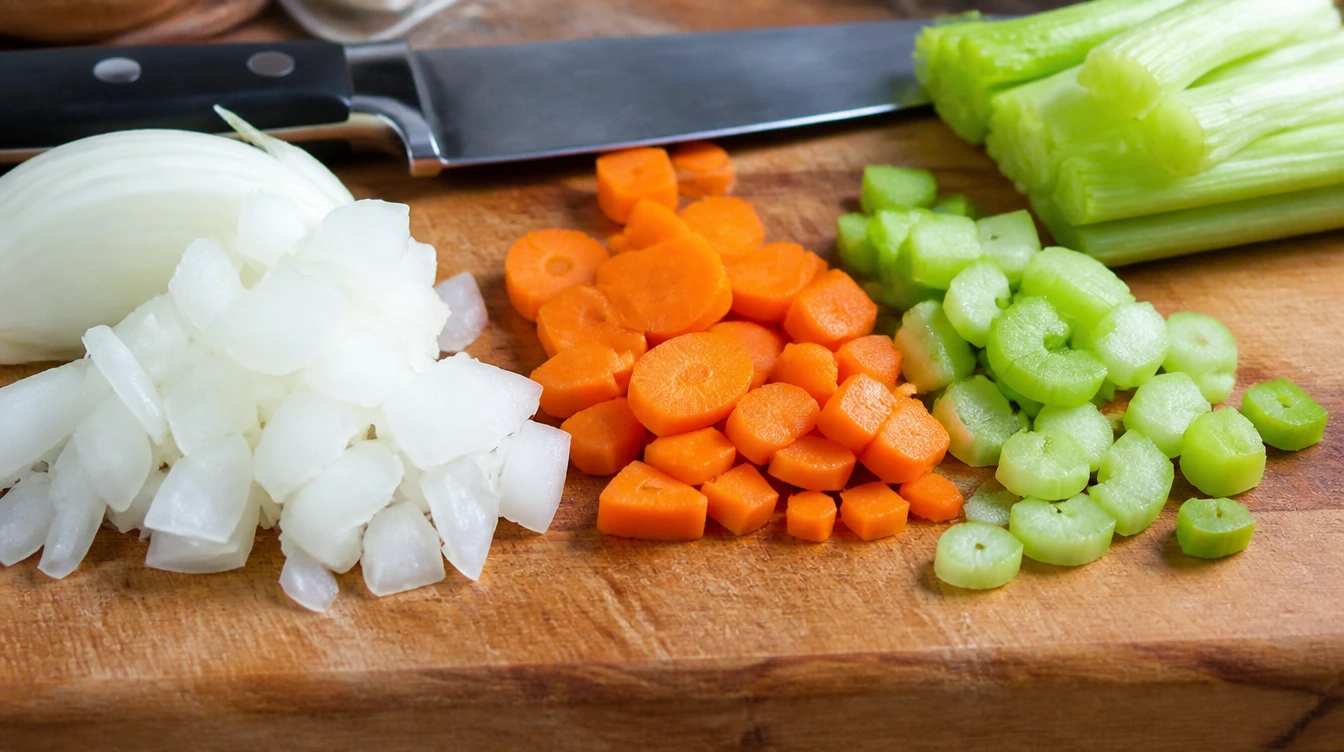
The size of your cuts depends on the food you are preparing, and you should keep this in mind when selecting your knife.
It is best to use a coarse or large cut when preparing soups or stocks because everything will be filtered or blended anyway.
In the case of sauces or stews, you may need a fine cut, especially if you do not want the vegetables to be obvious in the dish.
Step 2: Heat Butter or Oil
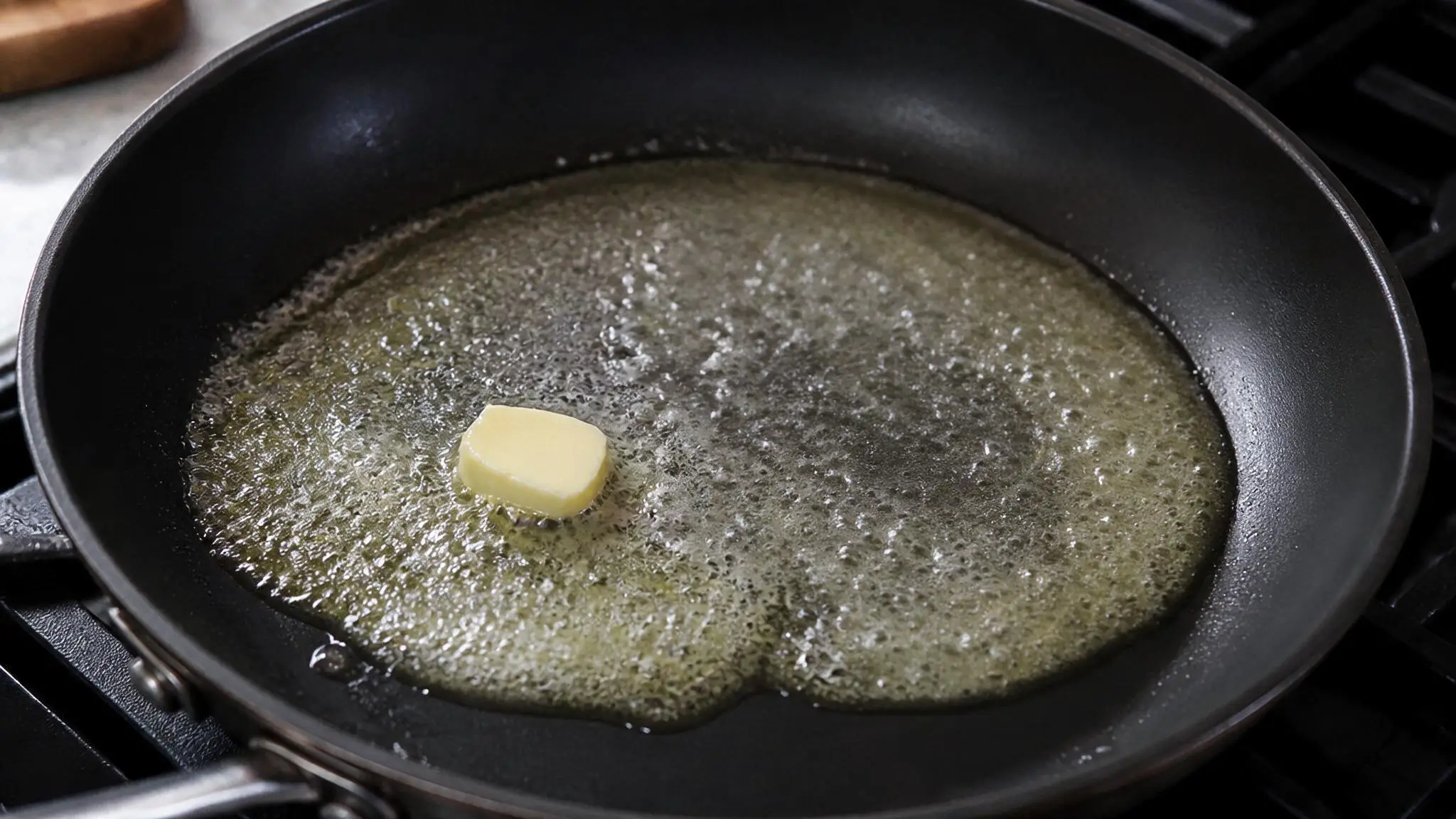
Both butter and oil work just fine; choose the one that best suits your recipe.
Butter adds a rich taste with a touch of sweetness, and it’s great for sautéing when you have a sauce or stew in mind. Oil can handle heat better, which is why it comes in handy when you need more control over the process.
You need to heat the pan before you put either butter or oil into it, since the cold pan will cause vegetables to stick and brown improperly.
Step 3: Cook Low and Slow
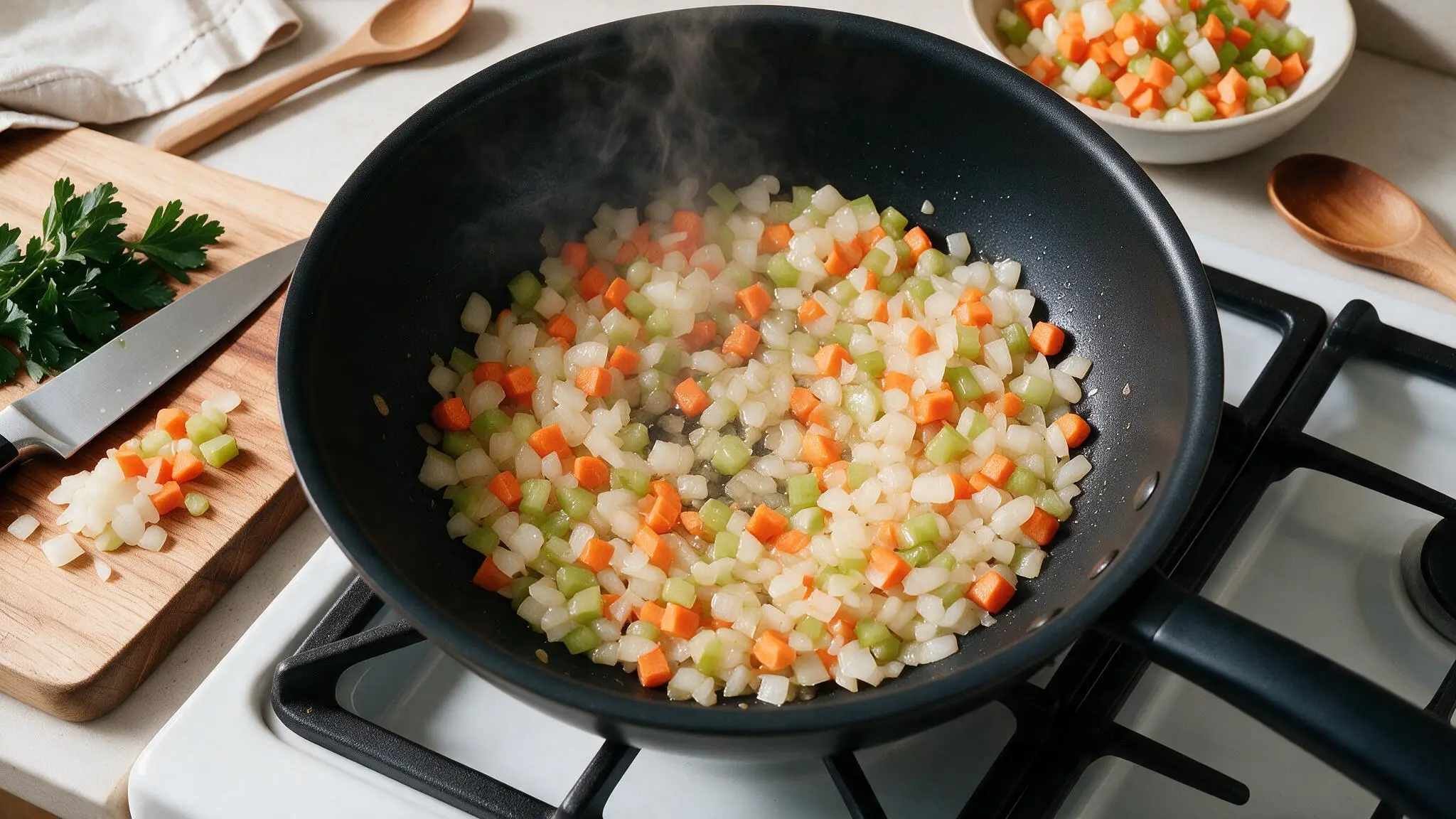
After you add the veggies to the pan, reduce the heat and be patient.
High temperatures will brown the ingredients way too quickly and burn the sugars before they have a chance to caramelize.
With low temperatures, the onions, carrots, and celery will soften slowly and release their sweetness rather than bitterness.
Toss occasionally to ensure none of the ingredients stick to the bottom or brown on one side. This process will take about fifteen to twenty minutes.
Good Mirepoix takes more time than effort, so let it sit and do its thing.
Step 4: Know When it is Ready
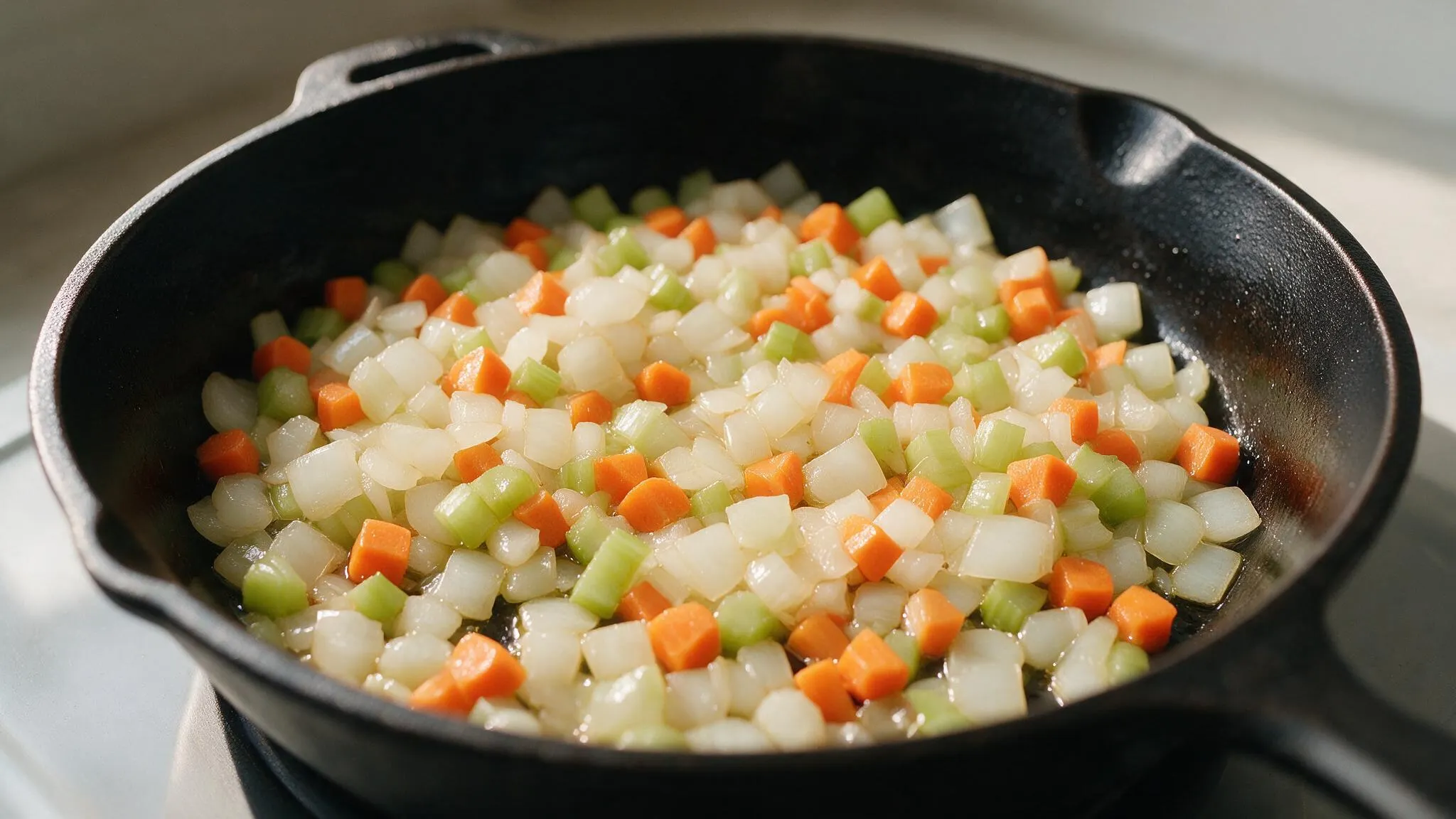
The mirepoix is ready when all the ingredients are soft, translucent, and aromatic.
The onions are no longer sharp but glassy in appearance, while the carrots and celery are tender enough to squish when poked with a spoon.
This is also true for color: everything should be pale and golden, not brown and crispy. Burnt spots, in this case, mean that it was cooked either too hot or too quickly.
Mirepoix by Dice Size
Not sure what size to cut? It really just depends on what’s cooking.
- Large dice: Go rough and chunky here, since you’ll strain it out of stocks and broths anyway.
- Medium dice: Keep pieces even and bite-sized for soups and stews.
- Small dice: Chop it fine for sauces and braised dishes, so it melts right in.
Longer cook times give bigger cuts room to soften up. Sauces move faster, so a finer chop helps everything blend in without anyone noticing.
What to Do with Mirepoix after You Make It
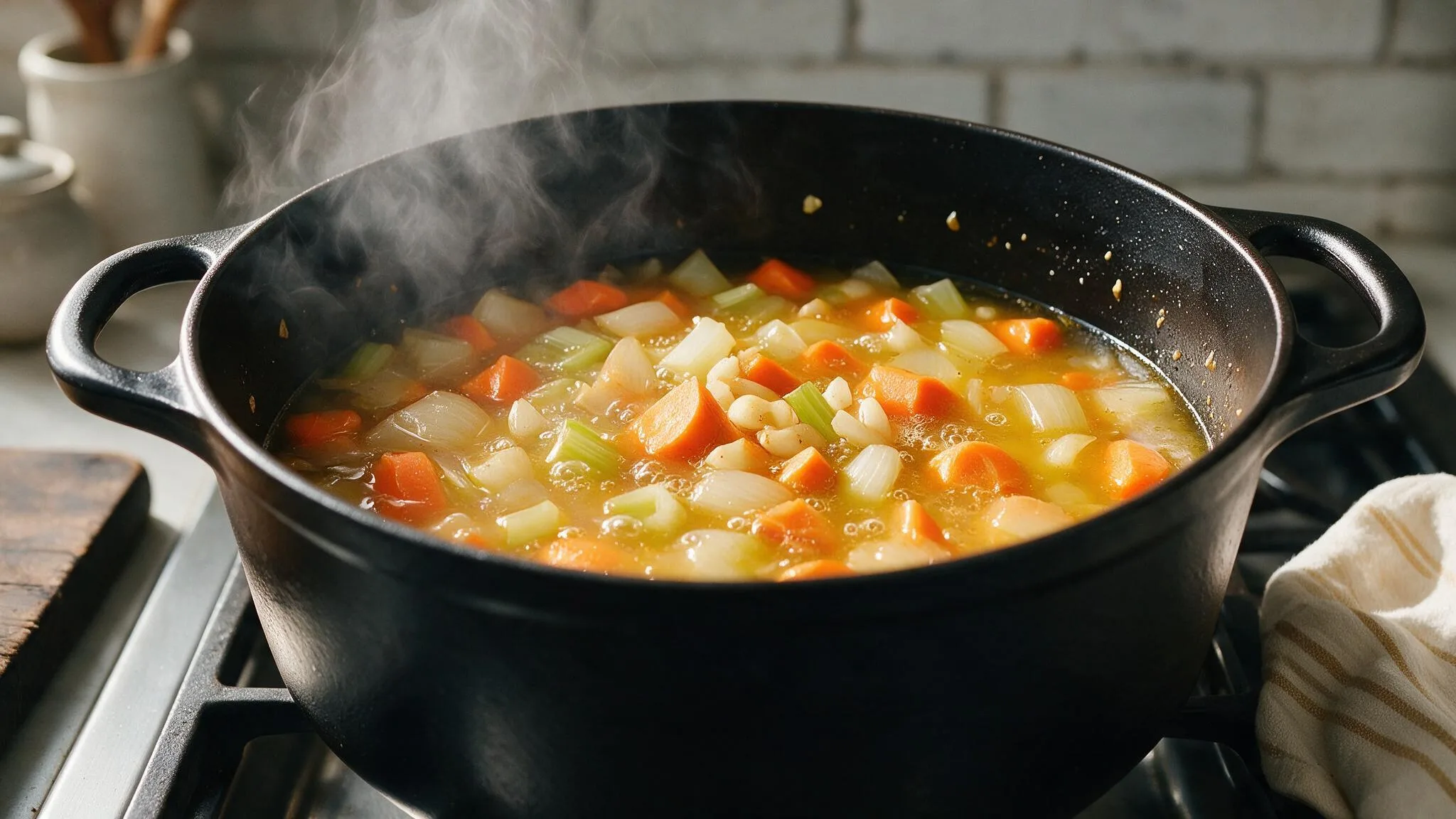
So your mirepoix is done – soft, golden, and smelling amazing. Now what?
This base doesn’t just sit around looking pretty. It goes straight to work in whatever you’re cooking next.
From soups to sauces, here’s exactly where it fits and how to use it right.
Add It to Soups
Soups are where mirepoix really shines. Once you have made your mixture, toss it in right away, then add your stock and simmer everything together.
It will dissolve in the liquid, creating taste from the first sip.
Build Better Stews
Stews benefit from mirepoix the same way soups do, but with less liquid to carry the flavor, so the base has to work harder.
Cook your batch, then build the stew on top of it, letting the meat and vegetables simmer alongside it for a rich, cohesive dish.
Make Stocks and Broths
The stocks require mirepoix to add that savory undertone of flavor.
Put your mirepoix into the pot along with other ingredients such as bones and/or vegetables, after which you will have to pour water into the mixture. Leave it to cook gently for hours, and your mirepoix will continue working throughout.
Remove it after cooking, and you’re left with a stock full of deep, rounded flavor.
Start Sauces
The preparation of sauces begins with having a flavor base to start with, and this is where the mirepoix comes in.
Start by cooking it down, then build your sauce on top of it, whether it’s tomato-, wine-, or cream-based. This goes unseen in the sauce but shows in the taste.
Use It for Braised Dishes
Braising asks for low heat and plenty of time, and mirepoix fits right into that rhythm. Lay it under your meat before adding liquid, so everything cooks together for hours.
As the dish braises, the vegetables break down and blend into the sauce, leaving behind flavor that clings to every bite.
Add It to Beans and Lentils
Beans and lentils can taste plain on their own, and mirepoix fixes that fast.
Cook your batch first, then add your beans or lentils along with water or broth. As everything simmers together, the vegetables break down and blend right into the pot.
What you’re left with tastes rich, not bland.
Use It in Rice and Grain Dishes
Rice and grains soak up flavor fast, so mirepoix gives them something worth absorbing.
Cook it down before adding your rice or grains, then pour in your liquid and let everything cook together. The grains pull in that buttery, savory base as they cook, turning a plain side dish into something worth going back for.
How to Store Homemade Mirepoix
Made more mirepoix than you need right now? No problem, it stores well if you handle it right.
- Fridge: Keep it in an airtight container for up to five days.
- Freezer: Portion it into bags or containers, and it’ll last up to three months.
- Labeling: Jot down the date, since it’s easy to forget how long it’s been sitting there.
When you’re ready to use it, just thaw and toss it straight into whatever you’re cooking. No extra steps needed.
Mirepoix Variations Around the World
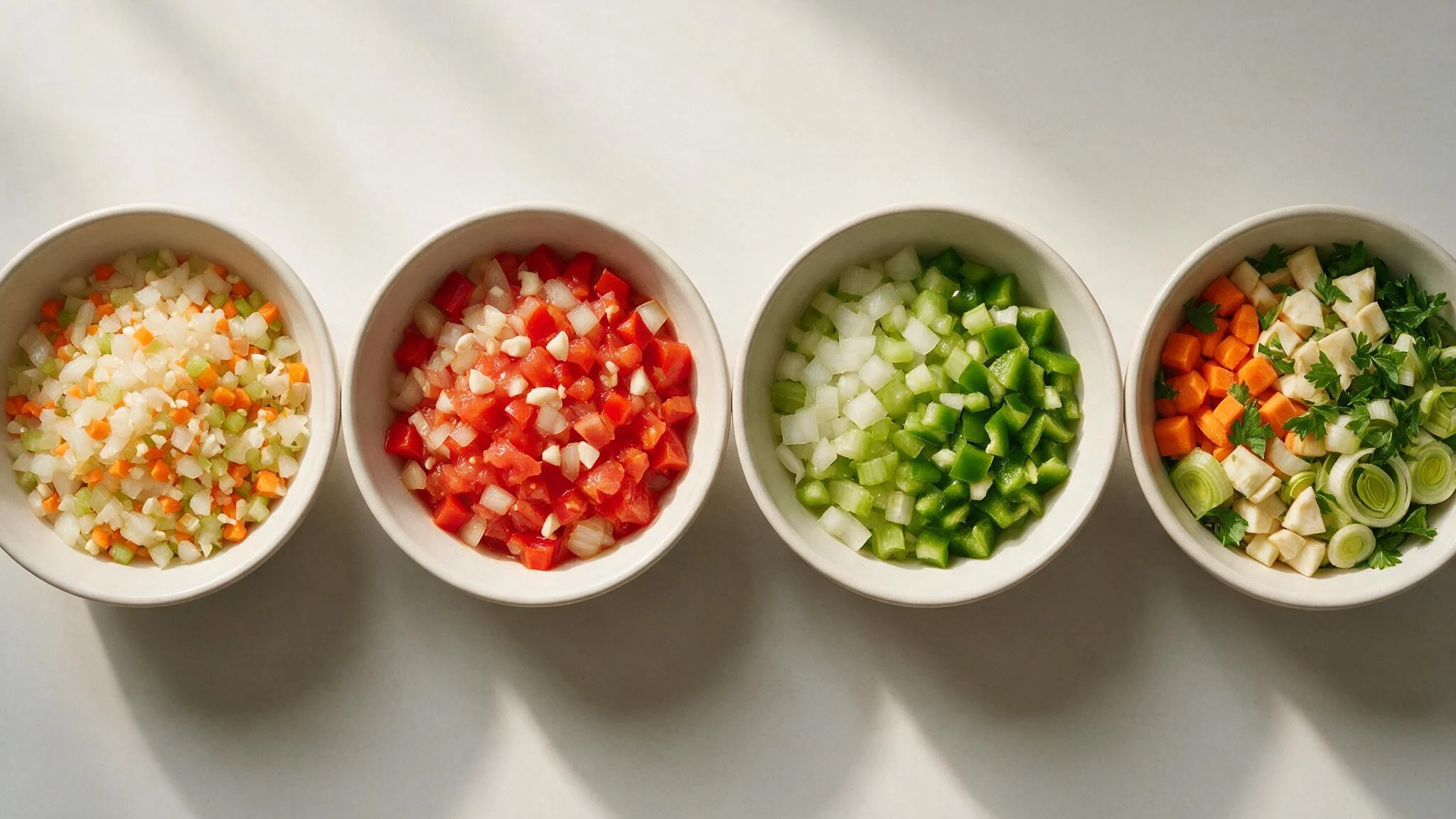
Mirepoix might be French, but almost every kitchen around the world has its own version. Different countries use their own vegetables and ratios, all chasing that same rich, savory base.
Here’s how a few other cultures put their own spin on it.
Italian Soffritto
Italian cooking calls its version soffritto, and it swaps butter for olive oil right away. The base sticks to onion, carrot, and celery too, but garlic often joins the mix for extra punch.
Soffritto gets cooked a little longer, letting the vegetables turn deeply golden before anything else goes into the pot.
It shows up in pasta sauces, risottos, and soups all across Italy.
Sofrito
Spanish and Latin American kitchens have their own version too, and they call it sofrito. This mix leans on onion, garlic, and bell pepper, sometimes with tomato added for extra body.
Cooks blend or finely chop everything, then simmer it until it thickens and becomes fragrant.
Sofrito shows up in rice dishes, beans, and stews, giving them that deep, homey flavor Latin cooking is known for.
Cajun Holy Trinity
Cajun cooking swaps carrot out completely and brings in bell pepper instead.
Onion, celery, and bell pepper make up what locals call the holy trinity, and it shows up in almost every Cajun dish.
Cooks often add garlic right alongside it, building even more depth before anything else joins the pot. Gumbo, jambalaya, and étouffée all lean on this base to get their signature flavor.
German Suppengrün
German kitchens take a different route entirely, using suppengrün, which means soup greens. This mix includes carrot, celery root, and leek, sometimes with a bit of parsley.
Cooks simmer it slowly in stocks and soups, letting the vegetables soften and release flavor over time.
It’s milder than mirepoix, but it still gives dishes that same comforting, homemade taste.
Conclusion
That smell that started this whole thing, onion and celery melting into butter, is worth chasing down in your own kitchen.
Mirepoix looks simple sitting there in the pan, but it carries the flavor for everything you build on top of it. And once you know what to do with mirepoix, soups taste richer, stews taste deeper, and sauces stop falling flat.
Every culture seems to have its own version of this trick, which says a lot about how well it works.
Next time a dish tastes like something’s missing, check the base first. Chances are, that’s exactly where the problem started.
Frequently Asked Questions (FAQs)
1. Can You Freeze Mirepoix?
Yes, mirepoix freezes well. Cook it first, cool completely, then store in freezer bags for up to three months.
2. How Long Does Mirepoix Last in The Fridge?
Cooked mirepoix stays fresh in the fridge up to five days when stored in an airtight container.
3. Can You Make Mirepoix Ahead of Time?
Absolutely. Cooking a big batch ahead saves time later, since it reheats easily for soups, stews, or sauces anytime.