Paint stores sell separate wall and trim colors for a reason, yet plenty of homeowners now skip that split.
Painting walls and trim the same color turns a room into one smooth, continuous surface, with no two shades competing.
Some owners love how it hides busy trim work and unifies mismatched molding. Others worry the approach will flatten a room’s architectural detail.
This blog clearly explains when the one-color look works, when it falls short, and how to choose the right sheen.
Should You Paint Walls and Trim the Same Color?
Yes, painting walls and trim the same color works in most rooms as it fits best in spaces with heavy or mismatched trim.
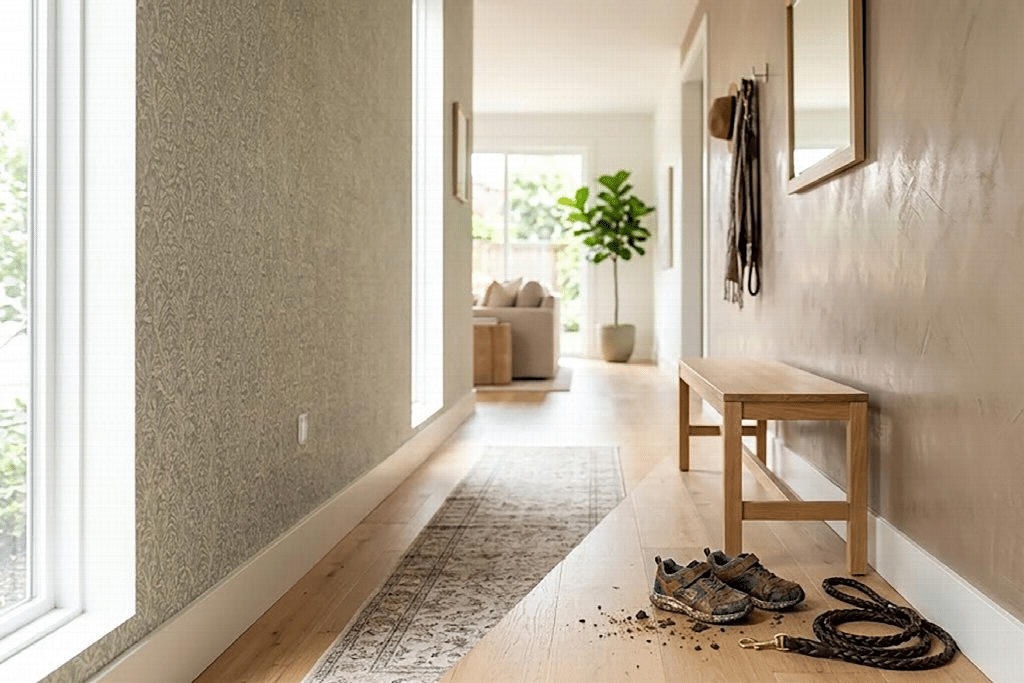
A hallway with deep baseboards, window casings, and a chair rail can look chopped up when each piece is a different shade. One flat color removes that clutter.
The room reads as a single space rather than as pieces. The exception is a formal room built around crisp white trim.
A traditional dining room with dark wood furniture still often gets far more from contrast than from a match.
Why the One-Color Look Works So Well?
A single color across walls and trim solves a few problems at once, especially in rooms with a lot of trim detail.
Ties Busy Trim Together
Wainscoting, built-ins, and window casings can look disjointed when they’re painted white against a colored wall. One color blends them into a single, calmer surface.
Adds Height
A monochrome room draws the eye up and along the walls instead of stopping at a trim line, which can make ceilings feel taller.
Makes Small Rooms Feel Bigger
Without a color break at the baseboard, the eye reads the room as a single continuous shape rather than a boxed-in space.
Costs Less than a Full Redesign
Repainting in one shade is often cheaper and faster than sourcing new trim, molding, or built-ins to match a style update. For a fast refresh, painting walls and trim the same color beats a full trim replacement almost every time.
Visual Representation of this Painting Style
This one-color look works better in some spaces than others. It depends on how much trim detail and natural light a room gets.
1. Hallway With Heavy Trim
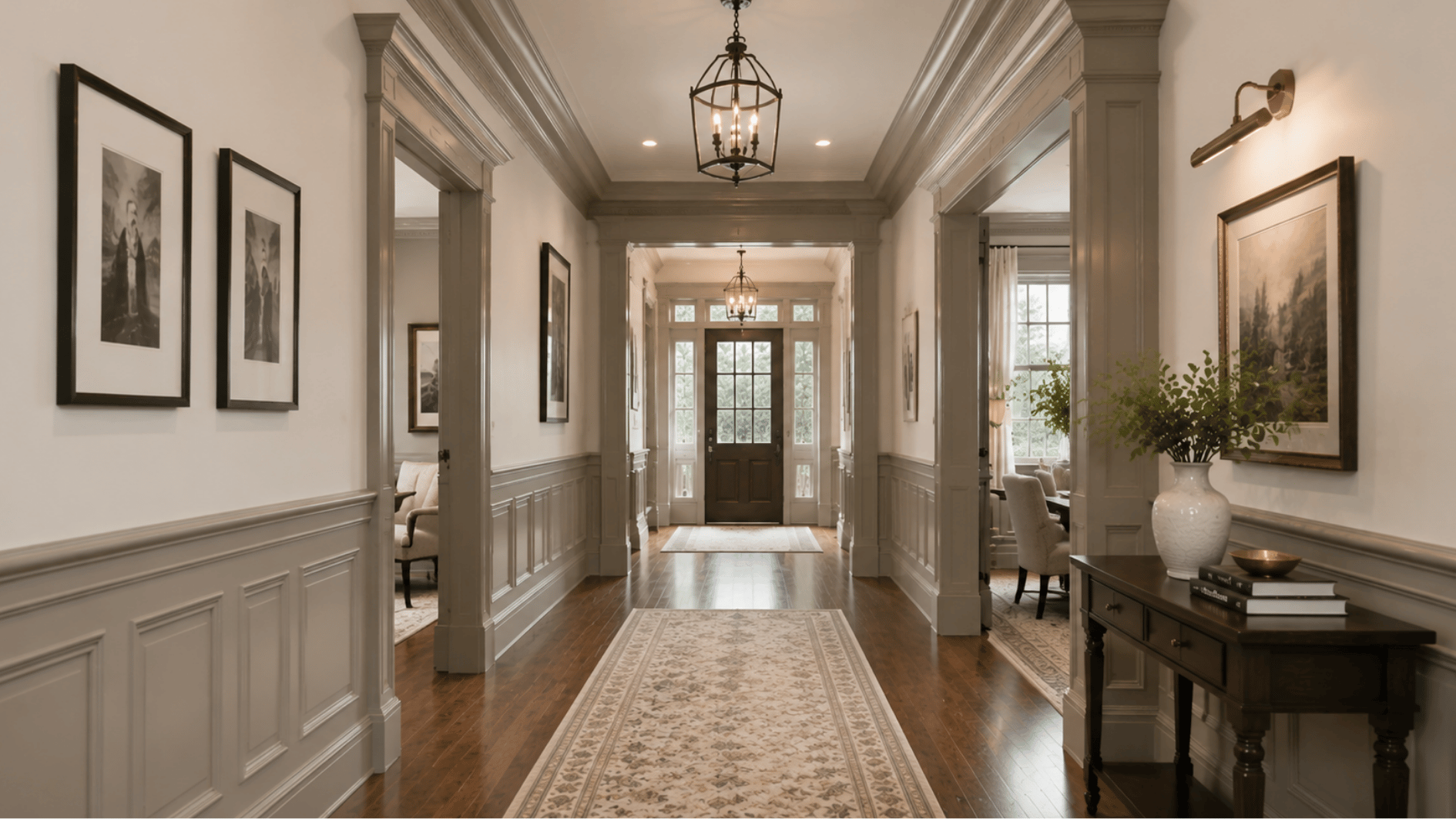
A hallway with heavy trim benefits from lighter wall colors that balance the detailed woodwork. Soft white, warm beige, or pale grey can keep the space from feeling narrow.
Using a slightly darker shade on the trim can also highlight its character while creating a polished, intentional look.
2. Small Home Office
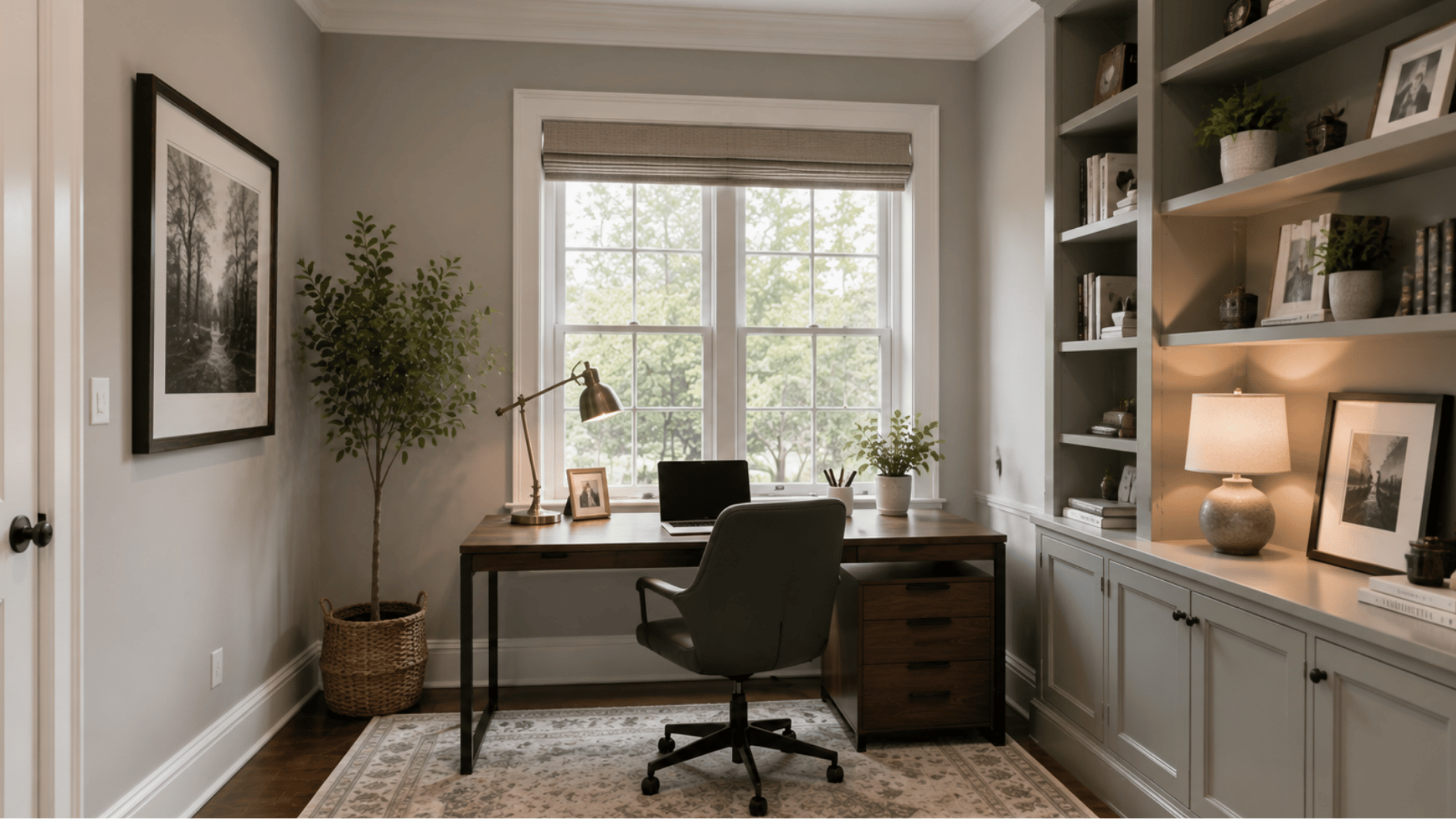
A small home office should feel bright, organized, and free from visual clutter.
Light neutrals, muted greens, or soft blues can make the room appear more spacious while supporting concentration.
Built-in shelves, compact furniture, and good task lighting help you use every corner without making the workspace feel cramped.
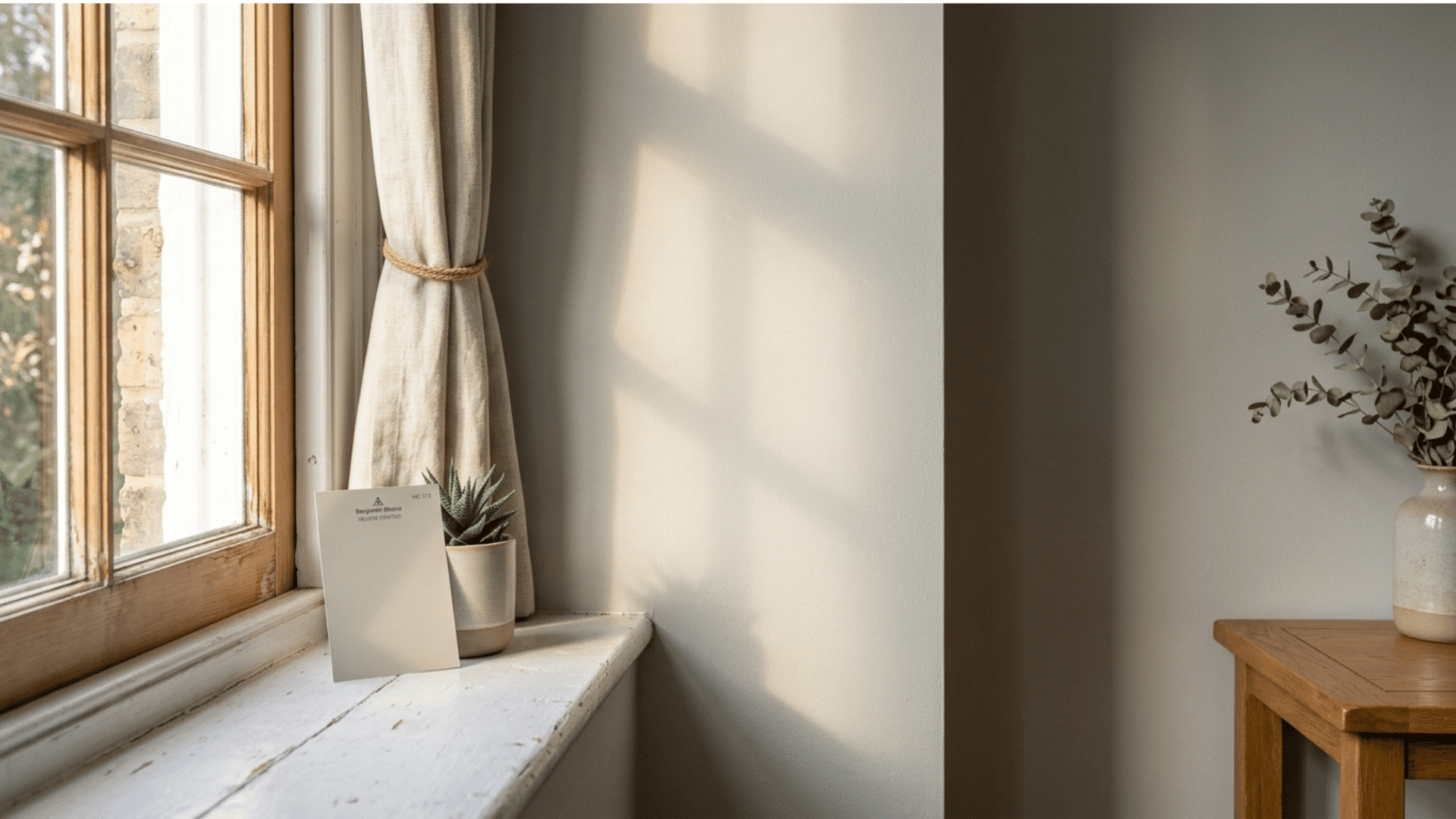
If you're weighing two moodier neutrals against each other for this kind of room, comparing undertones side by side makes the decision a lot easier than staring at swatches.
3. Formal Dining Room
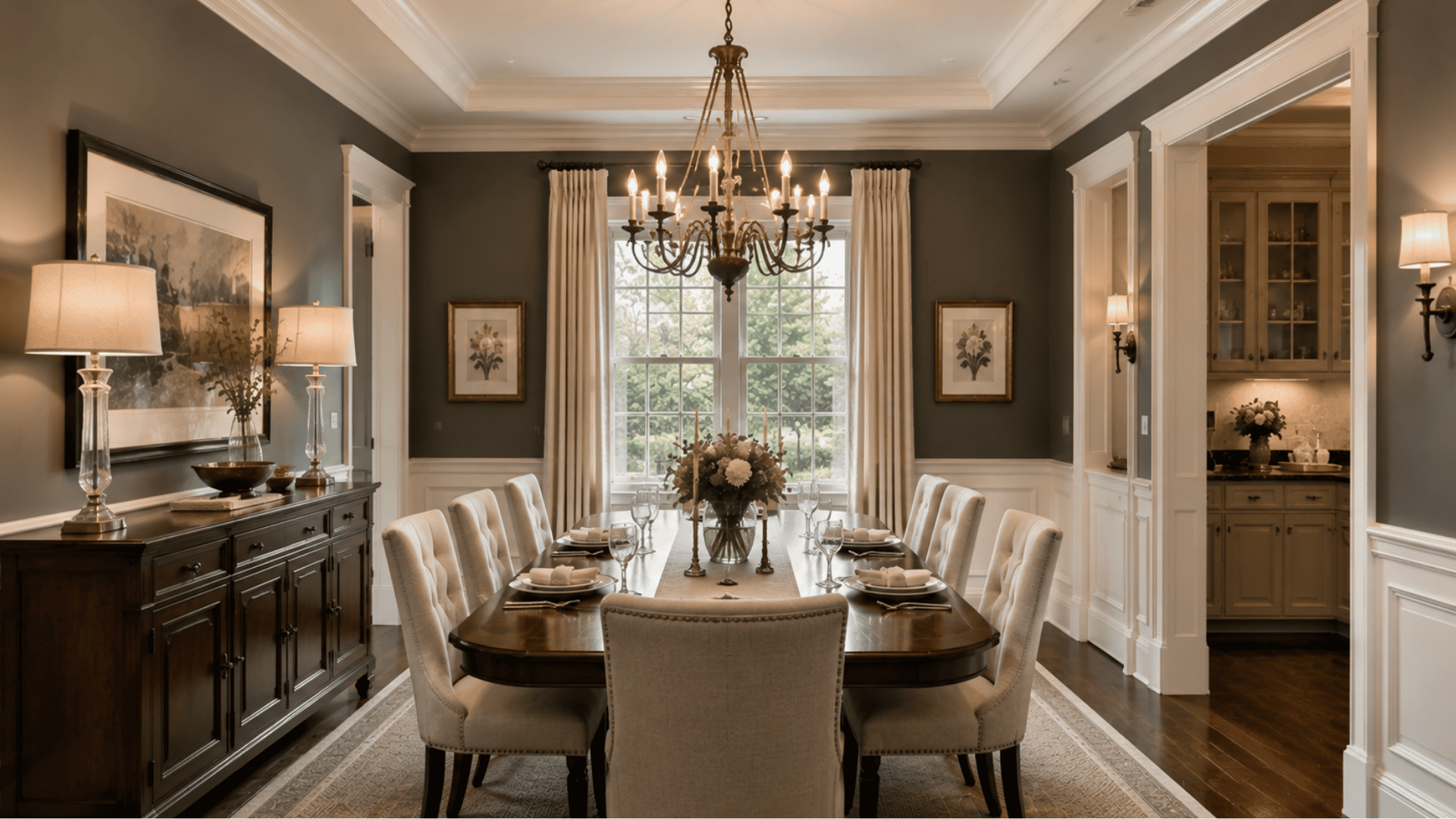
A formal dining room can handle deeper colors and richer finishes than casual spaces. Navy, burgundy, forest green, or charcoal can create a refined setting for meals and gatherings.
Decorative lighting, traditional furniture, and layered textures add warmth, ensuring the room feels welcoming rather than overly stiff or ceremonial.
4. Kids’ Playroom
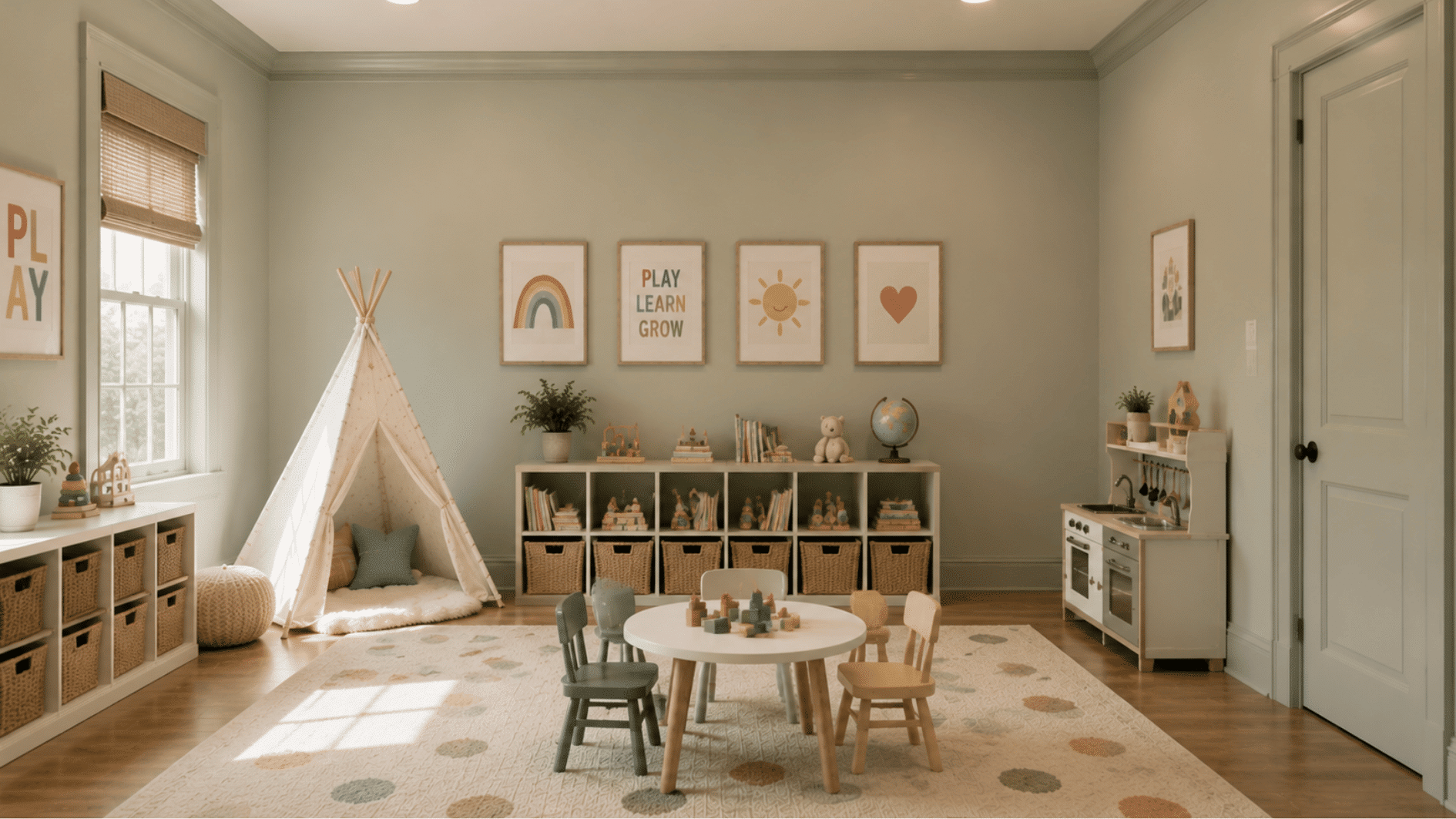
A kids’ playroom should feel cheerful while remaining practical and easy to maintain. Soft primary colors, washable paint, labeled storage, and open floor space support creative activities and active play.
A balanced color scheme prevents the room from becoming overwhelming, while flexible furniture allows it to change as children grow.
5. Open-Concept Living Room
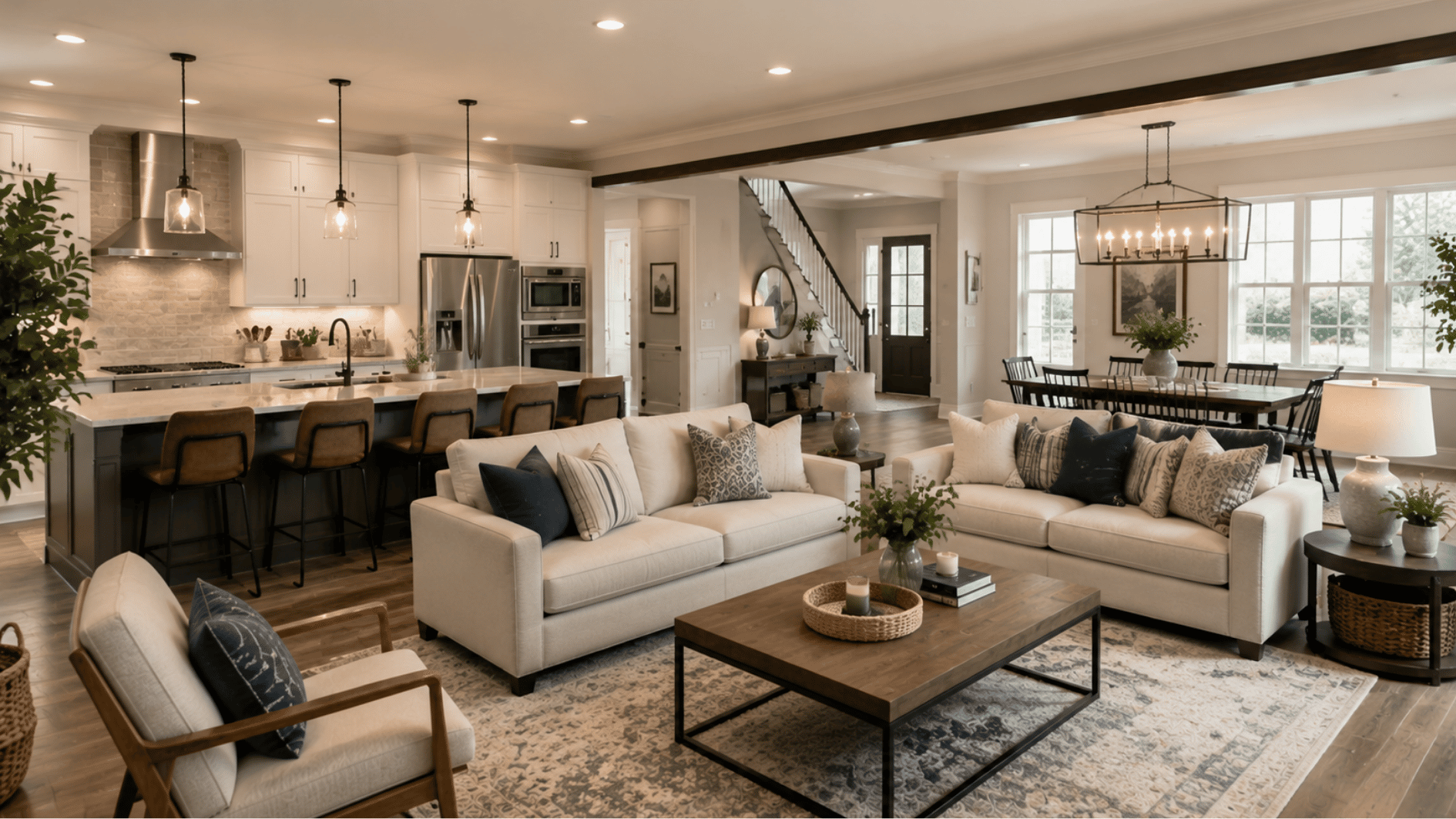
An open-concept living room needs a connected color palette that flows naturally into nearby spaces.
Repeating two or three shades across walls, rugs, and furnishings creates consistency.
Separate seating zones with lighting or area rugs to define each function while keeping the overall layout spacious, comfortable, and visually coordinated.
How to Choose the Right Sheen?
Sheen does the heavy lifting when walls and trim share one paint color. Skip the finish change, and the room can look flat, like the trim was never painted at all.
| Surface | Best Sheen | Durability | Why It Works |
|---|---|---|---|
| Walls | Flat / Eggshell | Low–Medium | Hides minor flaws |
| Baseboards | Satin / Semi-gloss | High | Handles daily wear |
| Window Casings & Moldings | Satin / Semi-gloss | High | Easy to clean |
| Interior Doors | Semi-gloss | High | Resists marks |
| Wainscoting & Paneling | Satin / Semi-gloss | High | Adds contrast |
| Cabinets & Built-ins | Semi-gloss | High | Creates a smooth finish |
| Ceiling (If Matching) | Flat | Low | Reduces glare |
What are the Downsides to Watch?
Rooms with detailed molding, crown molding, or paneled doors can lose that detail under a single flat color. The trim just disappears into the wall.
It also raises the stakes if you change your mind later. Repainting a monochrome room means recoating both walls and trim, not just one element. That adds time and paint cost down the road.
Bright, sunlit rooms show every roller mark more clearly with no contrast to break up the surface.
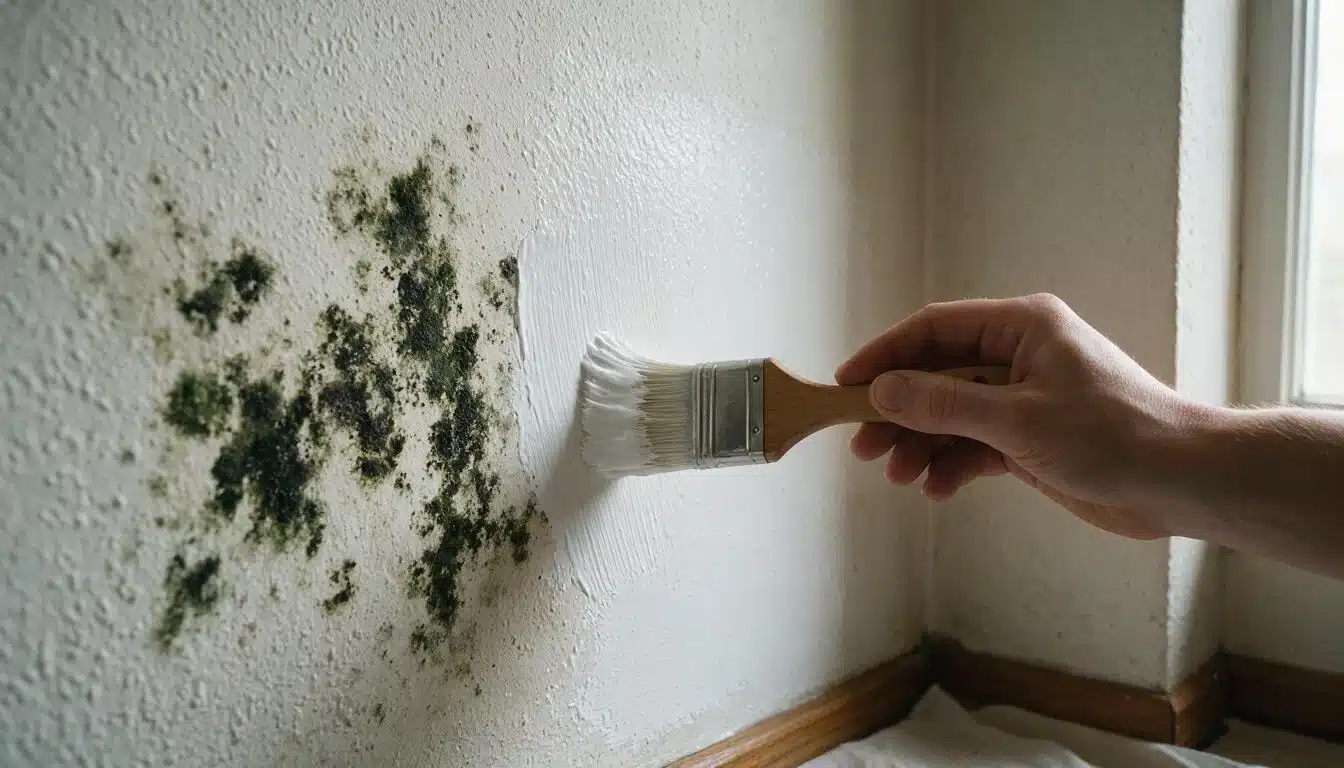
Prep work and a steady hand matter more here than in a two-tone room. Don’t skip the sanding and priming.
Choosing a Shade That Works in Both Flat and Glossy Finishes
Choosing a color here is different from picking a single wall color, as it has to work with both flat and glossy finishes.
| Category | Shades | Suggested Paints |
|---|---|---|
| Soft Whites & Neutrals | Ivory, cream, beige, greige | SW Accessible Beige (7036) or BM Edgecomb Gray (HC-173) |
| Light Earthy Tones | Taupe, sandy beige, warm clay | SW Kilim Beige (6106) or BM Revere Pewter (HC-172) |
| Muted Greens & Blues | Sage, olive, dusty blue, teal | SW Evergreen Fog (9130) or BM Aegean Teal (2136-40), Ashwood Moss for olive |
| Classic Grays | Light gray, warm charcoal, greige | SW Agreeable Gray (7029) or BM Balboa Mist (OC-27), Stonington Gray for deeper |
| Deep Accent Shades | Navy, forest green, charcoal, brown | SW Naval (6244) or BM Kendall Charcoal (HC-166) |
| Soft Pastels | Pale blue, blush, lavender | BM Palladian Blue (HC-144) or BM Rose Blush |
Test any pick in both flat and satin/semi-gloss before committing, sheen changes depth more than people expect.
The Bottom Line
Painting walls and trim the same color comes down to two things. How much trim detail your room has, and how ready you are to commit to one shade.
Rooms with busy molding, small footprints, or mismatched trim usually benefit the most. Formal rooms built around crisp white trim usually don’t need the change.
Not ready to commit a whole house to it? Start small: a hallway, a powder room, or a home office. Test the color in both a flat wall finish and a semi-gloss trim finish on the same wall first.
Frequently Asked Questions
Does Painting Walls and Trim the Same Color Affect Resale Value?
it rarely hurts resale if the shade stays neutral, as buyers respond to clean, well-kept paint more than color-matching, so neutrals protect value better than bold monochrome choices.
What Order Should You Paint In: Trim First or Walls First?
Paint trim first, then tape it off once dry and roll the walls. This order gives cleaner lines and prevents fresh trim paint from lifting.
Should the Ceiling Match the Walls and Trim, or Stay White?
A white ceiling keeps a room grounded and avoids a cave-like feel. Matching works best in small powder rooms where a fully enclosed, cocoon effect is the goal.