Exterior paint is one of the hardest decisions in a home project, not because the options are limited, but because you’re choosing under the wrong conditions.
But Benjamin Moore has some of the most loved exterior colors out there.
We’ll show you exactly which shades work best and why.
By the end of this post, you’ll know the top Benjamin Moore exterior paint colors, how to choose the right one for your home, and what makes each shade stand out.
Qualities to Look for in the Exterior Colors
Exterior paint behaves differently in the field than it does on a sample card. Sunlight, shade, and nearby materials all affect how a shade finally looks on the house.
That’s why it helps to focus on a few simple points before deciding.
- Weather Resistance: Look for a formula rated for UV resistance, colors fade faster on south-facing walls that take direct sun all day.
- Light Response: Test the paint sample in both full sun and full shade before committing. Some colors shift dramatically between the two.
- Surface Match: Siding, brick, stone, and wood each absorb color differently. A paint that looks warm on wood can look muddy on brick.
- Tone Balance: What reads as subtle on a 4-inch chip can feel overwhelming at scale. Go one shade lighter than you think you need on large surface areas
These points keep things practical and reduce second-guessing when comparing different options.
Exterior Paint Types, Formulas, and Finishes
Color choice gets most of the attention, but the formula underneath it determines how long any of it actually lasts.
The following is what you need to know:
- Paint Types: Latex (water-based) paint is the most popular choice. It dries fast, cleans up easily, and holds up well against the weather.
- Oil-based paint takes longer to dry but provides a harder, more durable finish, making it great for trim and doors.
- Formulas: Benjamin Moore offers both 100% acrylic and alkyd-modified formulas. Acrylic works well on most surfaces, while alkyd gives a smoother, harder coat.
When it comes to finishes:
- Flat/Matte: Hides surface flaws well.
- Satin: Easy to clean, good for siding.
- Semi-gloss: Best for doors and trim.
Latex paint works best with satin or flat finishes. Oil-based paint pairs well with semi-gloss for doors and trim.
Benjamin Moore Exterior Paint Colors
These aren’t just popular picks; they’re colors that perform well in real-world conditions across different climates, home styles, and lighting conditions.
1. Revere Pewter HC-172
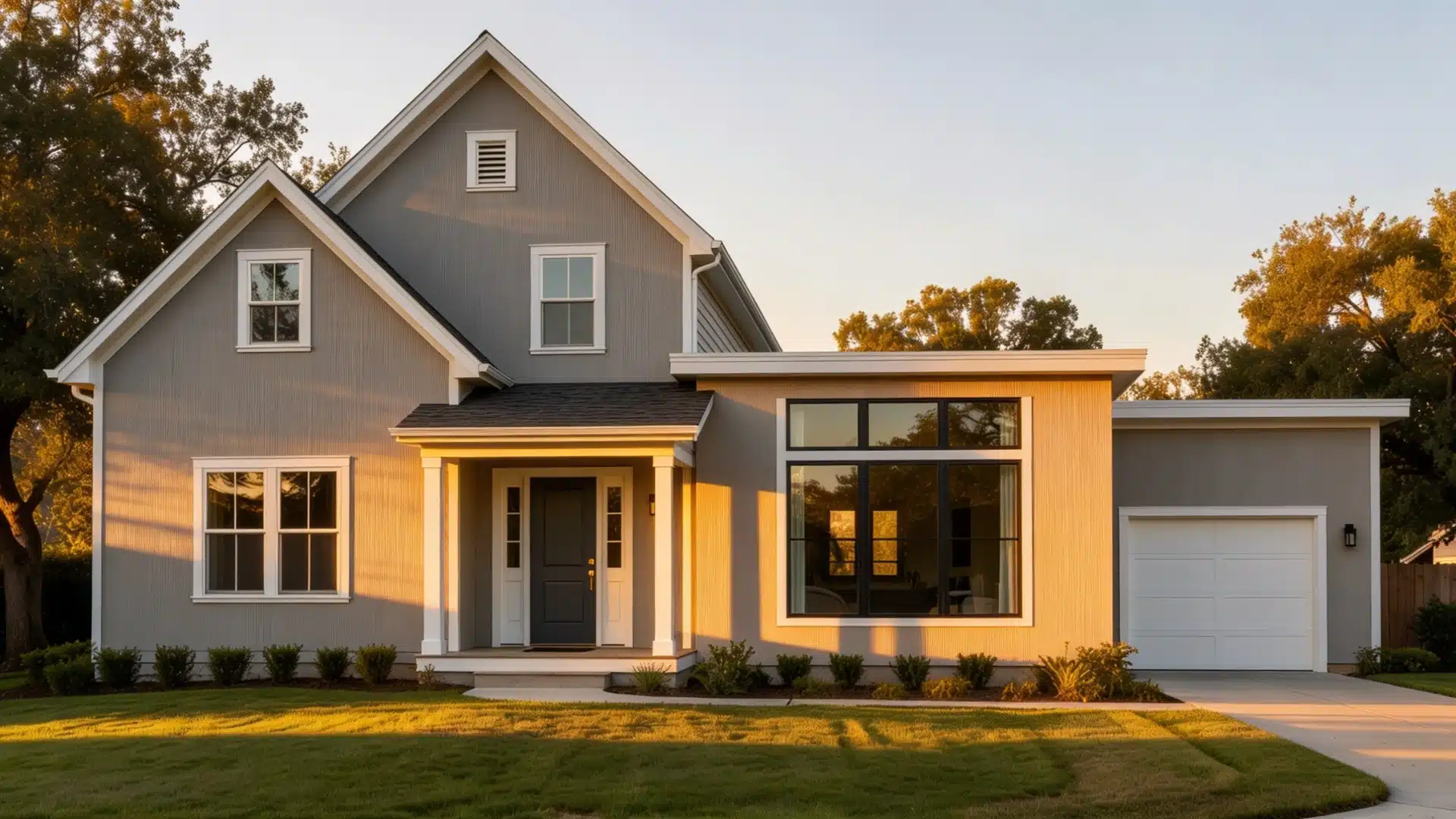
Revere Pewter HC-172 is a well-known greige that sits between gray and beige. It adapts easily to changing light conditions.
- Balanced gray-beige tone.
- Works across many home styles.
- Soft, neutral exterior choice.
In direct afternoon sun it can pull more beige; on overcast days it reads closer to gray. Worth testing both conditions before committing.
2. White Dove (OC-17)
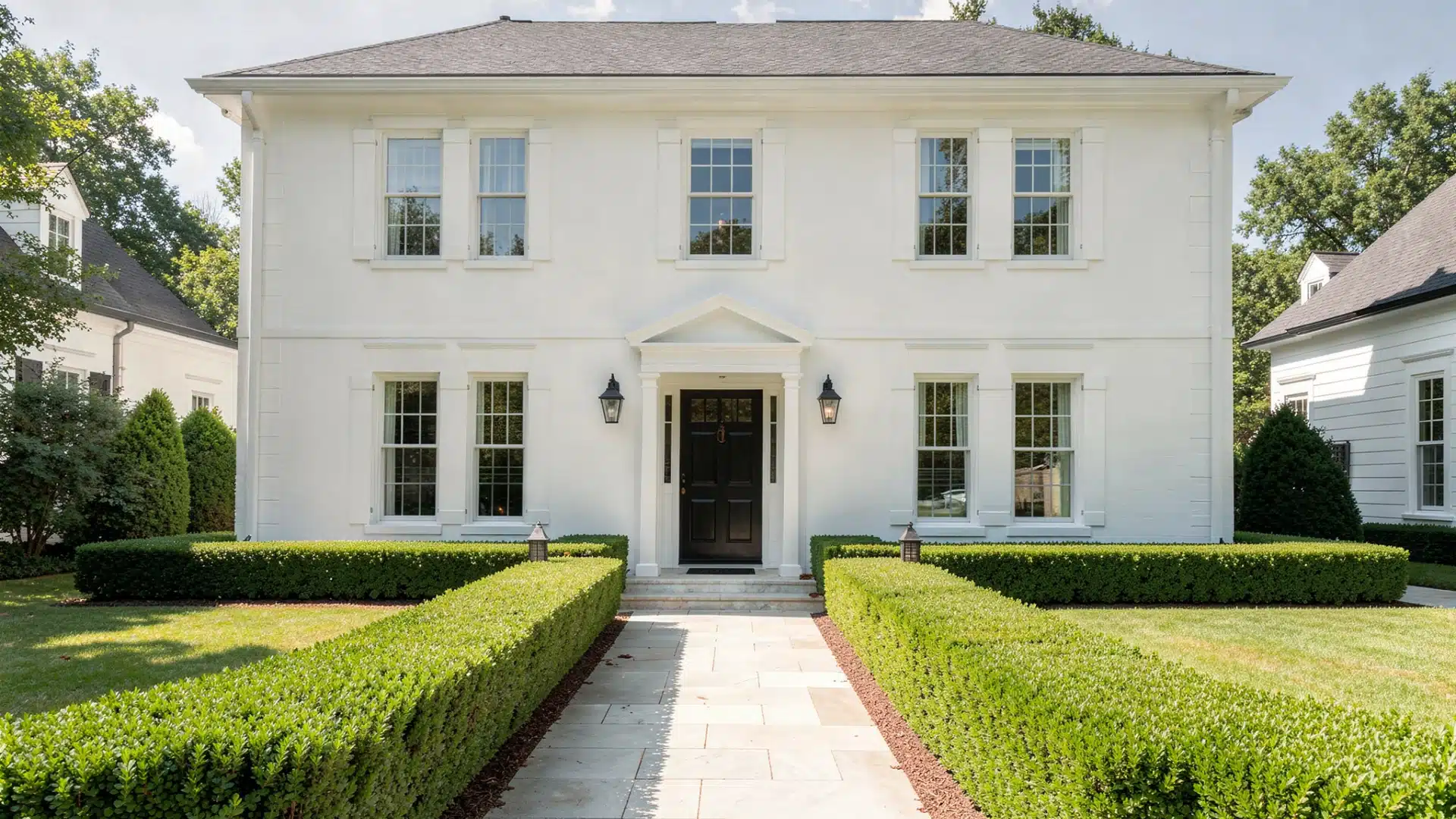
For a clean, crisp white that doesn’t feel harsh on exteriors, use White Dove (OC-17). It works well for trim or full siding when you want a fresh, simple look.
- Bright white base with slight softness.
- Works with both modern and classic homes.
- Pairs easily with darker accents.
You can go for this if you want clean, bright exteriors and crisp trim contrast.
3. Cape May Cobblestone 1474
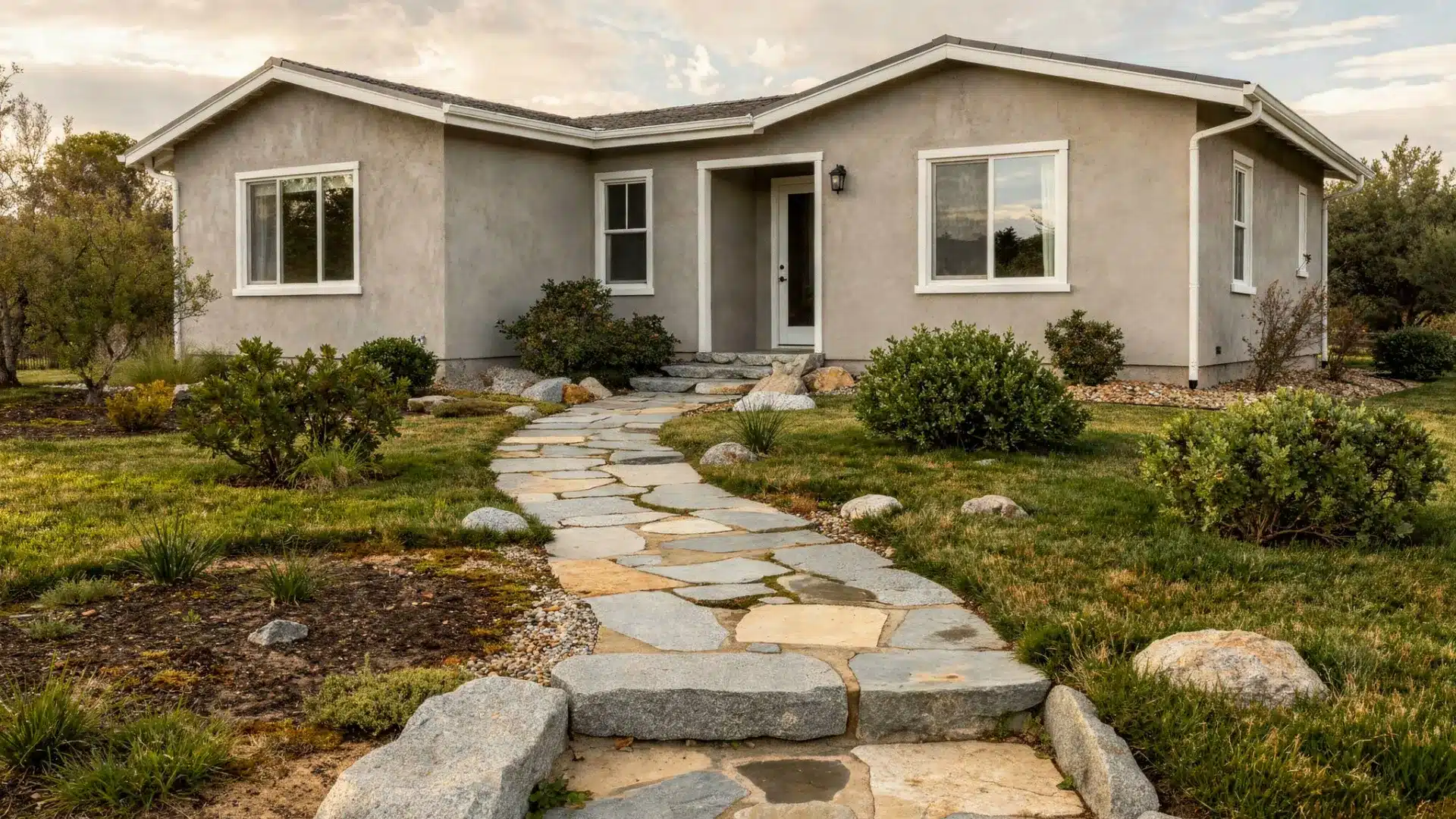
Cape May Cobblestone 1474 is a soft gray-beige that feels grounded without looking heavy. It sits nicely in natural surroundings and blends well with stone or wood finishes.
- Neutral with earthy balance because of the gray color.
- Good for full exterior coverage.
- Works well with white or black trim.
4. Louisburg Green HC-113
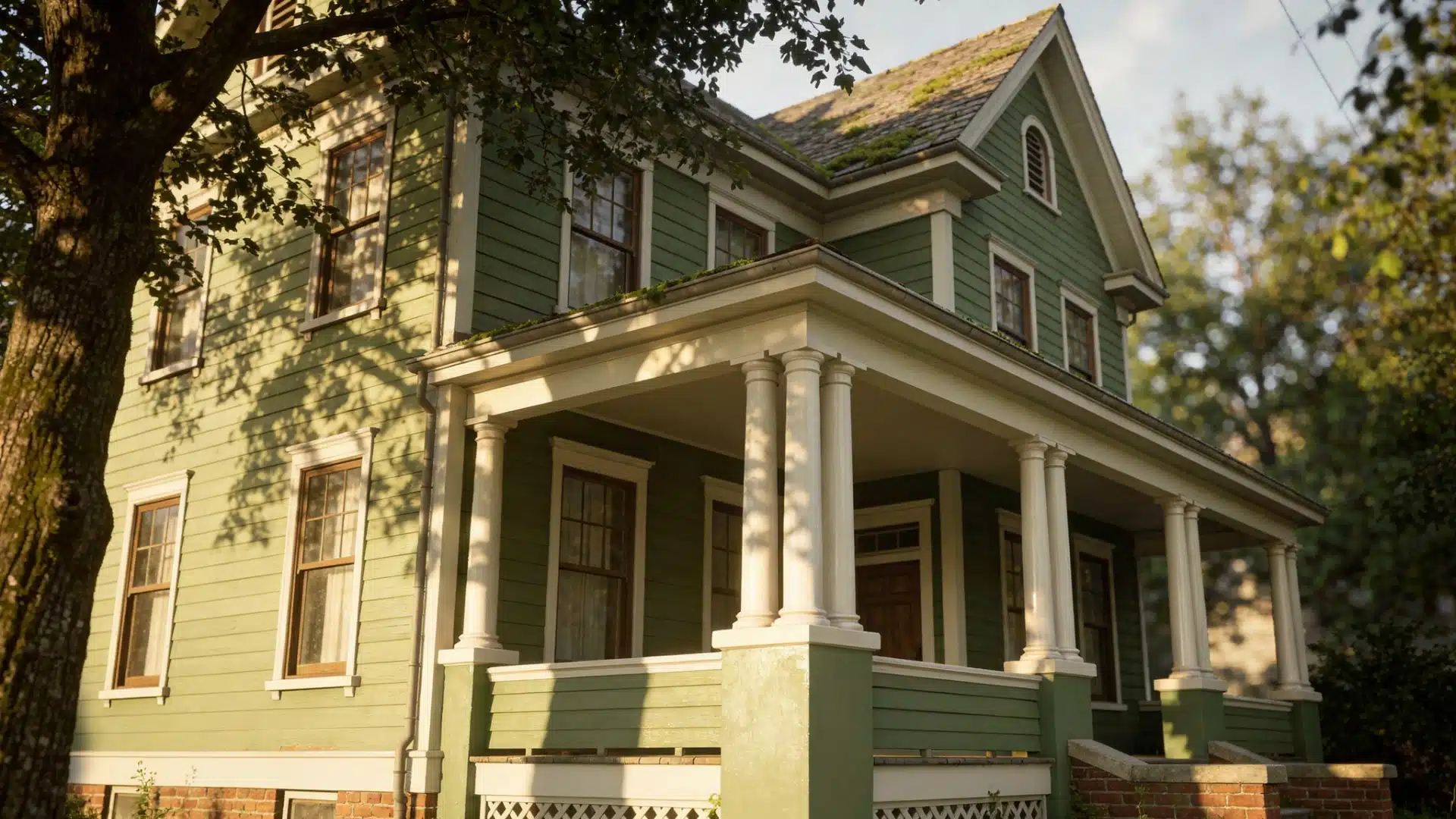
Louisburg Green HC-113 suits older-style homes and adds depth without feeling too bold or loud. It is a clssic and muted green.
- Soft green with a gray undertone
- Works best with cream trim
- Fits traditional architecture well
The gray undertone keeps it from reading too saturated in photos, but in person it has real presence, especially against aged brick.
5. Pale Oak OC-20
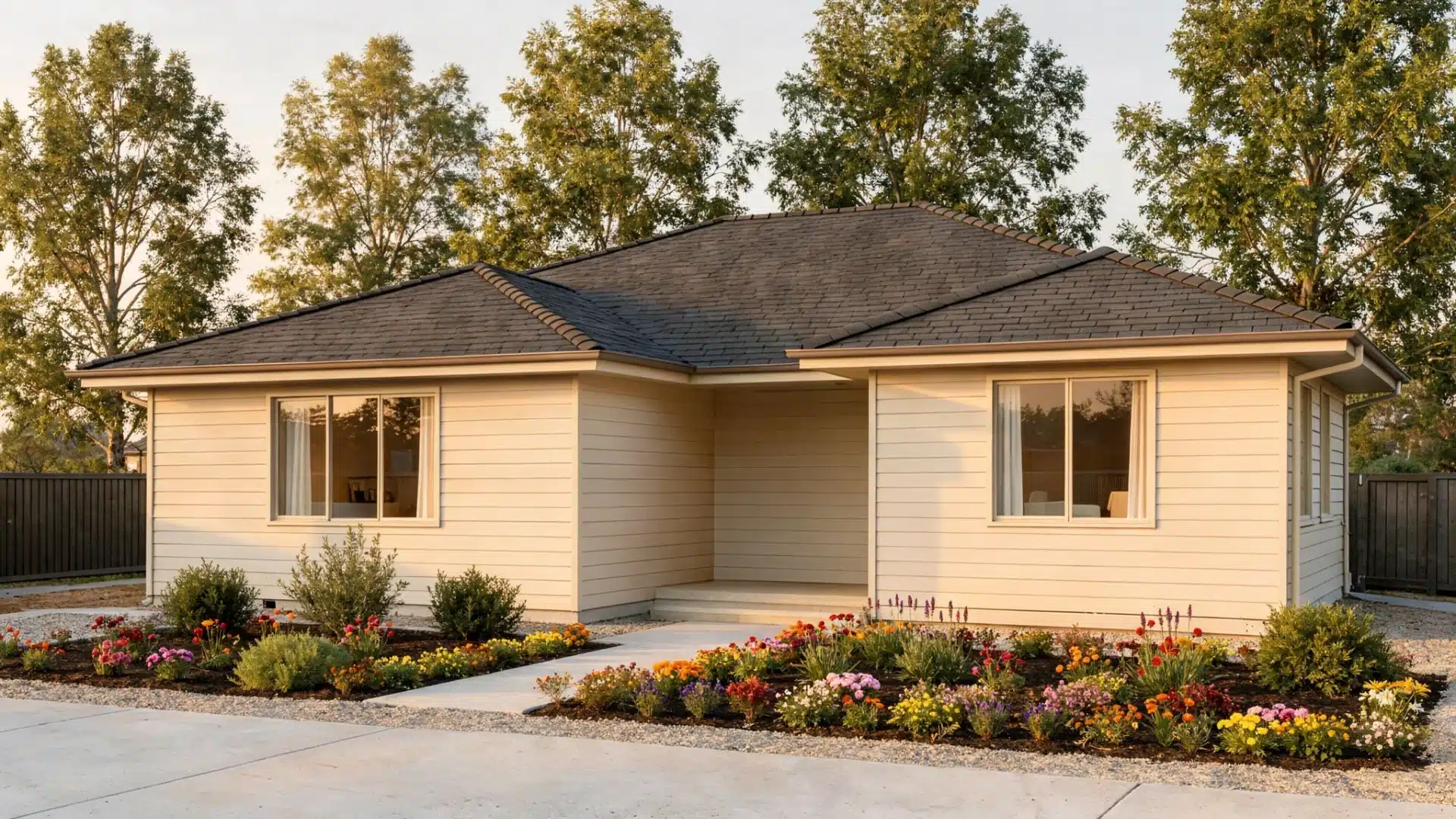
A soft, light neutral, Pale Oak OC-20 is one of those Benjamin Moore exterior paint colors that leans balanced.
It gives homes a calm, welcoming feel without going too white or too beige.
- Light beige with subtle warmth
- Looks clean in natural light
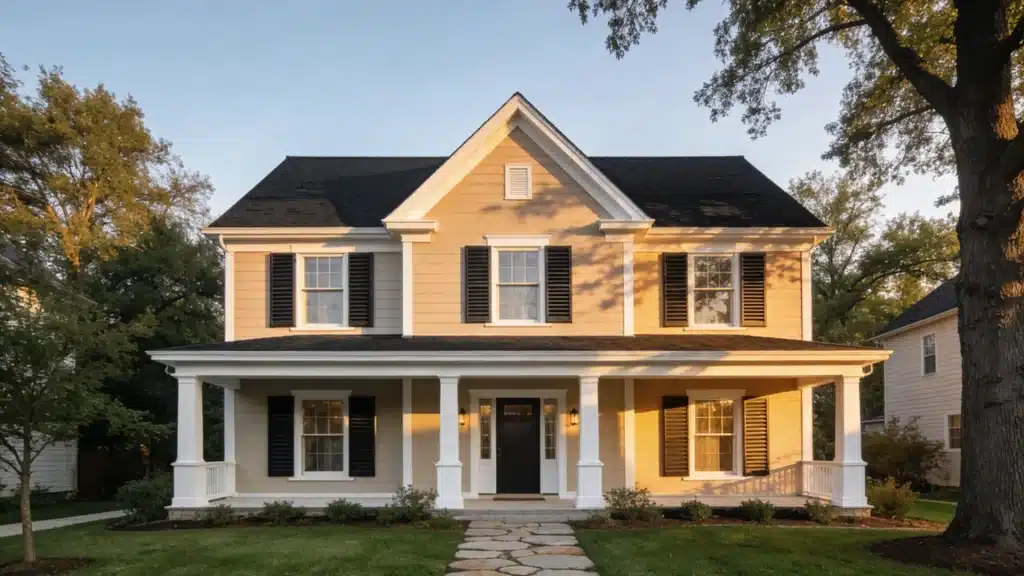
- Pairs well with dark roofing
6. Carrington Beige HC-93
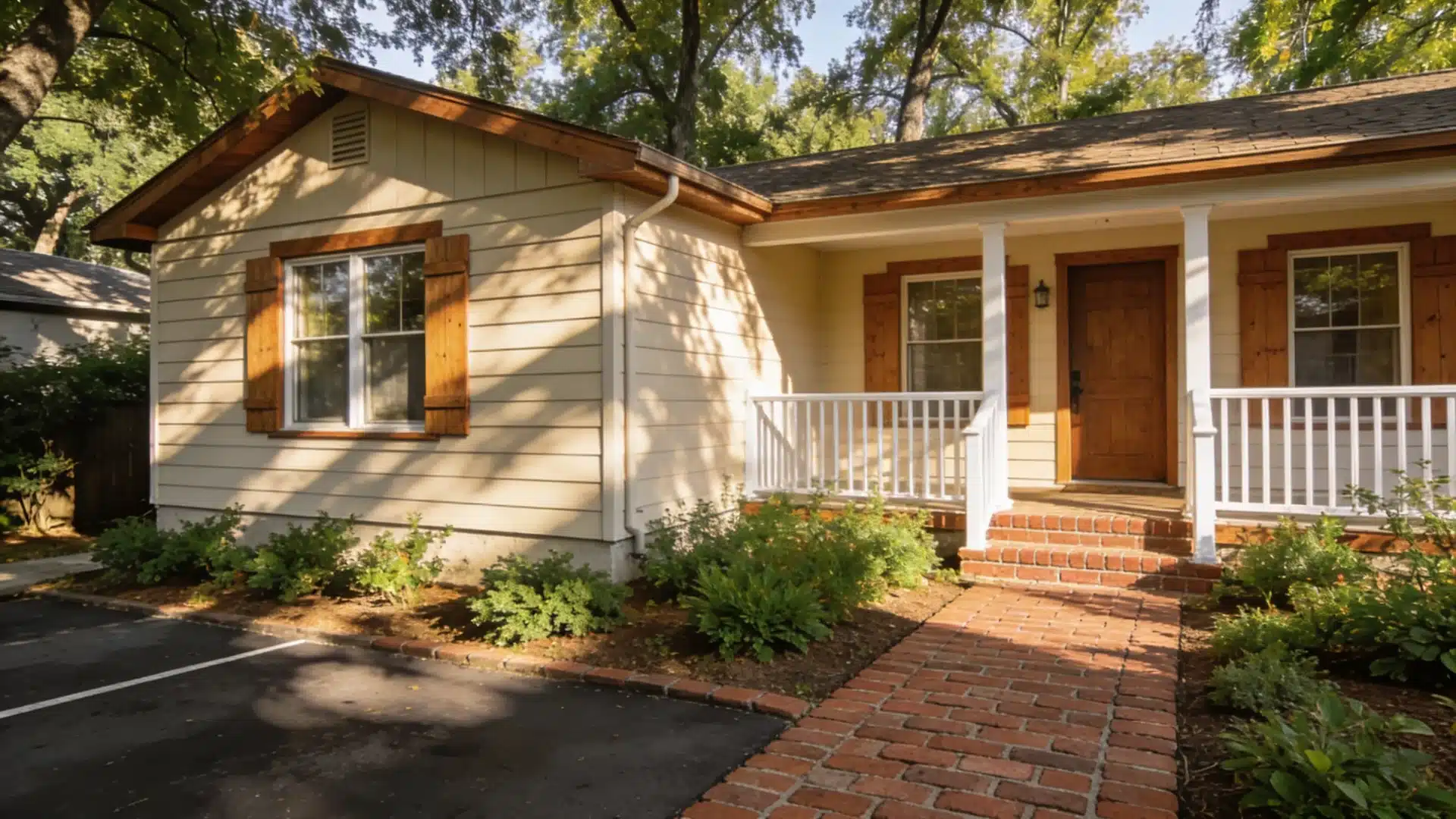
Carrington Beige HC-93 is a deeper beige that feels steady and classic. It’s a safe pick for larger surfaces where you want comfort without brightness.
- Medium beige with muted base
- Works well in shaded areas
- Matches wood and brick tones
7. Blacktop 2135-10
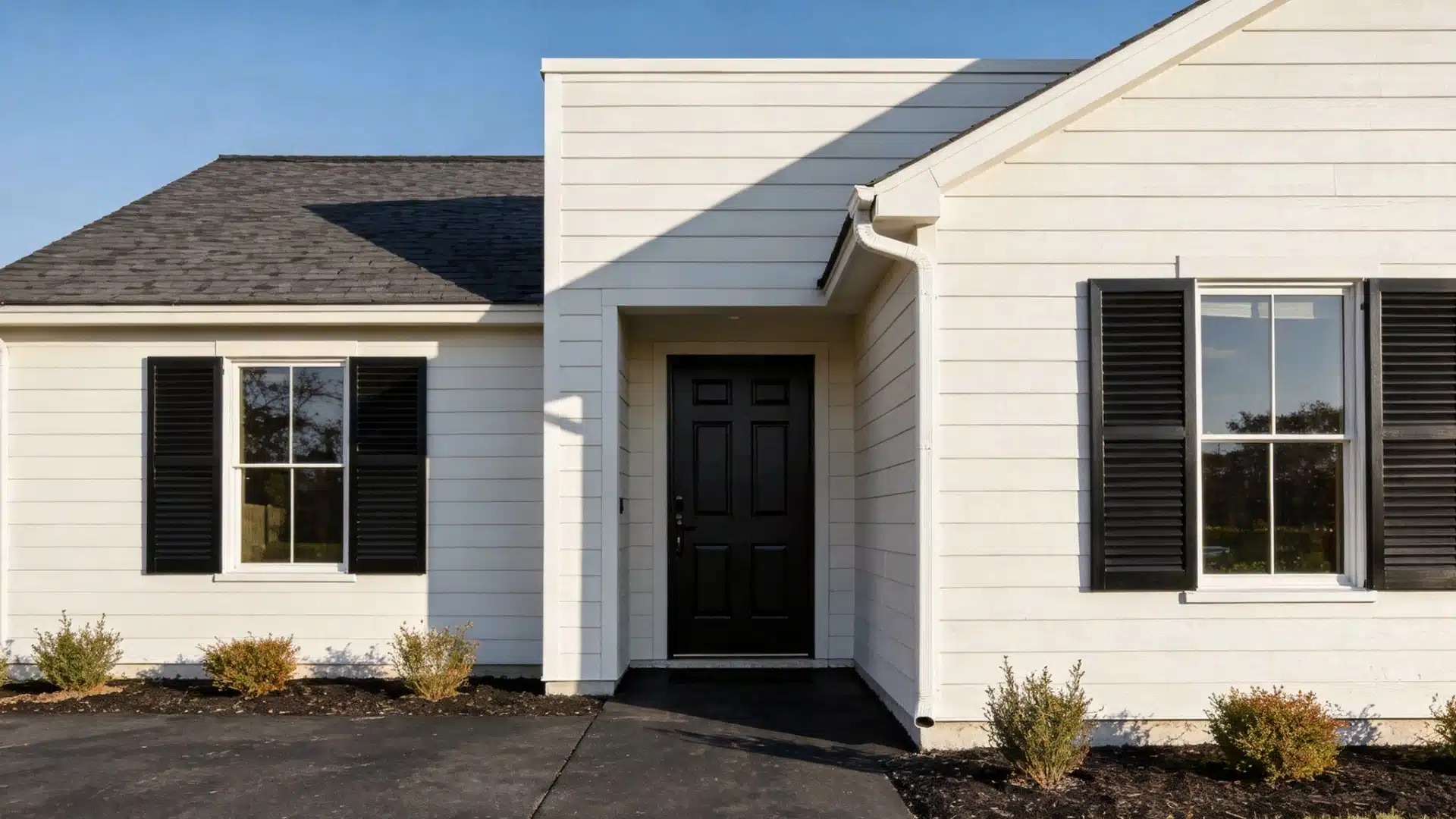
A strong near-black shade for bold exterior accents. Blacktop 2135-10 adds structure and contrast, especially in modern homes.
- Deep black with soft undertone.
- Ideal for doors and shutters.
- Pairs with light siding tones.
Deep blacks absorb heat. On metal doors in hot climates, this can cause paint to expand and contract more aggressively, so surface prep and a quality primer matter more here than anywhere else.
8. Monroe Bisque HC-26
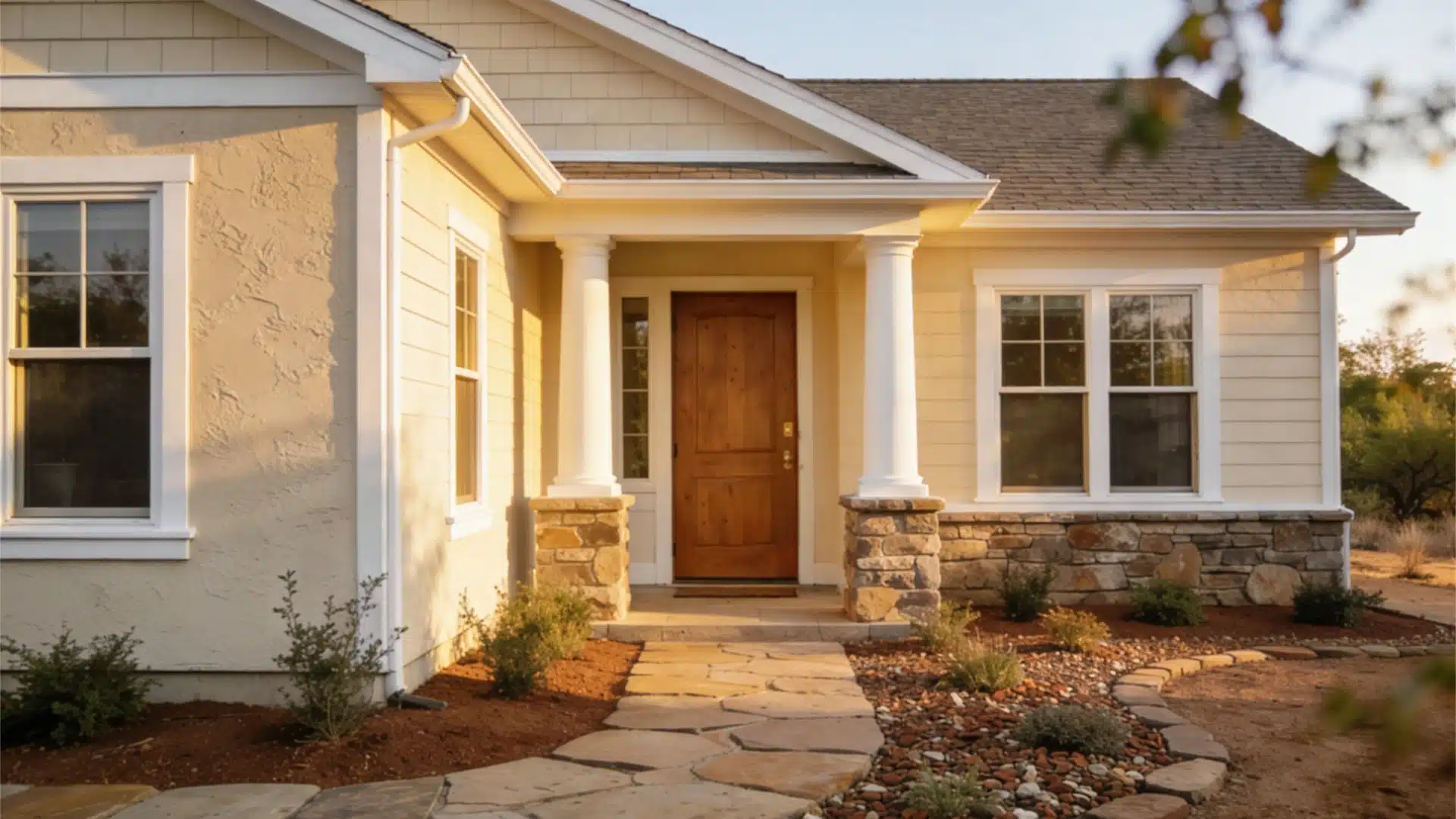
A subtle, creamy tone that feels soft and traditional. Monroe Bisque HC-26 works well in sunny locations where you want warmth without glare.
- Cream base with beige undertone
- Good for full siding use
- Complements earthy accents
9. Caldwell Green HC-124
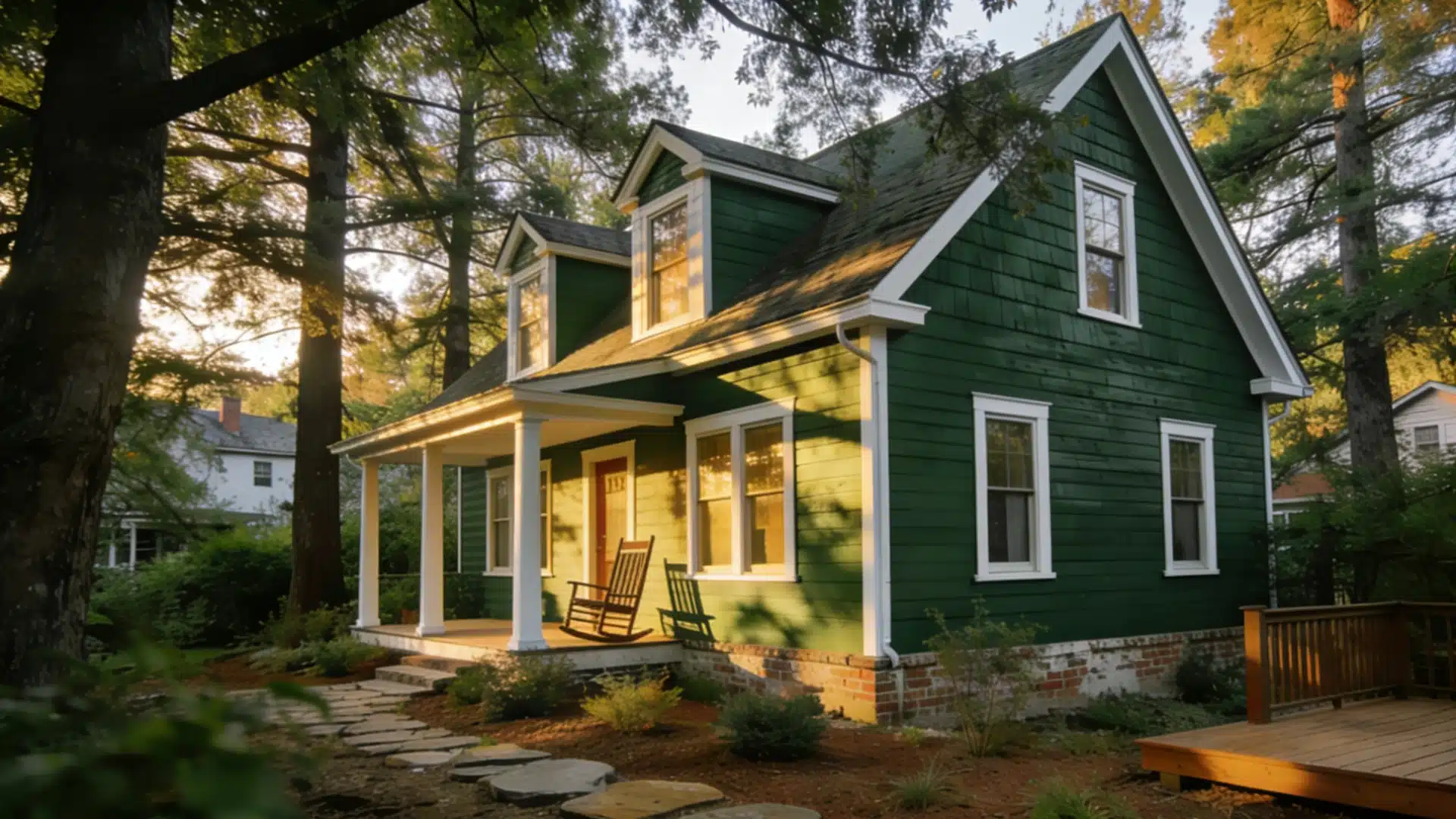
A deep, classic green with strong character. Caldwell Green HC-124 works well for homes surrounded by trees or natural landscapes.
- Rich green with muted finish
- Works best with white trim
- Strong traditional appeal
10. Hampshire Gray HC-101
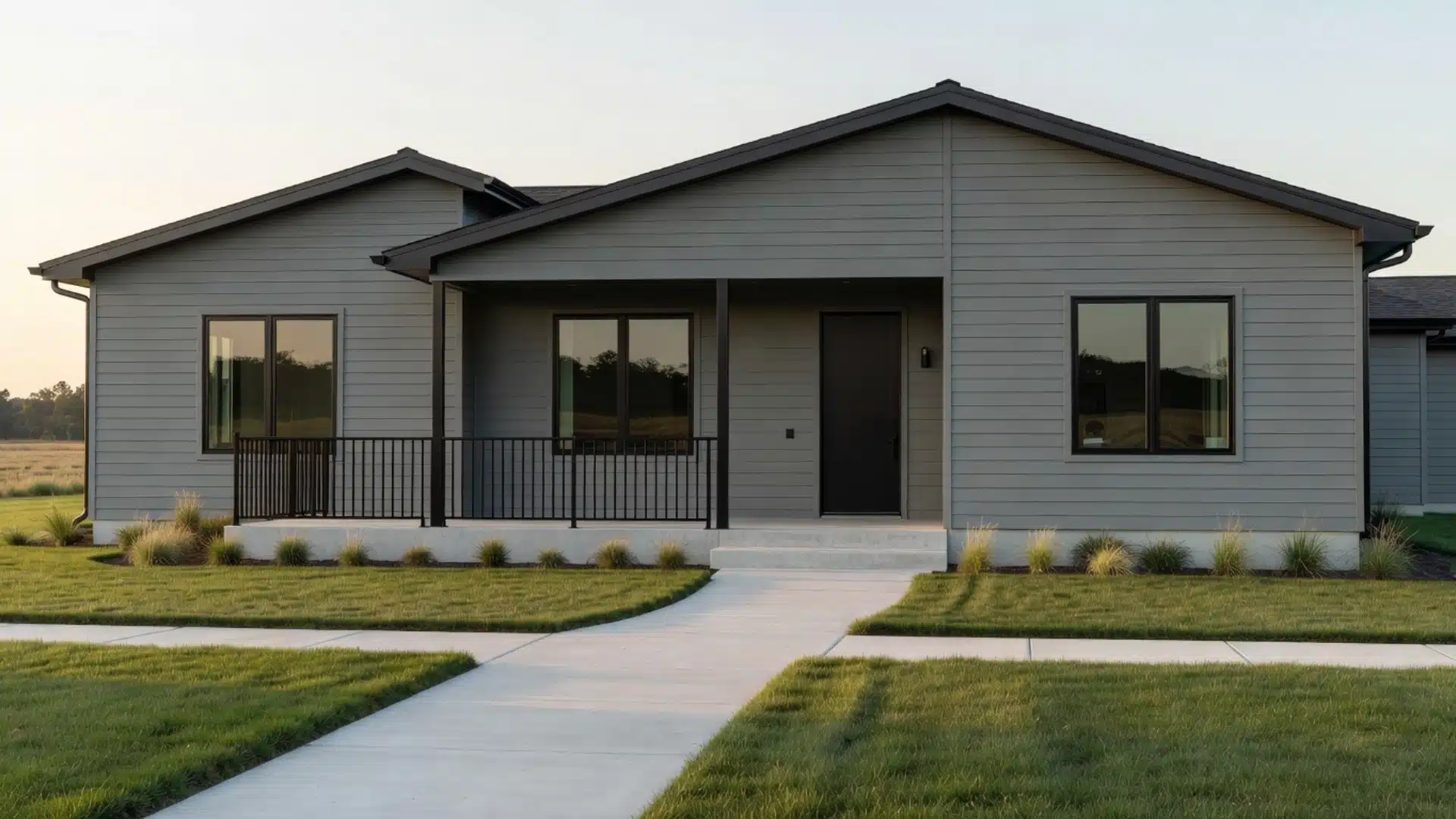
Hampshire Gray HC-101 is a medium gray with depth and balance. It feels steady without leaning too cold or too yellow.
- True gray with soft depth
- Good for modern exteriors
- Works with metal accents
11. Van Courtland Blue HC-14
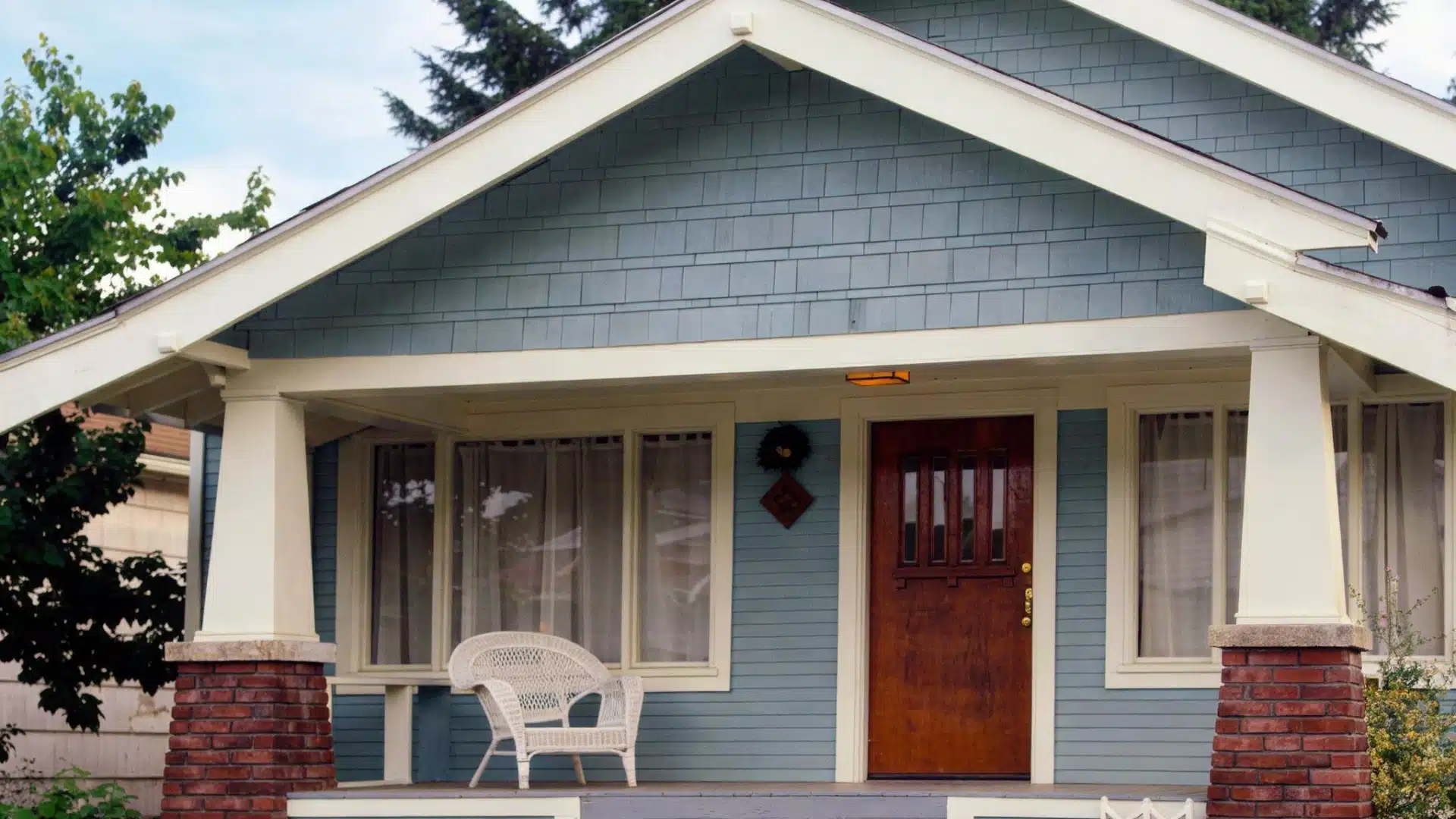
Van Courtland Blue HC-14 is a soft blue with gray undertones that feels calm and historic. It adds subtle color without overwhelming the exterior.
- Muted blue with classic feel
- Works well in daylight
- Pairs with white or cream trim
This is a good option for subtle color with a calm and coastal feel.
Final Tips on Selecting the Colors for the Exterior
Choosing exterior paint is best when you look at what’s already there, rather than starting from scratch.
Your home already gives you clues through structure, materials, and surroundings. Paying attention to these makes the decision more grounded and less confusing.
- Start with Fixed Exterior Elements: Brick, stone, roof color, and trim already set a base tone.
- Understand Natural Light: Sunlight affects how paint looks throughout the day, so test shades in different lighting conditions.
- Match the Color to the Home Style: A modern home and a traditional one won’t suit the same palette.
- Use the 60-30-10 Exterior Rule: 60% main color, 30% secondary tone, 10% accent for balance.
Conclusion
Exterior paint decisions often come down to balancing how the house looks, what surrounds it, and how light shifts through the day.
The colors covered here range from soft neutrals to deeper, grounded tones that work across different styles without feeling out of place.
With Benjamin Moore exterior paint colors, it helps to take time with samples and see them directly on the surface.
Light can change how a shade feels, so a quick test can make the final result feel more natural and steady for the home.
Frequently Asked Questions (FAQ’s)
1. What is the Most Popular Benjamin Moore Exterior Paint?
Aura Exterior, Revere Pewter, Chantilly Lace, and Hale Navy are among the most popular Benjamin Moore exterior paint colors.
2. How Long Does Benjamin Moore Exterior Paint Last?
It usually lasts 10–15 years, depending on weather and surface prep.
3. Does Benjamin Moore Exterior Paint Need Primer?
Primer is often needed for bare or repaired surfaces, but some paints include a built-in primer.