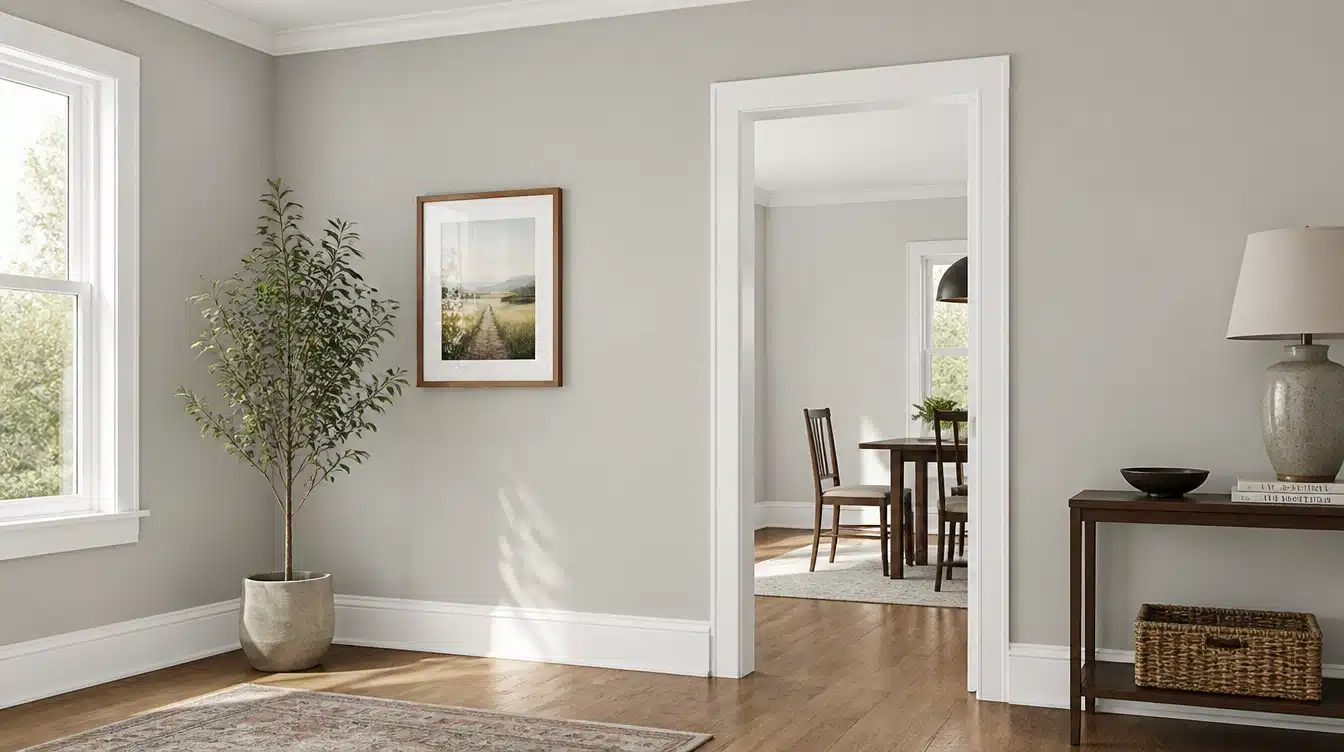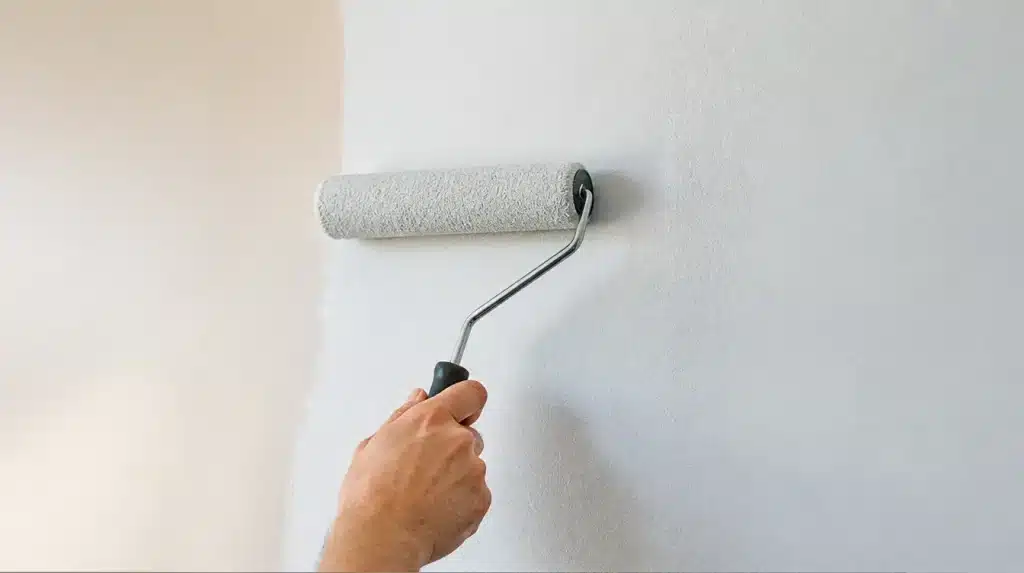
Surface type decides a lot here. So do paint color, what’s already on the wall, and the paint itself. Two coats cover most interior and exterior jobs just fine.
Some surfaces get away with one coat. Others need three or more before coverage looks even across the whole area.
Knowing when primer helps, how long to wait between coats, and how much paint to actually buy saves time and money down the line.
This covers paint coats, coverage, drying time, and the average price of a gallon.
How Many Coats of Paint Do You Need?
Two coats give better color and coverage for most painting jobs out there. Still, the right number depends on the surface, the color change, the paint type, and the area’s condition.
One Coat of Paint
A smooth, well-prepped surface getting a similar color refresh that’s where one coat works fine.
Some high-quality paints are built specifically for one-coat jobs too. Patchy spots can still show up, though, especially over darker colors, stains, or surfaces that soak up paint fast.
Two Coats of Paint
Steadier color and coverage that’s the whole reason two coats remain the standard pick. The first coat handles most of the surface area on its own.
The second one cleans up thin spots, roller marks, and any small color gaps left behind by the first pass.
Three or More Coats
Big color changes, stubborn stains, or surfaces that soak up paint fast any of these call for three coats or more.
Dark colors hiding under light paint often need those extra layers too. Each coat needs full drying time before you decide whether another is necessary.
When You Need an Extra Coat
A patchy last layer, old color peeking through, or paint absorbing unevenly any of these signal an extra coat is needed.
Big color changes, patched spots, stains, and lower-quality paints also tend to call for more coverage.
Do You Need Primer Before a Coat of Paint?
Not every job needs primer, but it helps paint stick better, cover more evenly, and finish cleaner overall.
New drywall almost always needs it, since raw drywall soaks up paint unevenly on its own. Bare wood and other unpainted surfaces usually need it too.
For covering stains, patching damaged spots, or making a big color change, primer helps most.
A dark wall covered with something much lighter benefits from primer underneath, and it builds a more even base before the real color goes on.
Walls that are already painted and still in decent shape often skip primer entirely. This especially holds true when the new color sits close to the old one, and the surface stays clean and smooth to begin with.
How Many Coats of Paint Do Different Surfaces Need?
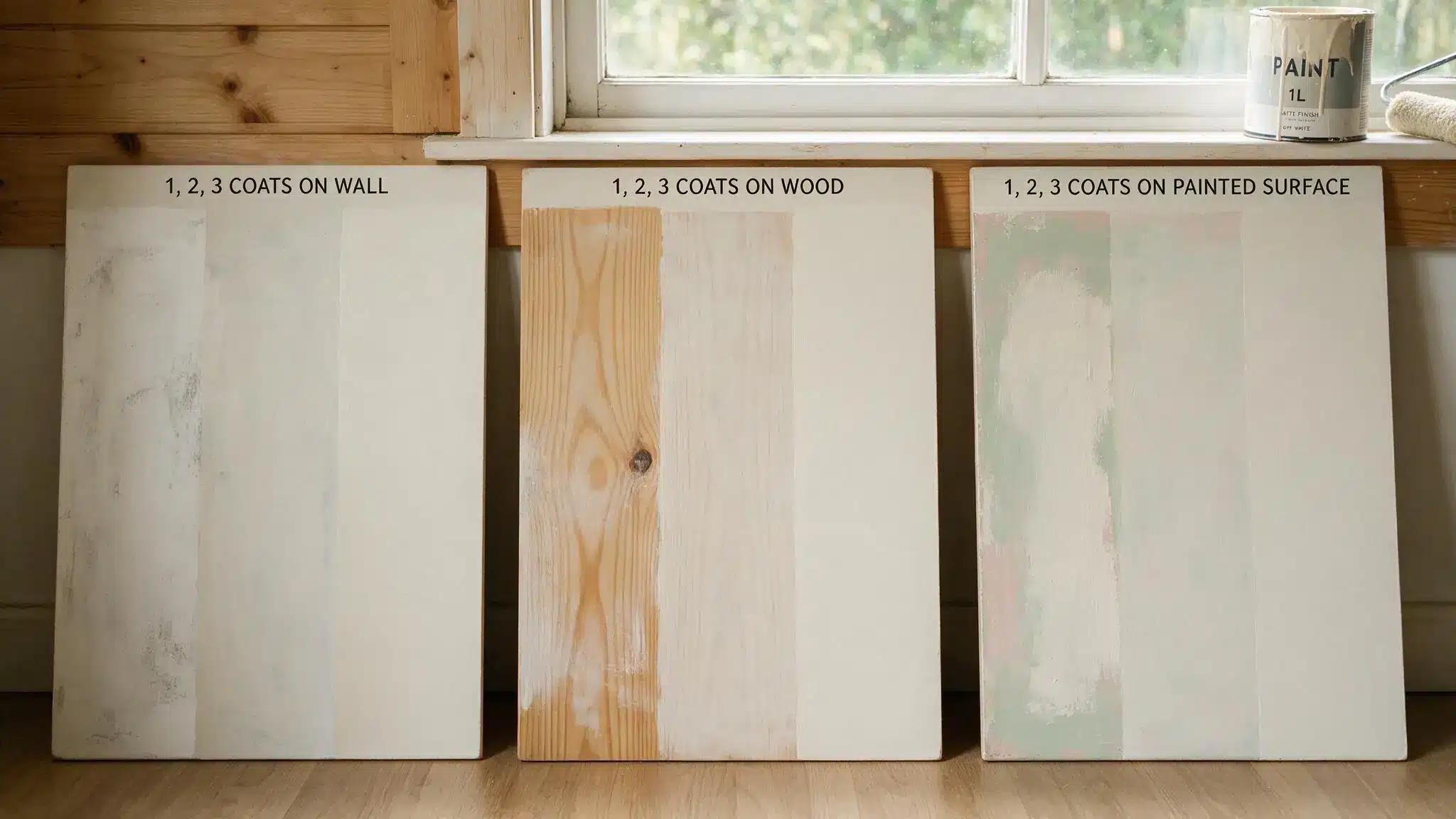
Surface type and the color going on top both shift how many coats a job actually needs. Use this table as a starting point, then check the paint maker’s own coverage numbers before finalizing anything.
- Previously painted walls:1–3 coats; primer usually not needed if clean and sound
- New drywall: 2 coats; primer recommended
- Dark-to-light colors: 2–3 coats; primer often helpful
- Light-to-dark colors: 1–3 coats; primer usually optional
- Bare wood: 2 coats; primer recommended
- Repaired/stained surfaces: 2–3 coats; primer recommended
How Long Should You Wait Between Coats of Paint?
Real drying time matters before you apply another coat over the last one. Product type, temperature, humidity, airflow, and the surface itself all shift how long that actually takes.
Many interior paints handle a second coat after just a few hours. Still, checking the label first beats guessing every time.
Painting too soon causes dragging, peeling, patchy coverage, or a soft finish that never fully sets up right.
Humidity and cooler air slow the whole process down. Good airflow, on the other hand, speeds it back up again.
Paint that feels dry to the touch might still need more time before the next coat goes on top.
How Much Does a Gallon of Paint Cost?
Somewhere between $20 and $70 is the usual range for a gallon of paint in the U.S. Prices climb from there depending on the product you choose. A handful of things shift that final number.
1. Typical Price Range
Around $20 a gallon marks the starting point for basic interior paint. Mid-range and premium options usually cost more, though.
Exterior paints and specialty products can fall well outside that range. Checking prices across a few retailers first beats settling on the first one seen.
2. Brand
Formula, coverage, how long the paint lasts, and other features all shape how brands set their prices. Well-known names often cost more than basic options.
That extra cost can pay off through better coverage or a longer-lasting finish.
3. Quality
Better pigments and resins usually come with higher-quality paint, which helps with coverage, durability, and the final look.
Cheaper paint sometimes needs extra coats. That can quietly drive up the total amount needed for the job in the end.
4. Finish
Price also shifts based on finish type. Flat and matte paints usually cost less.
Eggshell, satin, semi-gloss, and specialty finishes tend to cost more, depending on the brand and formula.
5. Interior vs Exterior
Sunlight, moisture, temperature swings, and other outdoor conditions push exterior paint prices higher, since it’s built to handle all of that exposure.
Interior paint is made for indoor surfaces instead, with different durability and cleaning needs built in.
6. Specialty Paint
Mildew-resistant, stain-blocking, cabinet, floor, or heat-resistant formulas, these specialty paints usually cost more than standard wall paint.
Those extra features justify the price when regular paint just can’t handle the job at hand.
7. Number of Gallons Needed
Total cost ends up shaped more by how many gallons a project needs than almost anything else.
Bigger jobs needing several gallons get expensive fast, especially once premium paint enters the picture.
How Much Paint Do You Need for Your Project?
Working out paint needs before shopping stops wasted money and keeps a project from running short partway through.
Keep these factors in mind while figuring out the total amount required.
Coverage per gallon: About 300 to 400 square feet; that’s roughly what one gallon covers for a single coat.
Actual coverage still shifts by product, surface, and application method, though.
Wall area: Multiply each wall’s width by its height to find the total area. Add every wall together first, then subtract out doors and windows from that total.
Number of coats: Multiply the paintable area by the number of coats planned. Two coats roughly double the paint needed compared to just one.
Doors and windows: Subtract big doors and windows from the wall area total. That way the final estimate doesn’t come in higher than what’s actually needed.
Manufacturer’s coverage rate: Check the paint can or the maker’s product page for the stated coverage rate.
Different formulas cover different amounts of space entirely, so this matters.
Simple calculation example: With an 800-square-foot paintable area and a gallon covering 400 square feet, one coat needs roughly 2 gallons. Two coats would need around 4 gallons total.
How to Get Smooth and Even Paint Coverage?
Cleaner coats come from good prep work and steady technique. This cuts down on visible marks, thin spots, and uneven color along the way. Keep these points in mind while painting.
Clean the surface thoroughly, patch holes or cracks, scrape off loose paint, and lightly sand rough spots so the new coat sticks evenly.
Pick rollers and brushes that match the paint and surface; the right nap and brush type build more even coverage.
Work in manageable sections, overlapping each pass while the paint’s still wet, to avoid visible lines and lap marks.
Spread the paint evenly, skip spots that have already started drying, and let each coat dry fully before adding another; rushing hurts adhesion and the final look.
Avoid piling on too much paint at once; a few thin, well-applied coats beat one thick, heavy layer every time.
Conclusion
Two coats make a solid starting point for most painting jobs. Still, the real number depends on the surface, the color, the paint quality, and whatever’s already on the wall.
Primer helps most on new drywall, bare surfaces, stains, and big color changes. Before buying paint, work out the wall area, check the maker’s coverage rate, and plan for every coat needed ahead of time.
Taking time between coats and spreading paint evenly leads to a cleaner finish. It also cuts down on wasted paint, extra work, and added cost along the way.
Frequently Asked Questions (FAQs)
1. Can You Paint a Wall with Only One Coat?
Yes, one coat works fine when the surface stays smooth, well-prepped, and close in color to the new paint. Two coats still tend to give more even coverage, though.
2. Does a Second Coat Make Paint Darker?
A second coat usually makes the color look more even rather than simply darker overall. It covers up thin spots and builds a more finished, consistent look across the whole wall.
3. Is Expensive Paint Worth the Extra Cost?
It can pay off when better coverage, durability, or a specific finish matters for the job at hand. Still, the right choice comes down to the surface, the project’s needs, and the overall budget available