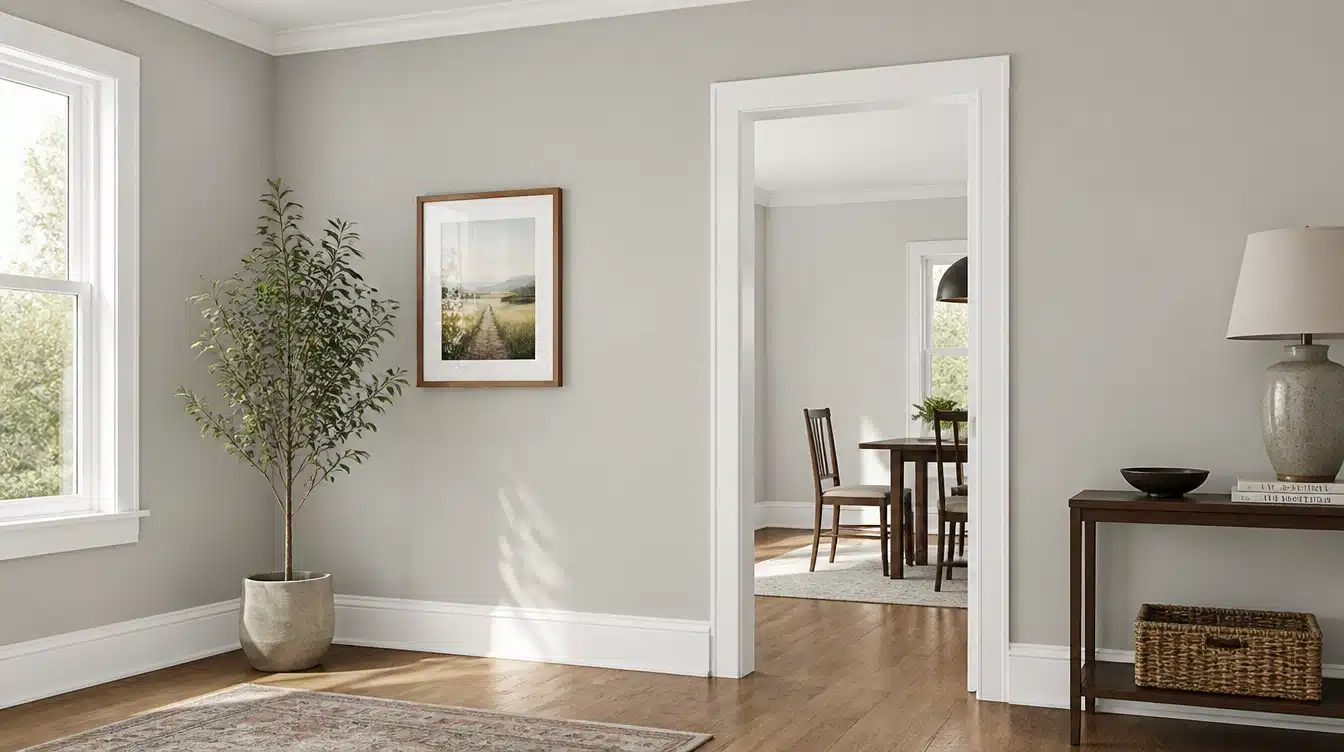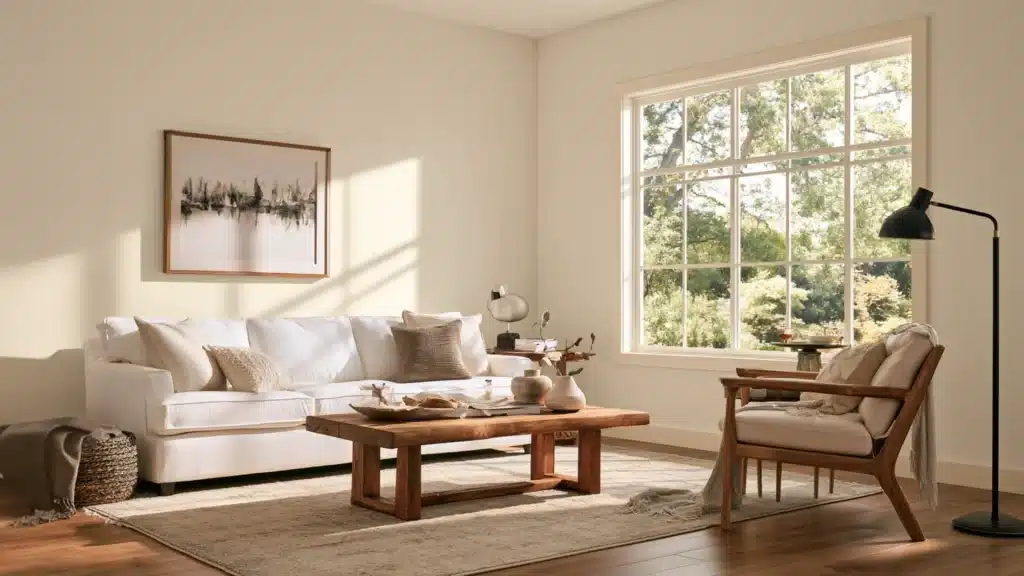
Sherwin-Williams’ SW Shoji White is the best white paint for your space.
It’s a gentle, warm off-white color that suits any space, making it feel really calm and inviting. Shoji White (SW 7042) has a subdued greige base.
Sherwin-Williams offers a warm off-white paint hue called SW Shoji White. It appears soft and grounded rather than stark or plain.
Although many refer to it as white, it is actually an off-white with subtle depth.
It feels comfortable and lived-in because of that tiny splash of color.
Japanese shoji screens, which are thin paper panels that soften light as it passes through, are the source of the name.
Instead of bouncing light back violently, it gradually disperses it throughout a space.
Undertones of SW Shoji White 7042
The foundation of Shoji White is a combination of taupe and gray, and it also has a subtle green that controls the temperature and prevents it from appearing overly yellow.
It is brilliant, though.
The surroundings affect this hue because of its subtle undertones.
It feels creamy next to warm woods and metal. It feels more balanced and neutral when compared to chilly grays and blues.
It could appear warm on one wall and nearly gray on another.
Always paint a sample, live with it for a day, and check it at various times of the day before going in.
LRV of SW Shoji White 7042
Shoji White’s LRV is 74.
This indicates that it reflects a fair amount of light without appearing harsh or clinical. It maintains a warm, cozy atmosphere while adding brightness to a space.
An LRV of 74 has limitations, though.
It won’t fully brighten a dark room with limited natural light.
Shoji White may appear heavier and grayer in those areas than what the swatch shows.
How SW Shoji White Looks in Real Spaces in Different Lighting
Any paint is affected by light, but Shoji White is more affected than others. Sunlight and light bulbs both affect its delicate nuances.
Morning Natural Light
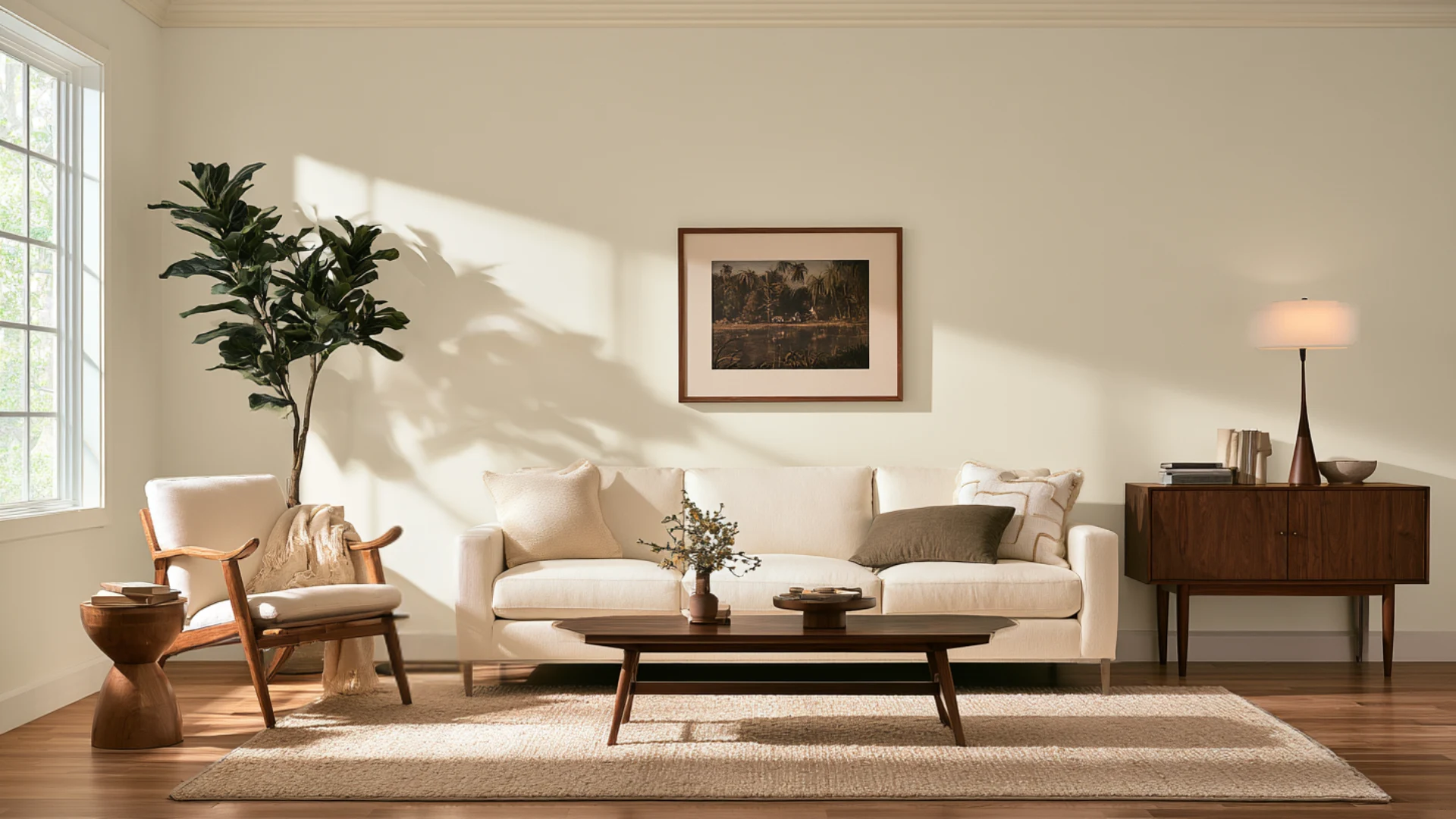
Shoji white’s warmth is tempered by cool morning light.
It appears balanced and fresh, almost like an off-white. The color feels serene and light early in the day, but you still get a faint hint of comfort.
In Natural Afternoon Light
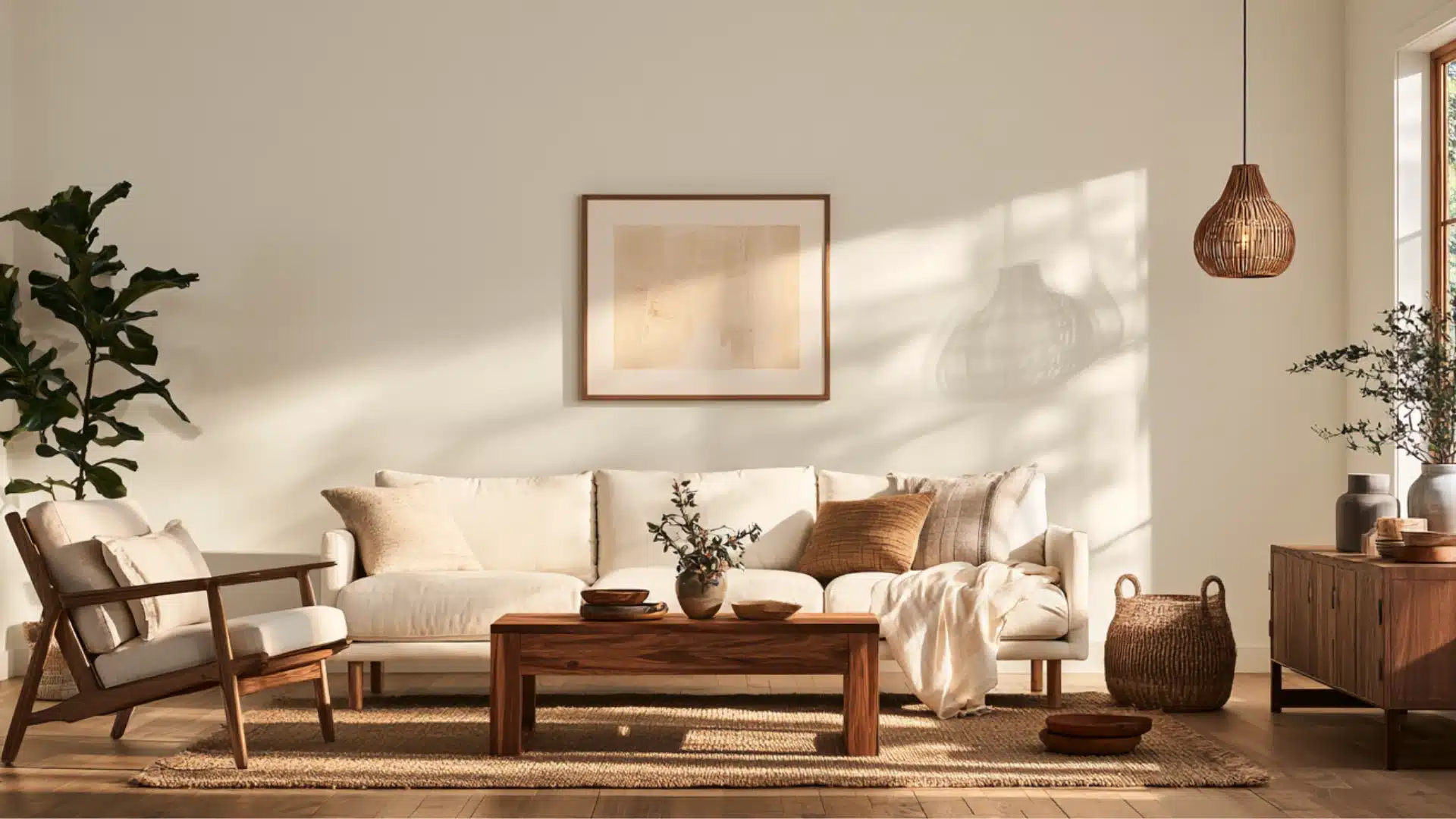
Its creamy side is highlighted by stronger daylight.
All afternoon, south-facing rooms feel cozy and welcoming because the light in north-facing rooms is softer and bluer, and it may appear slightly colder and grayer.
In Natural Evening
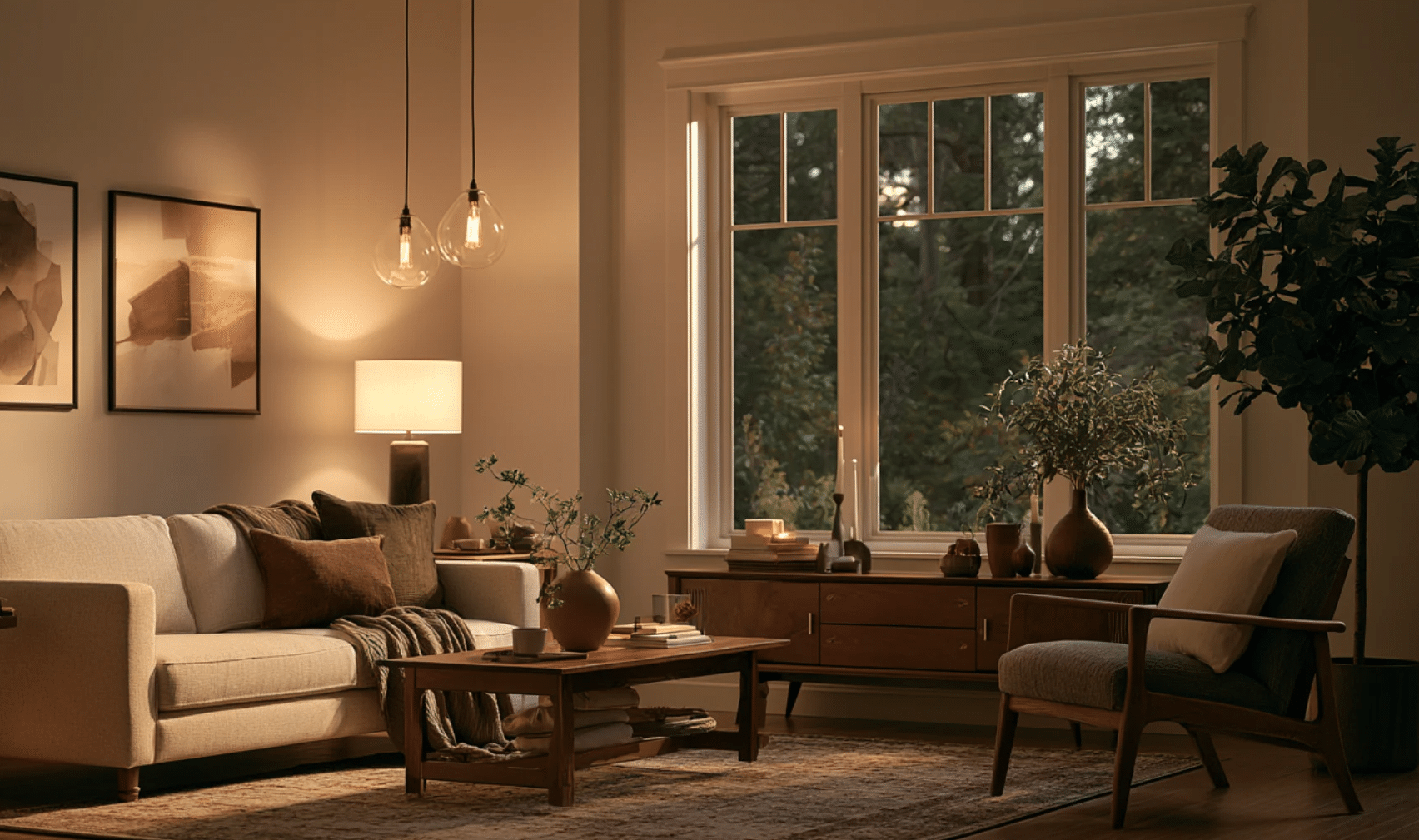
The color warms and deepens as the light fades. Shoji White becomes cozier and softer, enveloping the space in a serene, mellow radiance.
It feels most at ease and comfortable at this point, making it ideal for shutting down.
At Night
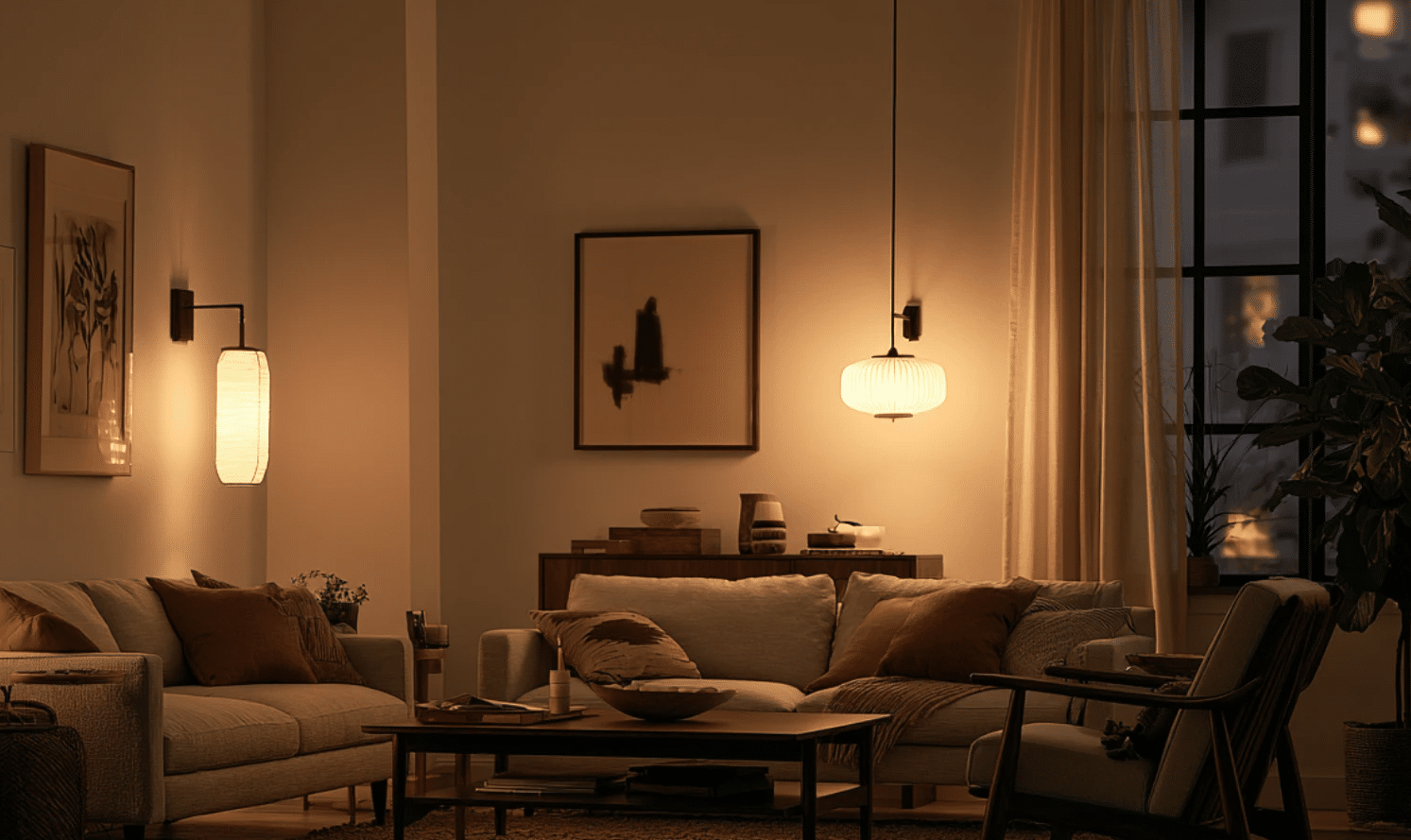
Everything relies on your bulbs as it becomes dark.
Warm lighting gives it a creamy, golden hue. It remains clear and neutral in cold lighting, much more like it does during the day.
With Warm Bulbs (2700 K-3000 K)
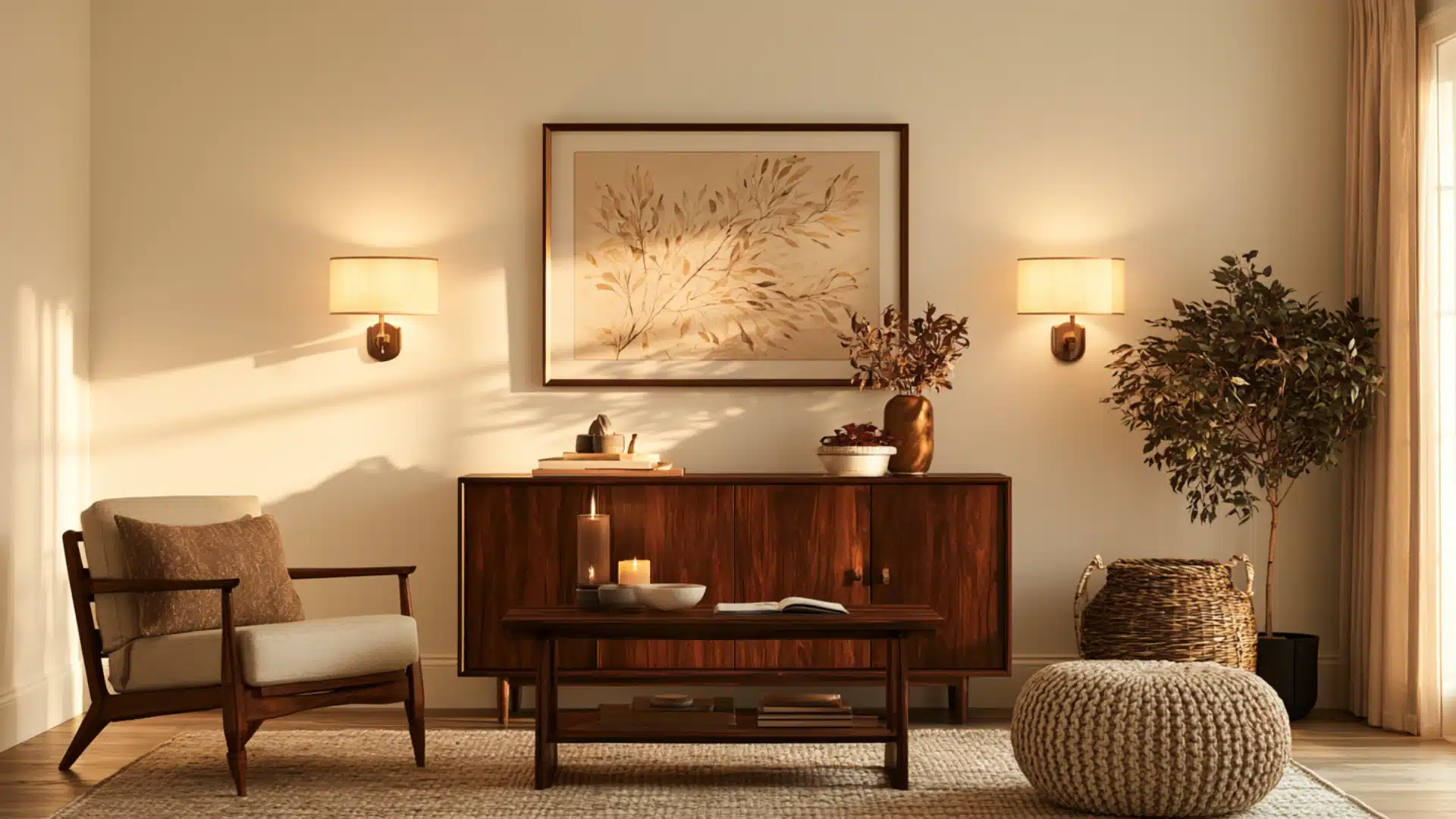
These highlight Shoji White’s cream and gold hues.
The space seems cozy, luxurious, and welcoming. The color may lean more yellow than you might think, which makes it even better.
Warm lights are used in comfortable spaces like living rooms and bedrooms.
With Cool White or Daylight Bulbs (4000 K-5000 K)
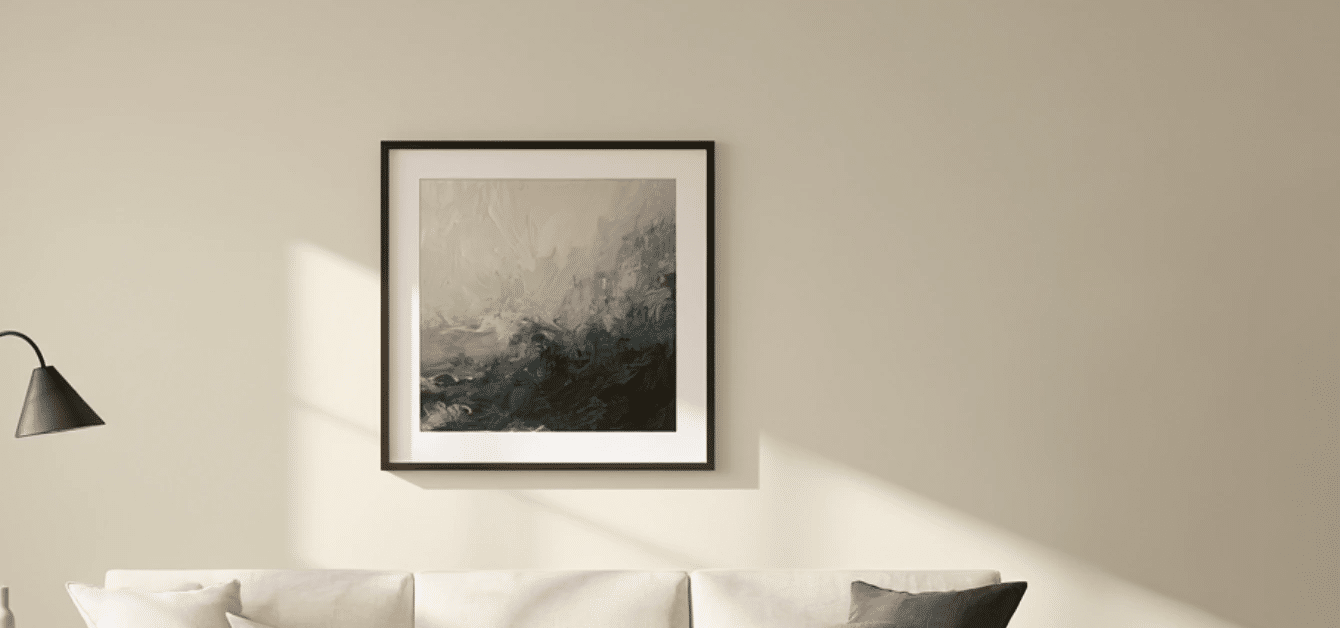
These reduce the warmth and highlight the base’s greige color. In this type of light, Shoji White seems crisper, cleaner, and more accurate to the swatch.
Cooler bulbs are used in bathrooms and kitchens where you need a fresh look and feel.
How and Where Does SW Shoji White Work Best?
Shoji White is a flexible color that goes well in practically any space in the house.
It functions well in designs that use warm, organic materials like wood, stone, metal, and soft textiles, and adjusts to almost every setting and mood.
Kitchen
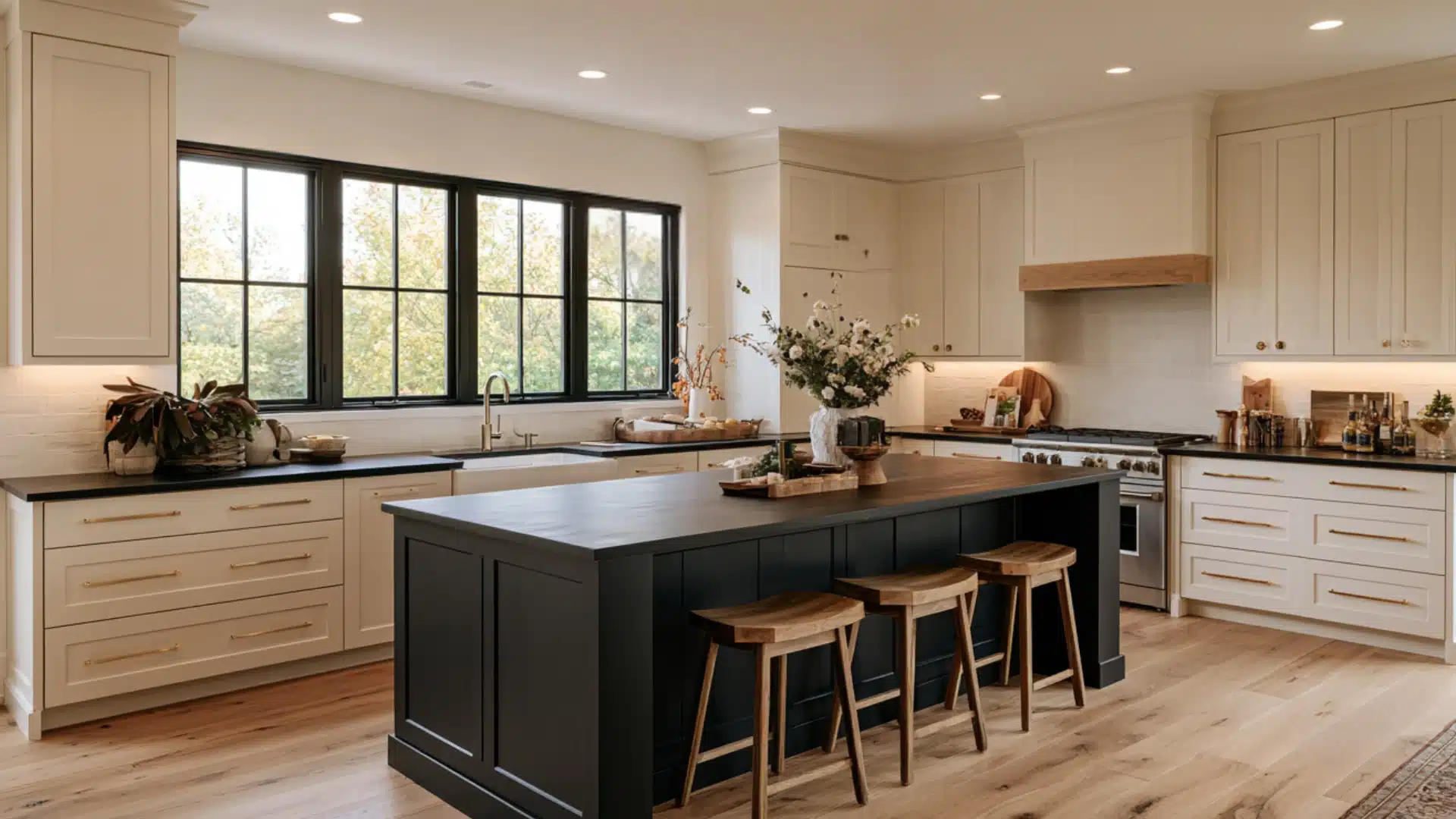
Shoji White is a gentle color for kitchen cabinets and walls.
Pure white kitchens can feel clinical or chilly, but the warm paint prevents that. It is a wise choice for a busy kitchen because it also hides minor marks.
It looks great with darker islands for contrast, brass or black hardware, and white oak.
Bedroom
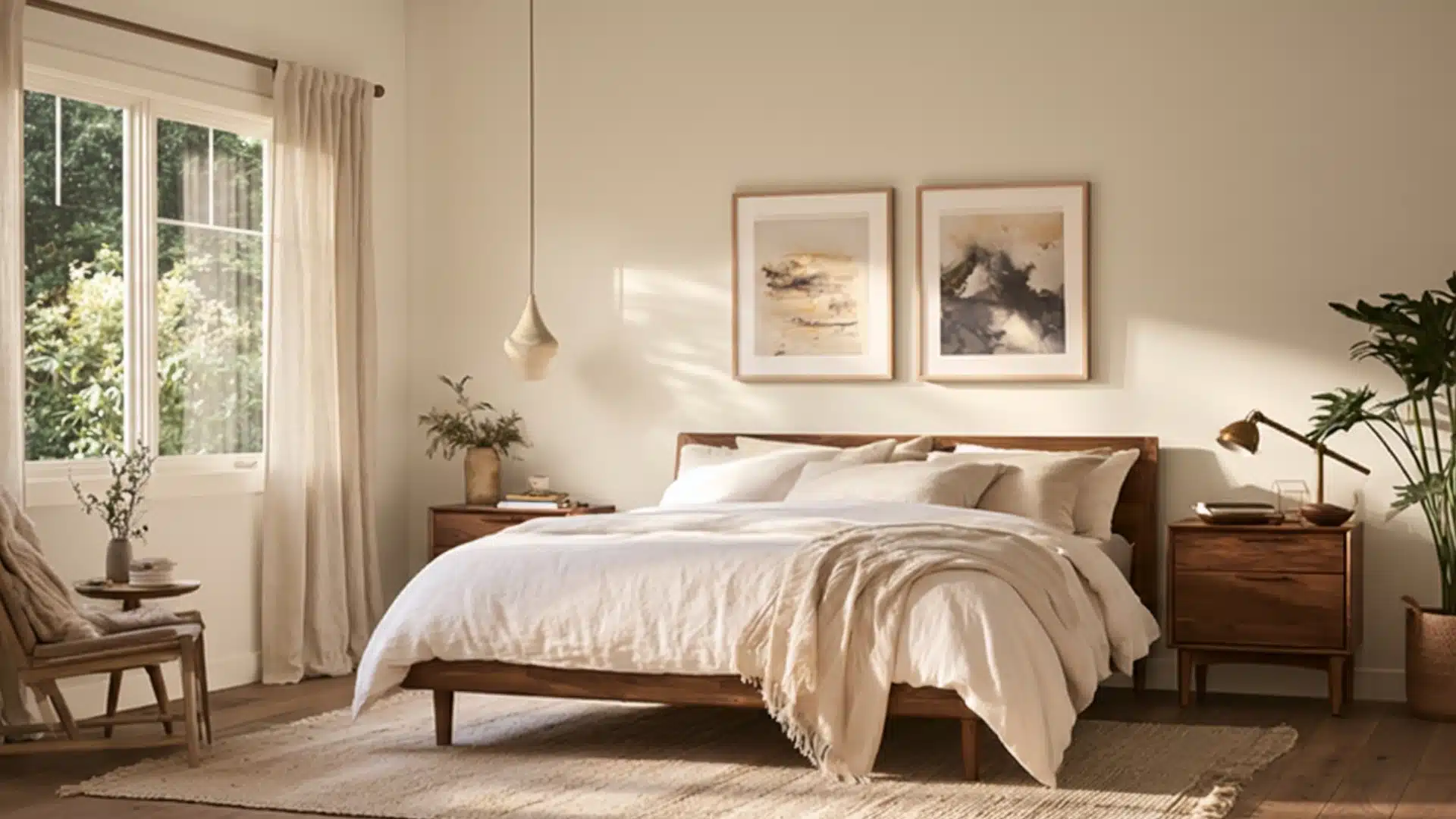
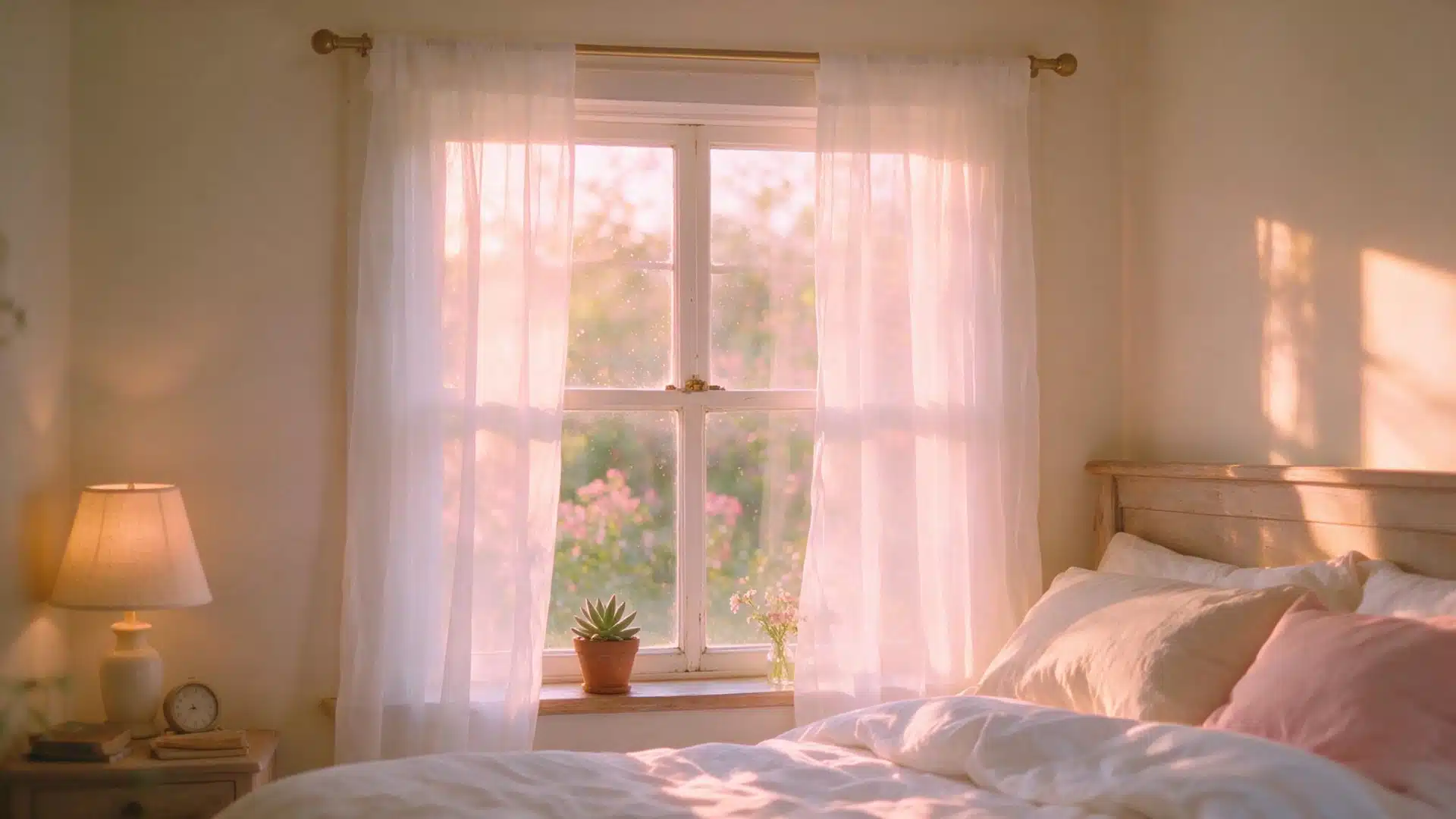
Shoji White gives a peaceful, relaxing atmosphere in bedrooms.
It works well in east-facing bedrooms because the color retains a soft warmth long after the brilliant morning light has faded.
And if you’re the one who needs a hotel-like atmosphere, pair it with warm wood furniture and linen bedding.
Living Room
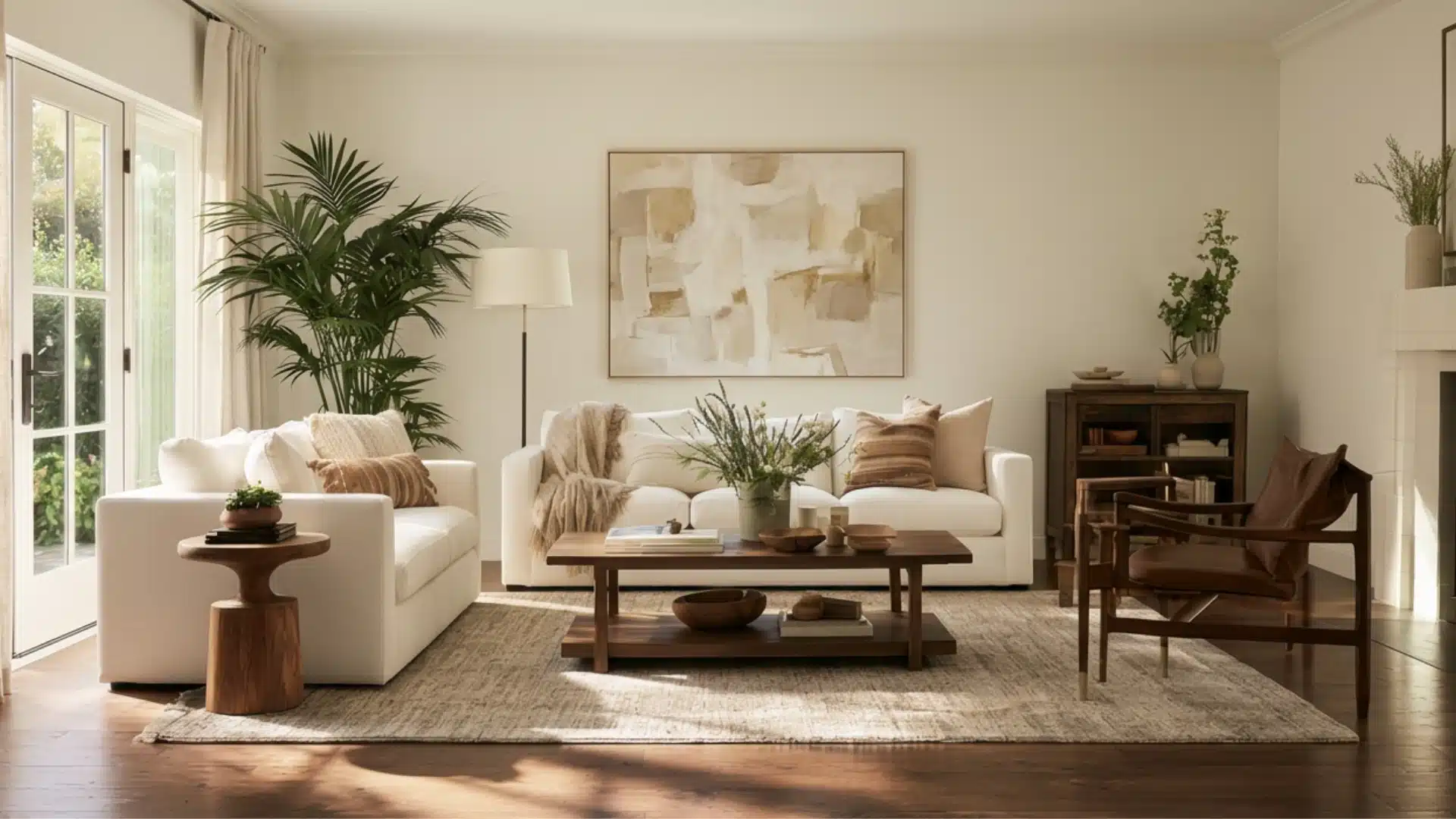
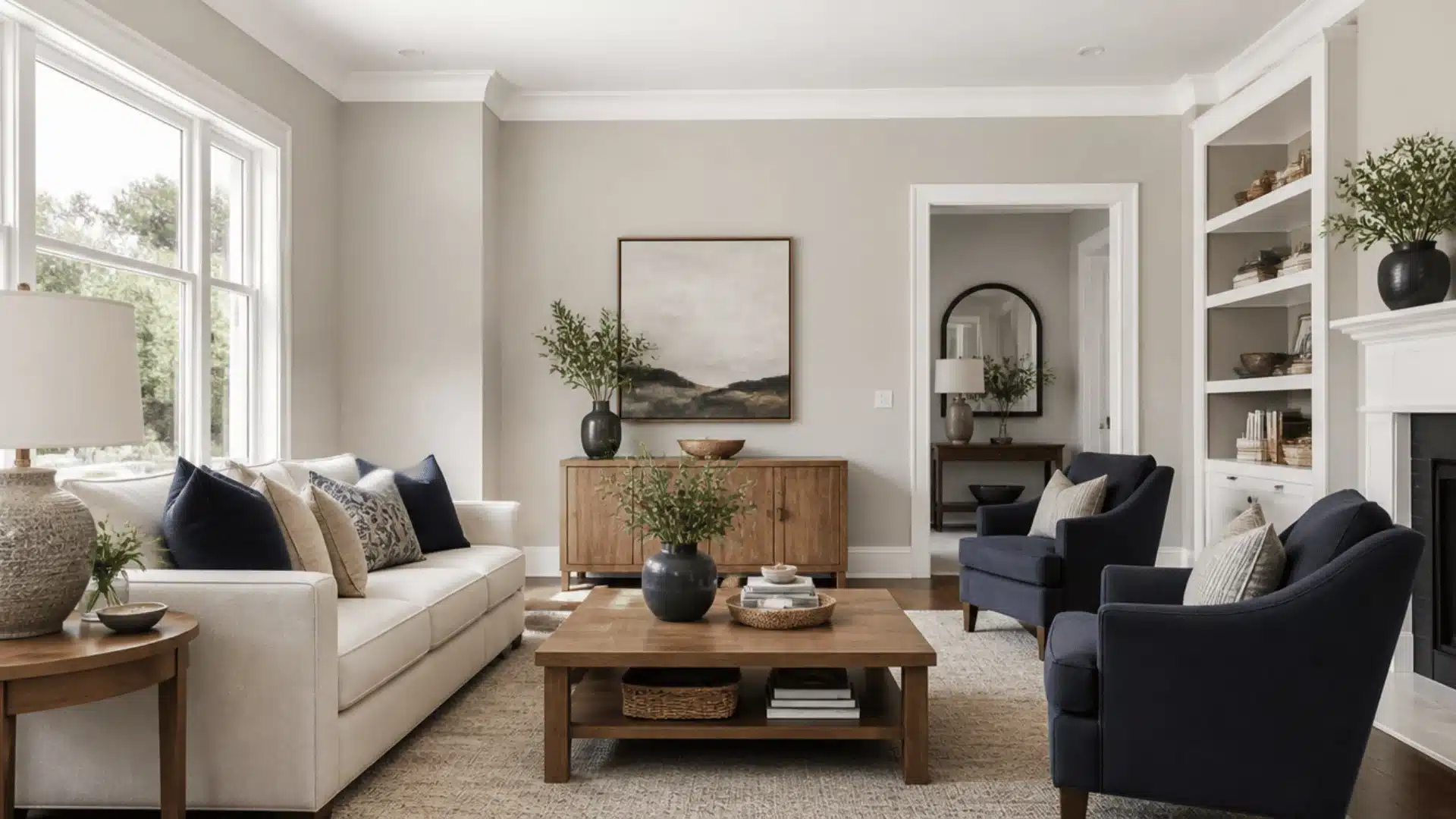
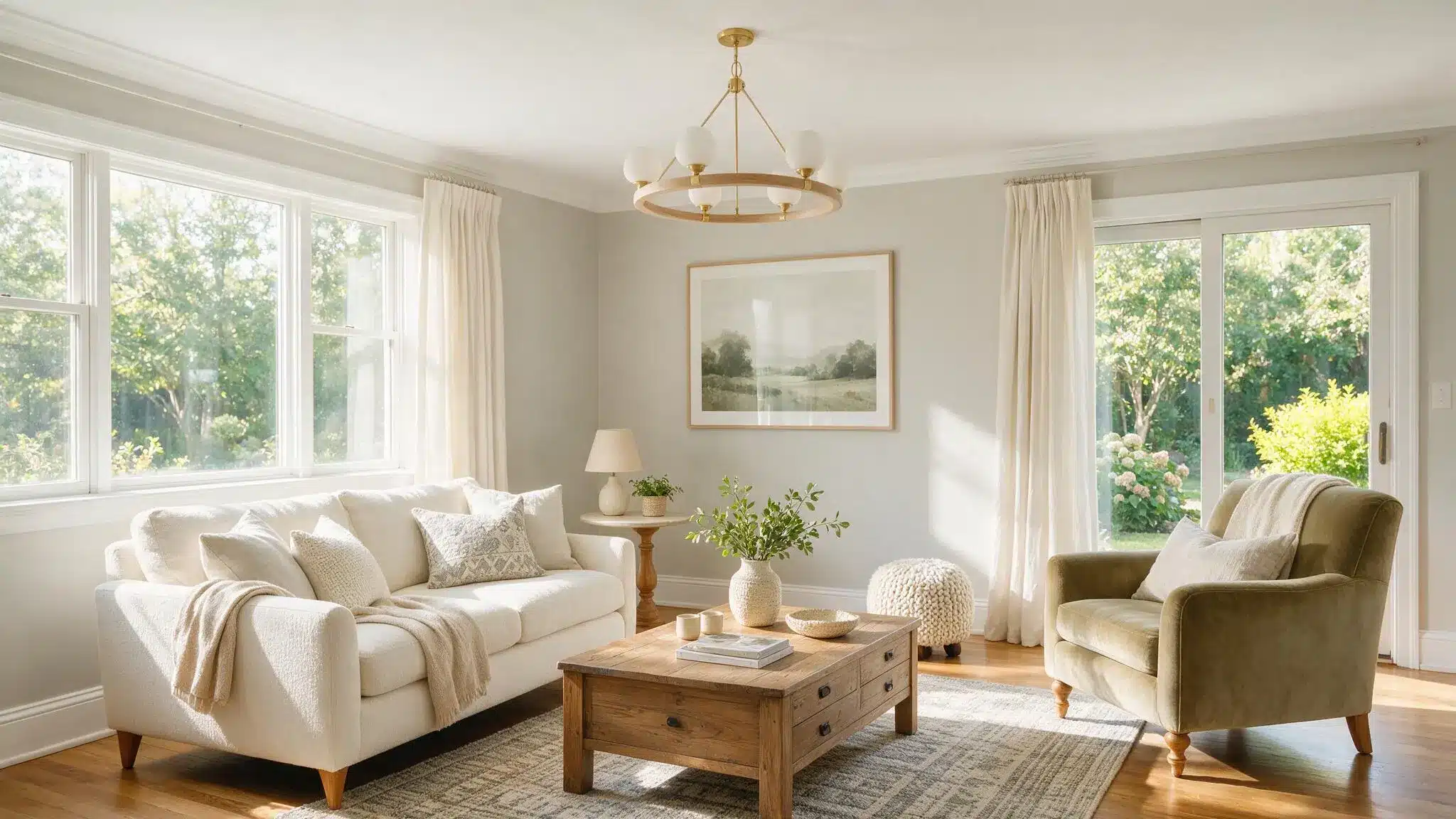
The warm greige base grounds the room and highlights the wood floors, furniture, and textiles.
It seems warm and inviting, but it feels light and open.
It flows well from room to room in open-plan houses, giving your artwork and décor a chance to stand out against a gentle background.
Bathroom
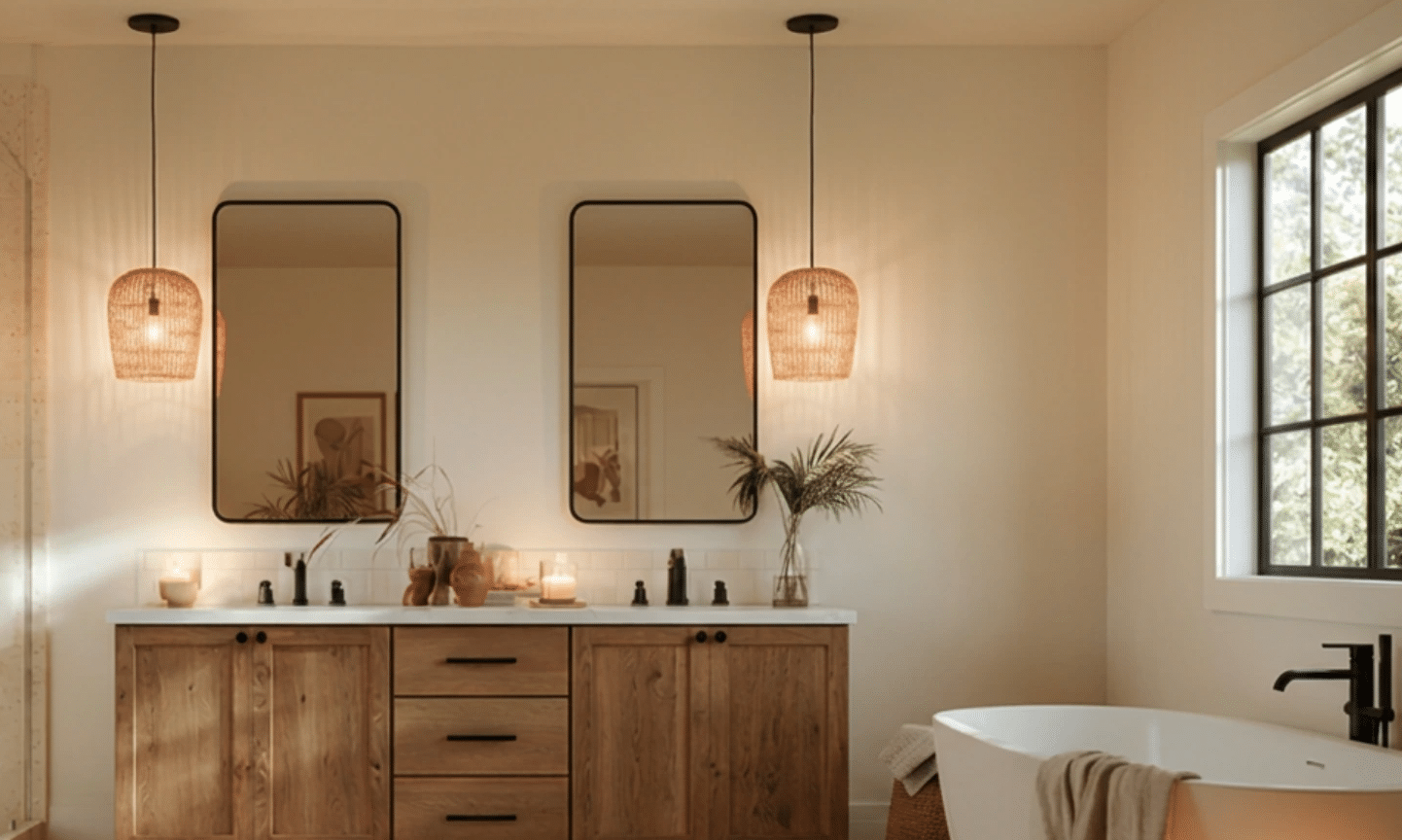
Shoji White makes small bathrooms feel softer and larger.
Its ability to reflect light makes tight spaces feel more open, without the impersonal look that harsh whites often give tiling and fixtures.
It looks great with natural stone, matte black faucets, and warm wood vanities.
Does SW Shoji White Look Good on Exteriors?
SW Shoji White goes well on exteriors, especially on traditional, farmhouse, or modern-farmhouse homes.
Its warm greige base keeps the exterior from looking stark, and the LRV of 74 gives enough brightness without glaring in direct sunlight.
It pairs beautifully with natural materials like wood, stone, and brick, and looks especially good with bronze or black window trim, dark doors, or Iron Ore accents for contrast.
Because it shifts subtly with daylight, it can look creamier at sunset and cooler at midday.
Shoji White vs Other Similar White Types
Before deciding, it’s helpful to compare a couple Sherwin Williams whites near Shoji White. A room’s entire atmosphere can change with slight shifts in LRV and undertone.
Alabaster (SW 7008)
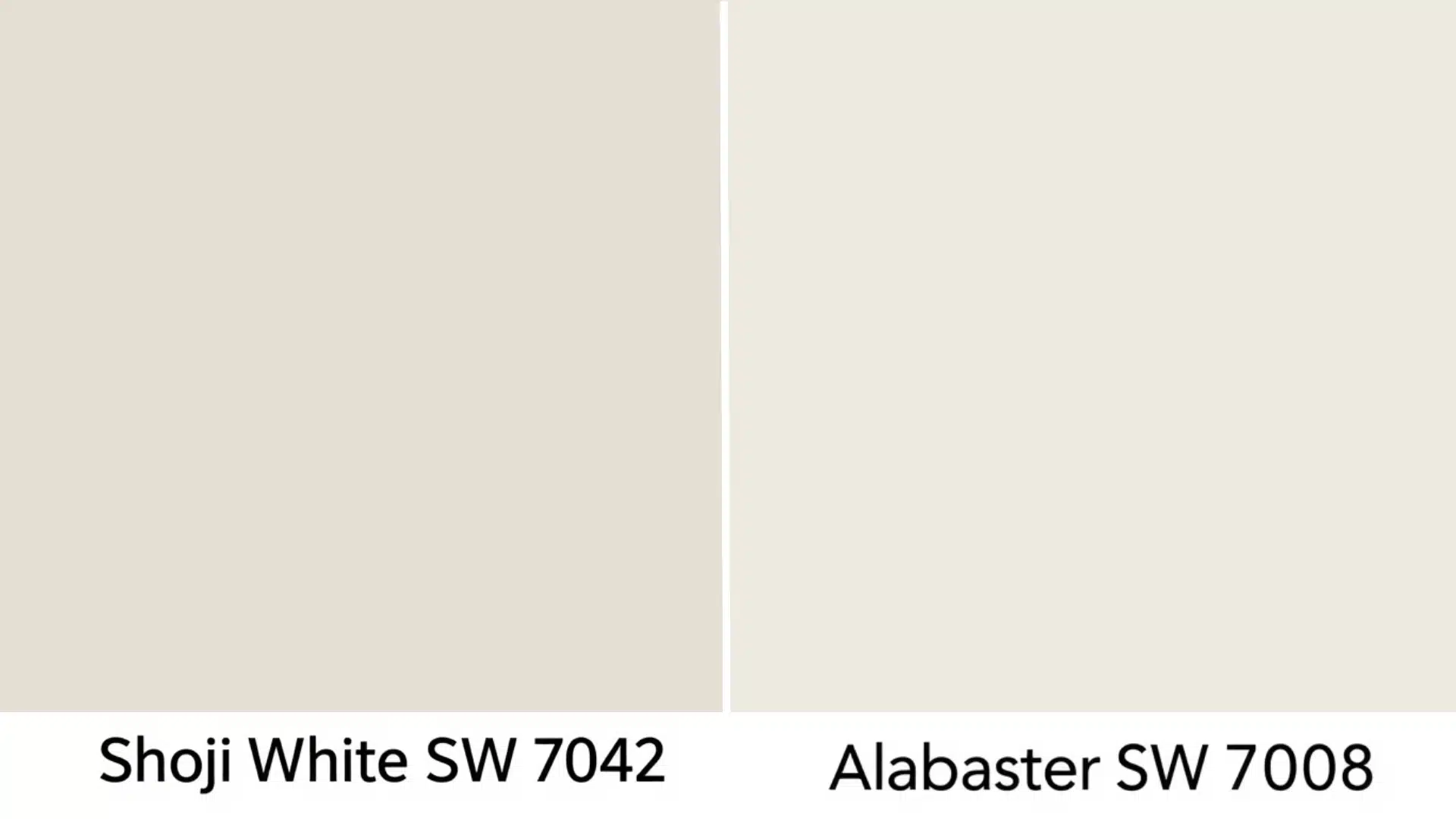
SW Alabaster is lighter and airier because of its higher LRV.
It reflects more light into the space and feels lighter on the wall than Shoji White.
And it has a softer, warmer undertone. It is a better choice if you’re looking for a white that feels softer, more open, and more like a real white.
Creamy (SW 7012)
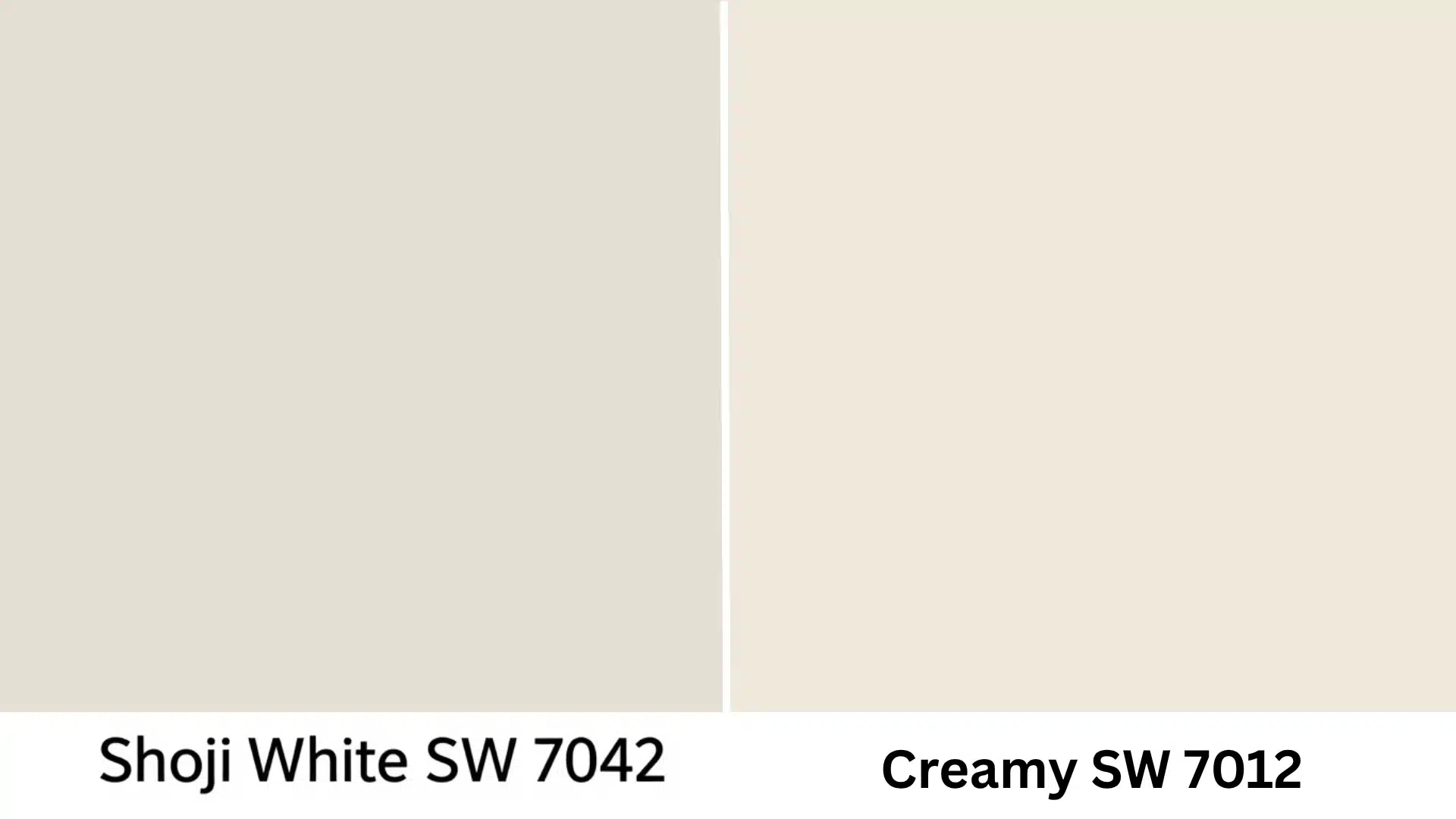
Compared to Shoji White, SW Creamy is warmer and more yellow.
Its gentle, buttery texture goes well in places with lots of natural light and comfortable, traditional settings.
Without appearing harsh or gold, it clearly adds warmth. Creamy consistently produces that reassuring, sunlit look if you prefer a warm-white glow.
Accessible Beige (SW 7036)
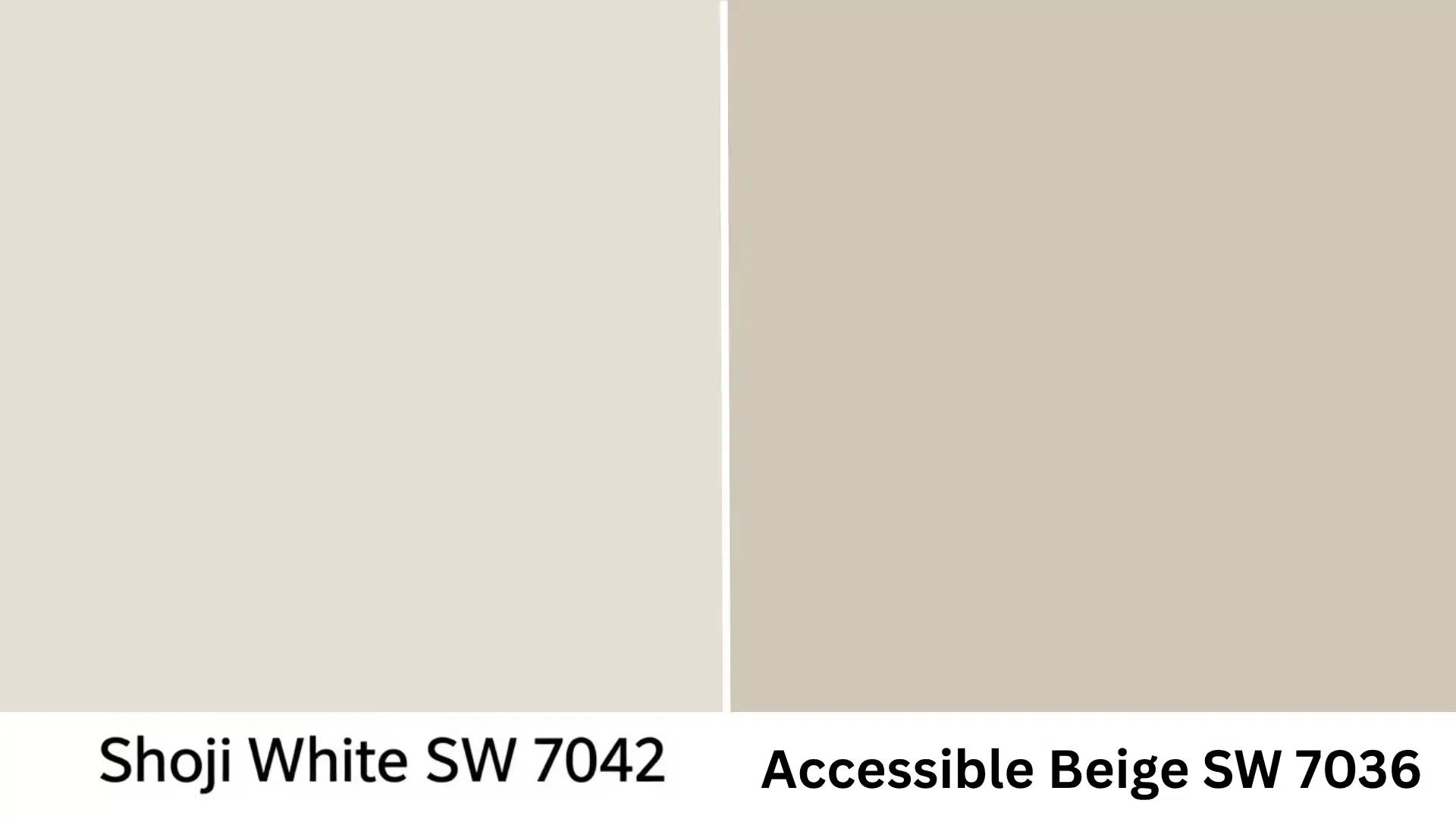
Accessible Beige has a more colorful greige base, making it deeper and more beige than Shoji White.
Because of this, it’s a great option for larger or brighter areas. It provides much-needed foundation if Shoji White seems too airy or washed out for your space.
Natural Choice (SW 7011)
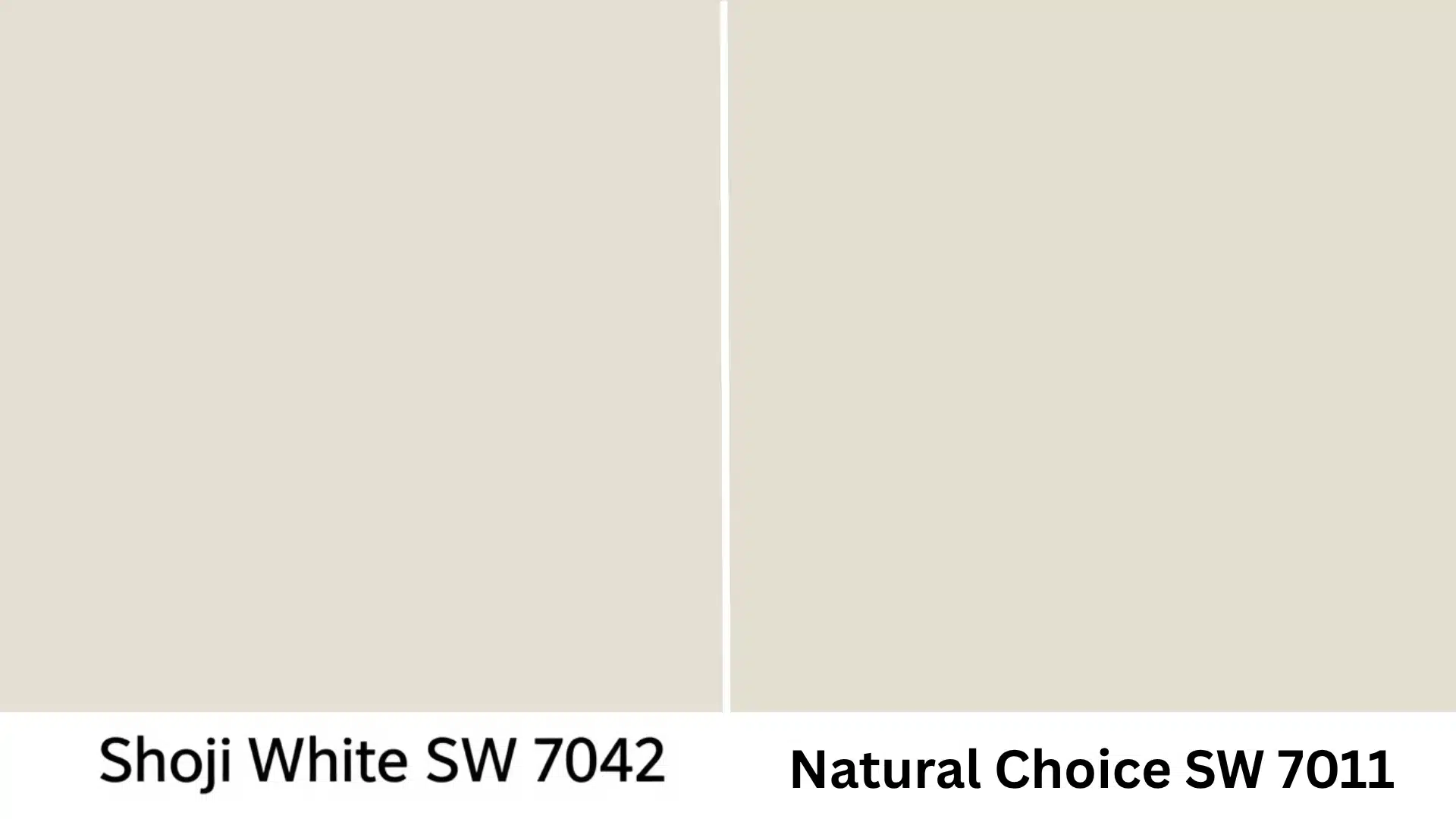
In warm conditions, SW Natural Choice may look cloudy or muddy and tends to lean a touch greener.
In terms of brightness, it is comparable to Shoji White, although it feels a little bit colder and less consistent.
Shoji White remains more flexible and readable on the wall in the majority of lighting conditions. Choose Natural Choice only if you’re looking for an earthier, gentler off-white.
Coordinating Colors that Work with SW Shoji White 7042
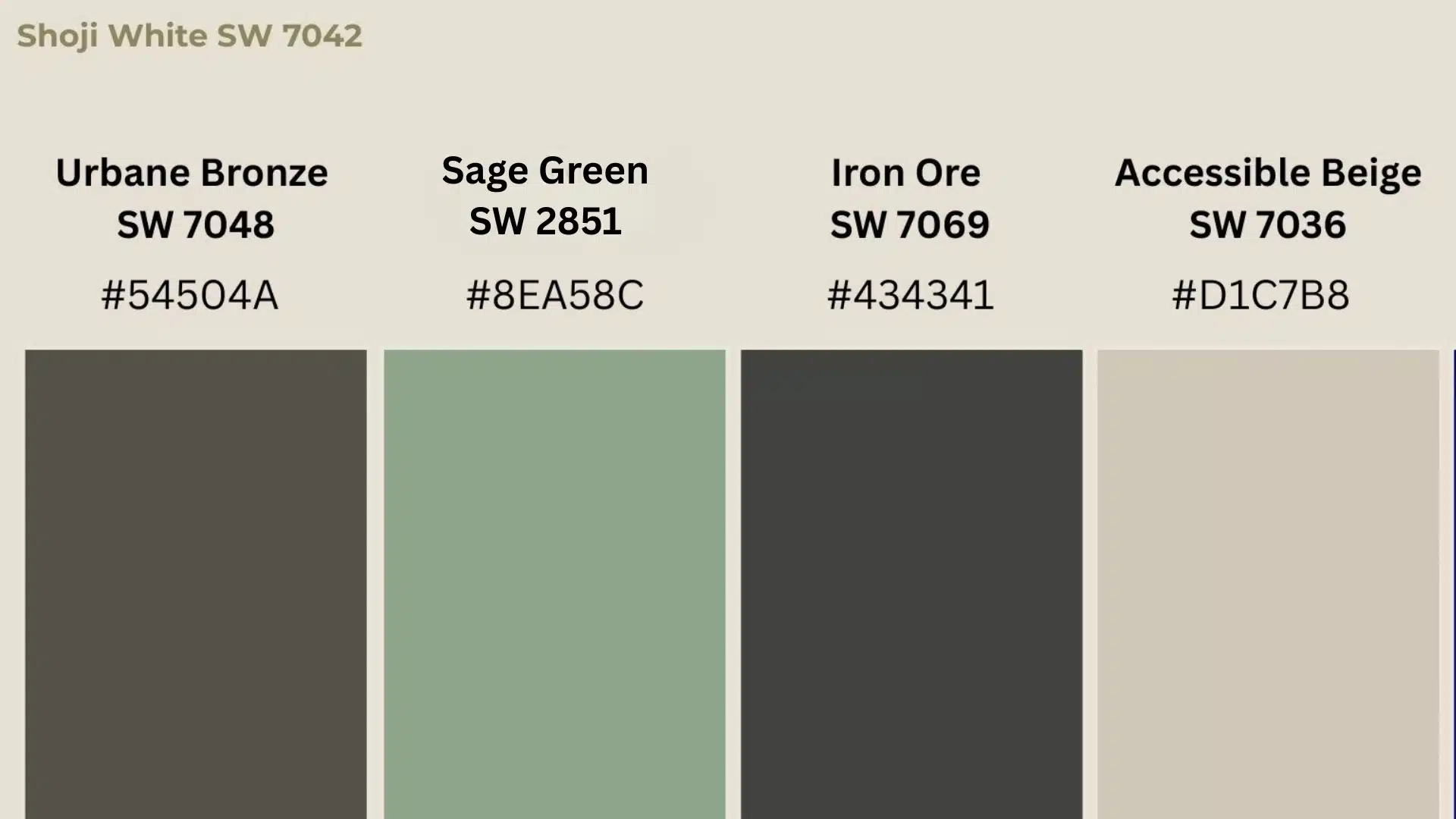
It looks great with natural finishes, rich accents, and warm neutrals, which contribute to a home’s overall serene feel.
You can try the combinations below.
Urbane Bronze (SW 7048)
In contrast to Shoji White, this rich, warm brown-gray creates contrast. Use it on doors, trim, or a focal wall to create a contemporary look.
Sage Green (SW 2851)
Soft sage green adds a natural, earthy touch to the palette. It works great in kitchens, bedrooms, and serene, nature-inspired areas.
Iron Ore (SW 7069)
For doors, shutters, or exterior trim, near-black Iron Ore creates a sharp contrast. The combination doesn’t feel harsh because both colors have a warm base.
Accessible Beige (SW 7036)
Shoji White and Accessible Beige make a gentle, tone-on-tone color scheme. The two warm neutrals give subtle depth and form a smooth layer.
Conclusion
The warm off-white SW Shoji White is comfortable, soft, and simple to live with.
It adds subtle warmth to walls, cabinets, and exteriors without going stark or yellow thanks to its LRV of 74 and soft greige base.
This color tends to calm and soften a space, much like the paper screens it is named after.
It pairs well with wood and bold accents, changes with the light, and complements nearly every style.
Try it in your own home, watch how it changes throughout the day, and experience the calming, grounded feeling it may provide.
Frequently Asked Questions (FAQs)
1. What Sheen Works Best with SW Shoji White?
Eggshell or satin works best for walls, giving a soft, low-glare finish. Use semi-gloss for trim and doors for durability and contrast.
2. Can SW Shoji White Be Used on Ceilings?
Yes, it works well on ceilings, especially in a flat finish. It softens light and adds warmth without feeling heavy or dark overhead.
3. Does SW Shoji White Pair Well with White Trim?
Yes, pairing it with a crisp white trim like Extra White creates subtle contrast while keeping the overall look soft and cohesive.