Homes can look picture-perfect in photos and still feel a bit stiff to sit in.
Every cushion sits in place, every shelf lines up, and somehow the room says nothing about the people living there.
Cottagecore interior design pushes back against that. A chipped teapot, a scratched-up table, hand-sewn curtains from years back; small things like these build a room slowly.
That slow build is the whole idea behind this style.
Colors, furniture picks, and a few small styling details are covered below, all leading toward a space that feels genuinely settled in.
Where Did Cottagecore Style Come From?
Cottagecore emerged as an internet aesthetic around 2018-2019, spreading through Tumblr and later TikTok and Pinterest.
It romanticizes rural, pastoral life- think baking bread, tending gardens, foraging, and wearing prairie dresses- as an escape from urban stress and digital overload.
Its roots draw on much older influences: Romantic-era idealization of nature, English countryside imagery, fairy tale illustrations, and even 19th-century Arts and Crafts values around handmade goods.
The pandemic accelerated its popularity, as people stuck at home leaned into cozy, slow-living fantasies.
Unlike traditional farmhouse style, cottagecore carries a nostalgic, almost fictional quality, less about historical accuracy, more about mood and comfort.
Key Features of Cottagecore Interior Design
There’s no single formula behind this look, just a handful of details that keep showing up. Furniture, materials, florals, texture, and light each play their part.
Put together, a room ends up feeling lived in and easy to sit in.
1. Vintage and Collected Furniture
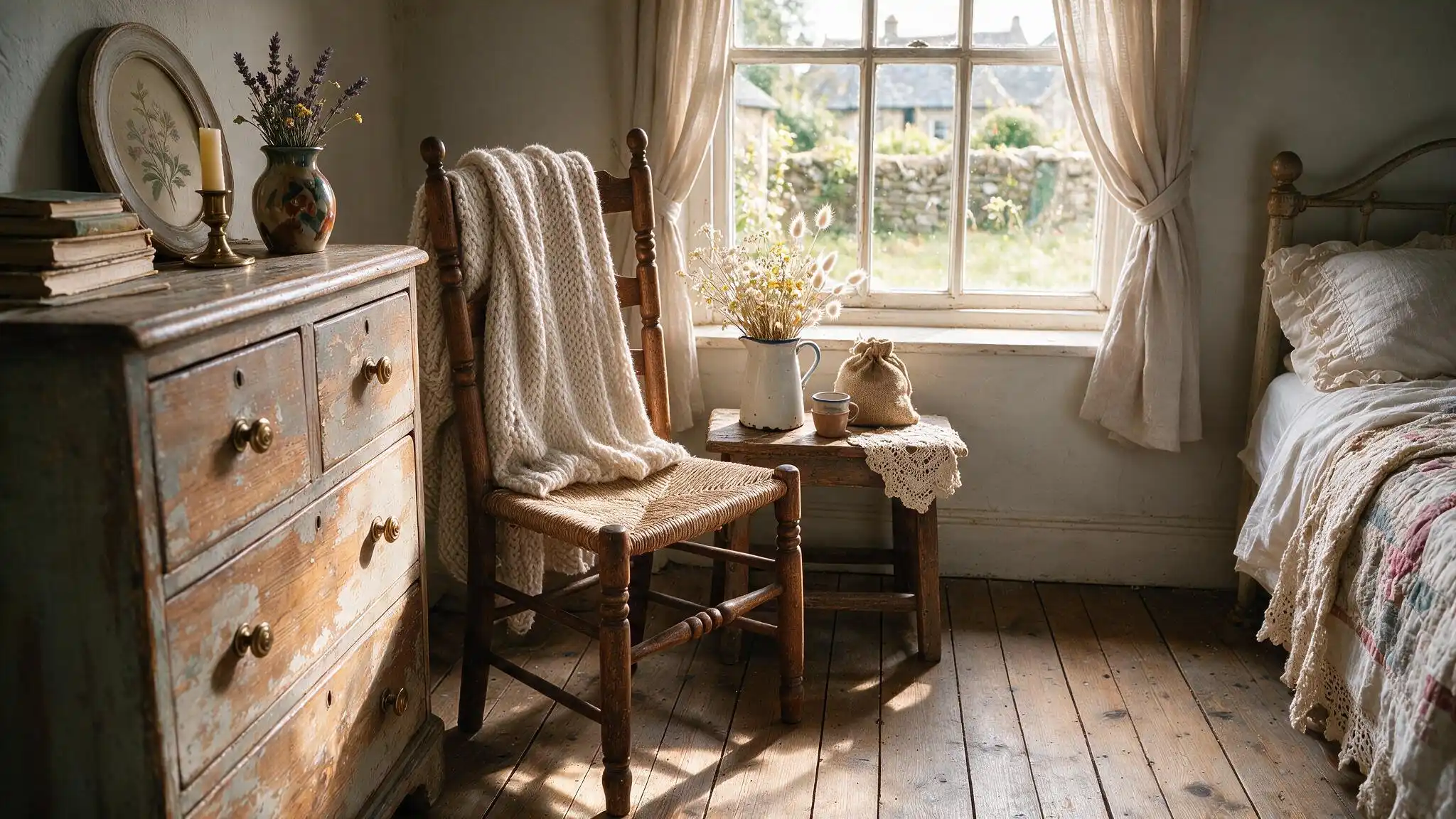
Furniture rarely comes from a single trip to a single store. A dresser might’ve belonged to a grandmother, while a chair could be a flea market find from three years back.
Neither has to look like it belongs to the same set, as long as the wood tones feel related.
2. Natural Materials and Finishes
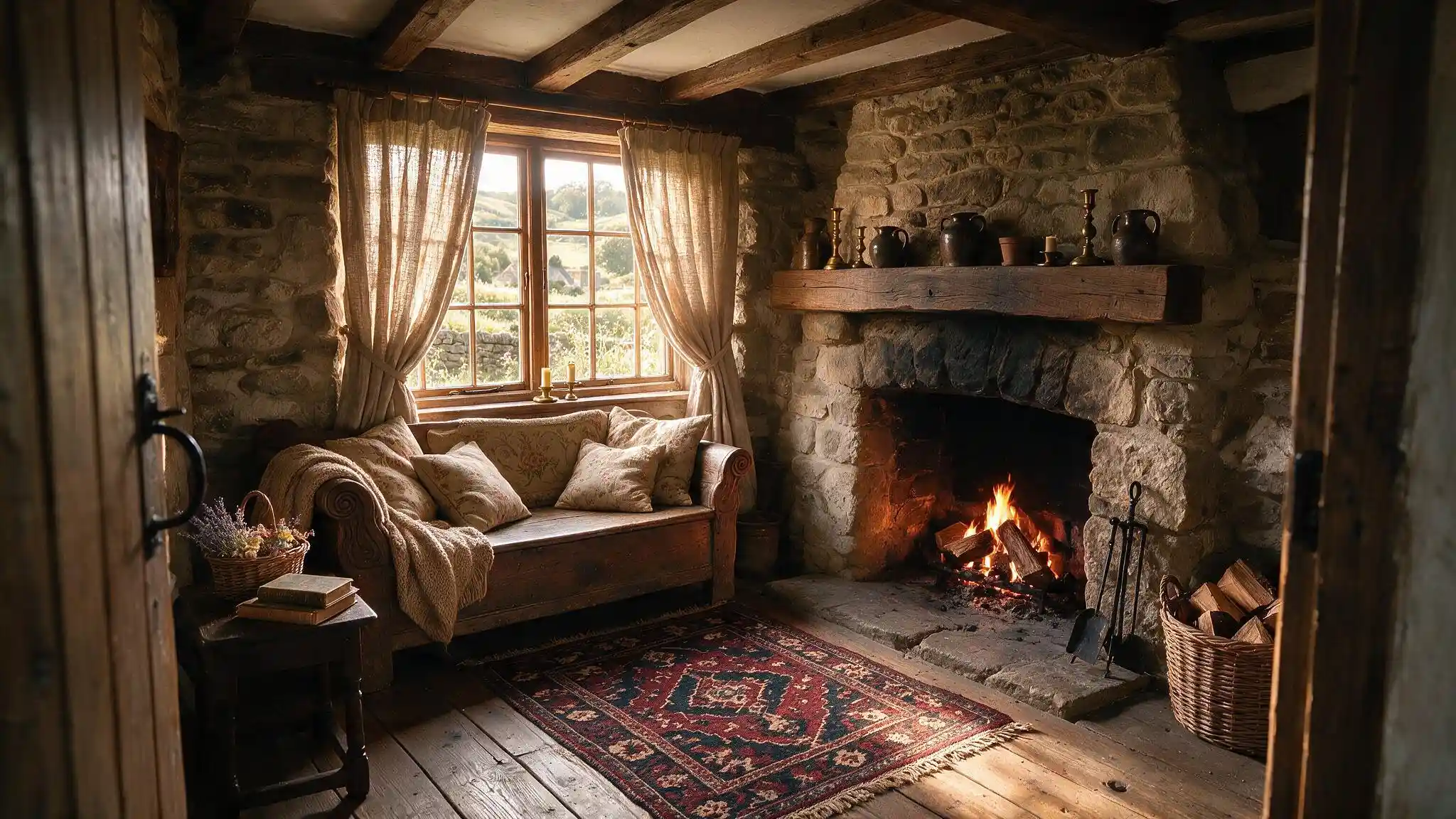
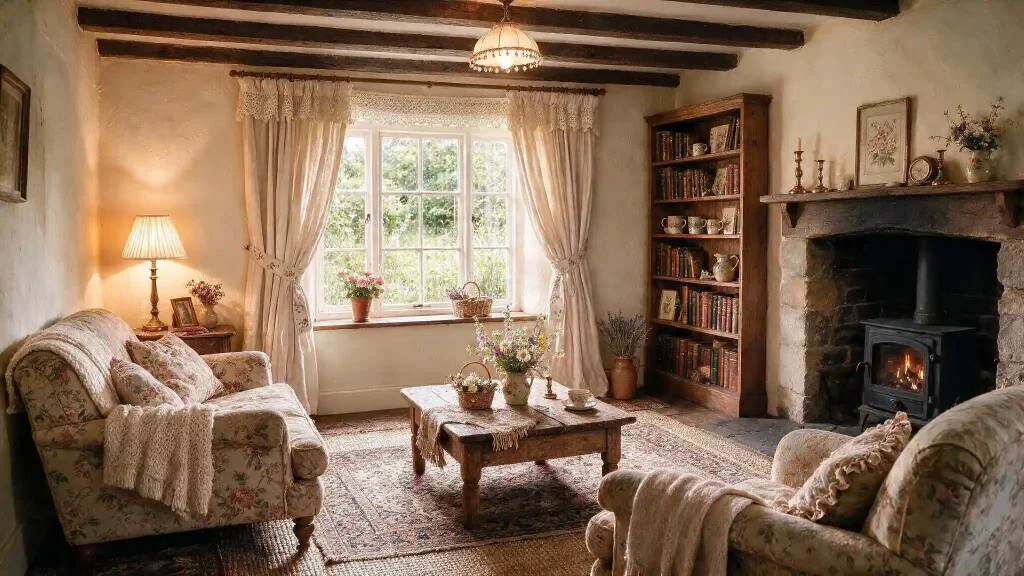
Wood, stone, wicker, and linen these keep turning up in cottagecore rooms for a reason. They age well instead of looking worn out.
Stone hearths hold up for decades, and a wicker basket earns its keep with almost no upkeep at all. Cotton and wool finish the job, keeping things soft underfoot and under hand.
An exposed wood beam overhead does something paint never could. Brass doorknobs or a copper pot add a bit of shine without looking new.
3. Floral and Botanical Details
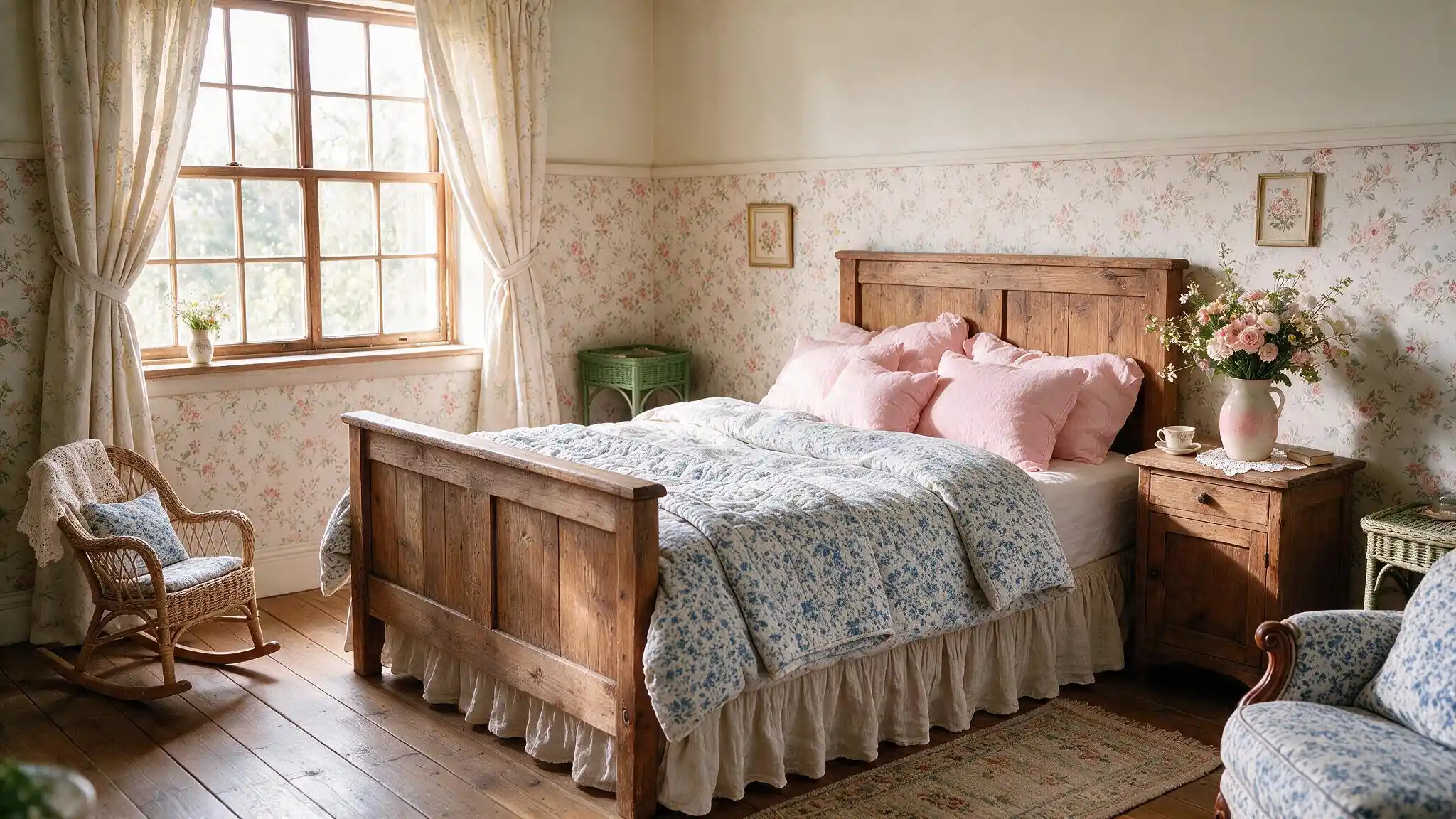
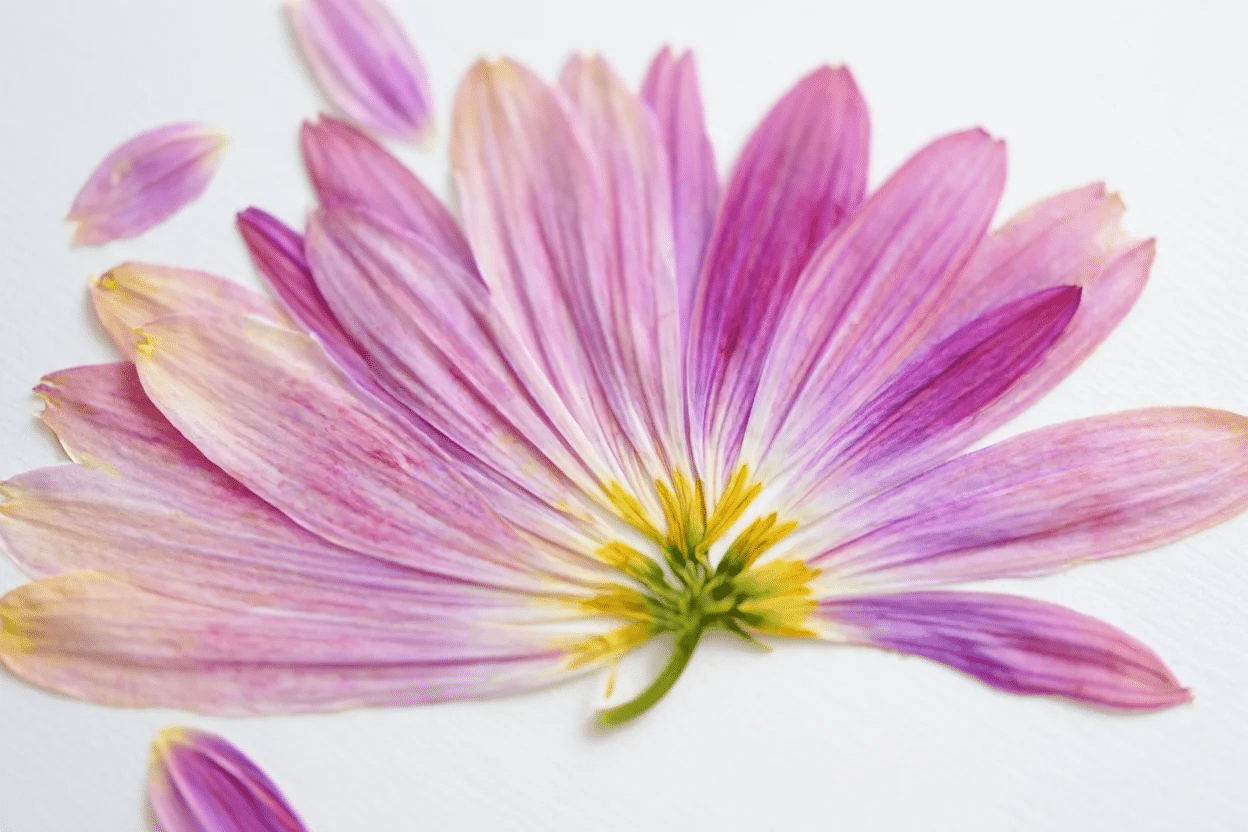
Flowers turn up nearly everywhere, on wallpaper, in fresh stems left in a jar, or tucked into a windowsill somewhere.
Even a single dried bunch in an old glass bottle often does more than a big, fussy bouquet ever managed to.
4. Perfectly Imperfect Finishes
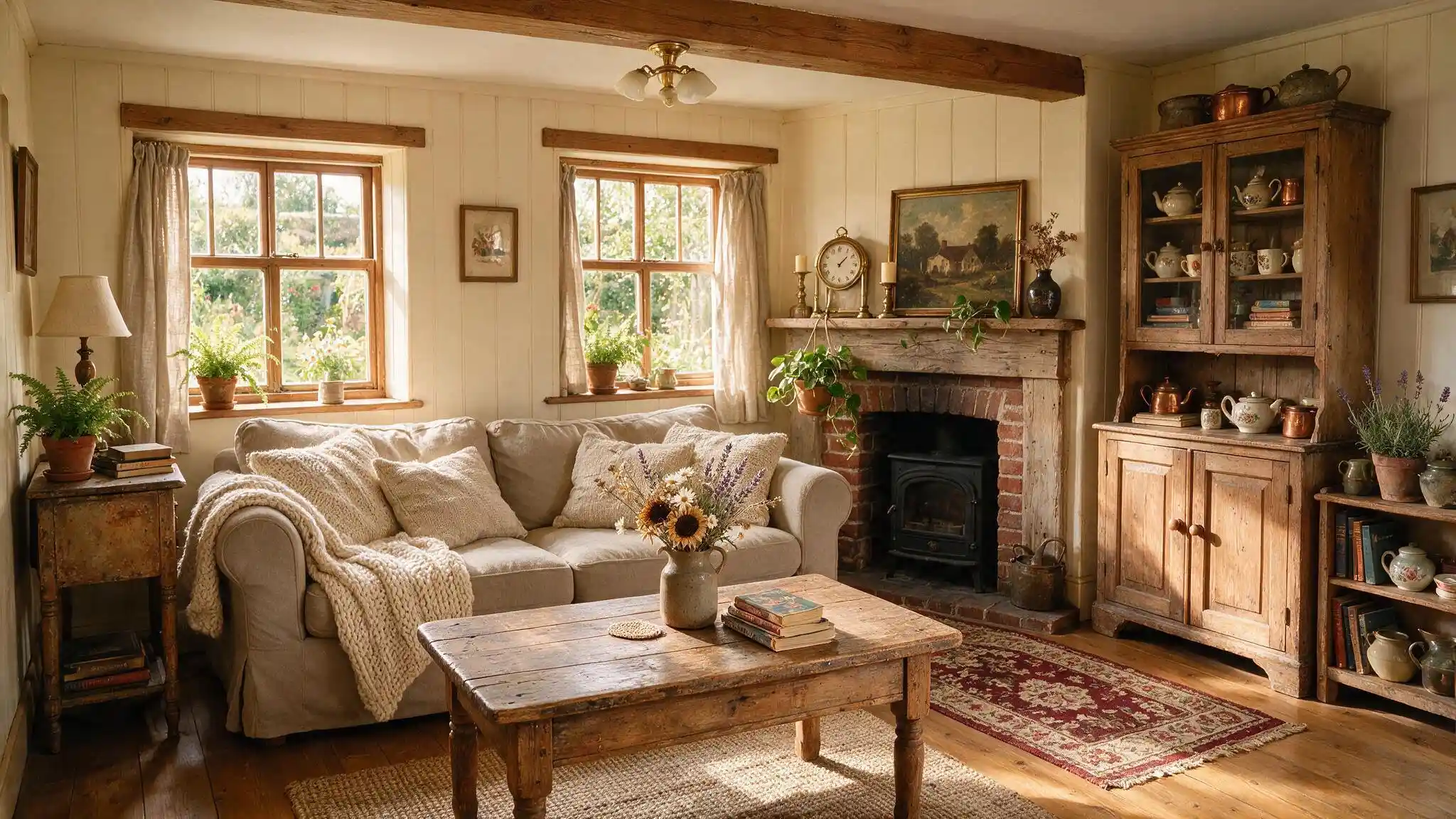
Chipped paint stays chipped, and faded fabric stays faded.
Dulled countertops say something a brand-new one just can’t, and a bit of rust on old hardware usually adds more than it takes away.
5. Handmade and Personal Pieces
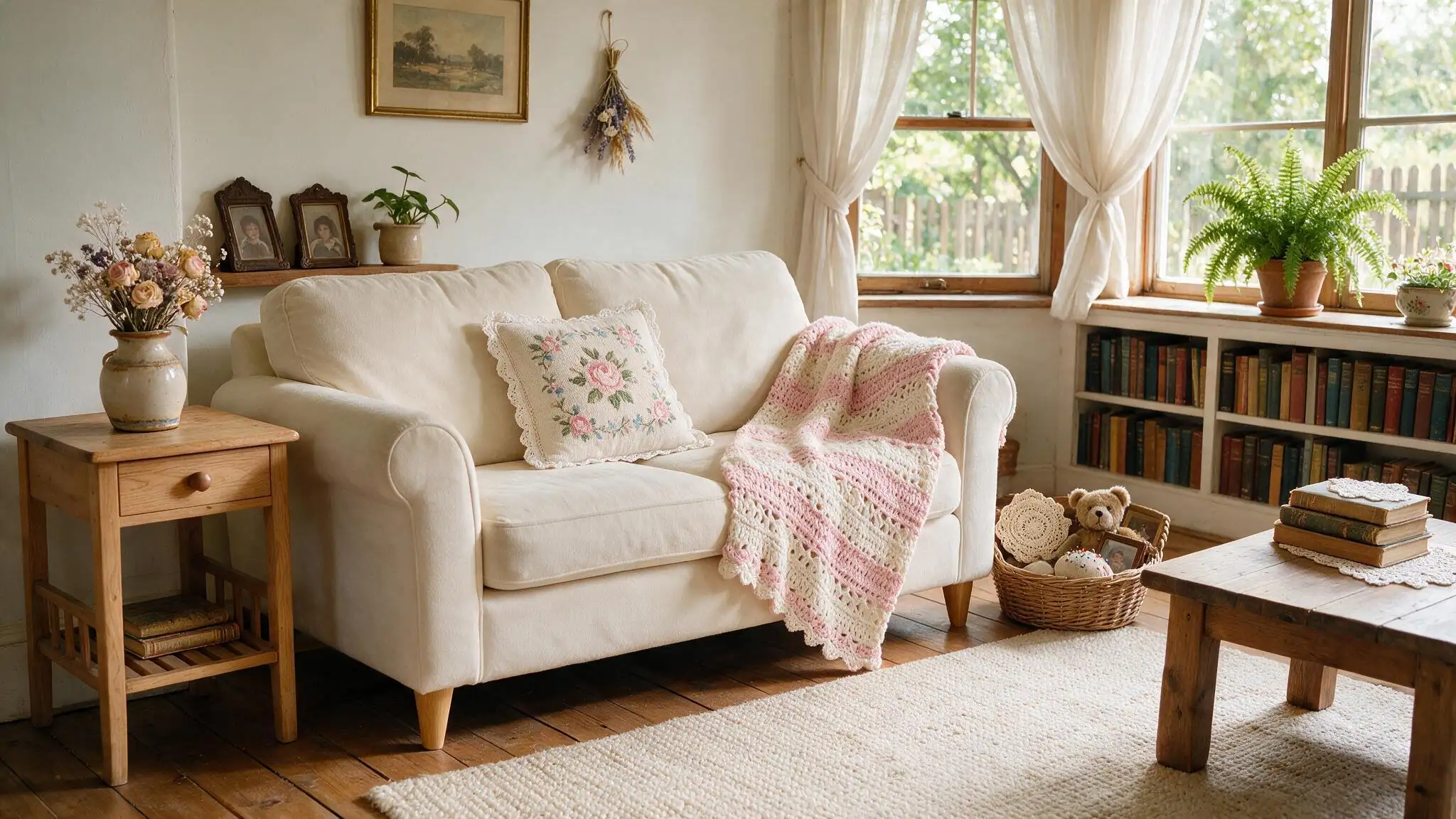
Something with a story behind it tends to win out over anything bought new off a shelf.
A crocheted throw picked up somewhere along the way counts. So does an old photo hung slightly crooked.
Small things like that carry more weight than they should.
6. Layered and Comfortable Textures
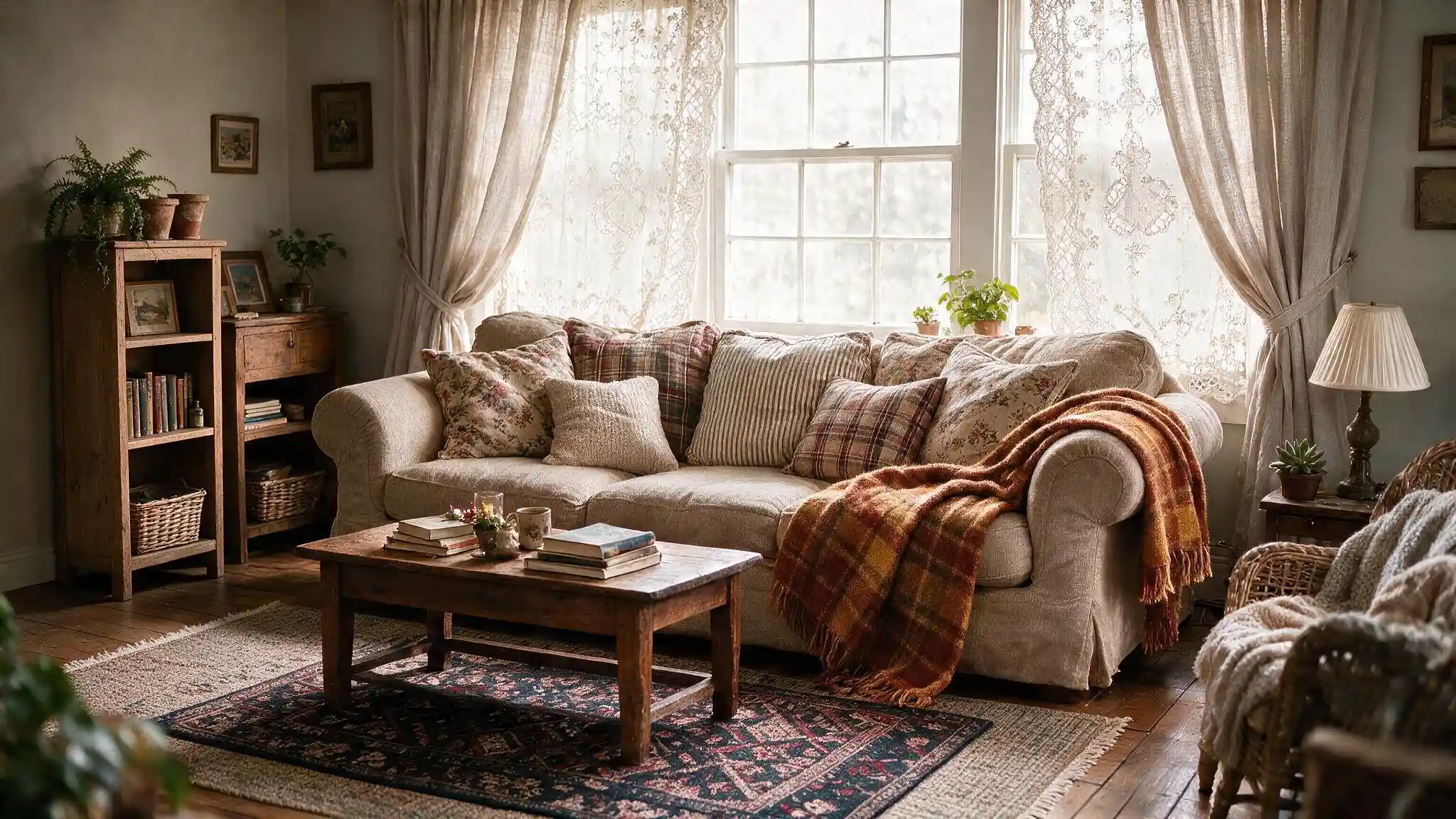
Rooms like this rarely lean on just one texture. One rug might sit under a lace-edged throw, with a chunky wool cushion tossed on top, nothing chosen for the sake of matching.
Lace next to heavy wool sounds off on paper, but it works once it’s actually in the room.
7. Soft Lighting
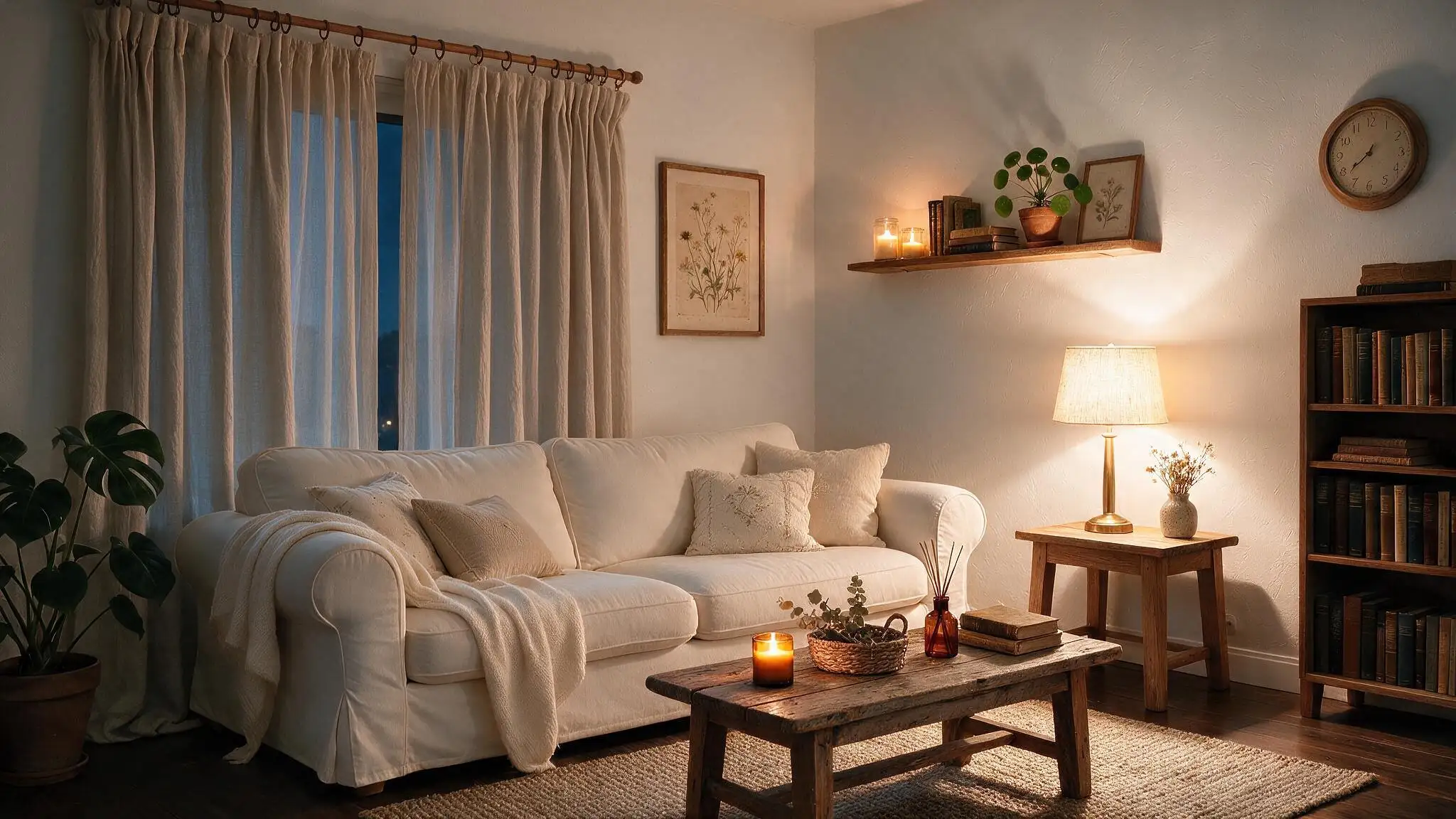
Bright overhead bulbs don’t really belong in this style. Candles and small lamps do the job instead, tucked along a shelf or left glowing on a side table.
Bringing the Style Into Every Room with Cottagecore Aesthetics
A room doesn’t need a theme to carry this look, just the right pieces added over time. Wood, soft color, and a few things worth keeping tend to do most of the work, room by room.
Living Room
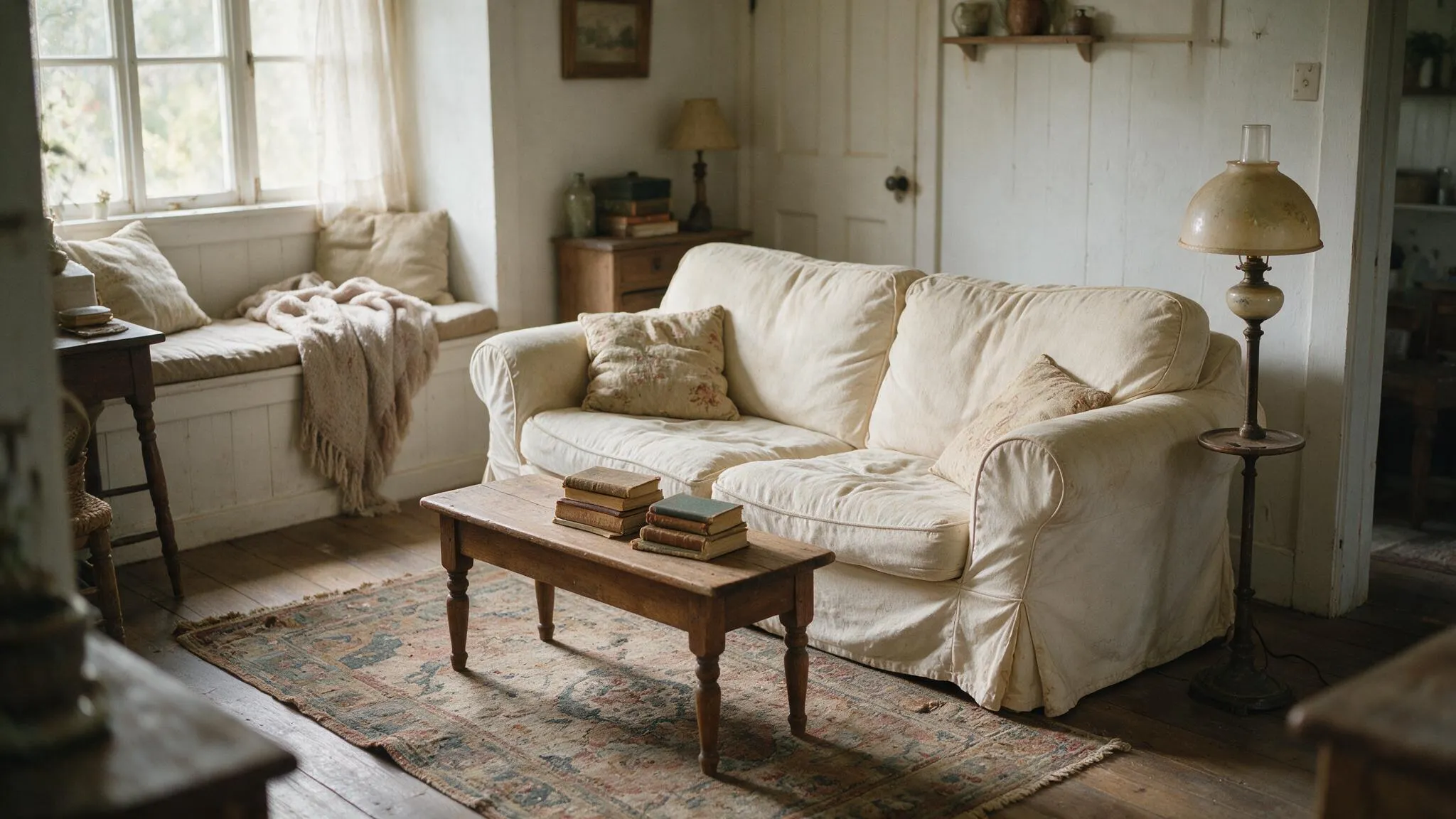
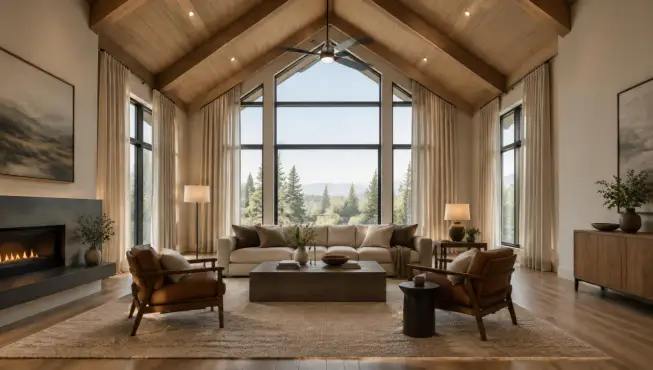
A faded slipcovered sofa beats anything sleek off a showroom floor.
Toss in a worn rug, a stack of old paperbacks, and a lamp that’s clearly been around a while, since straight lines aren’t the goal here.
Left draped over the arm of a window seat, a simple throw blanket says a lot on its own, often more than a matching furniture set ever could.
Bedroom
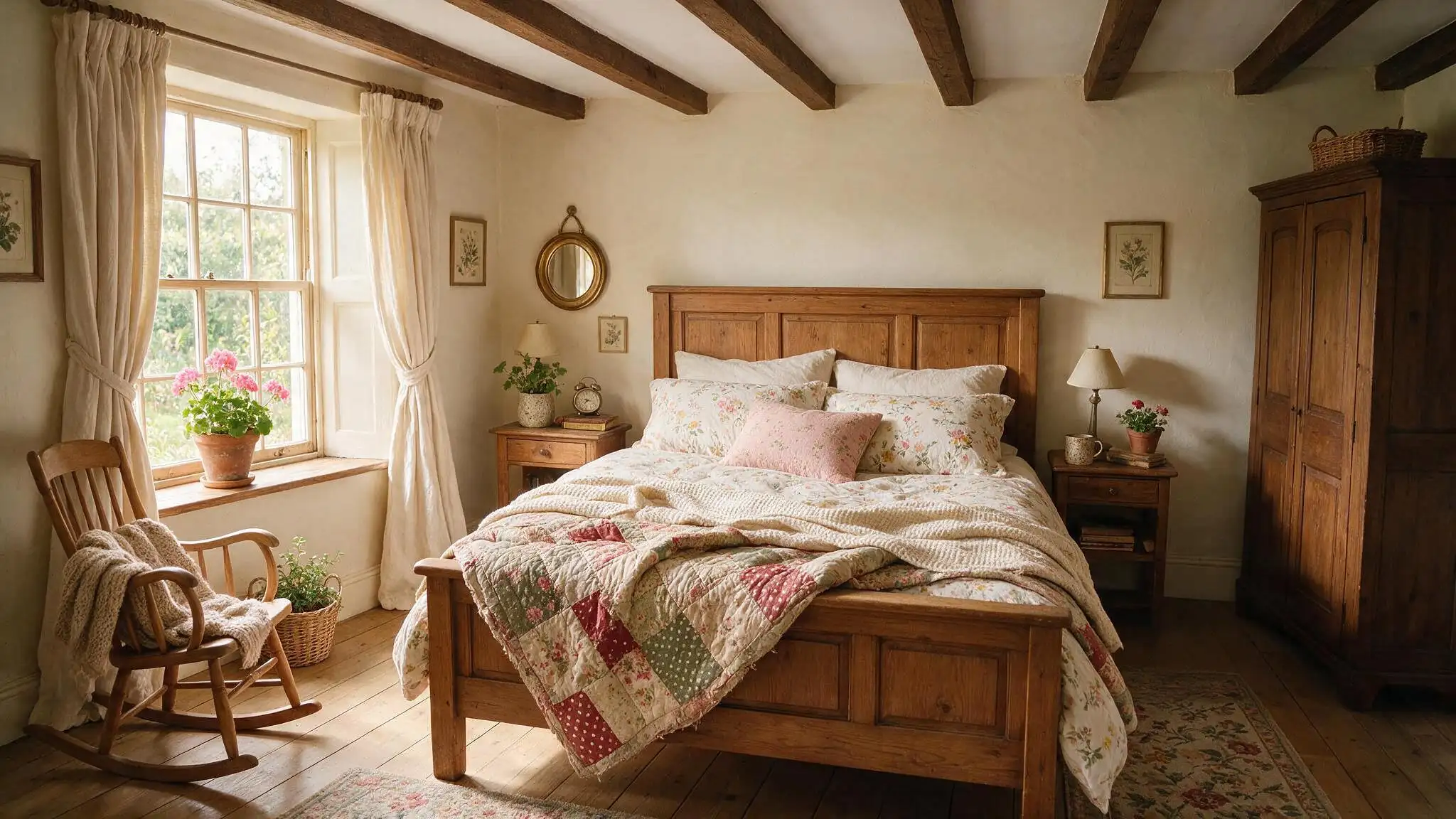
Floral bedding does most of the heavy lifting fast. Even a quilt that doesn’t quite match the sheets adds warmth at the foot of the bed without any real effort.
Kitchen
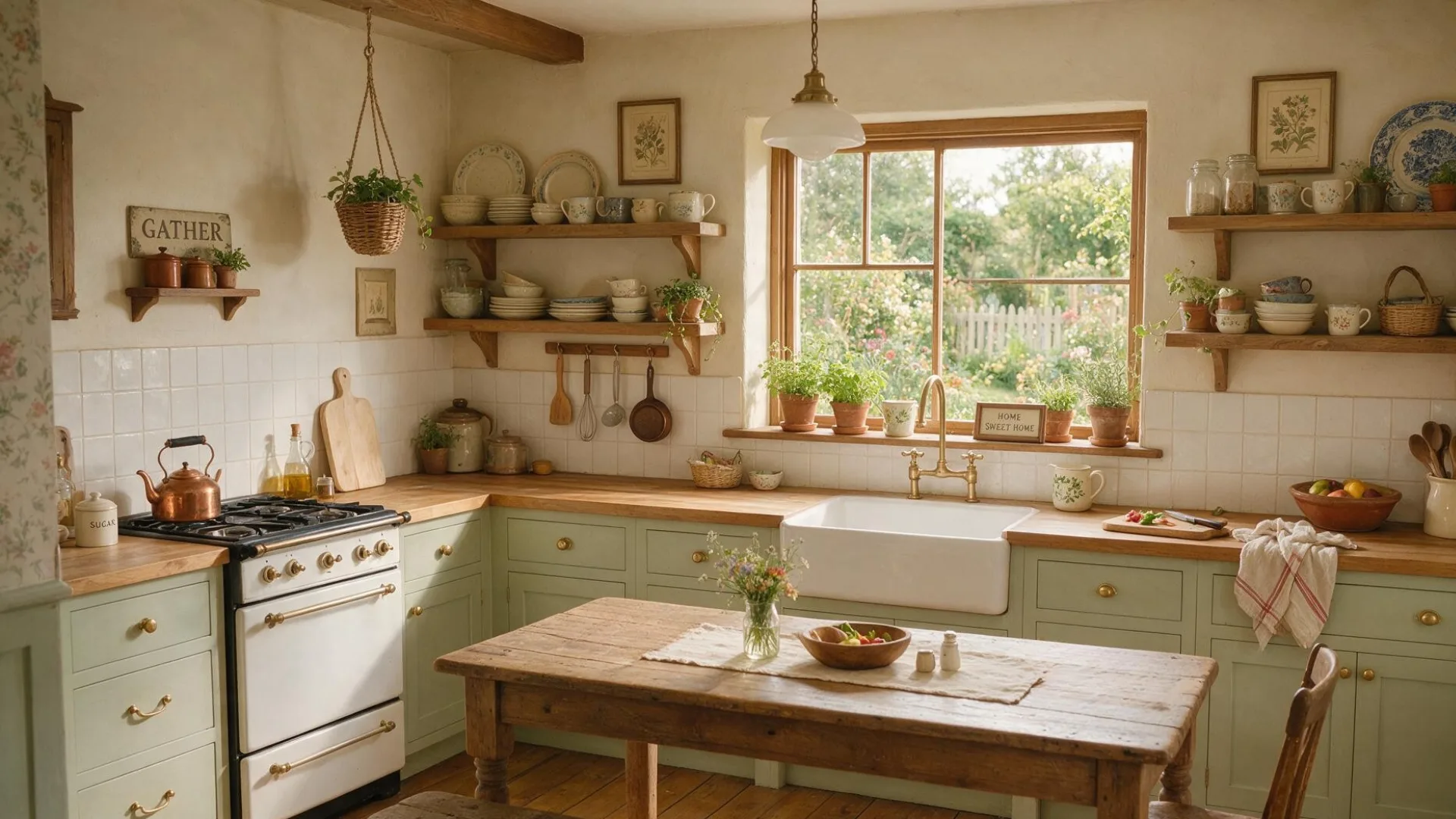
Open shelves carry a lot of the look here. Stacked plates, a couple of mismatched mugs, and a jar of dried herbs turn a bare wall into something worth glancing at twice.
Wooden cabinets and a deep farmhouse sink round it out.
An old cookware piece that still works earns a spot out in the open. It doesn’t need to stay shoved in a drawer.
Dining Room
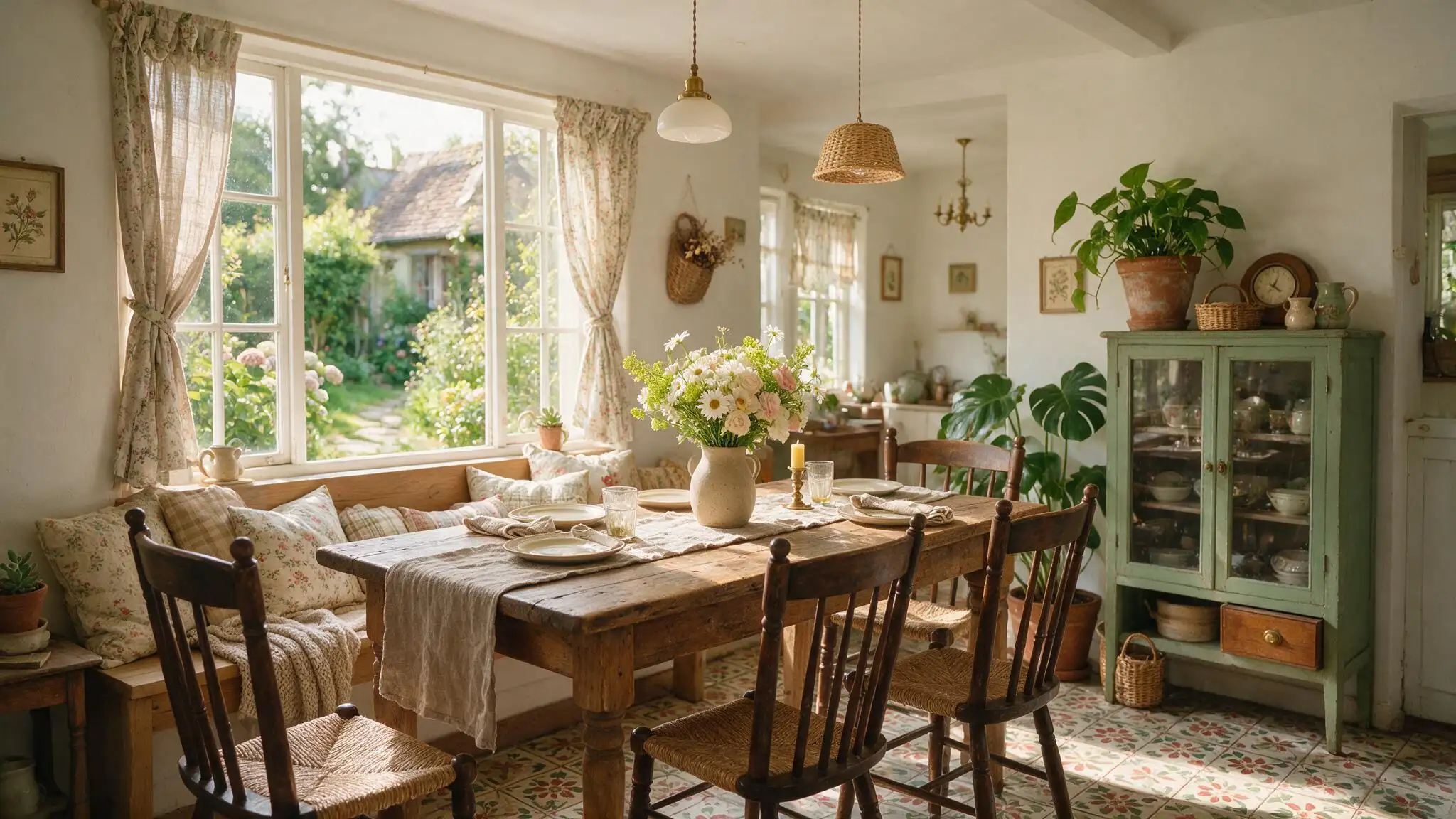
A wooden table with a dent or two says more than a polished one ever will.
Chairs pulled from different places give the room some life, and a plain linen runner down the middle keeps things from tipping into formal.
Bathroom
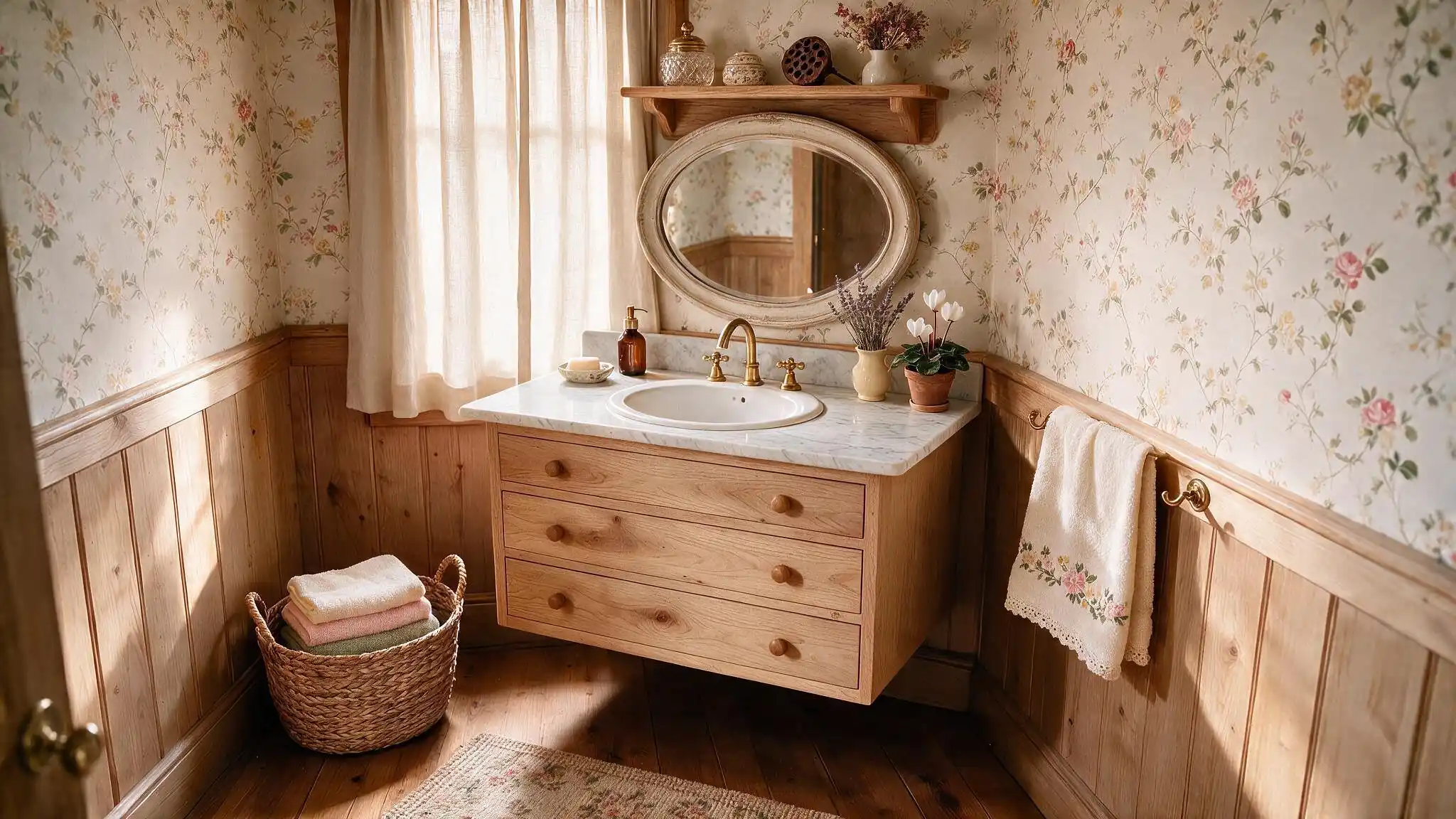
Small touches carry this room more than big ones. A woven basket for towels, an old mirror, a floral print somewhere on the wall that’s usually plenty. Nothing here needs fussing over.
Cottagecore Colors and Patterns
Color stays soft in this style, almost on purpose. Nothing glossy, nothing loud, nothing shouting for attention in a room meant to feel calm.
Most shades trace back to something outside: a field, a shoreline, wet stone after rain.
Warm Whites and Creams
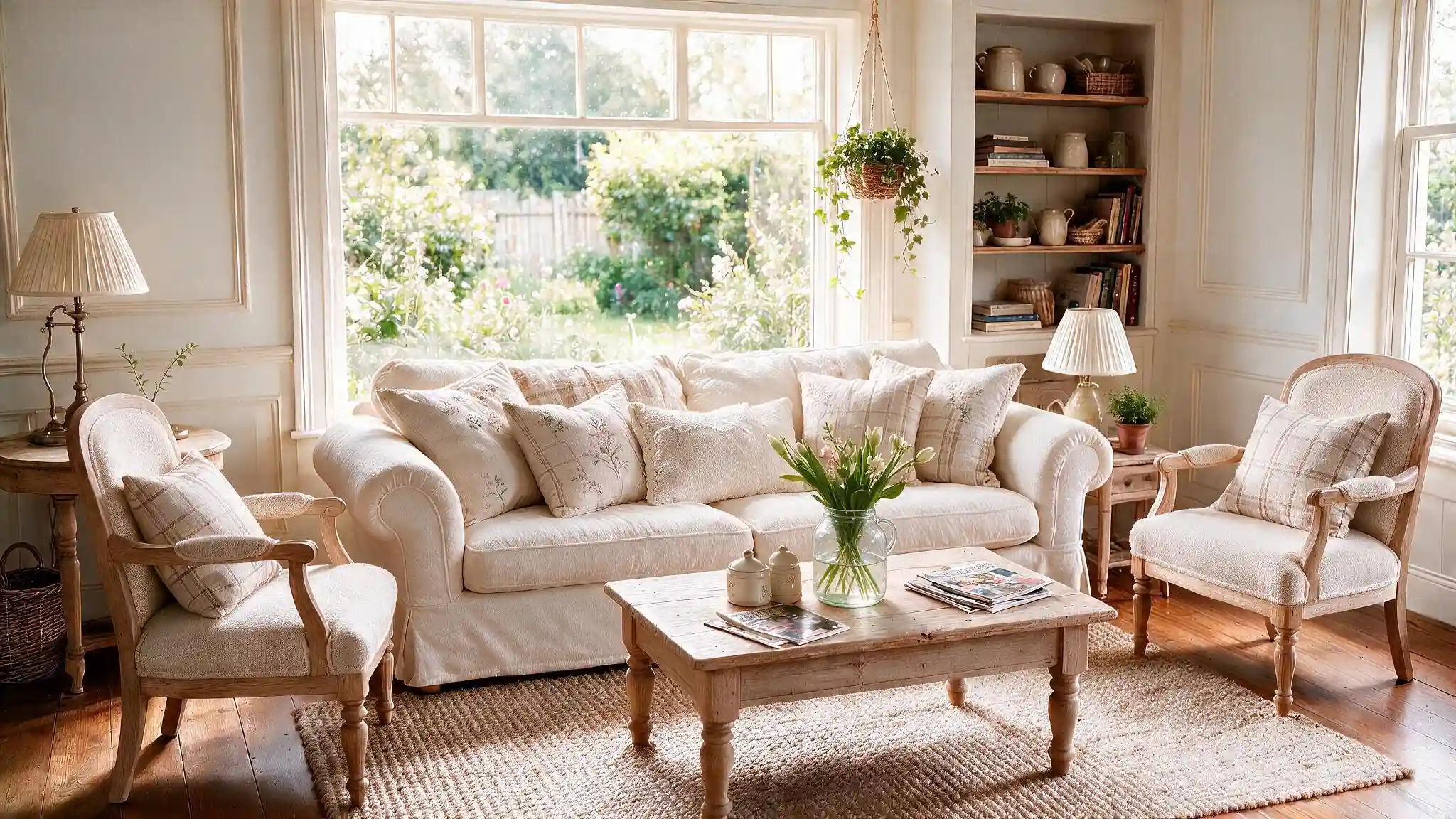
Stark white rarely shows up on these walls. Cream and bone tones take over instead, quiet enough to let furniture and florals stand out on their own.
Sage and Muted Greens
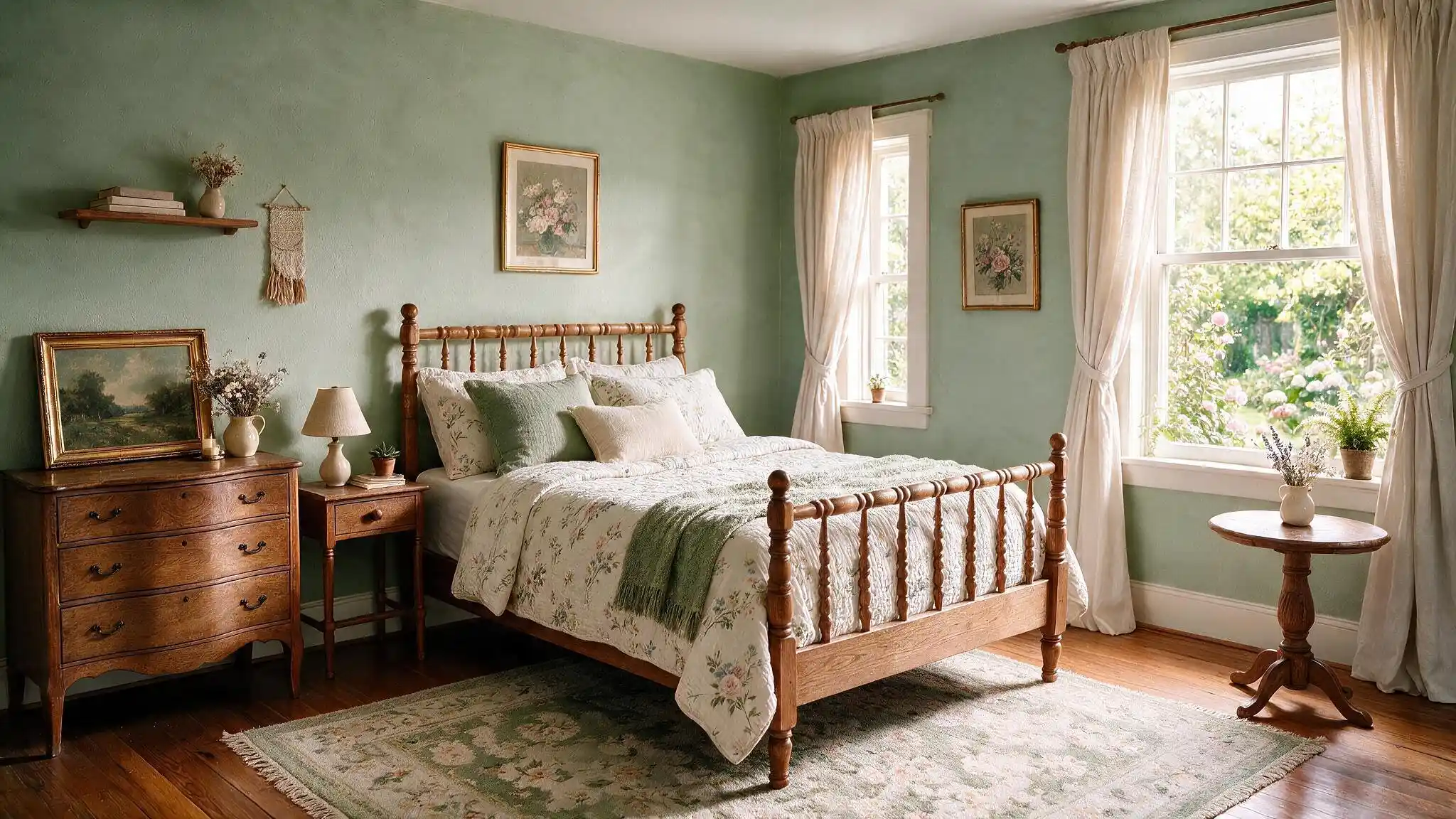
Green brings the outside into a room faster than almost any other shade. Sage looks good on cabinetry or a single wall.
It reads calm rather than bold, which suits this style with little effort.
Soft Blues, Pinks, and Yellows
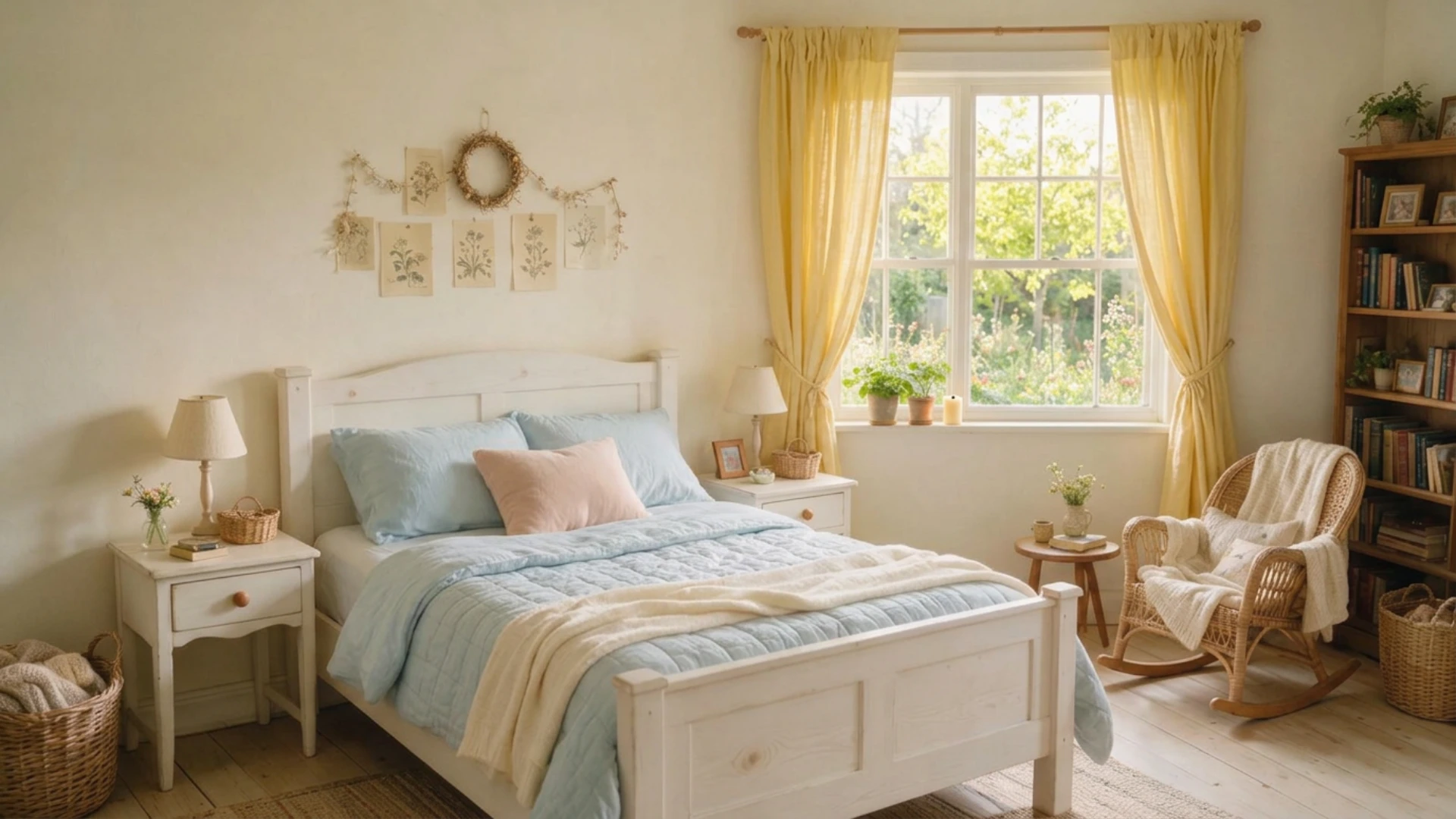
A pale blue pitcher, a blush cushion, and a soft yellow curtain small touches like these add a little color without tipping into anything bold.
Earthy Browns and Warm Neutrals
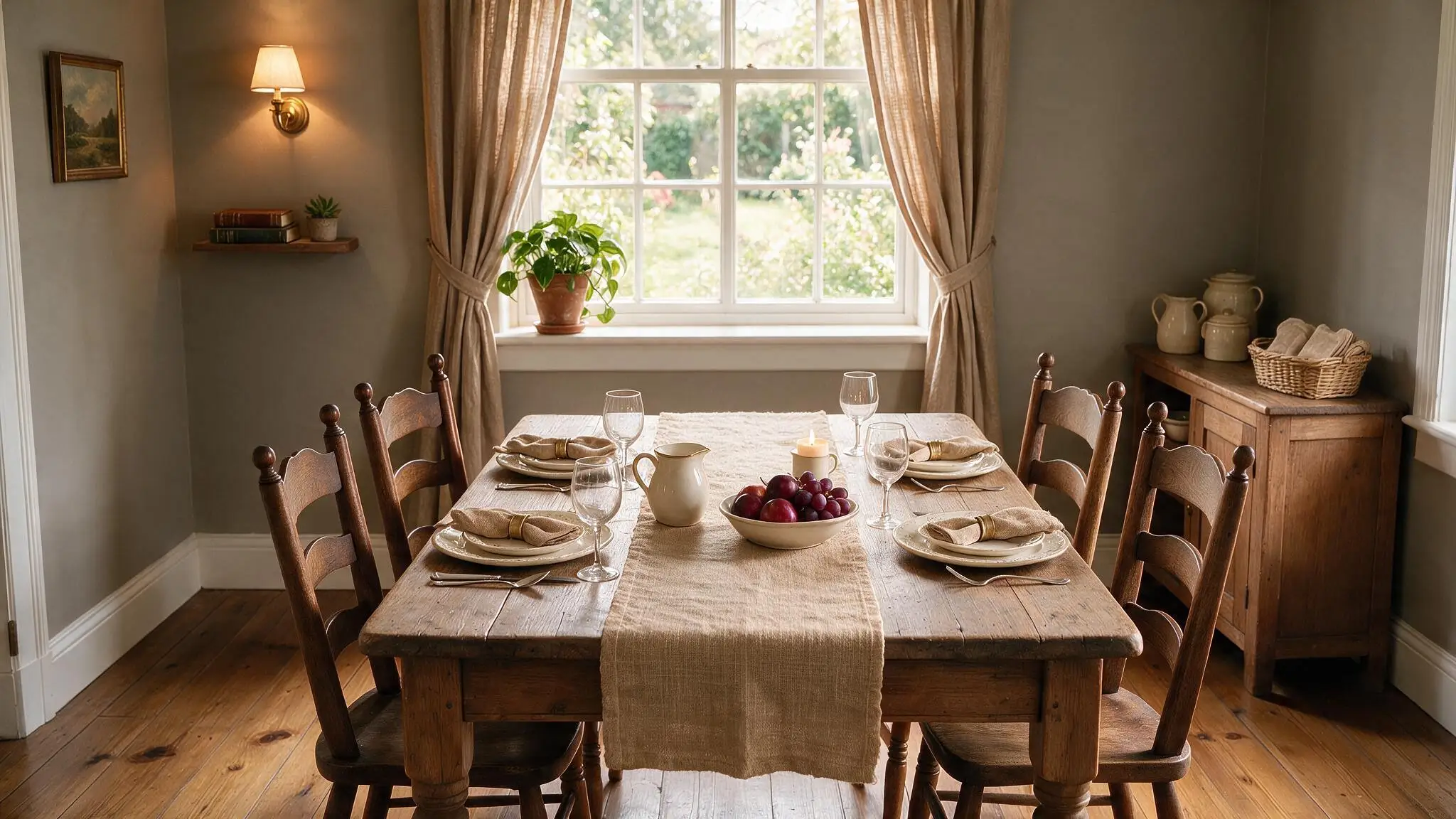
Brown grounds a room the way soil grounds a garden bed. Wood tones, tan linens, and warm taupe walls sit in this part of the palette, and next to green or cream, they stop a space from feeling flat or strangely empty.
Gingham Checks and Small Patterns
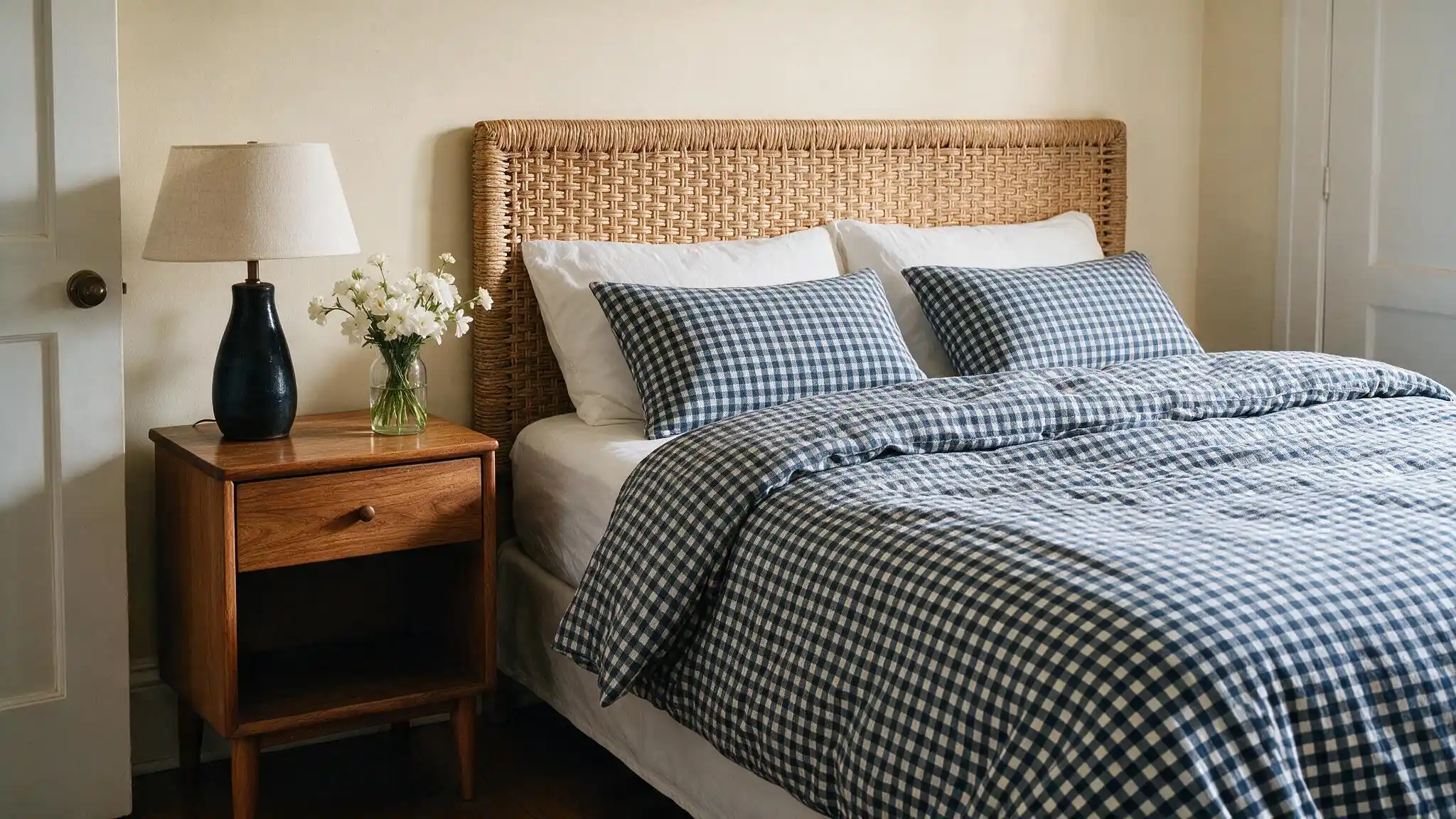
The pattern stays modest here, small and repeated rather than bold.
Gingham shows up on curtains or a cushion now and then, adding just enough interest without pulling focus from everything else.
Bringing it all Together
Cottagecore interior design comes down to a few habits. Natural materials, soft colors, layered textures, and pieces that carry history all play a part.
Room by room, from the kitchen to the bathroom, a cottagecore room takes shape slowly. It comes from small, collected choices rather than one big purchase.
None of it needs to look flawless to work, and that’s really the whole point. A stiff room needs less uniformity and a few more things that mean something to whoever lives there.
Frequently Asked Questions (FAQs)
1. Does Cottagecore Interior Design Cost a Lot to Pull Off?
Not really; most of the look comes from secondhand and thrifted pieces.
2. Can a Small Apartment Pull Off Cottagecore?
It can, since the style doesn’t depend on large furniture.
3. What About a Rental with Plain White Walls?
Textiles, shelves, and Furniture carry most of the look without touching the walls at all.
4. Is There a Set Timeline for Building a Cottagecore Room?
Not really; most rooms take shape gradually over several months, sometimes longer.