Crochet uses one hook to build fabric, working yarn through loops and stitches over and over.
Someone brand new to it doesn’t need a big pile of tools or fancy skills to get going. A hook, some yarn, scissors, and a yarn needle cover most of what you need for basic practice at home.
Picking materials comes first. Next, learn how to hold the hook and yarn properly, then tie a slip knot and make a chain.
Basic stitches follow, then simple rows, and finally putting together that first finished project with real confidence behind it.
Materials and Tools You Need to Start Crocheting
Not much stands between someone and their first crochet project: just a handful of basic supplies.
Simple materials make stitches easier to see while learning, without the overwhelm a full craft store aisle can bring. A small kit covers the basics.
- 5 mm Crochet hook
- Smooth Yarn
- Scissors
- Yarn needle
- Stitch markers
- Measuring Tape
You don’t need a full crochet kit to get started. The right hook, easy-to-see yarn, scissors, and a needle handle the basics just fine.
Step-By-Step Crochet for Beginners
Steps work best in order. Start by holding the tools, then move to basic stitches and simple rows. Take each move slowly before moving on to the next.
Step 1: Learn How to Hold the Hook and Yarn
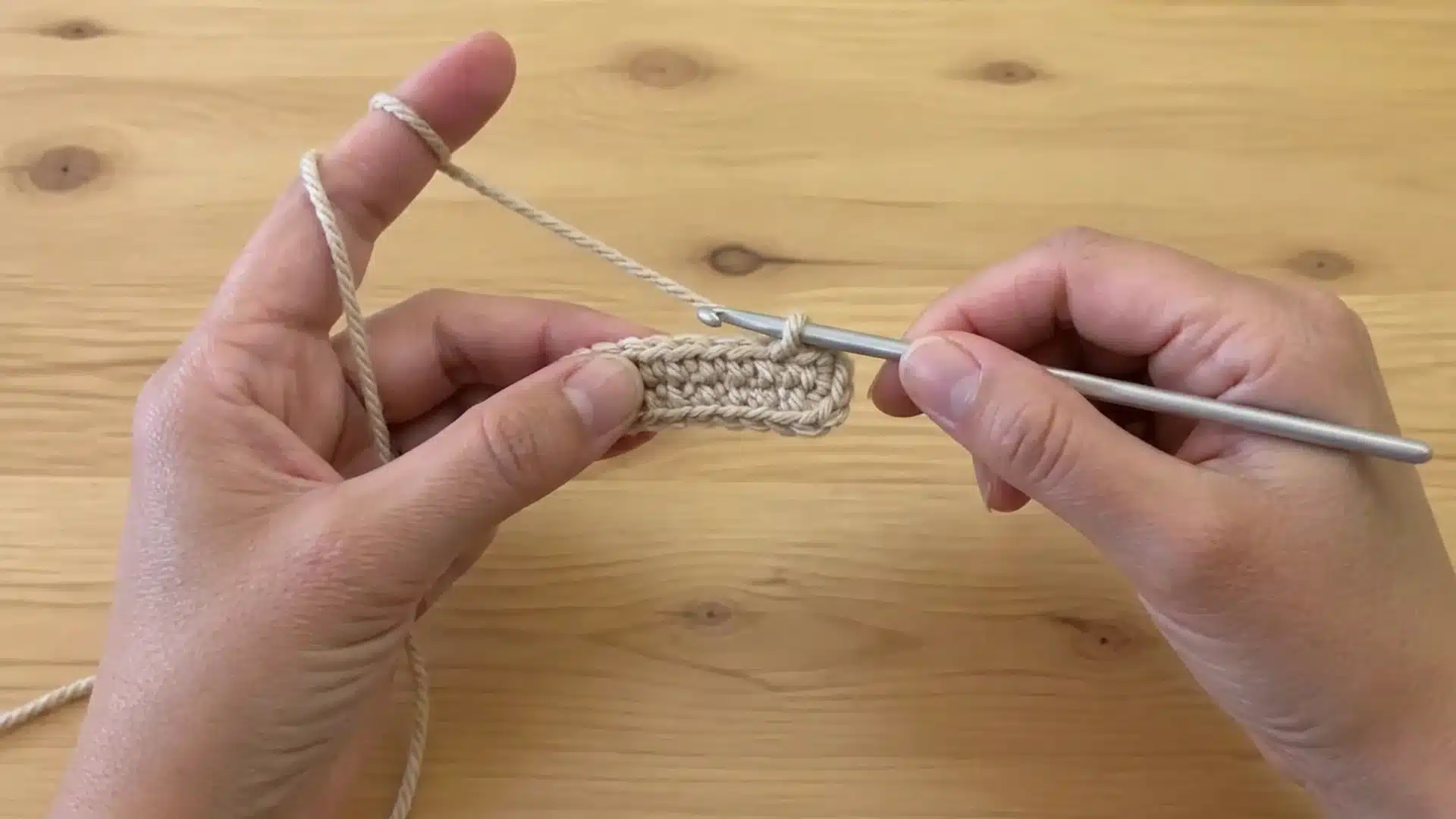
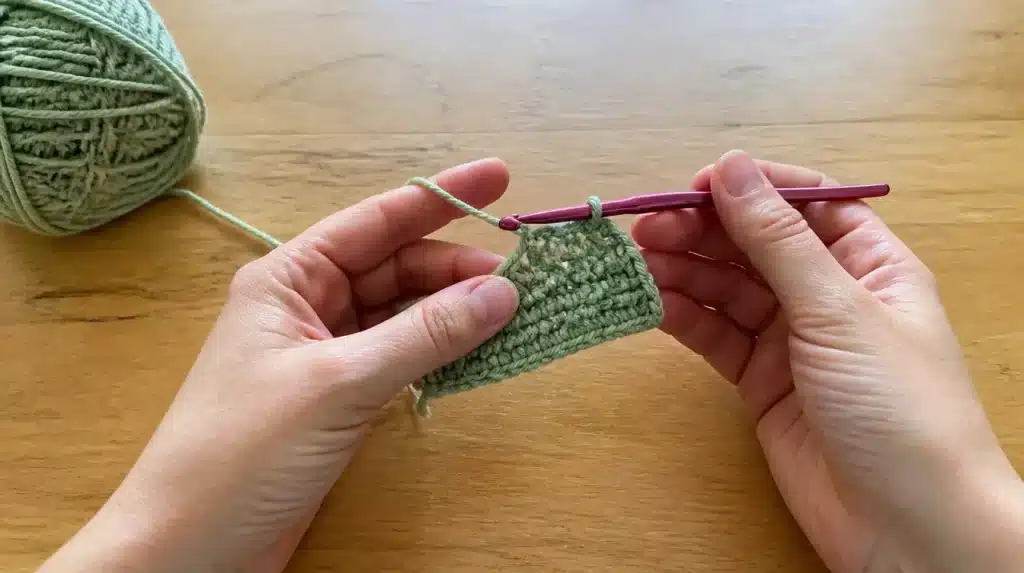
Pencil grip, knife grip. Whichever one feels more natural in the hand works fine here.
The other hand manages the yarn, letting it slide smoothly through the fingers rather than getting yanked too tight.
Neither hand should grip hard; the hook especially needs a light touch. With a comfortable grip and steady yarn tension, moving the hook through each stitch gets much easier, building rows that come out even in the end.
Step 2: Make a Slip Knot
First, form a loop with the yarn. Pull a section of yarn through that loop, then slide the new loop directly onto the hook.
Tighten it gently around the hook, not too snug or tight. This one simple, movable knot starts most crochet projects from the very beginning.
Step 3: Make a Chain Stitch
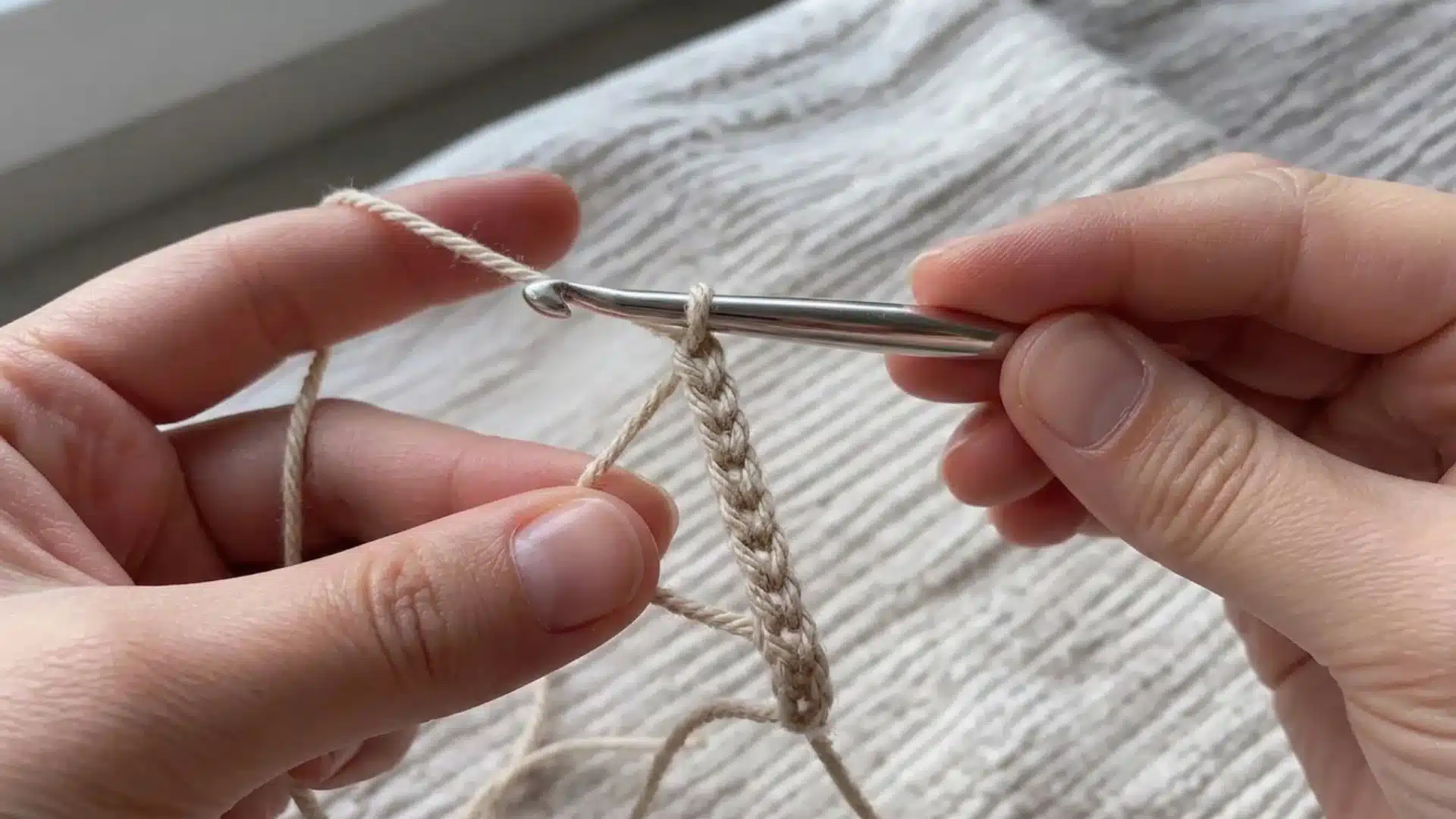
The slip knot is already on the hook, ready for the next step. Wrap the working yarn over the hook, then pull it through the loop already on it.
Repeat the same motion again and again, and a chain builds up, becoming the base for everything worked afterward.
Step 4: Count Your Chain Stitches
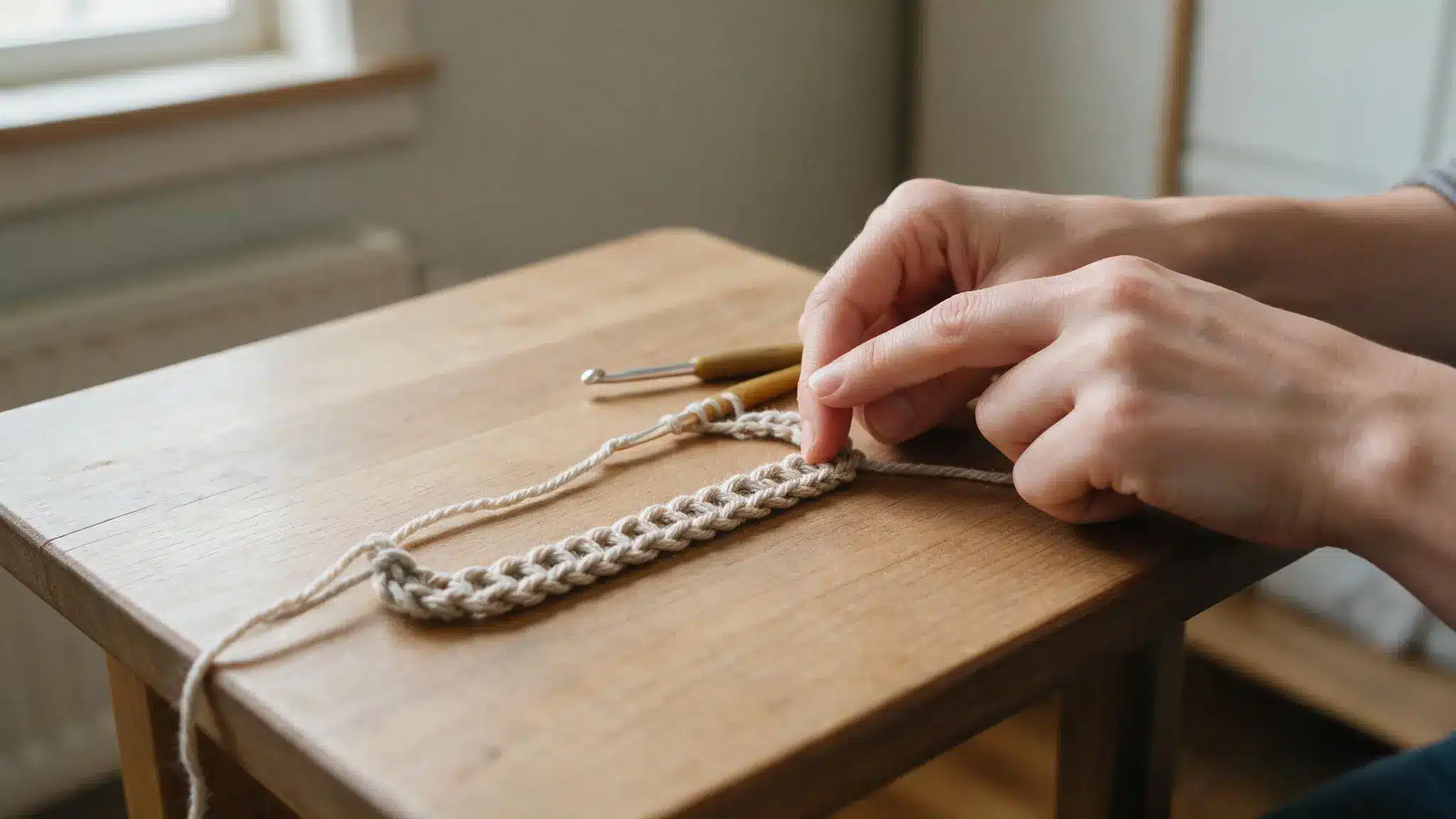
Small V shapes run along the finished chain, and each one counts as a single stitch. The loop currently sitting on the hook doesn’t count toward that total, though.
Start counting from the first V-shaped stitch below the hook, moving down the chain toward the slip knot.
Step 5: Work Your First Crochet Row
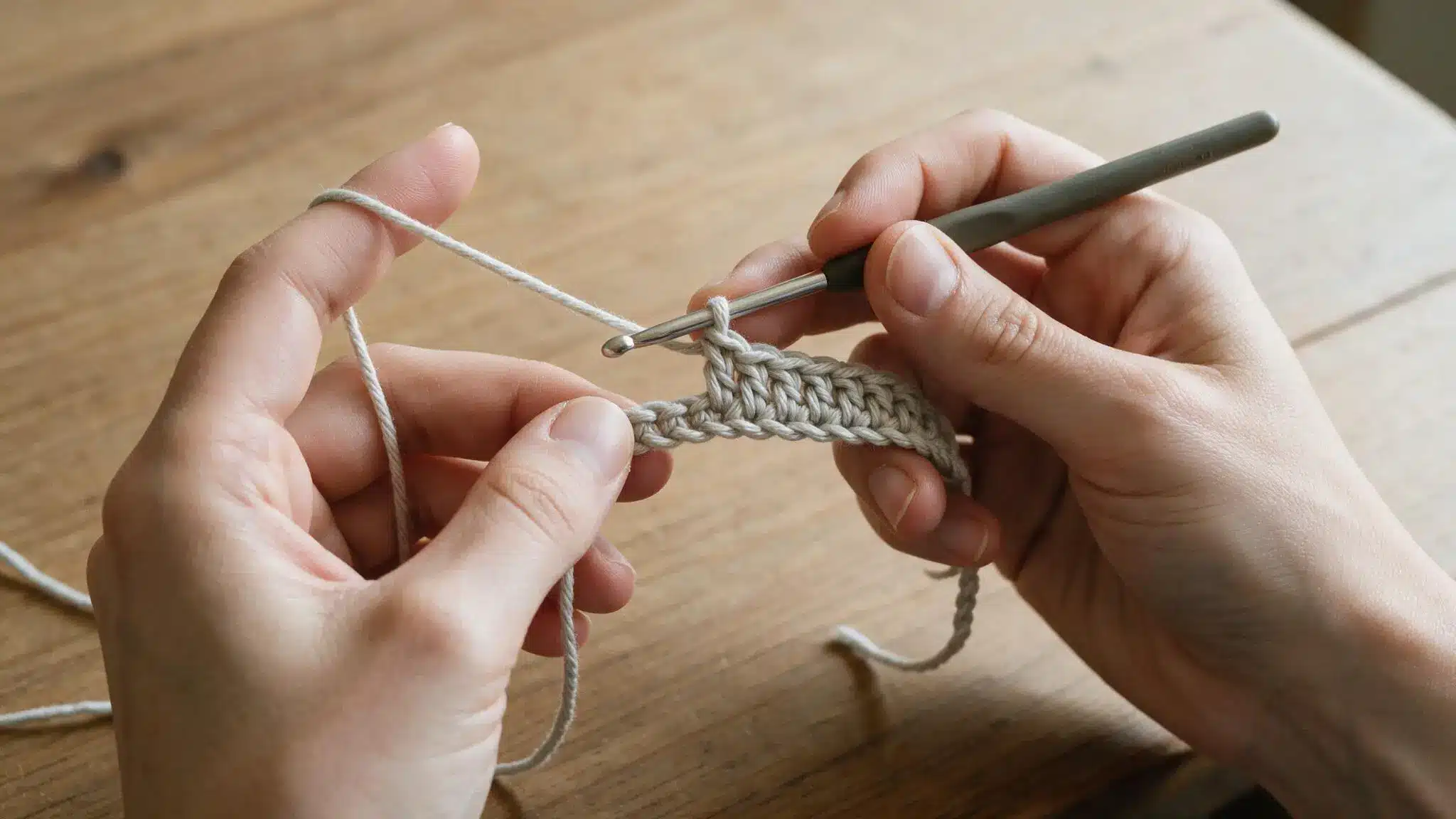
Skip the first chain closest to the hook, then insert the hook into the second chain from the hook. Single crochet across the row after that, matching whatever stitch count was planned ahead of time.
Keep tension steady the whole way through, and count stitches along the way to keep the row even.
Step 6: Turn Your Work and Start the Next Row
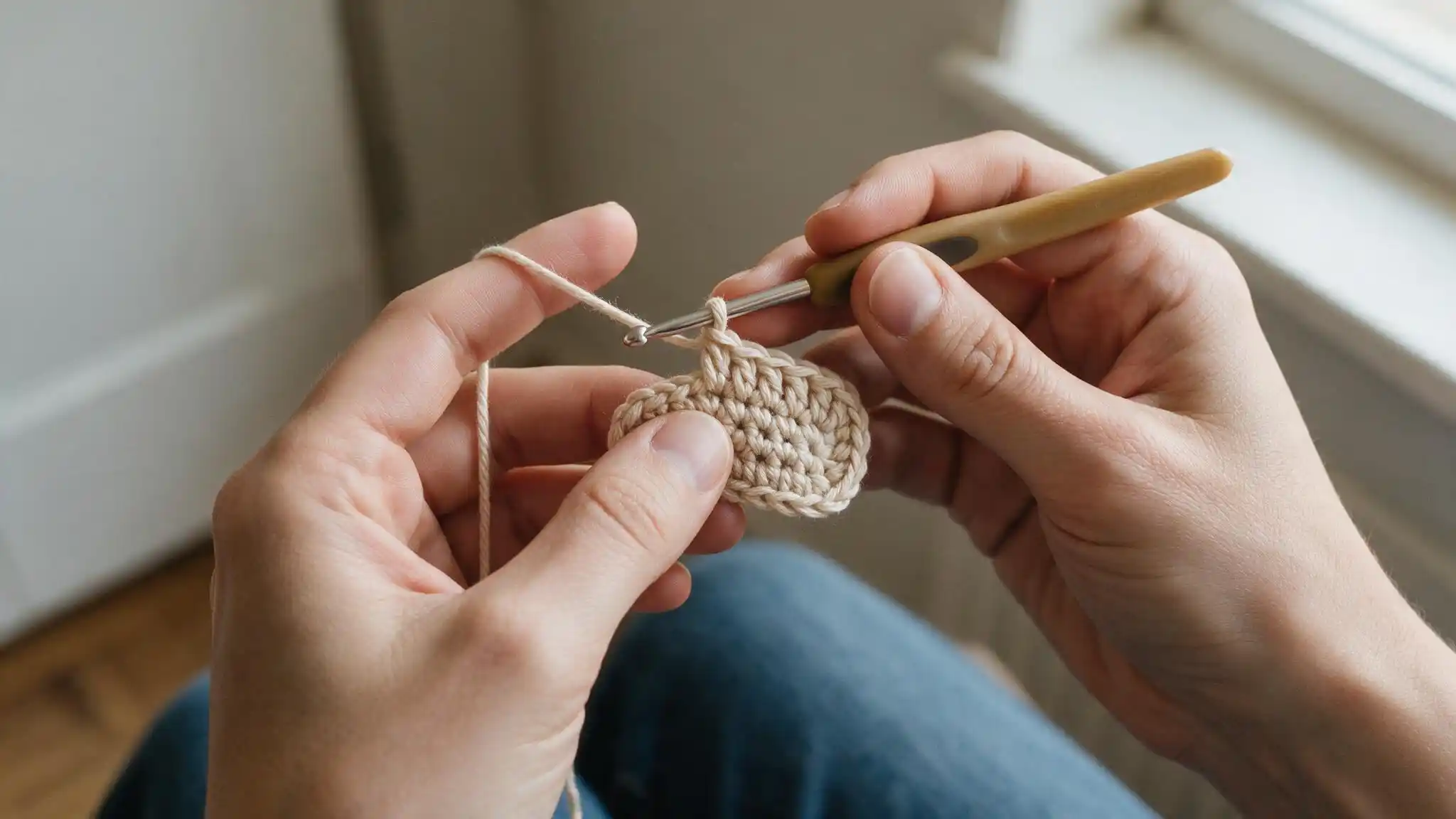
Once the row ends, make a turning chain before flipping the work over to the other side.
Finding the first stitch of the new row matters a lot at this point. Skip it, or accidentally add one extra, and the whole row throws off from that point forward.
How to Finish Your Crochet Project?
That last row’s done, but the yarn still needs securing so nothing unravels later.
A few quick steps take care of it, usually just a couple of minutes from start to finish before the project’s truly complete.
Finish the Final Stitch: That last stitch works the same way every other stitch in the row did. Nothing changes here; finish it out the usual way before moving forward.
Cut the Yarn: Snip the working yarn, but leave several inches of tail hanging. That extra length matters later, once it’s time to weave the end in properly.
Pull the yarn through: Take that cut end and pull it all the way through the last loop still sitting on the hook. Tighten it down gently; nothing forced.
Weave in the Loose End: Grab a yarn needle, thread the tail through it, then work it through nearby stitches. That secures everything and hides the loose end for good.
Beautiful Crochet Stitches You Can Try Once You Learn the Basics
Once the basics feel comfortable, new stitches open up a whole world of texture, shape, and interest for any project. Some stay simple and useful.
Others lean decorative, leaving plenty of room to experiment along the way.
1. Crab Stitch Crochet
Reverse single crochet is another name for it, and crab stitch really shines at building a neat, textured edge once everything else is finished.
Working backward from a regular single crochet creates a twisted, cord-like finish that suits blankets, bags, and clothing well.
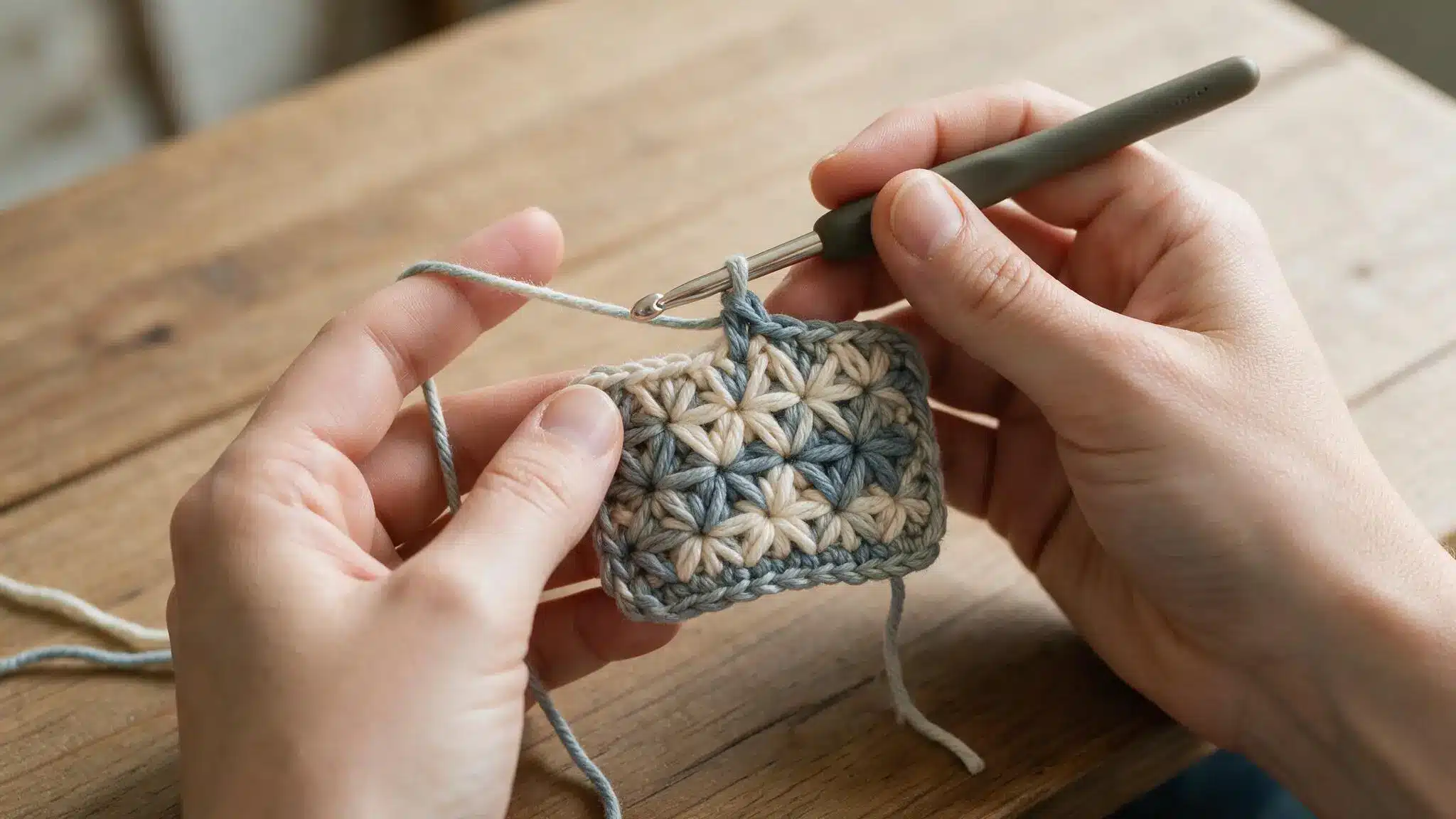
2. Star Stitch Crochet
Small clustered stitches, arranged to look like tiny stars that’s the whole idea behind this star stitch.
This way, a thick, textured surface builds up fast, working well for blankets, scarves, and any project where extra surface detail matters to the final look.
3. Waffle Stitch Crochet
Stacked stitches rising off the fabric surface create that grid-like, raised texture the waffle stitch is known for.
Thick and structured, it works well for warm blankets, washcloths, scarves, and pretty much anything that benefits from built-in depth.
4. Double Crochet Stitch
Taller and more open than single crochet, double crochet sits near the top of the list most beginners learn early on.
The movement clicks fast for most people, and from there it works for scarves, blankets, granny-style patterns, projects that need faster progress.
5. Slip Stitch Crochet
Short, low, unassuming, slip stitch mostly handles joining pieces, moving across existing stitches, or finishing an edge cleanly at the end of a project.
Height barely comes into play in the slip stitch, which is exactly why it works for connecting sections without leaving a raised row behind.
6. Bobble Stitch Crochet
Small, rounded bumps rising up from the surrounding fabric are the signature look of the bobble stitch.
This adds a playful bit of texture to blankets, cushions, hats, and other projects, especially when the bumps are scattered here and there on purpose.
How to Practice Crochet as a Beginner?
Basic movements come first, well before you start any full project.
Small practice pieces build tension control, help you spot stitches clearly, and keep things steady throughout, making it much easier to catch mistakes early before they pile up.
Practice Your Tension
Relaxed yarn beats a tight pull whenever working through stitches.
Stitches that stay roughly the same size throughout the practice piece show good, steady tension forming naturally over time.
Rushing tends to tighten things up without anyone even noticing it happen.
Count Your Stitches
Chains and rows need regular counting to catch a skipped or extra stitch early on in the process.
Left unchecked, that small mistake changes the shape of the whole piece later, sometimes in ways that are hard to fix without unraveling several rows.
Watch the First and Last Stitch
These two spots slip by easily while working across a row, especially early on in the learning process.
Learning exactly where each stitch begins and ends takes real practice, and it usually clicks after a few finished rows.
Use Easy-to-See Yarn
Light or medium-colored yarn makes each stitch easy to spot at a glance while working through a row.
Dark or heavily textured yarn hides those same details, making mistakes harder to catch until you’ve already completed several rows.
Repeat Basic Stitches
Chains, single crochet, and double crochet need repetition until they feel automatic in the hands.
Only then does jumping into harder, more detailed patterns actually make sense, since rushing ahead too early usually leads to frustration and mistakes.
Make a Small Swatch
A simple square offers low-pressure practice space, with no need to worry about a perfect finished result right away.
It’s a small, forgiving way to test tension, stitch count, and overall comfort with the hook before starting anything bigger.
Uneven rows show up early on, and that’s completely normal for anyone just starting out. Getting comfortable with the hook, yarn, and basic movements matters more than chasing perfection right away.
What is the Easiest Crochet Project for a Beginner?
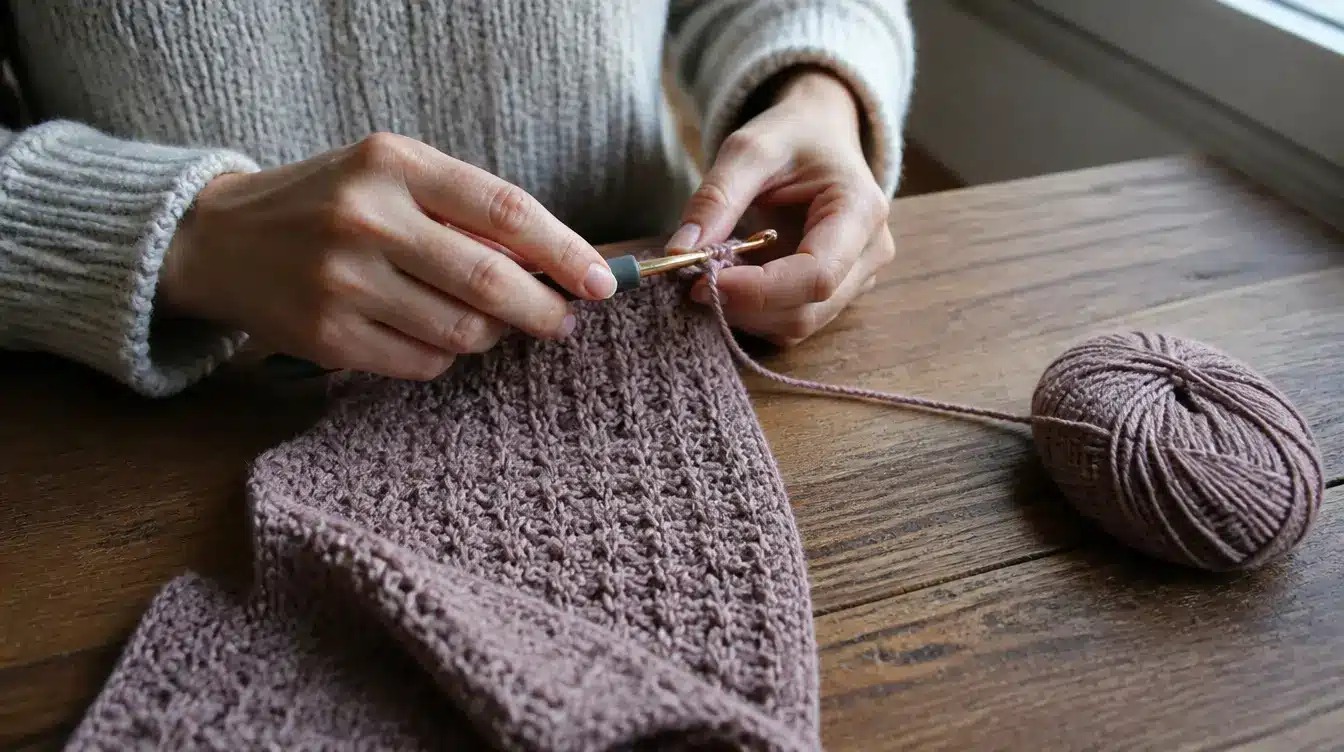
Simple, repeated projects work best for practicing crochet without dealing with tricky shaping right away.
- A small scarf
- Dishcloth
- Coaster
- Basic square
- Simple headband
All fit the bill for beginners. Pick something that uses basic stitches and lets the same movements repeat across each row.
Starting small also builds tension control, stitch counting, and turning skills before moving on to bigger or more detailed patterns later.
Conclusion
Crochet really comes down to a few things at first. Getting comfortable with the hook, the yarn, tension, and a handful of basic stitches that’s most of it.
Simple practice rows help build that comfort. Stitches don’t need to look perfect right away; uneven rows are normal at the start.
Once chains, single crochet, double crochet, and basic rows feel natural, small projects become much easier to take on. Skills build from there, one project at a time.
Frequently Asked Questions (FAQs)
1. Can You Crochet without a Crochet Hook?
Not really; a hook is what pulls the yarn through loops to form stitches, so crochet actually needs one to work.
2. How to Crochet for Beginners Book?
Look for books labeled specifically for beginners, ones with clear photos, step-by-step instructions, and simple starter projects included throughout.
3. Is Crochet Easier than Knitting?
Many find crochet easier at first, since it uses one hook and drops fewer stitches, though both crafts take real practice to learn well.