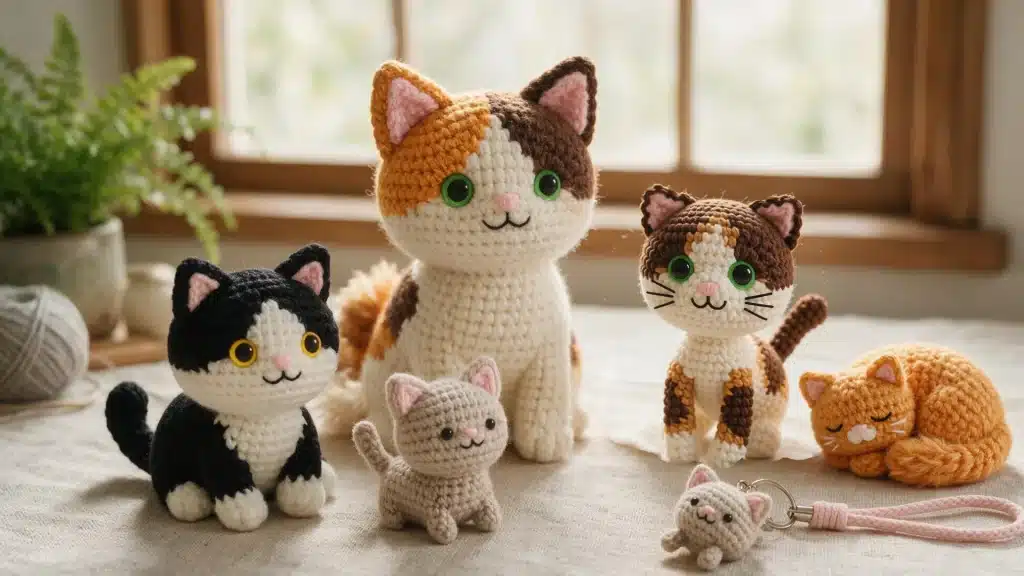
You don’t need years of crochet experience to make something that actually looks like a cat.
That’s the strange thing about amigurumi: a few rounds of single crochet, some safety eyes, and suddenly you’ve got a creature with personality sitting on your shelf.
Cats are especially forgiving to make this way, which is part of why a crochet cat pattern is such a good starting project. Round bodies hide uneven stitches, triangle ears are basically foolproof, and a bit of stuffing covers a multitude of sins.
Grab a hook and whatever yarn is sitting in your stash, because your next cat is closer than you think.
Before You Get Started
Amigurumi looks intimidating on paper, but it only relies on a few skills. If you can single crochet, work in the round, and increase or decrease a stitch, you’re set for most patterns here.
Gauge barely matters since you’re not fitting a garment, so don’t worry if your tension runs tighter or looser than the pattern writer’s.
Read through the whole pattern before picking up your hook. Some rounds join with a slip stitch, and others don’t, and knowing which ahead of time saves you from ripping out rows later.
Supplies Needed
Most crochet cats use the same short list of supplies, so you can stock up once and reuse everything across the projects on this list.
- Worsted weight yarn in your cat’s main color, plus a small amount of a contrast color for paws or a face
- A crochet hook, though check your pattern since amigurumi often calls for a hook size smaller than the yarn label suggests
- Polyester fiberfill for stuffing
- Safety eyes or small black buttons
- A yarn needle for sewing pieces together and weaving in ends
- Stitch markers to track the start of each round
- Sewing thread and a needle if your pattern adds embroidered details like whiskers or a nose
Cutest Crochet Cat Patterns to Try
This list moves from quick beginner projects to more involved ones, so pick based on how much time you actually want to spend hooking today.
1. Classic Amigurumi Cat
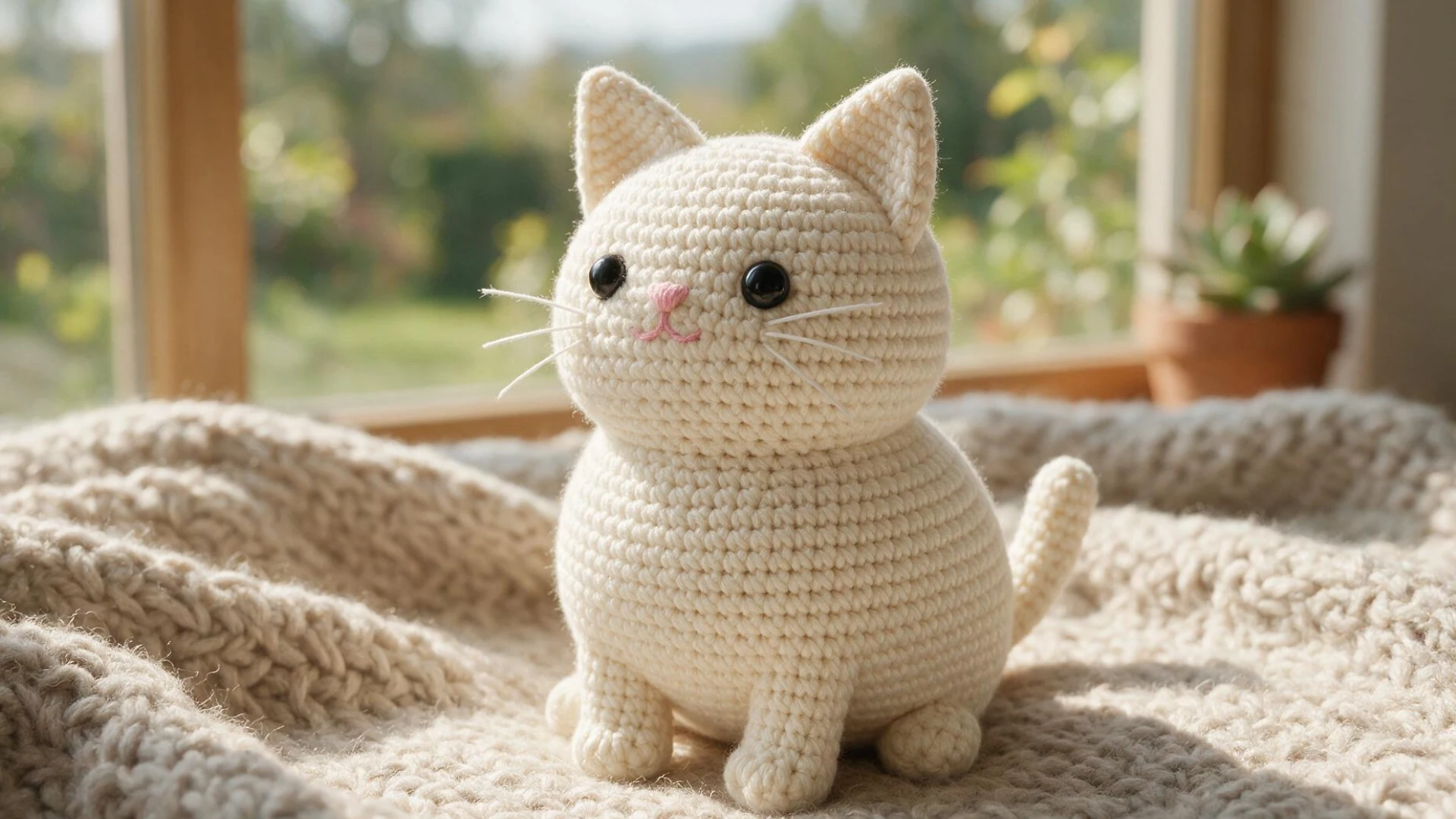
This is the pattern most people picture when they hear “crochet cat,” with a rounded body, stubby limbs, and triangle ears worked in single crochet.
The shaping relies on basic increases and decreases, which makes it a solid first amigurumi project.
Use worsted-weight yarn in a smooth, medium color so your stitch counts stay easy to track.
A 3.5mm hook keeps stitches tight enough that stuffing won’t show. Choose a beginner pattern that uses safety eyes rather than embroidered ones.
2. No Sew Crochet Cat
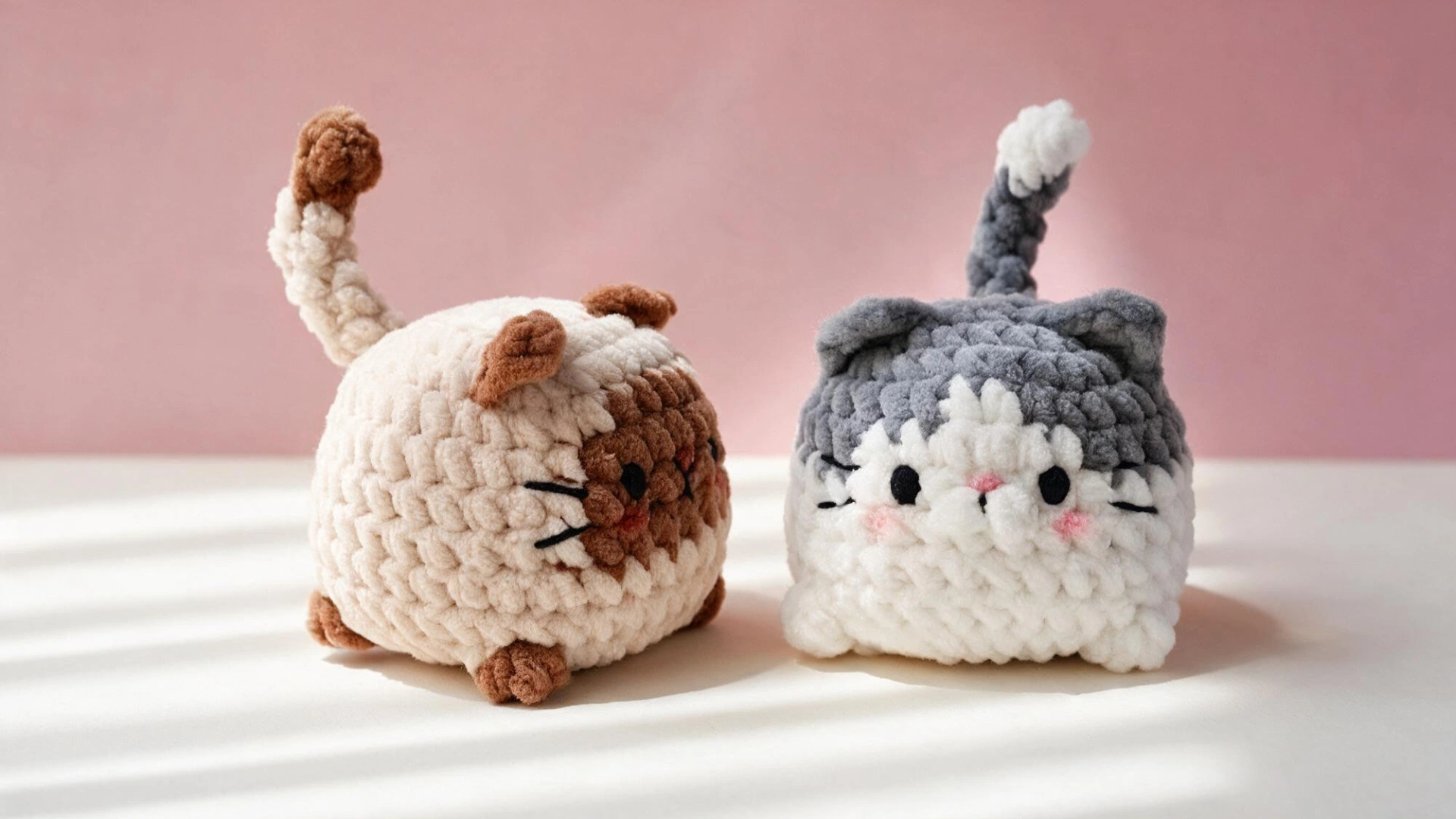
This pattern skips separate pieces entirely, so you crochet the whole cat, ears included, in one continuous piece and only close a few small gaps at the end.
It’s a good option if sewing on limbs and ears is the part of amigurumi you dread most.
Worsted-weight yarn holds its shape well for this style, and a 4mm hook gives you slightly looser stitches that are easier to work in one long sequence.
Look for a pattern specifically labeled “no sew” or “seamless,” since regular amigurumi patterns assume separate pieces.
3. Mini Crochet Cat
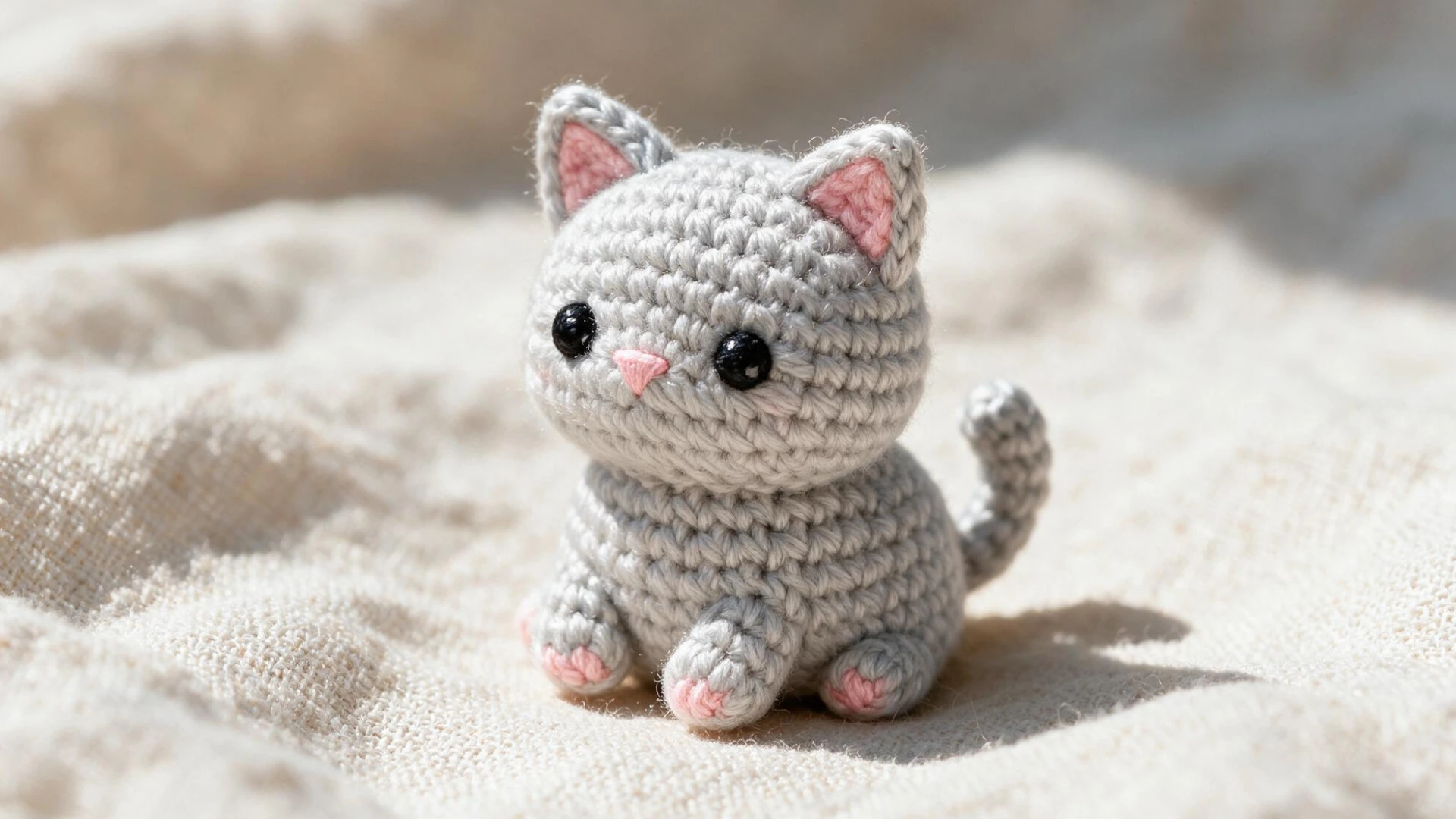
At this scale, rounds run 6 to 18 stitches instead of 30 or more, so the project moves fast but leaves less room to hide uneven tension.
A set of these makes a nice little collection, since you can experiment with color combos without committing to a big project each time.
Fingering or sport weight yarn keeps proportions right, and a 2.5mm to 3mm hook stops the fabric from looking gappy. French knots work better than safety eyes at this size.
4. Plush Crochet Cat
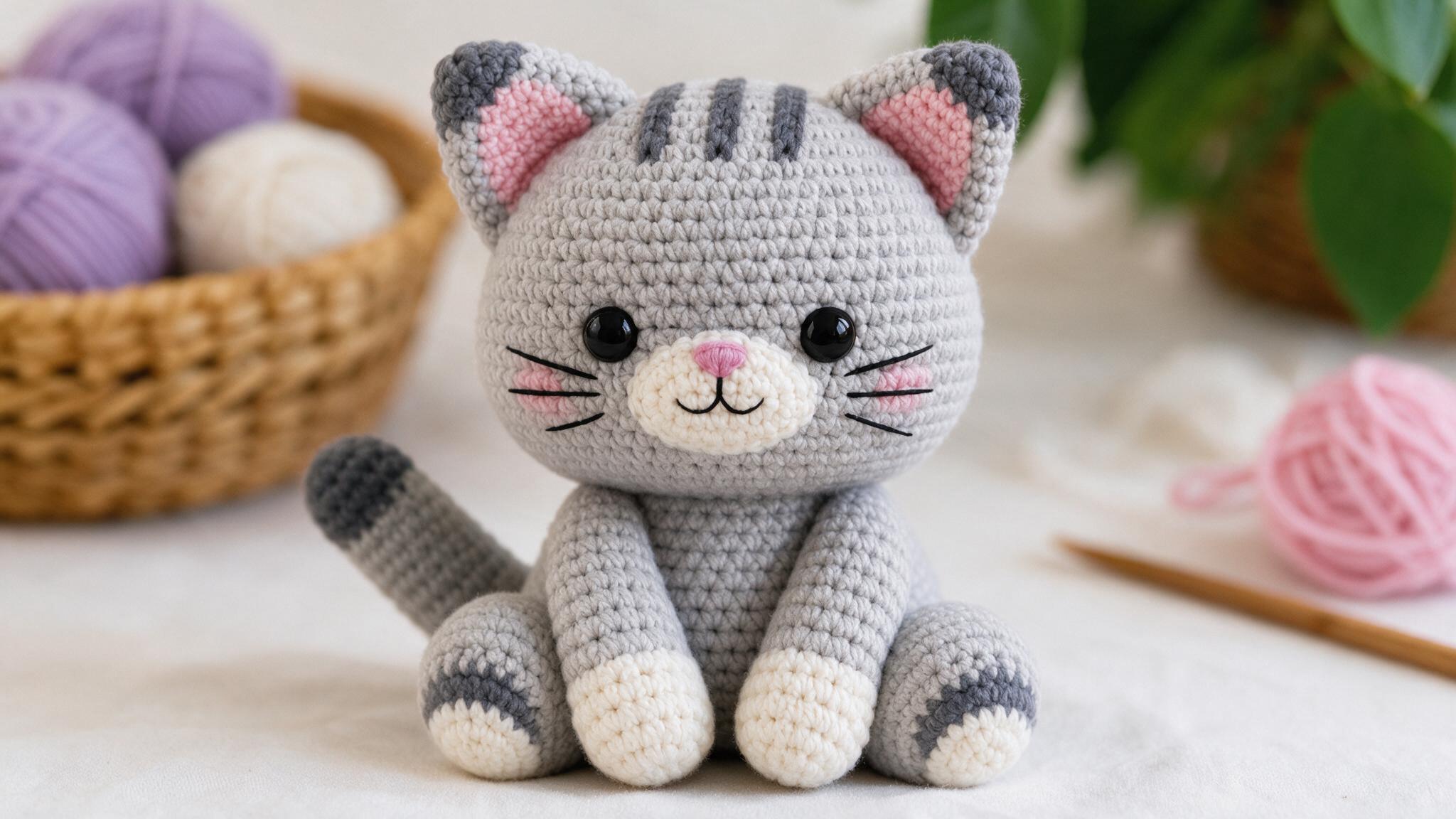
Plush versions trade the tight, structured amigurumi look for something softer and rounder, closer to a stuffed animal you’d cuddle.
The stitches are looser, and the stuffing goes in heavier, giving the cat more give than a display piece.
A bulky yarn works best since it fills out fast and feels soft. Pair it with a 5mm or 6mm hook to keep the fabric loose enough to squish.
Choose a pattern that calls for extra fiberfill in the body.
5. Sitting Crochet Cat
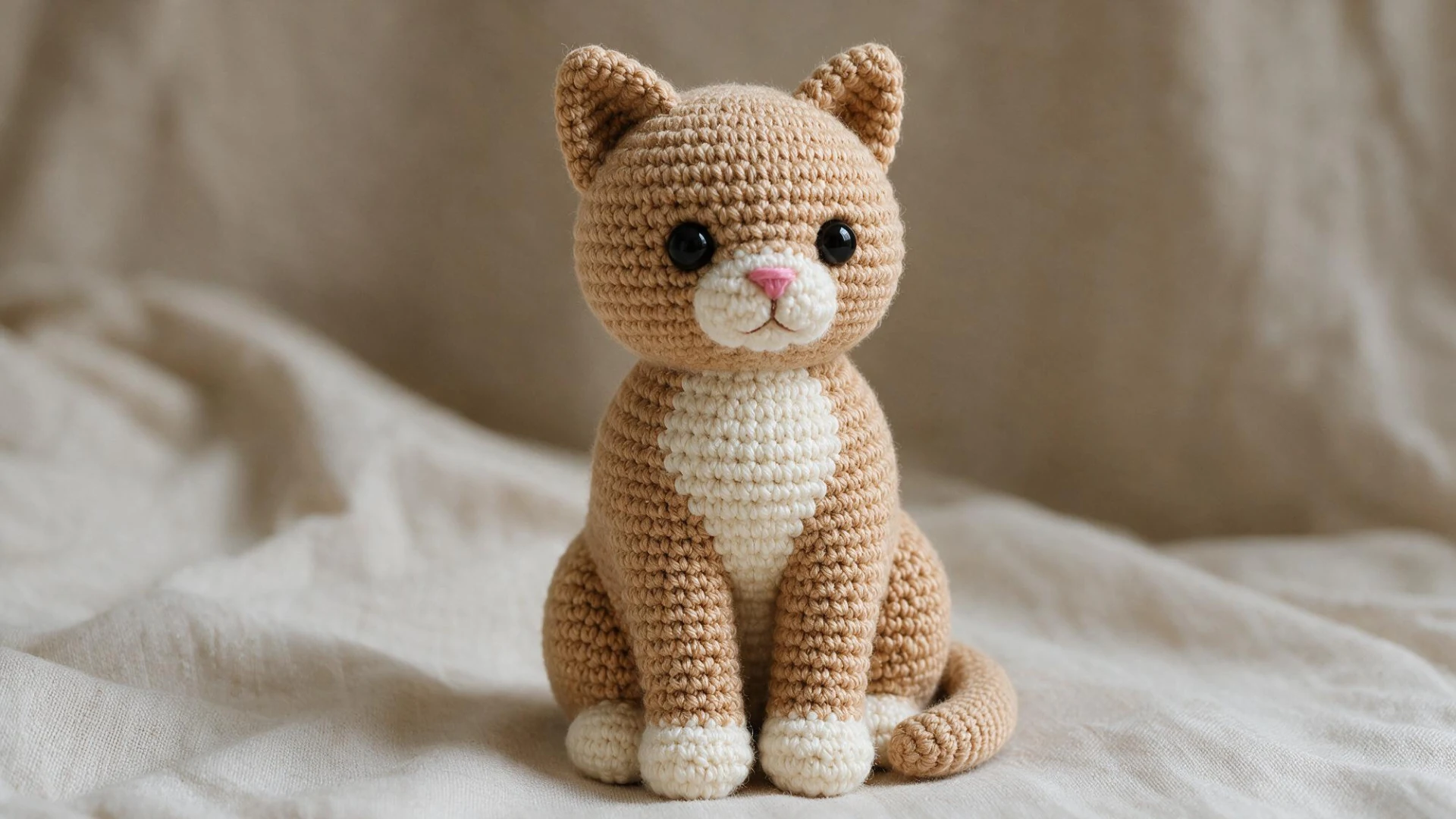
This pattern shapes the body and legs so the cat rests upright on its haunches instead of lying flat or standing on all fours.
The trick is in how the lower body flattens out, giving it a stable base without wire support.
A worsted-weight yarn holds this shape well once stuffed firmly.
Stick with a 3.5mm hook so stitches stay tight enough to keep the sitting position from sagging. Look for a pattern with a flattened oval base rather than a simple decrease.
6. Sleeping Crochet Cat
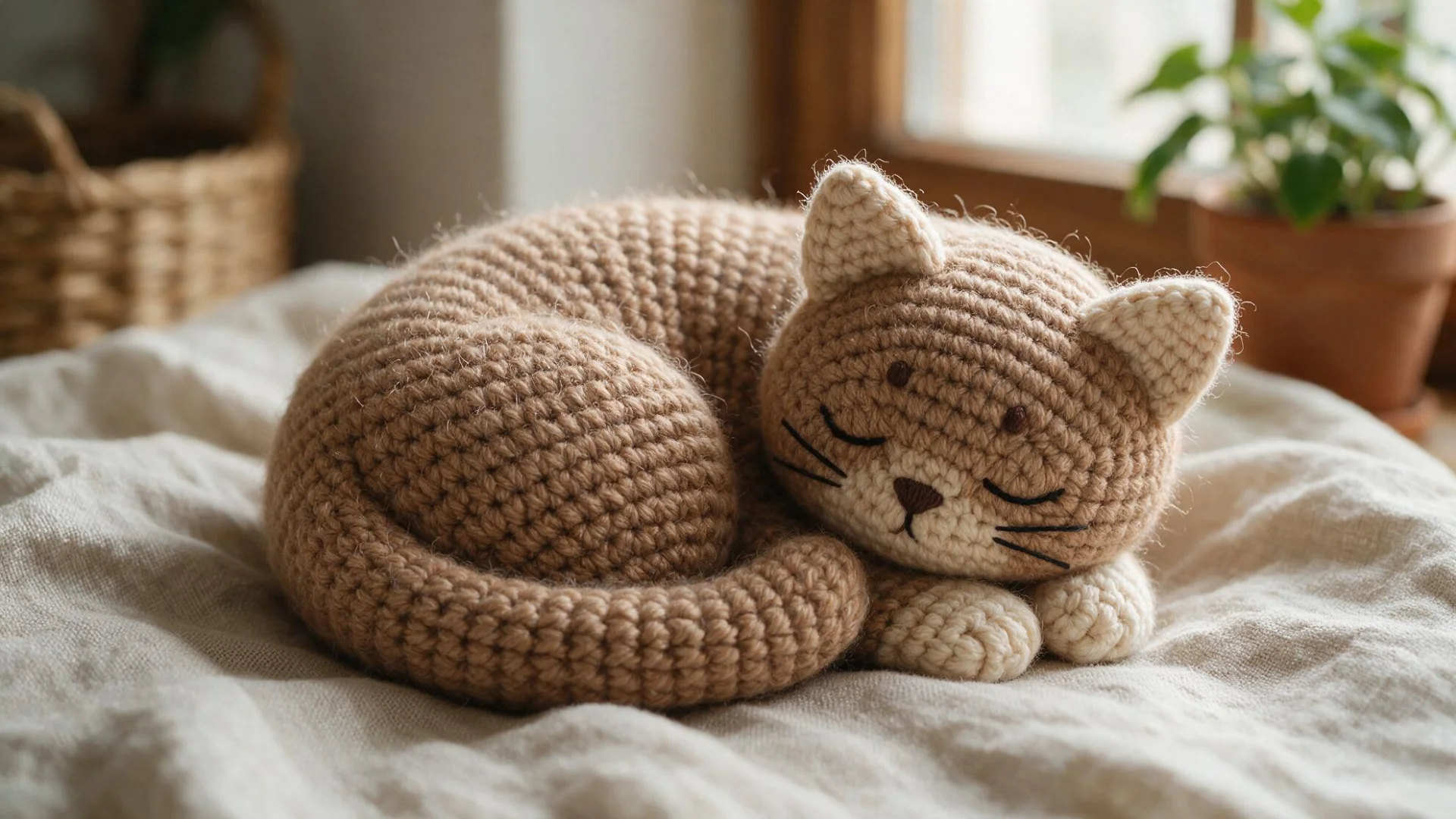
Instead of sitting upright, this version curls into a loaf-like shape with the head tucked down, mimicking a cat napping.
It’s worked mostly flat across the bottom, with less shaping than standing or sitting versions.
A soft worsted-weight yarn in a light color shows off shaping details like closed eyes better than a dark one.
A 4mm hook keeps stitches loose enough for the curled shape to sit naturally. Choose a pattern with embroidered closed eyes rather than safety eyes.
7. Long-Legged Crochet Cat
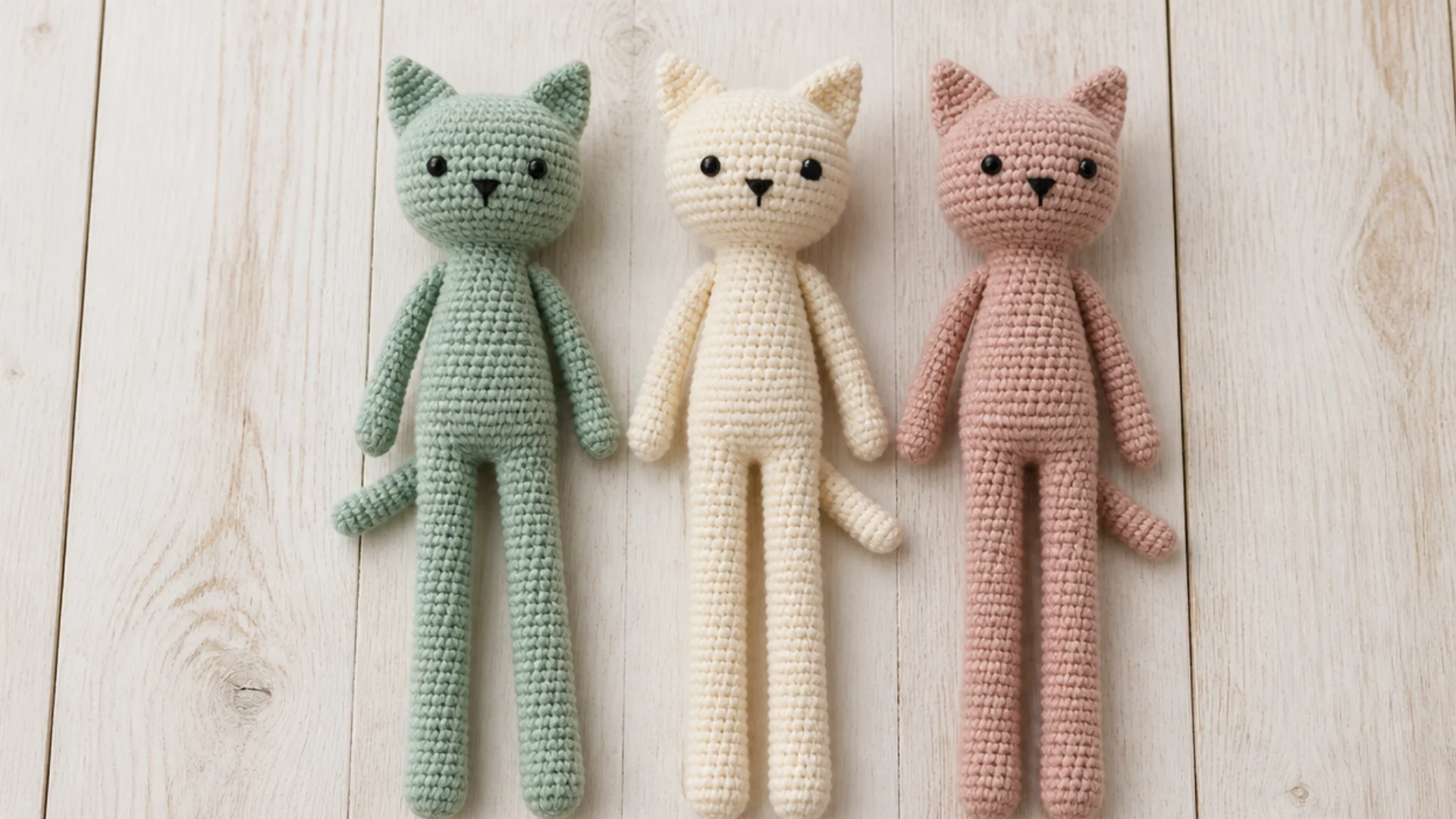
This style stretches the legs well past standard amigurumi proportions for a lanky, cartoonish look.
Because the limbs are longer, they need internal support so they don’t flop under the stuffing’s weight.
Worsted-weight yarn and a 3.5mm hook keep the legs sturdy, but threading pipe cleaners through each leg before stuffing is the real fix.
Some patterns switch to half double crochet for the legs to build length faster.
8. Chubby Crochet Cat
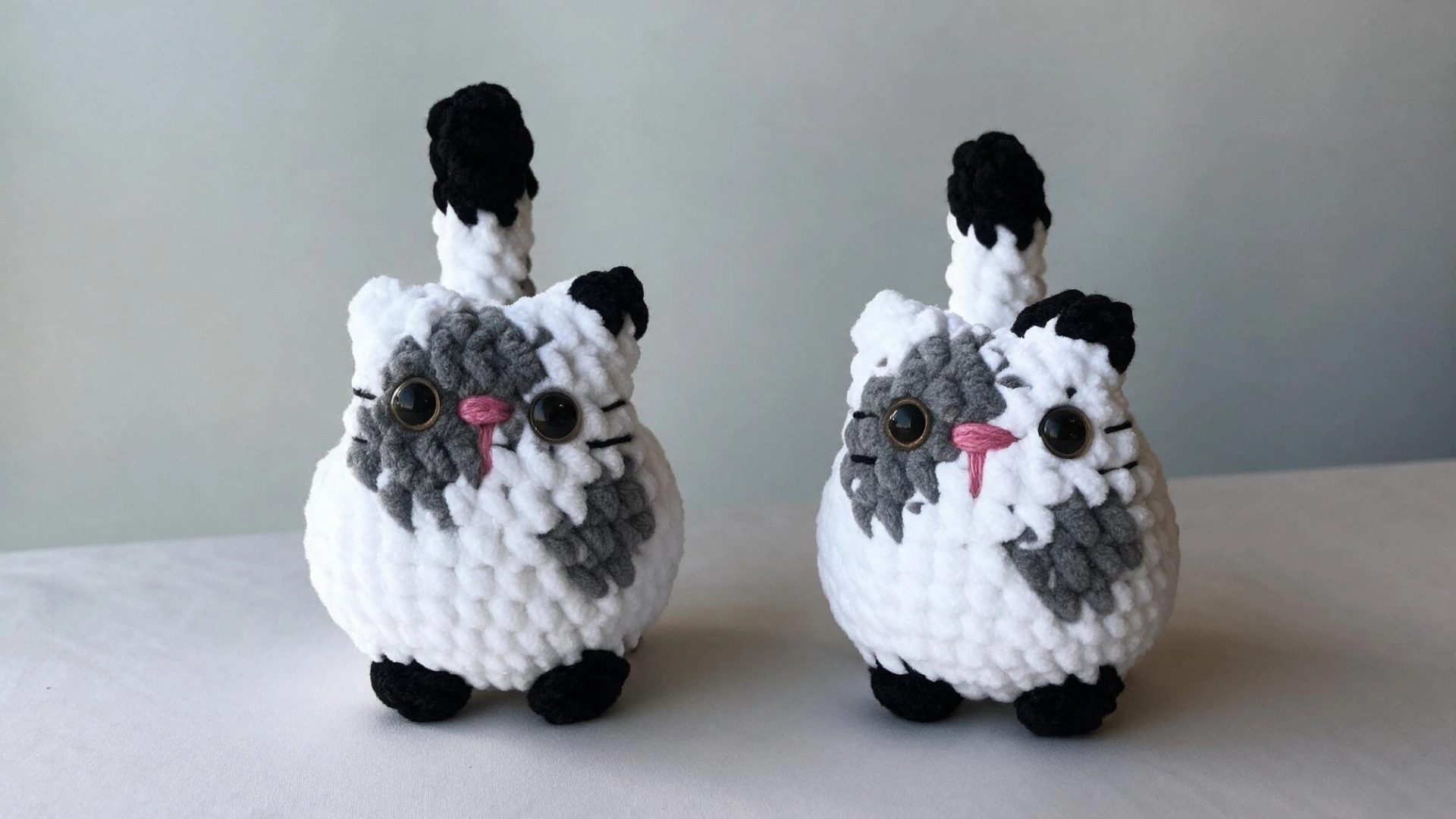
Extra increase rounds before the midpoint are what give this cat its wider, rounder silhouette compared to the standard shape, with shorter limbs that play up the plump look even more.
Go with bulky yarn on a 5mm hook so the extra volume fills in fast without doubling up stitches.
Underfilling is the main risk here, since a light stuff flattens the exact roundness you’re going for.
A belly increase round, not just a wider base, is the detail worth checking for in the pattern.
9. Crochet Kitten Pattern
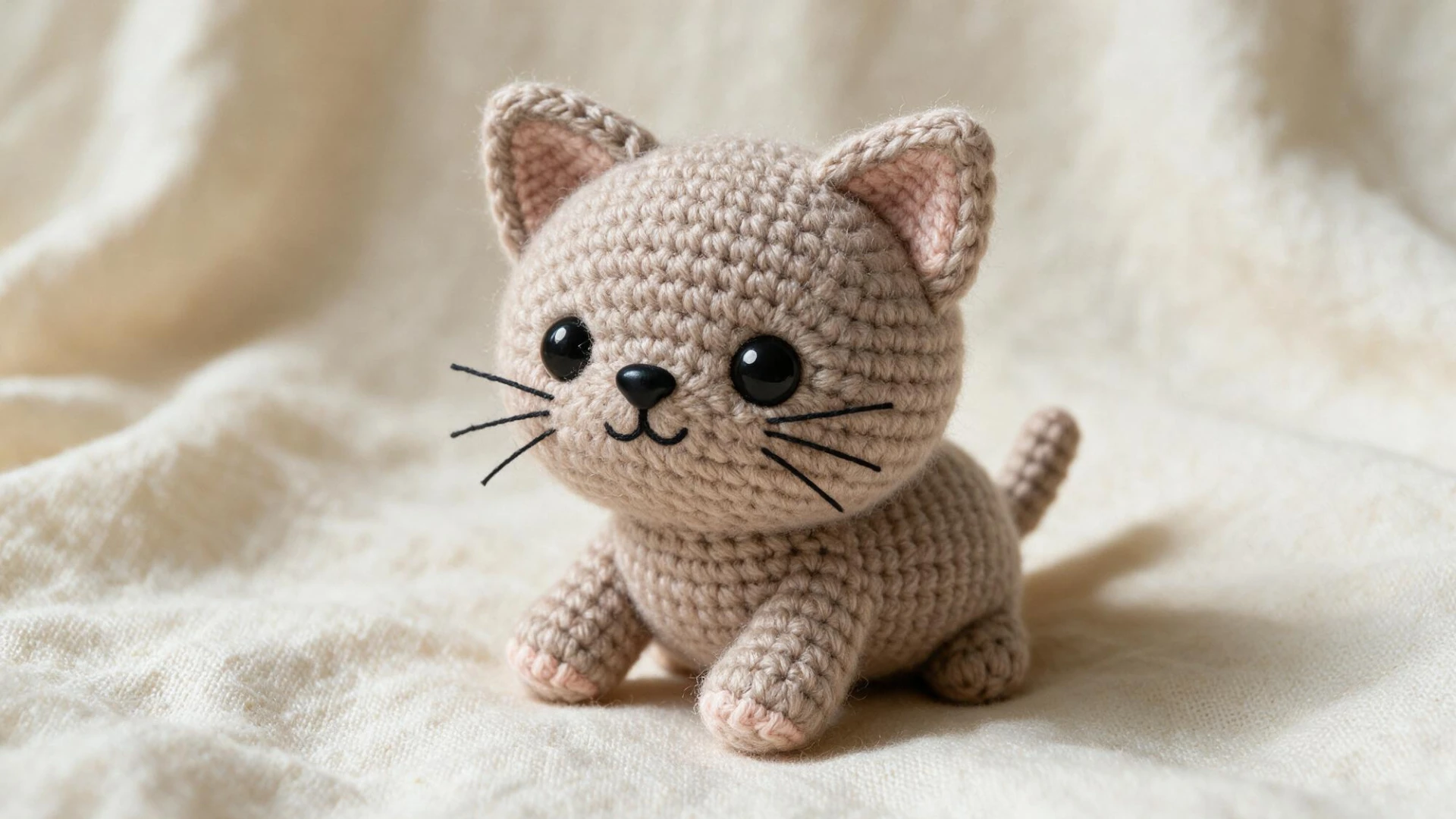
Kittens aren’t just small cats. Their proportions differ too, with bigger heads relative to the body and stubbier legs that haven’t caught up in length yet.
A good pattern accounts for this instead of scaling down an adult cat.
Sport or DK weight yarn on a 3mm hook keeps the oversized head from looking bulky. Wider-set safety eyes sell the kitten look.
10. Black Cat Crochet Pattern
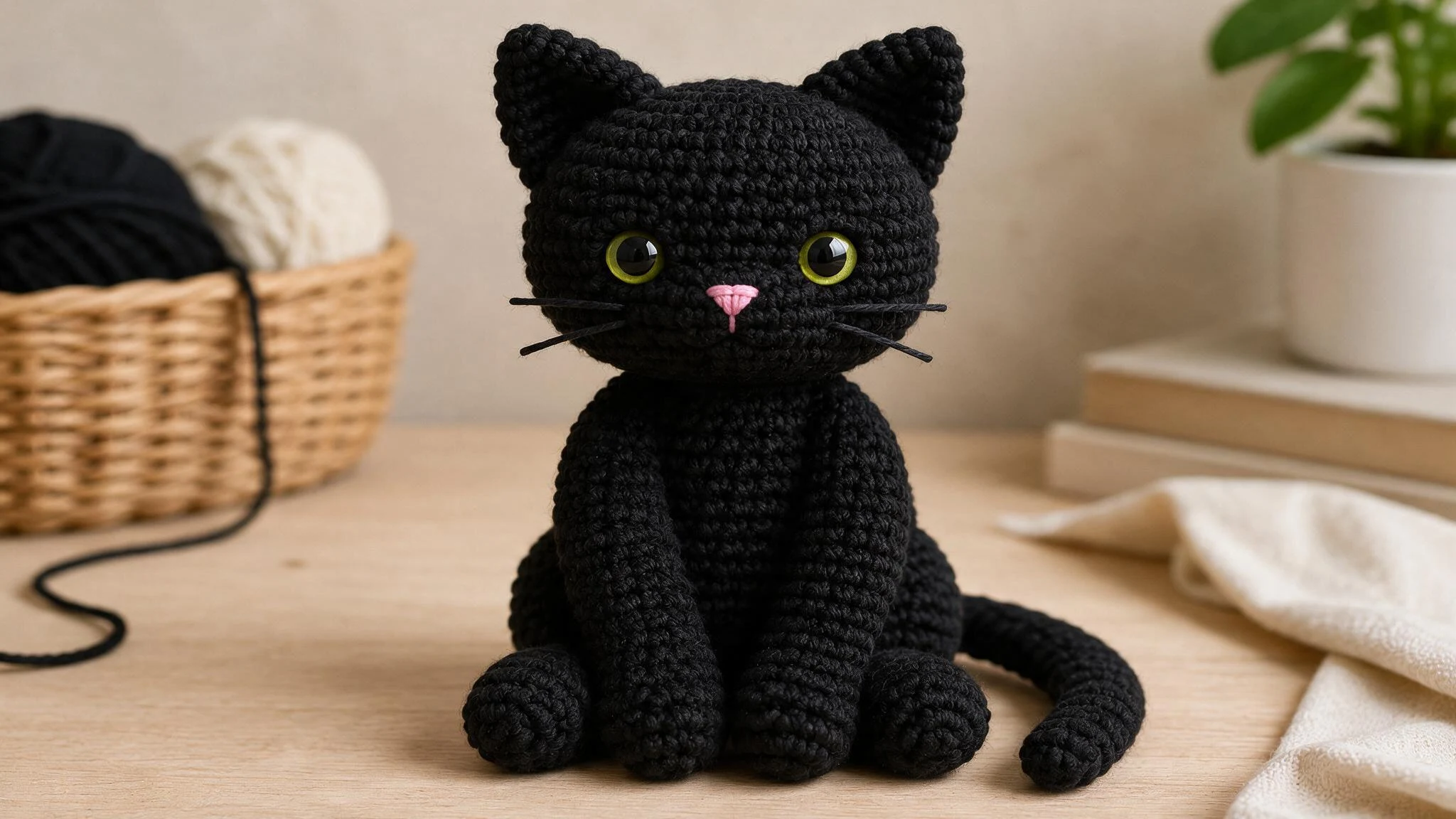
Solid black hides stitch definition more than lighter colors do, which sounds like an advantage until you’re trying to spot where one round ends and the next begins.
Good lighting and a slower pace matter more here than they do with other colors.
A matte black worsted yarn, rather than one with a sheen, shows shaping best under normal light.
Stick with a 3.5mm hook. Amber or green safety eyes stand out better against black than dark brown ones do.
11. Orange Tabby Crochet Cat
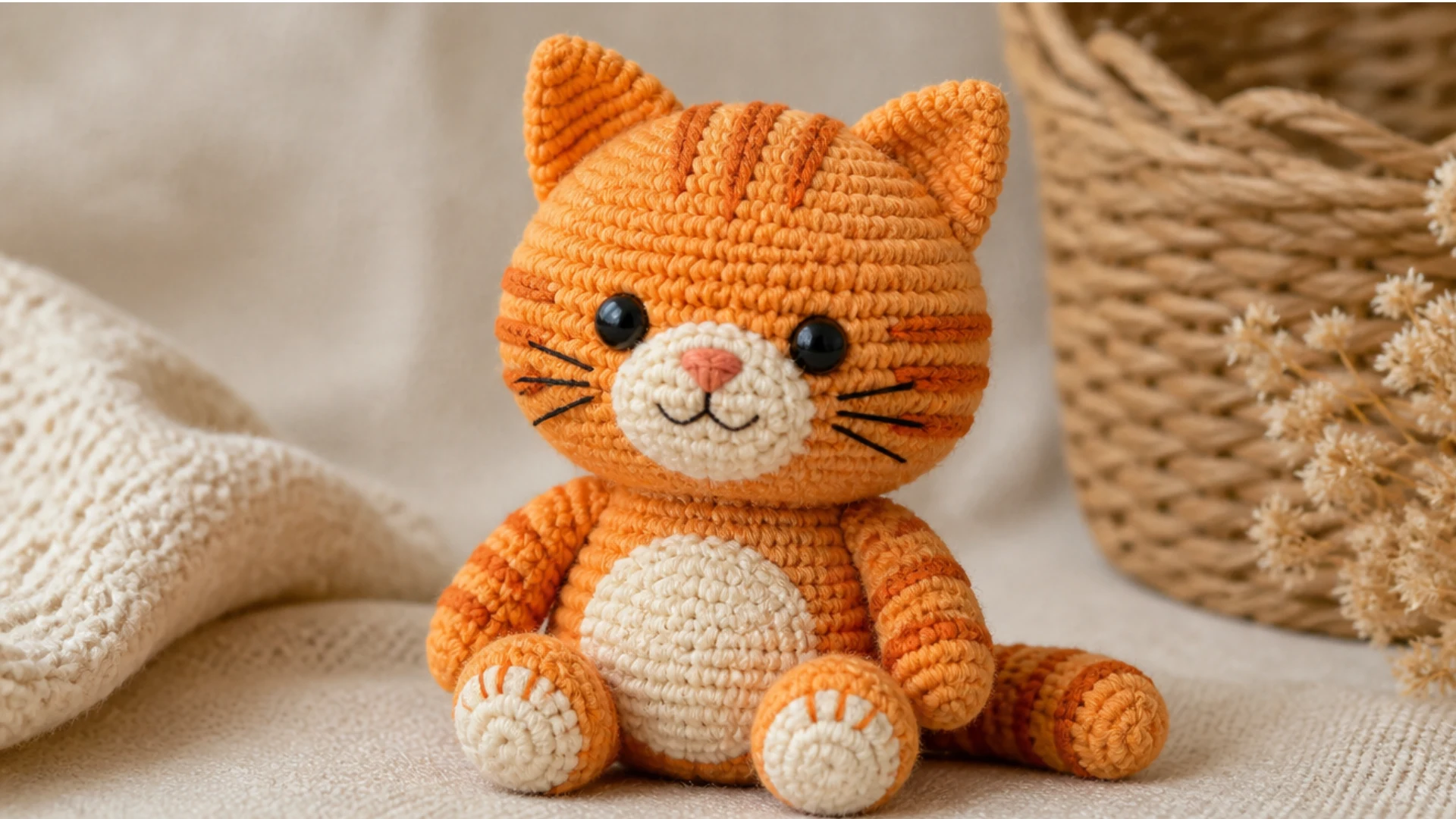
Tabby markings come from stripes worked in a contrast yarn, either crocheted separately and sewn on or added with surface slip stitches after the base piece is done.
Surface stitching is more forgiving if your stripe placement goes slightly off. Orange and cream worsted yarn on a 3.5mm hook gives the classic tabby contrast.
Check that the pattern specifies surface crochet for stripes, since some skip straight to embroidery instead.
12. Tuxedo Crochet Cat
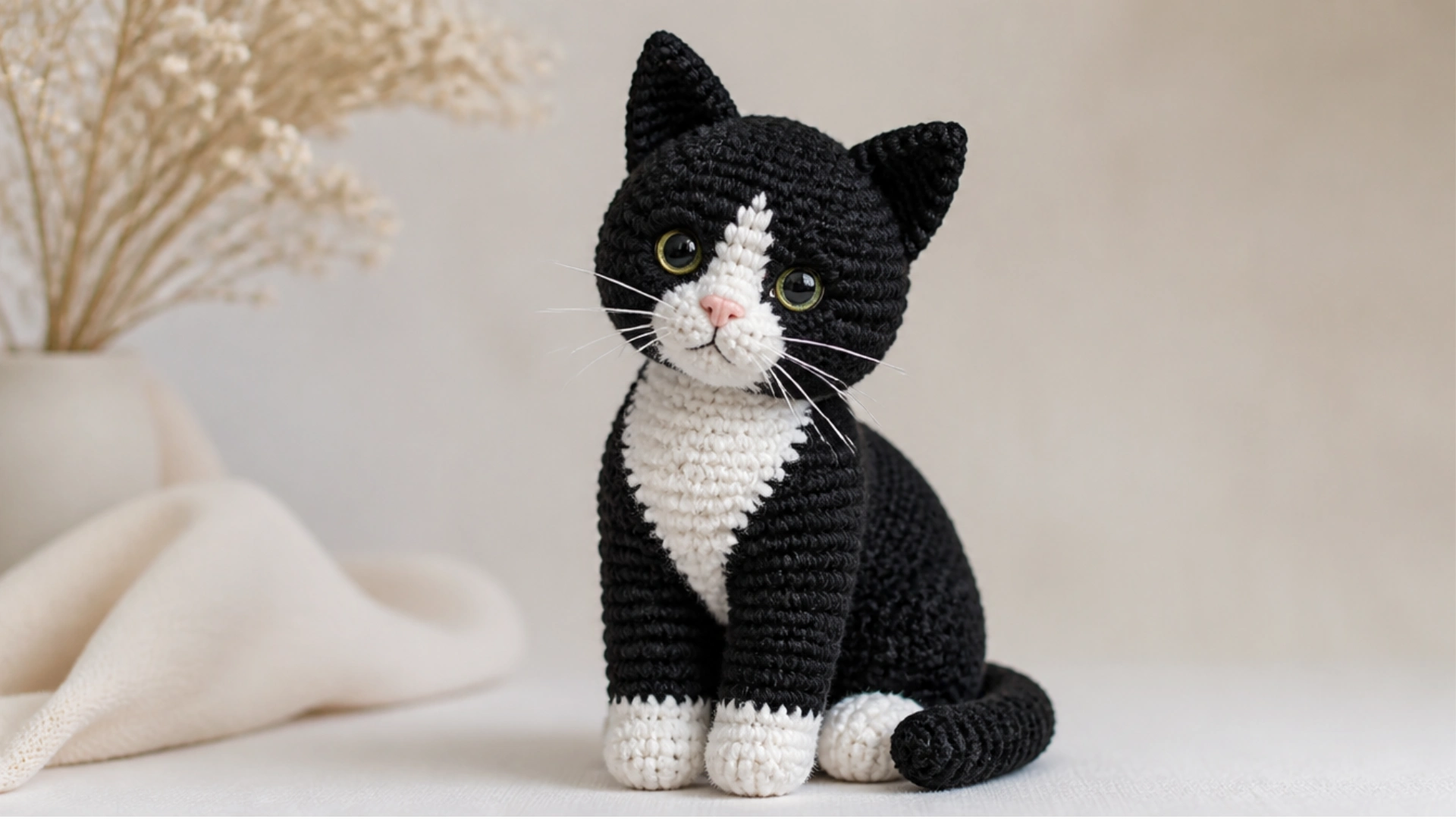
The white patches on a tuxedo cat- chest, paws, and often the face- need to be crocheted in at the right rounds rather than added after, or the color transition looks messy.
This makes it a bit more planning-heavy than a solid-color cat.
Black-and-white worsted yarn on a 3.5mm hook works fine, but pick a pattern with a row-by-row color chart. Guessing at tuxedo placement rarely looks right on the first try.
13. Calico Crochet Cat
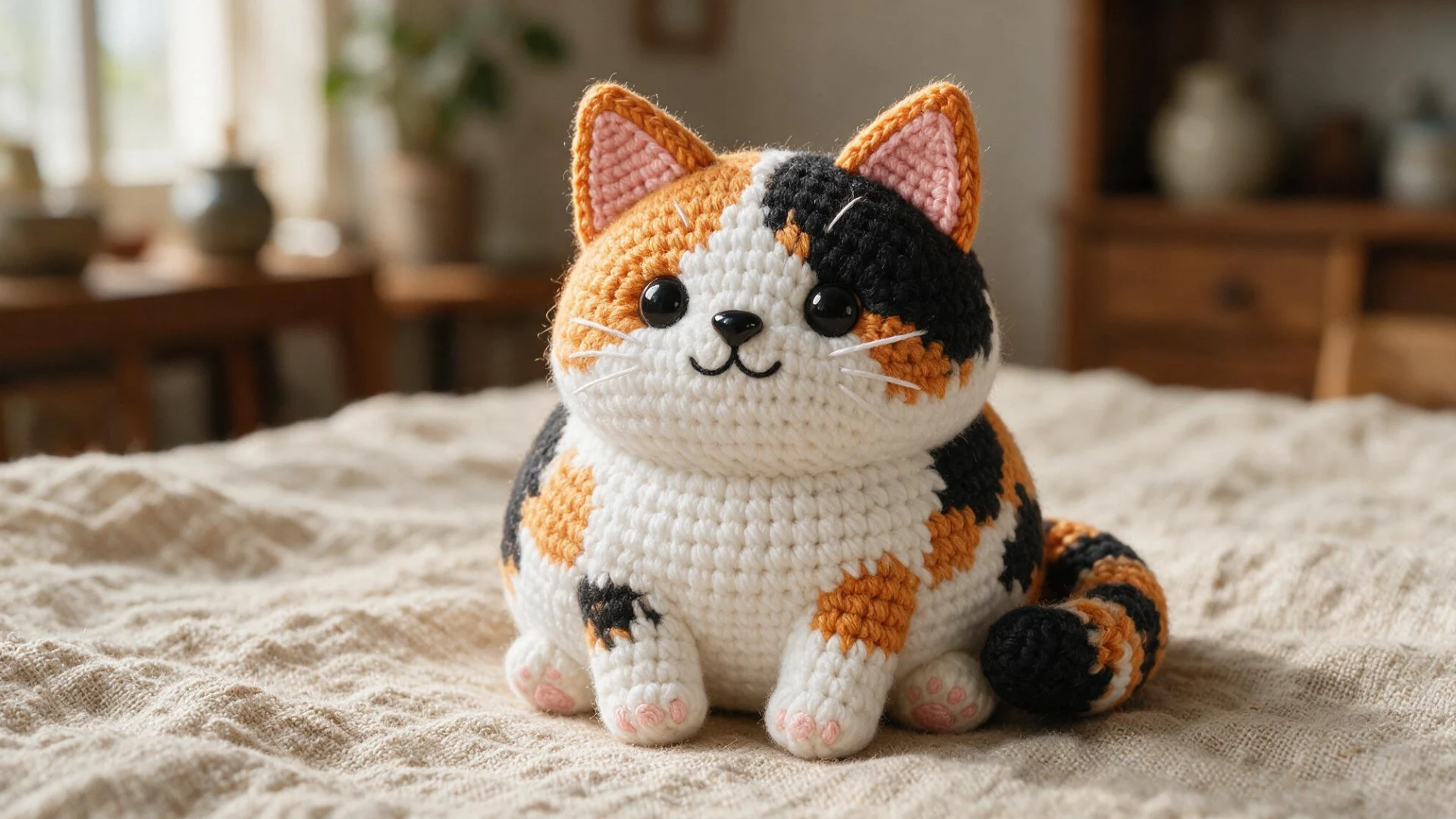
Calico patterns mix three colors, usually white, orange, and black, in patches rather than stripes, which means more color changes per round than a tabby or tuxedo pattern needs.
DK or worsted yarn in all three shades works on a 3.5mm hook.
Look for a pattern with a patch map included, since freehand calico patches tend to look more muddy than mottled.
14. Crochet Cat Keychain
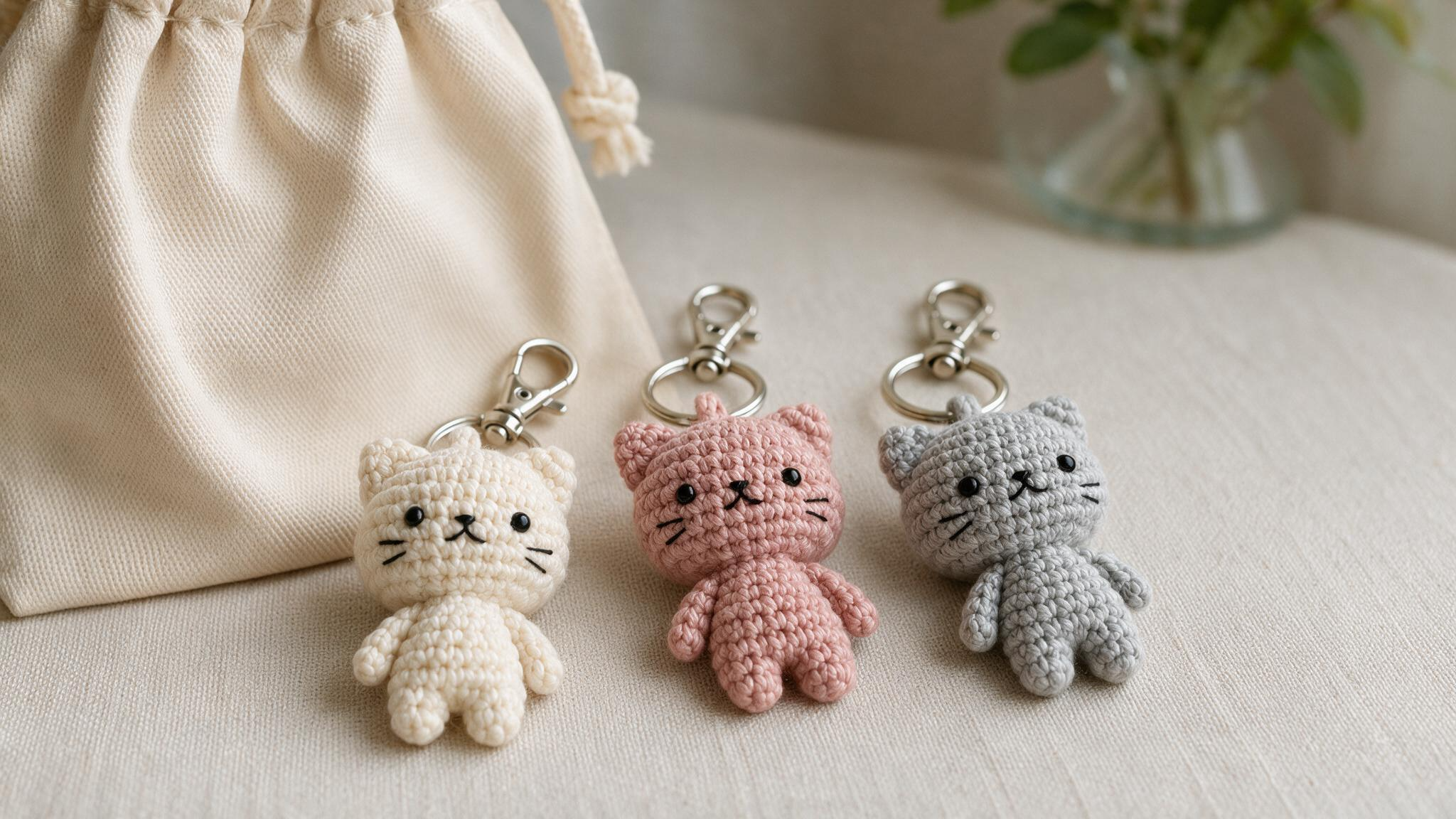
Keychains shrink the cat down to a couple of inches and skip stuffing almost entirely, or use just enough to keep the shape from collapsing flat.
The main addition here is hardware, not yarn.
Fingering yarn on a 2.5mm hook keeps the scale right. You’ll also need a metal keyring or lobster clasp, attached through a loop left at the top of the head or worked separately and sewn on.
Pick a pattern that specifies keyring placement, since a poorly centered loop makes the finished piece hang crooked.
15. Crochet Cat Pillow
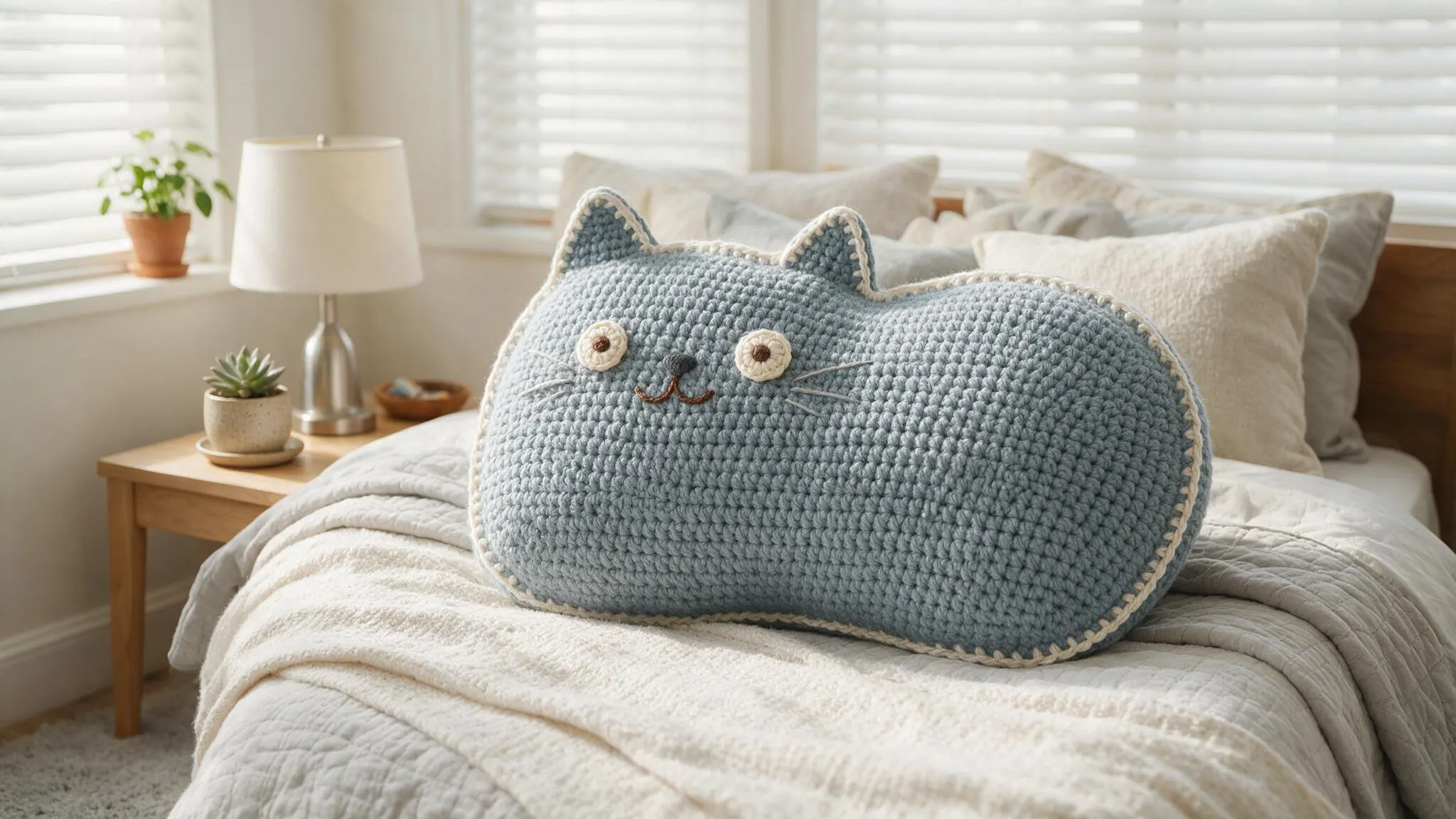
This one flips the usual proportions. Instead of a small stuffed toy, you’re crocheting a flat or slightly rounded panel large enough to rest your head on.
Make two matching panels separately, then join them around the edges.
Bulky yarn on a 6mm hook works up fast for a project this size. Stuff with a pillow form instead of loose fiberfill. It holds its shape better over time.
Check that the pattern includes finishing instructions for the last edge. That’s the step most likely to look sloppy if rushed.
How to Stuff Amigurumi Cats?
Stuffing looks simple, but it’s the step that makes or breaks the final shape. Add fiberfill in small pinches rather than one big handful, working it into the edges first before filling the center.
This keeps the piece from developing lumps or thin spots where the yarn shows through. Stuff firmer than feels natural, especially for the head and body.
Amigurumi softens slightly over time, so an overstuffed piece usually looks right once finished. Limbs and ears need less filling, just enough to hold their shape.
Check the piece from a few angles before closing the opening.
How to Pick the Right Crochet Cat Pattern
Fifteen patterns is a lot to sort through. These three checks help you settle on the right one before you buy yarn or commit hours to a project that isn’t the right fit.
Check the Skill Level
Amigurumi patterns list a difficulty rating, but it often assumes you already know basic increases and decreases.
If you’re new to crochet, start with a beginner pattern using only single crochet, so you’re not learning stitches and shaping at once.
Choose the Right Yarn
Worsted weight yarn is the safest default since it’s what most patterns are written for and it’s easy to find in stores.
Cotton or acrylic blends hold their shape better than pure wool, which can stretch under the weight of stuffing over time.
Consider the Finished Size
Check the finished measurements listed in the pattern, not just the yarn weight, since two patterns using the same yarn can produce wildly different sizes depending on hook size and stitch count.
This matters most if you’re making a gift or need the cat to fit a specific space.
Final Thoughts
You don’t need to make every pattern on this list to get the hang of amigurumi.
Pick whichever cat caught your eye first, whether that’s the classic shape or something trickier like a calico or a no-sew version, and let your next project build on what you learn from it.
The stitches repeat more than you’d expect once you’ve made one cat, so your second one will go faster than your first.
Frequently Asked Questions (FAQs)
1. Are Crochet Cats Safe for Babies?
Not with safety eyes attached, since they’re a choking hazard. Embroider the face instead.
2. Can You Machine Wash a Crochet Cat?
Hand washing is safer. Machine washing can felt the yarn or shift the stuffing.
3. How much yarn do you need?
A small amigurumi cat uses about 50 to 75 grams. Larger versions need more.