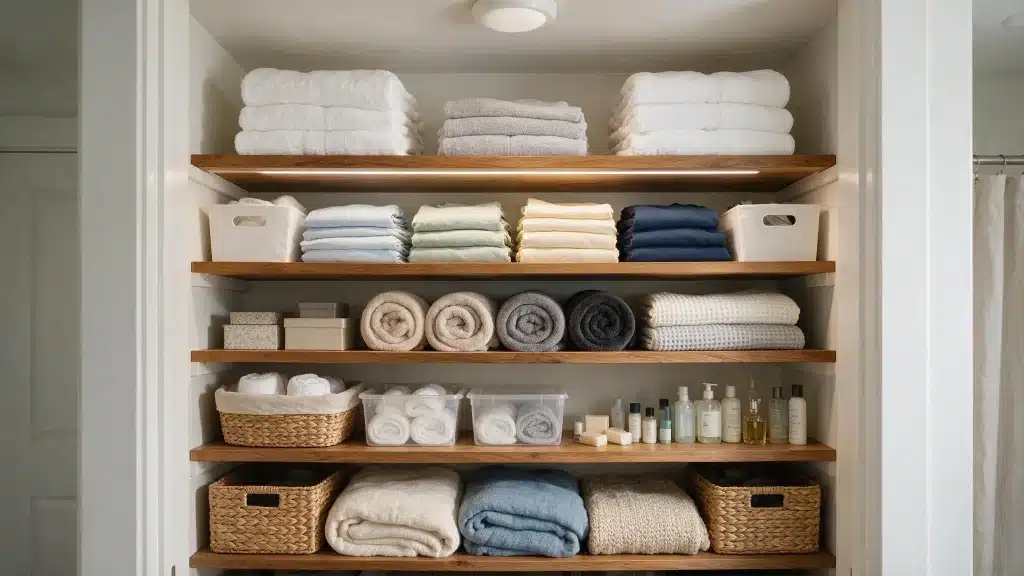
Can you find a matching pillowcase in your linen closet right now without pulling everything off the shelf?
If not, you’re not the only one. Most linen closets turn into a jumble of loose sheets and mismatched towels within a few months, with towels about to topple and sheets separated from their pillowcases.
If you’re looking for a system that actually works, this blog will help you organize your linen closet so you spend less time digging and can find what you need.
What to Put in a Linen Closet?
The most effective way to organize a linen closet is by making sure you know exactly what belongs in it. The following list contains what most people usually store in these storage units:
- Bedding (bed sheets and pillowcases)
- Towels (bath and hand towels)
- Washcloths
- Blankets and extra bed sheets
- Guest sheets
- Toiletries (toilet paper and tissues)
- Cleaning supplies (if necessary)
However, not all these things have to occupy a separate shelf. Washcloths and extra toiletries are better off in a box, while blankets will require separate space because of their size.
Simple Linen Closet Organization Ideas
An organized closet comes down to a few simple storage changes that let you find towels, sheets, and toiletries easily, without rummaging through messy piles.
1. Group Towels by Type
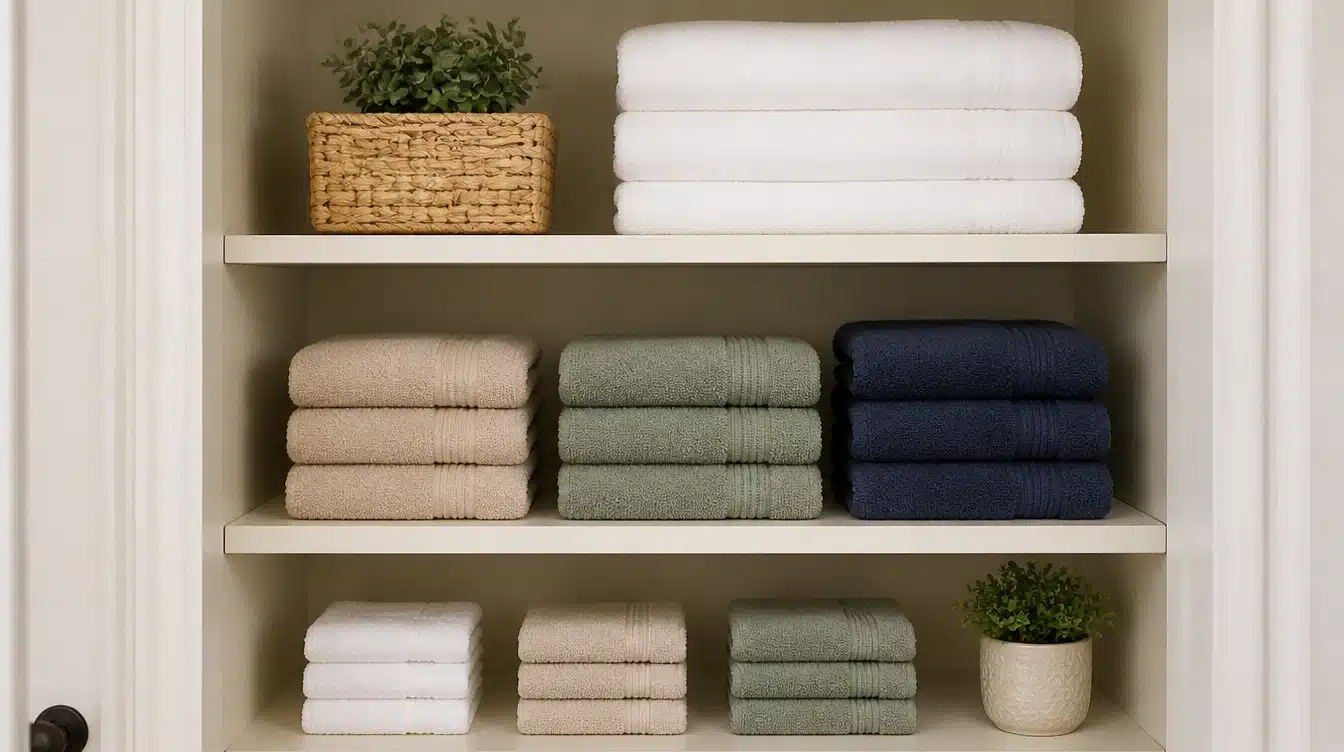
Separate your bath towels, hand towels, and washcloths so that they don’t all get mixed up in the same pile.
This will make it easy for you to get just the one you need without having to dig through the whole pile to get to it.
2. Fold Towels the Same Way
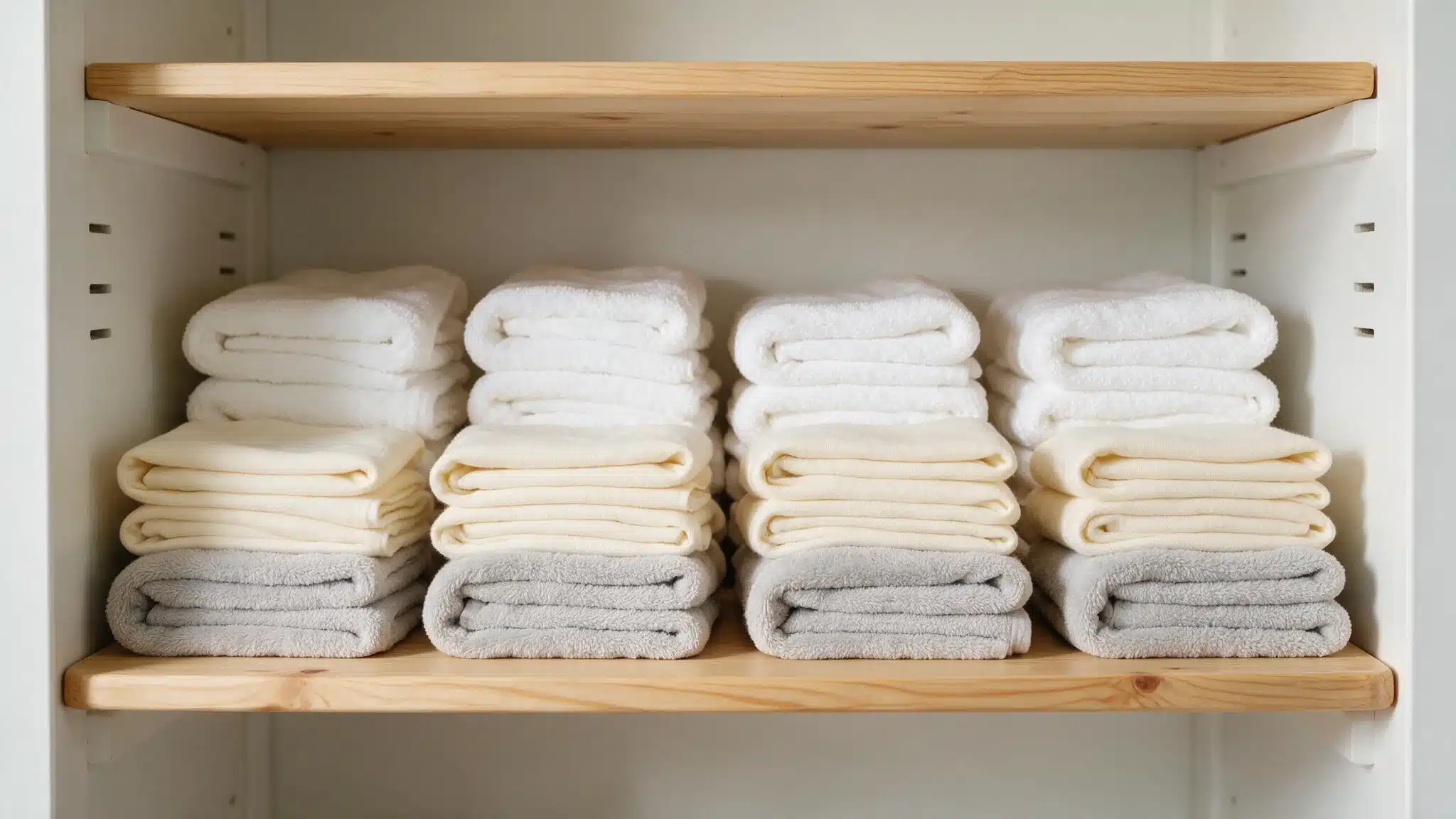
Folding every towel the same way, whether in thirds or in half, keeps stacks even and prevents shelves from looking messy.
Consistent folds also make it easier to fit more towels into the same amount of space.
3. Store Sheet Sets Together
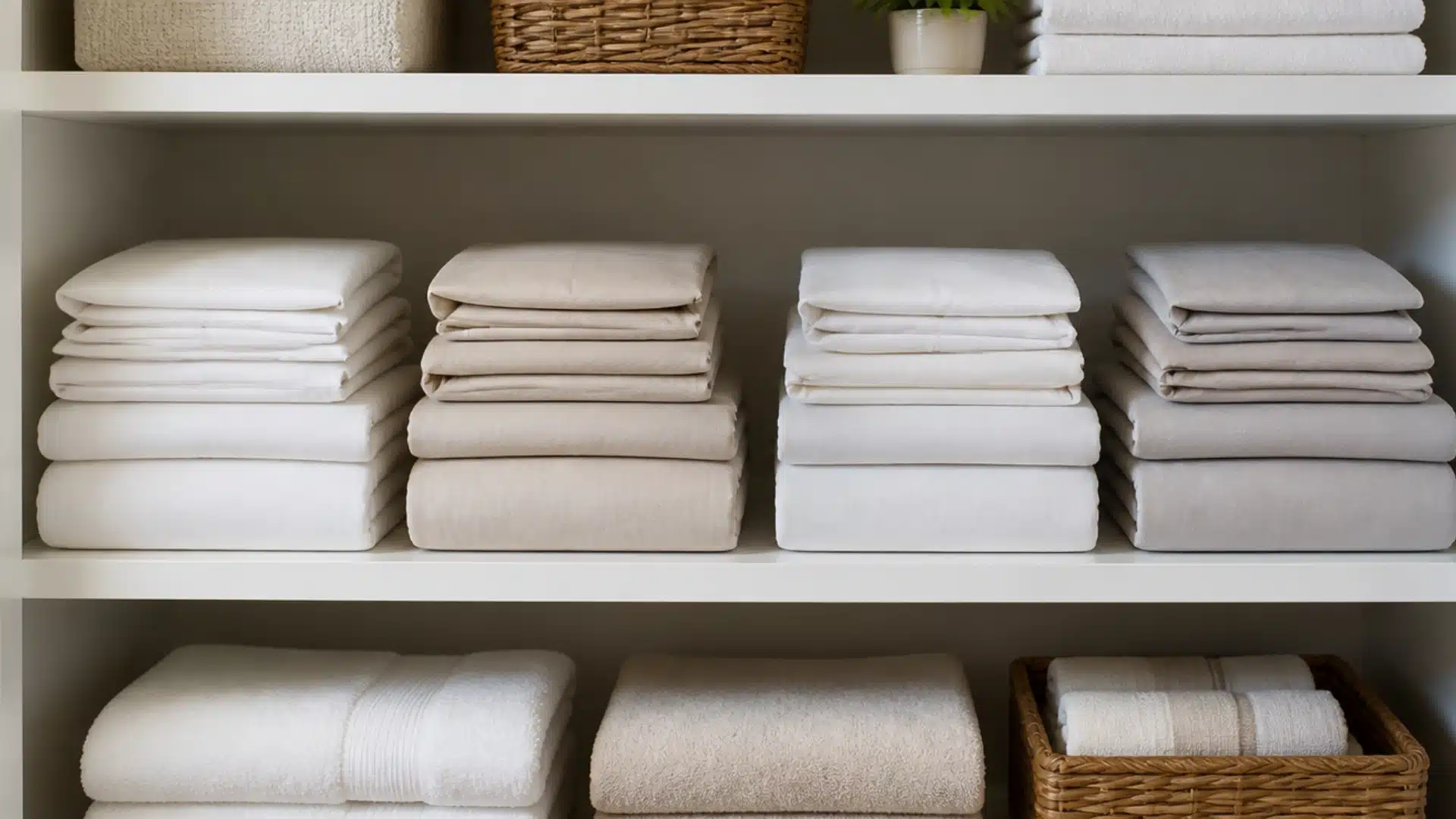
Keep flat sheets, fitted sheets, and pillowcases from the same set stacked together instead of separated by type.
This saves time when making a bed and prevents mismatched sheets from ending up on different shelves.
4. Store Blankets in Separate Baskets
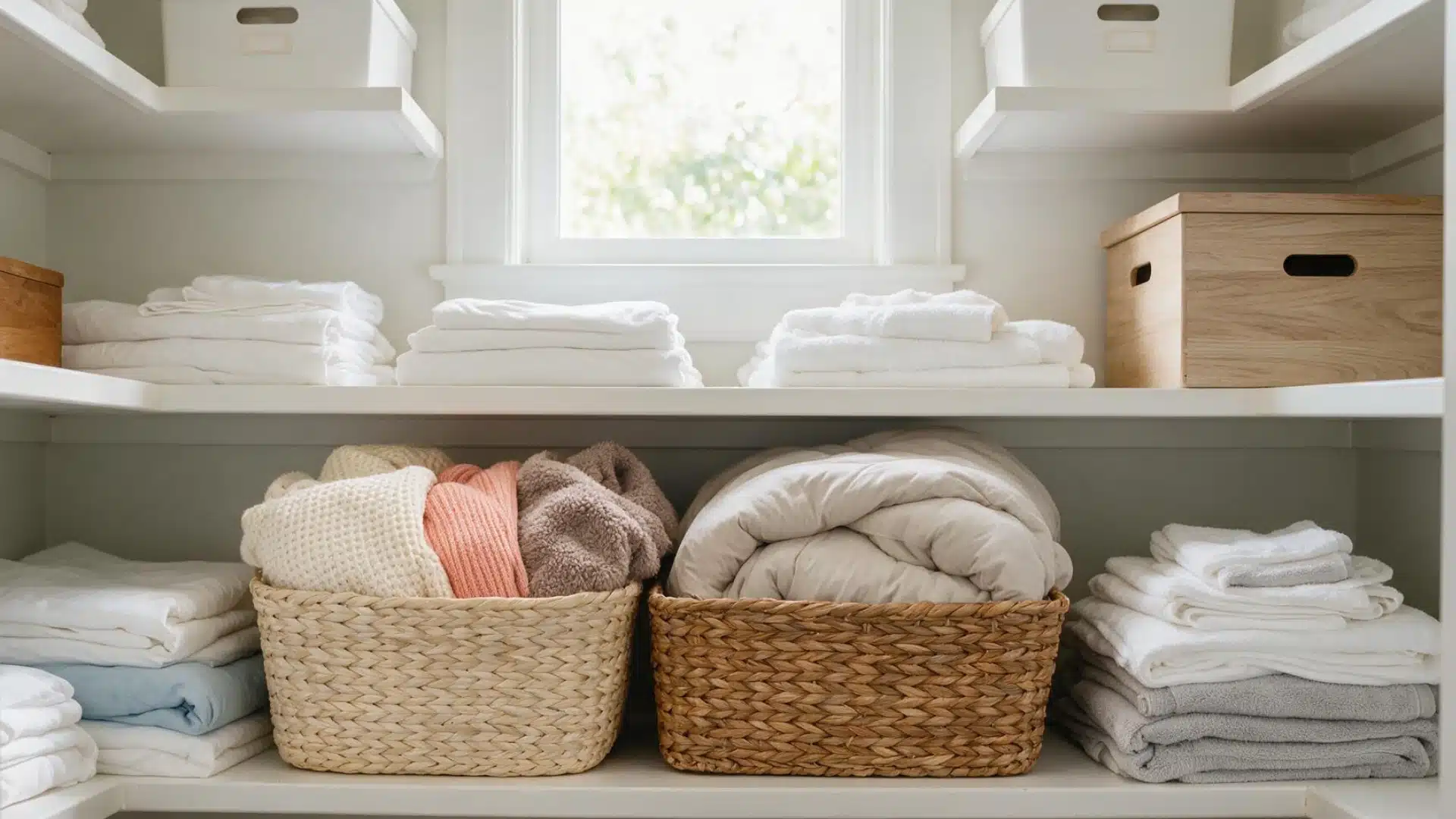
Bulky blankets eat up shelf space and topple stacks when crammed in with sheets. Give them their own baskets or bins instead, one for throws and one for spare comforters.
It keeps them contained, easy to grab, and stops them from crushing your neat linen piles.
5. Add Shelf Dividers
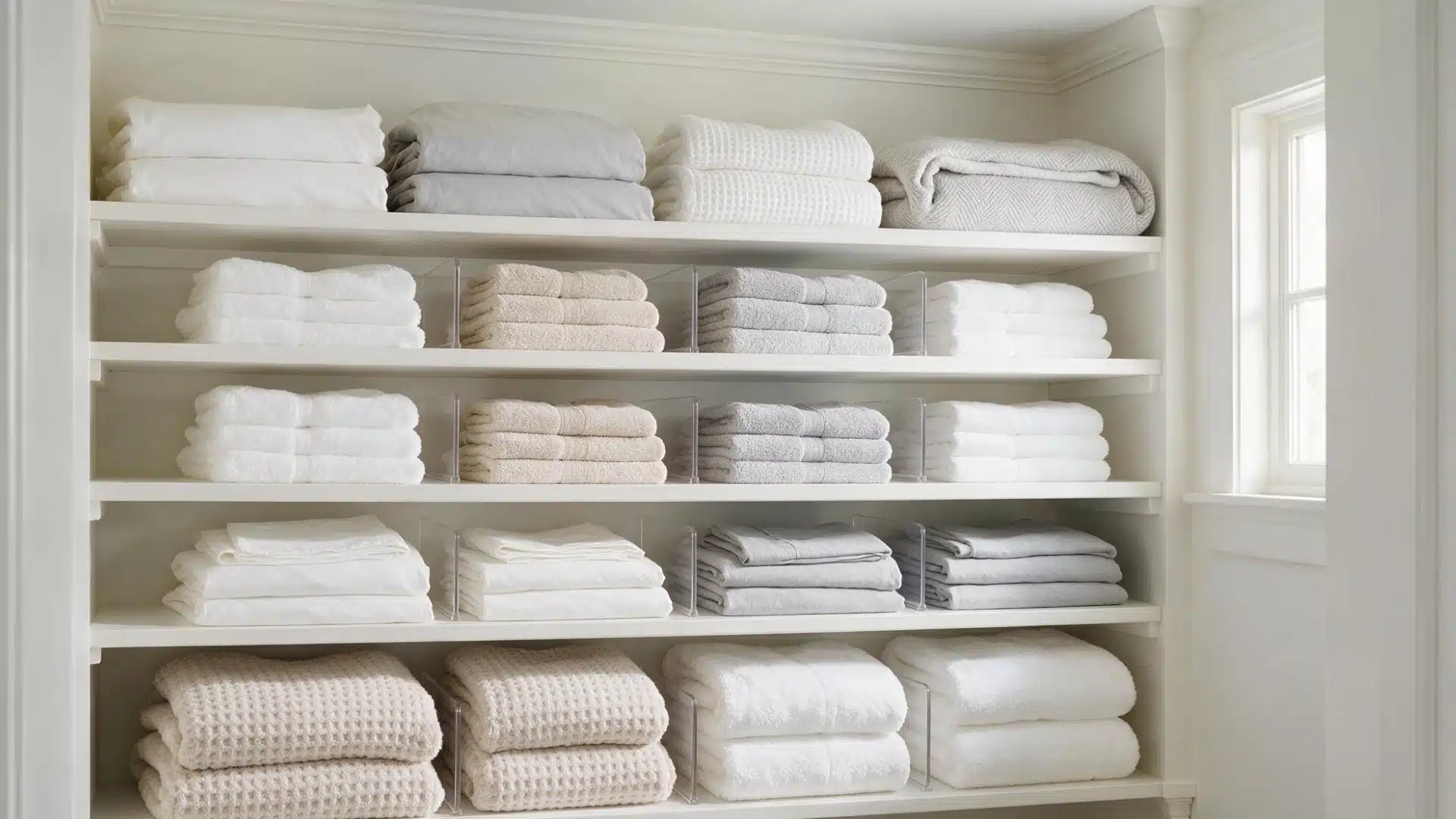
Shelf dividers keep tall stacks of towels or blankets from leaning over and toppling into neighboring piles.
They’re especially useful on deep shelves where multiple stacks sit side by side.
6. Use Baskets for Loose Items
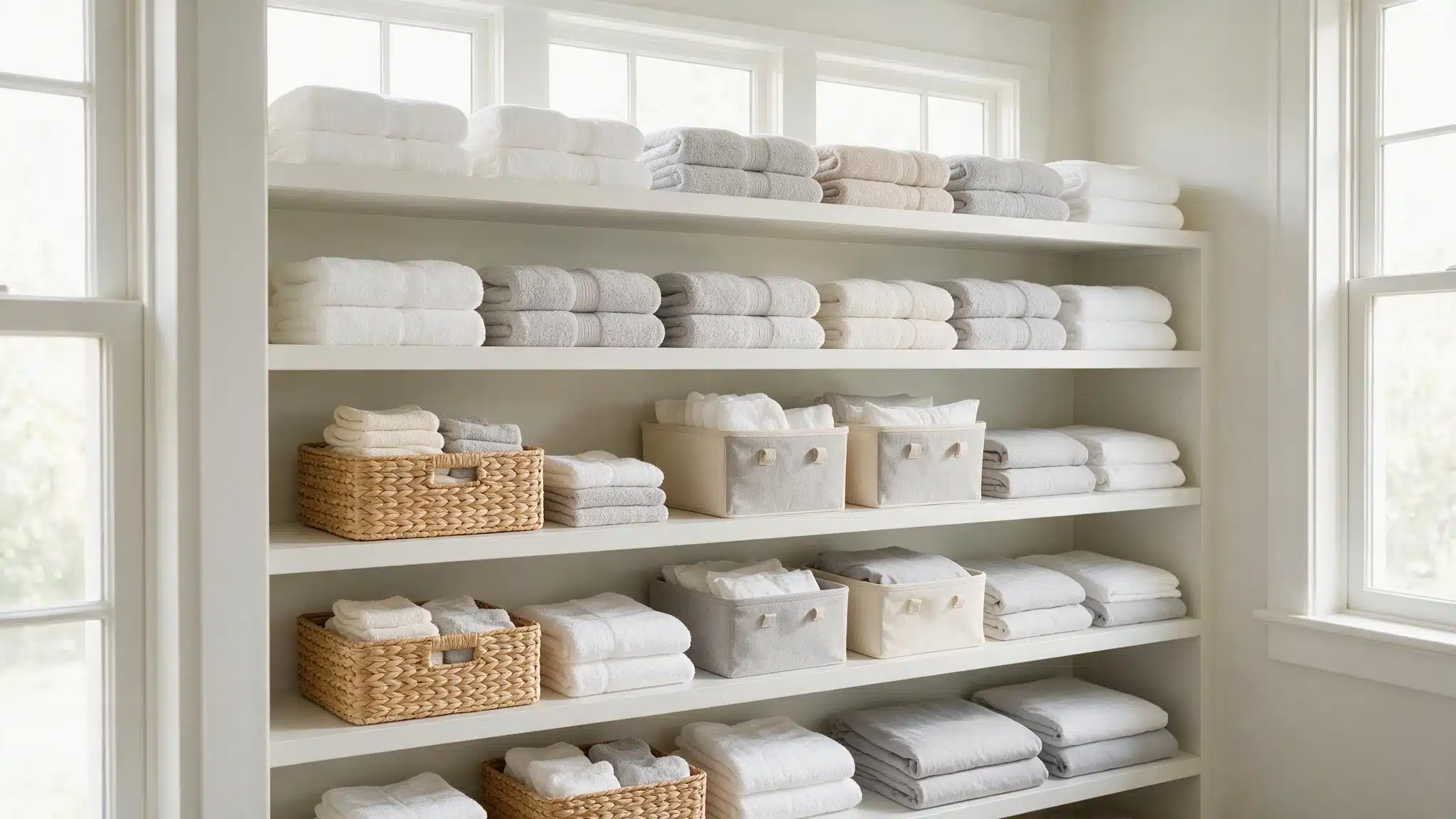
Small things such as washcloths, hair towels, or additional pillowcases tend to go missing on open shelves.
With baskets, you can store everything in one place, and your shelves look tidier.
7. Use Clear Storage Bins
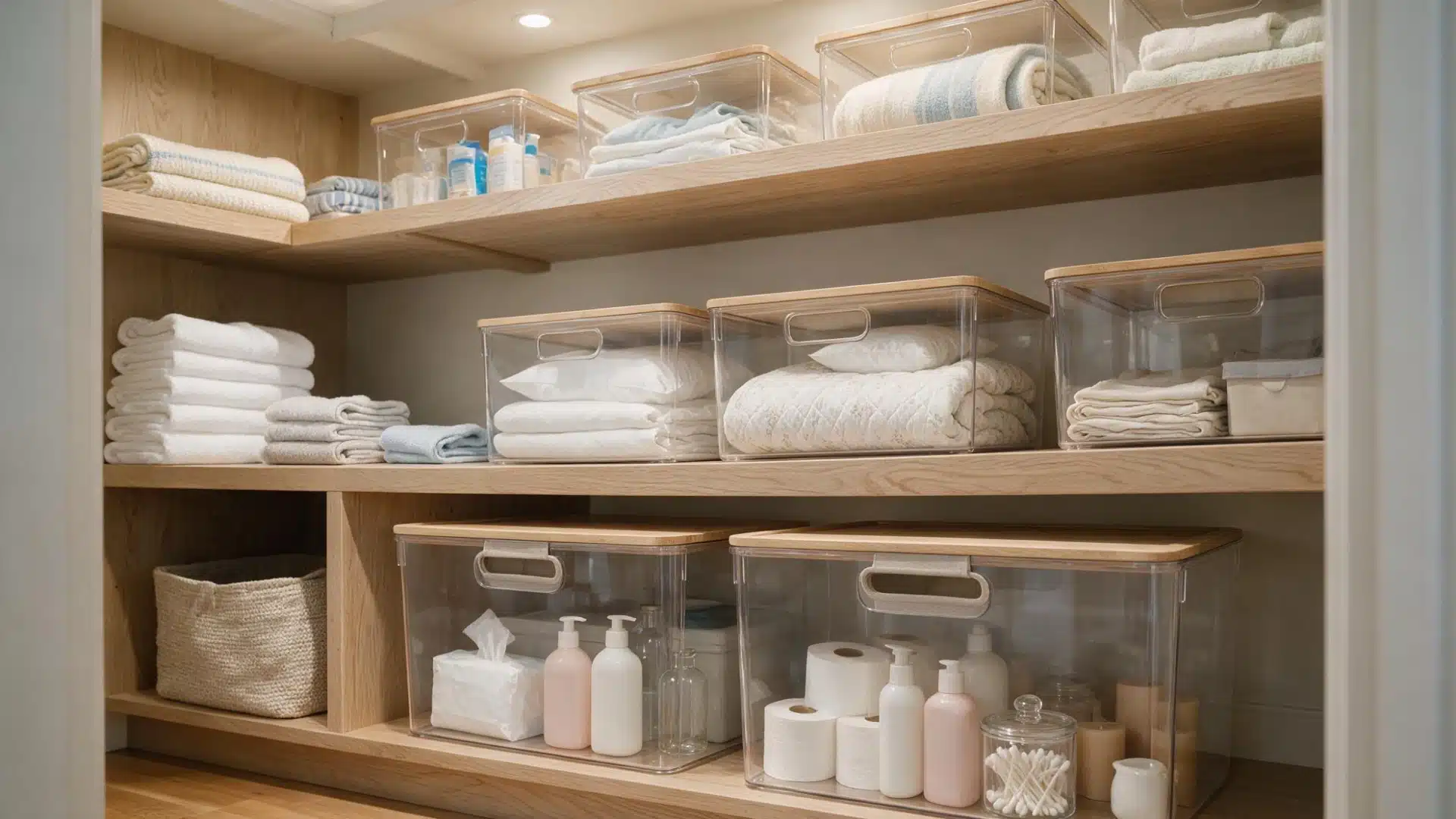
Clear bins make it easy to see what’s inside without opening every container on the shelf.
They work well for extra blankets, seasonal linens, or backstock toiletries you don’t need to access every day.
8. Label Shelves and Bins
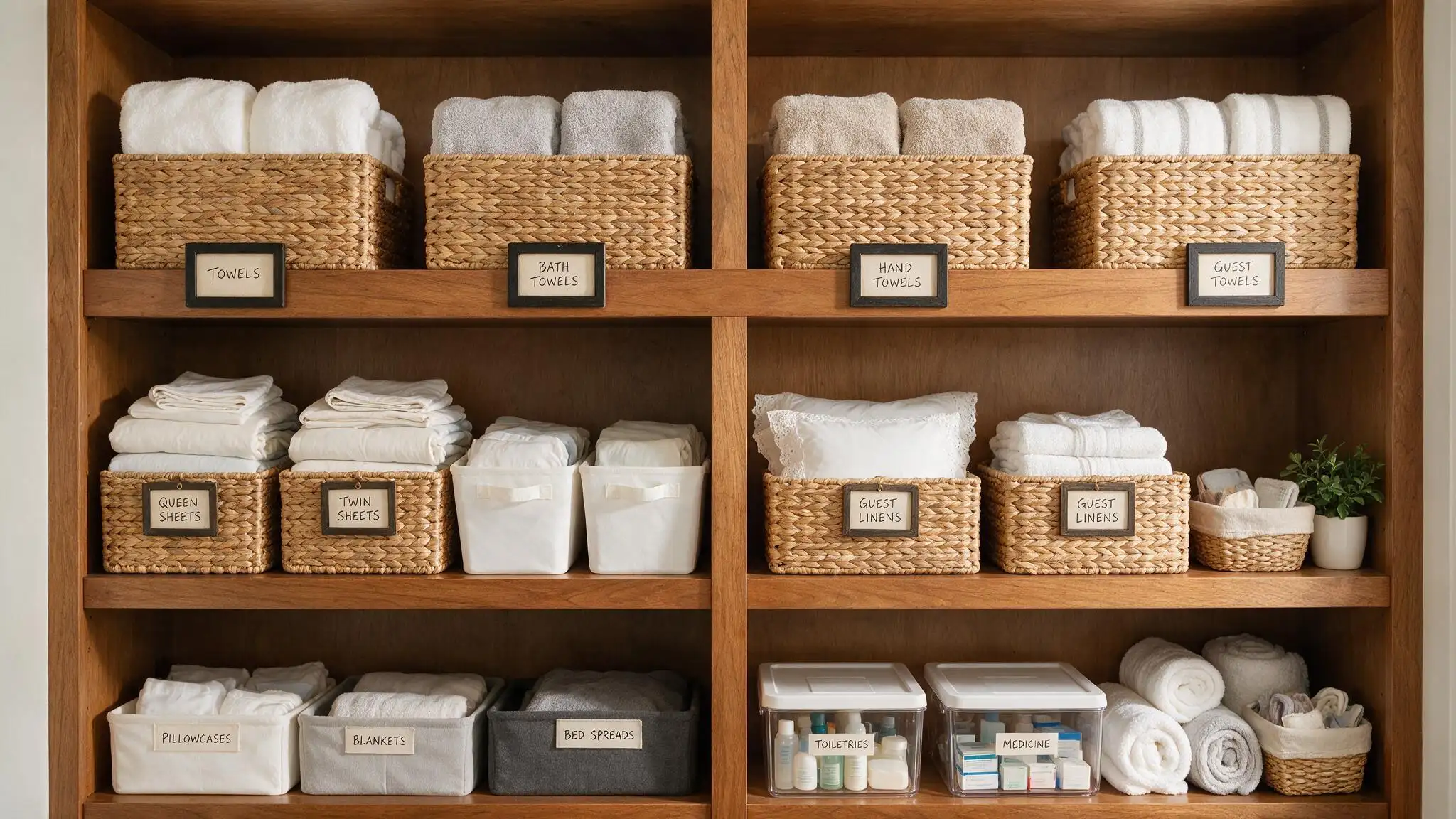
Labels reduce the guessing game of where everything goes, especially in a household where multiple people put their laundry in storage.
A small label on each shelf or bin helps everyone put their stuff in the right place.
9. Keep Everyday Linens at Eye Level
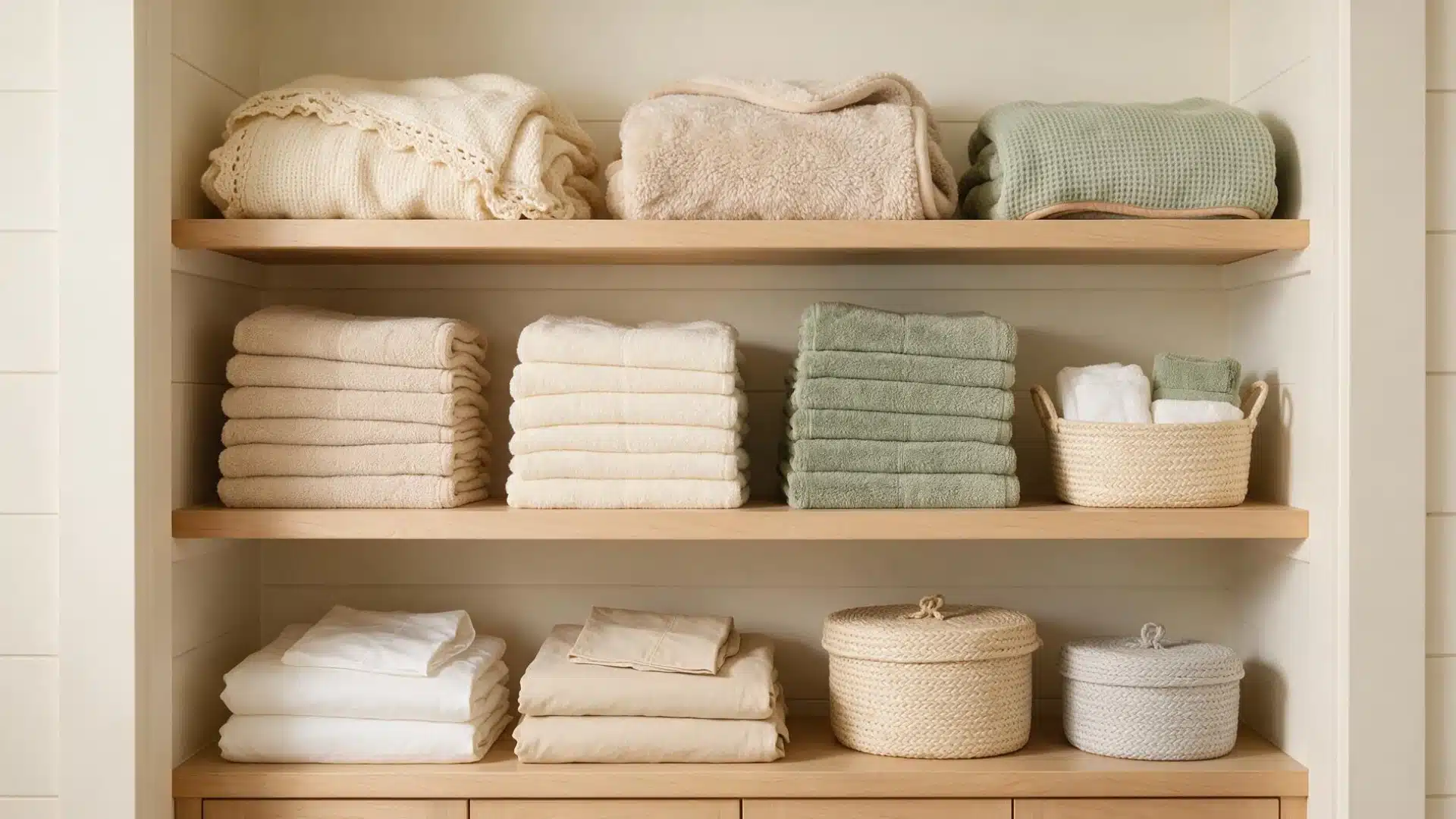
Keep the items you use most often at eye level so they’re visible and easy to reach. It’s a small choice that saves you time during your daily chores.
10. Store Rarely Used Linens Up High
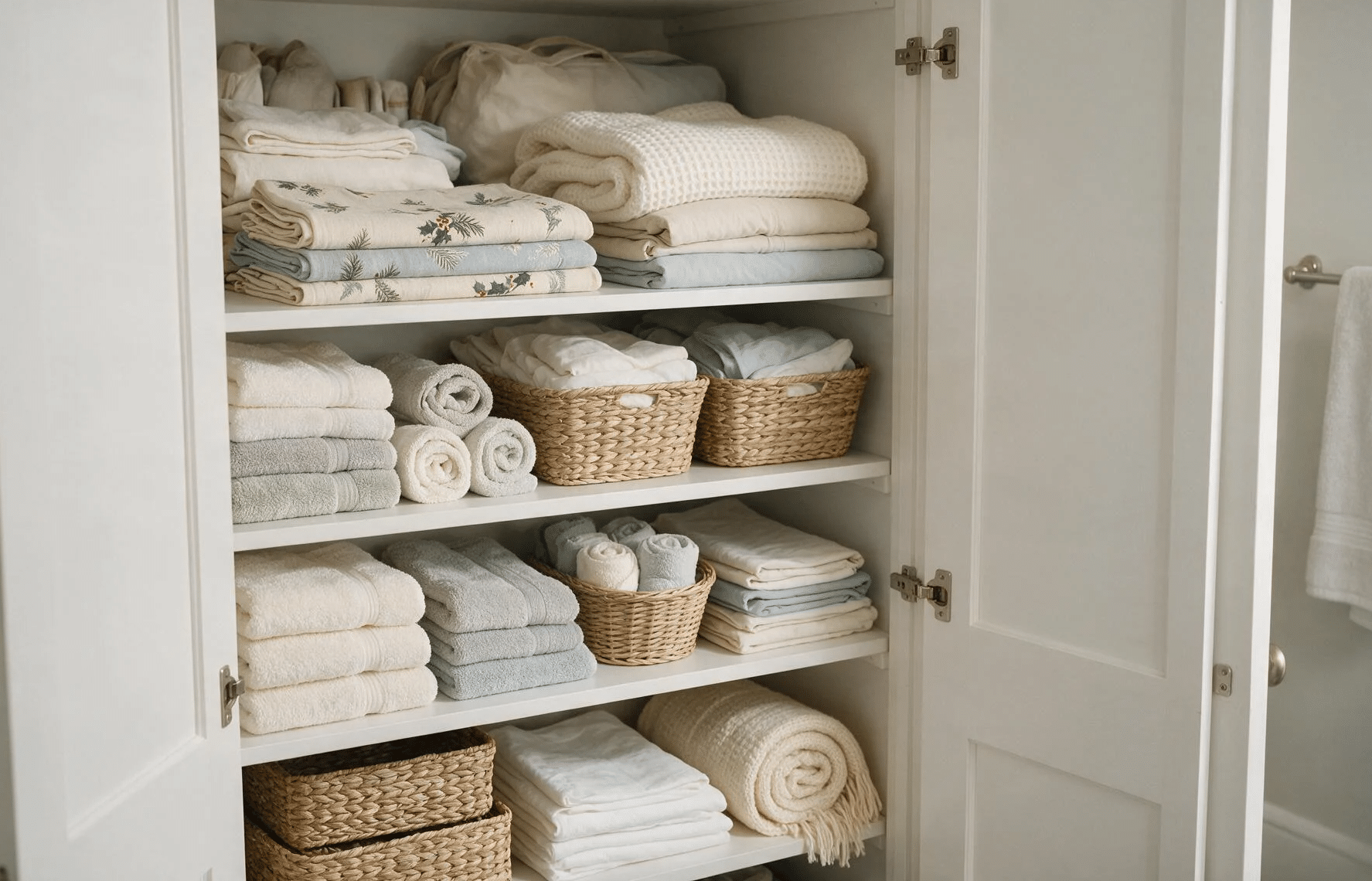
Guest sheets, holiday tablecloths, and extra blankets used only occasionally belong on the top shelf. Since you need these items only a few times a year, the harder-to-reach space is the right spot.
11. Create a Toiletry Backstock Zone
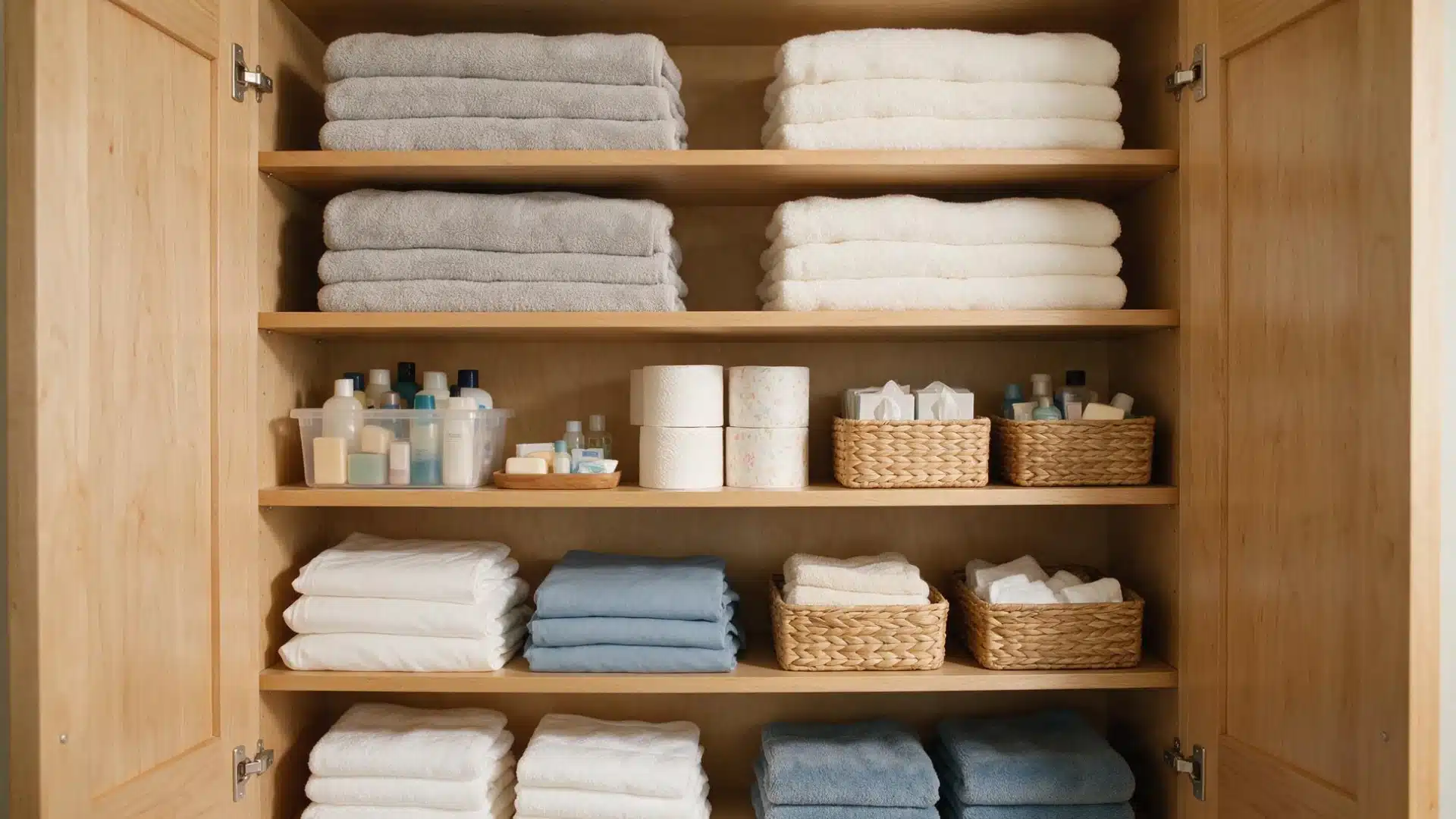
Set aside one shelf or bin specifically for backup toiletries like extra soap, toilet paper, or shampoo.
Keeping backstock in one designated zone prevents it from spreading across shelves meant for linens.
12. Separate Guest Linens
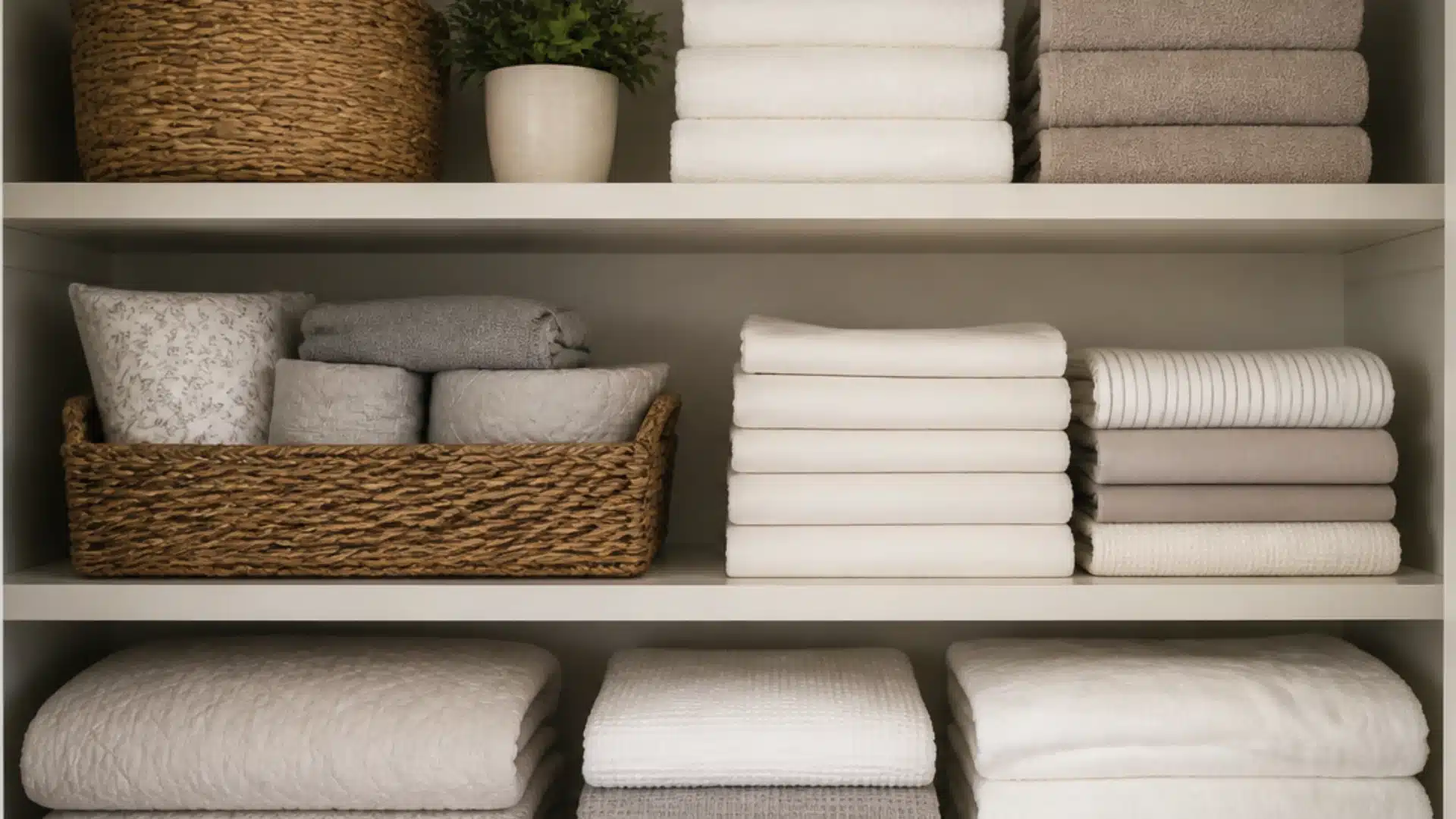
Store guest towels and sheets in their own labeled section, separate from everyday linens. This makes it fast to pull together a full set when visitors arrive, without searching through family-use items first.
13. Make Use of Vertical Space
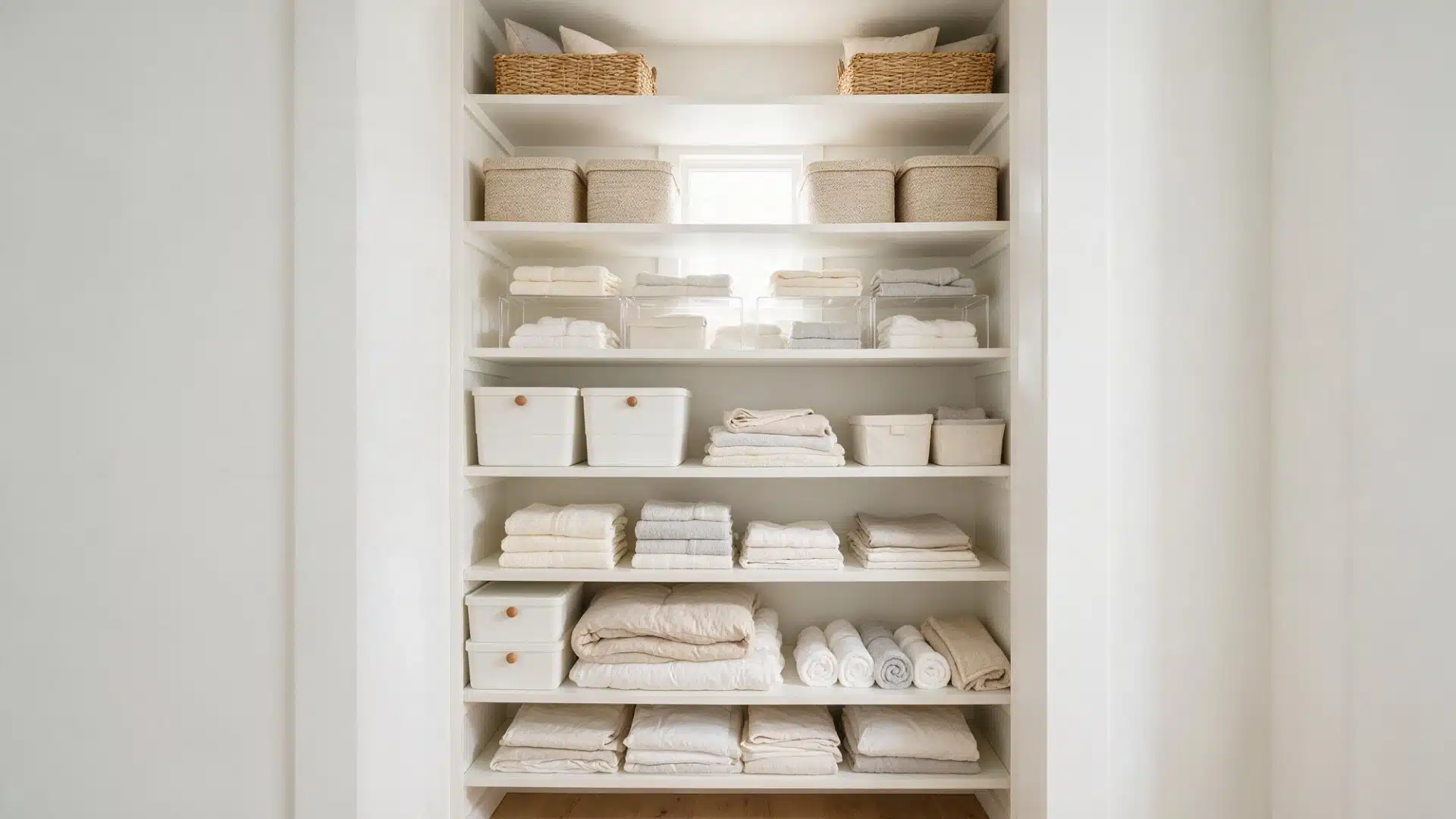
Stackable bins or additional shelves let you use empty space above stacked items. This is especially useful when closets have empty vertical space between shelves.
14. Use the Closet Door
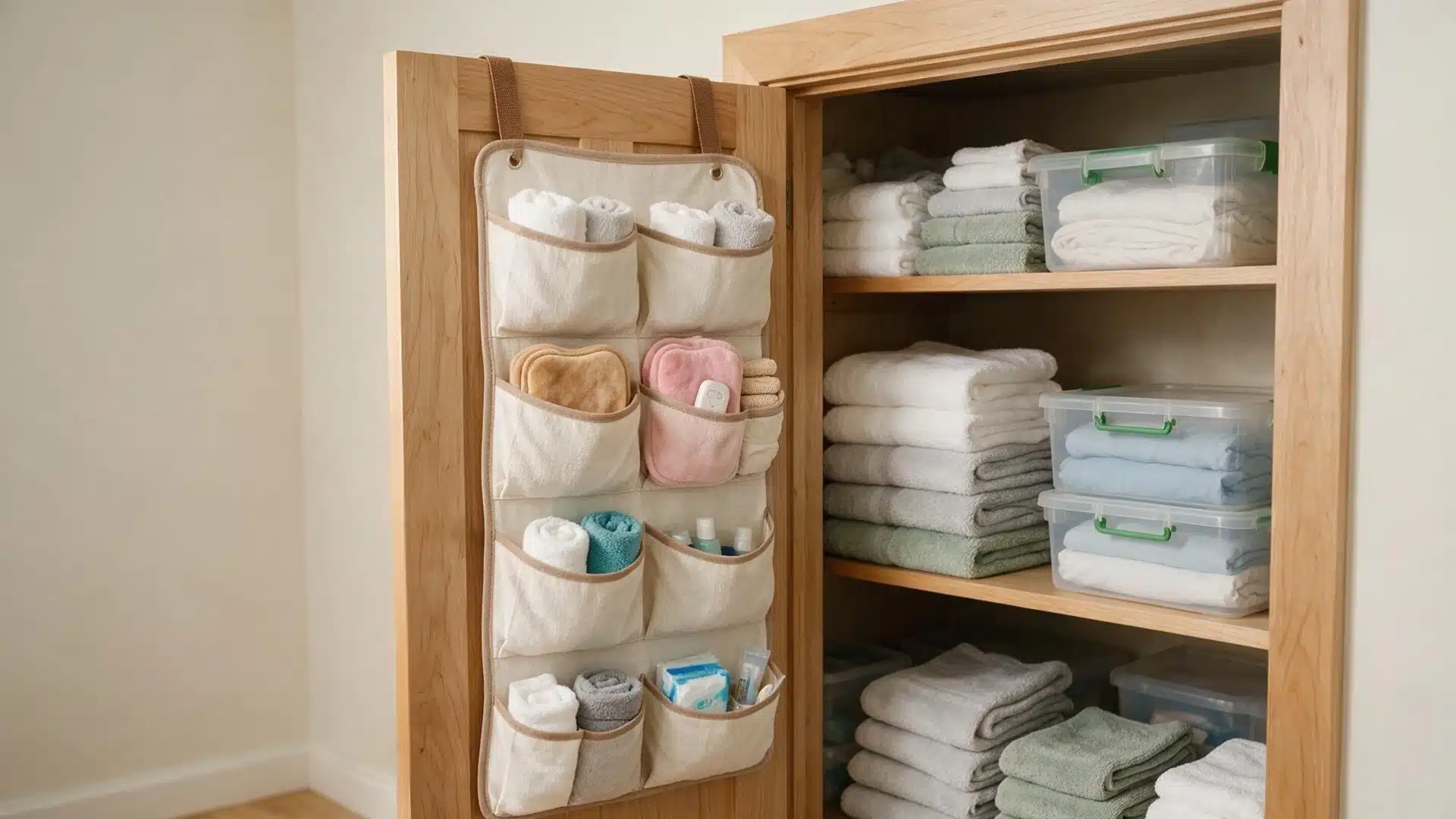
An over-the-door organizer with pockets or hooks adds extra storage without taking up shelf space.
It works well for small items like heating pads, extra washcloths, or travel-size toiletries.
15. Use Shallow Bins in Small Closets
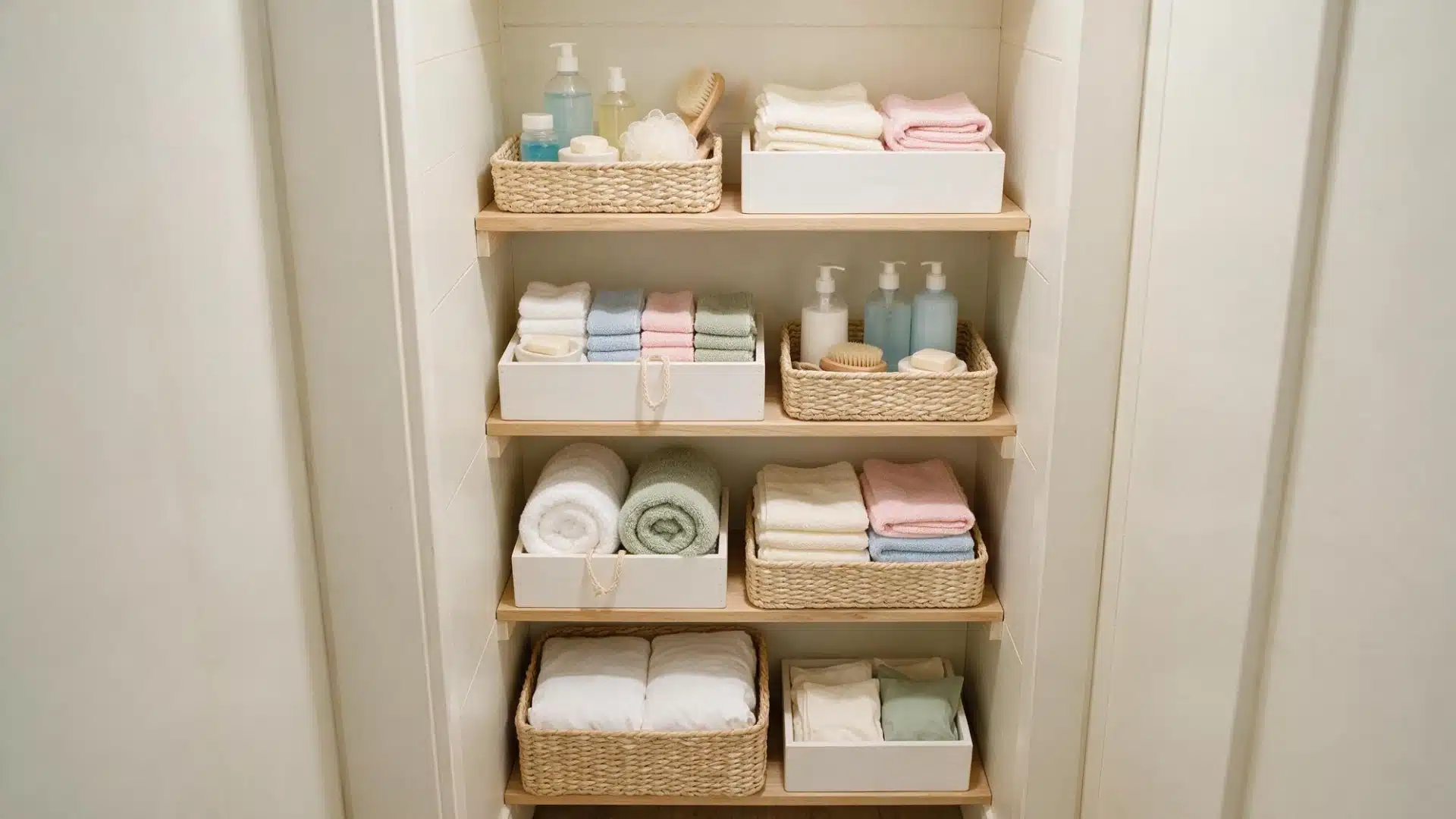
Shallow bins prevent items from getting buried at the back of a shelf where they’re easy to forget. They’re a better fit than deep bins in closets with limited shelf depth.
Follow the 4 Simple Steps to Organize Your Linen Closet
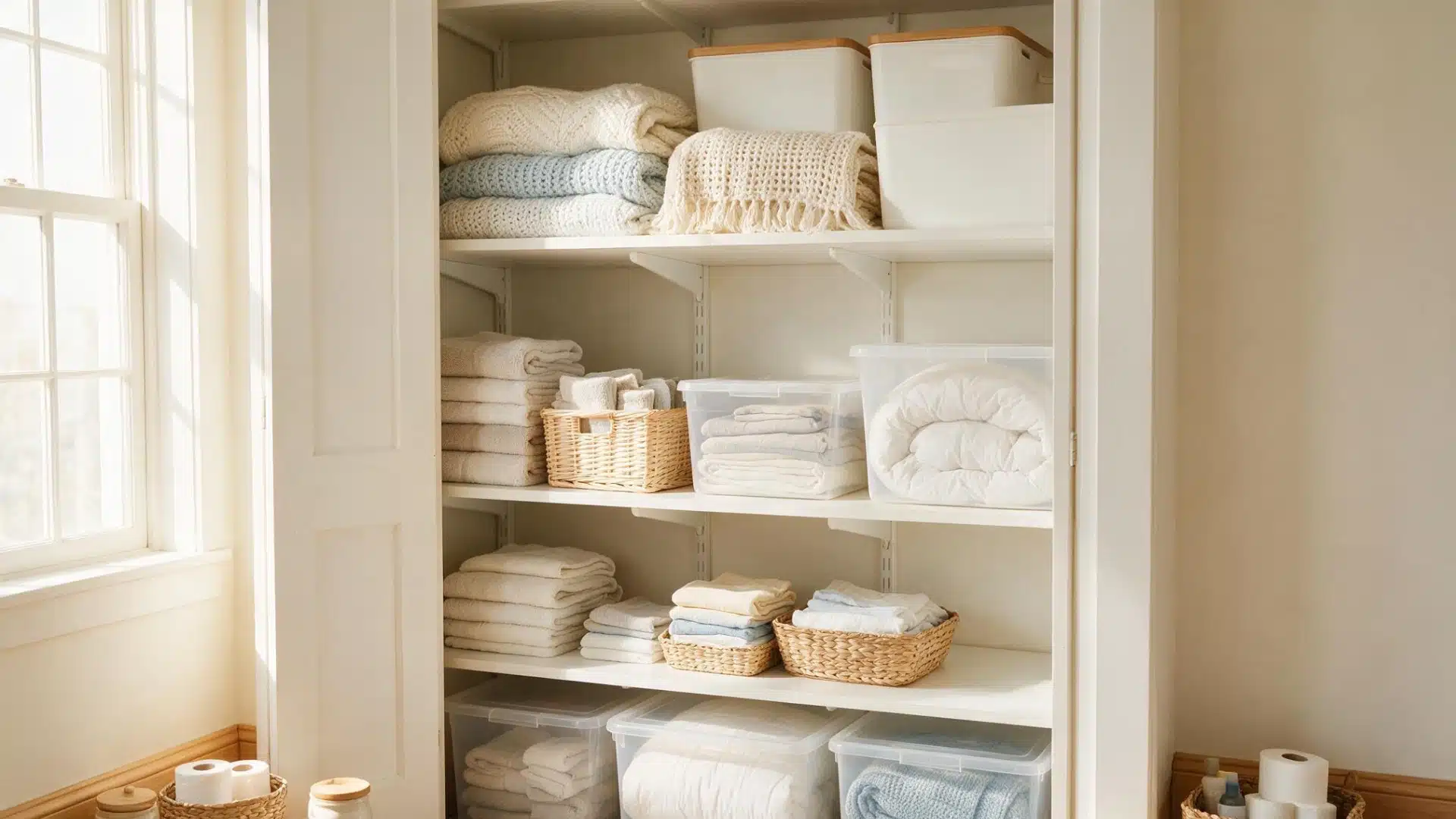
The best way to keep a linen closet organized is to set up a system from the start, rather than simply rearranging the towels.
By following the steps before buying new organizing bins, you can make the process much simpler.
Step 1: Empty and Declutter the Closet
Take everything out and set it all on the bed. Set aside towels with frayed edges, sheets that no longer fit any bed, and half-used toiletry bottles, basically anything that’s of no use.
Donate items still in good shape and toss anything too worn to keep using.
Step 2: Sort Items by Category
Group everything into clear piles: bath towels, hand towels, sheet sets, blankets, and toiletries.
Wipe down shelves and corners before putting anything back, since dust and lint build up fast in closets that stay closed most of the time. Seeing each pile helps plan shelf space.
Step 3: Create Storage Zones
Allocate each shelf to a specific category instead of grouping everything together.
Designating the shelves specifically for towels, bedsheets, and other things makes the organization process easy. This also helps you identify when supplies are running low.
Step 4: Keep Everyday Items Within Reach
Store the linens used most often at eye level or waist height, where they’re easy to grab without digging.
Save the highest and lowest shelves for extra blankets or seasonal items only needed a few times a year.
Wrapping Up
Efficiency in linen closet organization has more to do with good, regular practices than any one product.
Even the smallest or oddly configured closet can hold everything you own when you use vertical and shallow storage well.
The real payoff, though, is spending a few minutes at the end of laundry day putting things back properly.
Start with just one shelf today, and the rest gets easier from there.
Frequently Asked Questions (FAQs)
1. How Many Sets of Sheets Should You Keep per Bed?
Two to three sets per bed: one on the bed, one in the wash, and one spare in case something needs an extra change.
2. How Often Should You Declutter a Linen Closet?
Once or twice a year, ideally timed alongside a seasonal bedding swap for easier upkeep.
3. What Should Not Be Stored in a Linen Closet?
Damp towels, out-of-season clothing, and cleaning chemicals. Moisture and odors can transfer to nearby linens.