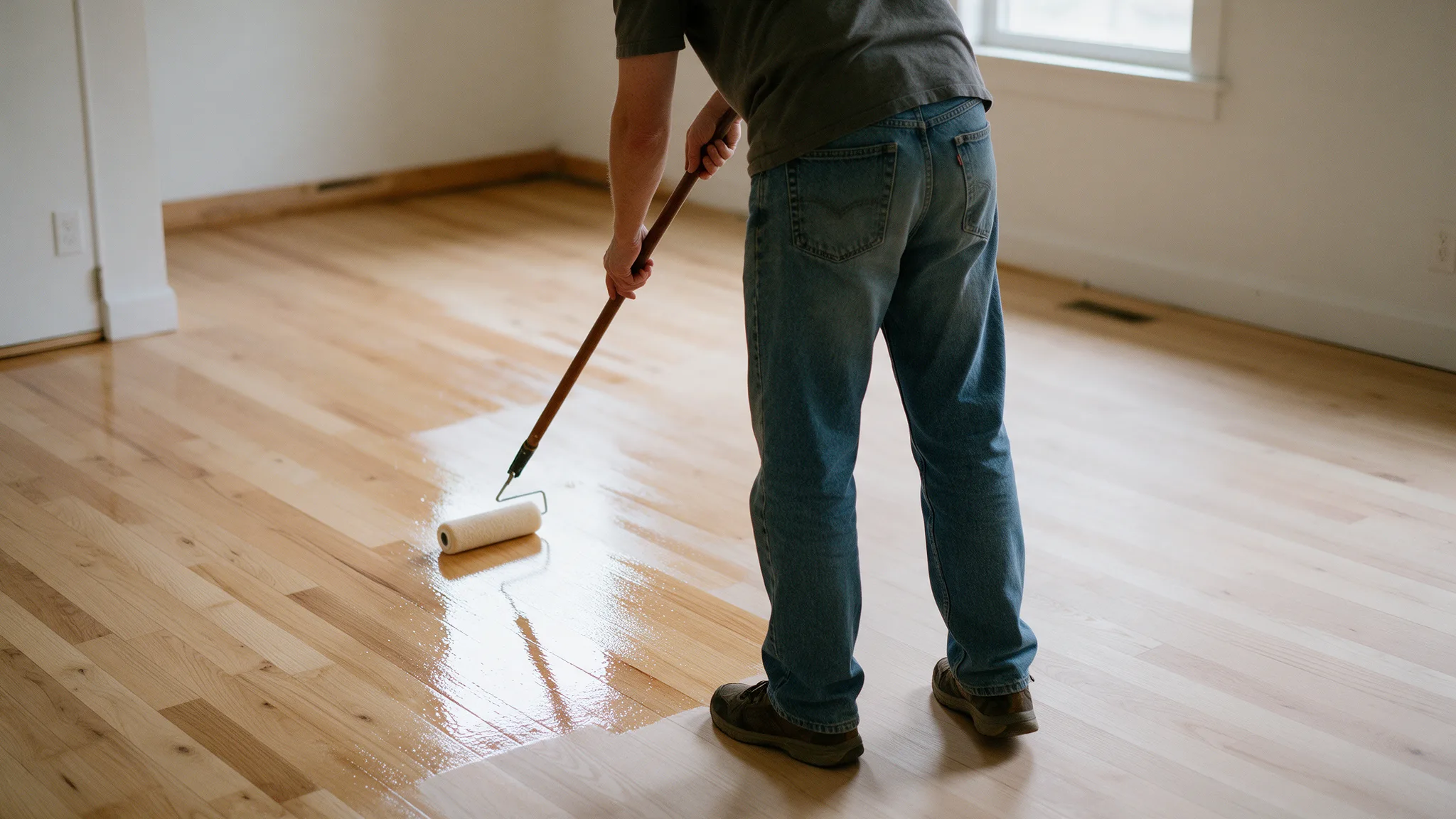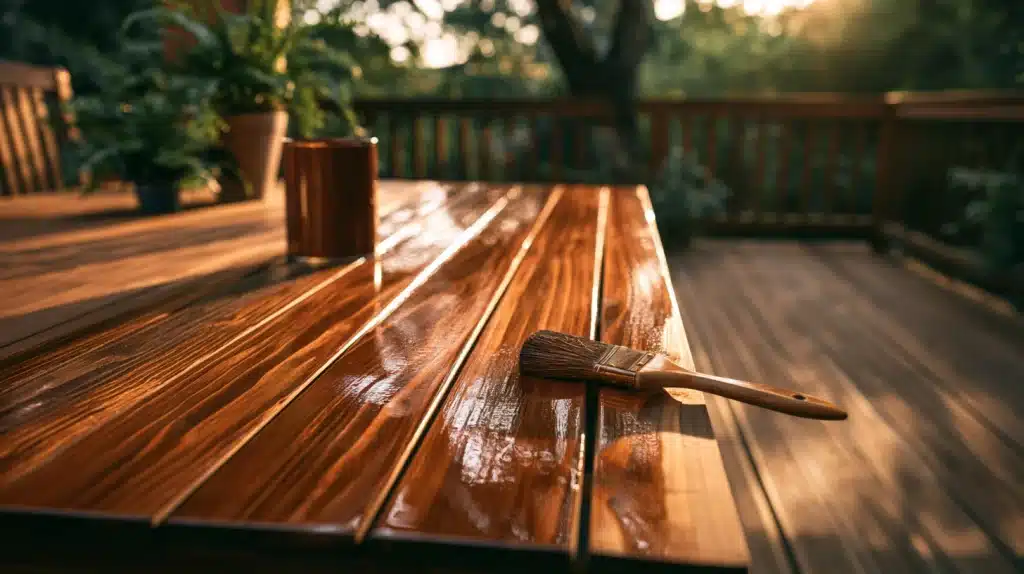
How long does wood stain take to dry?
Water-based stain is usually dry to the touch in a few hours. Oil-based stain needs closer to half a day before you can safely re-coat it, and longer than that before it’s fully cured.
Deck stain runs on similar timing, but weather changes the math since it sits outdoors instead of in a climate-controlled garage.
If you just wiped down a stained tabletop or finished a coat on your deck rail and you’re wondering when you can touch it, walk on it, or add a topcoat, the answer depends on the stain type, the wood, and the air around it.
How Long Does Wood Stain Take to Dry?
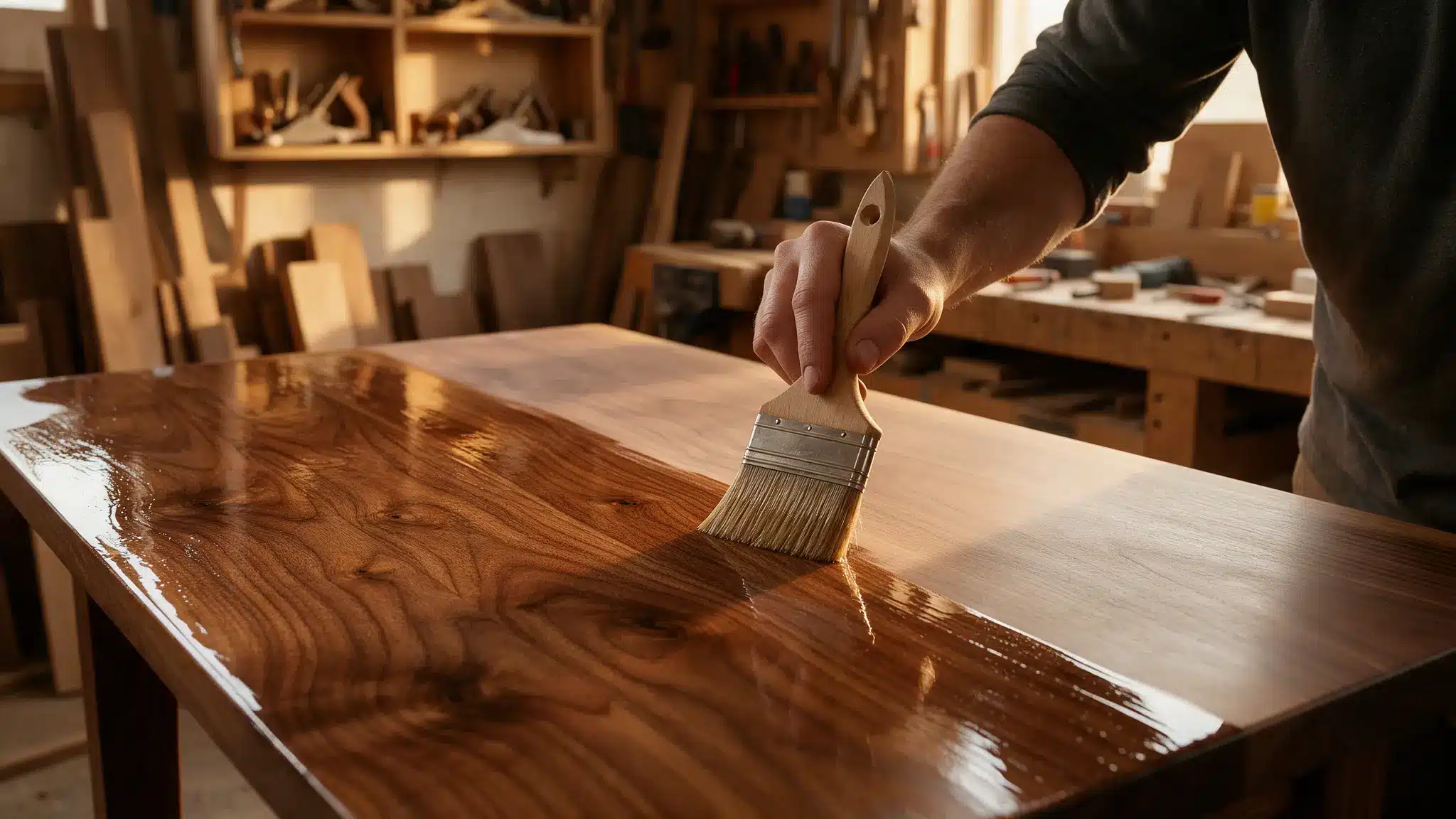
Wood stain dries in several stages, but the most important factor is the type of stain you’re using.
It will be safe to touch in just a couple of hours, but reapplication or sealing will require much more time, often even a day.
Water-Based Wood Stain

Water-based stain is the fastest of the three main types. Most brands dry to the touch in one to four hours and are ready for a second coat in about six hours.
Cooler, damp rooms push that toward the long end, so crack a window or run a fan if you’re on a deadline.
Oil-Based Wood Stain

Oil-based stain takes longer because the solvent has to evaporate out of the wood itself, not just off the surface.
Expect eight to twelve hours before it’s dry to the touch, and a full 24 to 48 hours before you topcoat it with polyurethane. Minwax, one of the most common oil-based stains on the shelf, falls right in that window.
Rushing this step is the most common reason finishes turn cloudy or lift later.
Gel Stain

Gel stain sits on top of the wood instead of soaking in, so it behaves differently than the other two.
Give it at least 24 hours between coats, and check the can before you start, since gel formulas vary more by brand than water- or oil-based stains do.
How Long Does Deck Stain Take to Dry?
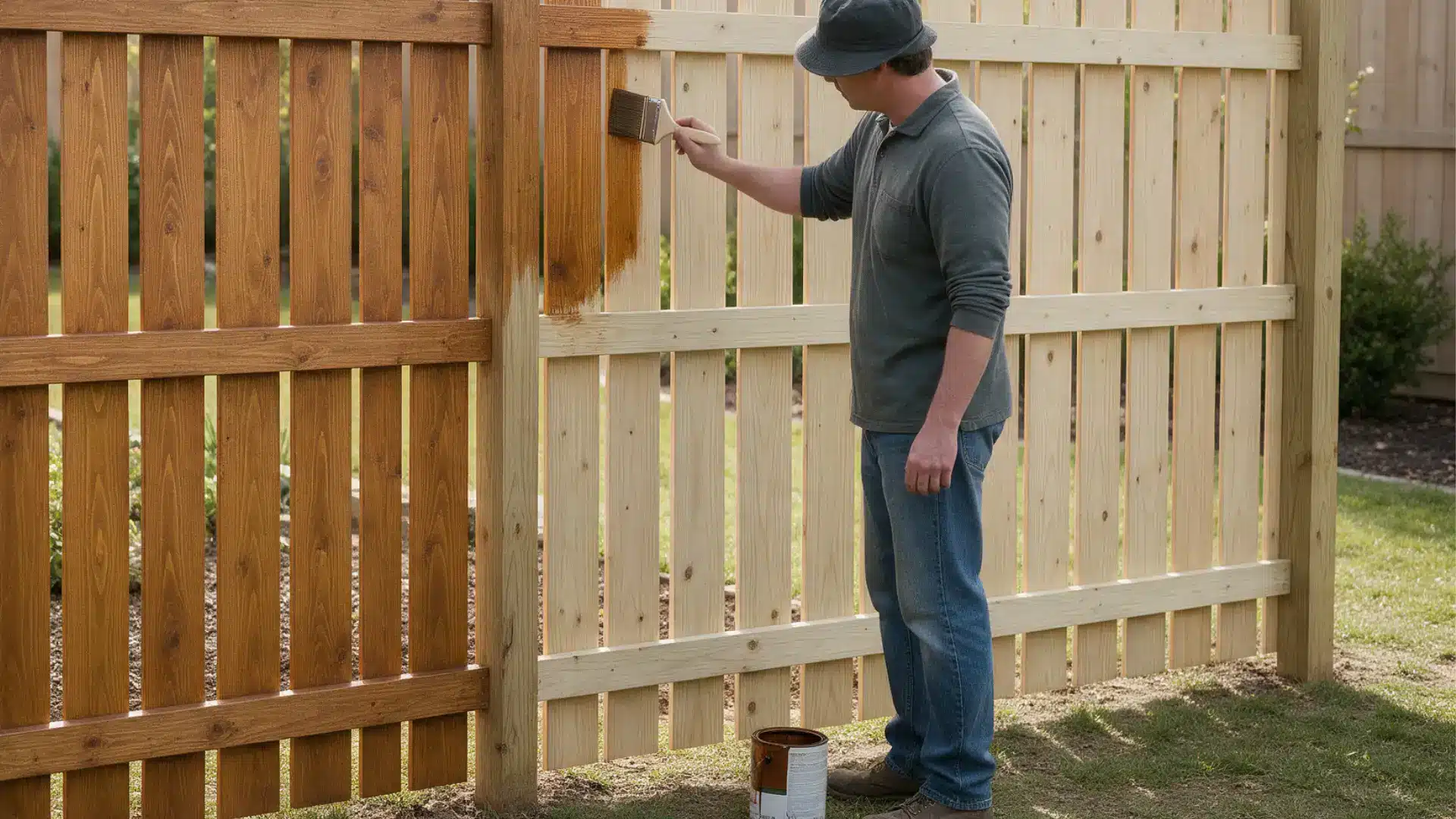
Deck stain goes through the same basic drying stages as interior wood stain, but it’s fighting real weather instead of a controlled room.
Sun, wind, and ground moisture all speed things up or slow them down, sometimes by a full day in either direction depending on the week.
Oil-Based Deck Stain

Oil-based deck stain typically dries within eight to twelve hours in mild weather, but don’t walk on it for at least 24 hours and hold off on furniture for 48.
Hot, direct sun can dry the surface fast while the layer underneath is still wet, trapping solvent and causing lifting down the line.
Water-Based Deck Stain

Water-based deck stain dries faster and is often safe to walk on in four to six hours.
It still needs 24 to 48 hours before you put furniture back out or before a hard rain, since a fresh water-based finish washes out more easily than an oil-based one.
What Changes Wood Stain Drying Time?
Temperature, humidity, wood species, and how thick a coat you laid down all shift the numbers above.
The times on the can assume a controlled room around 70 degrees, so anything warmer, cooler, wetter, or drier than that will change your actual wait.
Temperature and Humidity
Stain dries fastest between about 50 and 90 degrees with moderate humidity. Below that range, the solvent evaporates too slowly, and the stain stays tacky for a long time.
Above it, especially in direct sun, the surface can skin over while the layer underneath is still wet.
Wood Type and Coat Thickness
Soft, porous woods like pine and cedar soak up stain fast and generally dry faster than dense hardwoods such as oak or ipe.
A heavy, sloppy coat also takes longer than a thin one wiped back hard, since more stain sits on the surface waiting to evaporate.
Dry Versus Cured, and Why the Difference Matters
Dry to the touch and fully cured aren’t the same thing, and mixing them up is where most staining problems start. Dry means the surface won’t transfer onto your hand anymore.
Cured means the solvent has fully left the wood, which is what actually determines how tough and water-resistant the finish ends up being.
|
Stain type |
Dry to the touch |
Fully cured |
|---|---|---|
|
Water-based |
1 to 4 hours |
2 to 3 days |
|
Oil-based |
8 to 12 hours |
7 to 30 days |
|
Gel stain |
24 hours |
5 to 7 days |
|
Deck stain (oil) |
8 to 12 hours |
7 to 14 days |
|
Deck stain (water) |
4 to 6 hours |
3 to 5 days |
Treat the dry time as your cue for recoating and the cure time as your cue for hard use. A stained dresser top can take light dusting once it’s dry, but you’d still want to hold off on setting a hot mug or a heavy lamp down until the cure window has passed.
How Long to Wait Before Wiping, Recoating, Walking, or Sealing?
This is what most people actually want to know, more than the numbers on the drying charts.
The waits below assume an average stain type and normal indoor or outdoor conditions, so add extra time in cold or humid weather.
Rushing any one of these steps is usually what turns a smooth, even finish into a project you end up redoing from scratch.
Wiping Excess Stain

Wipe excess stain off within five to fifteen minutes of applying it, well before it starts to set. Waiting longer traps stain on the surface instead of in the wood, leading to a blotchy, sticky finish that never fully hardens properly.
A clean, dry cloth works best for this step, and going over the surface a second time in the same direction helps even out any streaks.
Second Coat

Water-based stains are usually ready for a second coat in about six hours. Oil-based and gel stains need a full 24 hours so the first layer has time to set before you add more solvent right on top of it.
Skipping ahead of that window often causes the new coat to lift the one underneath instead of bonding cleanly with it.
Walking on It or Placing Furniture

Give interior floors and deck surfaces at least 24 hours before regular foot traffic, longer for oil-based stain.
Hold furniture and rugs back for at least 48 hours, since trapped moisture under a rug leg is enough to leave a permanent mark in stain that hasn’t cured yet.
Applying Polyurethane or a Sealant

Applying a topcoat too soon is the single biggest cause of finish failure on stained wood.
Wait a full 24 to 48 hours after oil-based stain and at least six hours after water-based stain, and always test an inconspicuous spot before you commit to the whole surface.
How to Tell if Stain is Actually Dry?
Press a finger lightly into an inconspicuous spot. If nothing transfers and the surface feels dry rather than cool or slightly tacky, it’s ready for the next step.
A spot that still feels faintly cool, almost like it’s holding onto moisture, isn’t there yet.
Smell is a fast clue too, since a strong solvent odor means the oil-based stain still has drying left to do. Check the sheen as well.
A wet stain looks slightly glossy, while a dry stain settles into a flatter, more even finish. Corners, edges, and end grain dry slower than flat surfaces, so test those spots separately before assuming the whole piece is ready.
When in doubt, wait a few extra hours rather than risk lifting a fresh coat.
Conclusion
So, how long does wood stain take to dry?
Water-based stain is touch-ready in a few hours, while oil-based needs closer to half a day before you can touch it and 1 to 2 days before it’s ready for a topcoat.
Gel stain lands on the slower end for touch-dry time, often needing a full 24 hours, though its cure time sits between the two.
Deck stain follows the same basic pattern, just outdoors, where sun, wind, and ground moisture speed things up or slow them down.
The smartest approach is to treat the times on the can as a starting point, then check the wood itself before recoating, walking on it, or sealing it.
A couple of extra hours costs you nothing. A stain that lifts, clouds, or never fully hardens will cost you the whole project.
Frequently Asked Questions (FAQs)
1. Can You Speed up Wood Stain Drying Time?
Turning on the fan, opening up a window, or heating gently helps, but doing away with the waiting time completely generally ends up ruining the surface.
2. Does Rain Ruin Wet Deck Stain?
Rain within a couple of hours after applying can wash off an unset stain, especially a water-based stain that hasn’t set yet.
3. Why Is My Wood Stain Still Tacky After a Day?
Applying a very thick coat, working in cold weather, or high humidity can make a stain tacky for more than 24 hours.