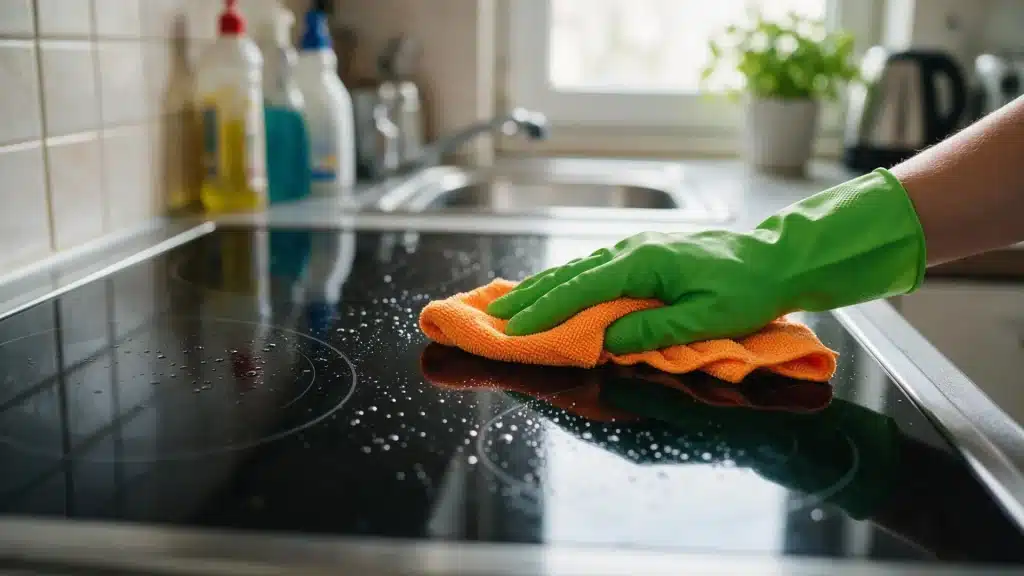
It can seem impossible to remove burned sauce off a glass stovetop. Dinner is cooking well in one minute. The following is a black, sticky stain adhered to the surface.
Almost all home cooks experience this at some point, and it often leads to scrubbing harder than they should. Here, heavy scrubbing and expensive chemicals are not the solution.
The right technique and a few simple products are all you need to know how to clean a glass stovetop.
Each section below explains easy ways to clean a glass stovetop and keep it scratch-free, from quick treatments for everyday dirt to more involved techniques for burnt-on stains.
How to Clean a Glass Stovetop?
Using a warm, moist towel and baking soda is the quickest way to clean a glass stovetop. After sprinkling the soiled area with baking soda, cover it with a damp cloth and leave it for 15-20 minutes.
After cleaning the surface, polish it with a dry towel to remove any spots. Before applying baking soda to more stubborn, burned-on areas, mist the area with white vinegar.
The mixture’s modest fizz breaks down grease and residue. The easy technique can remove most common stains without causing surface scratches.
What You’ll Need to Clean a Glass Stove Top
The majority of glass stovetop cleaning supplies are already in the kitchen.
Almost all stains, from mild oil to burnt-on residue, can be removed using a small combination of natural materials and one or two store-bought remedies. This is what works the best:
- Baking Soda: It breaks down grease and burned particles.
- White Vinegar: It helps remove stains and cuts through grease.
- Dish Soap: Handles light spills and everyday dirt.
- A Microfiber Cloth: To use as a Wipe that doesn’t leave scratches
- Non-Abrasive Sponge: Safe to use for cleaning without damaging glass
- Ceramic Cooktop Cleaner: It is designed to remove more stubborn stains.
- A Plastic Scraper: It can remove tough spots without damaging the surface.
Natural cleaning products are mild and readily available at home, making them ideal for routine cleaning. Store-bought cleansers frequently require less scrubbing effort and save time on darker stains.
Step-by-Step: How to Clean a Glass Stove Top?
The finest results from a deep clean come from completing each step in the correct order and without hurrying.
This method leaves the surface smooth and streak-free by eliminating everyday dirt, grease, and lightly burned areas.
Step 1: Let the Stove Cool Completely
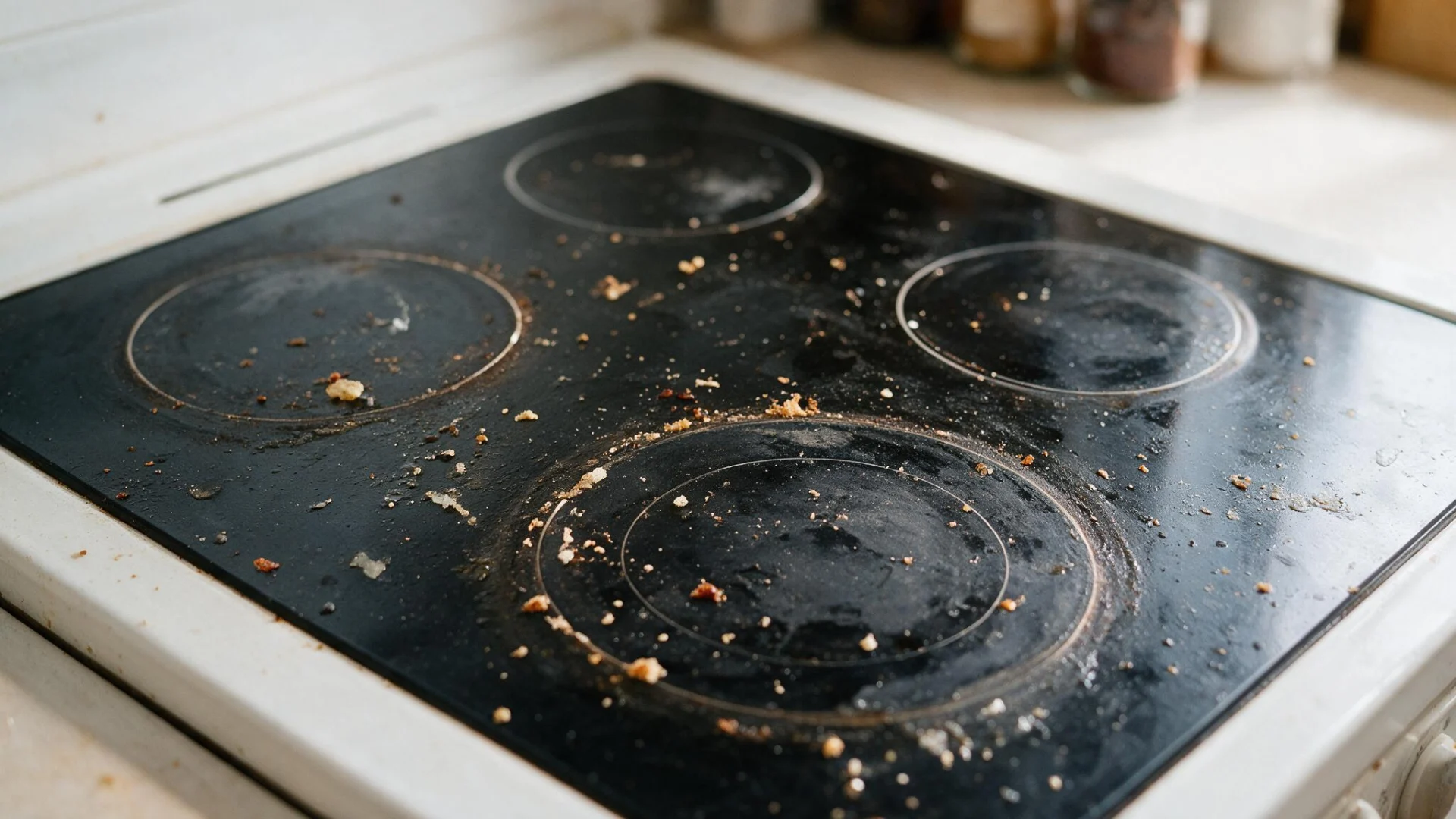
Never clean hot or heated glass stovetops. Heat can damage the glass surface and cause cleaning agents to react unexpectedly.
Don’t start cleaning until the surface feels cool to the touch. This also protects your hands from unintentional burns during the procedure.
Step 2: Clear Loose Debris
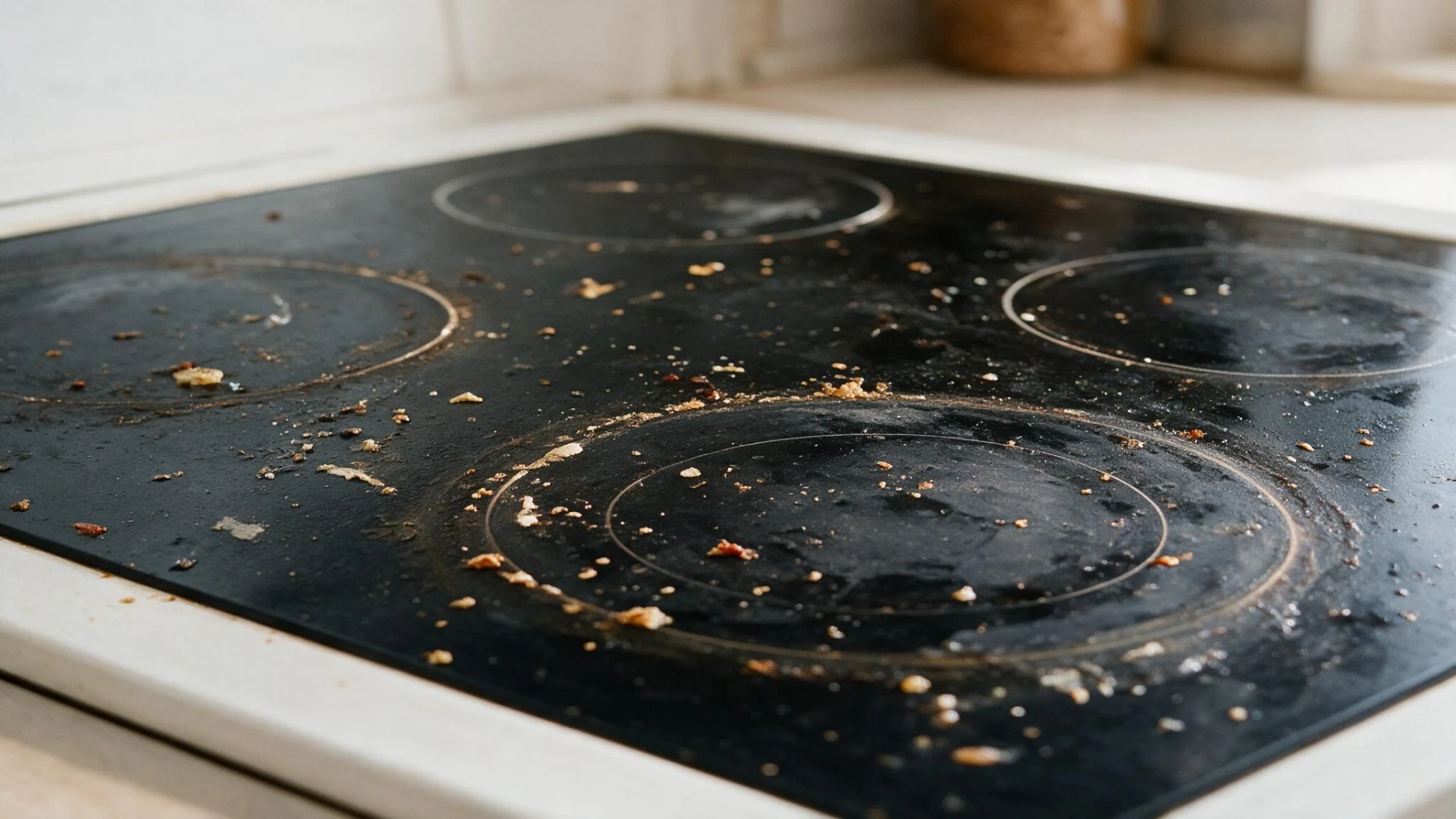
Before adding any liquid, use a dry towel to remove any crumbs, dry food particles, and dust.
This prevents the mess from later becoming a sticky paste. In the following stage, the baking soda works better on a dry surface.
Step 3: Sprinkle Baking Soda Over the Surface
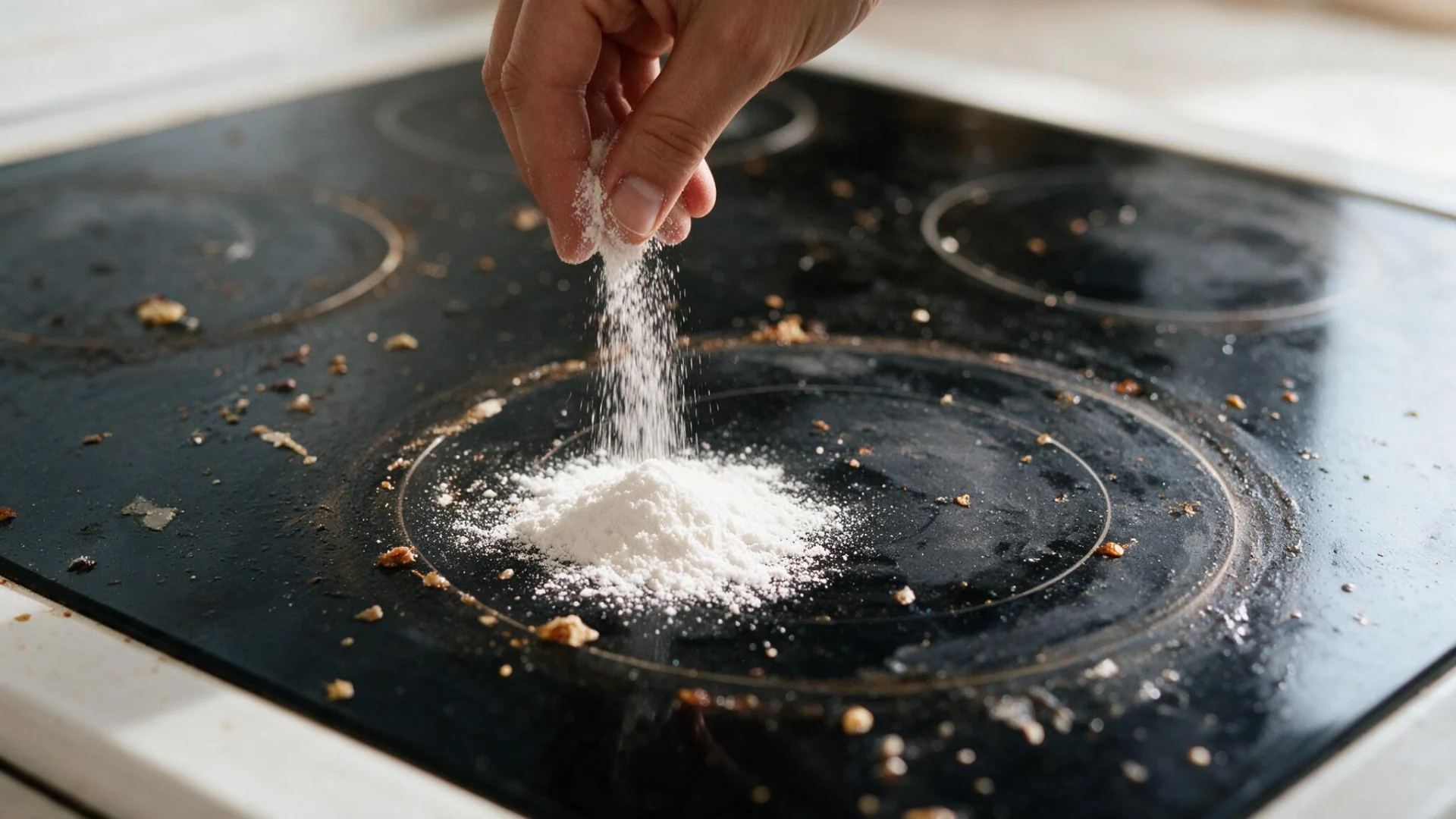
Apply a thick layer of baking soda over the entire stovetop, paying special attention to any oily or discolored spots.
Baking soda works as a gentle cleaning solution that removes dirt from glass without causing scratches. Make sure the layer is thick enough to hide any visible marks completely.
Step 4: Spray White Vinegar Over the Baking Soda
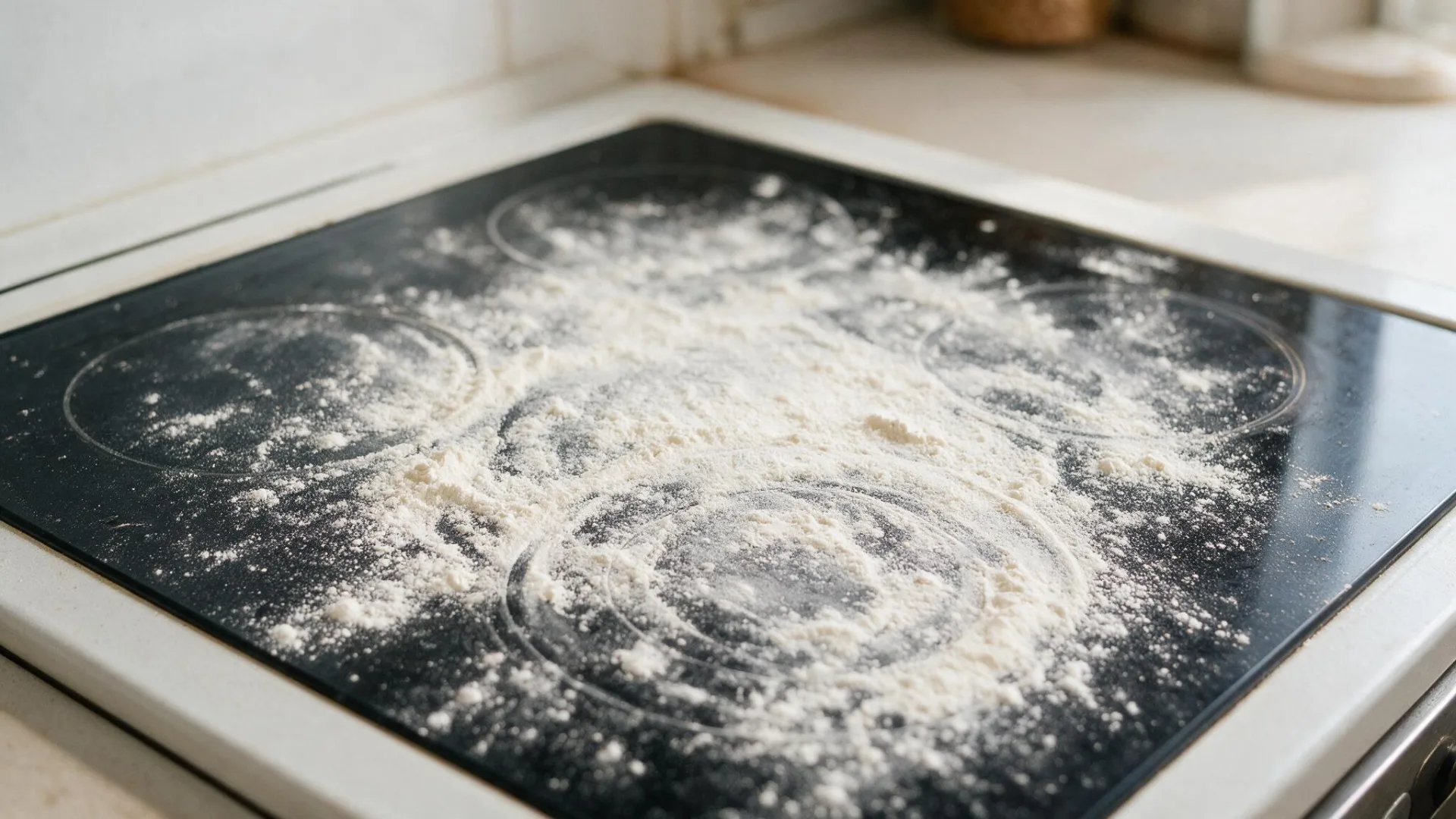
Directly mist the baking soda layer with white vinegar. It is usual for the mixture to bubble a little.
This fizzing process breaks down grease and releases food particles that have adhered to the glass.
Step 5: Lay a Warm, Damp Towel on Top
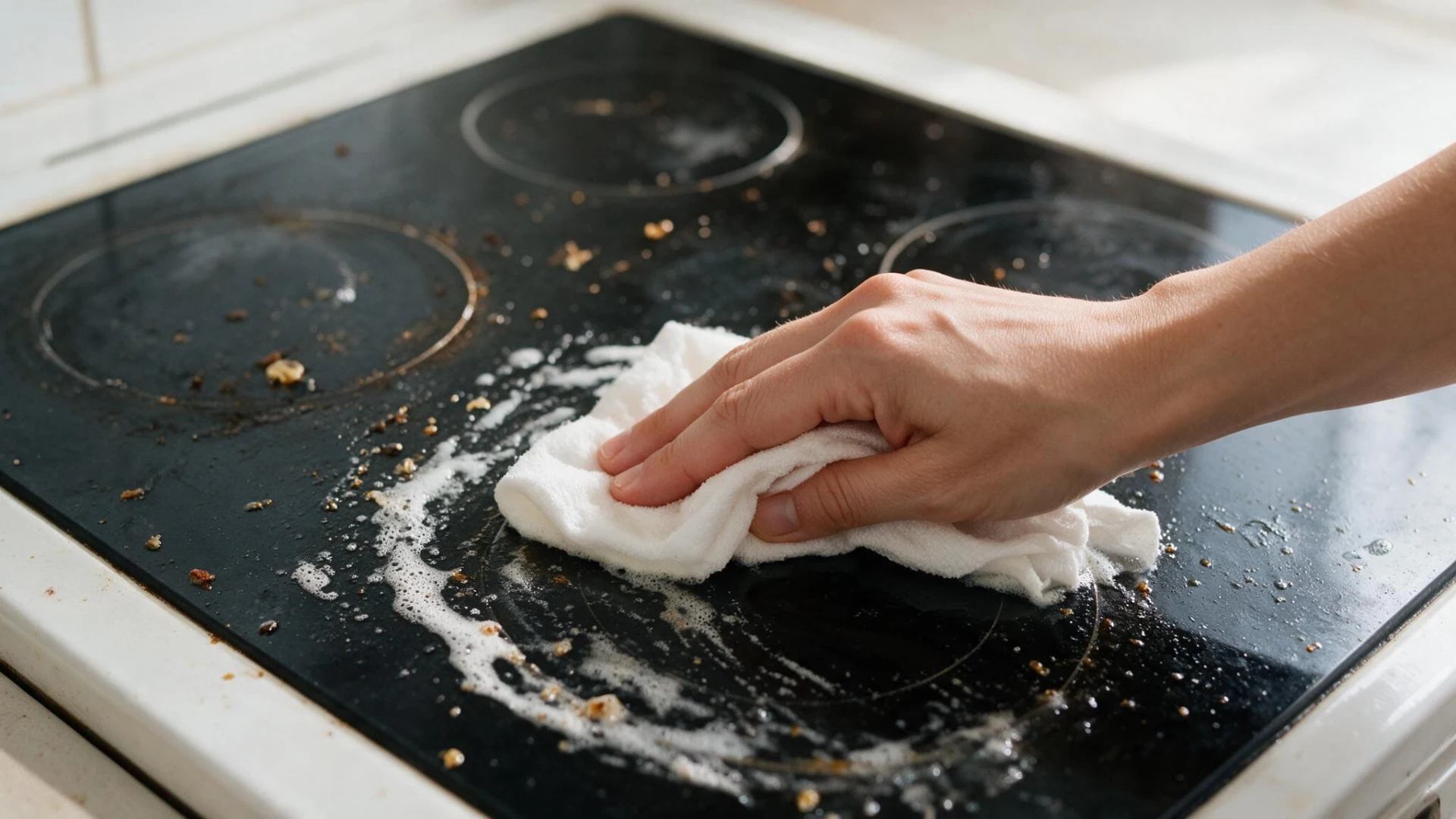
After soaking a towel in warm water and wringing it out, place it on top of the vinegar-and-baking-soda mixture.
Let it sit for 15 to 20 minutes. This procedure softens tougher stains and makes the final wipe easier.
Step 6: Wipe the Surface Clean
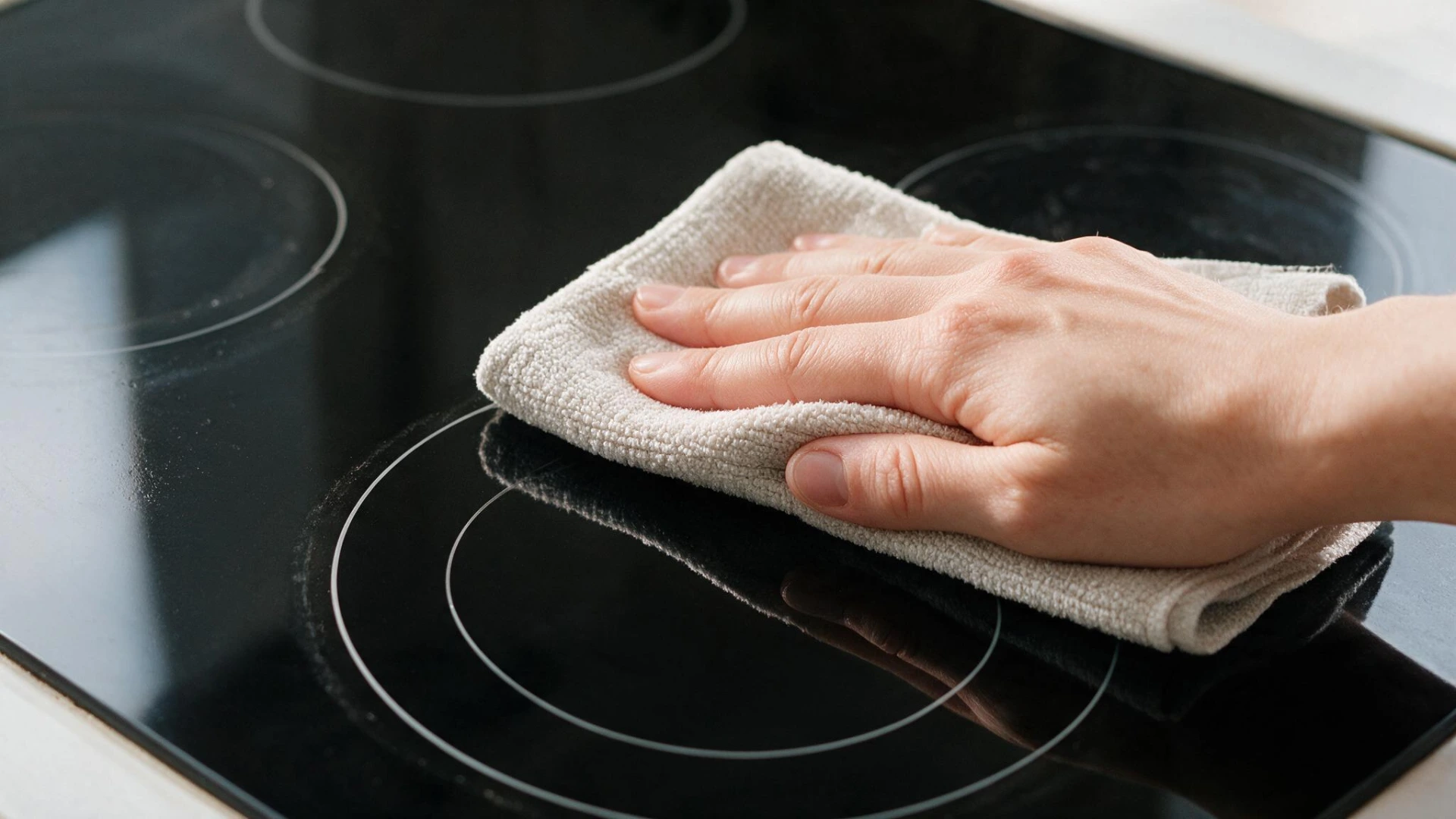
Remove the towel and use it to wipe away the loosened residue. If any spots remain, rinse the towel in warm water and repeat.
At this point, the majority of everyday dirt and lightly burned markings are easily removed.
Step 7: Buff Dry With a Microfiber Cloth
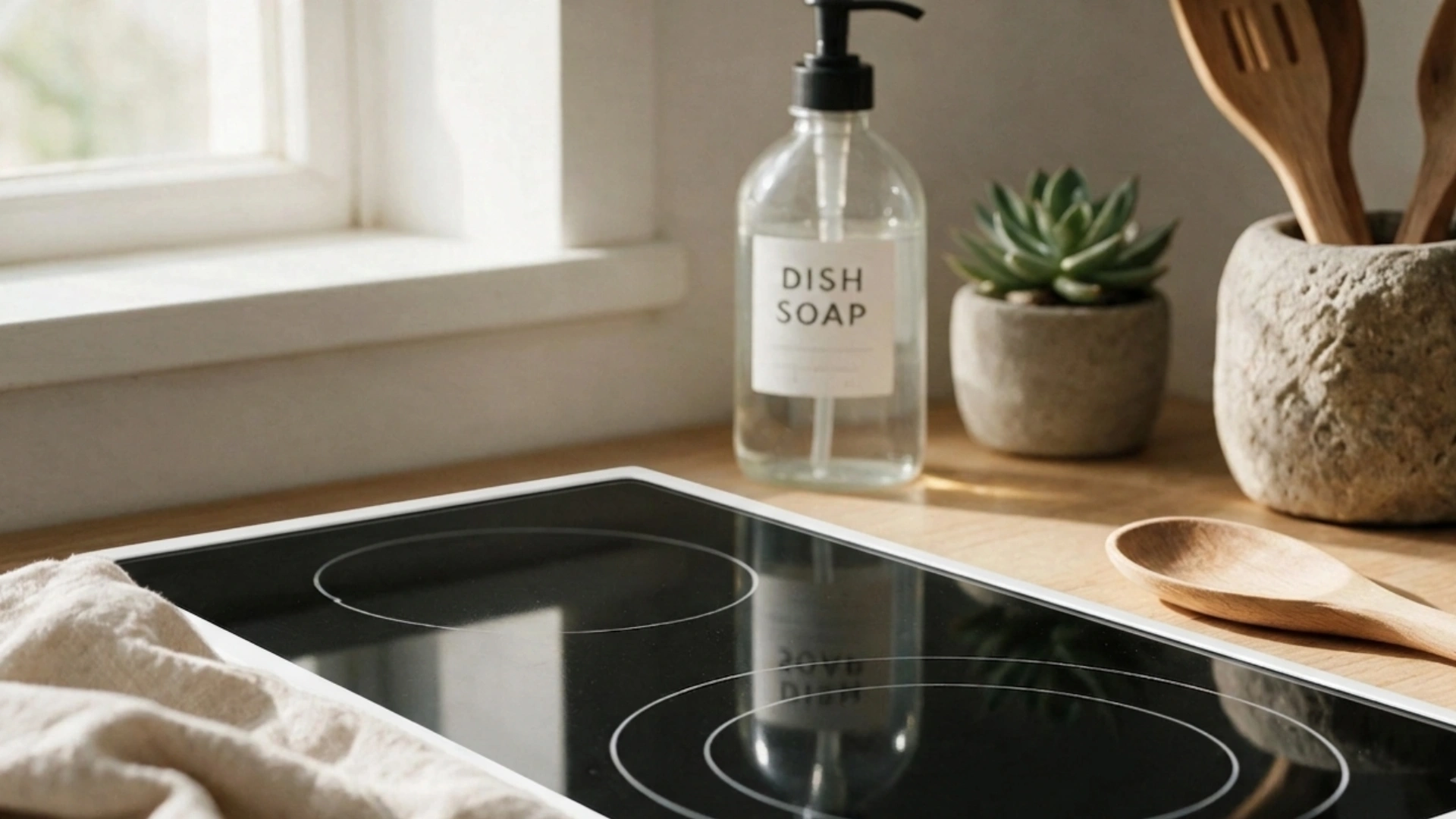
Finally, use a fresh, dry microfiber towel to polish the surface.
This eliminates any remaining stains and restores the glass’s original sheen. Additionally, a final buff helps you spot any areas that need a second pass.
In a single pass, this method removes the majority of daily dirt and lightly burned areas. Repeating steps three through six usually removes the remaining stains if they are older or deeper.
How to Get Rid of Tough Burn Marks Without Scratching?
After the initial cleaning, stubborn burn marks require a little more patience. After applying a coating of dish soap to the marks, mist them with white vinegar.
To completely soften the residue, let this mixture sit for half an hour. Carefully scrub only the burned area in tiny circles using the rough side of a sponge.
If markings remain, you can safely remove them without damaging the glass by using a plastic cooktop scraper held at a low angle. Avoid applying intense pressure in one place for an extended period, and move slowly.
If any residue remains, repeat the procedure.
What Not to Use on a Glass Stove Top?
Even with the best intentions, several popular cleaning products can dull or scratch a glass stovetop. Just as crucial as knowing the proper approach is knowing what to avoid. Avoid the following:
- Steel Wool or Metal Scouring Pads: They can slightly scratch the glass surface.
- Abrasive Powders: Over time, they can degrade the polish and leave lasting traces.
- Bleach– or Ammonia-Based Cleaners: Cleaners with bleach or ammonia bases can cause discoloration by dissolving the surface coating.
- Dry Paper Towels on Burnt Spots: Scrubbing dry can grind debris into the surface instead of lifting it.
Keep glass clean, smooth, and free of long-term damage by using soft materials and gentle techniques.
Daily and Weekly Maintenance
Most stains can be avoided with a quick wipe after each usage. Run a damp towel over the stove’s surface once it has totally cooled to absorb spills and splatters before they have a chance to solidify.
To remove grease buildup that daily wipes could overlook, do a gentle clean once a week using dish soap and a soft sponge.
Additionally, a weekly spritz of vinegar adds extra shine and keeps the glass streak-free. This tiny habit keeps your stovetop looking brand new for much longer, with fewer deep-cleaning sessions and less scrubbing later.
Conclusion
Glass stovetops don’t need expensive materials or extensive cleaning to look immaculate. Most stains and burned areas are easy to remove with baking soda, vinegar, and a little perseverance.
Over time, routine wipe-downs between deep cleanings make the job easier and help prevent stains from developing.
Learning how to clean a glass stovetop the right way turns a frustrating chore into a quick, simple task. A bright, streak-free stovetop is always just a few steps away when you have the right materials.
Frequently Asked Questions (FAQs)
1. How Do I Clean a Black Glass Stove Top?
Use the same baking soda and vinegar method, then buff with a dry cloth to avoid dull streaks on dark glass.
2. Can I Use Dawn Dish Soap on My Glass Stove Top?
Yes, Dawn works well for daily spills and grease, especially with a non-abrasive sponge.
3. How to Clean a Glass Stovetop Without Baking Soda?
White vinegar and dish soap alone can lift light stains, though baking soda works faster on tougher spots.