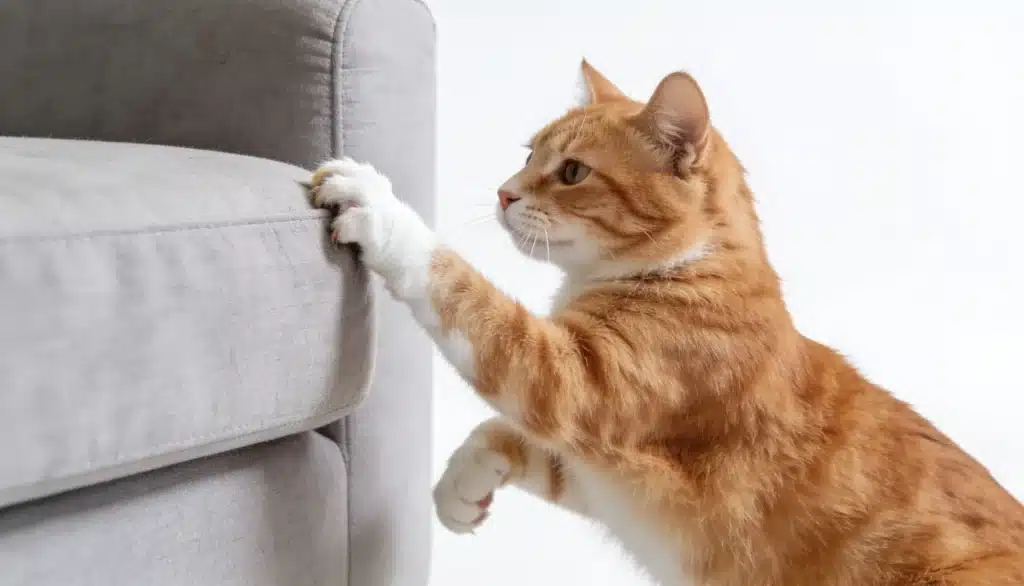
If your couch looks like it lost a fight, you already know the frustration.
Learning how to keep cats from scratching furniture starts with understanding why cats do it in the first place.
You can’t train this out of a cat. But you can steer it, put the right surface in the right spot, and the couch stops being the target
Why Cats Scratch Furniture in the First Place
Scratching is not bad behavior. Cats scratch to mark territory, both visually and with scent from glands in their paws.
The primary reason for scratching revolves around the following:
Claw Maintenance
Scratching helps cats shed the outer, dead layers of their claws so sharper, healthier nails come through underneath.
The furniture gets picked because vertical surfaces with textured or smooth fabric give their claws something to dig into and pull against.
Scent Marking
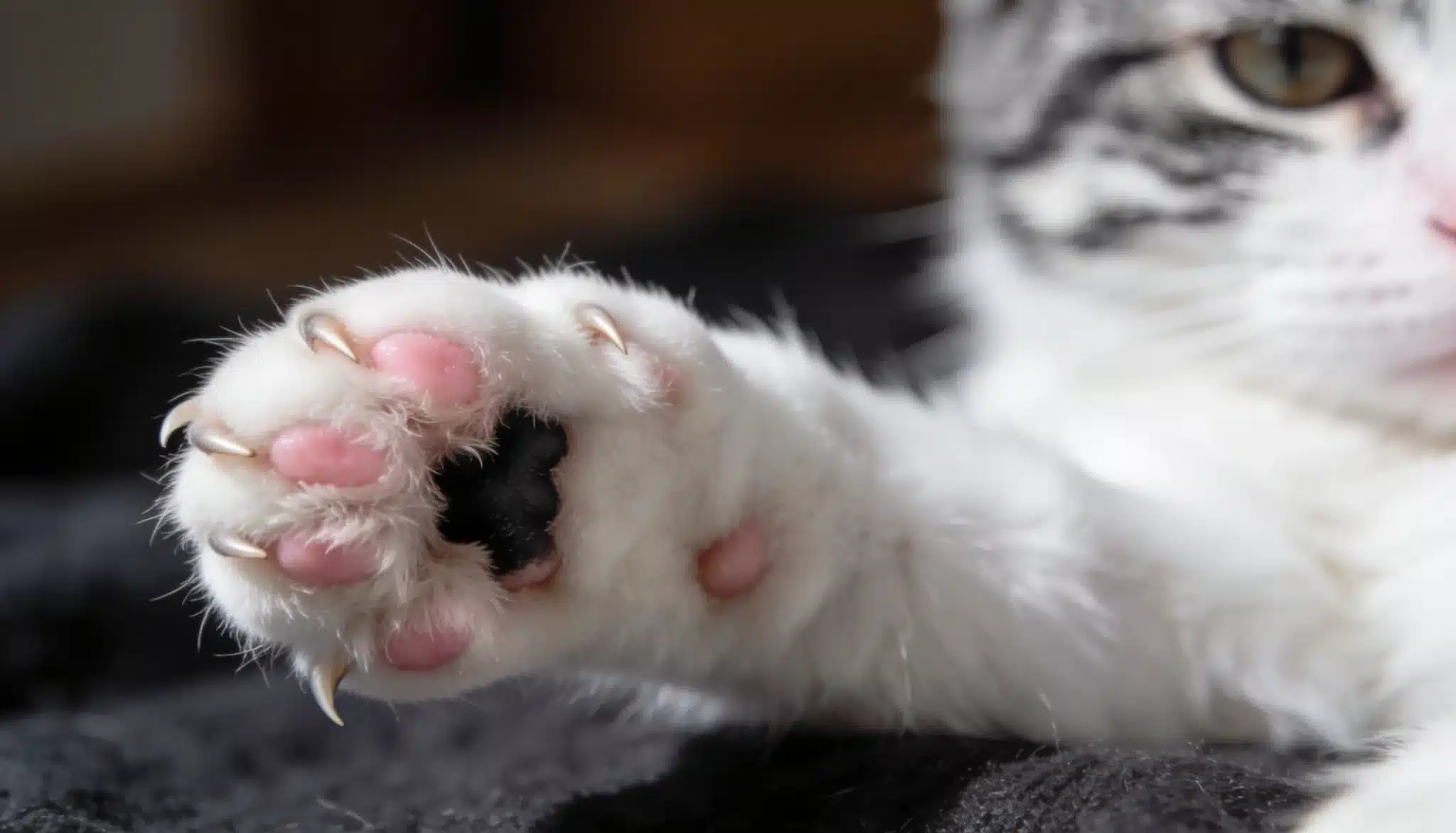
Cats have scent glands in their paws, so scratching leaves both a smell and a visible mark behind, basically a “this is mine” sign.
Spots that get used a lot, like couches, carpets, or a favorite chair, get marked most because it makes the space feel safer.
Physical Stretch
Scratching lets cats stretch their whole body, back, shoulders, and legs, especially right after waking up from a nap.
Furniture tends to be the right height for this kind of stretch, which is part of why they gravitate toward it over a short post.
Stress and Energy Release
Scratching gives cats a way to work off stress, extra energy, or excitement that’s built up with nowhere else to go.
A cat that isn’t getting enough playtime, or one dealing with noise or changes at home, may scratch more than usual as a result.
Boredom
Cats that don’t get much to do during the day, especially ones kept indoors full-time, often scratch just to pass the time.
It gives them something to engage with when there’s nothing else going on around them.
How to Keep Cats From Scratching Furniture?
The most effective way to keep cats from scratching furniture is to give them something better to scratch, placed exactly where they already want to scratch.
Surface
Start by figuring out what your cat prefers. Pay attention to the texture of the furniture they already target.
A cat that scratches a rough wooden leg may want a similar rough surface on a post. A cat that goes for soft carpet may prefer a horizontal scratcher instead of a vertical one.
Placement
Placement matters just as much as material. A scratcher tucked away in a spare room will likely get ignored. Put it right next to the furniture your cat already scratches, in a room where family spends time.
If you have more than one cat, add multiple scratchers around the house so no one has to compete for one.
Height is another detail people often miss. Many store-bought posts are too short for a cat to fully stretch its body while scratching.
A tall, sturdy post, close to three feet, gives your cat room to stretch the way it naturally wants to.
Once the scratcher is in place, make it worth using. Sprinkle catnip on it, or offer treats and praise when your cat tries it.
Never force your cat’s paws onto the scratcher. It can feel like a threat, leading them to avoid it completely.
How to Stop Cats From Scratching Furniture
Once you have a scratcher your cat likes, the next step is protecting the furniture while the new habit sticks.
Sticky Tape
Double-sided tape on furniture edges works well, since cats dislike the sticky feel under their paws, but it does not hurt them.
Physical Covers
Aluminum foil or a thin throw blanket can also work as a temporary cover over the exact spot your cat targets.
Replacement Sprays
Thin fabric tends to work better than thick fabric, since a thick cover can still feel satisfying to scratch through. Citrus sprays can help too, since most cats avoid that smell.
Pheromone sprays, which mimic the scent cats leave when they rub their face on furniture, can also discourage scratching in that same spot.
Skip punishment entirely. Yelling, clapping loudly, or spraying your cat with water does not teach them to stop scratching the furniture.
Nail Care Tips to Reduce Damage
Trimming your cat’s nails every few weeks reduces the damage from scratching, even if it does not stop the behavior.
Cats only need their front claws trimmed, since those do most of the damage. Soft nail caps are another option.
They are temporary, usually lasting four to six weeks, and let your cat scratch normally without damaging the furniture underneath.
Things that Can Make This Situation Worse
Habits work against you without you noticing. They can push your cat back toward the couch instead of away from it. This is what to skip if you want the new routine to stick.
1. Punishing or Yelling
If you scold your cat after (or during) a scratching session, it doesn’t teach them to stop the act. Rather, they just start to see you as unpredictable, and will scratch more when you’re not around.
2. Using Spray Bottles
A quick squirt of water might interrupt the flow, but it does nothing to fix the reason your cat is scratching in the first place.
Do it enough, and your cat gets jumpy around you, or just waits until you leave to go back to the couch.
3. Buying Small, Unstable Scratchers
If a post wobbles or tips the second your cat leans into it, that’s the last time they’ll bother with it.
A shaky scratcher loses to a couch every time, since the couch never moves and always holds up.
4. Placing Posts in Hidden Corners
A scratcher stuck in a closet or spare room might as well not exist.
Cats scratch where they hang out, not where you’d prefer to store it out of sight, so put it somewhere your cat already spends time.
5. Removing Scratchers too Soon
Just because your cat used the post a few times doesn’t mean the habit’s locked in. Pull it away too early, and there’s nothing left to stop them from drifting right back to the furniture.
What Real Cat Owners Do when Nothing Seems to Work

In the Reddit thread, a frustrated cat parent asked r/CatAdvice for real solutions after nothing seemed to work.
Commenters offered the standard solutions:
Sisal posts placed near the target furniture, double-sided tape, nail trims, and reminders that yelling or squirting water only stresses cats out without solving anything.
But several replies pointed to how one chair becomes the fixation, no matter how many posts you scatter around the house.
That’s because the chair isn’t random. It smells like home base to your cat now, and every scratch just tops off a scent mark that’s already there.
A trick that works better for some owners: cover only the scratched section with a thin throw, rather than the whole piece, so the furniture still fits the room.
Others swear by homemade deterrents like diluted garlic or lemon water.
Nobody’s run a real study on garlic water; it’s a forum trick, not science, so test it on a hidden patch first since it can stain just as easily as it deters.
And if the scratching turns excessive or seems tied to stress, a certified animal behaviorist can help pinpoint the cause and build an actual plan.
Conclusion
Learning how to keep cats from scratching furniture is really about meeting your cat halfway.
Give them a scratcher that matches what they already like, put it where they will actually use it, and protect your furniture while the habit builds.
With a little patience, your cat gets to scratch the way nature intended, and your furniture gets to stay in one piece.
Frequently Asked Questions (FAQs)
1. What Kind of Material Will Cats Not Scratch?
Materials such as canvas, top-grain leather, and microfiber offer a balance and are the least likely to be scratched.
2. Which Homemade Spray to Stop Cats from Scratching Furniture?
Keep cats away from furniture by spraying a diluted mixture of distilled water, citrus (lemon juice), and a few sprigs of rosemary
3. Can You Teach a Cat Not to Scratch Your Furniture?
The best tactic when dealing with scratching is not to try to stop your cat from scratching, but instead to teach them where and what to scratch.