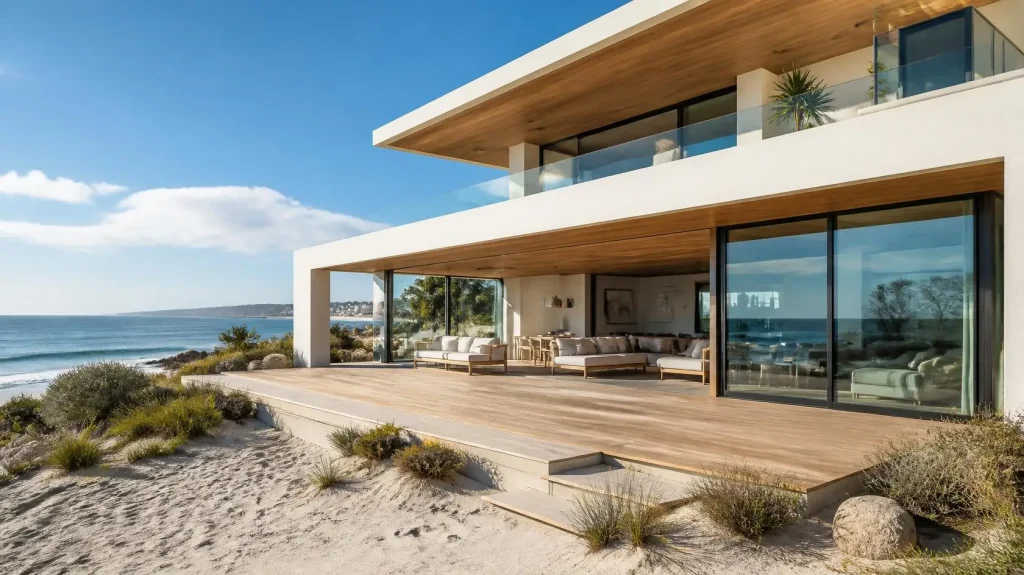
A beach house is defined by clean lines, natural materials, and a direct connection to the surrounding landscape.
It moves away from decorative excess and focuses on what the setting already provides: light, water, and open space.
Some styles use weathered wood, white concrete, and large glass panels facing the water.
Open floor plans reduce visual clutter, large glass panels frame the view, and natural materials like timber, concrete, and stone hold up in coastal conditions.
The color palettes stay neutral, furniture sits low, and every design decision points toward the water, not away from it.
Modern Beach House Interior Design Ideas
The interiors work best when every choice serves the space and the setting. These ideas cover the materials, layouts, and details that actually make a difference.
1. Open Floor Plans
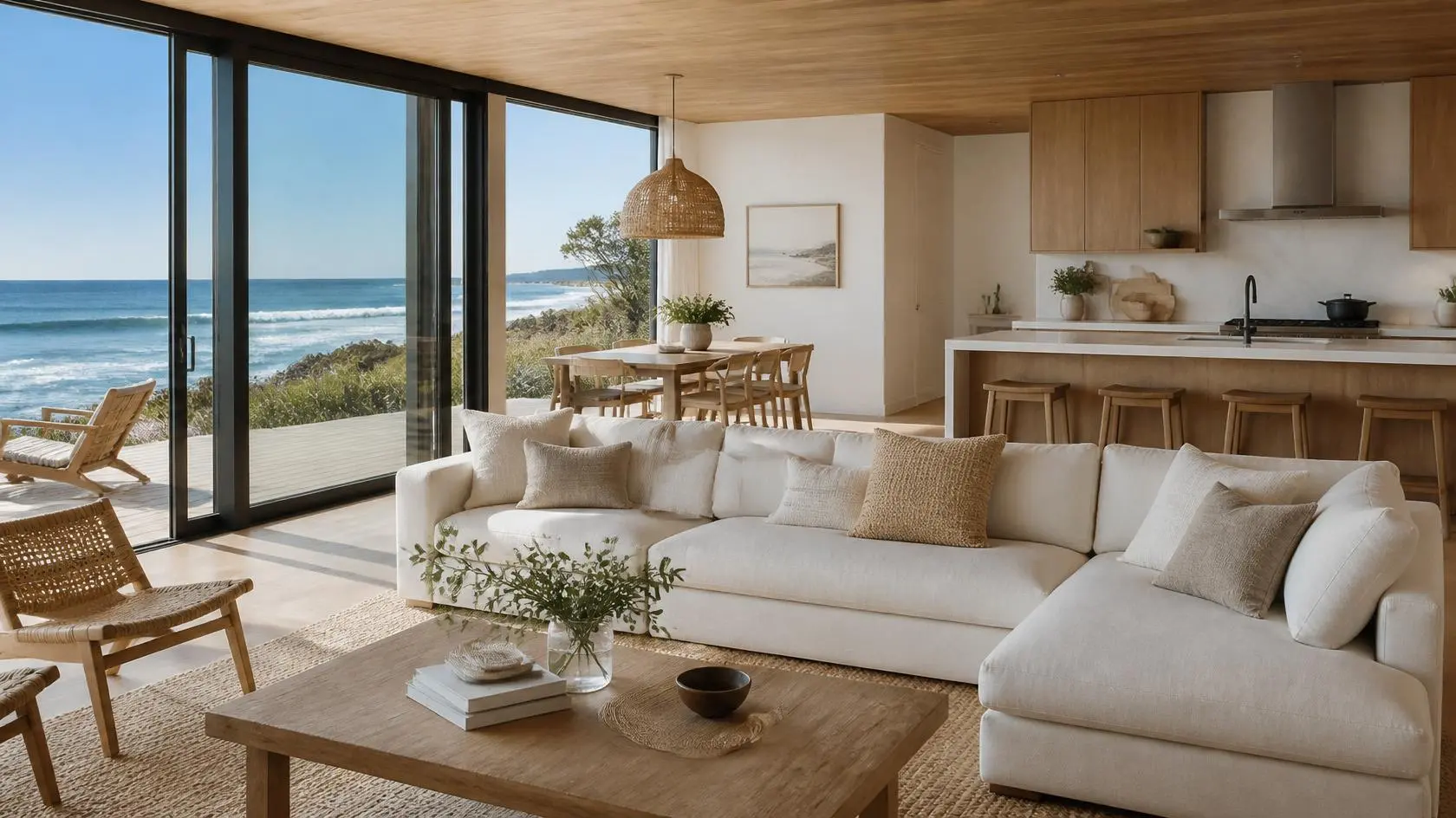
Removing walls between the kitchen, dining, and living areas is a standard move in modern beach homes.
It pulls natural light deeper into the space. Air moves more freely, and the connection to the view outside stays strong from every angle.
2. Natural Wood Finishes
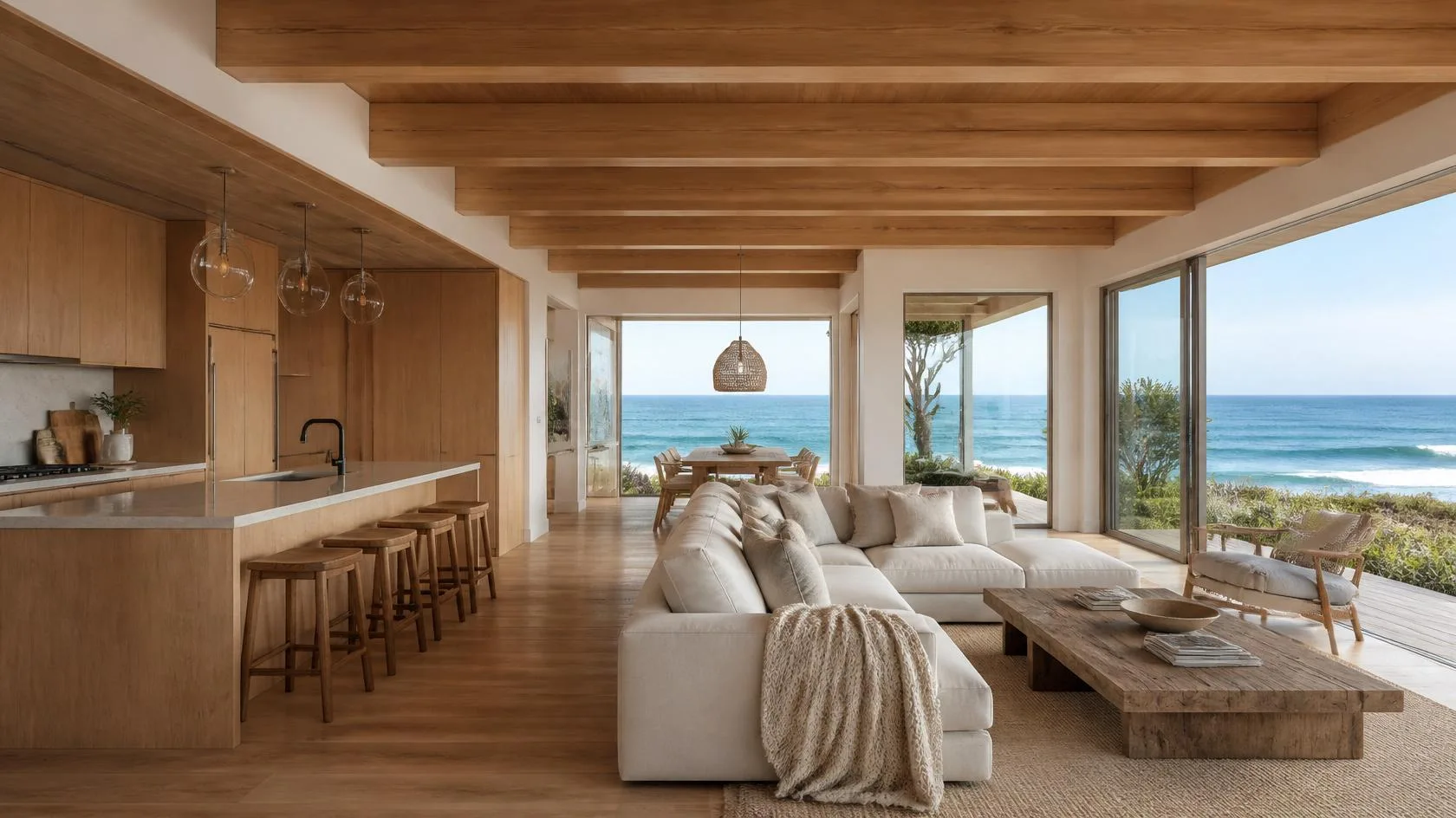
Salt air strips painted finishes faster, and raw teak, white oak, and cedar hold up better in humid coastal conditions.
These materials develop a natural grey-silver tone over time rather than peeling or flaking. That color shift is part of the design, not a sign of wear.
3. Built-In Storage Solves
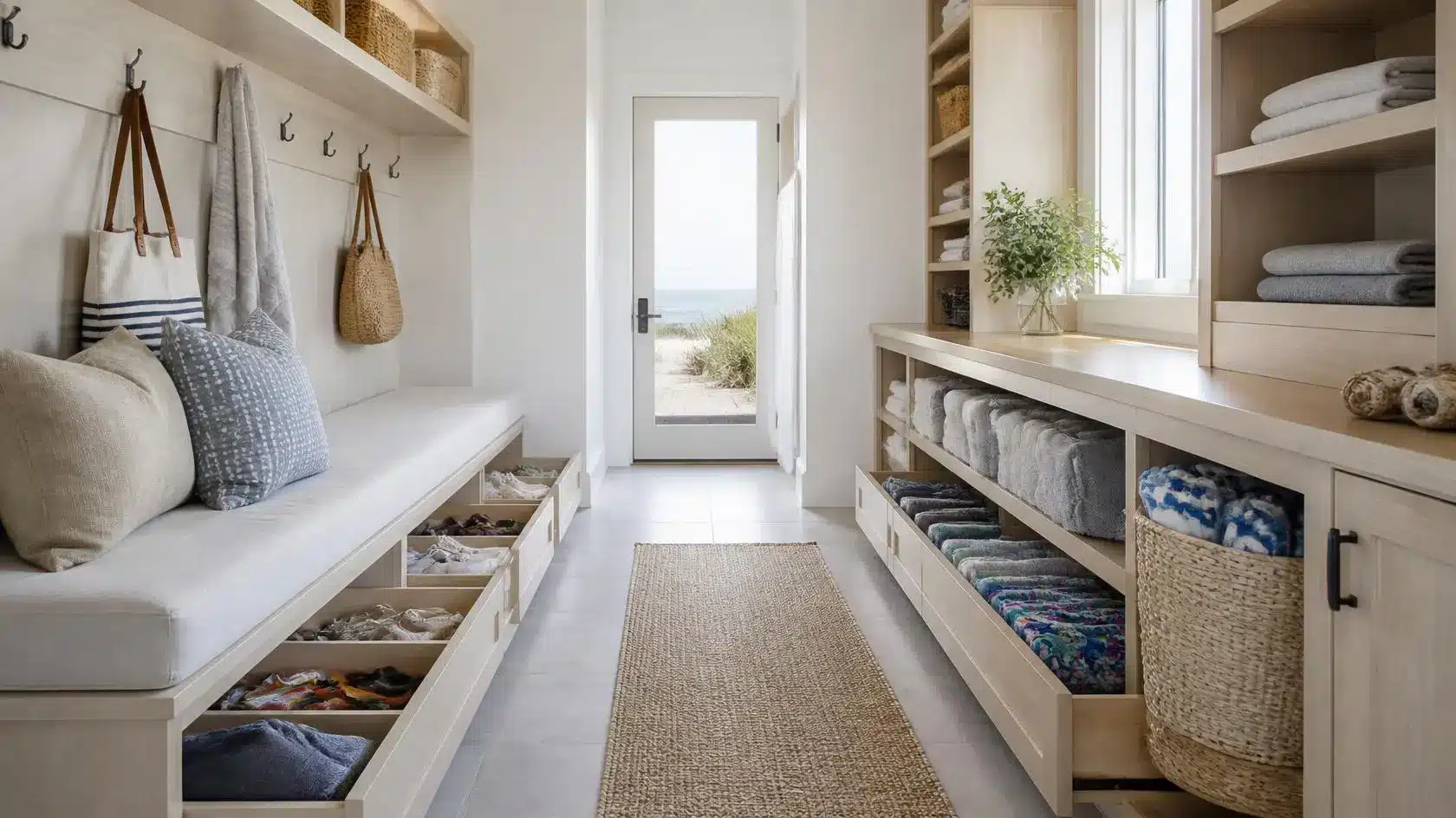
Sand, towels, sunscreen, and wet gear add up quickly in a home near the water. Built-in benches with hidden compartments near the entry handle wet shoes and bags.
Custom shelving in the utility room keeps gear out of the main living areas.
4. Large Glass Walls
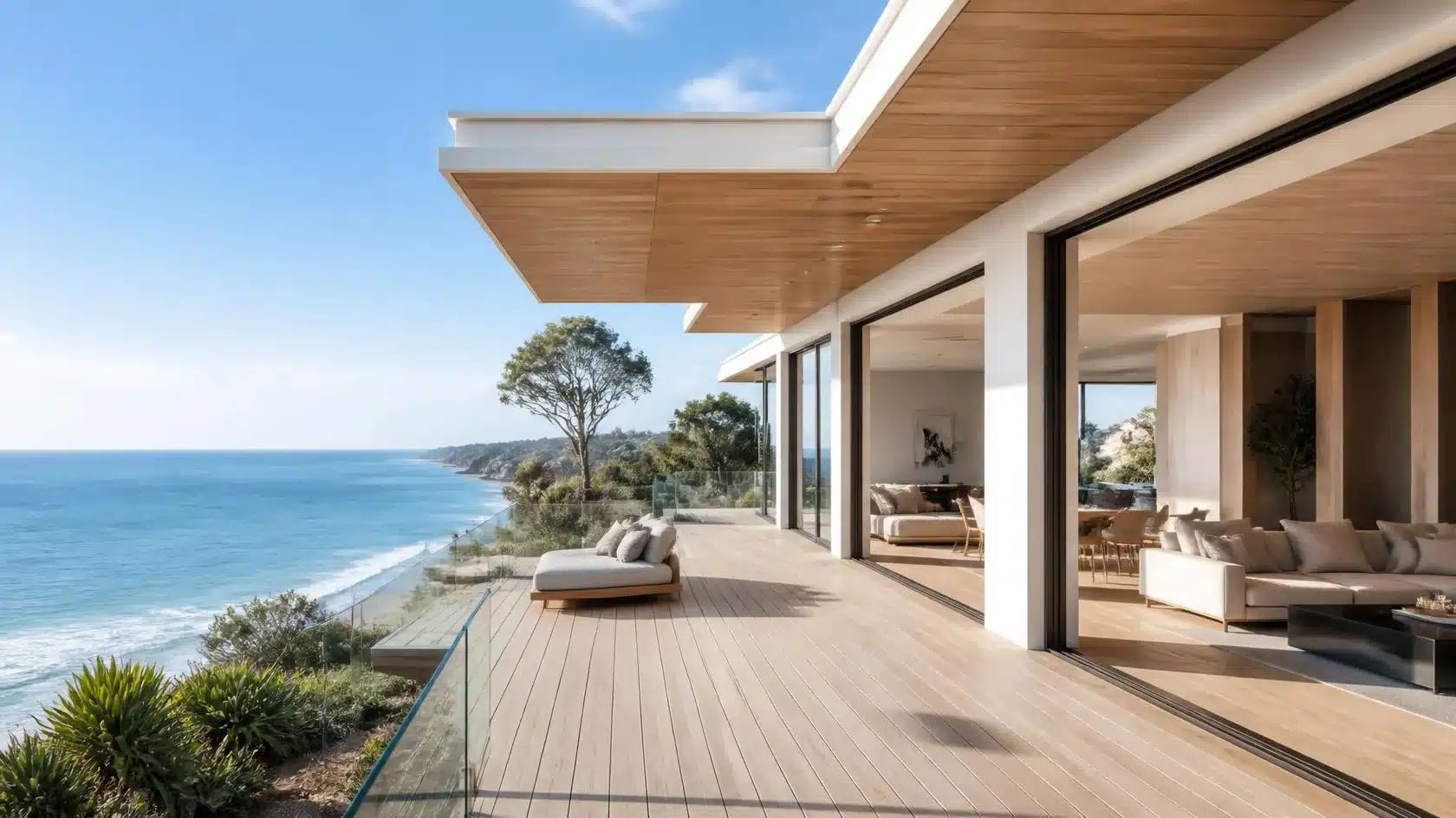
Floor-to-ceiling glass panels replace the need for decorative wall treatments. They pull the water, sky, and landscape directly into the room.
Sliding glass doors along the rear wall open the living area to the deck in seconds. A south-facing glass wall can also reduce heating costs in cooler months.
5. Indoor Outdoor Spaces
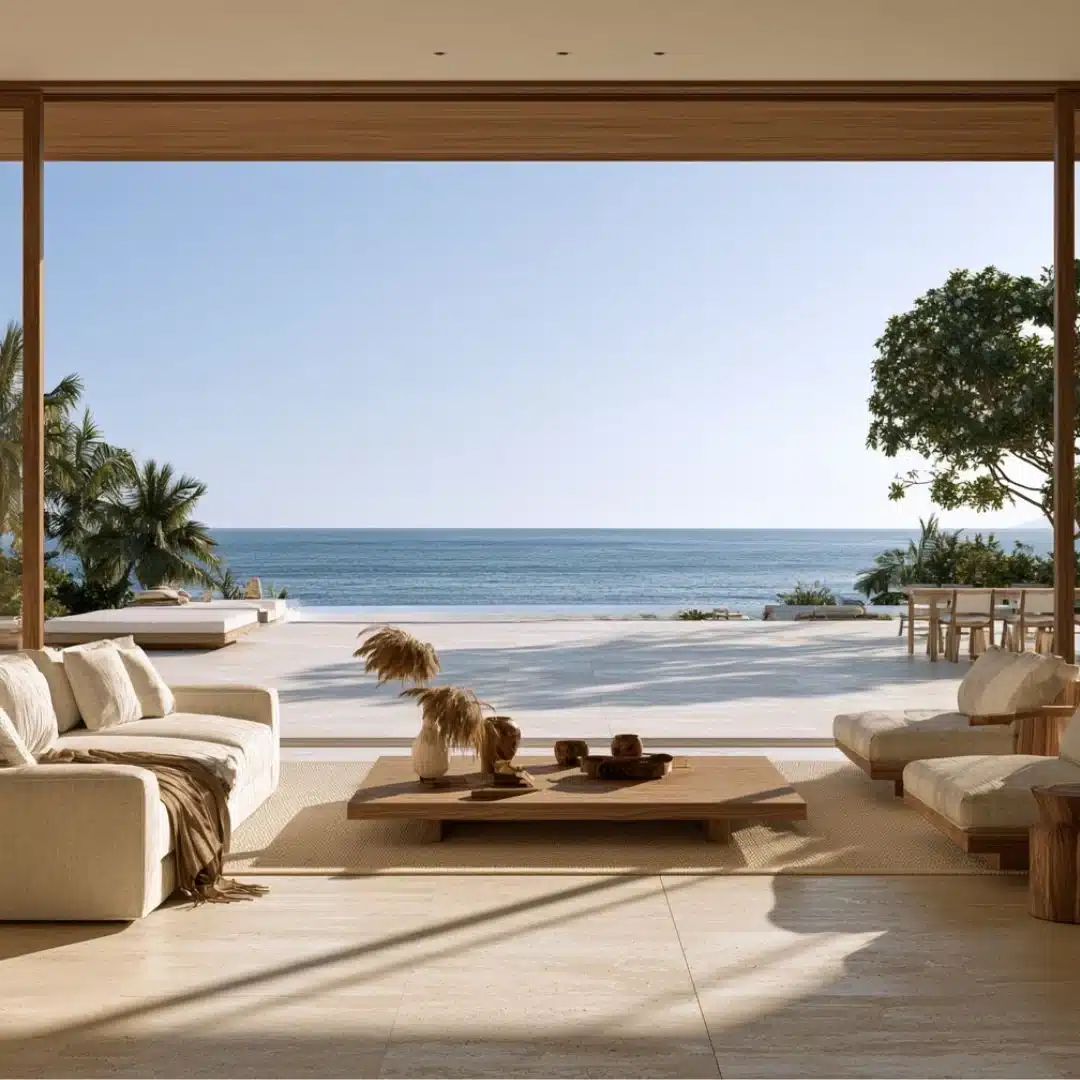
The strongest beach house interiors treat the outdoor deck as a second living room. Matching floor materials inside and out visually connects both spaces.
Outdoor sofas with weather-resistant cushions should be as comfortable as the ones inside. That continuity separates a well-designed beach house from one that just has a view.
6. Linen and Cotton Beat
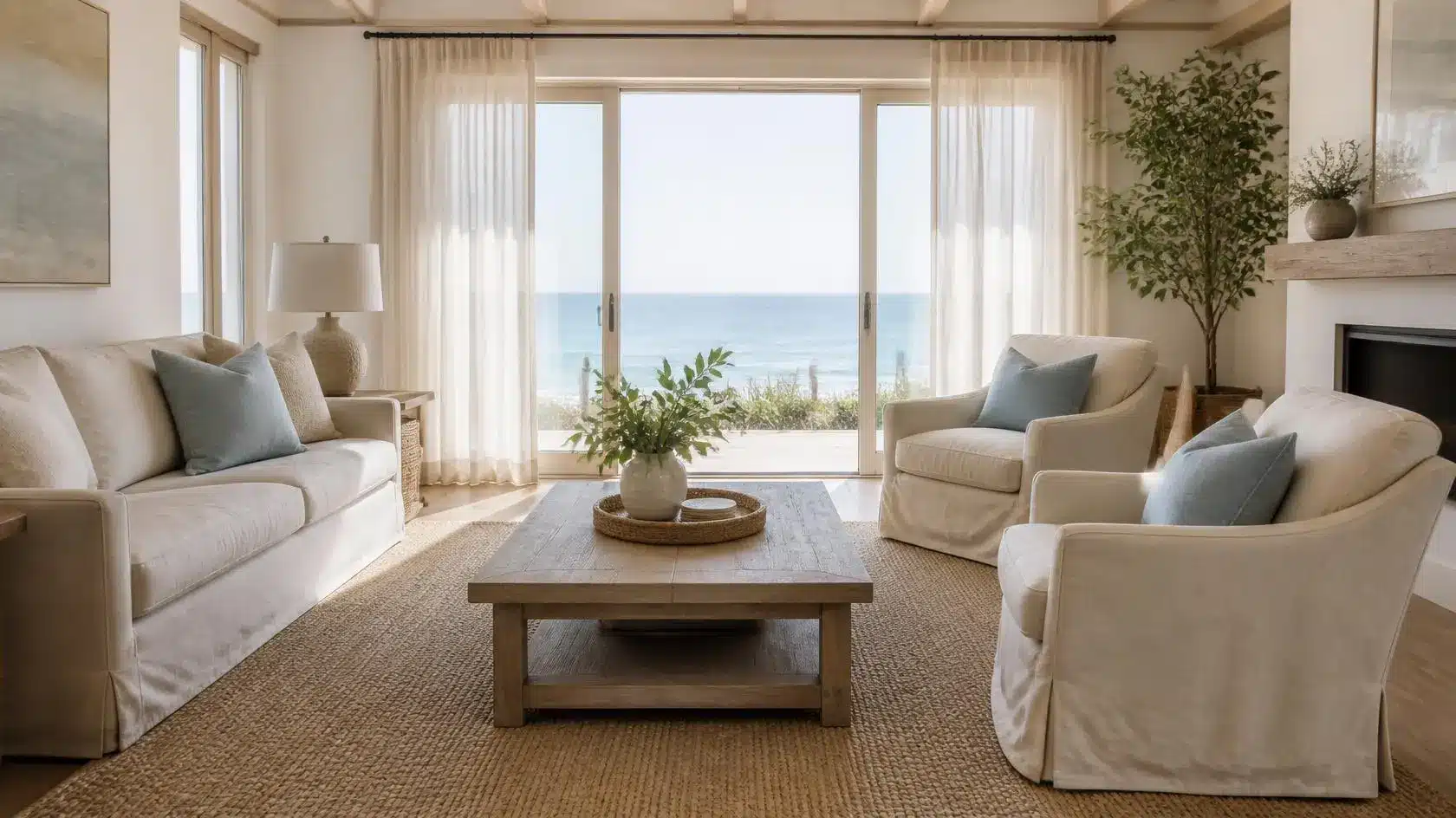
Synthetic fabrics trap heat and hold moisture longer than natural ones.
Linen is breathable, fast-drying, and gets softer with every wash, and cotton slipcovers on sofas and chairs make cleanup easy after sandy use.
Both materials look relaxed rather than overdressed, which suits the coastal setting well.
7. Rattan and Cane Furniture
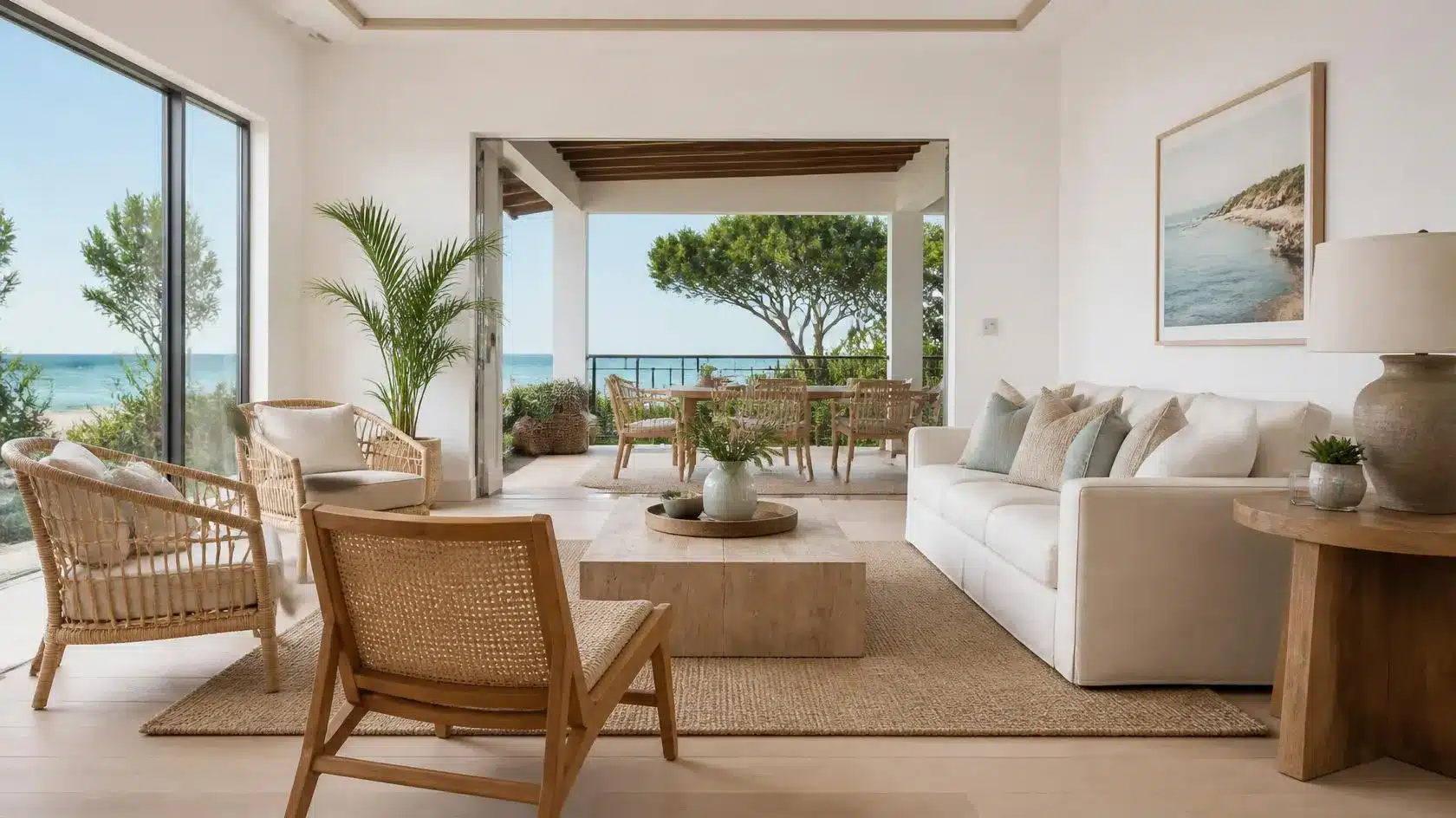
Rattan chairs and cane-backed seating let light pass through and keep rooms feeling open.
Both can be used in living areas and covered outdoor spaces, and hold up in humid climates when sealed with a UV-protective finish.
8. White and Sand Tones
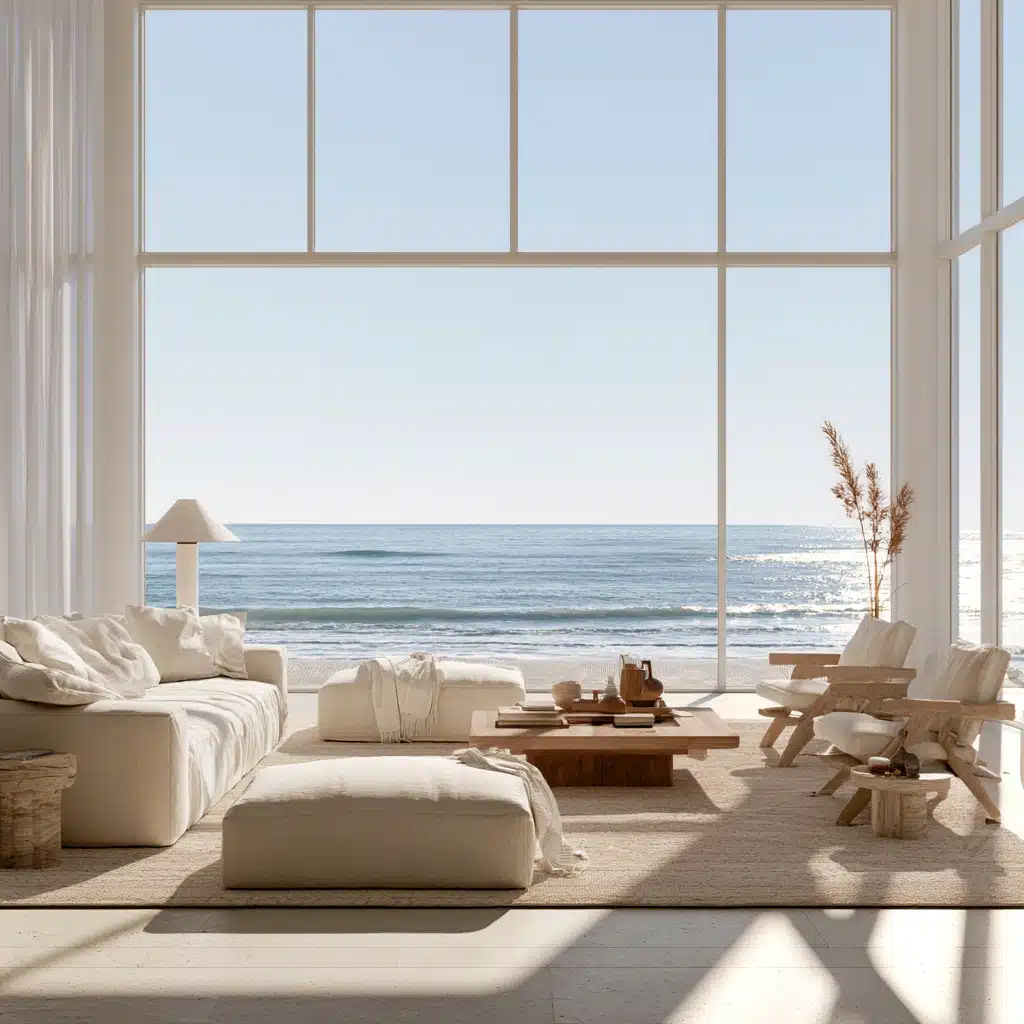
White walls reflect light and make rooms feel cooler in summer heat.
Sand, warm beige, and off-white tones keep the space grounded, and these colors go well with every wood tone and natural material.
9. Concrete Floors
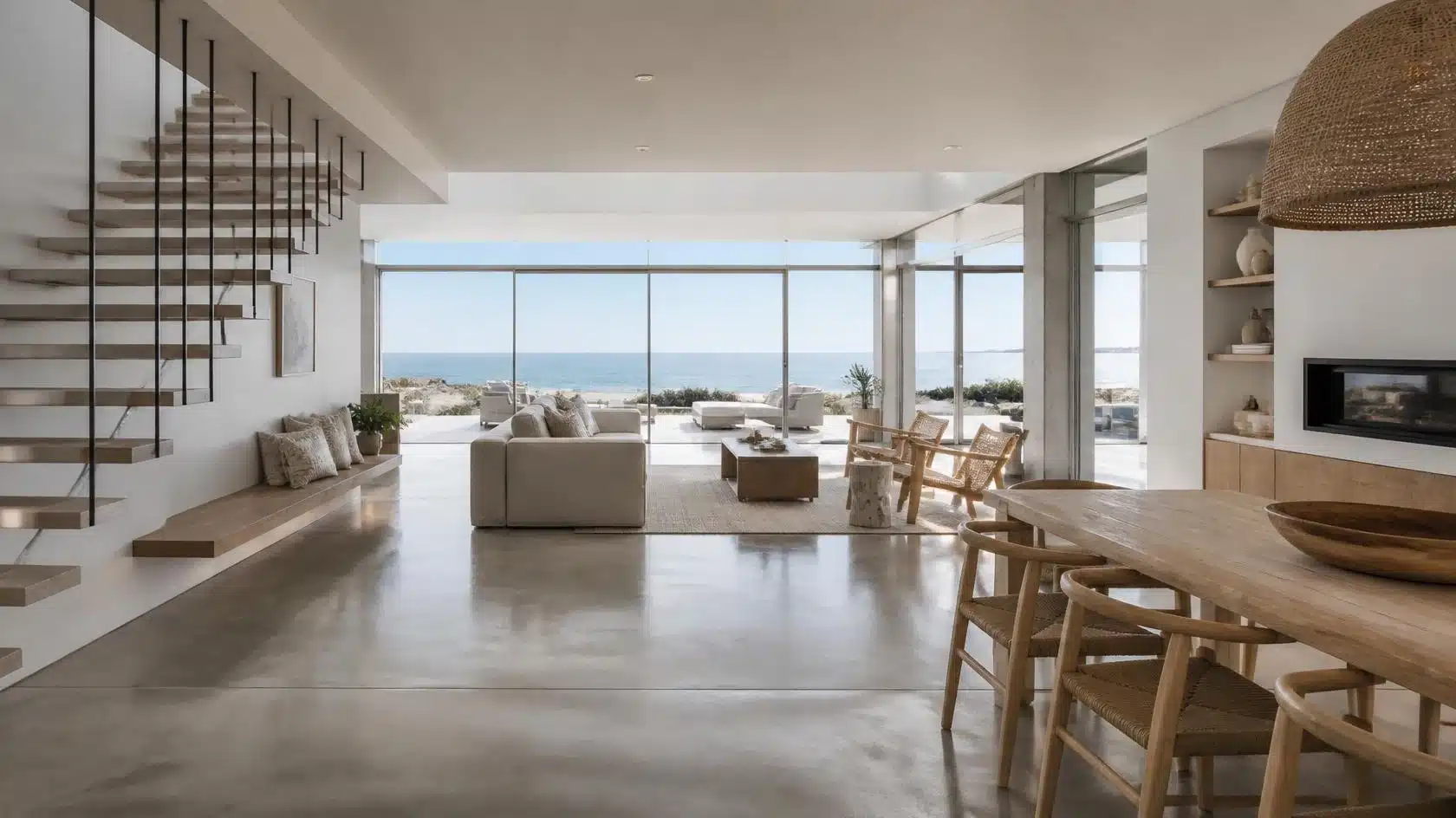
Polished concrete is one of the practical flooring choices for a beach house as it resists moisture, doesn’t trap sand between boards, and cleans in minutes.
You can add radiant heating beneath the slab, as it helps to keep the space comfortable underfoot in cooler months.
A matte or honed finish shows fewer scratches than a high-gloss surface.
10. Coastal Art Works
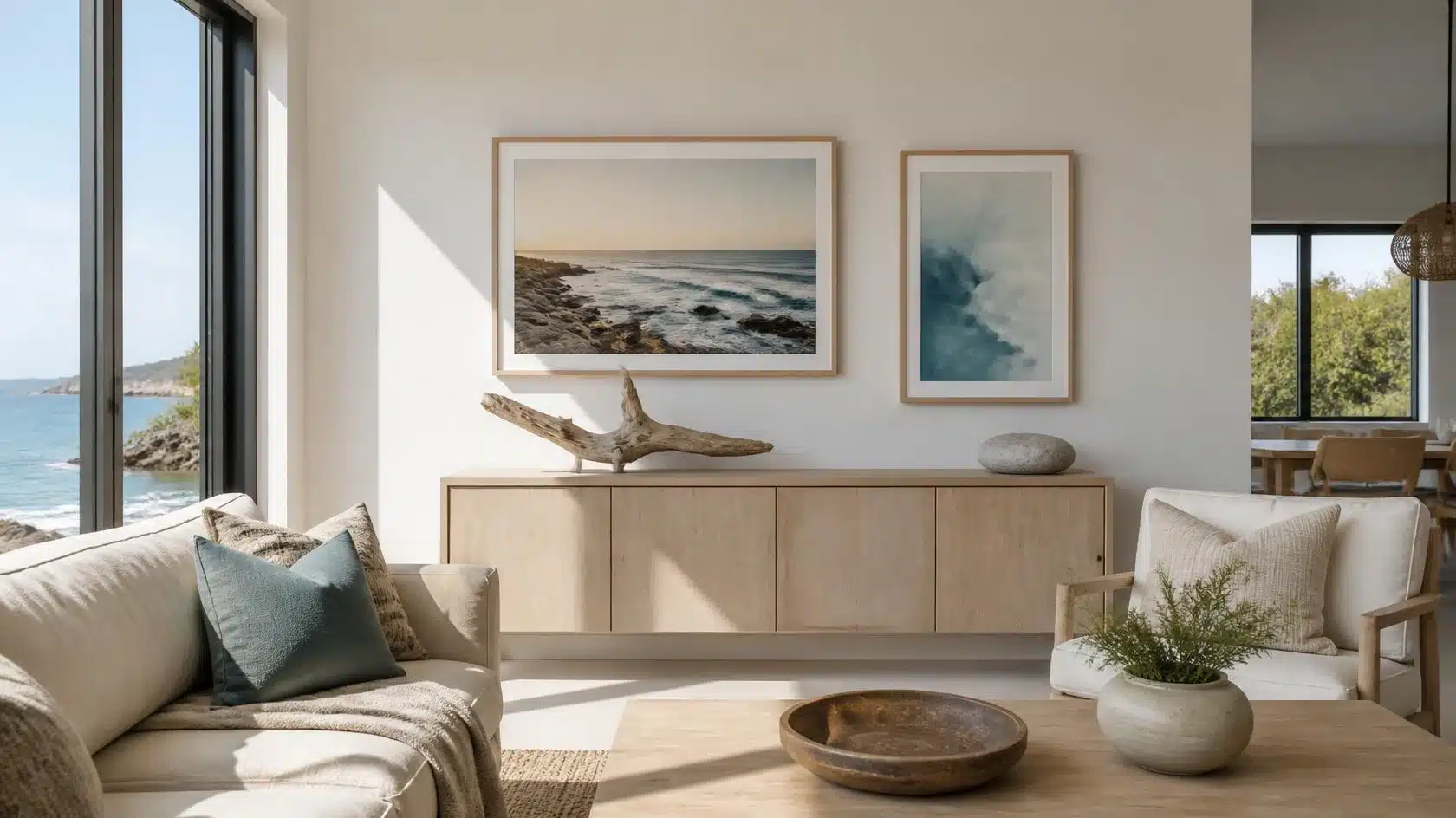
Framed photographs of local coastlines, abstract blue-green prints, and driftwood sculptures all work well in beach interiors.
Two or three strong pieces have more impact than a wall covered in ocean-themed prints.
11. Low-Profile Furniture
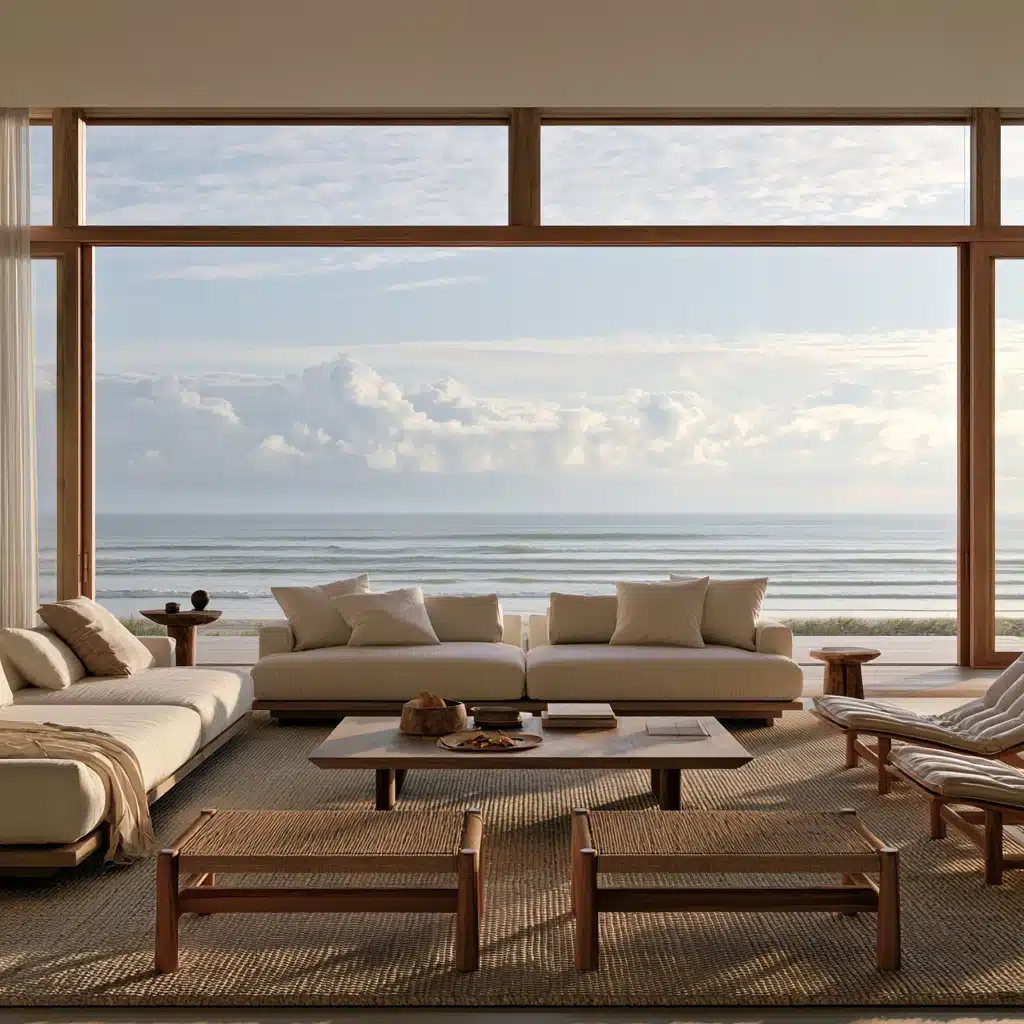
Sofas and chairs that sit close to the floor don’t interrupt sightlines to the water. A low sectional, paired with a flat coffee table, keeps the main living area visually open.
This furniture scale also suits rooms with lower ceilings, which is common in single-story beach homes.
If the furniture blocks the window from a seated position, it’s too tall.
Small Modern Beach House
And if you have a small house, you don’t have to compromise on what you want or how you want to decorate it.
The right layout, materials, and design choices create a compact beach house.
12. Compact Coastal Cottage
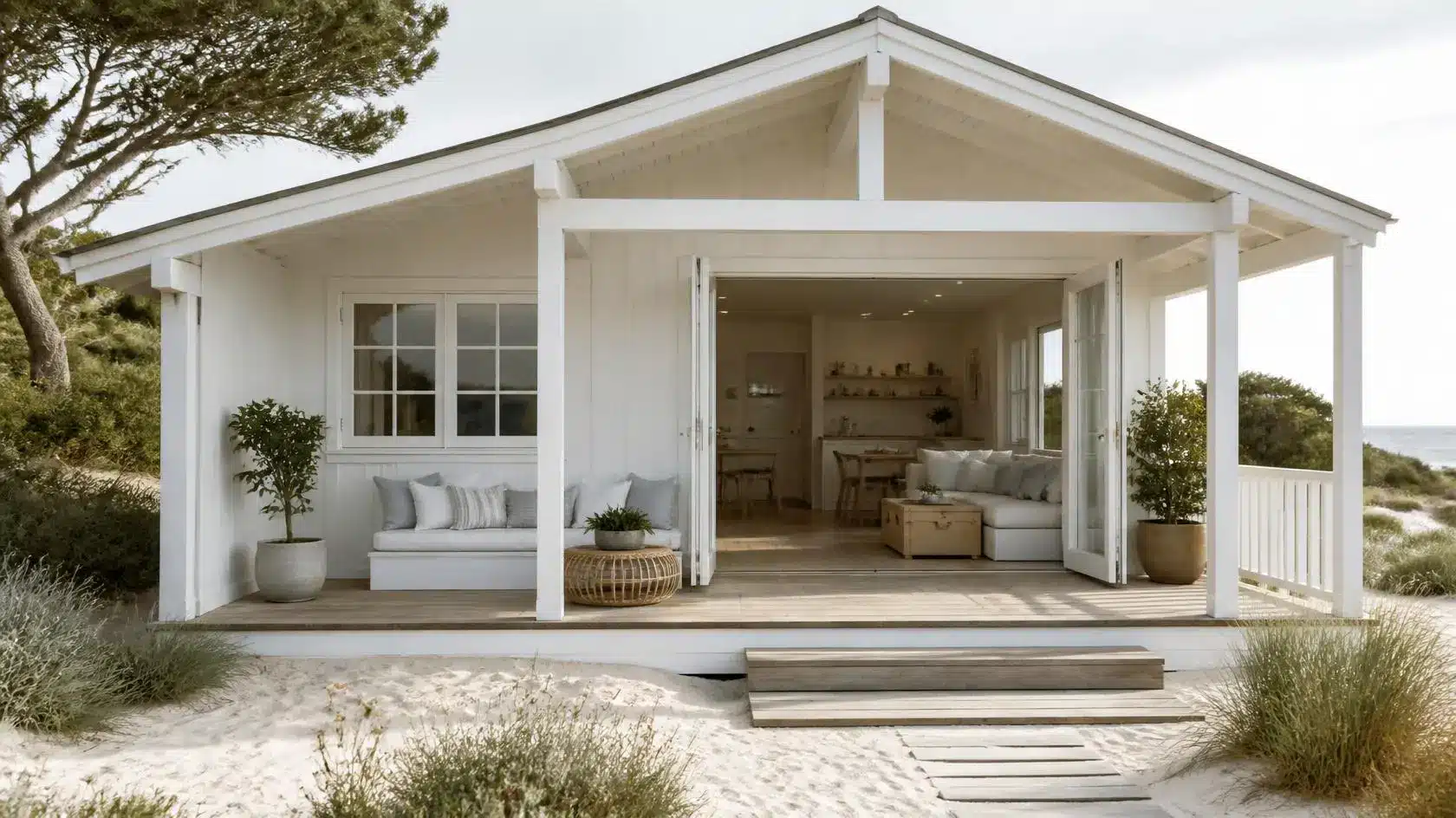
A small beach cottage with white-painted timber walls, a single open living area, and a covered front porch keeps the layout simple.
Homes in the 600 to 900-square-foot range benefit most from built-in storage and furniture that has storage, too.
13. Single-Story Glass Home
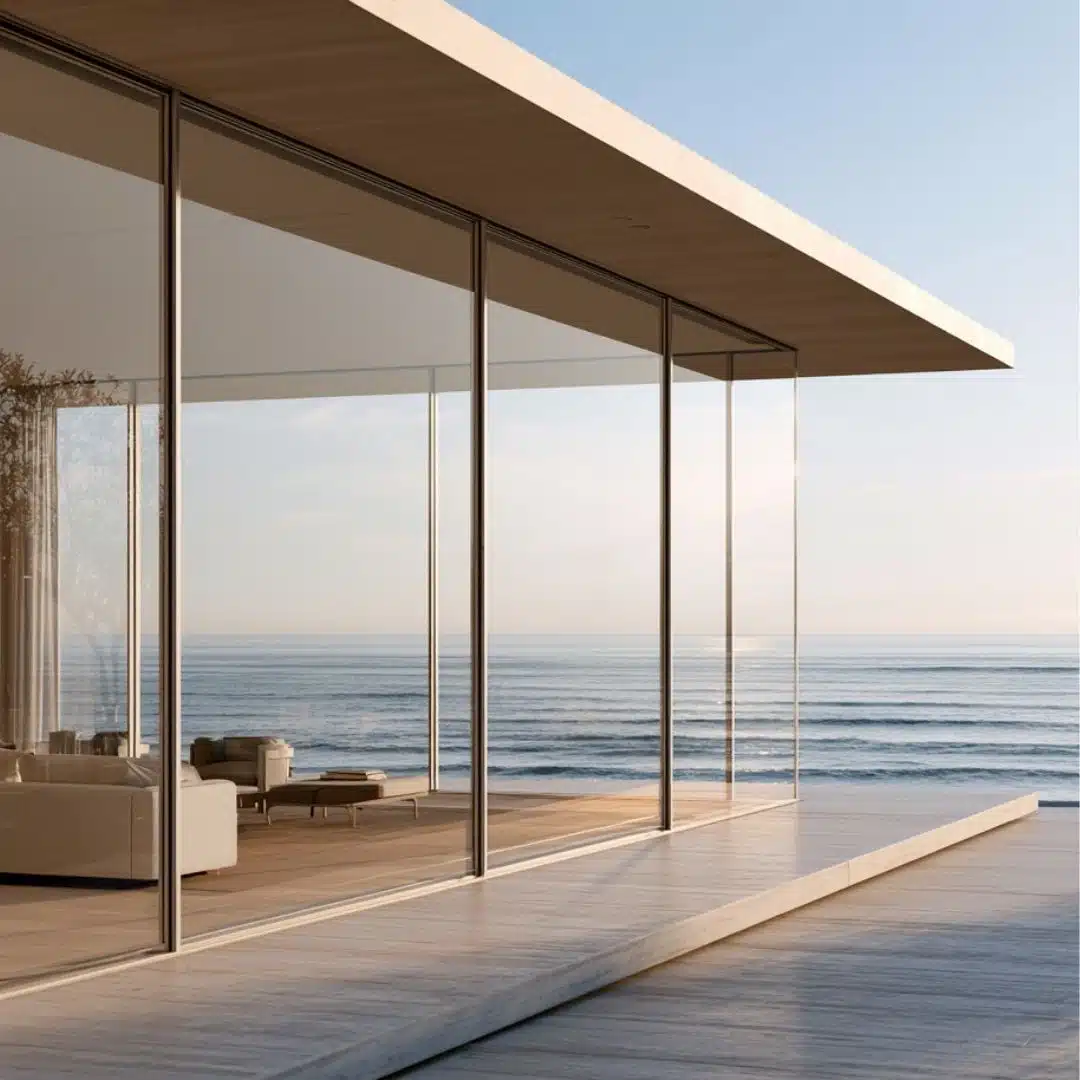
A single-story beach house with a full glass front wall makes a 700-square-foot space feel larger.
Keeping interior walls to a minimum and using sliding glass doors instead of solid ones maintains an open feeling throughout the day.
14. Studio-Style Beach Retreat
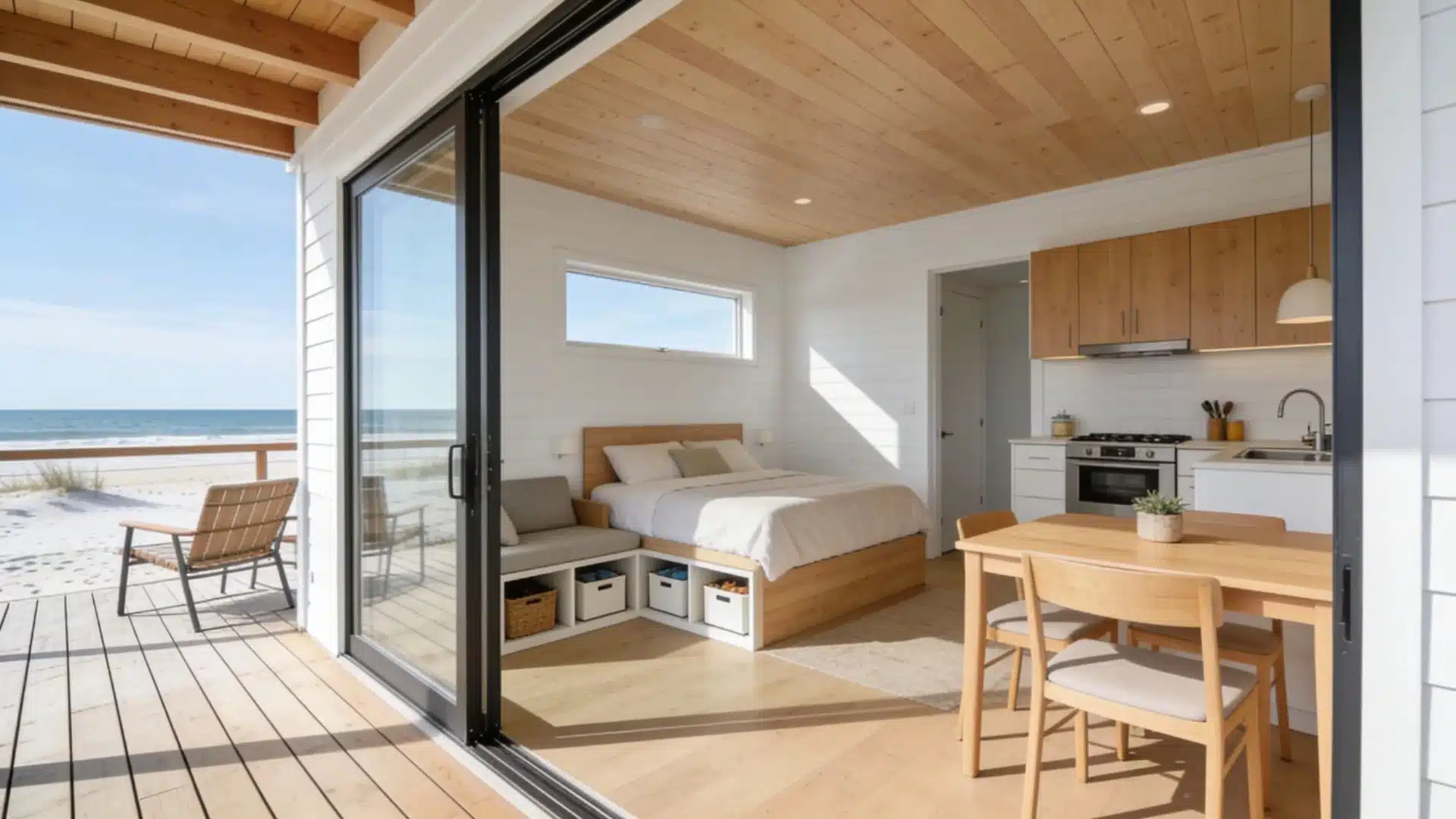
A studio layout, one open room combining sleeping, kitchen, and living space, suits short-stay coastal properties well.
At under 500 square feet, this layout works best with a covered deck that doubles as usable living space.
15. Narrow Lot Beach
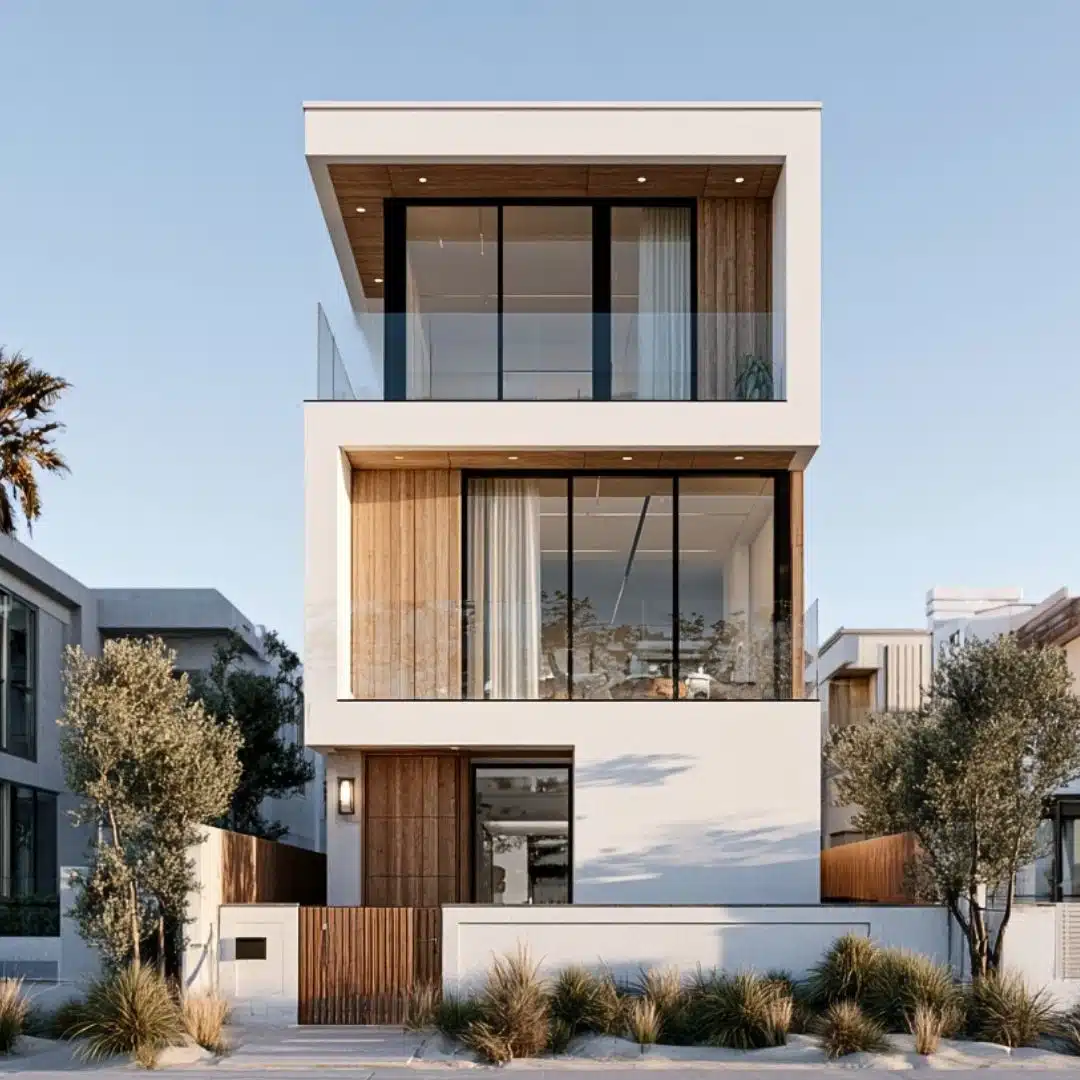
Narrow coastal lots, typically 20 to 30 feet wide, call for a vertical layout rather than a wide footprint.
Two or three stories with a small floor plate keep the home within the lot boundary while maximizing square footage.
16. Prefab Modular Beach Home
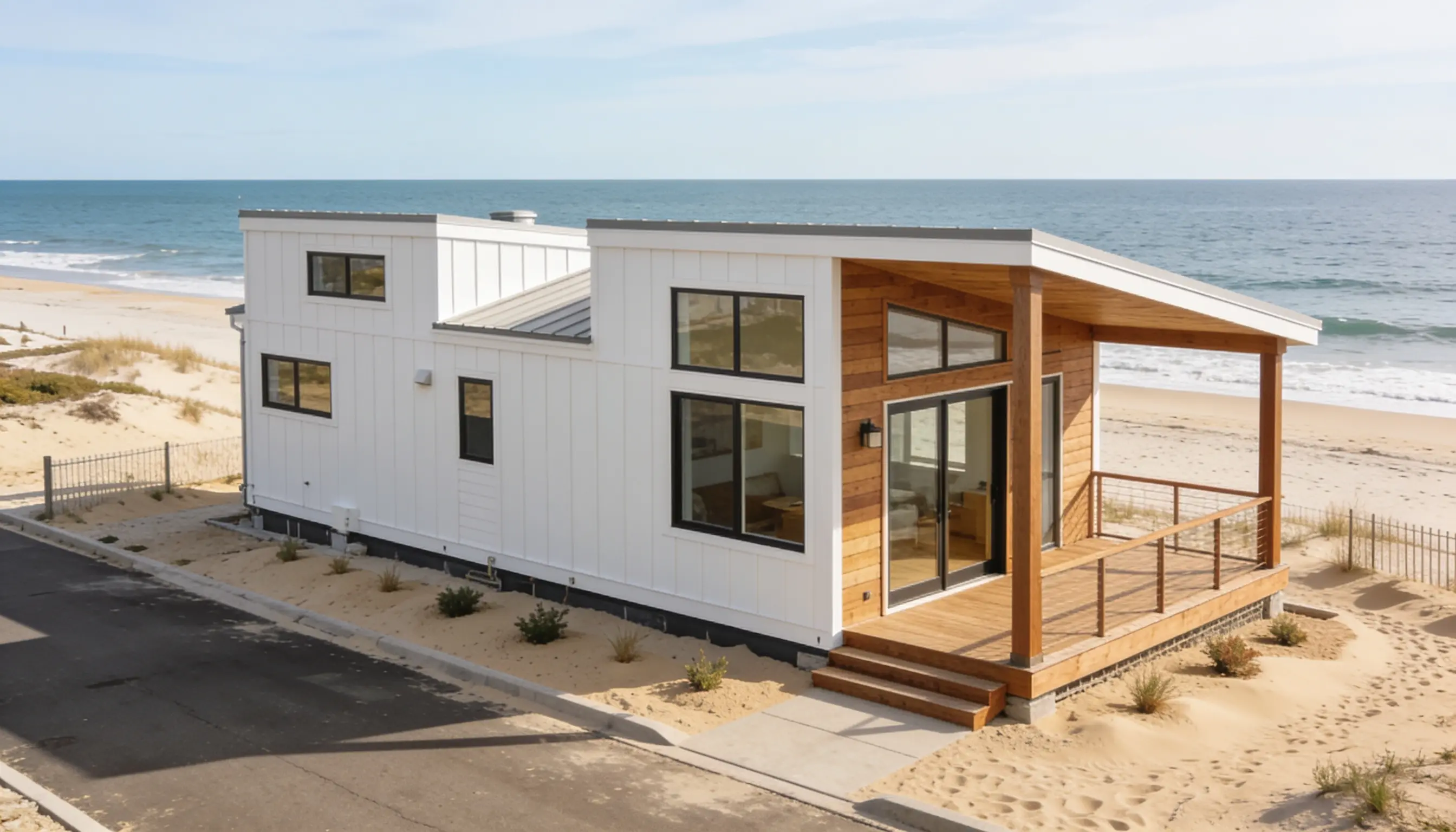
A prefabricated modular home reduces build time on coastal sites with limited access.
Units range from 400 to 800 square feet and arrive with insulation, windows, and fittings already installed. Factory-built panels handle coastal humidity better.
Modern Beach House Exterior Ideas
The exterior is the first thing anyone sees, and on a coastal property, it takes a beating. These ideas cover the materials and details that hold up and look right when done.
17. Raised Foundations
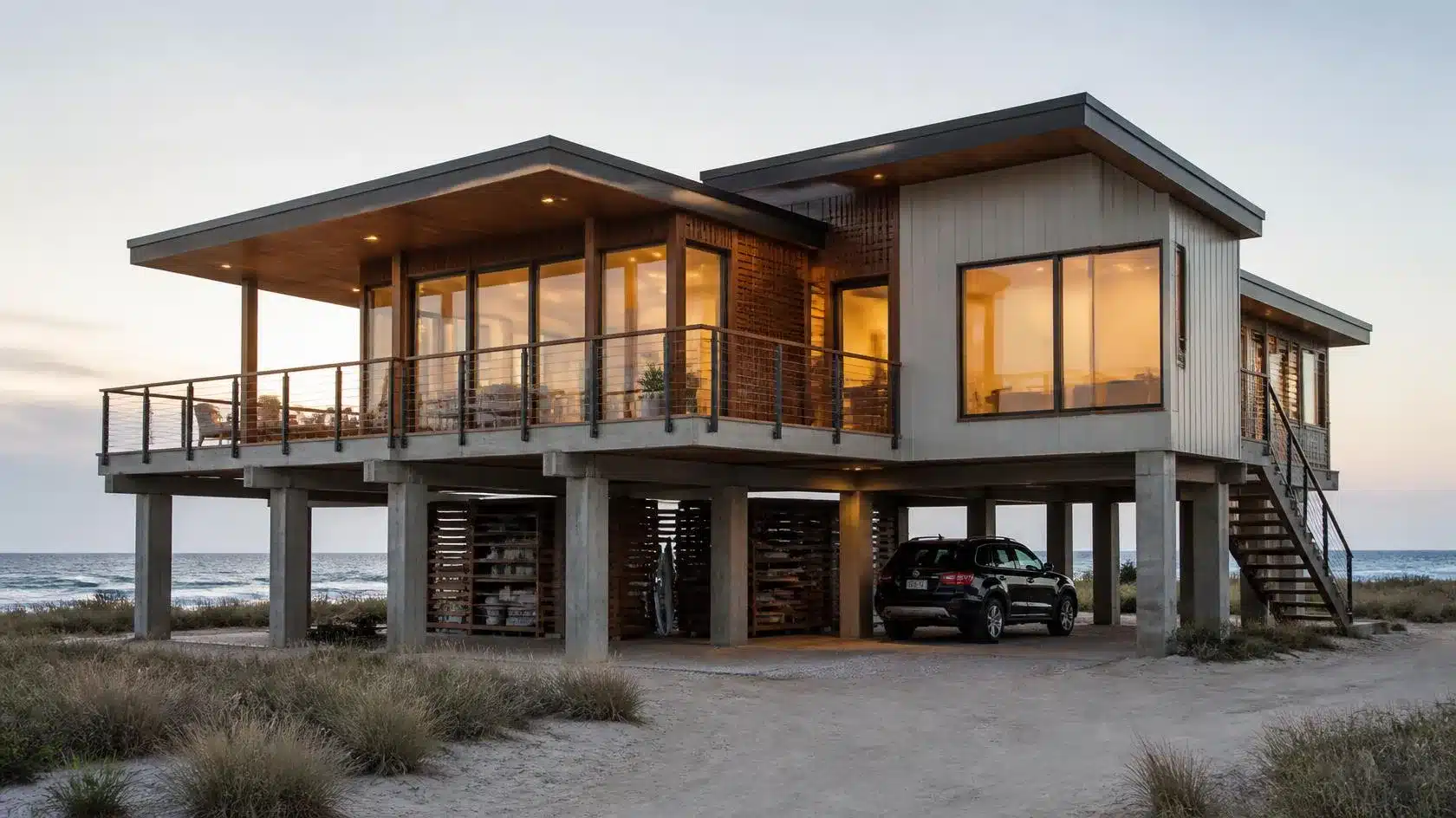
Building on stilts or a raised concrete foundation protects the structure from storm surges and tidal flooding.
These coastal building codes require a minimum elevation of 8 to 12 feet above base flood level. This allows for covered parking or storage space beneath the home.
18. Cedar Cladding
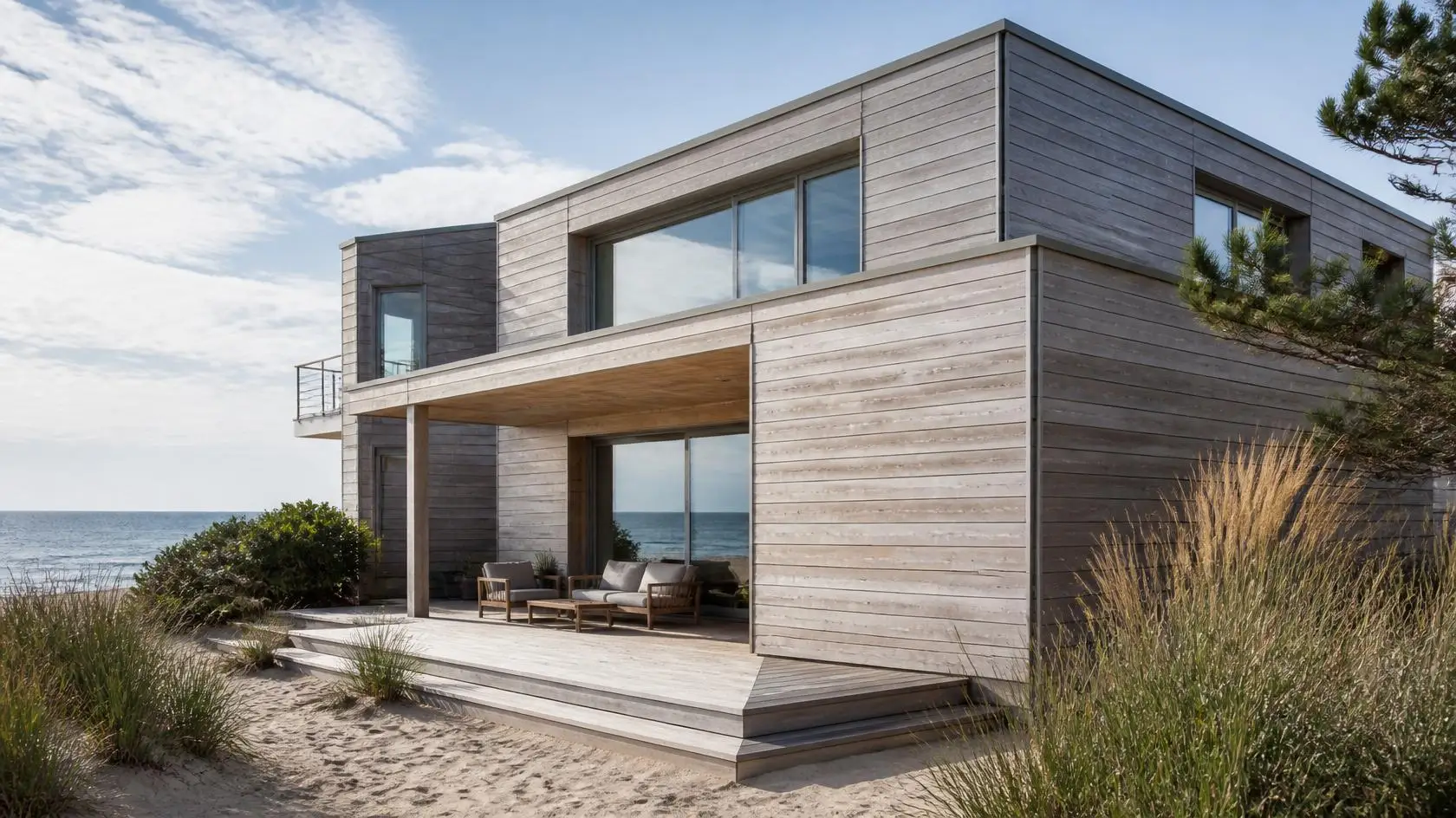
Cedar and redwood siding hold up better on coastal exteriors than fiber cement or vinyl. Both woods contain natural oils that resist moisture.
Left untreated, cedar shifts to a warm silver-grey tone within 12 to 18 months of installation.
19. Roof Overhangs Block
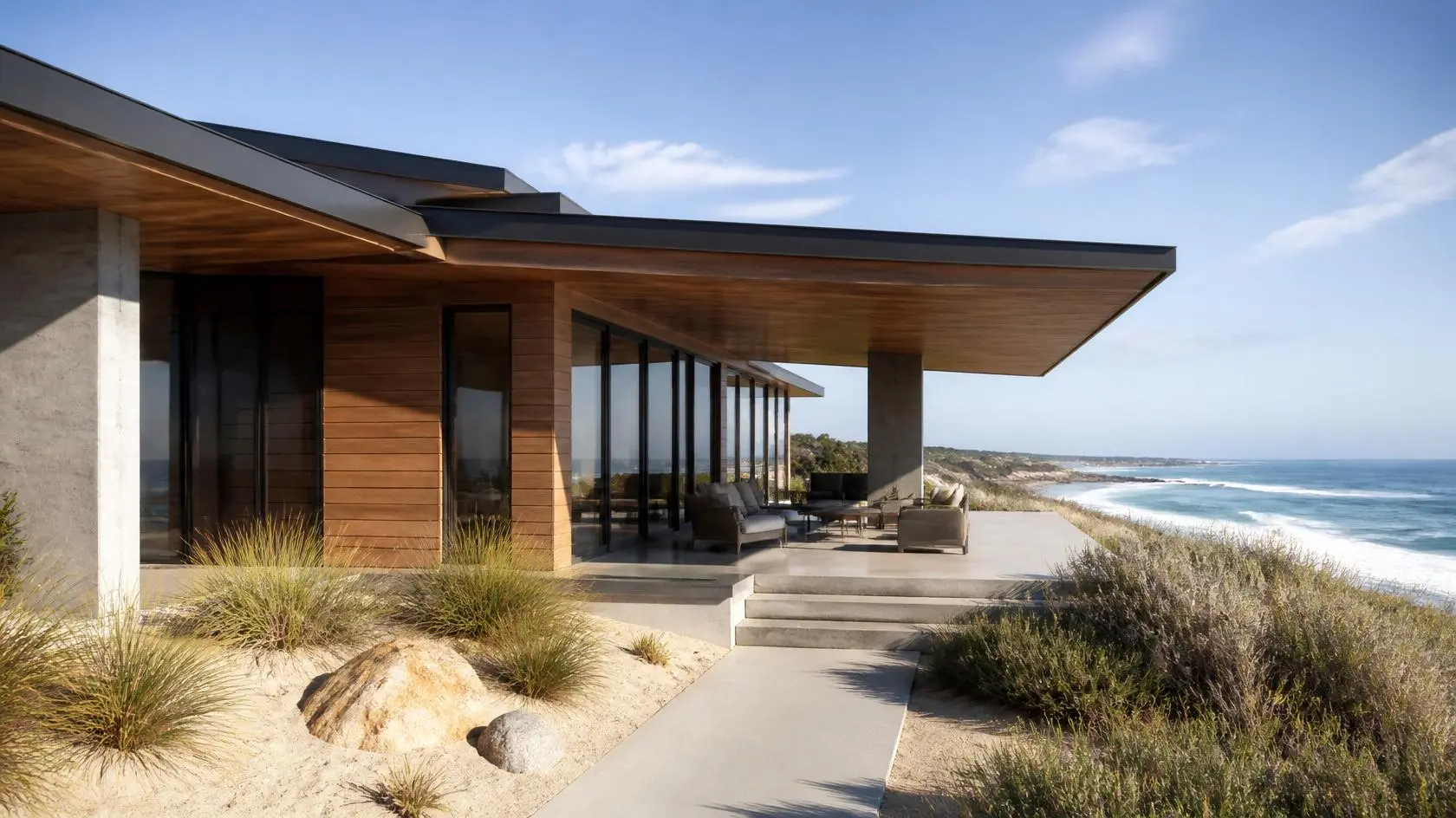
Wide roof overhangs of 3 to 4 feet shade windows and reduce direct sun exposure on the hottest days.
They also protect exterior walls and window frames from rain-driven salt spray. This single design detail extends the life of exterior finishes by several years.
20. Outdoor Showers
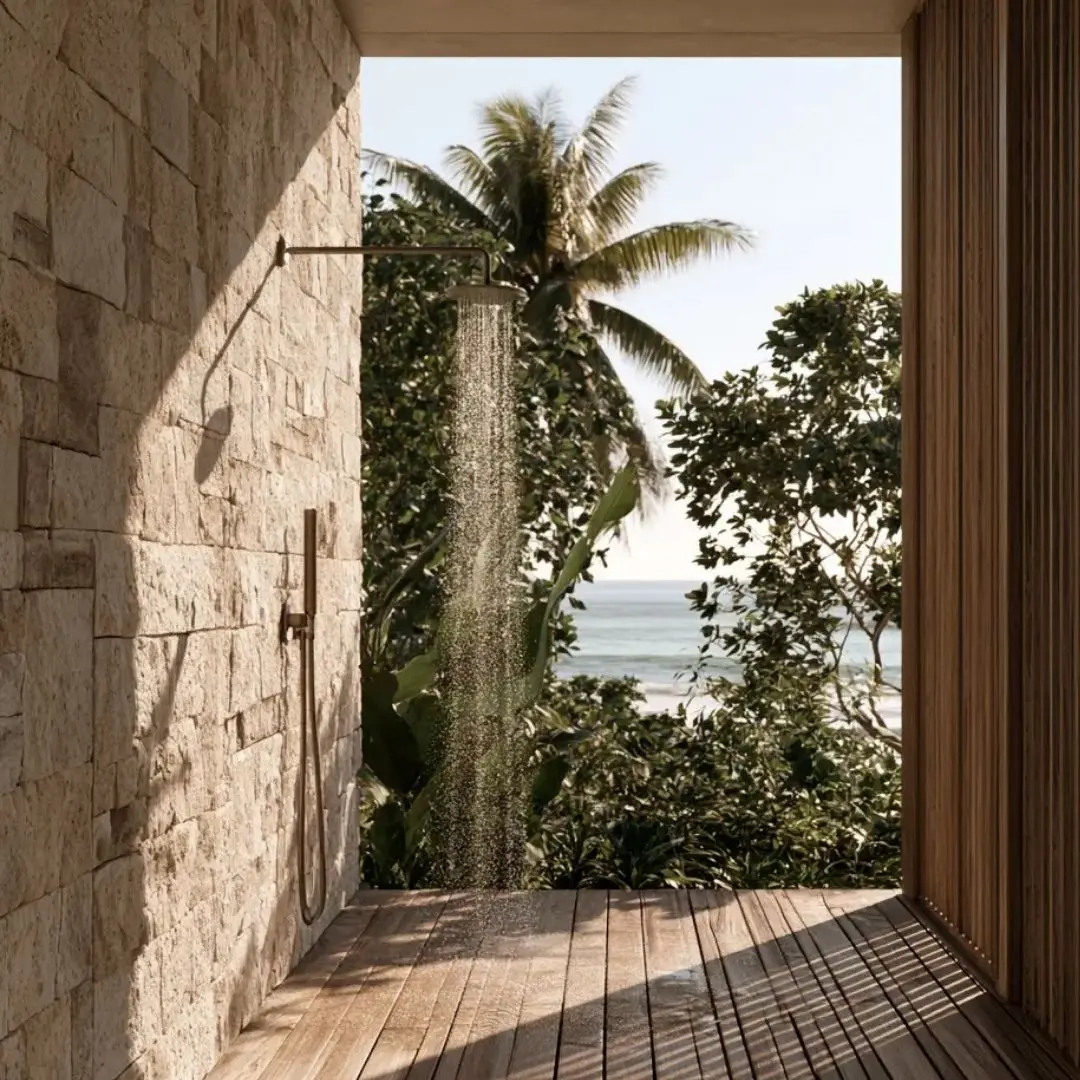
A wall-mounted outdoor shower near the main entrance keeps sand and salt out of the home.
Get a simple stainless steel fixture with hot and cold supply handles that meet the needs. Teak decking beneath the shower drains quickly and resists rot in wet conditions.
21. Dark Frames
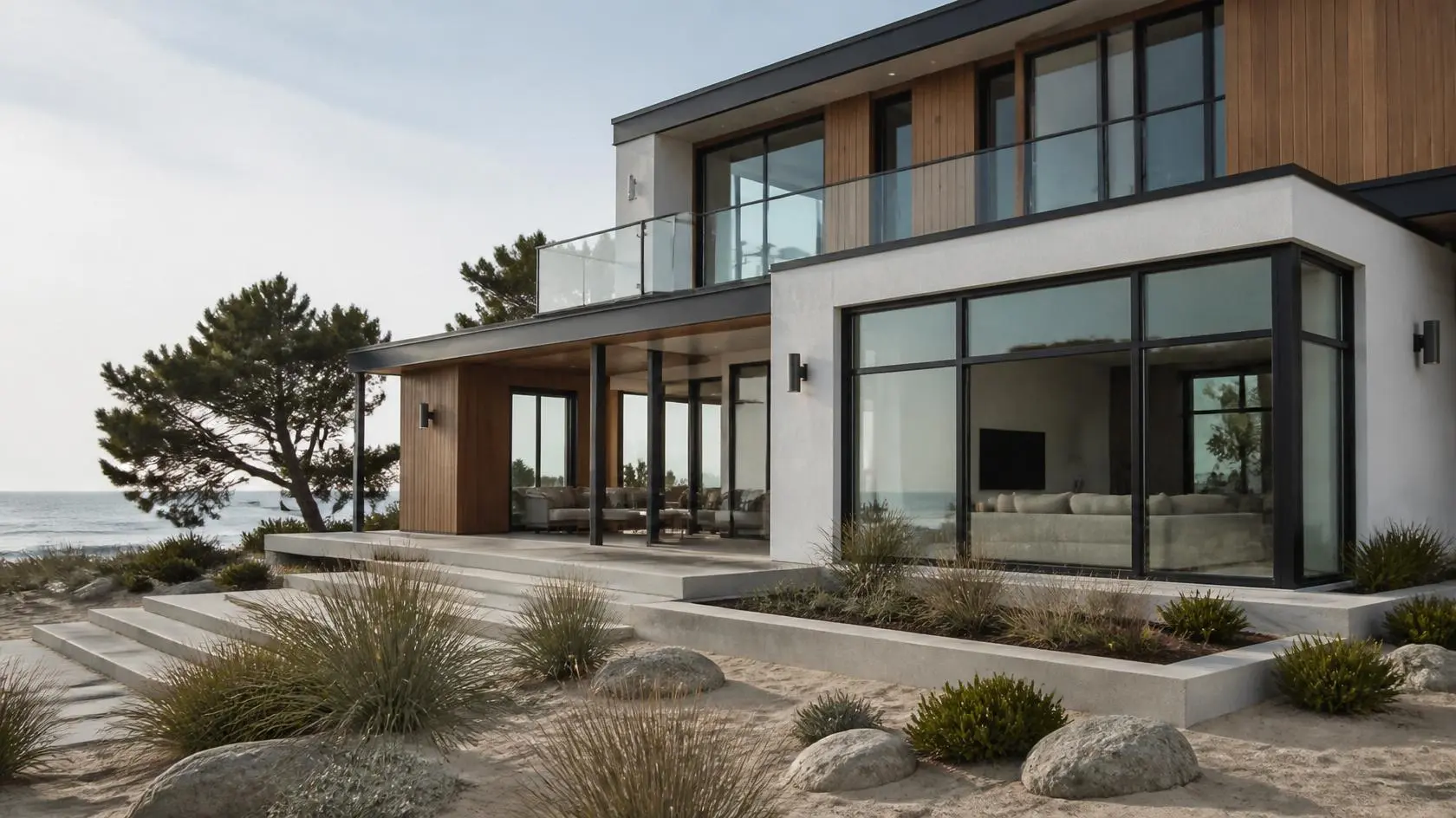
Black or charcoal window frames create a strong contrast against white or pale grey exterior walls, giving a beach house a sharper appearance from the street.
Powder-coated aluminum frames hold their color better than painted timber in salt-heavy coastal air.
22. Concrete Driveways
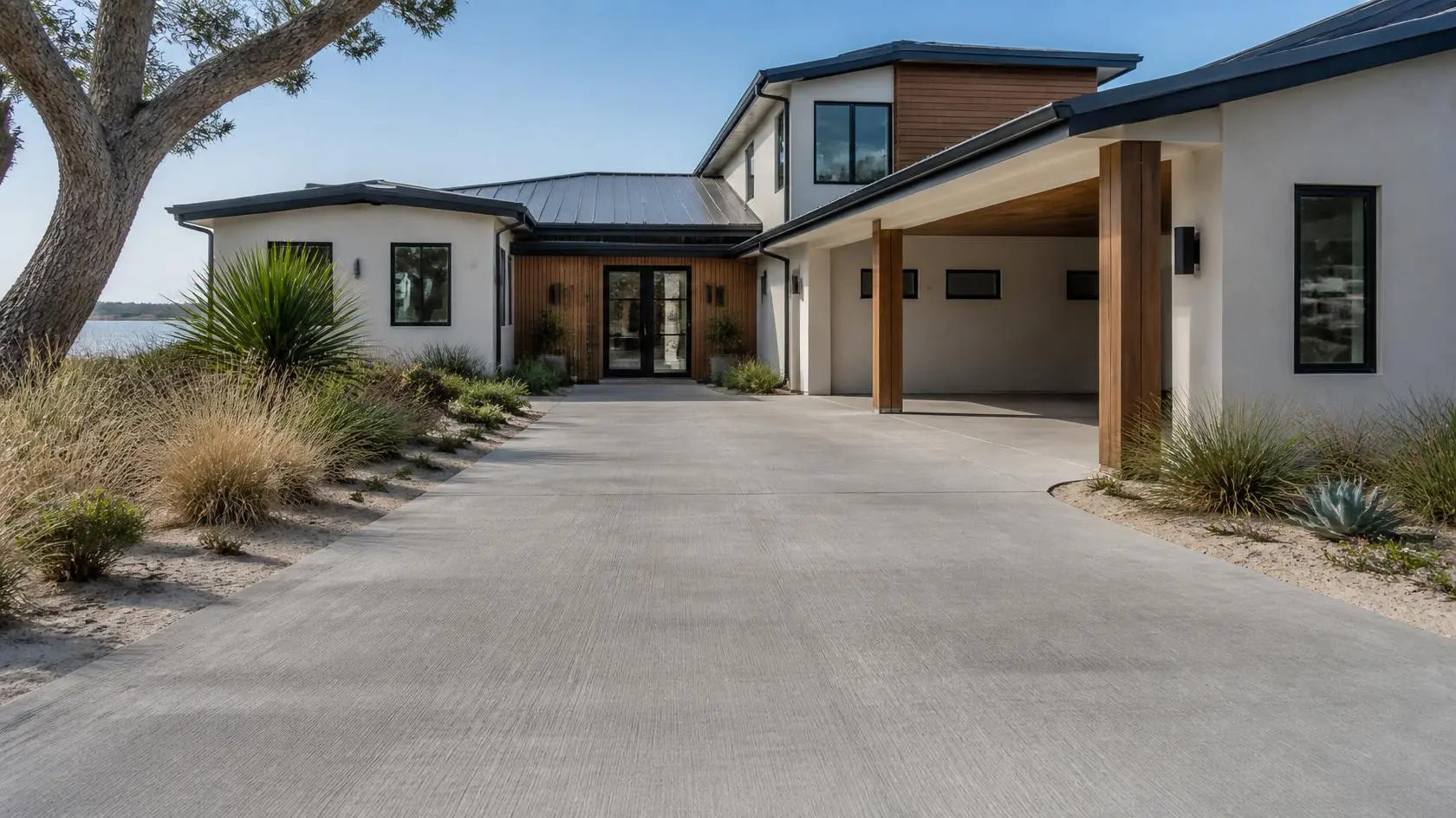
Poured concrete driveways handle vehicle weight, coastal moisture, and heavy foot traffic well. Their maintenance requirements are lower than the brick pavers.
They loosen in sandy, wet soil over time.
A broom-finished surface creates grip without affecting the clean exterior look.
23. Wrap-Around Decks
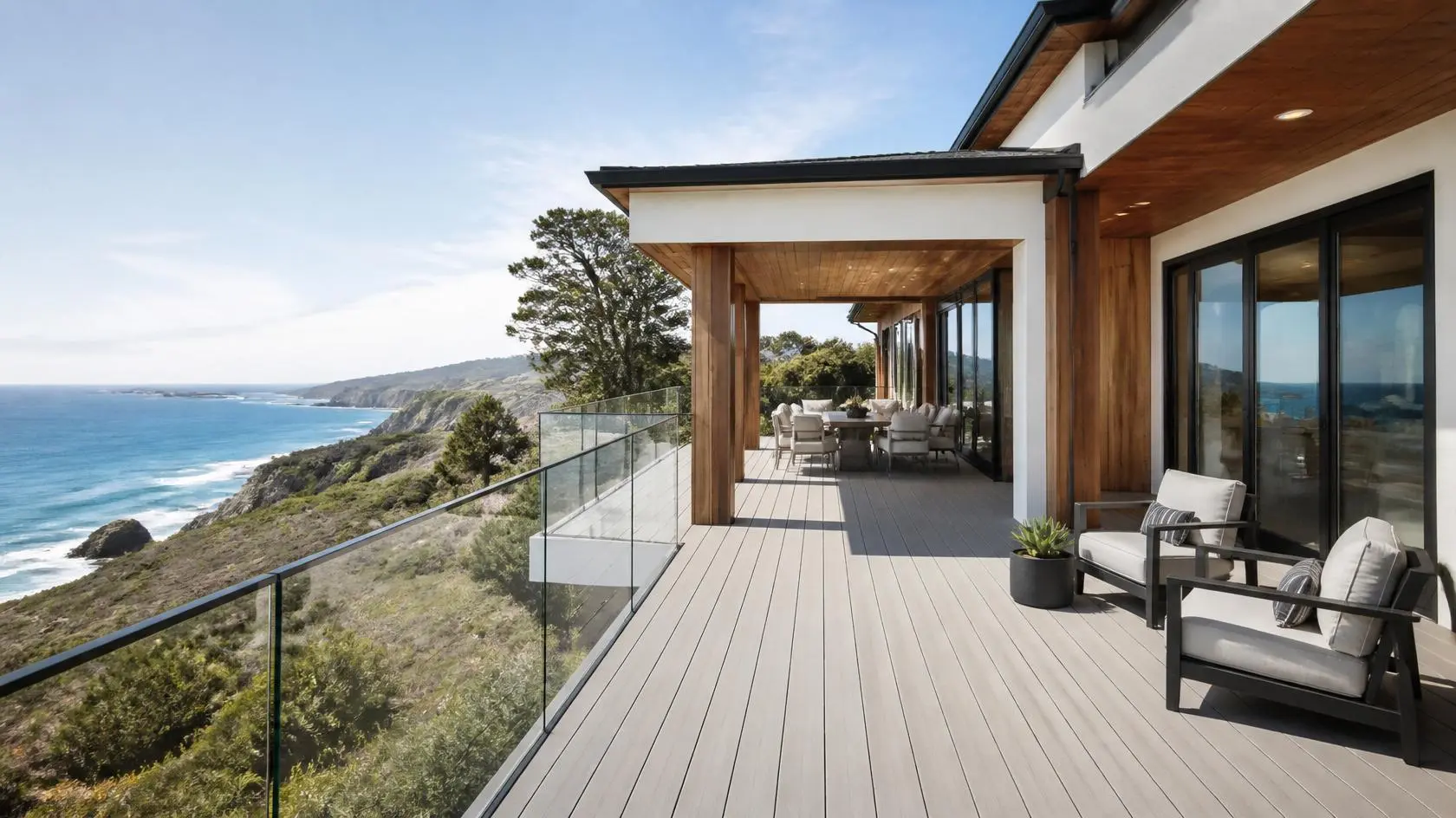
A wrap-around deck allows you to get the whole panoramic view of the beach. Composite decking materials rated for coastal use resist fading, warping, and salt corrosion.
Adding a covered section on the south-facing side makes the outdoor space usable in all weather.
Modern Beach House Color Schemes
Color sets the mood before a single piece of furniture goes in. Get the palette right, and everything else falls into place.
Neutral Base Colors: White, warm ivory, and soft grey work best on walls in a coastal home. Sand and warm beige tones keep rooms grounded without feeling heavy.
Accent Colors that Work: Muted navy, sage green, and slate blue add depth without taking over a room. Dusty teal pairs well with natural wood and linen.
Colors to Avoid: Bright tones fight coastal light, cool greys go flat on overcast days, and high-gloss ceilings create glare near large windows.
Light Shifts Colors: Coastal light changes throughout the day, making the same wall color look different at noon versus dusk.
Matching Interior and Exterior Tones: Using the same base palette inside and on exterior trim ties the whole property together visually.
Always test paint colors on a 12-inch square patch directly on the wall and never rely on a small paint chip from the store.
Conclusion
A modern beach house is when the design gets out of the way and lets the setting lead.
Choose marine-grade stainless hardware for hinges, fasteners, and fixtures, since standard metal rusts fast in salt air and leaves streaks down cladding.
The homes that hold up over time are the ones built with the right materials.
This can take salt and sun, a palette that shifts gently with the light, and a layout that keeps the water in view from wherever someone happens to sit.
Frequently Asked Questions (FAQs)
1. What Makes a Beach House Look Modern?
Clean lines, open floor plans, large glass walls, and natural materials like timber and concrete give a beach house a modern look.
2. What Colors Work Best in a Modern Beach House?
White, warm ivory, sand, and muted tones like navy and sage green work best in a modern coastal home.
3. What Materials Are Suitable for Coastal Homes?
Teak, cedar, polished concrete, powder-coated aluminum, and composite decking all hold up well against salt air and moisture.
4. Can a Small Beach House Have a Modern Design?
Yes, open floor plans, low-profile furniture, large windows, and a neutral palette make even a compact beach house feel modern and spacious.