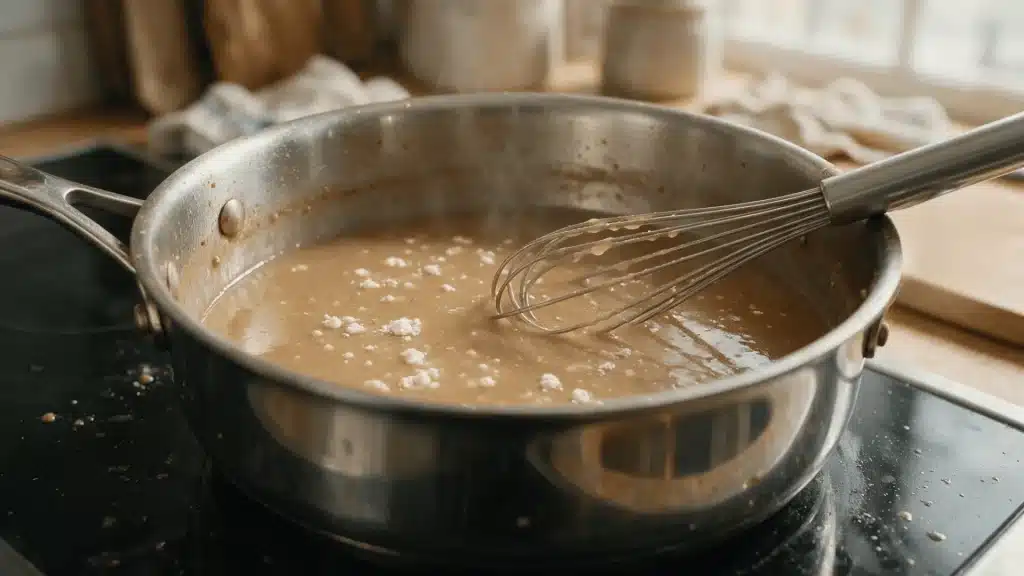
Dinner’s almost ready, maybe a pan of lemon herb chicken with potatoes, and the gravy on the stove is just… thin. So you shake in some flour and stir hard, but instead of a silky gravy, you get little white lumps floating around.
Have you faced the same anytime before?
Here’s what nobody tells you when you’re starting out: flour hates being dumped straight into liquid. It needs to be cooked first, in fat, before it ever meets your broth or milk.
That cooked mixture has a name. It’s called a roux, and once you get the hang of it, that lumpy gravy problem just disappears for good.
So, What Exactly is a Roux?
A roux is butter and flour, cooked together until it smells nutty and looks like wet sand. That’s really it.
Every home cook who’s made a decent gravy has already made one, whether they knew the name or not.
Straight flour in water just clumps, no matter how hard you stir. Cook that same flour in fat first, and it turns into a paste that melts into liquid instead of fighting it.
That bit of stovetop time is the difference between silky gravy and lumpy gravy. Nothing fancy. Just flour that got cooked first.
What is Roux Made of?
Two ingredients. Flour and fat. Simple on paper, but the specific type of each one you grab changes how the whole thing behaves.
Flour
All purpose flour is the default for a reason. It has just enough protein to thicken a sauce without turning it gluey.
Cake flour is too weak for the job, and bread flour tends to make a roux stiff and hard to whisk smooth. Stick with all purpose unless a recipe tells you otherwise.
Fat
This is where flavor and heat tolerance come in. Butter tastes great but has milk solids that scorch faster, so it’s better suited to lighter roux cooked over gentler heat.
Oil can handle more heat without burning, which is exactly why it shows up in recipes for darker roux.
Bacon drippings or other rendered fats bring their own flavor into the mix, and they work well when that flavor actually belongs in the dish.
The 4 Types of Roux and When to Use Each
| Type of Roux | Color | Approx. Cooking Time | Flavor | Best Uses |
|---|---|---|---|---|
| White Roux | Pale cream | Short | Mild | Béchamel, cream sauces |
| Blond Roux | Light golden | Slightly longer | Lightly nutty | Velouté, soups, gravies |
| Brown Roux | Medium to deep brown | Longer | Toasty, rich | Stews, brown sauces |
| Dark Roux | Deep brown | Longest | Strong, roasted | Gumbo, Cajun dishes |
Don’t treat these times as fixed rules. A thin pan heats faster than a heavy one, a bigger batch takes longer than a small one, and butter browns quicker than oil. Go by color and smell instead of watching the clock.
1. White Roux
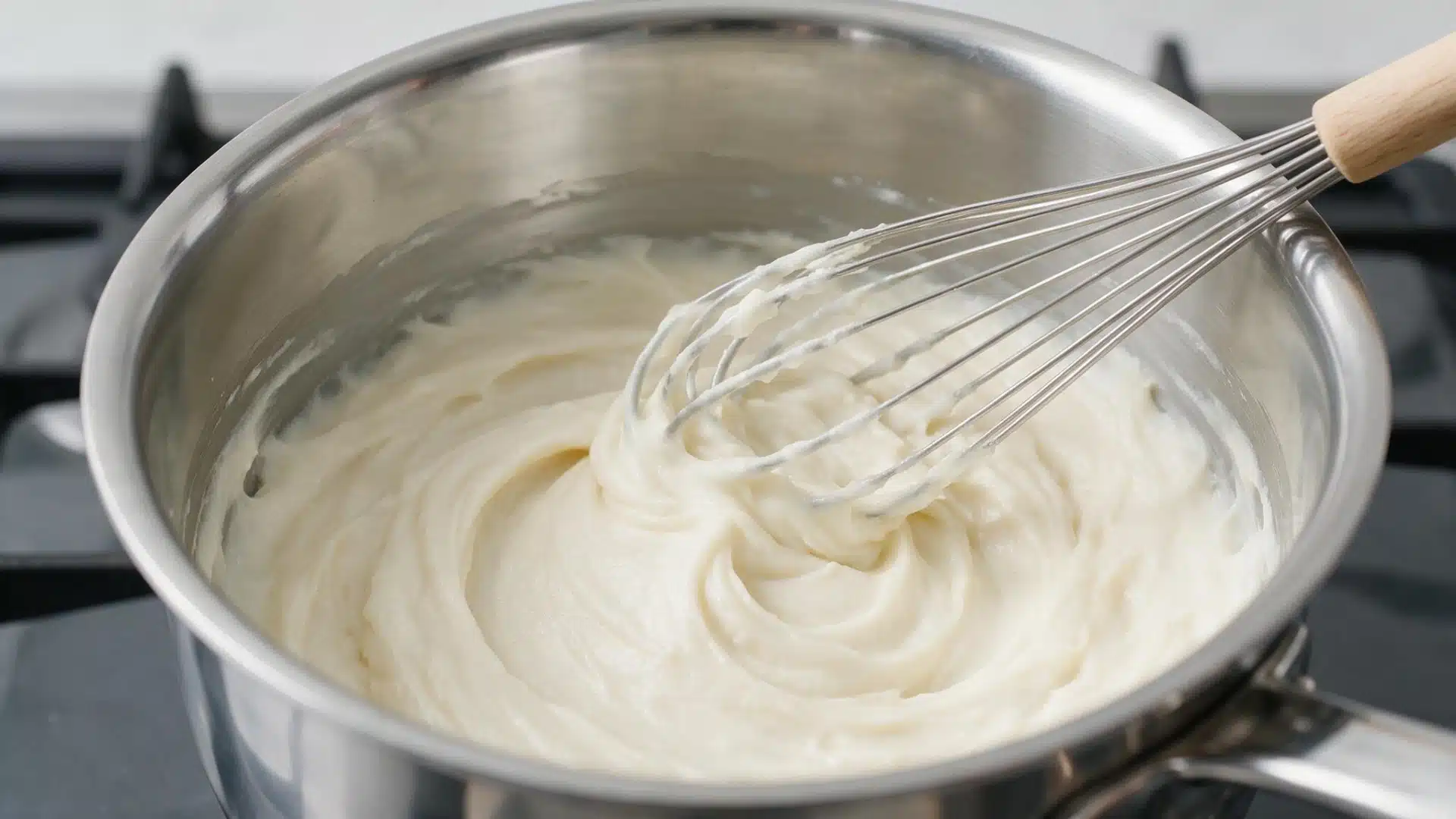
This one barely leaves the stove before it’s done. You’re looking for pale, almost cream colored, with no hint of browning.
It has the strongest thickening power of the four, which is why béchamel and cheese sauce lean on it so heavily. If a recipe needs body without changing the color of the dish, this is the version to reach for.
2. Blond Roux
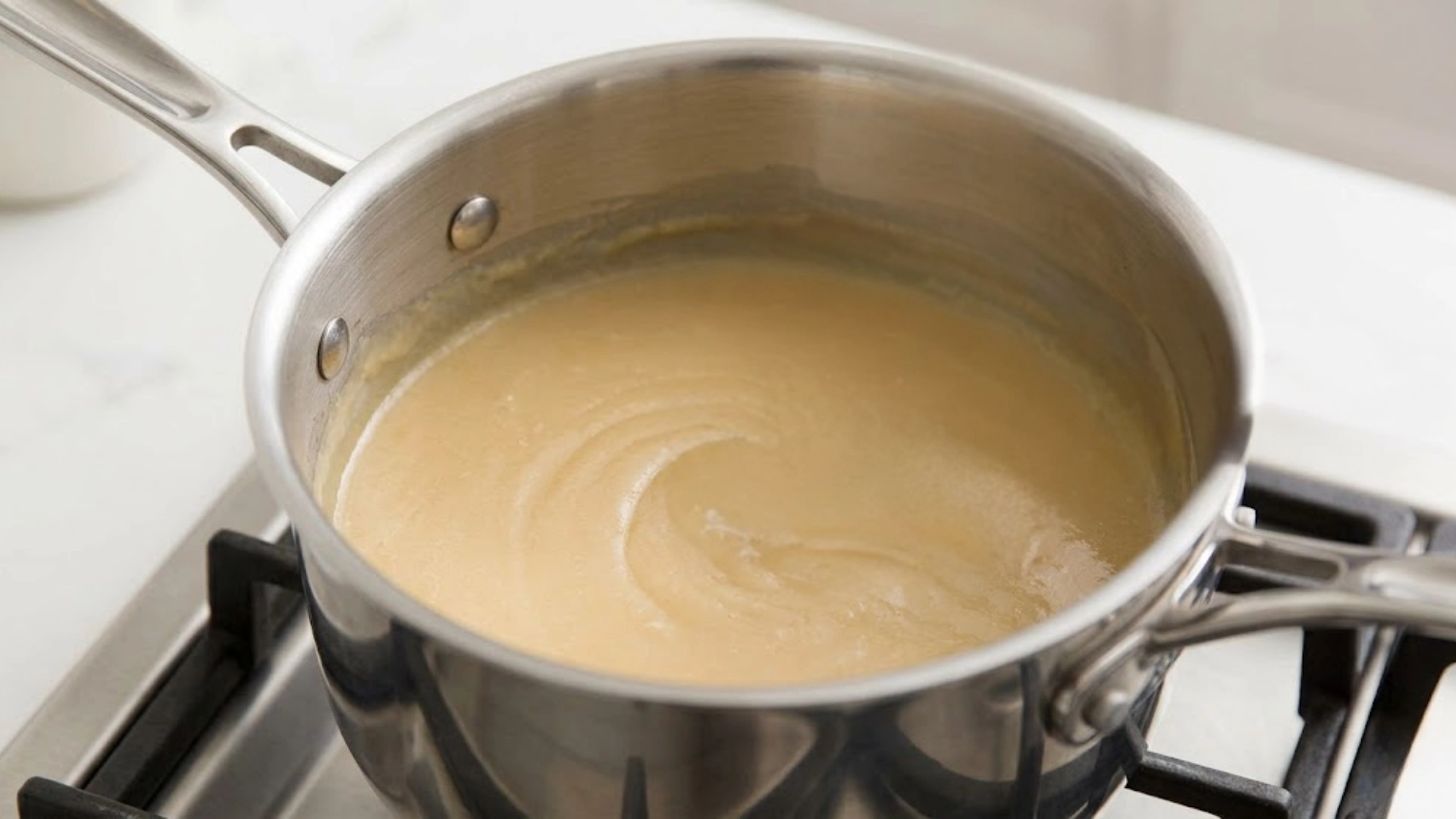
Push it a little past white and you land here. The color shifts to a light gold and a faint nutty smell starts to show up.
It still thickens well, just slightly less than white roux, but the flavor payoff makes it worth it for gravies and veloutés.
3. Brown Roux
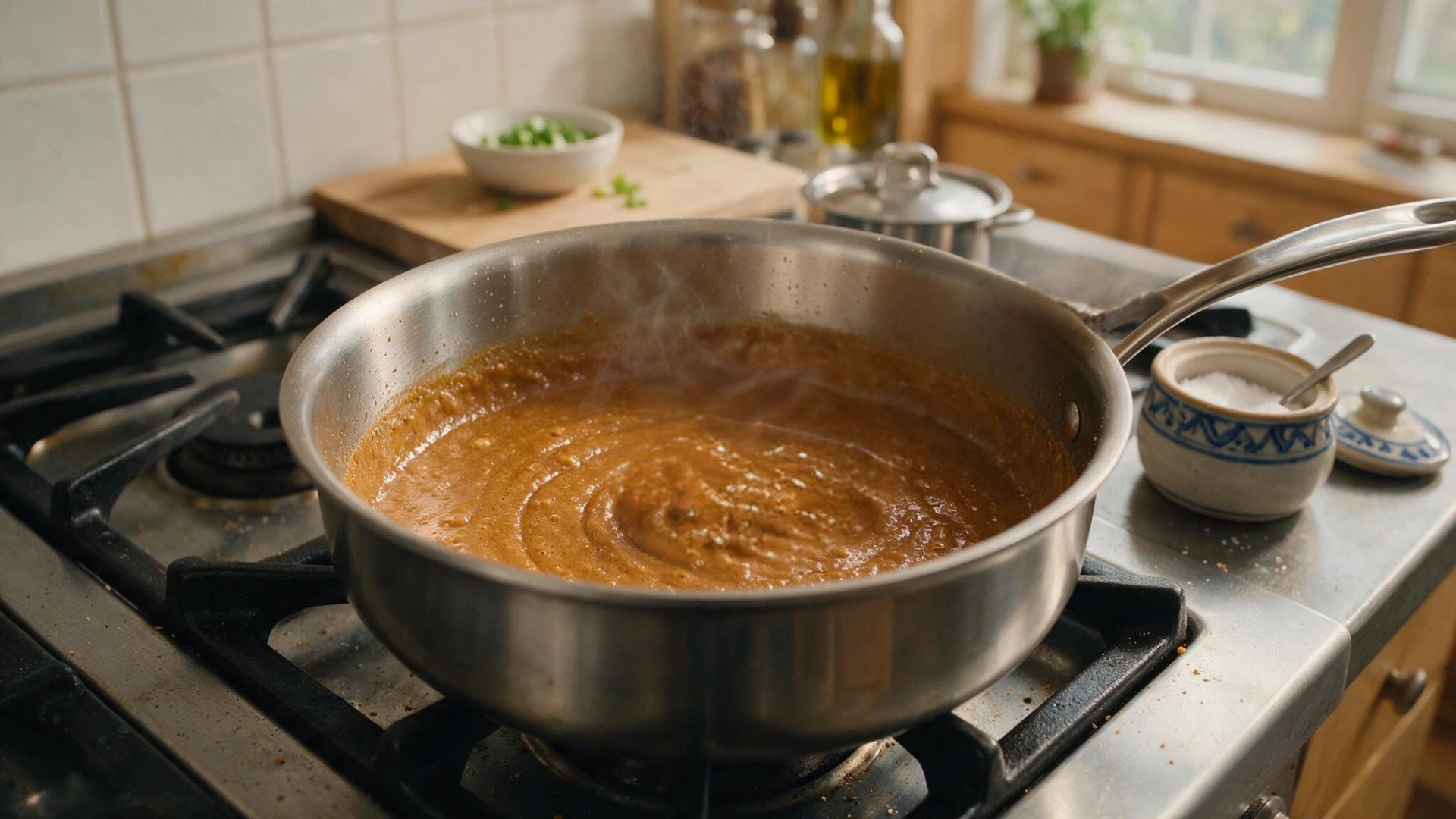
Now flavor starts taking over from thickening power. Brown roux spends more time in the pan, picking up a toasted smell and a color closer to peanut butter.
It won’t thicken a sauce as much as the lighter versions, so recipes built around it usually count on other ingredients to help with body.
4. Dark Roux
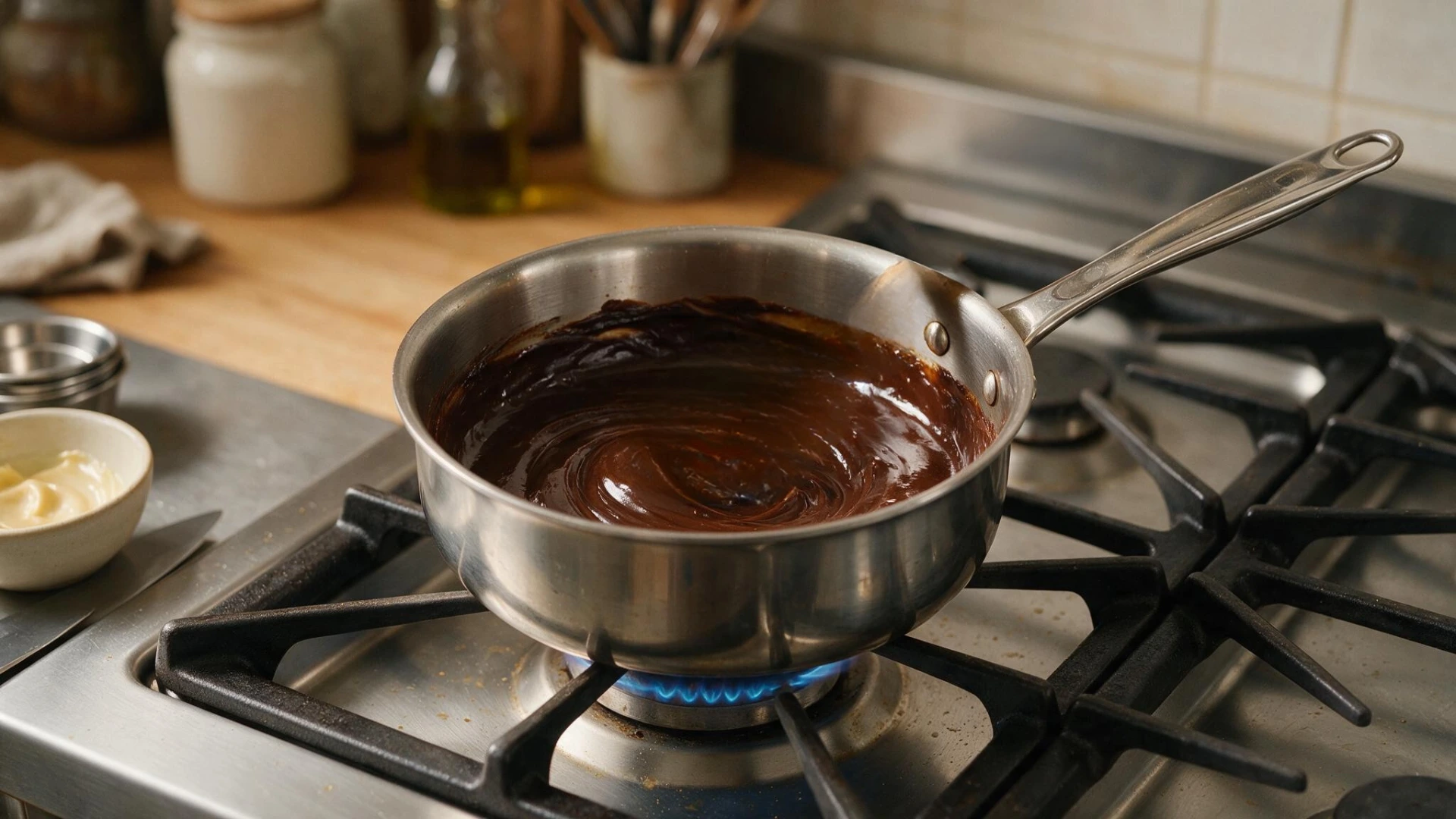
This is the one that separates patient cooks from rushed ones.
Dark roux needs more attention, because it can go from perfectly toasted to burnt in the span of a few seconds.
Gumbo depends on this deep, almost coffee colored roux for its signature flavor, and there’s no shortcut around standing at the stove and stirring.
How to Make a Roux? Lets Do it Together
Step 1: Choose the Right Fat
Butter for classic, lighter sauces. Oil, if you’re heading toward brown or dark roux and need more heat tolerance. An animal fat if its flavor fits what you’re cooking.
Step 2: Measure the Flour and Fat
The classic ratio is one to one by weight.
A lot of home cooks just use equal tablespoons of each instead, and that works fine in practice, but it isn’t technically the same measurement, since flour and fat don’t weigh the same amount per tablespoon.
Step 3: Heat the Fat
Get your pan on medium heat and let the fat melt all the way before adding anything else. Rushing this step with high heat is one of the fastest ways to scorch a roux before it even gets going.
Step 4: Add the Flour
Dump the flour in all at once and start stirring right away. You’re aiming for a smooth paste with no dry, powdery streaks left anywhere in the pan.
Step 5: Cook It to the Color You Need
Pull it early for white. Let it go a bit longer for blond, until it turns pale gold. Keep pushing for brown, watching for that toasted smell.
For dark, stay close to the stove and check constantly, because a few extra seconds is the difference between rich and ruined.
Step 6: Add the Liquid Correctly
Pour the liquid in slowly, not all in one go, and keep whisking the whole time.
Liquid that’s closer in temperature to the roux blends in easier and fights lumps better than something ice cold straight from the fridge.
Keep stirring until the sauce thickens to where you want it.
You Know What is a Roux Used for?
A roux shows up way more often than people know. Anywhere a sauce, soup, or gravy needs body instead of feeling thin and watery, there’s a good chance a roux is doing the work behind the scenes.
It is used in:
- Thickening gravy so it clings to meat and mashed potatoes instead of pooling around them
- Building the base for classic sauces like béchamel and cheese sauce
- Giving soups and chowders a creamy, rounded texture
- Forming the flavor backbone of gumbo and other Cajun dishes
- Holding casseroles together so they slice cleanly instead of falling apart
Beyond the texture, a roux quietly adds flavor too.
A quick white roux barely changes the taste of a dish, while a dark roux left on the stove longer brings a toasted, almost roasted depth that can’t be faked with a quick shortcut.
Especially once you start building balanced meals at home that lean on a good sauce for flavor.
Conclusion
A roux is the quiet fix behind a lot of sauces that just work.
Get the ratio right, pick a fat that matches your heat and flavor needs, and pay attention to color instead of a timer.
Once you’ve made a few, it stops feeling like a technique and starts feeling like a habit.
Frequently Asked Questions (FAQs)
1. How Do You Know When a Roux is Done?
It depends on the type you’re making. Color and smell are more reliable signs than any set cooking time.
2. Why Did My Roux Get Lumpy?
Usually the liquid went in too fast or too cold. Slow pouring with steady whisking prevents most lumps.
3. Can You Add Cold Liquid to a Roux?
Yes, but pour it in slowly while whisking. Fast pouring or a big temperature gap is what causes clumps.
4. Does Roux Thicken Immediately?
No. It thickens gradually as the liquid heats up and simmers, not the second it hits the pot.