Small gardens present a genuine headache. You want moving water, but there’s no room for a grand centerpiece pond or a sprawling multi-basin structure that dominates every sightline. Plenty of fountain styles are built precisely for tight spaces. Picking the right one can make a compact yard feel far more open and alive; picking the wrong one, and everything just feels more cramped than before.
Below are five designs that consistently deliver in smaller outdoor areas, each with a distinct visual character and a different relationship with the surrounding space.
Wall-Mounted Fountains
Wall-mounted fountains are one of the smartest answers to a space problem. They sit flush against a fence, exterior wall, or garden partition rather than eating up floor area. If you want to shop outdoor fountains for a patio that barely fits two chairs, a wall mount is often the first style worth considering.
It adds the sound and movement of water without claiming even a square foot of ground. Water spills from a spout or decorative face plate into a basin below, recirculates through a small pump, and the whole unit stays neatly contained to that vertical surface.
Materials run from cast stone and resin to copper and ceramic. Matching your garden’s aesthetic isn’t difficult.
Installation is fairly straightforward: you’ll need a nearby outdoor-rated electrical outlet, a secure anchor point, and occasional refilling to offset evaporation. The visual payoff is real, a strong vertical accent that draws the eye upward and makes a small garden read as taller rather than tighter.
Tiered Pedestal Fountains (Compact Scale)
Classic tiered fountains don’t have to be enormous. A two-tier pedestal scaled to 24 to 36 inches in height fits comfortably in a corner or at the end of a short garden path without dominating the scene.
The cascading water creates a layered sound that feels bigger than the fountain’s actual footprint; you’ll notice how much presence even a modest one commands once it’s running. Proportionality is everything here. A petite tiered fountain in a small garden looks deliberate and elegant; a large one looks like a misjudgment.
Cast stone and concrete versions weather naturally, developing a patina that blends into surrounding plantings over time. Resin versions are lighter and easier to shift around if you rearrange things seasonally.
Either way, placement matters: position the fountain where it’s visible from a seating area or through a window, and let it anchor a small cluster of container plants or low ground cover at its base.
That surrounding planting softens the jump between the fountain’s structure and the rest of the garden floor.
Bubbling Rock or Millstone Fountains
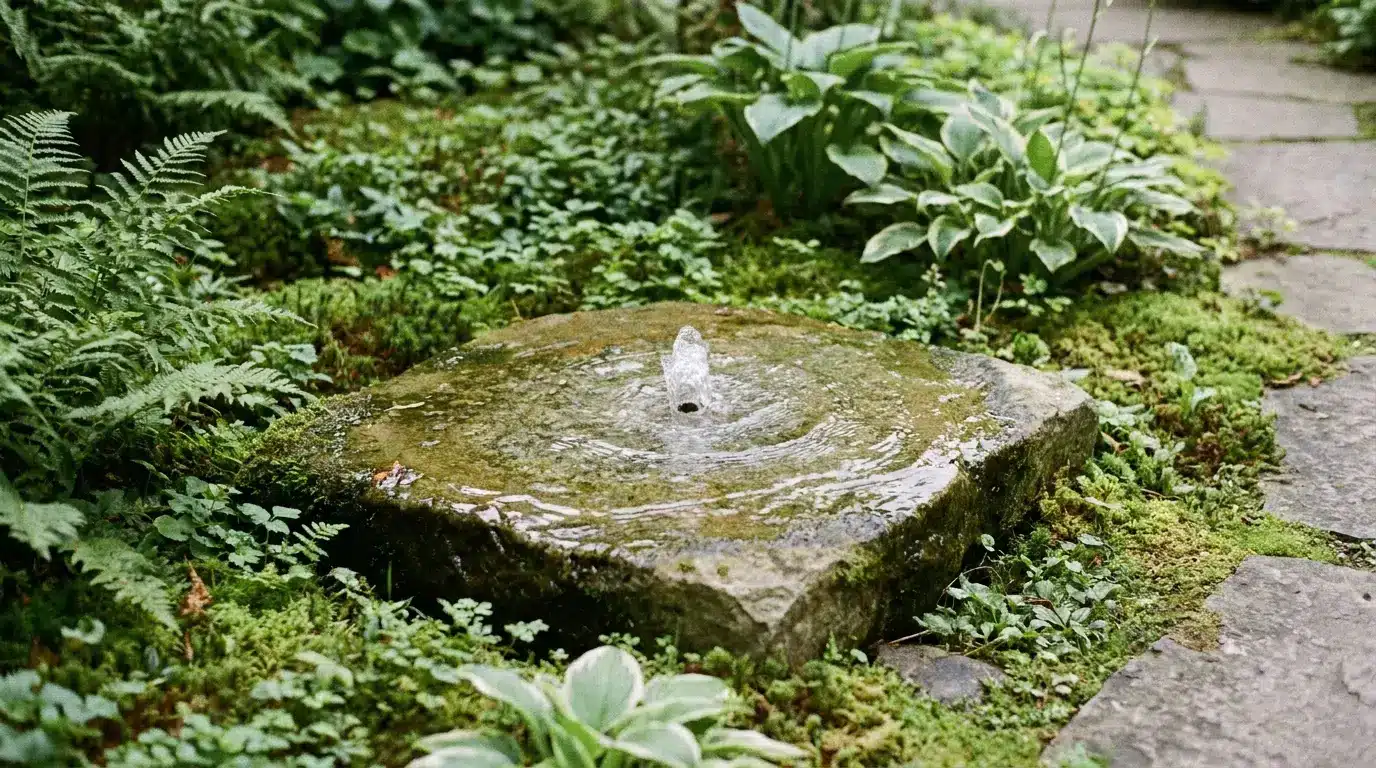
Probably the most space-saving option on this list. Water rises gently through a drilled hole in a large stone or flat circular millstone, spills across the surface in a thin sheet, and drains into a hidden reservoir buried flush with the ground, no basin rim sitting above the soil line, no tall structure to navigate around. From a few feet away, it reads as a beautiful stone feature with water quietly moving across it.
The sound is soft. Almost meditative, rather than the louder splash you’d get from a tiered or wall-mounted design, and that matters enormously in a small garden where you’re sitting just inches from the feature.
Safety is another reason people gravitate toward this style, especially households with young children or pets; the reservoir sits below grade, covered by the stone and a grate, so there’s no open water at surface level.
Container or Pot Fountains
A container fountain is exactly what it sounds like: a decorative pot, urn, or bowl with a small pump inside, water either spilling over the rim or rising through a simple nozzle at the top.
These are among the most flexible designs available for small gardens, portable, relatively affordable, and sold in sizes ranging from a generous decorative urn down to something that fits on a garden shelf.
You can move them with the seasons, cluster them with planted containers for a cohesive look, or drop one in as a standalone accent on a narrow side patio. The catch is that smaller containers lose water to evaporation faster, so you’ll be topping them off more often than you would with a larger basin fountain.
But for many gardeners, the tradeoff in flexibility is more than worth it. Setup couldn’t be simpler: fill it, plug in the pump, adjust the flow rate. No plumbing, no professional help required.
Solar-Powered Tabletop and Deck Fountains
Solar-powered fountains cut the need for an outdoor electrical outlet entirely. That makes them genuinely practical for gardens where adding wiring is inconvenient or expensive. Small solar fountains sit on a deck rail, garden table, raised planter edge, or low garden wall, drawing power from a panel that’s either built into the unit or positioned nearby in full sun.
They’re quiet, low-maintenance, and easy to reposition on a whim.
The main limitation is worth knowing upfront: flow rate varies with sunlight, so the fountain may slow noticeably on overcast days, and if you’re counting on consistent water sound throughout the day, that’s a real constraint. Decorative effect, though? Solar fountains are hard to beat for sheer ease.
They’re a natural fit for small apartment balconies, rooftop gardens, and compact outdoor spaces where running an extension cord just isn’t practical.
Conclusion
The right outdoor fountain design for a small garden depends on what you’re actually trying to accomplish in the space. Wall-mounted and millstone fountains are ideal when floor space is precious. Container and solar fountains win on flexibility. Compact tiered pedestals balance tradition with proportion. Any of these styles can turn a tight garden into something that feels considered and calm, not just small.