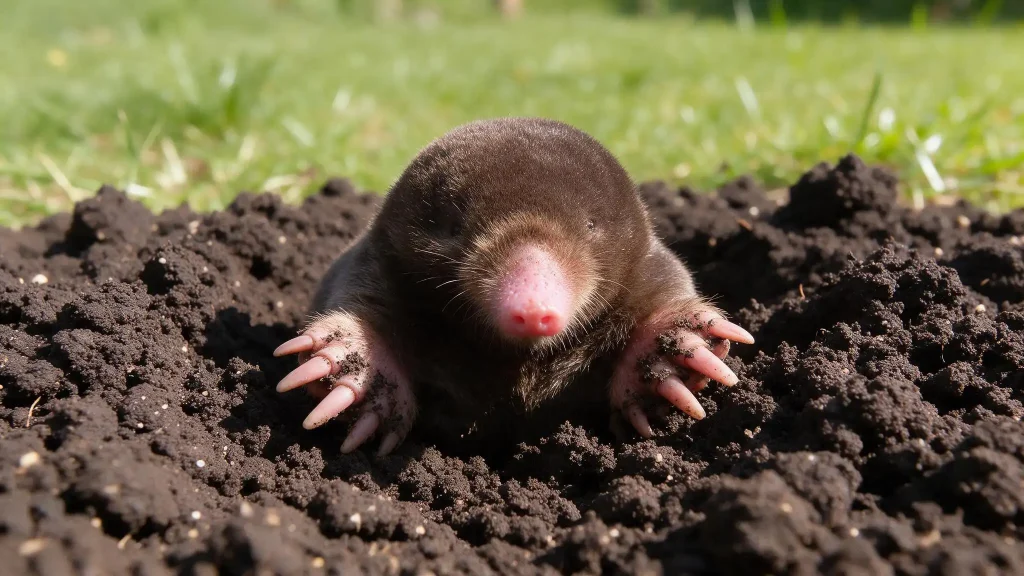
A single mole can tunnel through seventy-five feet of lawn in one night. Grass that looked fine yesterday can be covered in mounds by morning.
Those tunnels don’t disappear on their own, and the mess only spreads if you do nothing. Active tunnels tell a different story than old ones.
That difference shapes how to get rid of moles in your yard. The best way to get rid of moles in your yard often means combining more than one method.
What are Moles?
A mole is a small mammal built for digging. Fur usually runs brown to grey, and the body rarely grows past five to seven inches long.
Front feet look like paddles, wide and clawed, made for cutting through soil fast. Eyes stay hidden under fur, and ears barely show at all.
Touch and smell carry more of the work underground than sight or hearing. Moles eat earthworms and grubs, not grass, roots, or garden plants.
A mole eats almost its own body weight every day, and that keeps the tunneling going nonstop.
Signs of Moles
Confirming mole activity comes down to reading a few clear physical signs left behind in the yard. Some show up right on the surface, and others take a closer look to catch.
Spotting them early keeps the damage from spreading across more of the lawn.
Raised Surface Tunnels
Surface tunnels look like narrow ridges winding across the grass, usually just below the surface. They feel soft and give slightly underfoot, unlike the rest of the lawn around them.
Molehills and Soil Mounds
Molehills form where a mole pushes excess soil up from deeper tunnels. They sit as small, cone-shaped piles, often near the entrance to a main tunnel system.
Sinking or Uneven Ground
Old tunnels can collapse after rain or heavy foot traffic, leaving small dips or soft spots across the lawn. These sunken patches often show up before any fresh mounding appears nearby.
Underground “Rooms”
Moles dig out small chambers along their tunnel systems, mainly for storing food. Finding one of these while digging is a strong sign moles, not voles, are behind the damage.
How to Get Rid of Moles in Your Yard
Before choosing a method, check whether a tunnel is still active to save time. Press down a short section and watch whether a mole repairs it within a day.
Active tunnels are worth treating, and matching the right method to that activity is usually the best way to get rid of moles in your yard without wasting effort on a dead tunnel.
Trapping Active Moles

Harpoon traps drive a spring-loaded spike down when a mole pushes the trigger pan. Scissor traps clamp shut around the tunnel from both sides instead.
Both need to sit directly over a confirmed runway to work. Live traps catch a mole unharmed, but some states restrict relocating one.
Baiting Active Tunnels

Mole bait is shaped like a worm or grub and contains an active ingredient that kills within twenty-four to seventy-two hours of ingestion.
Dropping a piece into an active tunnel through a small poked hole works better than leaving it on the surface.
Gloves help, since human scent can make a mole avoid the bait. Keep placement away from areas pets can dig into.
Castor Oil Repellents

Castor oil doesn’t kill a mole, but it coats the soil and insects with a smell moles find unbearable, which usually pushes them to relocate.
Granular repellents spread with a lawn spreader and get watered in, while liquid concentrates get diluted and sprayed directly on active tunnels.
Reapplying monthly keeps the area unappealing, since rain and watering wash the scent away over time.
Habitat and Moisture Changes

Moist soil keeps earthworms near the surface, which is what keeps a mole working in one spot. Letting the topsoil dry out more than usual pushes that food deeper and makes an existing tunnel less worth maintaining.
This shift works more slowly than trapping or baiting, often taking weeks to show up as fewer new mounds.
Underground Barriers for Gardens

A trench dug two feet deep and lined with hardware cloth or gravel keeps a mole from tunneling into garden beds at all. Leaving four to six inches exposed above soil stops a mole from climbing over the edge.
Bending the base outward at a slight angle discourages digging underneath. This method costs more time than repellents, so it suits small, high-value areas best.
How to Trap Moles Properly?
Choosing the right trap and placing it correctly is often the best way to get rid of moles in your yard once you’ve confirmed an active tunnel.
Choose the Right Mole Trap
Harpoon traps drive a spring-loaded spike downward once a mole disturbs the trigger pan, while scissor traps clamp shut around the tunnel from both sides.
Both kill on contact and work well once you confirm a tunnel is active.
Live traps catch a mole without harming it, but relocating one is restricted or banned in some states, so check local rules first to avoid that problem later, especially since regulations vary widely by location and season.
Select an Active Runway
Long, straight tunnels along fence lines or garden edges usually serve as main runways a mole reuses daily.
Short, looping tunnels often get used only once. A trap set into one of those abandoned loops sits untouched no matter how well it’s built.
Position the Trap Correctly
The trap needs to straddle the tunnel directly, with legs pushed firmly into the soil on either side.
Compressing the tunnel slightly before setting it helps the trigger pan make solid contact with the loosened soil underneath, which matters more than most people expect on the first attempt.
A loose or shallow set lets a mole tunnel around the trap instead of through it.
Check and Reset the Trap
Checking daily catches a trapped mole quickly and confirms whether the chosen spot was actually active.
Live traps need extra attention in summer, since heat and dehydration can kill a captured mole within hours. No activity after three or four days usually means it’s time to move the trap somewhere new.
What Attracts Moles to Yards?
A yard rarely gets picked at random. Food and moisture sitting close together, with a quiet corner nearby to work from, pull a mole in more than anything else.
- Earthworms and grubs make up most of a mole’s diet and draw attention fast, even in lawns already treated for grubs alone.
- Soft, damp soil takes far less effort to dig through than dry, compacted ground.
- Overwatering or poor drainage keeps earthworm numbers high, since most lawns only need about one inch of water a week.
- Mulch piles and open compost hold onto moisture and insects long after the rest of the yard dries out.
- Moles choose quiet, low-traffic corners over busy spots near doors or patios whenever they have the option.
Some yards deal with this every year. Others nearby stay untouched, usually because one or two of these conditions aren’t there.
When Are Moles Most Active
Moles dig year-round, since food sits underground no matter the season. Surface signs come and go, though, and spring and fall show the most of it.
Rain softens the soil during both seasons, and earthworms move closer to the top, so tunneling takes less effort and covers more ground.
Spring also lines up with mating season, which is why trapping then often catches pregnant females before a new batch of moles takes over the tunnel system.
Fresh mounds tend to show up early in the morning or in the evening, when soil temperature falls into a range moles favor. The rest of the lawn usually stays quiet until later in the day.
Prevent Moles From Returning
Getting rid of the moles already there is one thing. Stopping new ones from showing up next season is a separate task, and it’s usually the one people skip.
Avoid Excessive Lawn Watering
Most lawns only need about an inch of water a week from rain or irrigation combined. Sprinklers left running past that turn the soil soft again fast, right back to what a mole wants.
Improve Poor Yard Drainage
Low spots that hold water stay damp and earthworm-heavy long after the rest of the lawn has dried.
Regrading those spots, or just running a drainage line through them, cuts off a food source no repellent can touch.
Manage Grubs Only When Needed
Grub treatments get sold as a mole fix, but earthworms make up more of a mole’s diet than grubs ever do. Treating grubs without touching watering habits or drainage barely moves the needle on its own.
Keep the Lawn Short and Clear of Debris
Tall grass hides a mole working just under the surface. Rock piles and stacked wood do the same thing at ground level. Cutting the grass on schedule and hauling off that debris takes both away at once.
Protect Gardens With Underground Barriers
You can seal off vegetable beds and flower borders with a buried barrier while leaving the rest of the yard open.
That trade-off works fine for most yards, since the goal is protecting what actually matters, not clearing every square foot.
New mounds showing up weeks after these changes usually mean one of them didn’t stick. At that point, a pest control company can finish what watering, drainage, and mowing changes started.
Moles vs Voles vs Gophers
Moles, voles, and gophers all get blamed for the same lawn damage, but the tunnels and mounds they leave behind are not the same.
Looking closely at what’s left on the surface makes it possible to tell which pest is actually digging. Getting this right matters, since a fix aimed at moles won’t do much against voles or gophers.
Moles vs Voles

A mole tunnel never has an open entrance, since soil gets pushed up into a mound or ridge instead.
Voles dig shallow surface paths with visible holes and chew grass down to the roots as they travel. Grass damage usually points to voles, while raised ridges with no holes point to a mole.
Moles vs Gophers

Gopher mounds are typically larger and spaced further apart than molehills, often showing a horseshoe or crescent shape with a plugged entrance to one side.
A molehill, by contrast, looks like a small, even volcano with no visible opening at all.
The Bottom Line
Fresh mounds usually mean more than one thing needs to change. A trap works fast on an active tunnel, but the same tunnel refills within weeks if the yard stays wet and full of earthworms.
Castor oil, bait, and buried barriers each solve part of the problem, not the whole thing.
Getting rid of moles in your yard usually comes down to combining a couple of these fixes and keeping the yard dry enough that new moles never find a reason to move in.
Frequently Asked Questions
1. Can Moles Damage Tree Roots or Shrubs?
Moles eat insects, not plants. Root damage is rare and usually limited to loosened soil near shallow roots.
2. Do Mole Tunnels Attract Other Pests Like Snakes or Rodents?
Voles, mice, and sometimes snakes often reuse empty mole tunnels as shelter.
3. Is It Safe to Fill in Mole Tunnels with Soil?
You can fill an inactive tunnel without trouble. An active one usually reopens within a day or two.
4. Can a Mole Infestation Affect a Home’s Resale Appeal?
Mounded lawns can put off a buyer during a walkthrough, though the effect fades once the mole problem is handled.
5. Do Moles Bite or Carry Diseases Harmful to Humans?
Moles rarely bite unless picked up or handled directly, and they aren’t linked to any diseases that spread to humans.