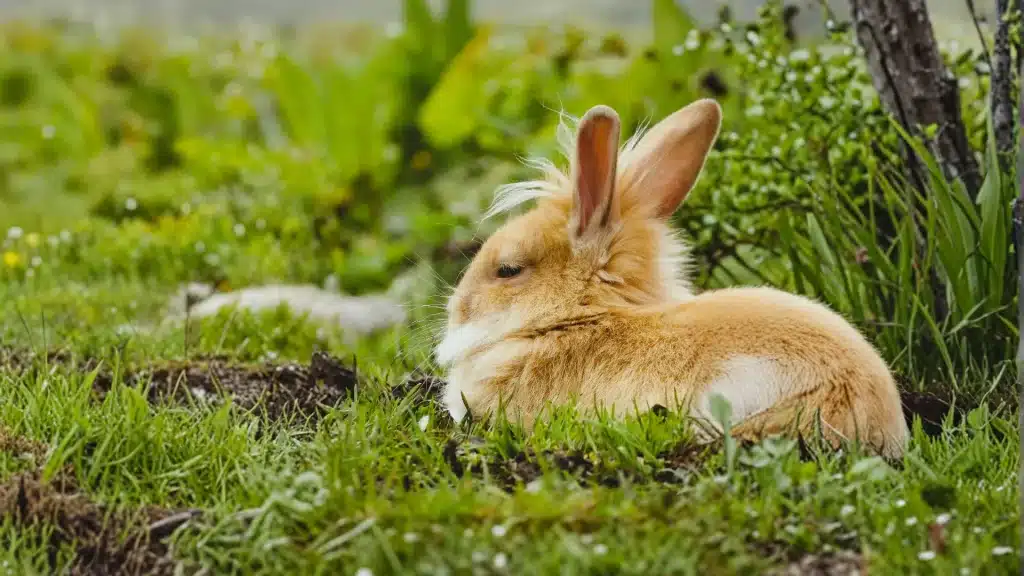
You walk outside one morning, and your lettuce is gone. Not wilted, not chewed by bugs, just gone, clipped clean at the stem.
If you’re trying to figure out how to keep rabbits out of garden beds before they finish off the rest of your plants, you’re not alone.
Rabbits move fast, and once they find a garden they like, they keep coming back.
Here’s what actually works, and why some popular methods fail faster than people expect.
Why are Rabbits Attracted to Gardens?
Rabbits do not just select any garden; they prefer the ones that contain young shoots that need to be soft and edible without requiring too much effort to get to.
Lettuce, beans, peas, and young herbs are examples of such plants. Seedlings are especially vulnerable since they have not developed hard stem yet.
Also, gardens located near high grass, piles of brush or fences are preferred by rabbits as well since the animals will be able to get into hiding fast when needed. When a rabbit finds food source located near its hideout, it will keep going back to this location.
Combining physical barriers with habitat alterations is considered the best protection. The former provides direct protection while the latter reduces the attractiveness of the location.
How to Tell If Rabbits Are Eating Your Garden?
Before jumping into prevention, it helps to confirm rabbits are actually behind the damage. Rabbit damage looks different from most other garden pests.
Instead of ragged bite marks, rabbits leave clean, angled cuts on stems and leaves, almost like they were snipped with scissors. That comes down to how their front teeth are shaped.
A few signs to check for:
- Leaves and stems cut at a clean angle, usually low on the plant
- Damage concentrated near the ground, since rabbits don’t climb or reach high
- Small, round droppings scattered near affected plants
- Shallow digging or disturbed soil near garden beds, especially close to fencing
If you notice several of these signs together, rabbits are likely the cause rather than deer, insects, or disease.
How to Keep Rabbits Out of the Garden?
Once you’ve confirmed rabbits are the problem, these methods can help stop them for good.
1. Install Rabbit-Proof Fencing

A solid fence is still the most reliable way to keep rabbits out of a garden. Aim for at least three feet above ground, since rabbits can jump higher than most people expect.
Use fencing with mesh openings of one inch or smaller. Wider gaps let young rabbits squeeze through even when adults can’t.
Bury the bottom of the fence six to ten inches underground, or bend it outward like an L shape. Rabbits will dig under a fence that stops right at ground level, so this step matters as much as the height itself.
2. Protect Plants With Wire Mesh
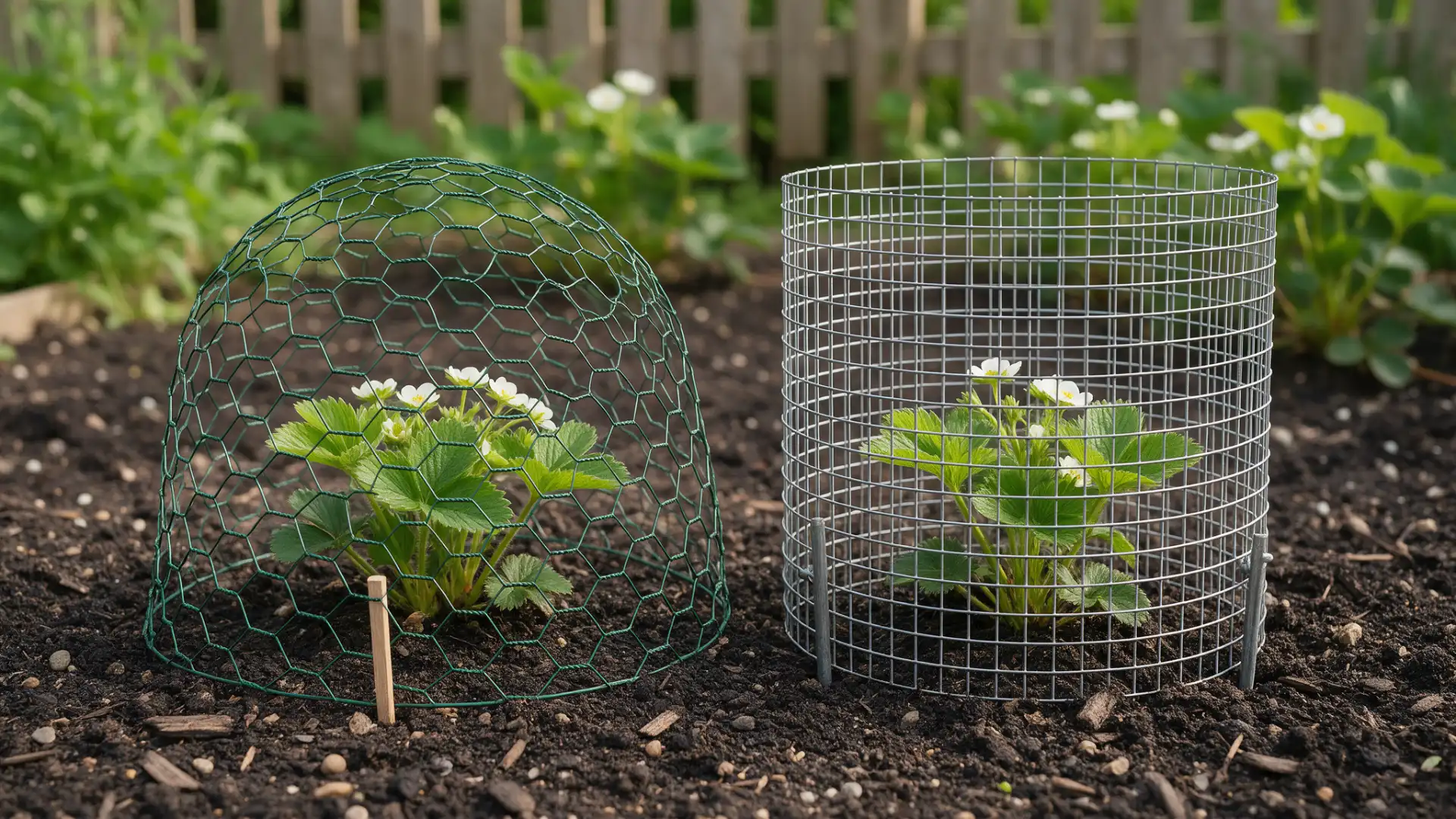
alt text:Wire cloches protecting small plants in soil
For vegetables and young plants that rabbits target most, individual wire covers add another layer of protection. Chicken wire is affordable and easy to shape, but rabbits can sometimes push through it if the wire is old or bent out of shape.
Hardware cloth holds up better since the openings are smaller and the wire is stiffer. It costs more, but it lasts through several growing seasons instead of needing yearly replacement.
Either option works well around plants like lettuce, beans, and strawberries in their early stages, when one night of feeding can wipe out a whole planting.
3. Use Garden Row Covers

Row covers protect seedlings and low growing crops without blocking sunlight or airflow. They work well for young lettuce, spinach, and other crops rabbits tend to target early in the season.
Covers need to come off once plants flower or need pollinators to reach them. Leaving covers on too long can actually reduce your harvest, since bees can’t get to the blooms underneath.
4. Add Raised Garden Beds

Raising garden beds even twelve to eighteen inches off the ground reduces rabbit access, since it adds one more obstacle between them and your plants. It won’t stop a determined rabbit on its own, though.
Adding a mesh barrier around the base of raised beds closes that gap. This combination works especially well for smaller gardens where a full perimeter fence isn’t practical.
5. Apply Rabbit Repellents

Commercial repellents use strong scents or bitter tastes to discourage feeding. Most need to go directly on plant leaves and stems, focusing on new growth since that’s what rabbits prefer.
Reapply every one to two weeks, and always after rain or heavy watering, since moisture washes the product away fast. Repellents work best as a backup to fencing, not as a standalone fix, since rabbits can get used to a scent over time if nothing else is stopping them.
6. Plant Rabbit-Resistant Vegetables

There are some vegetables that are naturally unappealing to rabbits owing to smell, texture, or taste. The herbs rosemary, sage, and lavender are frequently left alone, as well as daffodils and marigolds.
Placing such unattractive plants on the borders of the garden will work as a deterrent, reducing the chance that rabbits will venture into the garden itself.
This does not necessarily mean that this method will be completely effective, particularly when there is a lack of food sources elsewhere.
7. Remove Rabbit Hiding Places

It is known that rabbits keep themselves close to places where they could seek shelter.
So, by removing piles of brush, tall grasses, and bushes near your garden, you would be depriving them of their natural shelters where they feel safe and secure from their predators.
Do not forget to cut the grasses around the borders of your garden, for even small strips of low grasses might deter rabbits from entering your garden.
8. Protect Tree Trunks and Shrubs

Young trees and shrubs face a different kind of rabbit damage, especially in winter when other food is scarce.
Rabbits chew through bark near the base of trunks, which can seriously harm or kill a young tree if the damage wraps all the way around.
Trunk guards or wire cylinders around the base offer solid protection. Make sure the guard extends a few inches below the soil and high enough to clear expected snow levels, since rabbits can reach higher when standing on packed snow.
9. Use Motion-Activated Sprinklers

Motion activated sprinklers use sudden movement and a quick burst of water to startle rabbits away from the area. Since rabbits are naturally cautious, the surprise is usually enough to send them running, at least the first several times.
Place these near common entry points, like gaps in fencing or paths rabbits already use. Over time, some rabbits learn to avoid the sensor zone rather than avoid the garden completely, so this method works best paired with other barriers.
What Does Not Work Well Against Rabbits?
Not every popular method holds up once rabbits get used to it.
- Ultrasonic devices: marketed as a quick fix, but many rabbits show little to no reaction, and results are inconsistent at best
- Plastic predators: fake owls or snakes might work for a few days, but rabbits quickly figure out they’re not a real threat
- Repeating the same deterrent: even effective repellents lose their impact once rabbits get comfortable with the pattern
If you want results that last, physical barriers like fencing and wire mesh remain far more dependable than gadgets or one time fixes.
Final Thoughts
Fencing is still the strongest defense against rabbits, but it works best combined with plant protection and a few habitat changes.
Cover vulnerable seedlings, remove hiding spots near your garden, and rotate repellents so rabbits don’t get too comfortable with any single method.
None of these steps require harming rabbits. With the right combination of barriers and a bit of consistency, most gardens can stay protected through the whole growing season.
Frequently Asked Questions
1. Do Coffee Grounds Keep Rabbits Away?
Coffee grounds may reduce rabbit visits slightly, but results are inconsistent and grounds wash away quickly after rain.
2. Does Vinegar Keep Rabbits Out of the Garden?
Vinegar can repel rabbits briefly through smell, but it fades fast and rarely works as a long term fix.
3. Will Marigolds Keep Rabbits Away?
Marigolds may help slightly due to their smell, but they rarely stop determined rabbits from reaching nearby plants.
4. What Smell Do Rabbits Hate the Most?
Rabbits tend to avoid strong smells like garlic, predator urine, and pepper, though reactions vary between individual rabbits.
5. What is the Most Effective Way to Keep Rabbits Out of a Garden?
A tall, buried fence with small mesh openings remains the most reliable way to keep rabbits out.