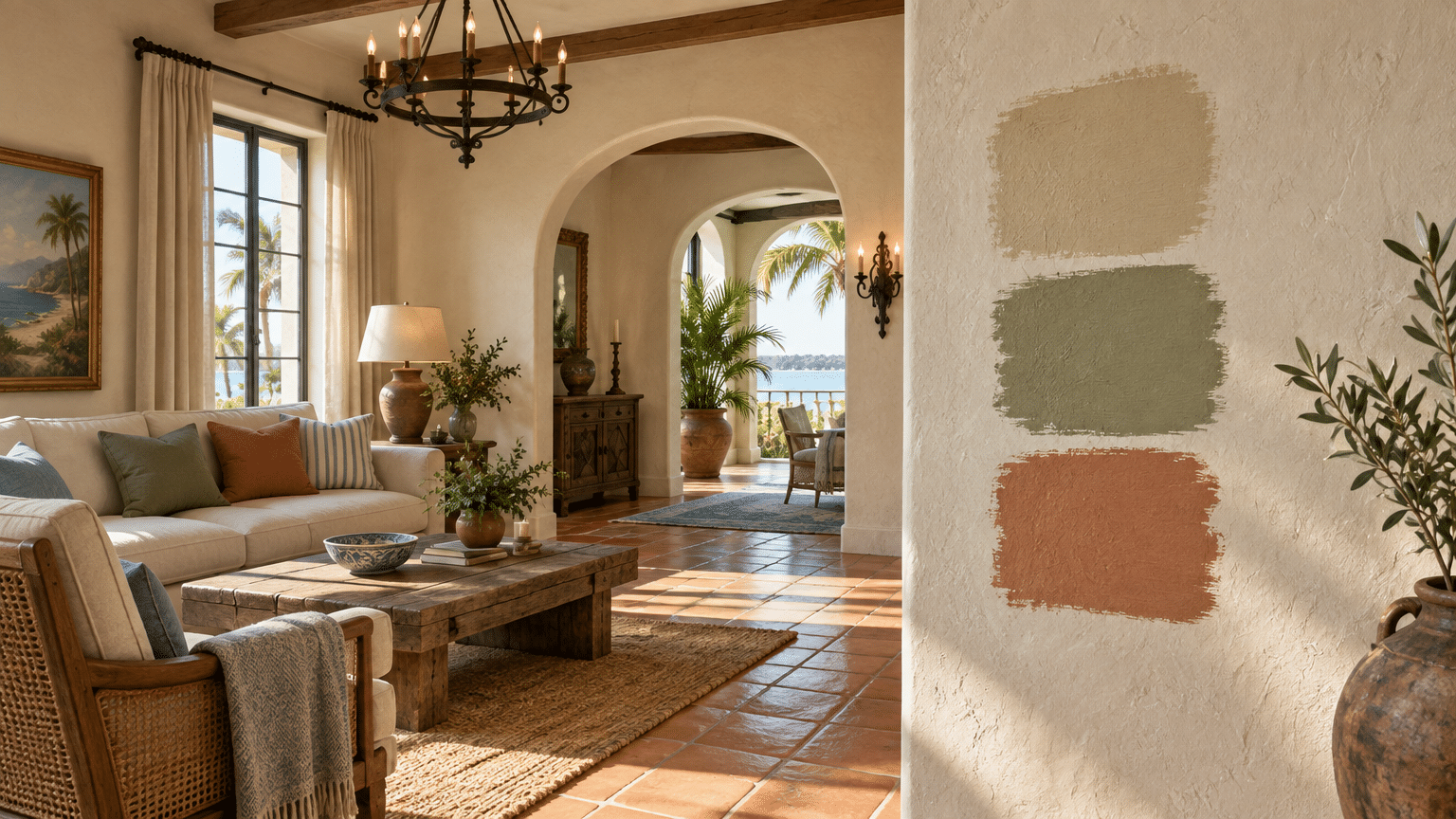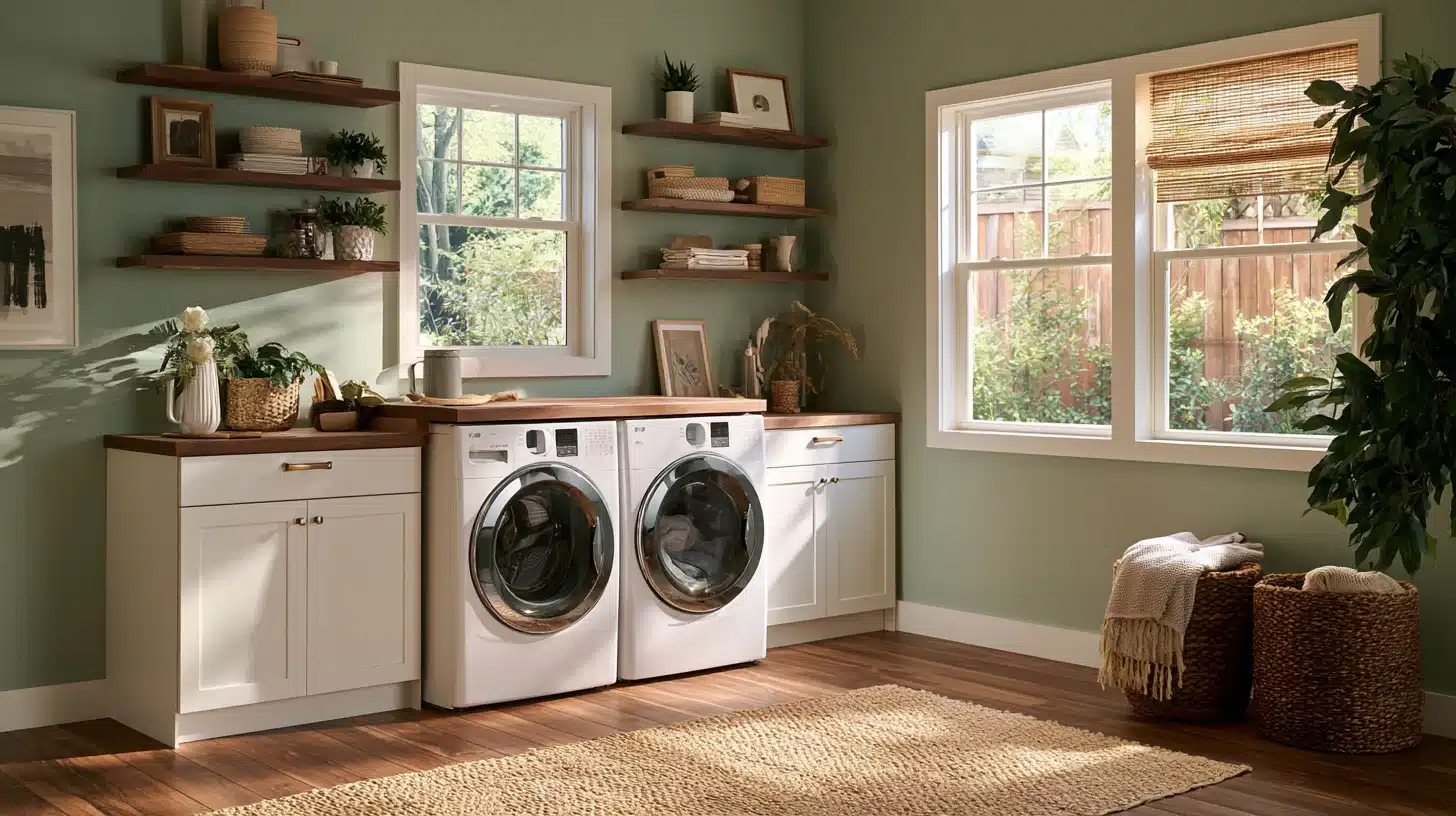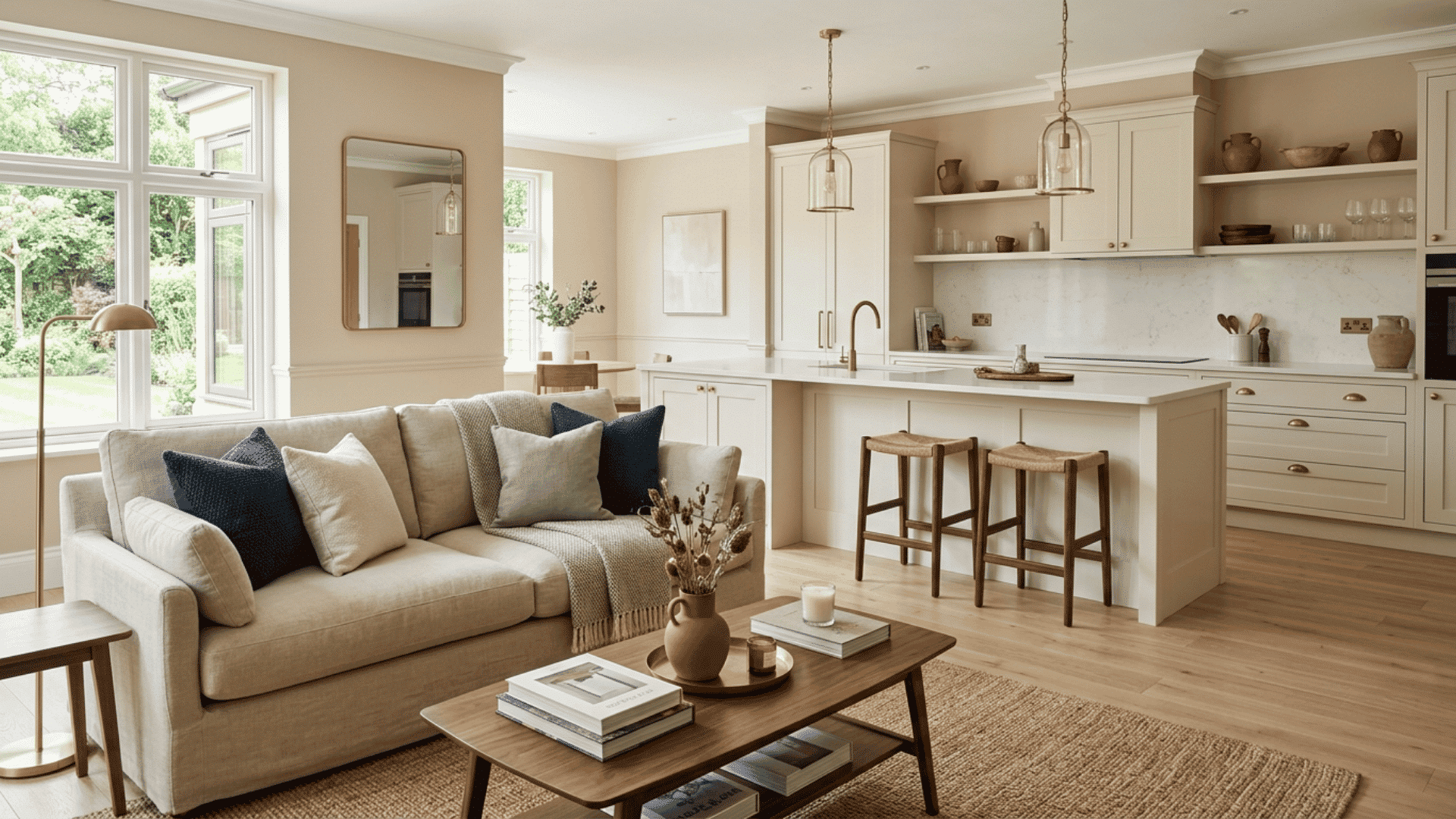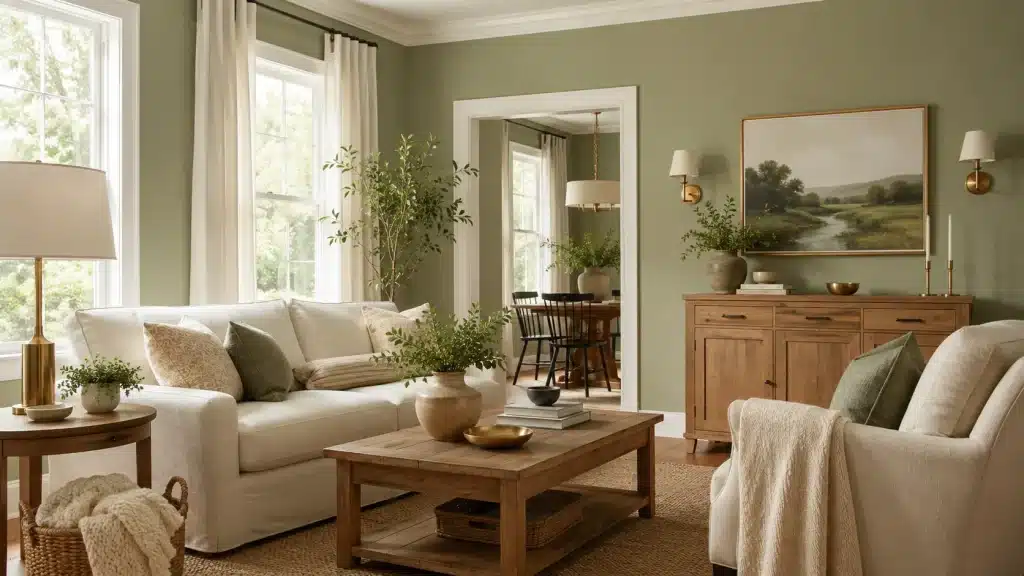
Sage green sits in the green family, but it never reads as a bright, punchy green.
It’s a soft, muted tone that leans gray, often with a hint of yellow or beige. That quality is what makes it feel calm and close to nature.
Benjamin Moore does not sell one paint simply called “Sage Green.” Instead, it offers a range of sage shades, so the look depends on the pick.
This manual breaks down how to choose the right sage green for a home, room by room.
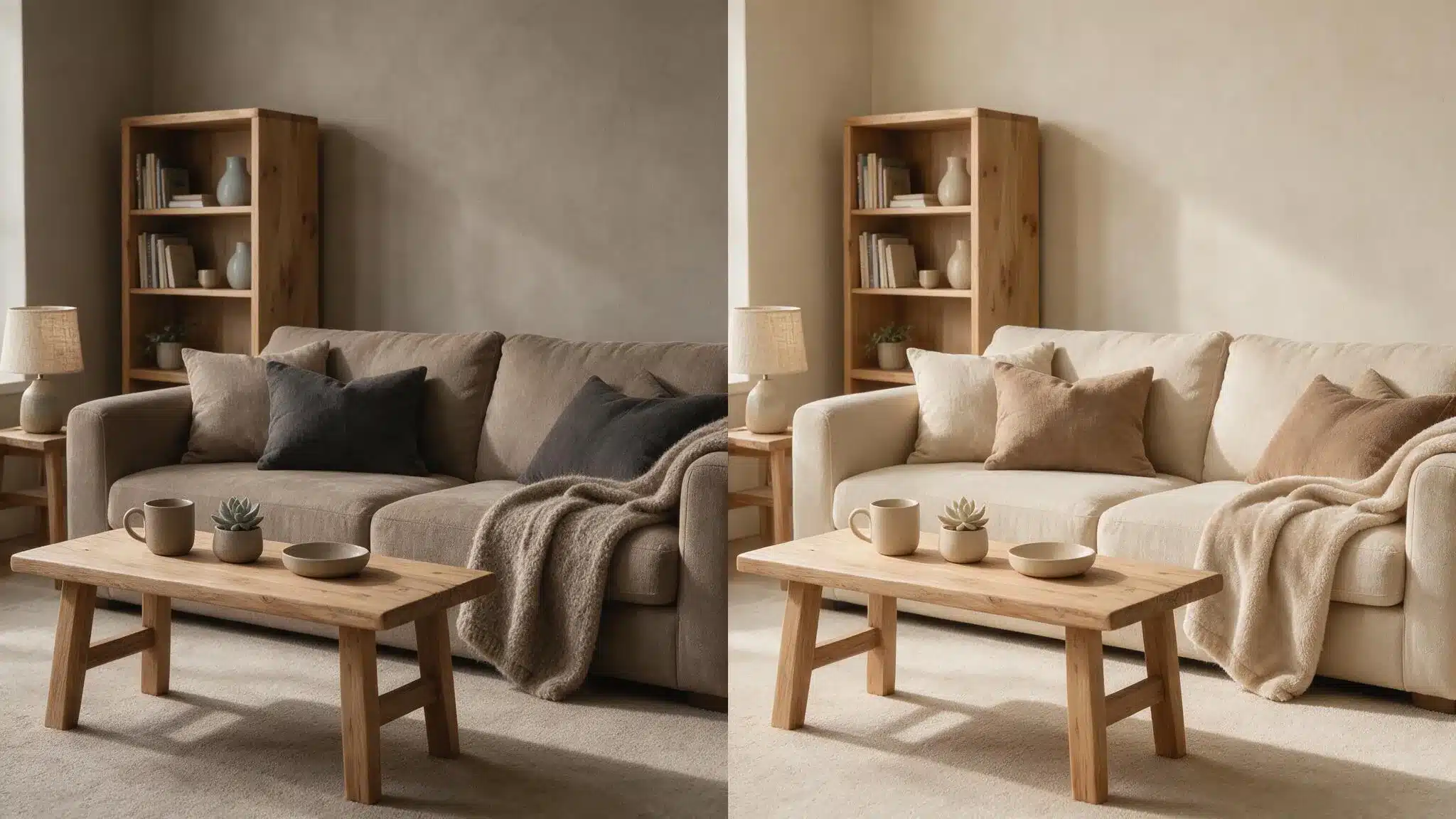
Light changes sage a lot, and that gray undertone is why. Bright, natural light makes it softer and greener, while fading light turns it flat and silvery.
Direction also matters here. North-facing rooms read grayer, and south-facing rooms push the green forward. Warm bulbs cozy it up, and cool bulbs can make it look silver.
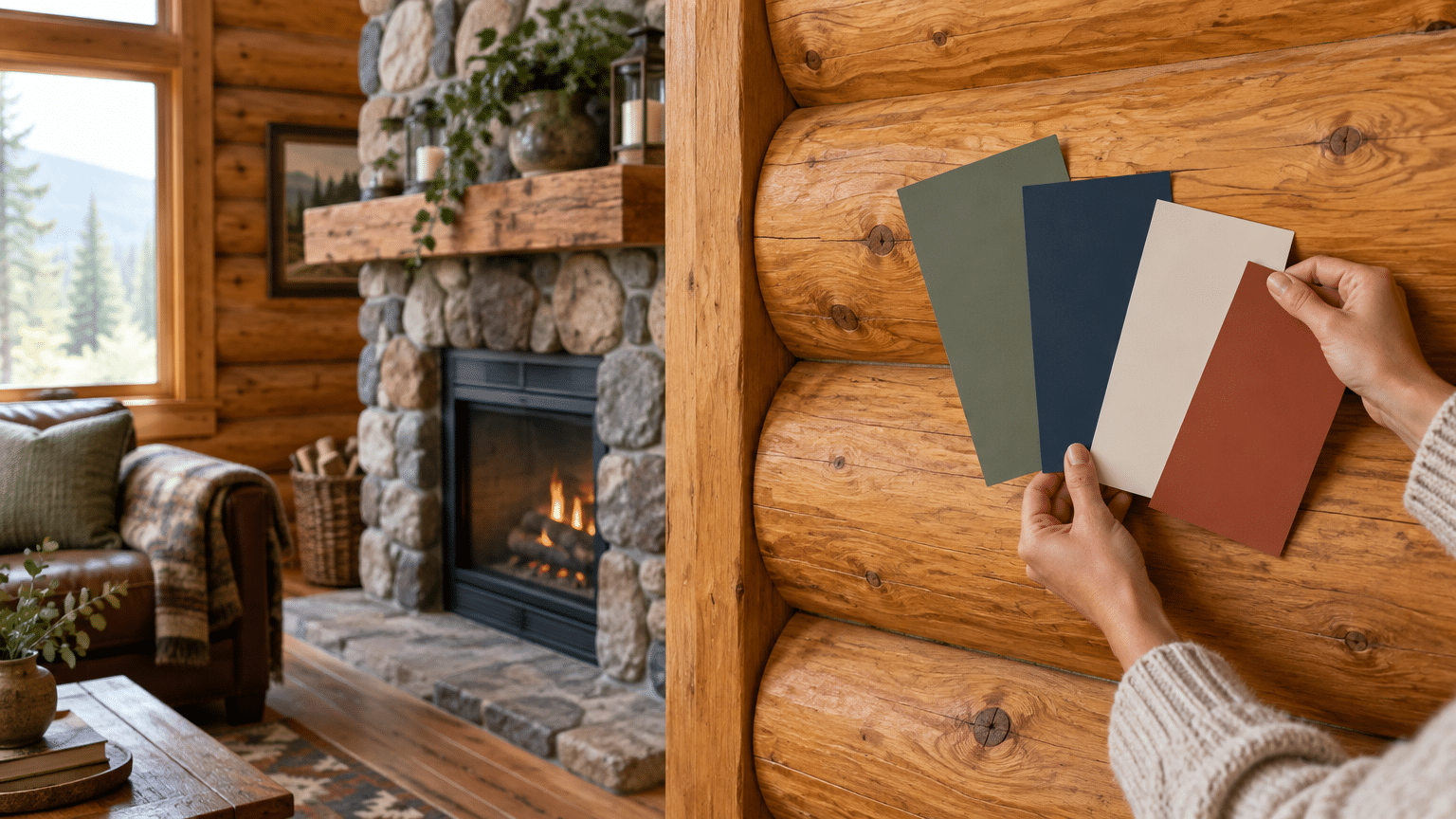
That’s why samples are so helpful. Tape a swatch up and see how it looks in the morning, at noon, and again at night.
Is Sage Green Still a Good Choice in 2026?
Yes, sage green has had a huge run over the past few years. It showed up on kitchen cabinets, bedroom walls, and just about everywhere else.
Because of that, some designers now call it the “new millennial gray.” They feel it has become a bit safe and predictable.
And the trend now seems to be shifting toward deeper greens, such as olives, mosses, and eucalyptuses. Soft blues and earthy pinks are gaining ground as well. But still, the sage green has not vanished.
It works well with woods, brasses, and neutral tones, so it can be used in a wide variety of homes.
However, what really matters is choosing a sage that has some life and character to it, rather than one that feels dull or lifeless.
And when used thoughtfully, it can still work well.
Best Benjamin Moore Sage Green Paint Colors
Some of the most notable Benjamin Moore sage greens come in different variations. Below is a list of the top varieties, ranging from pastel to intense shades.
1. October Mist 1495
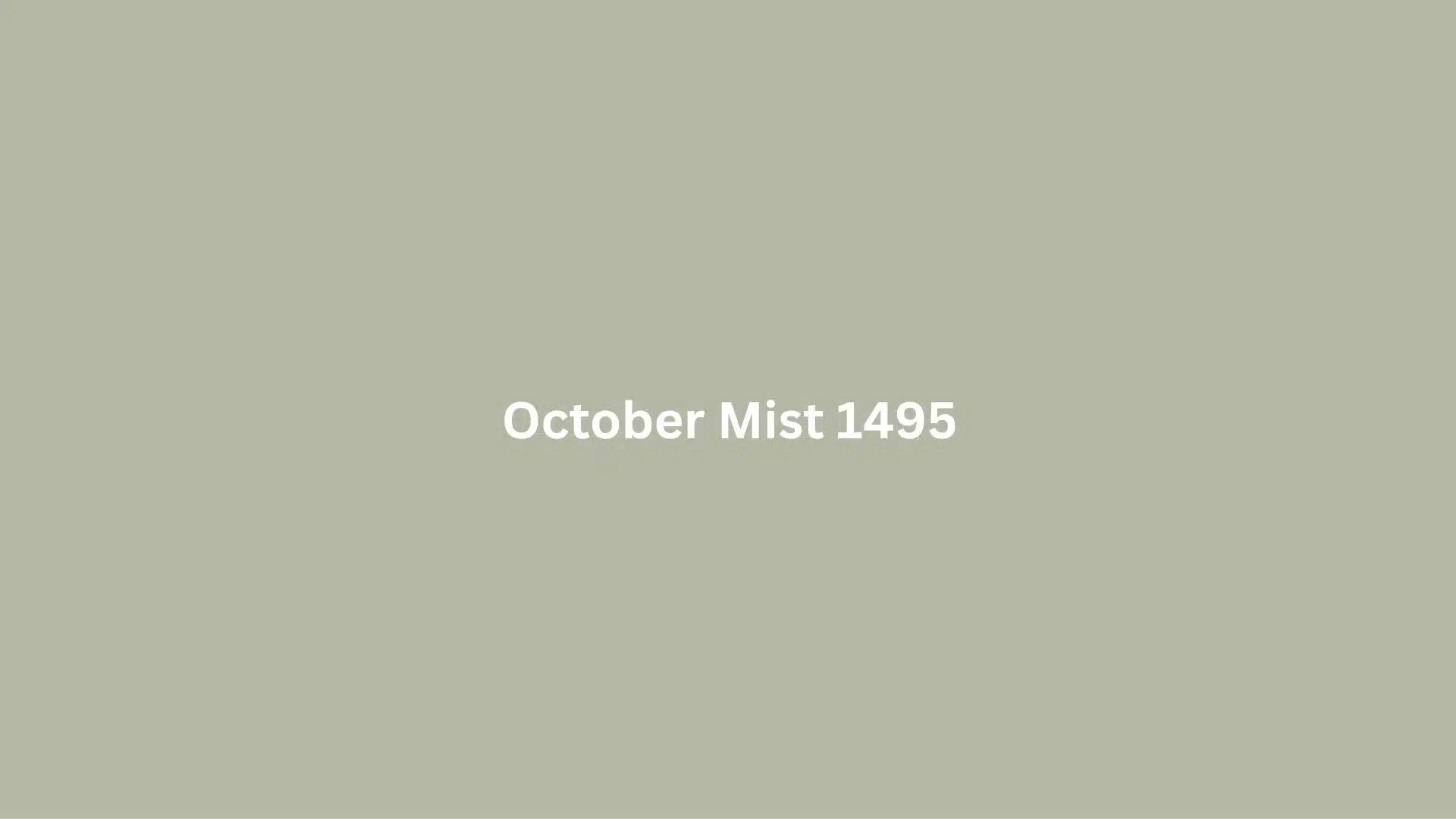
A mellow green-gray sage with a subtle appearance was chosen as Benjamin Moore’s 2022 Color of the Year and is perfect for any space.
LRV:46.54
Undertones: Green mixed with a warm gray, plus a faint hint of yellow that keeps it from feeling cold.
Best Uses: Bedroom and living room walls, kitchen cabinets, and trim. It’s flexible enough for almost any room.
Suggested Finish: Eggshell or matte for walls, and satin or semi-gloss for cabinets and trim.
2. Saybrook Sage HC-114
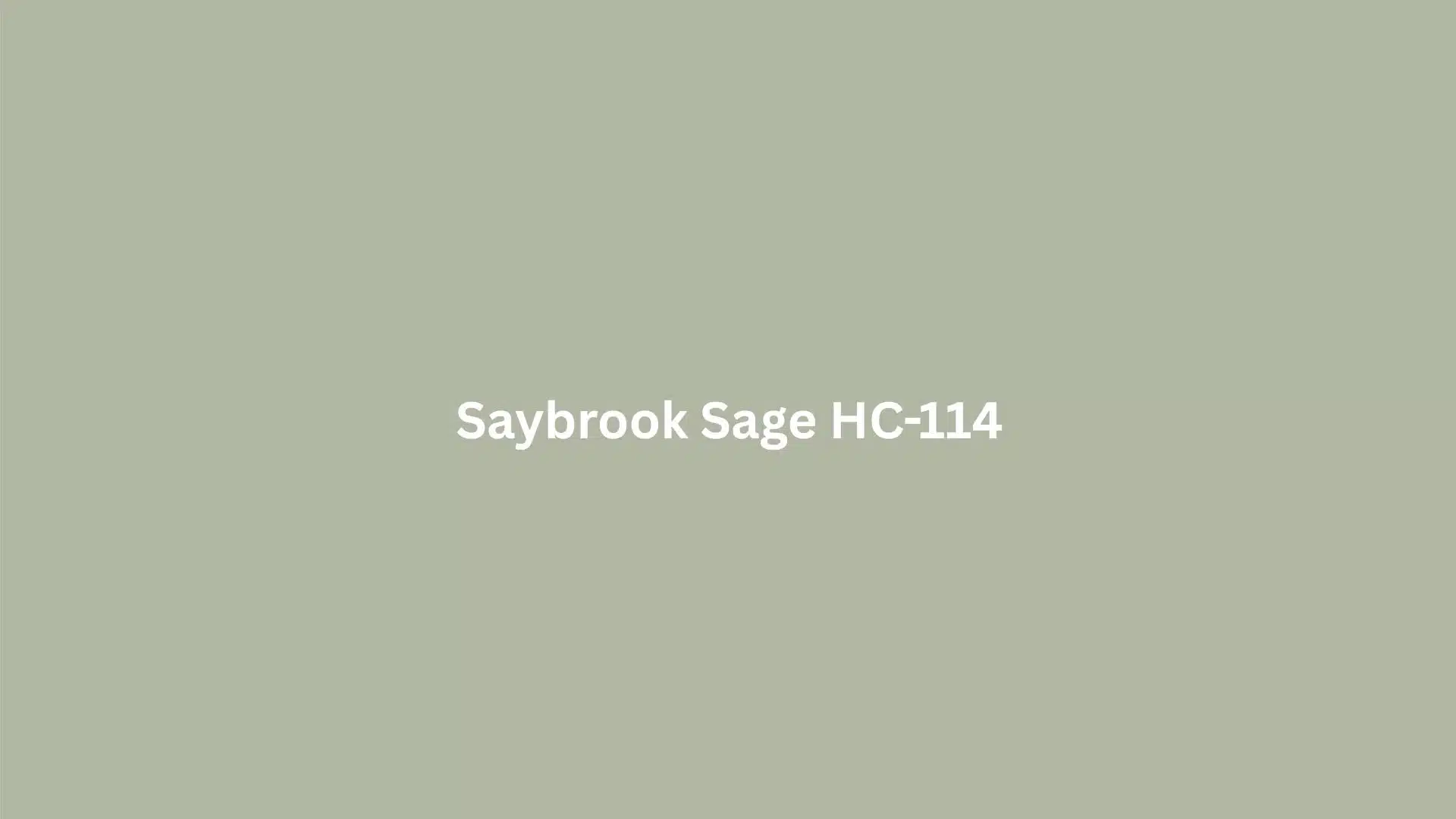
An even-toned sage with a hint of extra greenness, similar to the aloe color. It is a durable choice for both interior walls and exteriors.
LRV:45.46
Undertones: Slightly green, with an aloe undertone and warmth to prevent it from becoming cold.
Best Uses: For living room and bedroom walls, and cabinet work where a more transparent green would normally be used. For a deeper dive into how this one behaves outdoors and in different exposures, see our full Saybrook Sage review.
Suggested Finish: Eggshell or flat finish on the wall, and satin or semi-gloss on cabinets and molding.
3. Oil Cloth CSP-760
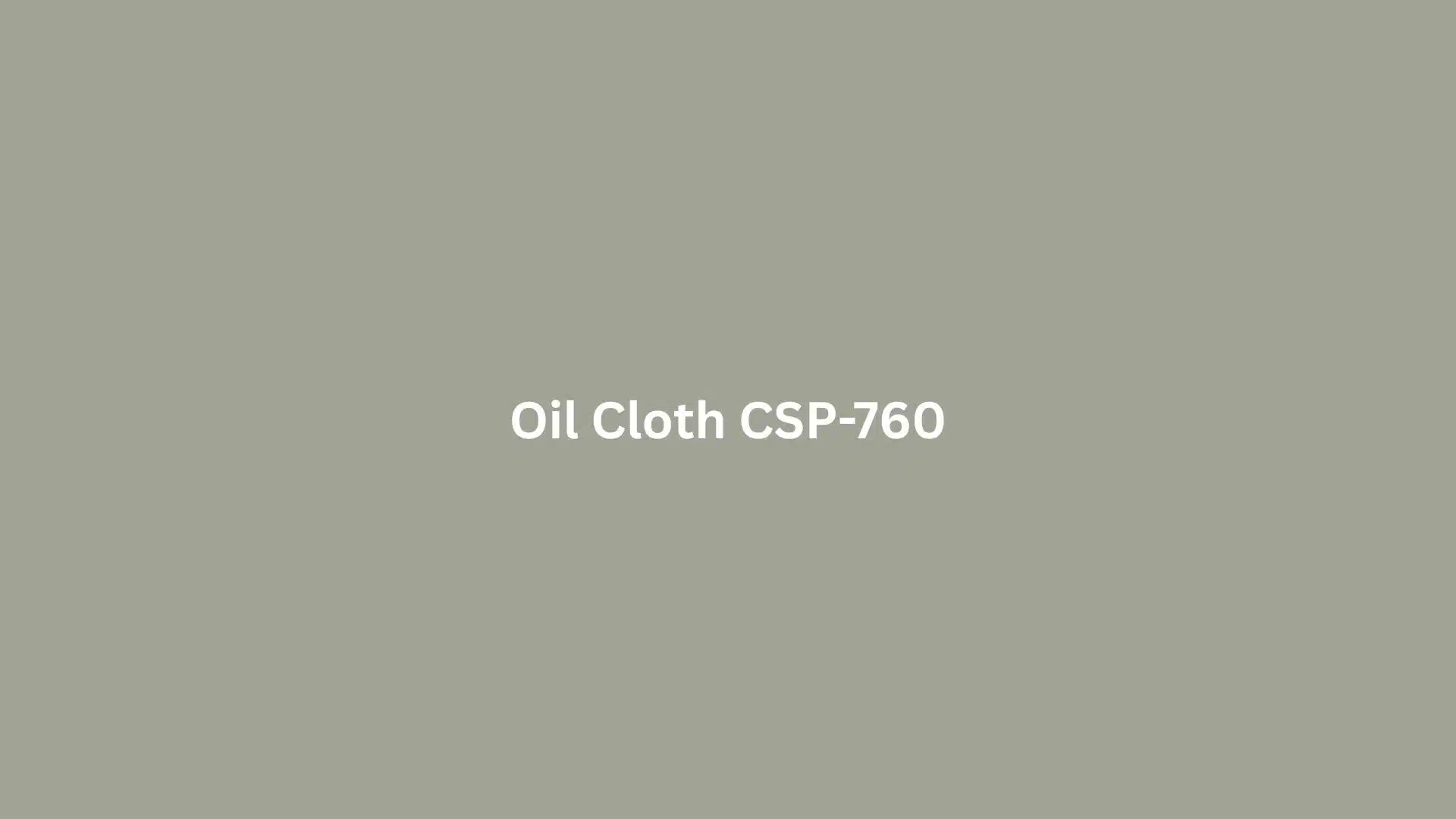
It is a darker green-gray sage with a refined look.
LRV: 35.31
Undertones: Green-gray sage, muted by a touch of gray, with a soft yellow-green base that keeps it earthy.
Best Uses: Accent walls, powder rooms, front doors, and cabinets where a moody, cozy look is the goal.
Suggested Finish: Satin or eggshell for walls and beadboard, and semi-gloss for doors and cabinets.
4. Aganthus Green 472
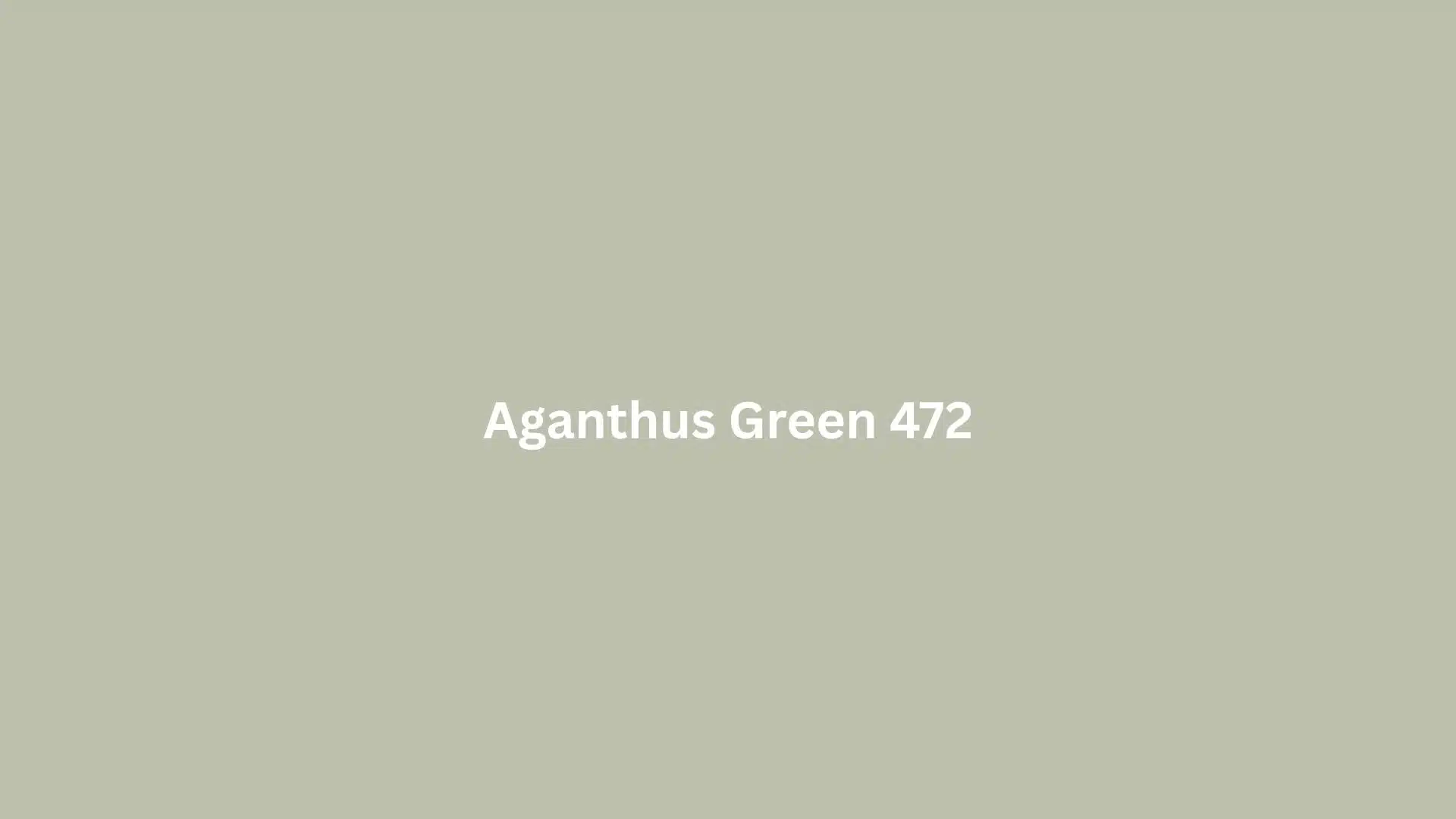
A soft, chalky celadon green that acts almost like a calm neutral.
LRV: 50.37
Undertones: A celadon green softened by chalky gray, with a faint yellow warmth and hints of other muted tones.
Best Uses: Bedrooms, living areas, and home offices where a calm, close-to-neutral green fits.
Suggested Finish: Matte or eggshell for walls, and satin for trim or built-ins.
5. Spanish Olive 1509
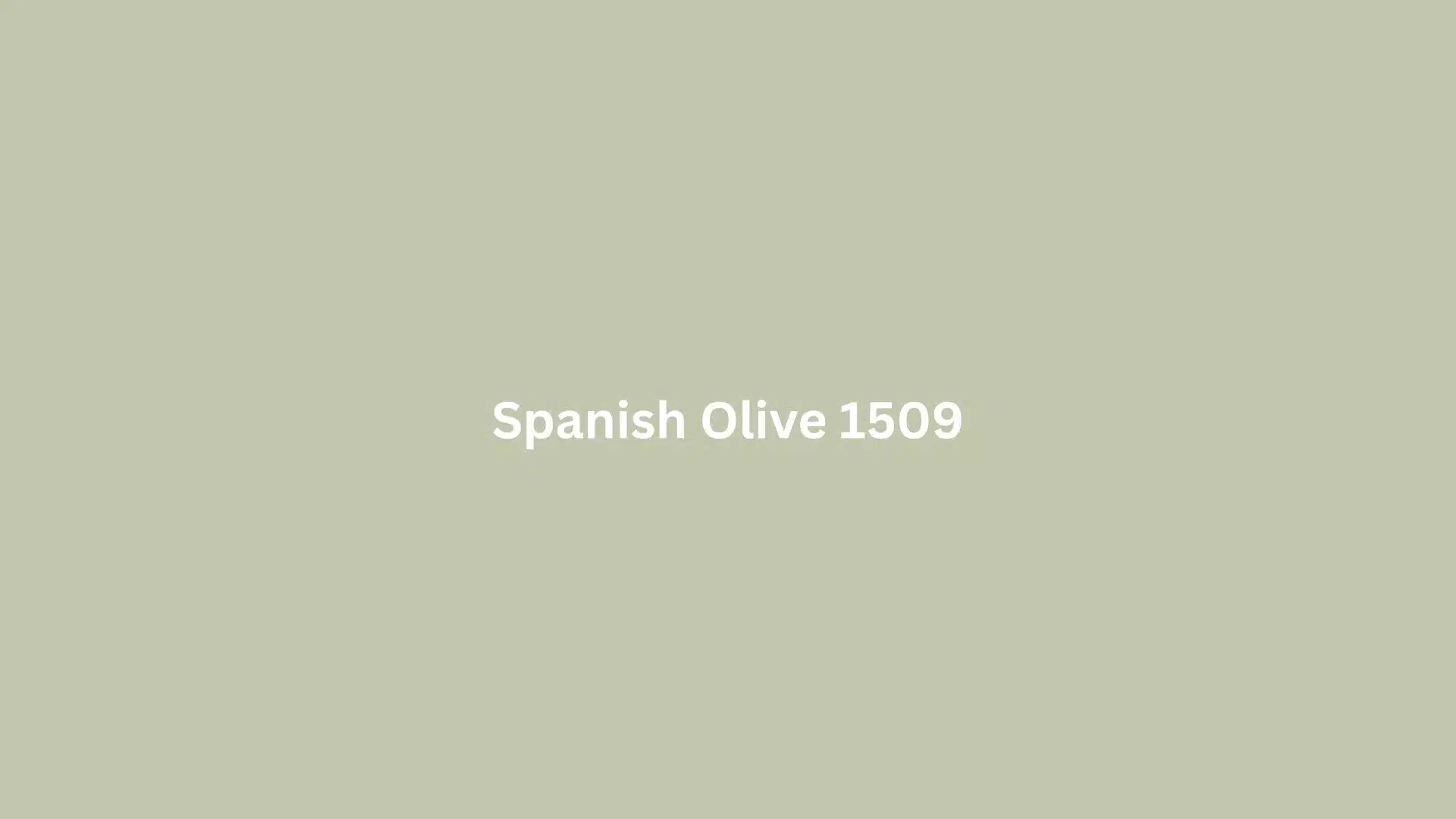
A faded, earthy olive-green with a warm, grounded feel.
LRV: 52.54
Undertones: A faded olive green with a brown warmth that grounds it, plus gray notes that show in cool light.
Best Uses: Interior walls, kitchen cabinets, and exteriors where an organic, lived-in green works well.
Suggested Finish: Eggshell for walls, and satin or semi-gloss for cabinets, trim, and doors.
6. Dry Sage 2142-40
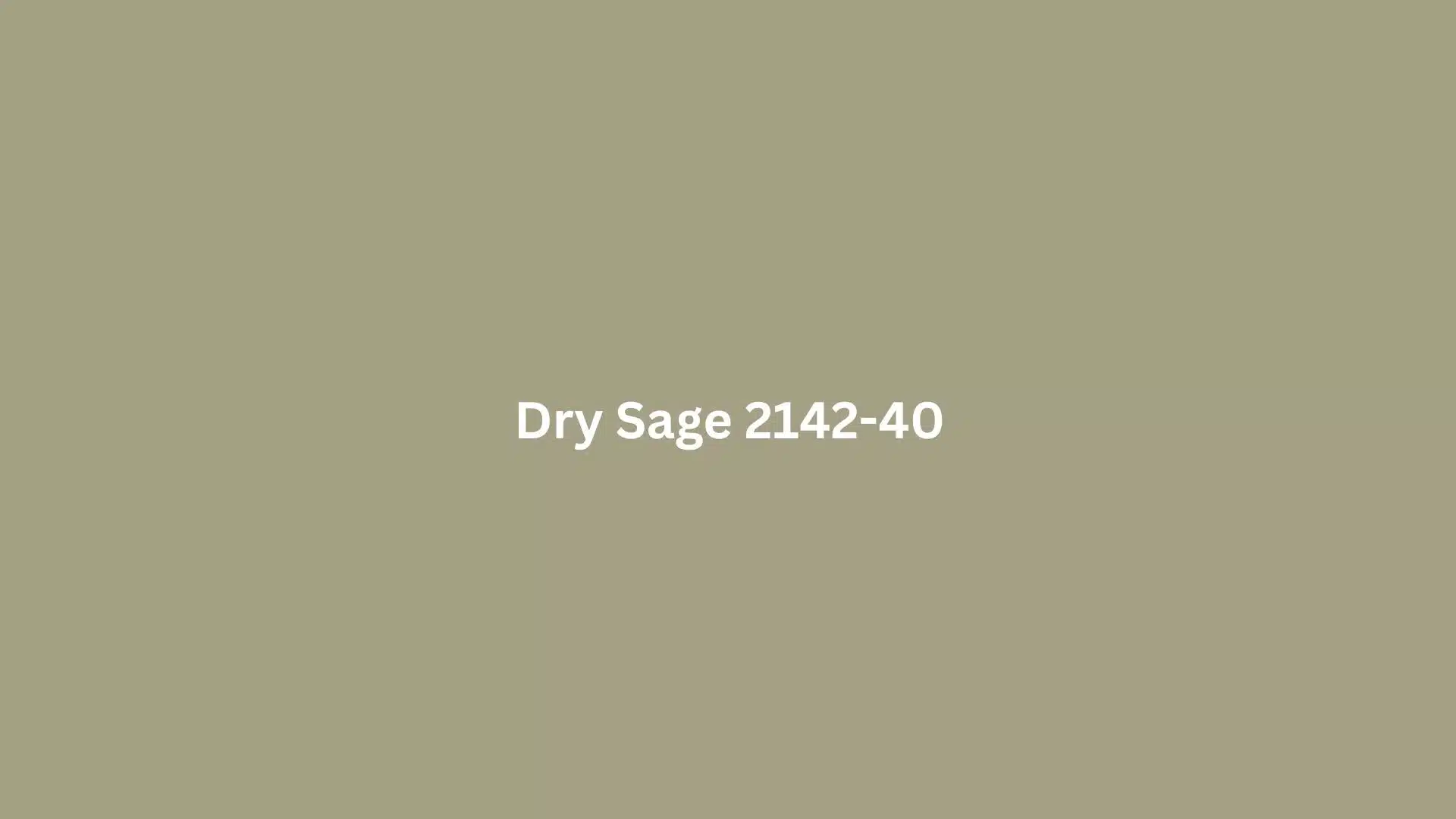
A muted, warm sage green paint that behaves like an earthy neutral. It has a very similar look when compared with Sherwin Williams Thunderous.
LRV: 34.63
Undertones: A muted, warm sage green with soft yellow and olive-beige notes, plus a light gray cast.
Best Uses: Interior walls, cabinets, laundry rooms, and pantries where an earthy, almost-neutral green fits.
Suggested Finish: Eggshell or matte for walls, and satin or semi-gloss for cabinets and trim.
7. Silver Sage 506
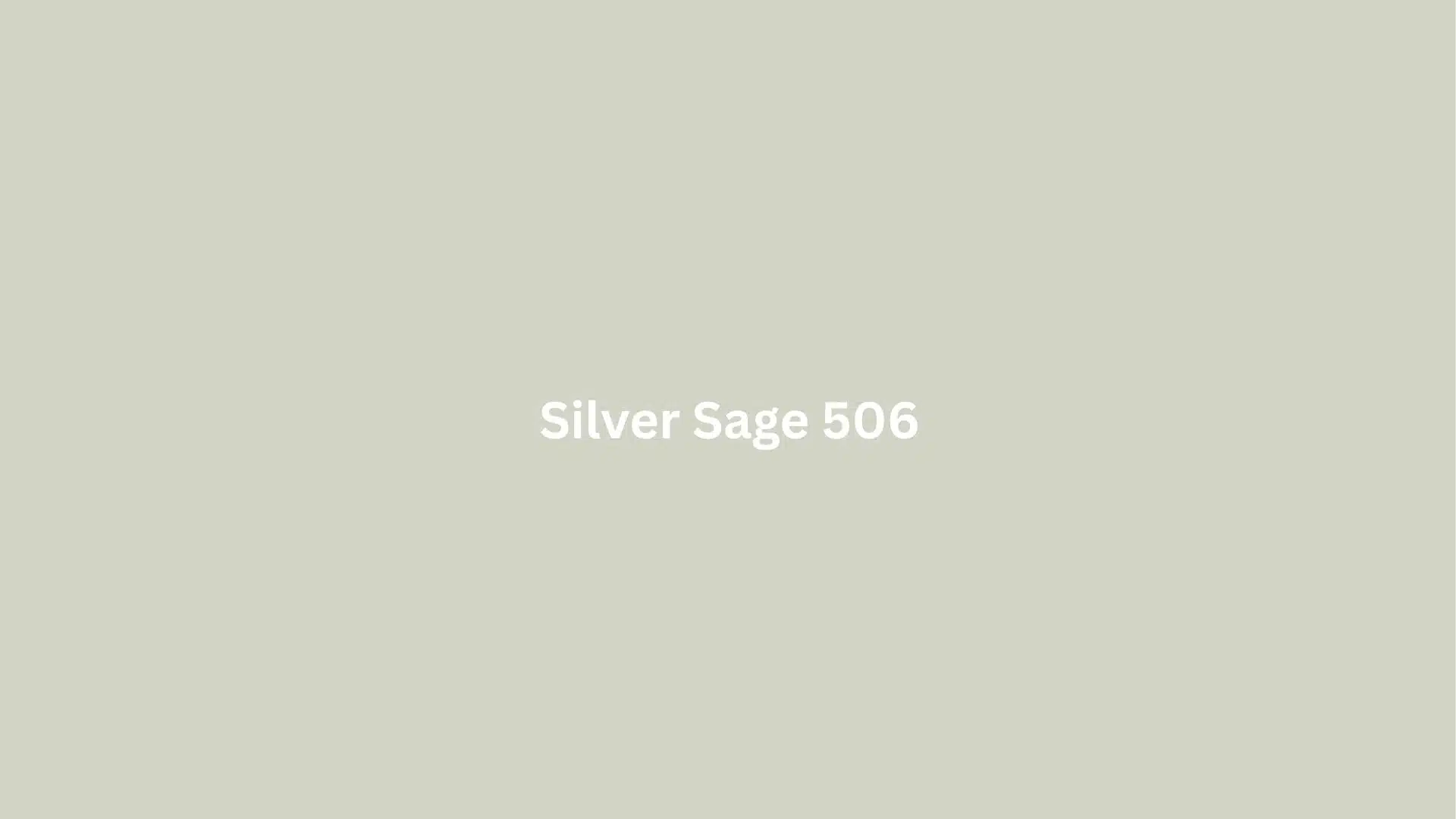
One of the palest picks here, a soft silvery green-gray. It keeps rooms light and airy, and works well in dim or busy spaces.
LRV: 63.26
Undertones: A soft, silvery green-gray with a gentle yellow warmth that stops it from feeling cold.
Best Uses: North-facing or dim rooms, open spaces, and high-traffic areas like hallways and family rooms.
Suggested Finish: Eggshell or satin for walls, especially in busy spaces that need washability.
8. High Park

A deeper, moodier sage with more richness and depth. It adds drama to accent walls, cabinets, libraries, and bedrooms when you want to bring in some warmth.
LRV: 30.43
Undertones: A dark green with gray undertones that are more evident in cooler lighting.
Best Uses: Accent walls, cabinets, libraries, and bedrooms where drama and warmth are wanted.
Suggested Finish: Matte and eggshell for walls, while satin and semi-gloss are ideal for cabinets and doors.
9. Gloucester Sage HC-100

The darkest one here, an olive-sage with a mossy and wrought iron undertone.
LRV: 19.25
Undertones: A warm yellow/olive undertone with a muted gray-green quality. It can read earthy and slightly brownish depending on the lighting.
Best Uses: Living rooms, dining rooms, bedrooms, kitchens, bathrooms, cabinetry, accent walls, and exteriors.
Suggested Finish: Eggshell for walls, satin for trim and cabinetry, and semi-gloss for doors and high-traffic areas
Want to see how sage stacks up against other brands, not just Benjamin Moore? Our roundup of 12 sage green paint colors across brands covers Sherwin-Williams, Farrow & Ball, and Valspar options alongside a few of these.
Light vs Dark Sage Green Colors
Sage green comes in light and dark versions, and the two behave very differently on a wall. Below is how they behave:
| Point | Light Sage Greens | Dark Sage Greens |
|---|---|---|
| Feel in a room | Airy, calm, and open | Cozy, moody, and grounded |
| Best rooms | Small, dim, or north-facing spaces | Larger, well-lit rooms and accent walls |
| Light needed | Reflect light, so they work with less | Absorb light, so they need more of it |
| Examples | Silver Sage, Sage Tint | High Park, Gloucester Sage |
| Trim pairing | Blend softly with most whites | Pop against crisp, bright white trim |
Test a dark sage in the actual room first, since it can read much heavier in low light.
How to Choose the Right Sage Green for Your Home?
Picking the right sage comes down to a few simple checks. The same color can look calm in one room and murky in another, so the space matters as much as the swatch.
To choose the color with confidence, you should think about light, undertone, and the job each room needs to do. These are simple ways to work through it.
- Start with the room’s light and direction. North-facing rooms pull sage grayer and a bit cooler. South-facing rooms warm it up and bring the green forward.
- Decide whether a warm or cool sage fits the mood. Warm sages carry a hint of yellow, while cool ones lean gray or blue.
- Consider the LRV before choosing it. The higher the LRV, the more light and airy the color will be, and the lower the LRV, the deeper and warmer the color will appear.
- Coordinate the white trim with the sage color. If the sage is cool, use a white such as Chantilly Lace; if it is warm, use a white like White Dove.
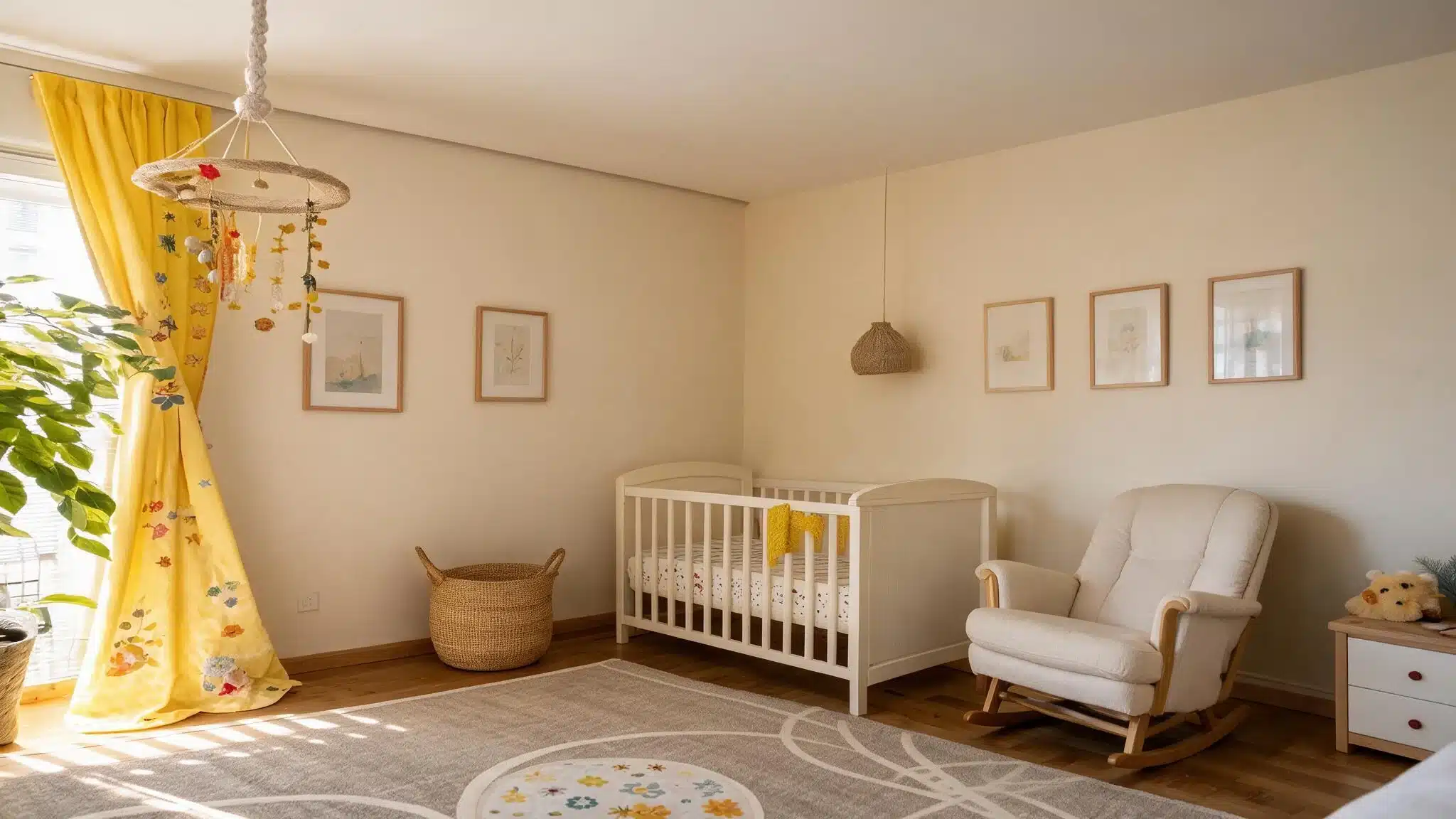
- Consider the function of the room. Light, soft sages are soothing colors for bedrooms and bathrooms, while deep, rich sages are dramatic for cabinetry and accent walls.
Always take samples first, regardless of how confident you are in your decision. Apply paint to two walls, observe the color during the day and night, and live with it for a few days.
Best Colors to Pair With Benjamin Moore Sage Green
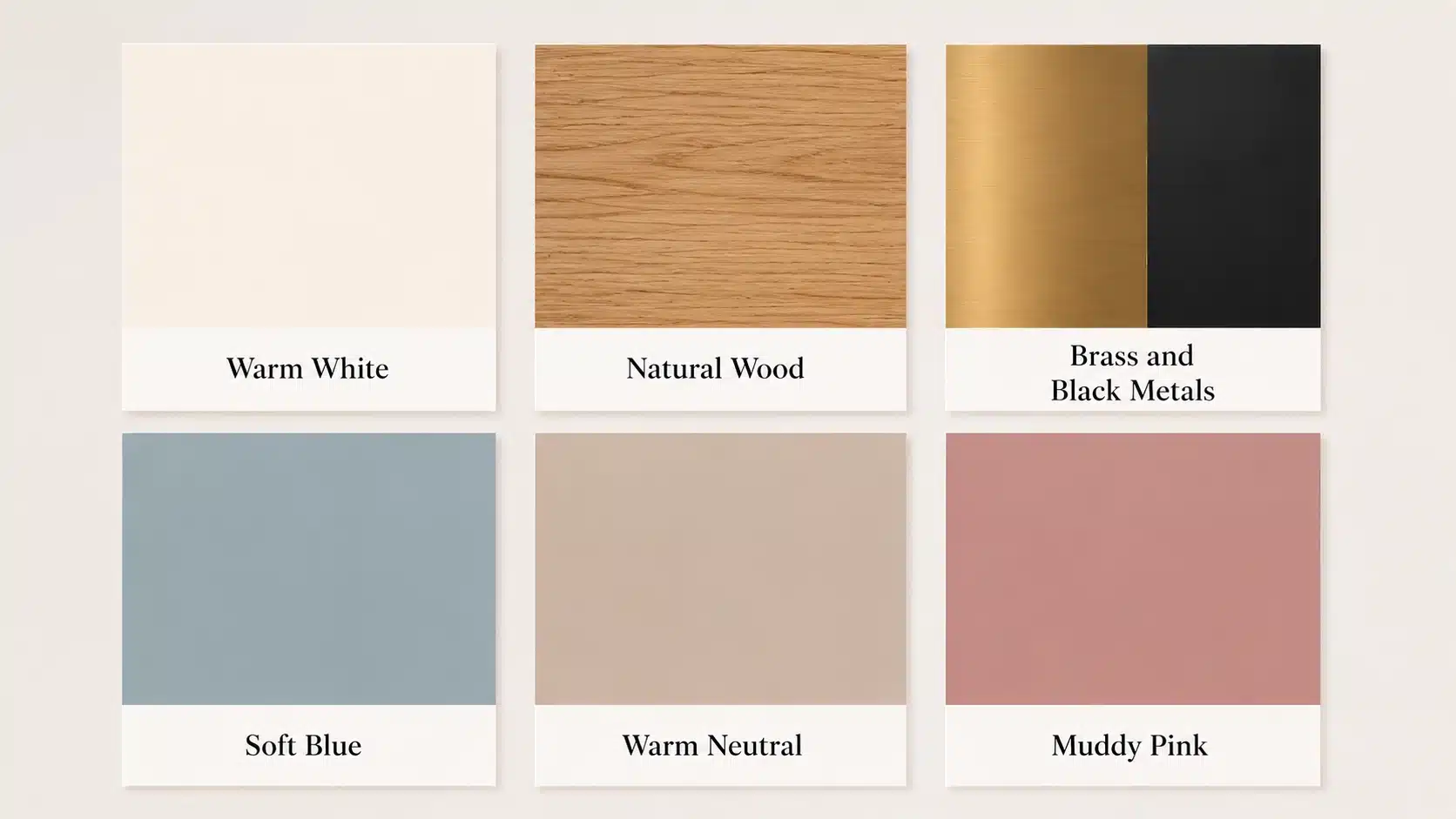
Sage green plays well with many shades, from soft whites to moody metals. The right partners bring out its calm, earthy side.
1. Warm White
White is the easiest partner for sage green, but the shade of white matters. Warm, creamy whites like White Dove suit warm sages best.
For cooler sages, crisp whites like Chantilly Lace work better. The right white keeps trim and ceilings looking clean, not dingy.
2. Natural Wood Tone
Sage and wood belong together. The color already leans earthy, so it settles right in next to oak, walnut, or lighter pine.
Wood floors, beams, and furniture all warm up a sage room. This pairing feels grounded and close to nature.
3. Brass and Black Metal
Sage green becomes more graceful with the addition of metallic finishes.
Gold and brass complement sage green and bring warmth and shine to the otherwise dull-looking color.
Matte black and oil-rubbed bronze provide a contrast finish that looks grounded and refined. They can be used for cabinet handles, light fixtures, faucets, and other hardware.
4. Soft Blue
Both blue and sage green are soothing and peaceful colors; thus, they go together perfectly well.
Soft slate and dusty blue can be used in bedroom and bathroom interior designs where one needs a cool atmosphere.
5. Warm Neutral
The combination of beige, greige, and soft tan completes the palette of sage colors. They act as balancing elements for the green tones to avoid coldness.
They can be used on rugs, sofas, and other large items. The combination creates a sense of layering.
6. Muddy Pink
For something less expected, a soft, muddy pink pairs surprisingly well with sage. The two share a gentle, muted quality, so neither one fights the other.
A little pink in pillows or art adds warmth. It’s a nice way to keep sage from feeling too safe.
October Mist vs Saybrook Sage – The Bestselling Sage Shades by Benjamin Moore
The two versions of sage green color are nearly identical twins, which is why people confuse them all the time. But there are some small differences between them.
| Point | October Mist 1495 | Saybrook Sage HC-114 |
|---|---|---|
| Lightness (LRV) | Around 47, so a touch lighter and airier | Around 45, so a shade deeper |
| How green it reads | Balanced blend of green and warm gray | Leans more green, close to an aloe tone |
| Undertone | Soft gray with a hint of yellow | Green identity with subtle warmth |
| Collection and code | Classics Collection, code 1495 | Historical Collection, code HC-114 |
| Best feel | Reads soft and can look silvery in low light | Holds its color and feels a bit richer |
Conclusion
Choosing Benjamin Moore sage green really comes down to patience and a few good samples. There is no single perfect shade for every home.
The right one depends on the room, the light, and the mood a homeowner wants.
October Mist suits most spaces, while deeper picks like High Park add drama. Lighter shades keep small rooms open and calm.
The main thing is to test before committing, since sage shifts so much on the wall. Anyone still comparing shades can browse the room ideas above and start narrowing things down. The right sage is worth the wait.
Frequently Asked Questions (FAQ’s)
1. What Color is Replacing Sage Green?
Designers are shifting toward deeper greens, like olive, moss, and eucalyptus, plus soft blues and muddy pinks.
2. What Makes Benjamin Moore Sage Green a Popular Choice?
Its calm, earthy feel and near-neutral behavior let it pair with almost any style, wood, or metal finish.
3. What Are the Most Popular Sage Green Paint Colors?
October Mist, Saybrook Sage, and Soft Fern rank among Benjamin Moore’s most loved sage shades.
4. Is Sage Green Good for Home Exteriors?
Yes, sage blends nicely with natural surroundings and pairs well with stone, wood, and white trim outdoors.