Here’s something I didn’t fully appreciate until I started really paying attention to roofs on my walks around the neighborhood: it’s not just the color doing the visual work up there. It’s the shape. Two roofs in the exact same shade of charcoal can look completely different depending on whether the surface is flat, wavy, ridged, or textured. The profile, meaning the actual physical shape of the roofing material, changes everything about how a house reads from the street.
I think we all default to thinking about roof color first, since that’s the easiest thing to picture. But profile is doing at least as much heavy lifting, and it’s worth understanding before you fall in love with a swatch.
What “Profile” Actually Means
When people talk about roof profile, they’re talking about the physical shape of the material itself, not the color or the brand. A flat panel is one profile. A wavy, barrel-shaped panel that mimics clay tile is a completely different one. A deeply textured surface with shadow lines built in, like something meant to look like wood shake, is yet another.
The reason this matters so much is that profile controls how light and shadow move across your roof. A flat surface reflects light evenly, so the color you see is pretty much the color you get, consistently, across the whole roof. A dimensional profile catches light unevenly, creating natural variation, depth, and shadow that a flat surface simply can’t produce, even in the exact same color.
Why Profile Often Outweighs Color
A muted gray on a flat panel reads as one steady tone from every direction. That same gray on a deeply textured, tile-inspired profile can look several shades different depending on where the sun is and which part of the roof you’re looking at. Two houses with roofs described as the exact same color can end up looking nothing alike once installed, simply because shape is doing more of the visual work than color is.
The Flat, Clean Look
Flat or lightly ribbed profiles give a house a crisp, graphic feel. There’s no shadow play, no texture to speak of, just clean, consistent lines from ridge to eave. This tends to suit homes with a more modern or minimalist personality, where the whole point of the design is restraint rather than ornamentation.
I’ll admit this look isn’t for everyone. On a home with a lot of traditional detail already, brick, decorative trim, an ornate porch, a perfectly flat roof can feel like it’s fighting the rest of the house instead of complementing it. But on a newer build or a home with clean architectural lines, that same flatness reads as intentional, almost like the roof is in on the design decision rather than just sitting on top of it.
How Sunlight Changes the Story Throughout the Day
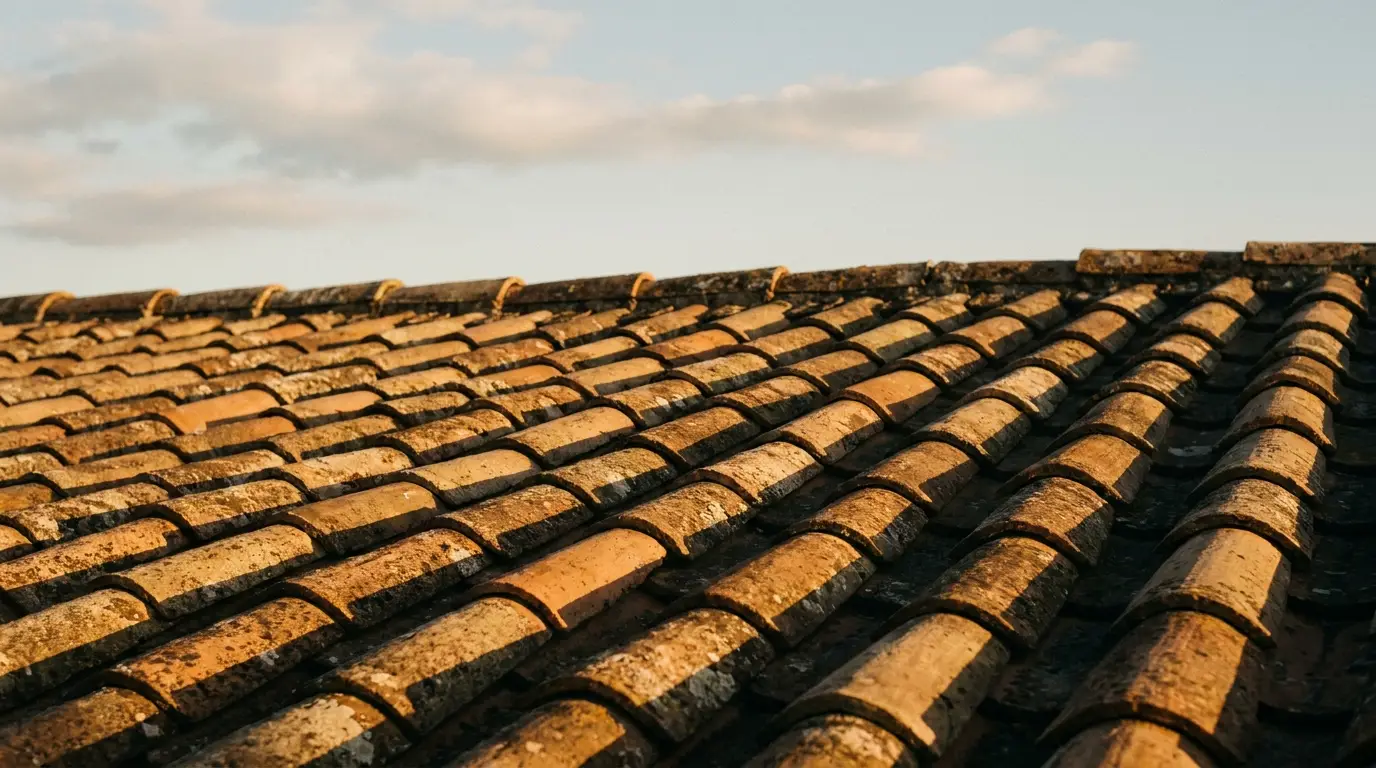
One thing that’s easy to miss until you’ve lived with a roof for a while is how much its appearance shifts over the course of a single day. Morning light tends to be softer and more golden, which can warm up a roof’s tone and soften harsh shadow lines. Midday sun flattens shadows and can make even a dimensional profile look temporarily less textured than it really is. Late afternoon light, especially the low, angled kind, tends to be the most flattering for textured profiles, since it rakes across the surface and deepens every ridge and groove.
Flat profiles are far less affected by this shift, since there’s little texture for the light to catch in the first place. Textured and wavy profiles genuinely look like different roofs at different times of day.
The Wavy, Tile-Inspired Look
At the other end of the spectrum, you’ve got profiles shaped to mimic clay tile, those rounded, overlapping curves you’d see on a Mediterranean or Spanish-style home. This shape creates a rhythmic, repeating shadow line across the whole roof, which gives even a fairly simple house a sense of history and warmth.
What surprised me most when I started looking into this is that you don’t need actual clay tile to get that look anymore. A tile-style steel roofing system can recreate a similar profile while weighing far less than traditional clay tile. So if you’re drawn to that Mediterranean silhouette but your home (or your budget) can’t really support genuine clay, this approach is worth considering.
The Deep, Textured Look
Somewhere in between flat and wavy, you’ve got deeply textured profiles designed to mimic things like wood shake or slate. These have a rougher, more irregular shadow pattern, less rhythmic than tile, more organic and varied, which tends to suit cottages, Craftsman homes, or anything with a rustic or woodsy feel.
This is where a textured, dimensional finish really earns its keep. Because the surface itself has built-in shadow and variation, the roof reads as rich and layered even from a distance, in a way a smooth, single-tone surface just can’t match.
How Roof Pitch Changes What You Actually Notice
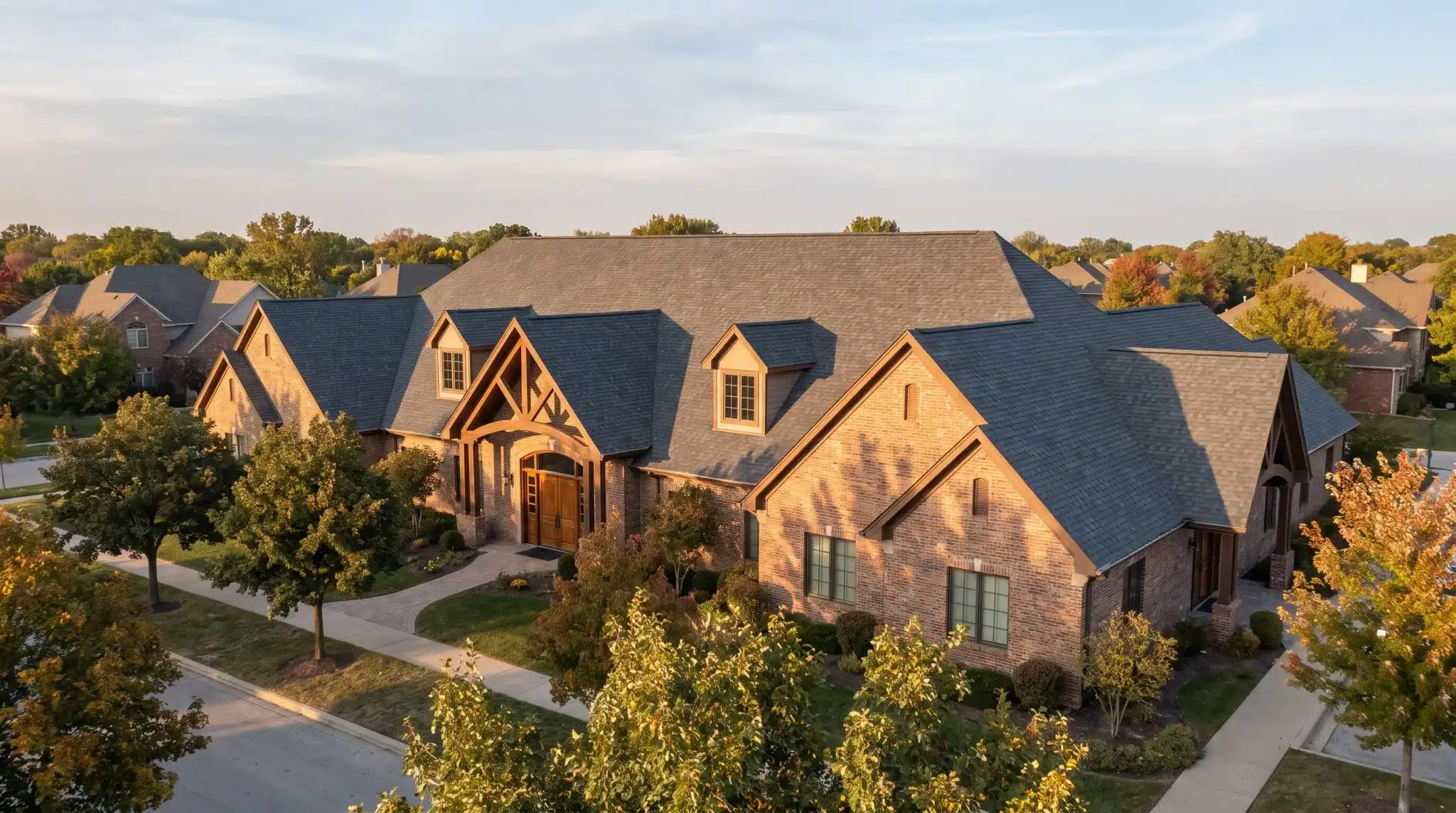
Pitch, meaning how steep or shallow your roof is, has a lot to do with how much of this texture you actually see from the sidewalk. A steep roof presents a large, tilted surface almost directly toward the street, so a dimensional profile is on full display, shadows, ridges, and all. A low-slope roof behaves differently. Because it’s closer to flat, you’re viewing it more from an angle and often from farther away, which naturally softens whatever texture is up there. On that kind of roofline, a heavily dimensional profile can end up looking flatter than intended, while a cleaner profile tends to read the way it’s meant to.
Matching Profile to Your Home’s Architectural Style
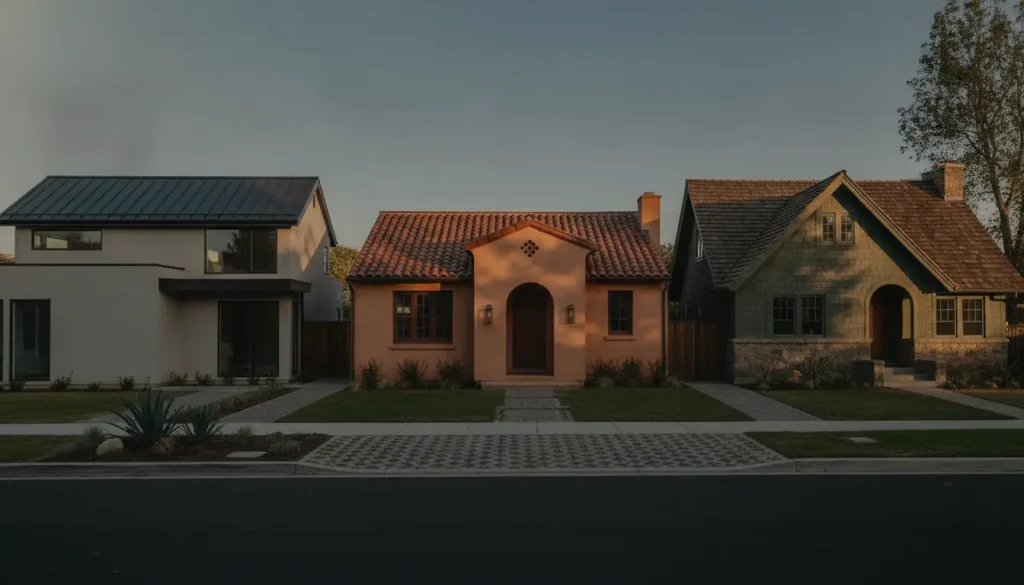
If I had to boil this down to one piece of advice, it would be this: look at what your house is already doing before you pick a profile. A home with lots of traditional detail, arched windows, stucco, decorative ironwork, tends to want a wavy or textured profile that continues that story onto the roof. A home with clean, simple lines and minimal ornamentation usually looks better with something flatter or more geometric.
This pairing tends to follow architectural style pretty closely. Mediterranean, Spanish Colonial, and Tuscan-influenced homes almost always lean toward wavy, tile-inspired profiles, since that curved shadow line is part of what defines the style. Craftsman and cottage-style homes tend to favor deeper, more irregular texture that echoes wood shake. Modern farmhouse and contemporary builds usually look most at home with something flatter or more geometric, where the roof adds structure rather than ornament.
Clean Lines for a Different Kind of Statement
If flat isn’t quite graphic enough for your taste but true wavy tile feels like too much texture, there’s a middle ground worth knowing about. Modular steel roofing creates strong, repeating lines that feel clean and architectural without looking overly plain. Instead of relying on deep texture, it adds visual rhythm through consistent geometry, making it a popular choice for modern farmhouse and contemporary homes that aim for a balanced, intentional appearance.
Why a Sample Beats a Photo
Online photos flatten all of this. A picture taken in even, diffused light can’t show you how a profile will look at different times of day, or how it will read from your own driveway rather than a stock angle. Standing in front of a full-size sample outdoors gives you a far more honest sense of what you’re actually choosing.
Before making a final decision, it can also be helpful to compare real product samples rather than relying only on online photos. Manufacturers such as Novatik offer different profile styles that make it easier to see how shape, texture, and color influence the overall character of a home.
The Bottom Line
Color gets all the attention, but profile is doing just as much work in how your roof, and by extension your whole home, reads from the street. Flat profiles bring clean, modern restraint. Wavy, tile-inspired shapes bring warmth and history. Deeply textured profiles create rustic character, while modular profiles offer a more architectural and geometric appearance.
Before falling in love with a particular color, take a little time to consider the profile carrying that color. It may have an even greater influence on how your home looks for years to come than the shade you eventually choose.