You’ve found the land. Now you want to know when you’ll actually be handed the keys.
In the US, building a house typically takes seven to twelve months. However, that figure varies depending on your region, the style of residence, and a few other factors.
Here’s the full breakdown: the stages, the typical build time for each, and where things tend to slip. Let’s get into it.
How Long Does it Take to Build a House?
In the US, the construction of a typical home takes seven to twelve months. That includes the time from the day you receive your permit to the day you move in.
Easy structures are completed more quickly. Larger or custom-built homes require more time. According to Census Bureau data, the national average is approximately nine months.
How Long Each Build Type Actually Takes
Depending on who builds the house and how, the build time varies significantly.
Using data from the 2024 Census Bureau, the primary kinds are compared as follows:
Spec homes, or homes built for sale
They take roughly 7.6 months to complete. These are by far the fastest builds. The same floor plans are often used by builders. Work proceeds swiftly because their personnel is familiar with the routine. This is the best option if you want to move quickly.
Homes built by contractors
Takes roughly a year. For your own lot and your own plans, you employ a builder here. The schedule is extended by that custom work. You have more control over the design, but it takes longer. Material orders and permit reviews also cause delays.
Homes erected by owners
This takes around fifteen months. These are the most time-consuming. A large portion of the job is either managed or handled by you. Slow development is typical when balancing a build with your day job. Nevertheless, many people choose to wait to save money and stay involved.
It also matters where you reside. At about eight months, the South finishes the quickest. At about 13.5 months, the Northeast takes the longest.
Slow permit offices and harsh winters drive these increases.
Key Phases in the House Building Timeline
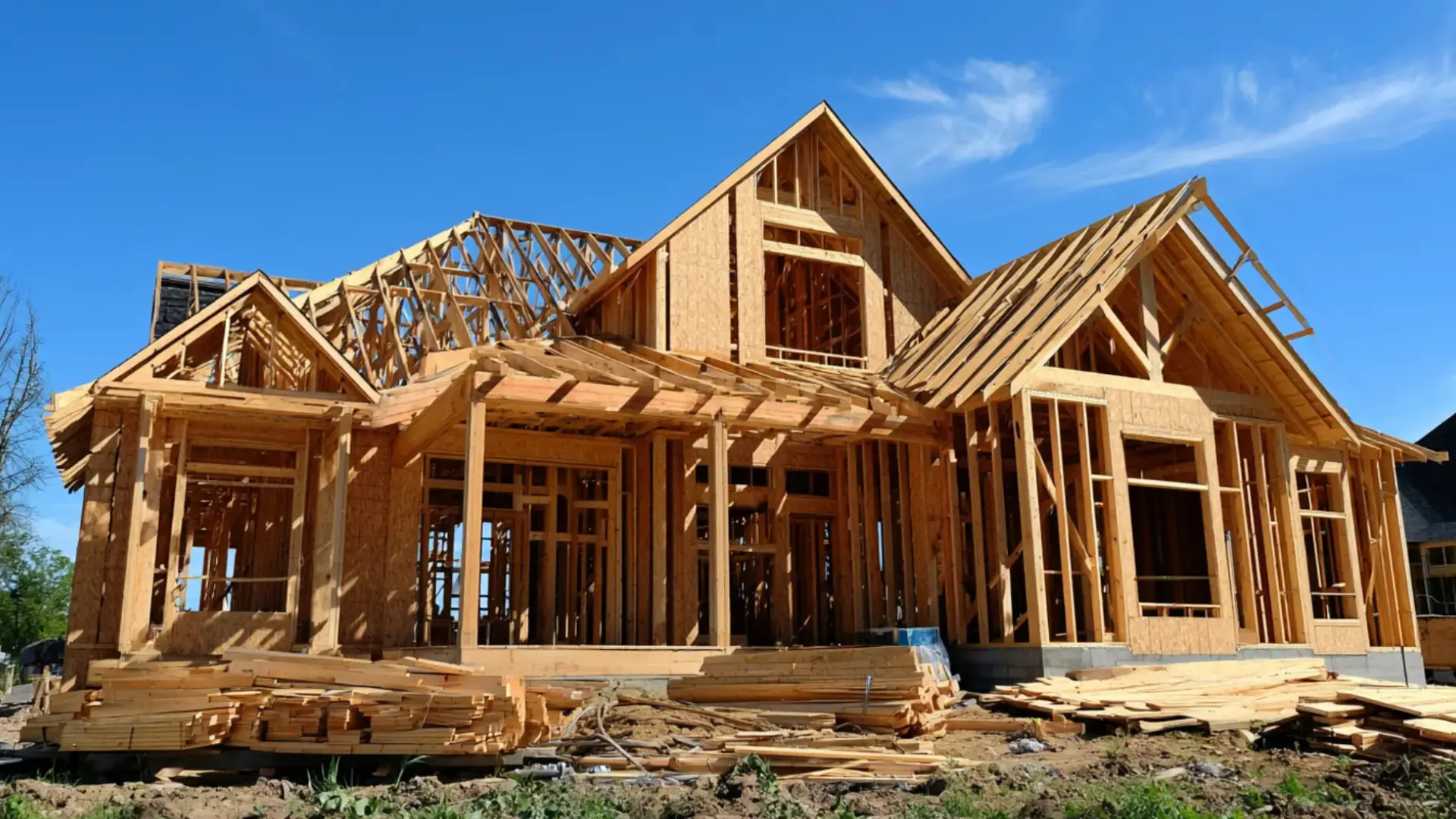
There are distinct phases in the construction of a home. Before the next phase may begin, the previous one must be completed.
These are the events that take place and the duration of each phase.
Planning and Permits (1 to 2 Months)
On paper, this is where it all starts. You choose a floor plan, or you work with an architect to finalize your own design and drawings, which then have to be reviewed against local code before anyone breaks ground. After that, you submit the plans to the city for approval.
The permit office verifies that your construction complies with municipal regulations. Here, large cities can take longer, up to three months.
It is a mistake to rush this process. You can avoid issues later with a clean, authorized plan.
Site Prep and Foundation (1 to 2 Months)
The main construction on your property begins now. Workers mark the plot, level the ground, and remove trees. The concrete foundation is then excavated and poured.
This serves as the foundation for your entire house. Here, soil quality and weather are major factors. The pour may be slowed by rocky or wet ground. Before framing starts, the foundation must also cure.
Framing (1 to 2 Months)
This stage is when your home begins to take shape. Workers use steel or wood to construct the skeleton. This includes the roof, flooring, and walls.
All of a sudden, you can see the arrangement as you move around the rooms. For many owners, it’s the most thrilling phase.
This phase is kept on course by favorable weather. It can be pushed back by snow or rain.
Rough Ins (About 1 Month)
The inside work starts once the frame is up. Crews install HVAC ducts, plumbing pipelines, and electrical wires. Before the walls are closed, all of this goes inside.
At this stage, inspectors examine the work. Drywall cannot be installed unless all conditions are met. This must be done correctly. Tearing down a wall is necessary to fix a pipe later.
Insulation and Drywall (A Few Weeks)
This is where your house begins to feel complete. Insulation is first installed in the ceiling and walls.
This keeps the house cool in the summer and warm in the winter.
After that, the frame is covered with drywall. Real, solid rooms emerge from the open skeleton. Workers smooth the drywall using tape, mud, and sand. The area is now prepared for painting.
Finishes (1 to 2 Months)
The lengthiest section of detail work is this one.
Paint, flooring, cabinets, and countertops are all covered. Install siding, doors, trim, and exterior light fixtures.
Every decision you made earlier in the process shows up now, for better or worse. This stage determines how the house actually feels to live in, and it tends to run long.
Custom windows, specialty tile, and imported fixtures alone can take 8 to 16 weeks to arrive, so this is the phase where a single backordered item quietly adds a month.
Final Walkthrough (1 to 2 Weeks)
You’re getting close. Together with your builder, you tour the house. Together, you inspect each room for problems. We refer to this as a punch list.
Your builder fixes any issues you find. The house is then verified to be safe to dwell in by a final inspection.
The keys are yours as soon as you receive that approval.
What Affects How Long a Build Takes
Your timeframe may move in either direction due to a few factors. Some are under your control, while others are not. The major ones to keep an eye on are as follows:
Home Design and Size
Larger homes require more time to construct. Custom designs add even more time. A simple ranch rises more quickly than a complicated two-story building with strange angles.
Location
Your entire schedule is shaped by where you build. Certain localities have stringent regulations and sluggish permitting offices. Longer wait times between stages may result from the absence of close staff in rural locations.
Weather
Mother Nature largely determines the weather. Rain, snow, and frozen ground can halt outdoor work. A wet season pushes back the foundation and framing since they are the most exposed.
Labor Supply
There is now a shortage of skilled workers. Plumbers, electricians, and framers are in high demand for weeks at a time. Your build waits if your builder can’t find a crew.
Materials
The construction of your home requires thousands of components. The job can take weeks to complete if even one item is backordered. Custom fixtures, doors, and windows are frequently delayed.
Mid-Build Modifications
The clock is slightly reset with each modification you make. Rework and fresh orders are required when a layout or finish is changed. You have to wait longer if you make more changes.
How to Speed Up Your Build
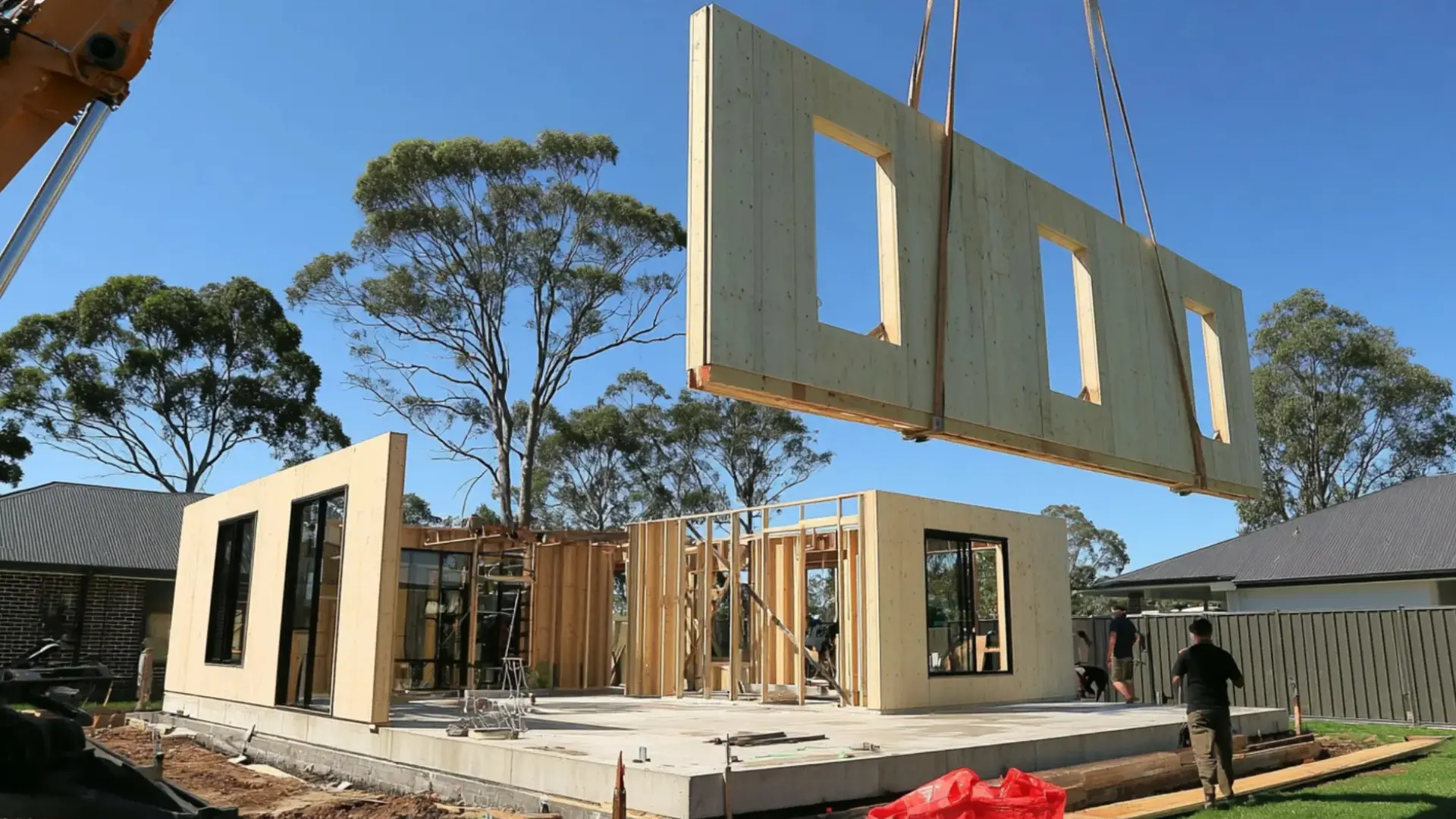
Not everything is under your control. However, a few astute actions keep things on course. This is what functions the best:
1. Select a pre-made floor plan: Drawing and approving custom designs takes more time. Much of the back-and-forth is avoided in a tested design. Additionally, because builders are familiar with certain plans, work proceeds more quickly.
2. Arrange your permits in advance: Don’t put off building until you’re ready. Start the permit application process many weeks in advance. In this manner, approvals are completed before the arrival of your staff.
3. Select the appropriate builder: Your timeline is made or broken by a skilled builder. Seek out an open schedule and a strong track record. Your project will be delayed if the workforce is busy.
4. Lock in finishes and materials: Before work begins, choose your flooring, fixtures, and colors. Place early orders for the long-lead items. This prevents the project from being delayed by backordered parts.
5. Once you start, don’t make any changes: Orders are reset and completed steps are revised with each modification. Make your decisions before the first nail is inserted. To keep things going, stick to the plan.
6. Every week, check in: Keep your builder informed. A brief weekly conversation identifies minor problems early. Issues that you identify quickly can be resolved quickly.
These decisions won’t shorten your build by months. However, they help you avoid the most frequent delays.
Things to Sort Out Before You Set a Timeline
Make a few preparations before deciding on a move-in date. Check your local permission regulations first. It takes weeks in some places and months in others.
Next, make sure your land is ready for construction by testing the soil.
Next, create a budget that is both realistic and flexible. Financial issues can cause significant delays.
Lastly, find out how much work your builder is currently doing. The longer wait is due to a busy team. Your timeline will hold up a lot better if you take care of these initially.
Average Cost to Build a House
Money and time go hand in hand here. Now let’s discuss the price.
The majority of US homes are built for between $150 and $400 per square foot. According to a 2024 NAHB survey, the national average is close to $162 per square foot. Land and the builder’s cost are not included in that amount.
A 2,000-square-foot house typically costs between $300,000 and $500,000. High-end finishes for custom homes are more expensive. Modular and prefabricated homes are typically less expensive.
Your location, size, and material selections will determine the total cost. Always find out what is included in your builder’s quote.
Conclusion
A variety of factors determine where you fall within the typical 7–12 month timeframe for building a house. The speed is initially defined by the type of home you own.
A bespoke or owner-built home takes a lot longer to complete than a standard home. In addition, the labor supply, the weather, and your location all have an impact. Your home’s size even affects how long it takes.
You can plan with clarity now that you know how long it takes to build a house.
You’ll avoid the typical surprises and select a reasonable move-in date.
Frequently Asked Questions (FAQs)
1. Can You Build a House in 3 Months?
It’s rare. Only very small or prefab homes finish that fast. Most standard homes need at least 7 months.
2. Is it Faster to Buy a House Than Build One?
Usually, yes. Buying an existing home closes in one to two months. Building takes longer but gives you full control.
3. Is $500,000 Enough to Build a House?
Yes, for most homes. At $150 to $250 per square foot, that budget covers a solid 2,000 to 3,000 square foot build.