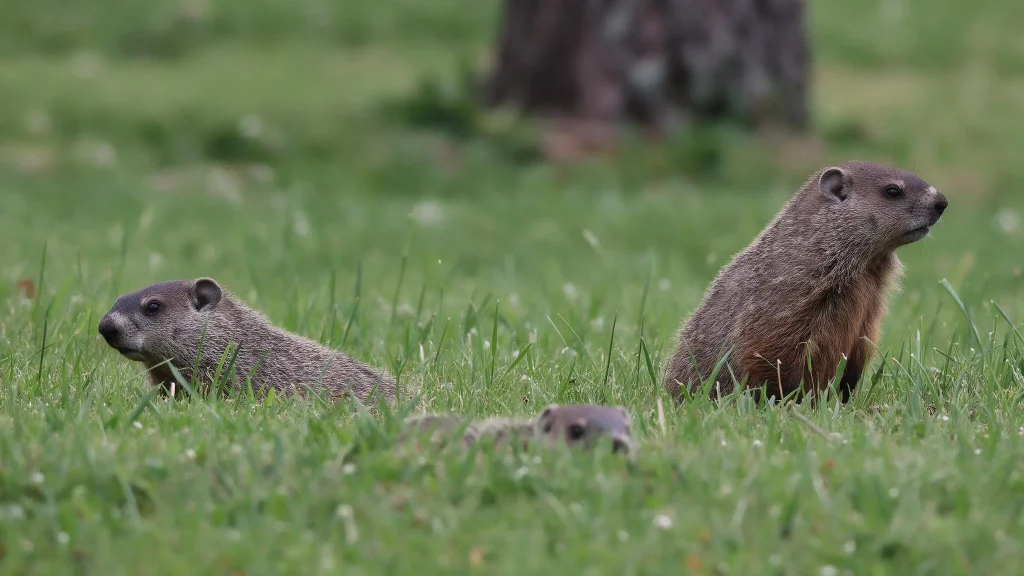
Groundhogs are one of those backyard problems that seem harmless until a garden bed disappears overnight.
Getting rid of one without resorting to anything lethal usually comes down to a mix of a few strategies, and none of those alone usually does the job.
It’s the combination, done in the right order, that actually gets a groundhog to move on for good.
The rest of this comes down to which combination fits the specific spot a groundhog has decided to move into – a yard is a different fight than a deck or a shed.
Signs that You Have a Groundhog Problem
Before jumping into removal methods, it helps to confirm what’s actually digging up the yard.
Groundhogs leave a pretty distinct trail, and mixing them up with rabbits or the moles usually means wasting time on the wrong fix.
Burrows and Entry Holes
The giveaway is the burrow itself – entrances roughly 8 to 12 inches wide, with a noticeable mound of loose dirt kicked out front.
Moles and voles leave smaller, neater holes with no dirt pile. A single groundhog often keeps two or three entrances to one tunnel system, so multiple holes nearby doesn’t necessarily mean multiple animals.
Damaged Plants and Garden Beds
Groundhogs go straight for lettuce, beans, peas, and anything soft and leafy. The damage looks clean, almost like scissors, rather than the ragged tears rabbits leave.
They’ll often clear a whole row close to the burrow before moving further out, so damage radiating from one spot is a strong clue.
Tracks and Droppings
Tracks show four toes on the front feet and five on the back, usually pressed into soft dirt near a burrow or garden bed.
Droppings are dark, oval, and about the size of a large grape, often scattered near the den. Neither is as reliable as the burrow itself, but combined with chewed plants, it’s usually enough to confirm the culprit.
One quick clarification: groundhog and woodchuck are the same animal. Different name, same digging habit, same appetite for a vegetable bed. So anything you find under “woodchuck removal” applies here too.
How to Get Rid of Groundhogs
Once the burrow’s confirmed, the actual removal comes down to stacking a few strategies together.
No single method tends to work fast on its own; groundhogs are stubborn, and a half-hearted attempt usually just teaches them to ignore whatever’s bothering them.
Remove the Food Sources

This is the one step that makes every other method work better. Groundhogs stick around because there’s food nearby, plain and simple.
Pull mulch away from garden beds, harvest vegetables as soon as they’re ready instead of letting them sit, and clear fallen fruit from under trees.
A groundhog with nothing easy to eat is a groundhog that starts looking elsewhere within days.
Clear Brush and Hiding Places

Groundhogs like cover almost as much as food – woodpiles, overgrown brush, and dense shrubs near the yard’s edge all make ideal shelter.
Trimming vegetation back a few feet and clearing brush piles removes the safety net that makes a burrow feel worth defending in the first place.
Use Natural Repellents
Castor oil-based repellents and predator urine (fox or coyote) are the two that actually hold up under real conditions, though both need reapplying after heavy rain washes them out.
A repellent applied once and forgotten rarely does much – groundhogs get used to a smell fast if it doesn’t keep reappearing.
Garlic and pepper sprays work too, but they tend to fade faster and need more frequent reapplication than oil-based options.
Install Motion-Activated Sprinklers
These work by startling the animal rather than harming it, and groundhogs tend to avoid areas where they’ve been sprayed more than once or twice.
Placement matters more than people expect – pointed at the burrow entrance or the main path to a garden bed works far better than a broad, unfocused spray pattern.
Use Groundhog-Proof Fencing
Standard fencing doesn’t do much, since groundhogs dig under it without hesitation. Real groundhog-proof fencing needs to go at least 12 inches into the ground, angled outward at the bottom, with the above-ground portion left loose enough to wobble if climbed.
That wobble matters – a rigid fence groundhogs can actually get a grip on gets climbed just as easily as it gets dug under.
What Doesn’t Work

A few methods get repeated online despite falling flat in practice.
Ultrasonic pest repellers rarely show any real effect on groundhogs specifically – they’re built more for rodents like mice.
Mothballs sometimes create a temporary smell deterrent right at the burrow entrance, but groundhogs often just dig a second entrance a few feet away and keep using the same tunnel system.
And flooding a burrow with a hose sounds satisfying, but it mostly pushes the animal to relocate a few yards over rather than leave the property entirely.
How to Get Rid of Groundhogs by Location
The general methods work everywhere, but where a groundhog has set up matters. A burrow under a shed needs a different approach than one dug into a vegetable garden.
From Your Yard
Yard burrows usually sit along a fence line or near a tree stump.
Fence the entire perimeter rather than just the burrow – a groundhog will simply dig a new entrance nearby if only the hole gets sealed.
Sprinklers along common travel paths reinforce the fencing while it settles in.
From Your Garden
Garden beds need direct plant protection more than perimeter fencing.
Wrap raised beds in hardware cloth buried a few inches down to stop tunneling from below, and reapply repellents around the bed’s edge after rain – the constant food source makes this spot harder to hold.
Under a Deck
Decks make a dark, sheltered den, and burrows here often run deeper than open-yard ones.
Bury hardware cloth at least 12 inches deep around the entire perimeter before closing the gap – sealing just the visible entrance means a new one shows up nearby within days.
Under a Shed
Same logic as a deck, though sheds often sit on a concrete footing with gaps only at the corners, which makes sealing more straightforward.
Confirm the burrow’s empty first – trapping a groundhog inside a sealed space under a shed isn’t a problem worth creating.
Near the Foundation
This is the highest-risk spot, since sustained digging can undermine soil support over time.
An L-shaped hardware cloth barrier extending down and outward from the foundation is worth installing immediately – foundation repairs cost far more than an afternoon spent burying mesh.
Can You Trap and Relocate a Groundhog?

A groundhog digging up the yard is frustrating, and the fix isn’t always as simple as setting a cage trap and driving off.
Trapping and moving a groundhog is legal in some areas and restricted in others, so it pays to know the rules before setting anything up.
Check Local Wildlife Laws First
Many states limit where a trapped groundhog can be released – often requiring it to go back on the same property where it was caught.
This rule exists because moving wildlife can spread disease and drops the animal into territory that’s already claimed by another groundhog, where it usually won’t survive.
A quick search for state wildlife regulations, plus a look at county or city ordinances, clarifies what’s allowed.
Avoid Trapping During Birthing Season
Groundhogs give birth in early spring, typically March through April, after they come out of hibernation. Trapping an adult during this window can leave a litter of newborns trapped underground with no way to survive.
Waiting until late spring or summer, once the young are weaned and out on their own, is safer for the whole family of groundhogs and keeps the job humane.
Use the Correct Trap and Bait
A live cage trap around 10x12x32 inches works well. Since groundhogs eat plants, skip the meat bait and use cantaloupe, cucumber, or fresh lettuce instead. Place the trap near the burrow entrance or along a path the groundhog already uses.
Monitor a Set Trap Frequently
Check the trap at least once or twice a day. A groundhog left sitting too long in heat or cold is not just inhumane – it can also violate local trapping laws that require timely release.
Contact a Wildlife Professional for Removal
When relocation rules are unclear, or the burrow is in a tricky spot, a licensed wildlife control company is worth the call. They know the local laws, have the right equipment, and can handle removal or relocation safely and legally.
When to Call a Wildlife Professional?

Most groundhog problems clear up with consistent effort at home, but a few situations call for backup instead of another round of repellent.
Persistent Activity After Weeks of Effort
If you’ve removed food, reapplied repellents on schedule, and put up fencing, but the burrow’s still active after several weeks, something in the setup is likely being outsmarted.
A professional can spot gaps – a fence section that isn’t buried deep enough, a food source that got missed – that are easy to overlook from the inside.
Burrows Near Structures
A burrow that’s tunneled under a foundation, driveway, or load-bearing part of a deck isn’t just a wildlife problem anymore.
At that point, structural risk outweighs the cost of a professional assessment, and DIY sealing can sometimes make things worse if the tunnel’s extent isn’t fully known.
Young Groundhogs Present
Baby groundhogs usually show up in late spring, and removing an adult while young are still in the den can leave them trapped underground.
Most state wildlife agencies have specific guidance on timing removal around breeding season – a professional knows how to check for young before sealing anything.
How to Prevent Groundhogs From Returning?
Trapping one groundhog rarely solves the problem for good. New burrows and easy food keep drawing them back, so a few extra prevention steps help keep the yard clear long-term.
Install Motion-Activated Deterrents
Motion-triggered sprinklers or ultrasonic devices startle groundhogs the moment they wander into range. The sudden burst of water or noise teaches them to steer clear of that part of the yard without causing harm.
Plant a Barrier of Groundhog-Resistant Plants
Certain plants act as a natural border groundhogs tend to avoid, including daffodils, alliums, and boxwood. Lining garden edges or burrow-prone areas with these instead of soft, leafy vegetables makes the space far less appealing.
Reduce Access to Water Sources
Groundhogs need a steady water supply, and birdbaths, pet bowls left outside, or low spots that collect rainwater can keep them coming back.
Moving water sources away from garden beds or regularly emptying standing water removes another reason to stay.
Add Predator Scent Markers
Products containing fox or coyote urine, available at most garden centers, signal danger to groundhogs without a trap.
Placing them near burrow entrances or garden borders taps into the animal’s natural instinct to avoid predators.
Seal Off Under-Deck and Shed Spaces
Decks, sheds, and porches with open gaps underneath are prime real estate for a new burrow.
Closing off these spaces with lattice, mesh, or solid skirting before groundhog season starts removes a favorite denning spot before it’s ever used.
Final Thoughts
There’s something a little satisfying about walking outside and finding a burrow finally gone quiet.
It usually doesn’t happen overnight – a groundhog that’s settled in takes a few weeks to give up on a spot, even once food’s gone and the fencing’s holding.
But once it does, the yard tends to stay that way, especially if the burrow gets sealed properly instead of just abandoned and forgotten.
What actually shifts things isn’t any single trick.
It’s the yard slowly becoming less worth the effort – less food, less cover, a fence that doesn’t dig under easily, a smell that keeps reappearing. Groundhogs are creatures of convenience, and once convenience disappears, so do they.
People Also Ask
1. What Smells Do Groundhogs Hate?
Castor oil, ammonia, predator urine, and strong herbs like lavender, mint, and garlic all repel groundhogs effectively.
2. Will Groundhogs Leave on Their Own?
Rarely, unless food and shelter disappear. Active dens usually need consistent deterrents before a groundhog relocates.
3. What Plants Keep Groundhogs Away?
Lavender, mint, sage, basil, and rosemary planted around garden borders and burrow entrances help repel groundhogs naturally.
4. Are Mothballs Safe to Use on Groundhogs?
Not recommended. Mothballs contain toxic chemicals harmful to pets, children, and soil, despite being a common home remedy.