Stained wood looks glossy and fresh when new, but it can grow tired and dated over time. And to solve that, you’ve might have tried covering it with paint before.
But the paint peeled off within weeks, didn’t it?
So let’s learn how to paint over stained wood effectively to achieve a long-lasting, smooth finish.
Why Painting Over Stain is a BIG Fail?
Raw wood soaks up paint easily, but stained wood has a sealed surface, so paint struggles to grip on it.
That’s why skipping the preparation always leads to peeling.
Another problematic issue is bleed-through. The stain beneath can seep into your paint layers, leaving ugly brown or yellowish patches on top.
This happens most often with oil-based stains. But can you paint over a stain? Yes!
Sand the surface first, then wipe away the dust with a clean cloth before priming. And DO NOT SKIP IT, as powder makes the primer stick to difficult.
Just use a liquid deglosser instead. It chemically scuffs the surface, so paint has something to hold onto.
Avoid painting in very humid or cold conditions, as these conditions can affect how paint bonds to the surface.
Supplies Required for Painting Stained Woods
Now that you know how to avoid failure,gathering the right supplies for it will ease out the process of doing it.
Having the right supplies saves you time and stops you from cutting corners midway.
| Supply | Estimated Cost |
|---|---|
| Cleaner/Degreaser | $5 – $15 |
| Sandpaper (120 & 220 grit) | $6 – $12 |
| Stain-Blocking Primer | $15 – $30 |
| Paint | $25 – $60 |
| Brushes/Rollers | $8 – $20 |
| Tack Cloth | $3 – $8 |
Shellac-based primers (like Zinsser BIN) are the go-to for blocking oil-based stain bleed-through. Oil-based primers work well on painted wood surfaces.
How to Paint Over Stained Wood: Step-by-Step Process
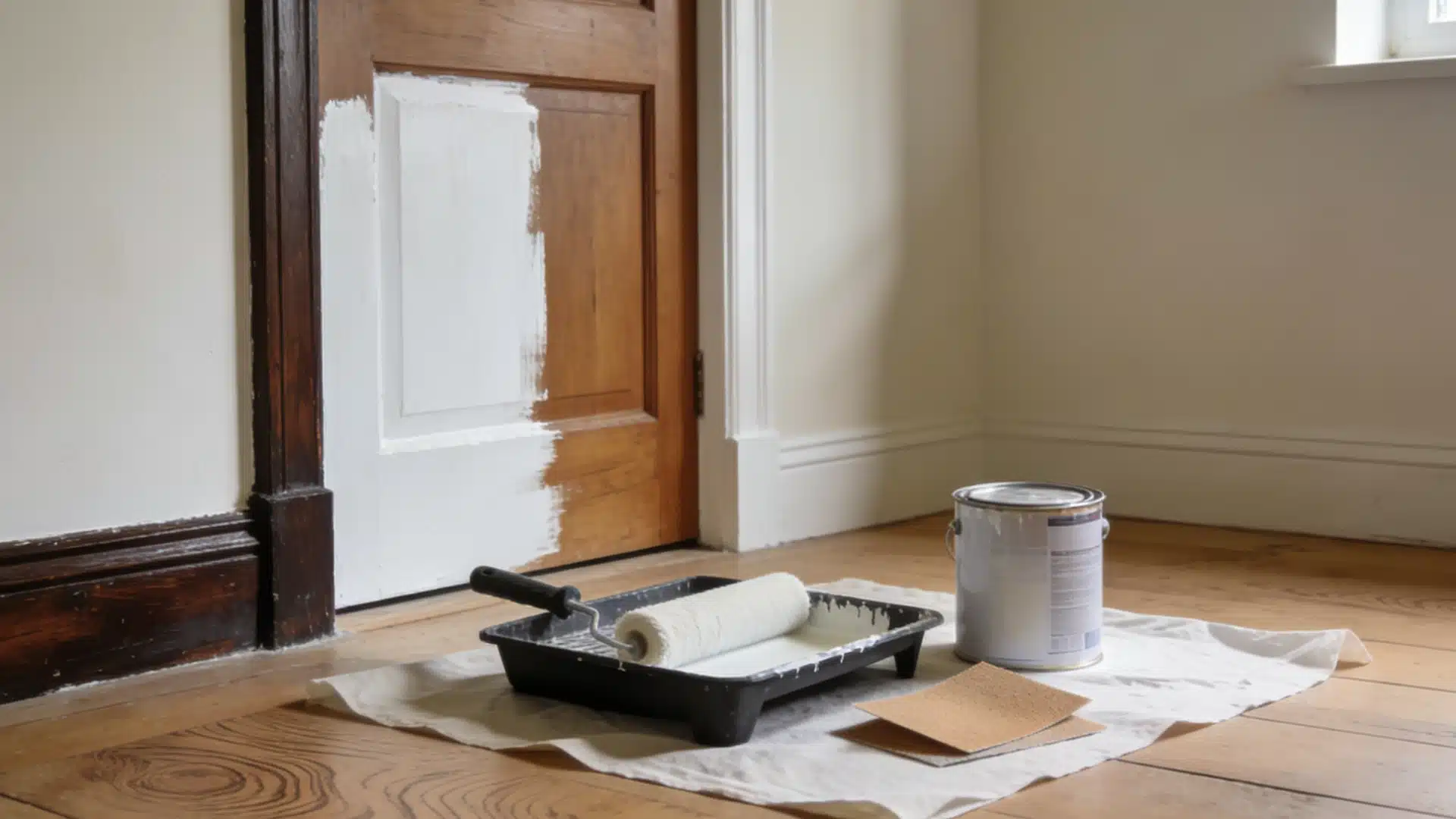
Rush through any one of these steps, and you’ll likely end up with peeling or patchy results.
But with a little patience, you’ll get a smooth, clean finish that holds up for years.
Step 1: Clean the Surface Thoroughly
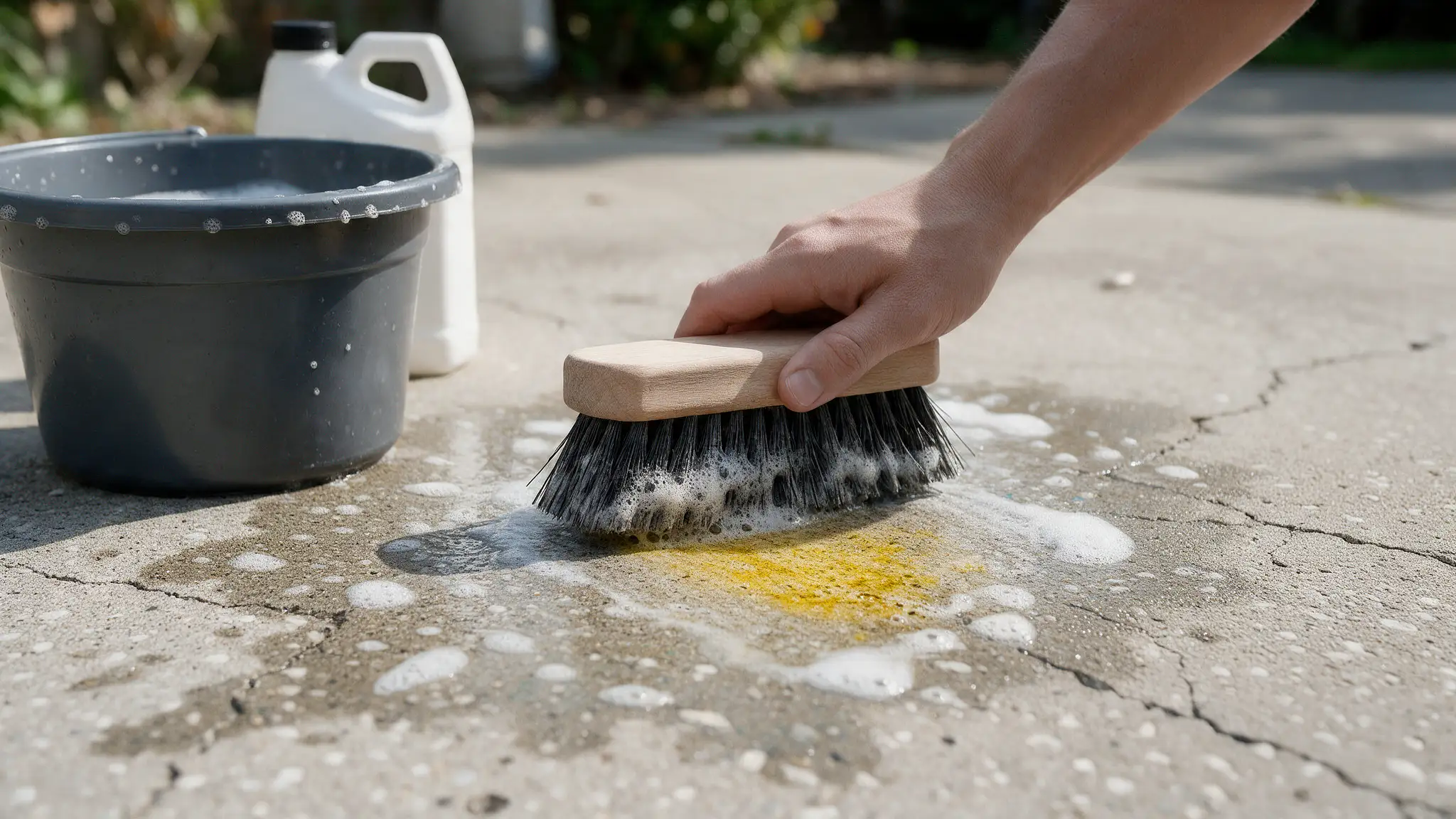
First, wipe down the wood with a cleaner or degreaser.
Stained wood often has built-up grease, furniture polish, and dust on its surface. Paint won’t stick to any of that.
Use a clean cloth and scrub the surface well. Let it dry completely before moving on.
Step 2: Sand the Glossy Finish
You don’t need to sand down to bare wood.
Light sanding with 120-grit sandpaper is usually enough. The goal is to dull the glossy surface so the primer has something to grip.
Once done, wipe away all the dust with a tack cloth before priming.
Don’t go past 120-grit here. If you start exposing raw wood, you’ve gone too far, as the primer will absorb unevenly and show through your topcoat.
Step 3: Apply a Stain-Blocking Primer
A stain-blocking primer stops old stains from bleeding through your topcoat. Apply one even coat and let it dry fully.
Always use paint and primer that are compatible with each other.
To check paint and primer compatibility, refer to the labels on both products. Oil-based primer works with oil-based paint, and water-based primer pairs with latex paint.
Step 4: Paint in Thin, Even Coats
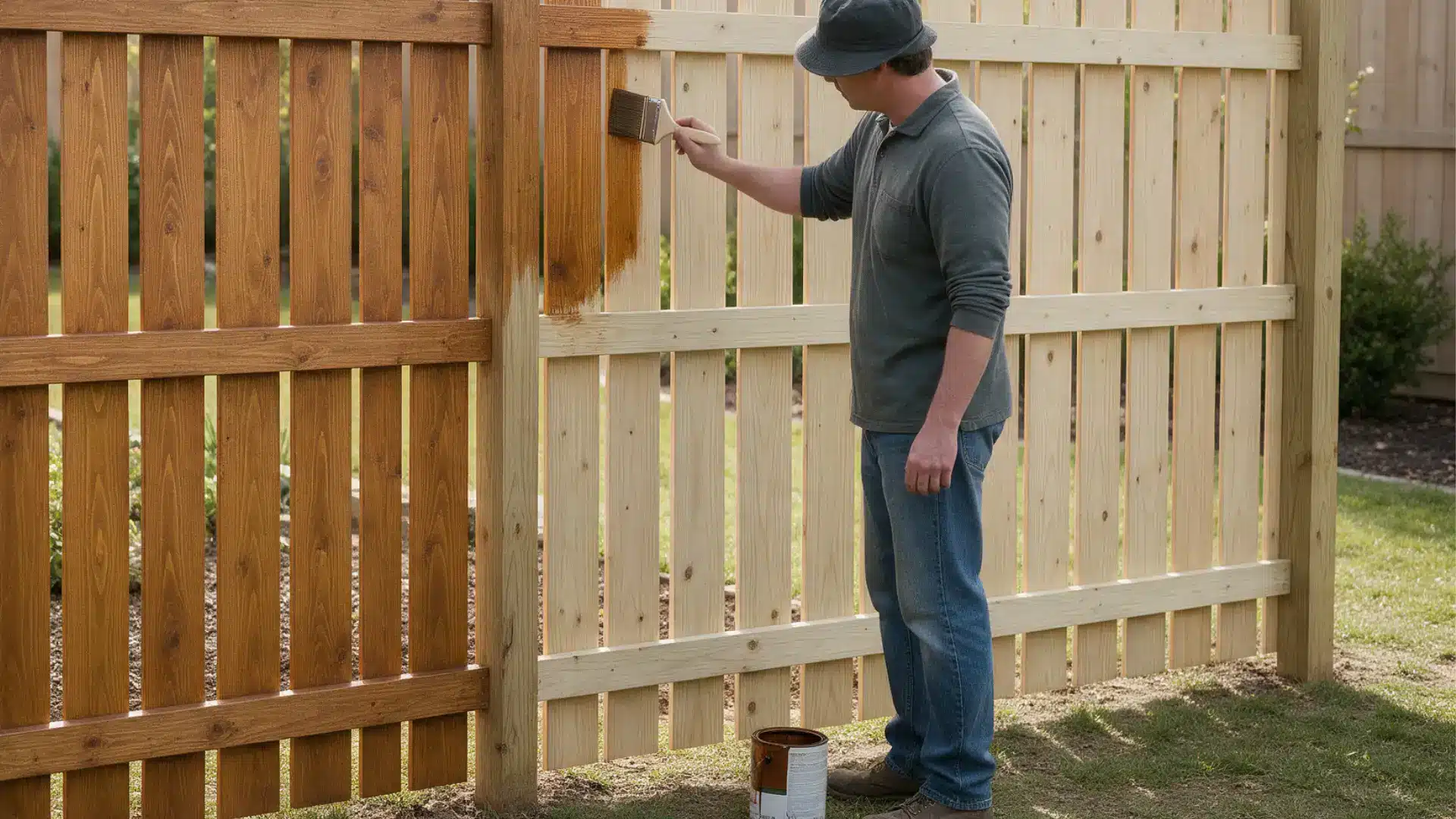
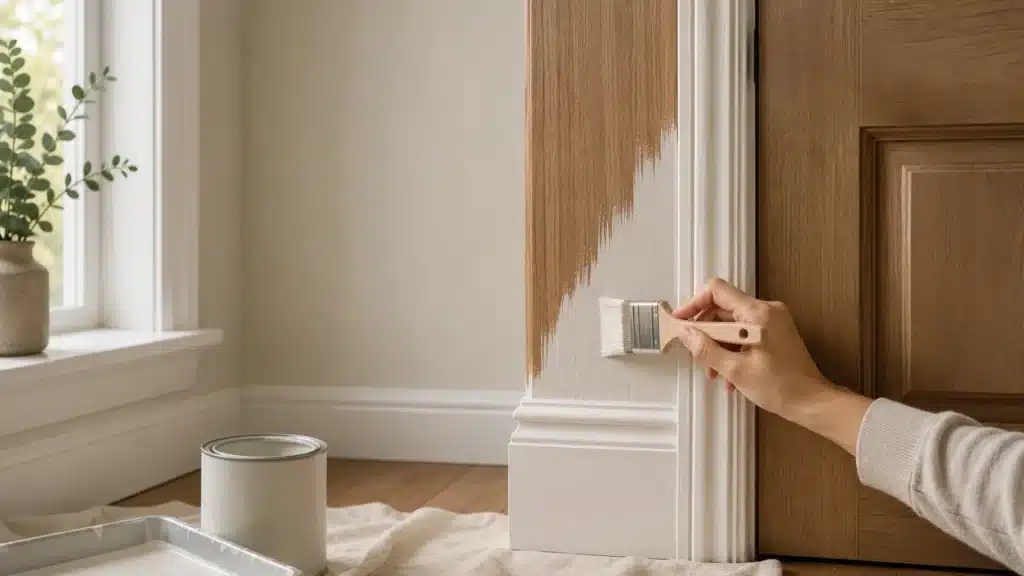
After applying the primer, apply your first coat of paint in thin, even strokes.
For doors and trim, use a good-quality brush for clean edges. For larger flat surfaces, such as window frames, a small roller works well.
Two thin coats always look better than one thick coat.
And always wait for the first coat to dry before applying the next one.
Step 5: Let the Paint Cure Properly
Paint may feel dry to the touch within a few hours.
Full curing takes up to 30 days for latex paint. Until then, the surface scratches more easily. Give it time to harden fully for a finish that won’t scratch or chip easily.
How to Paint Over Specific Types of Stained Wood?
Guys, listen up, not all the surfaces are the same; some need a different plan to work with. Doors handle daily wear and tear, windows deal with moisture, and cabinets face grease and heat.
Treating them all the same way often leads to peeling, chipping, or uneven results. So try this:
1. Trim
Stained trim is usually narrow and detailed, so use an angled brush for clean edges.
Watch the corners, paint pools in recessed profiles, and it takes twice as long to dry there. Lightly sand with 220-grit paper and apply a shellac-based primer, and use semi-gloss or gloss paint.
2. Door
Doors are the busiest part of the house.
So, for doors, take extra measures. Clean the surface well first, removing all grease and polish.
Paint the edges first, then the panels, working inward. Reversing this order traps wet paint.
Apply an oil-based stain-blocking primer for strong adhesion, and use semi-gloss or satin paint. Paint with the grain using even strokes for a smooth finish.
3. Window
Windows are tricky because they expand and contract with temperature changes.
For them, use a flexible, water-resistant paint to avoid cracking. Sand lightly and prime with an oil-based primer.
Apply two thin coats of satin or semi-gloss paint, and take care around the glass edges by taping them.
Remove the sash if you can. Painting windows in-frame almost always ends with a painted-shut window.
4. Cabinets
Kitchen cabinets are exposed to grease, steam, and constant use.
Hence, it’s very important to degrease thoroughly before doing anything else. Use a shellac-based primer to block stains and odors.
Apply a hard-wearing satin or semi-gloss paint for a smooth result.
TSP (trisodium phosphate) cuts through kitchen grease better than other household degreasers. It’s $8 at any hardware store.
How Long Does Painted Stained Wood Last?
Painted or stained wood lasts 5 to 10 years before needing recoating.
And it mostly depends on factors like wood quality, climate exposure, and surface preparation. Exterior surfaces face harsher conditions, like the sun, rain, and humidity, accelerating wear.
Regular maintenance, cleaning, and timely touch-ups can keep painted or stained wood looking good for decades.
Final Thoughts
Knowing how to paint over stained wood correctly saves you from a lot of frustration down the road.
Always clean first, sand lightly, and never skip the stain-blocking primer. These three steps alone solve most problems people run into.
Skip any of those three, and you’ll have to repaint within a year.
Just that, and your paint job will look great and last longer without peeling or any other damage to the surface.
Frequently Asked Questions (FAQ’s)
1. What is the Hardest Color to Paint Over?
Red is the hardest color to paint over. Its pigments bleed through easily. You’ll need a good stain-blocking primer for full coverage.
2. Can You Paint Over Stained Wood without Sanding?
Yes. Use a liquid deglosser to chemically scuff the surface. Then apply a stain-blocking primer before painting.
3. What are the Best Primers for Stained Woods?
Shellac-based and oil-based primers work best. Zinsser BIN (shellac-based) and Zinsser Cover Stain (oil-based) are two reliable options worth trying.