After a significant storm, a lot of homeowners find themselves staring at their roof trying to answer a genuinely tricky question: is this new damage from the storm, or is this just the roof showing its age?
The distinction matters more than it might seem, since it affects whether an insurance claim is appropriate and what kind of repair actually makes sense.
Why This Distinction Is Genuinely Hard to Make Without Training
Both storm damage and ordinary wear can produce similar-looking symptoms on a roof’s surface: granule loss, cracked shingles, and minor discoloration, which is exactly why insurance adjusters and experienced roofers rely on specific diagnostic patterns rather than a general visual impression.
Understanding these patterns helps you have a more informed conversation with whoever inspects your roof, even if you’re not making the final determination yourself.
Signs That Generally Point to Storm Damage
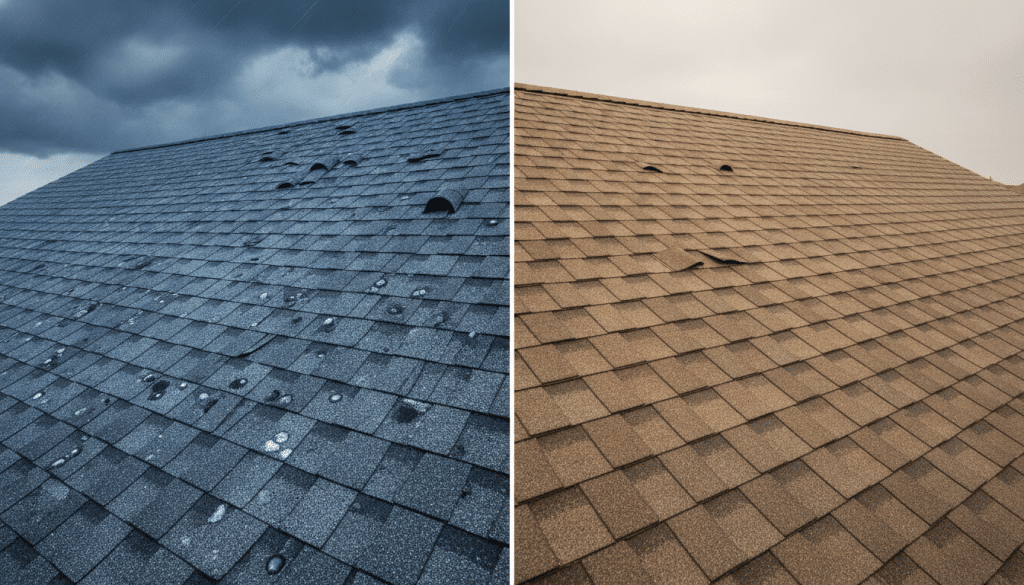
Impact marks with a random, scattered pattern. Hail damage typically shows up as bruises or dents distributed somewhat randomly across a roof’s surface, often more concentrated on the side that faced the storm’s wind direction.
This scattered, directional pattern is a meaningful indicator, since normal wear tends to be more uniform across the entire roof rather than concentrated on one exposure.
Shingles that are creased, torn, or completely missing in a pattern consistent with wind direction. Wind damage tends to affect shingles at edges and corners first, and missing shingles concentrated on one slope or edge is more consistent with a specific wind event than gradual wear, which tends to show up more evenly across a roof’s full surface.
Fresh granule accumulation in gutters immediately following a specific storm, as opposed to a gradual buildup you’d expect from ordinary aging. A sudden, noticeable increase right after a storm is a stronger indicator of storm impact than granules that have clearly been accumulating over a longer period.
Visible dents on other exterior metal surfaces, like gutters, vents, or window screens, from the same storm event. If hail was large enough to dent these other surfaces, it’s reasonable to expect corresponding impact on the roof, which helps corroborate that hail-related roof damage genuinely occurred.
Signs That Generally Point to Normal Wear
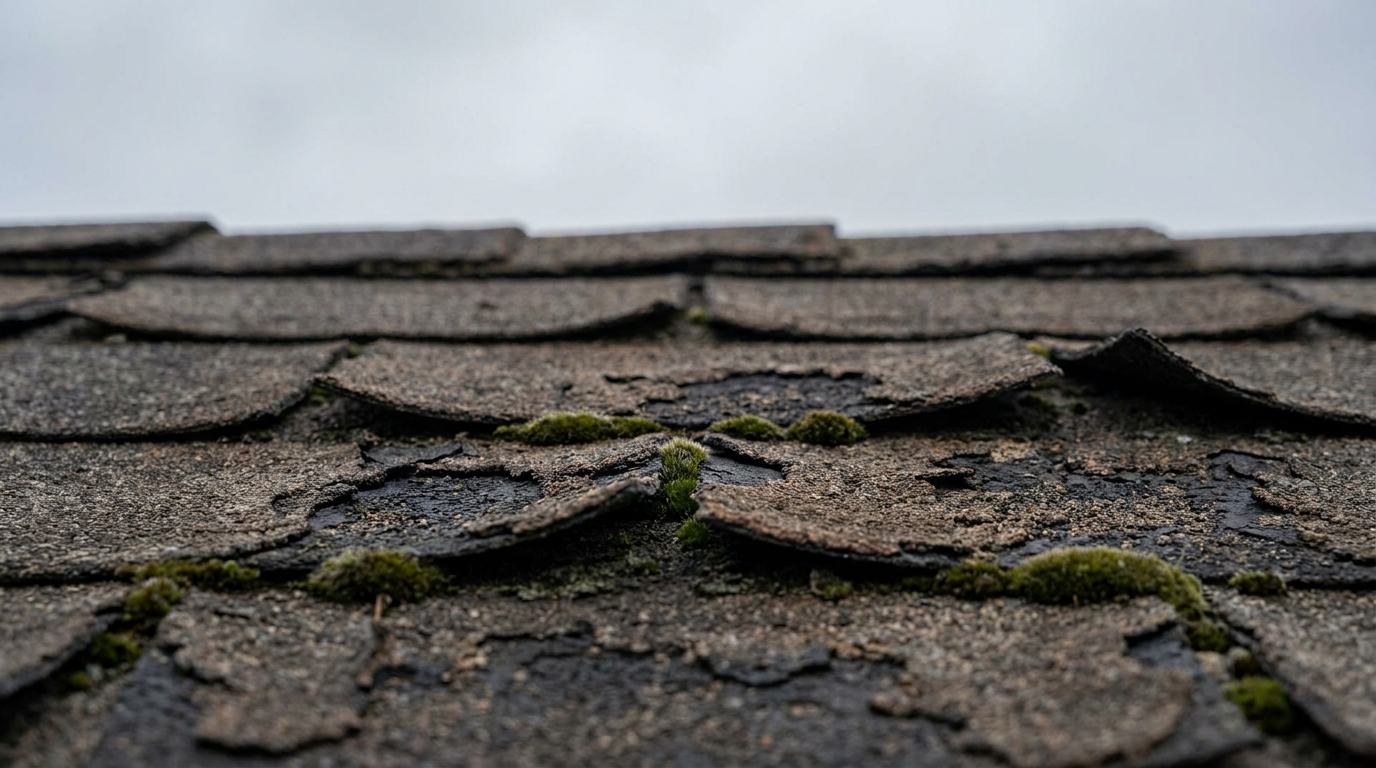
Gradual, uniform granule loss across the entire roof surface, without any specific event associated with it. This pattern is consistent with UV degradation and aging rather than a discrete storm impact.
Curling or cupping shingles that have lost flexibility evenly across multiple roof slopes, rather than concentrated in a pattern matching a specific storm’s wind direction. This typically reflects age-related material breakdown rather than an acute event.
A roof that’s simply approaching or past its expected material lifespan. Standard asphalt shingles generally have a realistic service life in the range of 20 to 30 years depending on the specific product and local climate, and wear consistent with that timeline, without a specific triggering event, points toward ordinary aging rather than storm damage.
Algae or moss growth, which develops gradually from sustained humidity and shade exposure rather than from any single weather event.
Why Pre-Existing Wear Complicates the Picture
A roof that already had some wear before a storm makes this determination genuinely more complex, since a storm can cause new, real damage on top of an already-aging roof, and untangling exactly what’s attributable to the storm versus what was already present requires a careful, honest assessment rather than attributing everything to the most recent event.
Why an Honest Assessment Serves You Better Than an Inflated One
It’s worth noting that misrepresenting normal wear as storm damage isn’t just an insurance risk, it can also mean pursuing a repair strategy that doesn’t address the roof’s actual underlying condition.
An honest assessment, even one that concludes some damage is ordinary wear rather than storm-related, gives you a more accurate picture of what your roof genuinely needs.
Getting a Clear, Honest Diagnosis
Because distinguishing storm damage from ordinary wear requires real diagnostic experience, not just a visual glance, it’s worth working with reliable storm damage roof repair specialists who will give you a straight, honest assessment of what’s actually storm-related and what’s simply your roof’s age catching up with it, rather than an assessment shaped by what makes for the most favorable insurance claim.