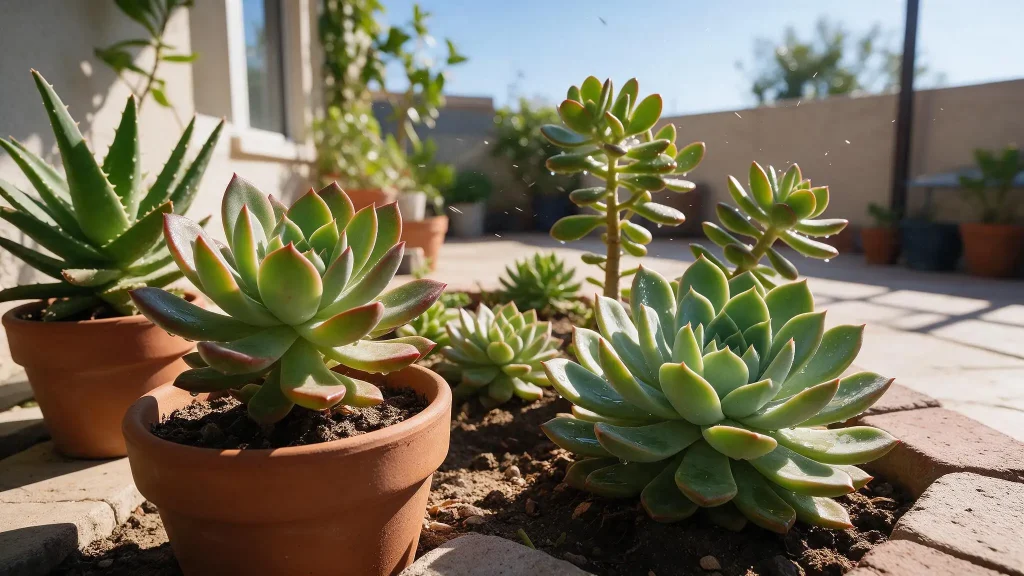
Most succulents are hardy plants and can survive with little water. They store water in their thick stems and leaves. So, at odd times when you forget to water them for a while, they can survive.
But that same trait causes problems too. Too little water, and the plant shrivels up. Too much, and the roots rot quietly before anyone even notices.
So how often should you really water succulents? No single number fits every plant, since soil, light, and season all change the answer.
This blog walks through how often to water succulents, how much they actually need, and how to tell when something’s off before it becomes a real problem.
How Often to Water Succulents?

There’s no strict weekly schedule here, and that trips a lot of people up at first. What matters is the soil. It needs to dry out completely between waterings, and how fast that happens depends on light, temperature, and pot size.
How often to water and how much to give are two different things, and it’s easy to mix them up.
A succulent needs one deep soak, not a few light sips spread across the week. Deep watering pushes moisture down to the roots, encouraging them to grow strong and reach deeper into the soil.
Small daily splashes, on the other hand, barely reach past the topsoil. They keep the surface damp, which does nothing for the roots and can invite trouble like rot or fungal growth over time.
Checking the soil with a finger beats counting days on a calendar.
How to Tell When Your Succulent Needs Water
Your plant is telling you it’s thirsty when the soil feels bone dry a few inches down, and the leaves start looking slightly wrinkled or soft instead of firm.
You’ll also notice the leaves losing their usual plumpness and looking duller or less taut than normal. Another reliable clue is weight – if the pot feels noticeably lighter than usual, it’s a sign the soil has dried out, and it’s time to water.
Factors That Affect Watering Frequency
- Temperature: Warmer rooms or weather dry out soil faster
- Sunlight: Bright spots need watering more often than shady corners
- Pot size and material: Small pots and terracotta dry out quicker
- Soil type: Fast-draining soil needs more frequent watering
- Succulent variety: Some types simply hold more water than others
How Often to Water Succulents by Season?
As a general guide, succulents need water roughly every 1 to 2 weeks during their active growing months, and every 3 to 4 weeks, sometimes longer, when they slow down.
That said, these numbers shift a lot depending on where the plant sits and how warm it gets, so they work best as a starting point rather than a fixed rule.
Spring & Summer

Spring and summer are when succulents do most of their growing, so they burn through water faster.
Watering every 7 to 10 days is a reasonable starting point for most varieties, though outdoor plants in hot, dry climates might need it every 5 to 7 days instead.
Indoor succulents near bright windows dry out quicker too, and often fall on the shorter end of that range. Still, always check the soil before adding more water, since cloudy days or lower humidity can slow drying without much warning.
Fall & Winter

Growth slows down a lot once temperatures drop, and water needs drop right along with it.
Watering every 3 to 4 weeks is usually enough during this stretch, and some succulents can go even longer, especially if they’re dormant.
Indoor heating can dry out soil faster than expected, so it’s worth checking in occasionally even if it hasn’t been long.
Outdoor succulents facing frost need very little water, since cold, damp soil combined with freezing temperatures can quickly damage roots.
Indoor vs. Outdoor Watering
Indoor plants tend to dry out slower, mostly because there’s less airflow and sun exposure indoors.
A spot by a sunny window will need water more often than one tucked under artificial light or in a dim room.
Potted succulents outside dry out faster than ones planted in the ground. Rain, heat, and humidity all change how often you need to water, so the weather should do the scheduling.
How to Water Succulents the Right Way?
The Soak-and-Dry Method
This one method covers most of what a succulent needs, and it’s simpler than it sounds.
Water the soil generously until it runs out through the drainage holes at the bottom, making sure every part of the root ball actually gets soaked rather than just the top layer.
Then let it all drain out completely; don’t let the pot sit in a saucer full of water. From there, the next watering only happens once the soil has dried out fully, right down to the roots.
It’s a cycle of deep watering followed by a proper dry spell, and it does a much better job than frequent little splashes ever could.
Water the Soil, Not the Leaves
Water should always go to the soil and roots, not the leaves. Succulent leaves already hold water inside them, so pouring more onto the surface just sits there with nowhere to go.
That trapped moisture, especially in low-light or humid spaces, can turn into rot or fungal spots fairly fast. A narrow-spout watering can helps aim water straight at the soil and keeps the leaves dry.
Signs of Overwatering and Underwatering
Overwatering

Overwatering shows up differently: leaves turn mushy or translucent, almost as if they’ve lost their structure, and yellowing spreads quickly across the plant rather than staying isolated to one or two leaves.
You’ll also notice the soil staying wet for days without drying out, which starves the roots of oxygen. In more advanced cases, rot can start forming at the base of the stem, a clear sign the plant is sitting in too much moisture.
Stop watering right away, let the soil dry out fully, and check the roots for damage. Repot in fresh, dry soil if you see rot.
Underwatering

Underwatering also leaves its own visible marks: leaves become wrinkled or shriveled as the plant loses moisture, and they start to feel thin or flat instead of full and firm.
You may also notice the soil pulling away from the edges of the pot, a telltale sign that it has dried out and shrunk over time.
Give it one thorough soak and let it drain. Don’t jump straight to daily watering, since the plant just needed that one deep drink.
Best Soil & Pots for Proper Watering
Good drainage starts with the soil itself.
A fast-draining mix, one blended with sand or perlite, keeps roots from sitting in moisture they don’t actually need. Roots that stay wet for too long lose access to oxygen, and that’s when problems start creeping in.
The pot matters just as much as what’s inside it. Drainage holes aren’t optional here.
Trapped water pooling at the bottom of a pot is one of the biggest causes of root rot, and once rot sets in, it’s hard to reverse. A pot without holes might look nice, but it works against the plant.
Material choice plays a role too. Terracotta is porous, so it pulls moisture out of the soil and lets it evaporate through the walls of the pot.
That means terracotta dries out faster than plastic, which sounds like a downside until you’re growing in a humid space.
There, that faster drying time actually protects the roots instead of putting them at risk.
Quick Watering Reference Table
|
Situation |
General Watering Approach |
|---|---|
|
Indoor succulents |
Water after soil dries completely |
|
Outdoor potted succulents |
Check more often in warm, dry weather |
|
Spring & Summer |
Water more frequently as growth picks up |
|
Fall & Winter |
Water considerably less often |
|
Hot, dry climate |
Check soil more frequently |
|
Cool or humid climate |
Allow longer drying periods between waterings |
Conclusion
Figuring out how often to water succulents becomes easier once you learn how your own plants respond. A succulent in bright outdoor light will behave differently from one kept indoors, so there is no need to force every plant into the same routine.
Over time, you will start noticing small changes in the soil, leaves, and growth pattern. That makes watering feel less like guesswork.
Keep an eye on the soil and adjust as the seasons change; that’s really all it takes.
Frequently Asked Questions (FAQs)
1. Do Succulents Need to Be in Direct Sunlight?
Most succulents need bright light and about six hours of sun daily, but not all species require harsh, direct sunlight.
2. Why Put Cinnamon on Succulents?
People put cinnamon on succulents mainly to prevent fungal infections and help cut stems heal during propagation
3. Are Succulents Better in Pots or Ground?
Succulents grow larger and healthier in the ground, but pots offer better control and protection when your climate is too cold or rainy.
4. Can Succulents go 2 Months without Water?
Yes, most healthy, mature succulents can survive two months without water, especially if they are kept indoors or in cool, dormant winter conditions.