A tray of seedlings dries out by afternoon, while another pot right next to it stays wet for a week, and the roots start to rot.
Same shelf, same watering schedule, yet the results turn out completely different. The reason usually comes down to the soil mix itself.
Perlite vs vermiculite explains that gap: one drains water fast, and the other holds onto it much longer. Picking the wrong one can quietly hurt healthy roots over time.
This comparison covers what each material does and which one fits which type of plant.
What is Perlite?
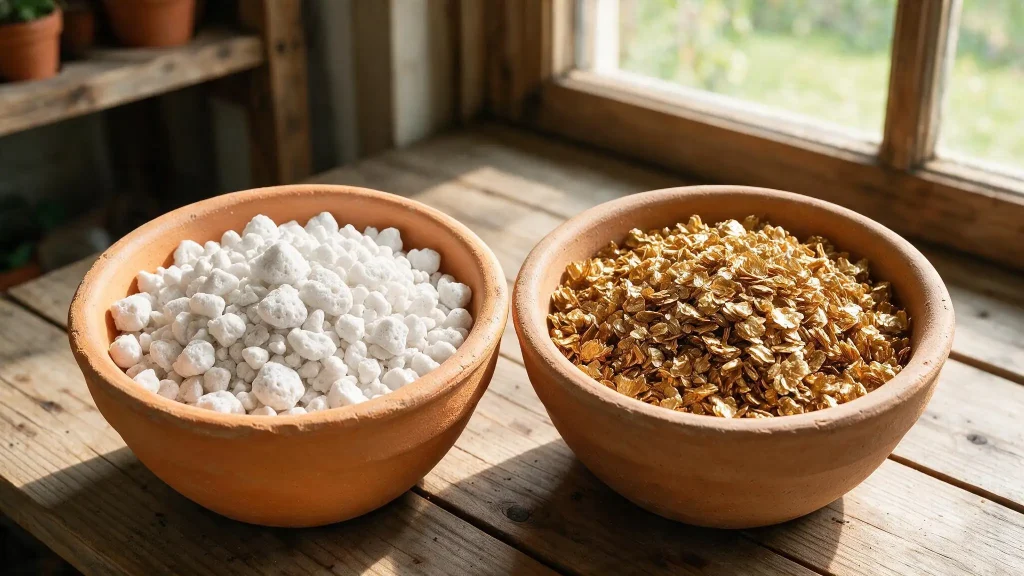
Perlite is volcanic glass heated until it puffs up into small white pieces. Mixed into soil, it looks a bit like scattered foam beads. Its pH is neutral, so it won’t shift the soil’s balance.
What matters more is the change in texture. Tiny gaps form between the pieces, letting air reach roots and water pass through instead of pooling at the bottom of the pot.
Benefits:
- Opens up soil with tiny air pockets, improving aeration
- Lets excess water drain away fast, lowering root rot risk
- Keeps soil loose and less compacted, so roots spread more easily
- Helps soil dry out a bit faster after heavy rain or watering
Perlite doesn’t feed plants directly, and after enough watering sessions, it tends to work its way toward the surface.
That said, the air pockets it creates give roots more room to spread and anchor properly, which often means sturdier growth above the soil too.
What is Vermiculite?
Vermiculite comes from a mineral that expands into thin, golden-brown flakes when heated. It has a spongy feel, and the pH runs close to neutral too.
It earns its keep through moisture control. Water gets pulled into the flake layers, then released back out gradually as the surrounding soil dries.
This helps anything that struggles with quick drying, especially seedlings.
Benefits:
- Holds water in its layered structure and releases it slowly
- Keeps soil moist longer as the surrounding area dries out
- Holds small amounts of nutrients, feeding plants at a steady pace
- Keeps seed trays evenly damp during germination
Add too much, and the soil can stay wetter than some roots want, which opens the door to rot.
Used the right way, though, the steady moisture helps young roots establish faster, giving seedlings a stronger start.
Perlite vs Vermiculite: Key Differences
Soil problems usually boil down to two things. It either holds too much water, or it dries out too fast. These two materials handle opposite ends of that problem.
1. Drainage and Aeration
Pour water over perlite, and it runs straight through almost immediately.
Tiny air pockets scattered throughout the material make that possible, letting roots breathe instead of sitting in wet, heavy soil for hours on end.
Vermiculite works nothing like that. Its flakes trap water rather than let it pass, so drainage slows considerably wherever it’s mixed in.
2. Water and Moisture Retention
Soak vermiculite once, and it keeps releasing that stored water back into the soil for days at a stretch.
The flakes act almost like a built-in reservoir sitting right near the roots, feeding moisture out slowly as things dry.
Perlite offers no such backup. A few hours after watering, it’s already bone dry again, with almost nothing left behind.
3. Nutrient Retention
Vermiculite holds small amounts of plant food and releases it slowly over time, helping feed roots steadily rather than all at once.
That kind of nutrient hold isn’t something perlite can offer at all. Its job stops at structure and drainage, with no nutritional value added to the mix.
4. Texture, Appearance, and pH
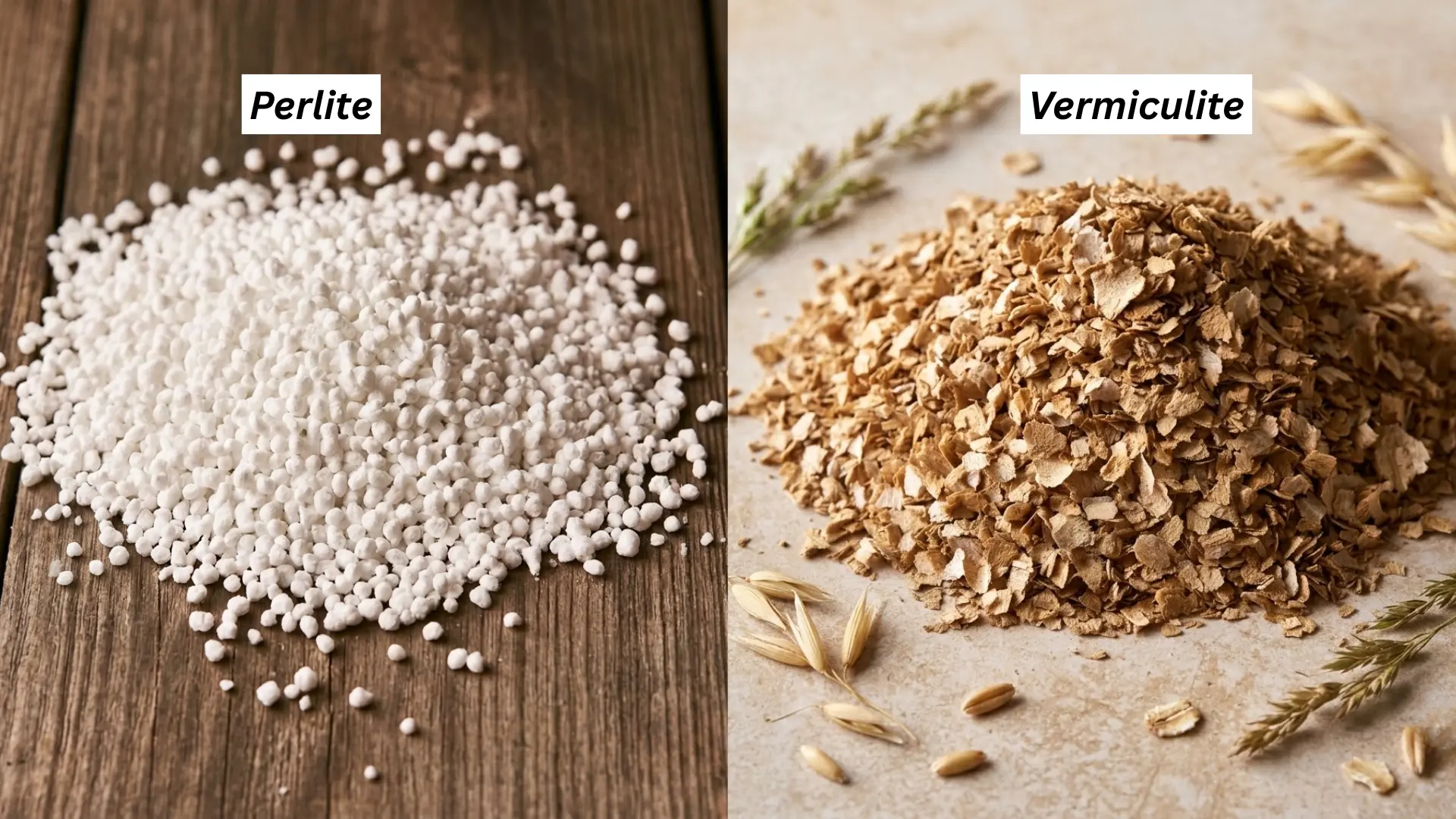
Foam-white and lightweight describe perlite well, almost like tiny packing beads scattered through the soil.
Flat, golden-brown flakes with a slightly spongy feel describe vermiculite instead, and the two rarely get confused once side by side.
Perlite runs roughly pH 7–7.5 (neutral to mildly alkaline). Vermiculite runs wider, roughly pH 6.5–9, and is often alkaline enough that growers use it to buffer acidic soil.
5. Best Uses and Suitable Plants
Dry feet suit cacti and succulents just fine, which is exactly why perlite tends to work best there, keeping their roots from sitting in moisture too long.
Ferns and seed trays need the opposite kind of care, since steady moisture matters more to them, and that’s where vermiculite provides a real advantage over perlite.
Either way, matching the material to the plant tends to show up as visibly stronger, more consistent growth over time.
How and When to Use Perlite and Vermiculite?
Knowing what each material does only matters once it actually goes into a pot correctly. Ratios and timing matter as much as picking the right one to begin with.
Using Perlite in Soil Mixes
One part perlite to four parts potting soil works fine for most plants. Cactus and succulent mixes usually need more, sometimes close to half-and-half.
Mix it in well before planting, since dry clumps left near the surface tend to float up after a few waterings.
Cuttings root faster in a lighter mix like this too, since loose soil keeps excess water from sitting around new roots.
Using Vermiculite in Soil Mixes
Seed trays usually need about one part vermiculite mixed with three or four parts other material. That keeps the surface damp enough for seeds to germinate without drying out too fast.
For potted plants, work a smaller amount into the base soil instead of piling it on top.
Skip using too much in pots without drainage holes, since trapped water builds up fast and roots can start rotting within weeks.
Choosing the Right One for Your Plants
Every plant handles water a little differently, and that’s really the whole decision. Plant type, climate, and cost usually settle it.
What Actually Matters
Soil that needs to dry out fast calls for perlite. Soil that should stay damp longer calls for vermiculite instead.
By Plant Type
Cacti, succulents, and anything prone to root rot do better with perlite. Ferns, seed trays, and moisture-loving houseplants tend to do better with vermiculite.
By Climate
Humid areas often need perlite to help soil dry out at all between waterings. Dry climates lean the other way, since vermiculite holds onto moisture longer.
By Cost
Perlite tends to run cheaper and shows up at almost any garden center. Vermiculite costs a bit more, though it pays off for plants that don’t get watered on schedule.
Do They Work Together?
Mixing perlite and vermiculite together works fine, and plenty of potting blends already do it.
Each one fills a gap the other leaves behind, so using both often beats picking just one.
Perlite stops soil from staying too wet. Vermiculite stops it from drying out too fast. Put together, they cover both problems instead of leaning too hard toward one side.
No fixed ratio fits every plant. A tropical houseplant that likes even moisture might do fine with equal parts of each.
A cactus mix leans mostly perlite, with just a touch of vermiculite added in. What works best really depends on the plant and whatever the base soil already brings to the mix.
Can They Replace Each Other?
Swapping one for the other rarely goes well. A seed tray filled with only perlite dries out before seeds even get a chance to sprout.
A cactus pot packed with only vermiculite stays wet long after the plant needs it to dry, and root rot tends to follow soon after.
Neither material was built to do the other’s job, which is why they are sold separately.
When neither is on hand, a few alternatives work well:
- Instead of Perlite: Pumice does the same job, minus the annoying habit perlite has of floating to the surface after a few waterings
- Instead of Vermiculite: Peat moss or coconut coir all hold moisture in a similar way, and any of them can fill in without much trouble
Wrapping Up
Drainage or moisture; that’s really the whole choice in the perlite vs vermiculite decision.
Perlite earns its keep with cacti and succulents that can’t stand wet roots. Vermiculite earns its keep with seedlings and ferns that wilt fast without steady dampness.
Many potting mixes use both, since one covers what the other misses. That dried-out seedling or soggy pot usually just had the wrong material in it.
Swap that out, and the roots underneath tend to sort themselves out fine.
Frequently Asked Questions (FAQs)
1. Is Perlite the Same Thing as Styrofoam?
Not at all; perlite comes from volcanic rock, while Styrofoam is manufactured plastic foam.
2. Is It Worth Saving Leftover Perlite or Vermiculite for Later?
Yes, since both hold up well over time and work just as reliably the second time.
3. Should a Mask Be Worn when Handling Dry Perlite or Vermiculite?
Wearing one helps, since both materials kick up a fine dust that isn’t great to breathe.