Aphids rank among the most common problems gardeners face, and they can appear on almost any plant without warning.
These small, soft-bodied insects feed on plant sap, often clustering on new growth and the underside of leaves.
Left unchecked, a small colony can spread across an entire plant within days.
The damage builds quickly too. Curled leaves, stunted growth, and a sticky residue called honeydew are common signs of an active infestation.
On the positive side, getting rid of these pests doesn’t have to be complicated or costly, as there are many ways to eliminate them.
What Kind of Insects are Aphids?
Aphids are tiny insects that feed on plant sap.
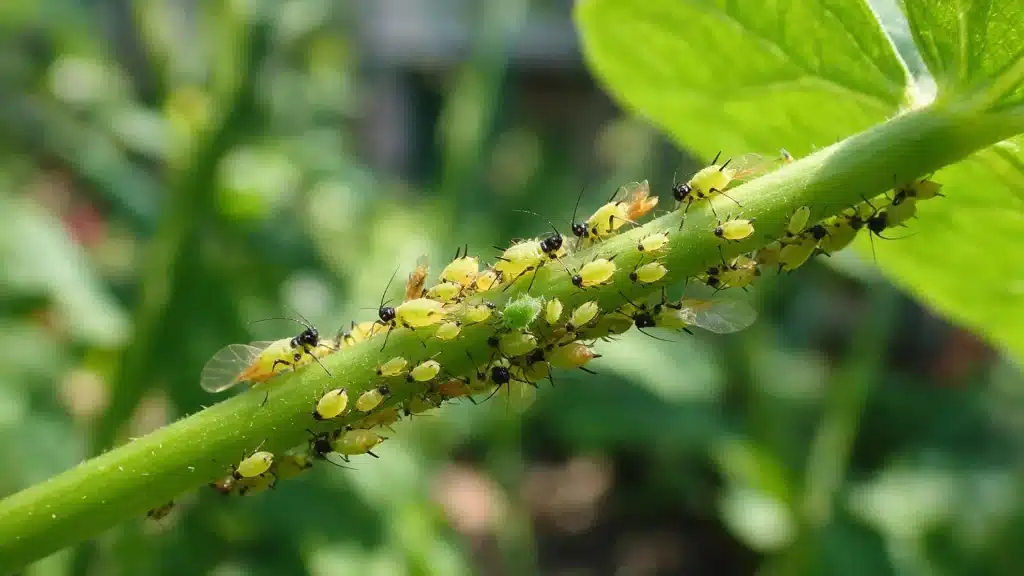
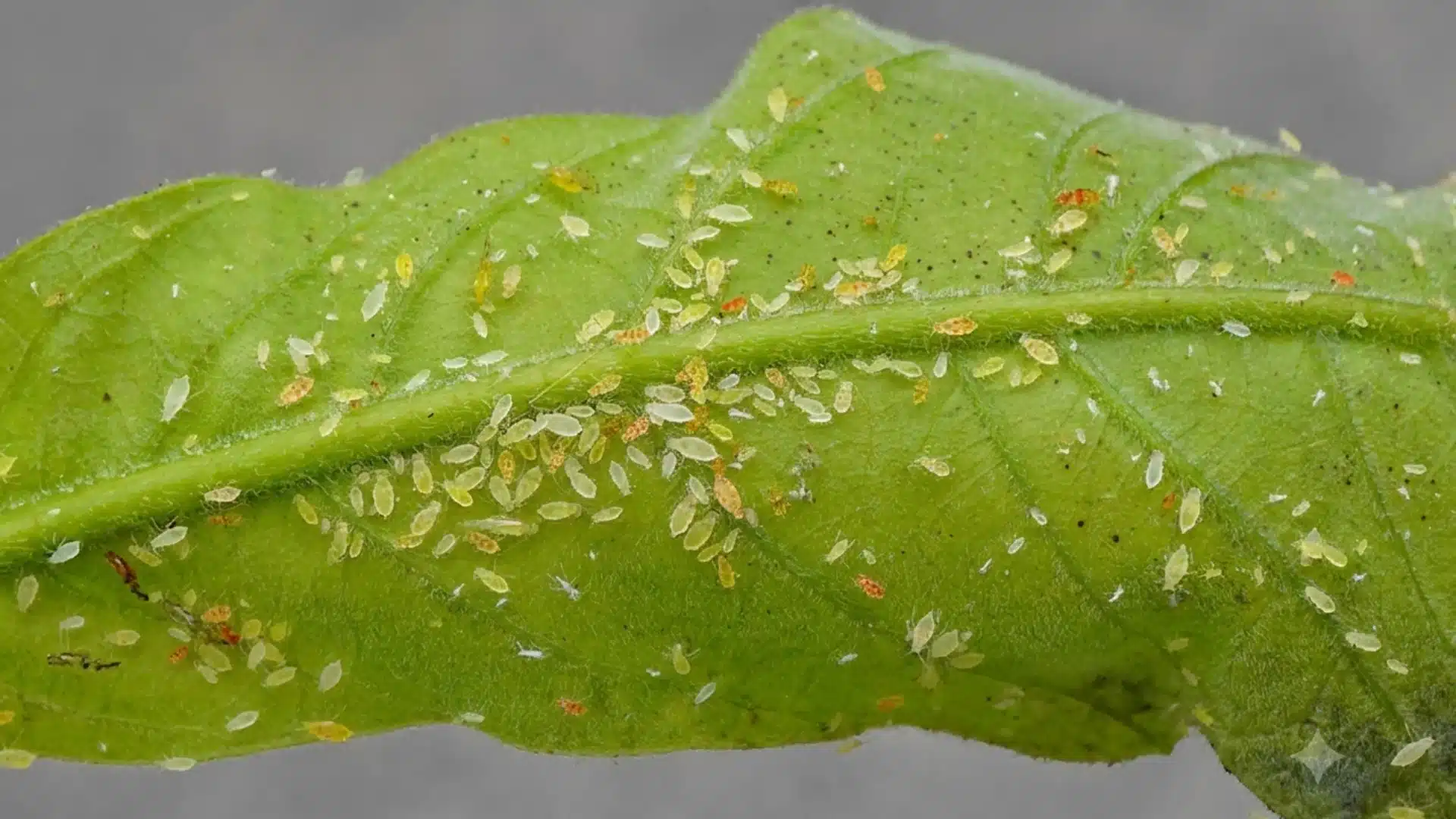
They often gather on new leaves and soft stems. Most aphids measure about one-sixteenth to one-eighth of an inch long, with soft, pear-shaped bodies.
Colors range from green and black to red, yellow, brown, or gray. Some have wings, while others stay wingless. They usually cluster on the underside of leaves.
A few aphids rarely cause harm. But their numbers grow fast. Females can give birth to dozens of young without mating. That is why one aphid can turn into a full colony within days.
How to Identify Aphids Before You Treat the Plant
Aphids can be tricky to spot at first glance, but a closer look at the plant makes them easy to confirm. A few clear traits set them apart from other pests, and the damage they leave behind is just as telling.
- Heavy ant activity along stems signals aphids feeding nearby
- Two small tail-like tubes, called cornicles, project from the rear of the body
- Long, thin antennae extend from the head
- The body stays soft and rounded, unlike faster-moving pests like whiteflies or psyllids
- Aphids move slowly and rarely jump or fly off when disturbed
- White, papery skins near a colony show where aphids have shed as they grow
- Leaves curl, twist, or turn yellow without a clear cause
- New growth looks stunted, and buds appear misshapen
- A sticky film on leaves points to honeydew, the waste aphids leave behind
- A black fungus called sooty mold grows on leaves coated with honeydew
How To Get Rid of Aphids on Plants?
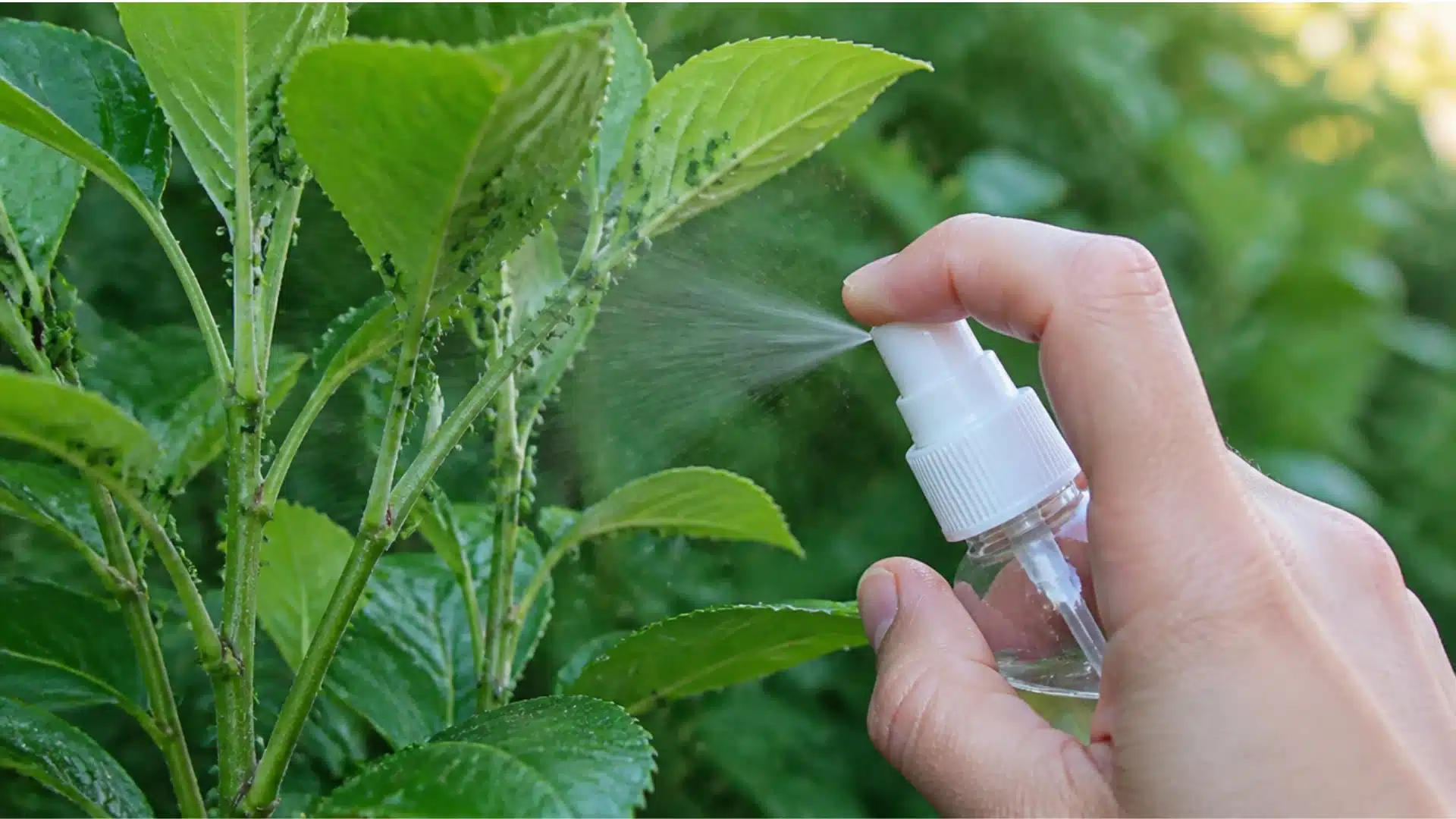
Aphids respond well to a range of simple treatments. Start with the gentlest option and move up only if needed. The methods given below work for garden plants dealing with light to heavy infestations.
1. Blast Aphids Off With Water
A strong stream of water knocks most aphids off a plant right away. Few aphids manage to climb back once they are dislodged. You have to do it right for it to work.
- Aim the spray at the underside of leaves and along stems, where aphids cluster most
- Use a garden hose outdoors or a spray bottle for smaller plants
- Repeat every few days until no new aphids appear
This method costs nothing and works best on light to moderate infestations.
2. Wipe or Squish Small Aphid Colonies
You can remove small, isolated aphid colonies by hand. Wipe them off with a damp cloth or cotton pad. Gloves make the job easier and keep hands clean.
Squishing works as well, since aphids have soft bodies that crush easily.
This method is particularly suited to gardeners who spot an infestation early, before it spreads. It also avoids any spray or chemical use altogether.
3. Prune Leaves and Stems That Are Heavily Infested
Heavily infested leaves and stems often carry more aphids than a spray can reach. Cutting them away removes a large part of the colony at once. Here is how to do it right.
- Identify the leaves or stems carrying the heaviest aphid numbers
- Cut them off with clean, sharp shears to avoid tearing the plant
- Seal the cuttings in a bag before throwing them out
Composting infested cuttings can allow aphids or their eggs to survive and spread again. The pruning also improves airflow, which most plants respond well to.
4. Use Insecticidal Soap for Aphids That Keep Returning
Insecticidal soap works well on aphids that keep coming back after other methods. It contains potassium salts of fatty acids.
These break down the aphid’s outer coating and cause it to dry out. Young aphids are especially sensitive to this treatment. A few simple steps make the treatment work well.
- Test the spray on one leaf first and wait a day
- Spray full coverage on both leaves and stems, since the soap only works on contact
- Reapply every five to seven days until the aphids are gone
5. Use Neem Oil or Horticultural Oil for Persistent Aphids
Neem oil and horticultural oil both target aphids that resist other treatments. Horticultural oil works by coating the insect and cutting off its oxygen supply.
Neem oil disrupts aphid feeding and slows down reproduction over time. Applying it the right way makes an actual difference.
- Spray both the top and bottom of every leaf for full coverage
- Apply in the early morning or evening, not in strong sun or heat
- Reapply weekly until the infestation clears
Results usually appear within a few days, with fewer aphids each time.
6. Let Natural Predators Control Outdoor Aphids
Ladybug beetles, lacewings, and their larvae all eat aphids in large numbers. Parasitoid wasps and hoverflies also contribute to regulating the populations of aphids outside.
Dill, fennel, and yarrow planted near the aphids can lure these useful insects into the garden. The use of broad-spectrum pesticides should be avoided as they kill both aphids and the beneficial insects.
Once established, predators can keep aphid populations in check with little ongoing effort from the gardener, though it may take time for predator numbers to catch up after an aphid population spikes.
This process is time-consuming but effective for the long term.
7. Try a Garlic-Based Aphid Spray
A mild garlic mixture can help knock back a light aphid problem. Follow these steps to make sure it works without harming the plant.
- Blend a few garlic cloves with water
- Strain the liquid through cheesecloth to remove leftover bits
- Test the mixture on a few leaves and wait a day
- Spray lightly on the aphid-covered areas rather than soaking the whole plant
Results with homemade sprays vary from plant to plant, and a few sensitive leaves may show mild irritation.
How to Kill Aphids on Houseplants
Houseplants need a direct approach, since there is no hose or rainfall to help indoors. The steps below focus on killing aphids fast and stopping them from returning.
Step1: Isolate the Plant First
Move the infested plant away from other houseplants right away. This stops aphids from crawling or spreading to nearby plants during treatment.
Keep it separate until the aphids are fully gone.
Step 2: Wipe Aphids With Diluted Rubbing Alcohol
Mix 70% rubbing alcohol with an equal part of water. Test the mix on one leaf first, then wait a day to see if there’s any reaction.
Dip a cotton swab or ball into the mixture, then wipe it directly onto the aphids. The alcohol dries out their bodies and kills them on contact. This works best on light infestations caught early.
Step 3: Rinse the Plant With Water
Let the alcohol air-dry for a few minutes, then rinse the leaves under lukewarm water to remove any residue.
Don’t leave the alcohol sitting on the foliage for hours, as prolonged contact can scorch leaf tissue. A gentle rinse under the sink or shower works well.
Repeat this treatment every two to three days for about two weeks, checking the plant regularly to catch any aphids that hatch later.
How to Prevent Aphids From Coming Back
A few simple habits keep aphids from settling back in for good. Building these into a regular routine makes the garden far less inviting to future infestations.
Grow companion plants like nasturtium
Aphids often prefer nasturtium over vegetables and other main crops. Planting it nearby draws aphids away and protects the plants that matter most.
Skip heavy nitrogen fertilizer
Nitrogen pushes out soft, tender growth, and aphids feed on it first. A slow-release or balanced fertilizer supports steadier growth that aphids find less appealing.
Inspect new plants before bringing them home
Aphids and their eggs often hitch a ride on new plants from a nursery or store. A quick check under the leaves catches a problem before it spreads.
Plant dill, fennel, or alyssum nearby
These plants attract ladybugs, lacewings, and other predators that feed on aphids. A steady supply of predators keeps aphid numbers low without any extra spraying.
Clear fallen leaves and garden debris
Aphids and their eggs can hide in leaf litter and other debris through the winter. Clearing this out removes a hiding spot before spring growth begins.
Wash plants regularly in the fall
A gentle rinse knocks off aphid eggs before they get the chance to hatch. Doing this a few times through the cooler months limits the following year’s infestation.
Use row covers on young plants
Row covers block aphids from reaching tender seedlings while still allowing light, air, and water through. Remove the cover once the plants have grown sturdy to keep this protection short and simple.
Final Thoughts
Though aphids can become an annoyance when not attended to, they are quite minor issues in the grand scheme of things, and all gardeners face aphids at one point, which is really not too much of a concern.
Attention today will mean a strong plant for the rest of the growing season.
There will always be some pests in the garden, and aphids are just one of them. The most important thing about aphids is always being prepared to beat them.
It is easy to keep your plants healthy and aphid-free.
Frequently Asked Questions (FAQs)
1. Do Aphids Spread from One Plant to Another?
Yes. They crawl to touch plants, hitch rides on wind or ants, or fly off once a colony gets too crowded.
2. Why Are Ants Often Found Around Aphids?
Ants feed on the honeydew aphids leave behind. In return, they guard the colony against ladybugs and all the other predators.
3. What Time of Year Are Aphids Most Active?
Spring and early summer, when soft new growth is everywhere. Activity drops off once the heat or frost sets in.
4. Will Aphids Go Away on Their Own?
Sometimes outdoors, if predators show up. Indoors, they rarely leave without some help.