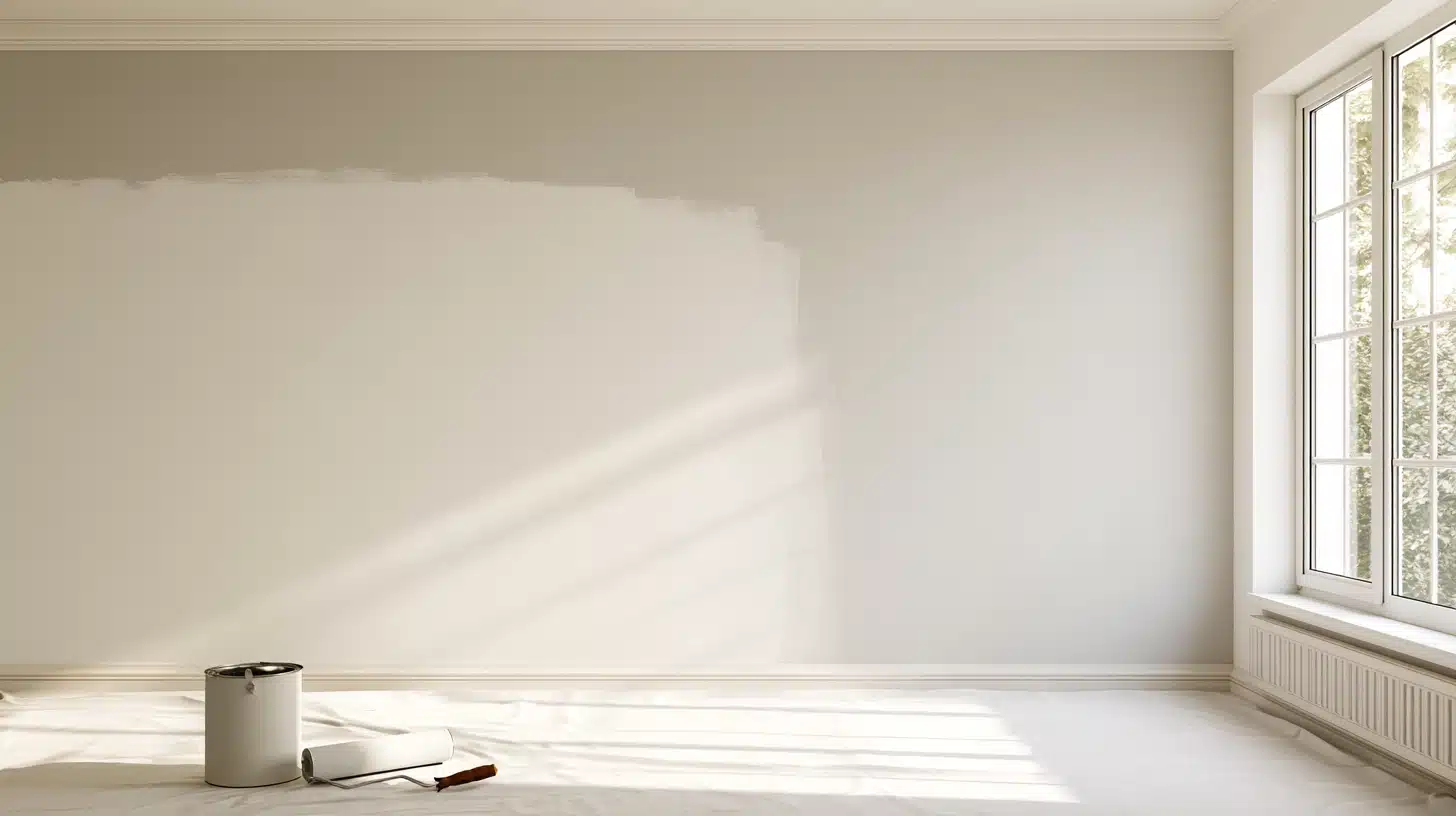
One gallon may seem sufficient for a partially painted wall until the second coat runs out.
Beyond square footage, other factors that affect paint coverage per gallon include wall texture, paint type, and the number of applications.
Buying too little leads to a rushed shop run in the middle of a job, while buying too much leaves cans sitting unused for years.
This guide provides coverage charts for popular paint types, a straightforward formula for measuring wall space by hand, and a calculator.
It will help you determine how many gallons of paint you need for any room or exterior wall.
Simple Formula for Figuring Out How Many Gallons You Need
To calculate the accurate gallon count, four short steps are required. None require specific equipment except a tape measure.
This method can be used for a single wall, a whole room, or several rooms merged into a single shopping list.
1. Determine the height and width of each wall in feet.
2. To find the square footage of each wall, multiply height by width.
3. Subtract the areas of the doors and windows from the total (a typical door takes away roughly 20 square feet, while a typical window takes away about 15 square feet).
4. Divide the sum by 400 or the paint can’s stated coverage rate.
After subtracting two windows and a typical door, a 12×12 room with an 8-foot ceiling has around 320 square feet of paintable wall space.
For one application, that area requires a little less than one gallon, and for two coats, a little more than one and a half gallons.
Gallons Needed by Room Size
| Room | 1 Coat | 2 Coats |
|---|---|---|
| Small bathroom | 1 quart-1 gallon | 1 gallon |
| Bedroom (10×12) | 1 gallon | 2 gallons |
| Living room (14×16) | 1 gallon | 2 gallons |
| Kitchen (12×14) | 1 gallon | 2 gallons |
| Small home exterior | 3 gallons | 5 gallons |
Based on 400 square feet per gallon with 8-foot ceilings and usual door/window deductions already applied, the chart below illustrates the average gallons required for one and two coats.
Rooms with open entrances, taller ceilings, or more windows could require a little less.
Small Bathroom
Since the wall space is frequently less than 150 square feet when fixtures and tiling are taken out, small bathrooms rarely require more than a quart for one application.
Two coats are covered by a full gallon, leaving extra for touch-ups at a later time.
Bedroom (10×12)
Approximately one gallon is needed for each application in a 10×12 bedroom with an 8-foot ceiling, even after deducting for doors and windows.
Yes, two coats, the standard for most color changes, require two gallons.
Living Room (14×16)
Larger open areas, such as a 14 by 16 living room, still require about one gallon of paint per coat since the length of the walls allows the paint to cover more surface area without significantly increasing height.
Usually, you need two gallons for two coats.
Kitchen (12×14)
Although backsplash tiling or partially painted walls might reduce the actual paintable area and extend a single gallon further, kitchens follow the same trend as bedrooms of comparable size.
Small Home Exterior
Because of siding texture and lower coverage rates, exterior paint requires more coats than interior paint for the same square footage.
Usually, a small house requires five gallons for two coats and three gallons for one.
Interior Paint vs Exterior Paint
Exterior paint covers less per gallon than interior paint, even on a wall of the same size. Formulation, surface, and weather exposure are the main factors that make a difference.
Let’s understand the difference between interior and exterior paint.
Interior Paint Coverage
Interior paint achieves 350-400 square feet per gallon.
Since it is designed for smooth, climate-controlled surfaces, and because previously painted walls and drywall absorb less product, coverage is uniform from room to room.
Exterior Paint Coverage
Stretch per gallon is reduced to 250–350 square feet since exterior paint has heavier binders and UV protection to withstand sun, rain, and temperature fluctuations.
Heat or wind can cause a coat to dry unevenly before it is fully applied.
Rough surfaces like wood siding, brick, and stucco absorb more paint, so keep this in mind while painting!
Gallons Needed by Paint Brand
The number on the can should always be the last word because coverage rates differ depending on the manufacturer and product line. For general reference:
Store-brand and stocked lines adhere to the industry standard of 350–400 square feet per gallon for interior paint and 200–300 square feet per gallon for primer.
On smooth, primed walls, the majority of interior lines cover 350–400 square feet per gallon; textured surfaces reduce it to 300–350 square feet.
Each gallon of interior paint covers around 350–400 square feet, and quarts are rated for about 100 square feet, which is sufficient for a door or a small accent wall.
Boysen’s Permacoat Latex covers around 25 square meters (270 square feet) per gallon per coat, whereas the Healthy Home line covers 30 to 35 square meters (325 to 375 square feet).
Depending on the product line, coverage varies from 250 to 400 square feet per gallon, with Premium Plus covering up to 400 square feet on smooth, primed drywall.
This wall paint covers roughly 375–400 square feet per gallon, which is comparable to the coverage reported by the majority of other national brands for interior latex.
Also, before all this, know the difference between acrylic vs latex paint!
Paint Coverage by Technique: Spray vs Brush
A gallon’s real stretch can vary by 20% or more depending on the paint application equipment. Choosing the right technique for the surface can save paint and avoid a second trip to the store.
Spray Painting
Although spray application quickly applies a thin, uniform coat, some paint never reaches the wall because it becomes overspray in the air.
Although spraying covers large or textured surfaces more quickly than rolling or brushing, it usually requires more paint overall per square foot.
Brushing and Rolling
For the majority of interior walls, rollers are the more paint-efficient option since they apply paint directly to the surface with significantly less waste.
Brushes use a little less paint per square foot than a roller on the same trim area and are ideal for trim, corners, and cut-in edges.
Make sure you clean your brushes and rollers after using.
Do You Need Primer First? Does it Affect the Count?
New drywall, bare wood, and walls with stains or dark colors underneath all require primer. It prevents stains from seeping through and protects the surface.
Additionally, it prevents the topcoat from soaking in unevenly.
About 200 to 300 square feet can be covered with a gallon of primer, comparable to the coverage of one coat of ordinary paint.
Skipping primer when it’s needed often results in an extra, unforeseen coat later.
The extra coat may cost more than the primer. But for a color shift, tinted priming can also reduce the number of topcoats required.
Gallon, Quart, or Multi-Gallon Bucket?
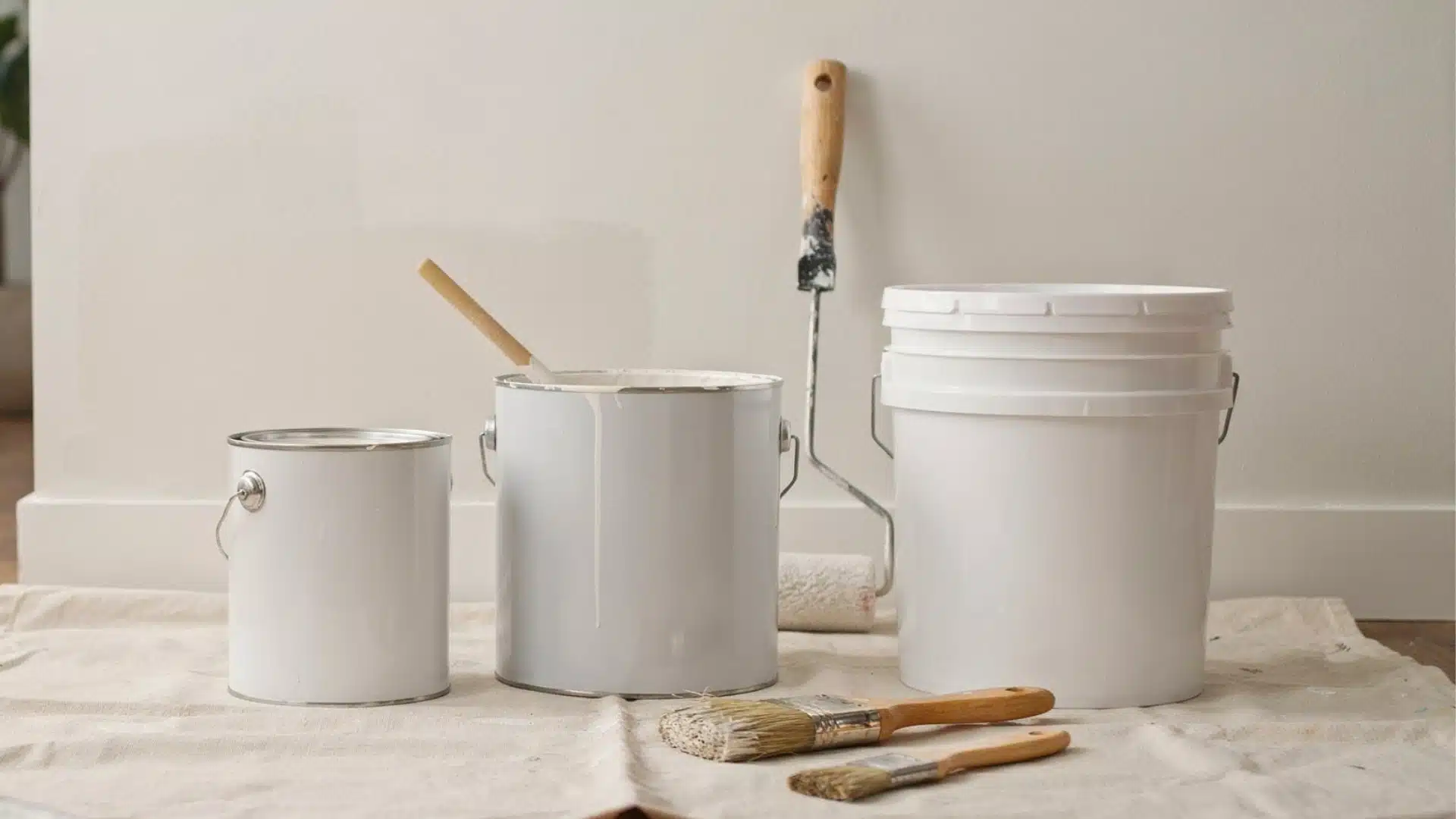
The project’s magnitude, not only the room’s size, determines the appropriate container size. Buying too little will leave you with a mismatched second can later, while buying too much will leave paint unused for years.
- A quart covers about 100 square feet, which is plenty for touch-ups, a door, or a modest accent wall.
- Most single rooms with ordinary ceilings and a few doors or windows may accommodate a gallon.
- For large rooms, open floor layouts, or complete exteriors, a 5-gallon bucket saves money per square foot.
- Buying a little extra from the same batch makes it easier for subsequent touch-ups to match the original color precisely.
Conclusion
A few factors determine paint coverage per gallon, including wall size, surface type, coat count, brand, and even the application instrument.
Calculating how many gallons of paint you need becomes math once you measure those numbers.
The correct gallon count is already present in the numbers above, ready to be measured out, regardless of the size of the project, a single bathroom wall or the exterior of a whole house.
Only once the arithmetic is done does the brush touch the wall.
Frequently Asked Questions (FAQs)
1. Do Most Walls Need Two Coats of Paint?
Yes, most walls need two coats, especially with a big color change or new drywall.
2. Does Darker Paint Need Extra Coats?
Yes, dark colors often need one extra coat, especially over a lighter wall color.
3. How Long Does Leftover Paint Stay Usable?
Sealed paint lasts one to two years when stored in a cool, dry spot.