There’s a particular kind of dread that hits about six hours into a hike, right when you notice a red, itchy line creeping across your ankle.
By then, the plant is long behind you, and you’re left wondering: is it Poison ivy that you brushed past?
This plant grows almost everywhere in North America, in forms that don’t look anything alike.
It can be a ground cover creeping through a flower bed, a shrub at the edge of a lawn, or a thick, hairy vine climbing forty feet up an oak tree.
So, instead of memorizing one picture, it helps to learn the handful of features that stay true no matter what shape the plant is wearing that day.
Poison Ivy Identification Begins With the Leaves, But Not the Way You’d Think
The well-known rhyme “leaves of three, let it be” is a reasonable starting point.
It omits the single feature that actually distinguishes poison ivy from the numerous harmless plants that also have three leaflets, such as blackberries, box elder seedlings, and Virginia creeper seedlings.
The Middle Leaflet’s Longer Stalk
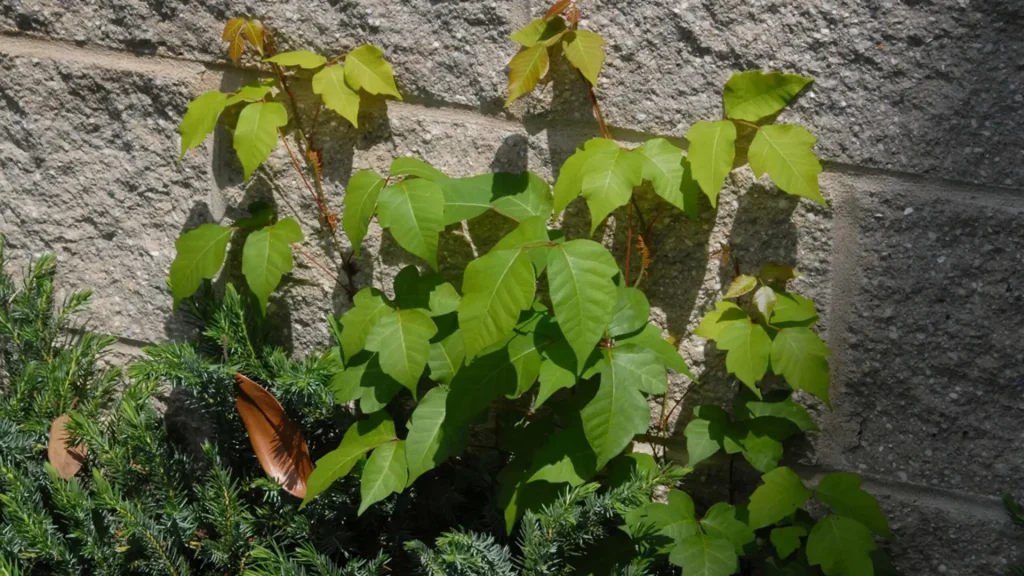
Look closely at where each leaflet attaches. The middle one sits on a noticeably longer stalk than the two side leaflets.
The University of Maryland Extension notes this middle stalk is long enough to spot at a glance, while the stalks on the side leaflets are often so short they’re barely visible at all.
How the Leaflets Branch Along the Vine
The two side leaflets attach directly across from each other, like a mirror image. But the three-leaflet clusters themselves grow alternately along the main vine, never in matched pairs across from another cluster.
This alternate branching is one of the most reliable clues on the plant.
Leaf Edges and Color Change With the Season
The edges are unpredictable. According to Clemson’s Home & Garden Information Center, a single plant can carry leaves that are smooth-edged, wavy, lobed like an oak leaf, or lined with a few blunt teeth.
It’s common to find more than one shape on the same vine.
Color shifts too: young leaves often carry a reddish or bronze tint in spring, settle into glossy medium green through summer, then flare into yellow, orange, or deep red before dropping in fall.
Because leaf shape varies so widely, it’s the least reliable clue about the plant.
The longer center stalk and the alternate branching pattern hold steady no matter the season, so if you only remember one thing from this section, make it those two.
The Three Growth Forms of Poison Ivy You’ll Actually Run Into
One reason people struggle to identify poison ivy is that the plant doesn’t stick to a single appearance. It takes three different forms depending on where it’s rooted and what it can climb.
Climbing Vine
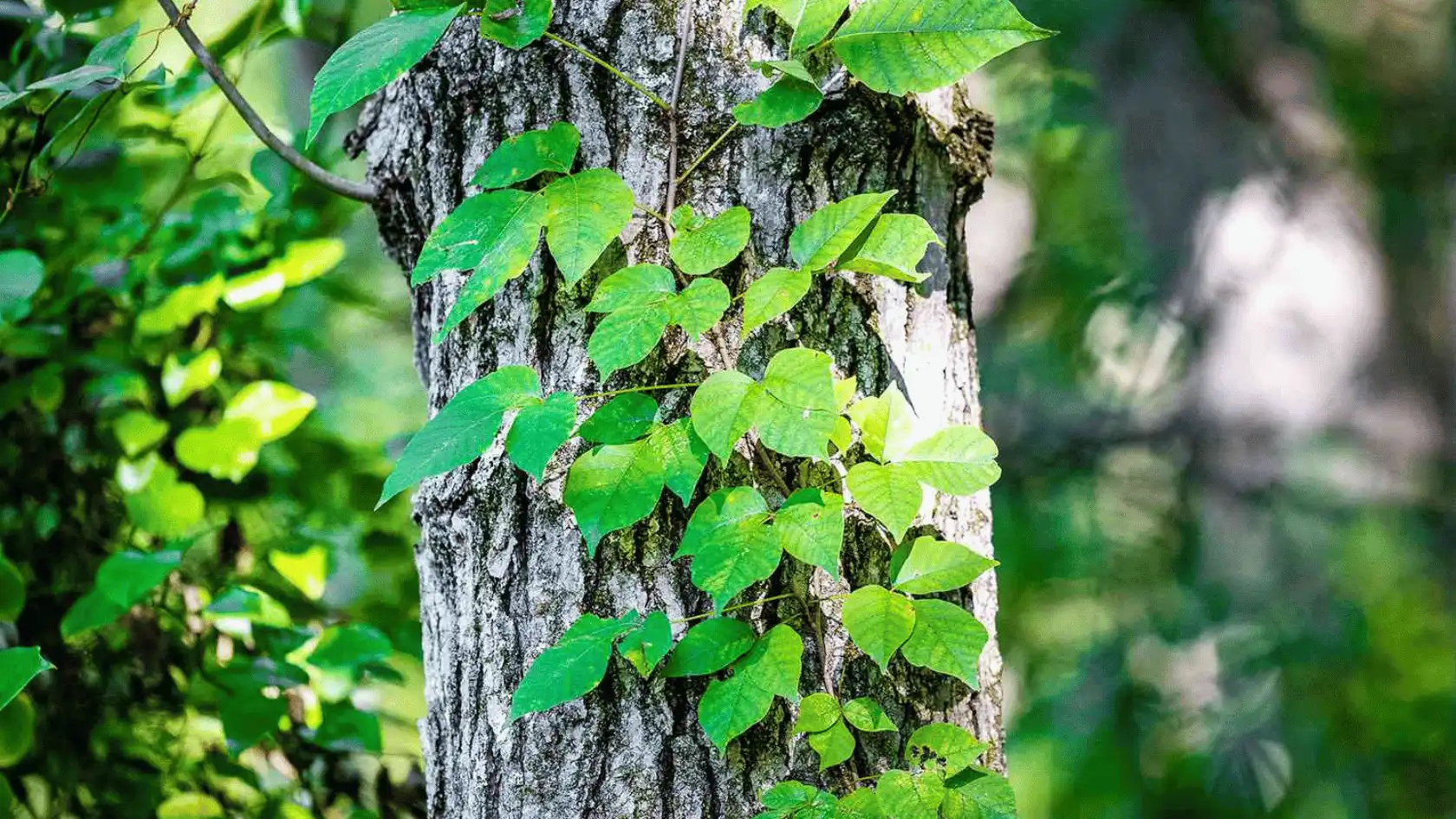
Given something to grab onto, poison ivy will climb aggressively, wrapping itself around tree trunks, fence posts, utility poles, and rock walls.
Mature vines anchor themselves with small, hairy rootlets and can reach well above head height, sometimes stretching forty feet or more up a mature tree.
Freestanding Shrub
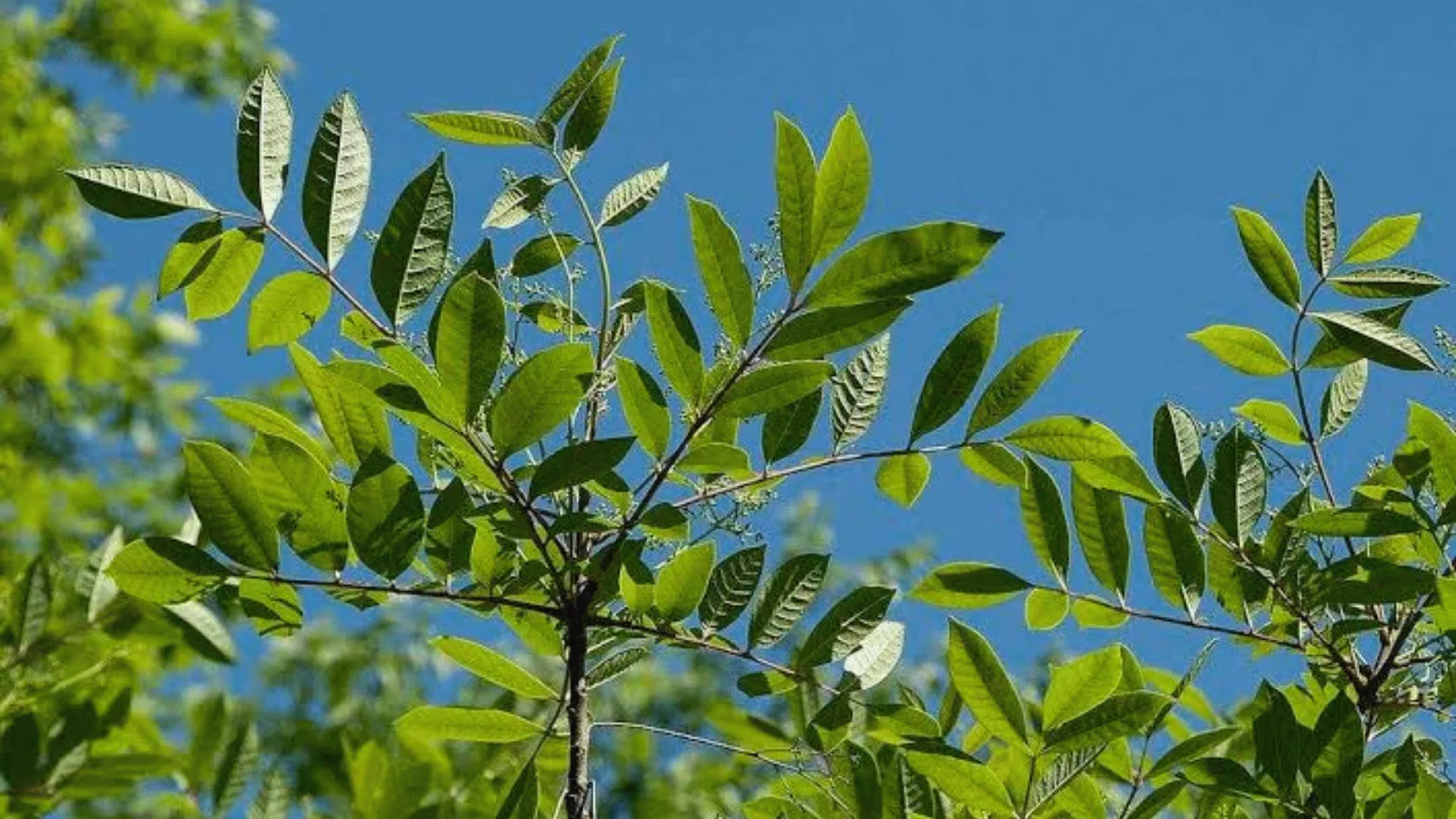
In open, sunny spots like field edges, trailheads, and the borders of yards, poison ivy often skips climbing altogether and grows as a self-supporting shrub.
These typically reach two to four feet tall, with multiple stems branching out from a central base, making the plant look bushier and more compact than its vine form.
Low Ground Cover
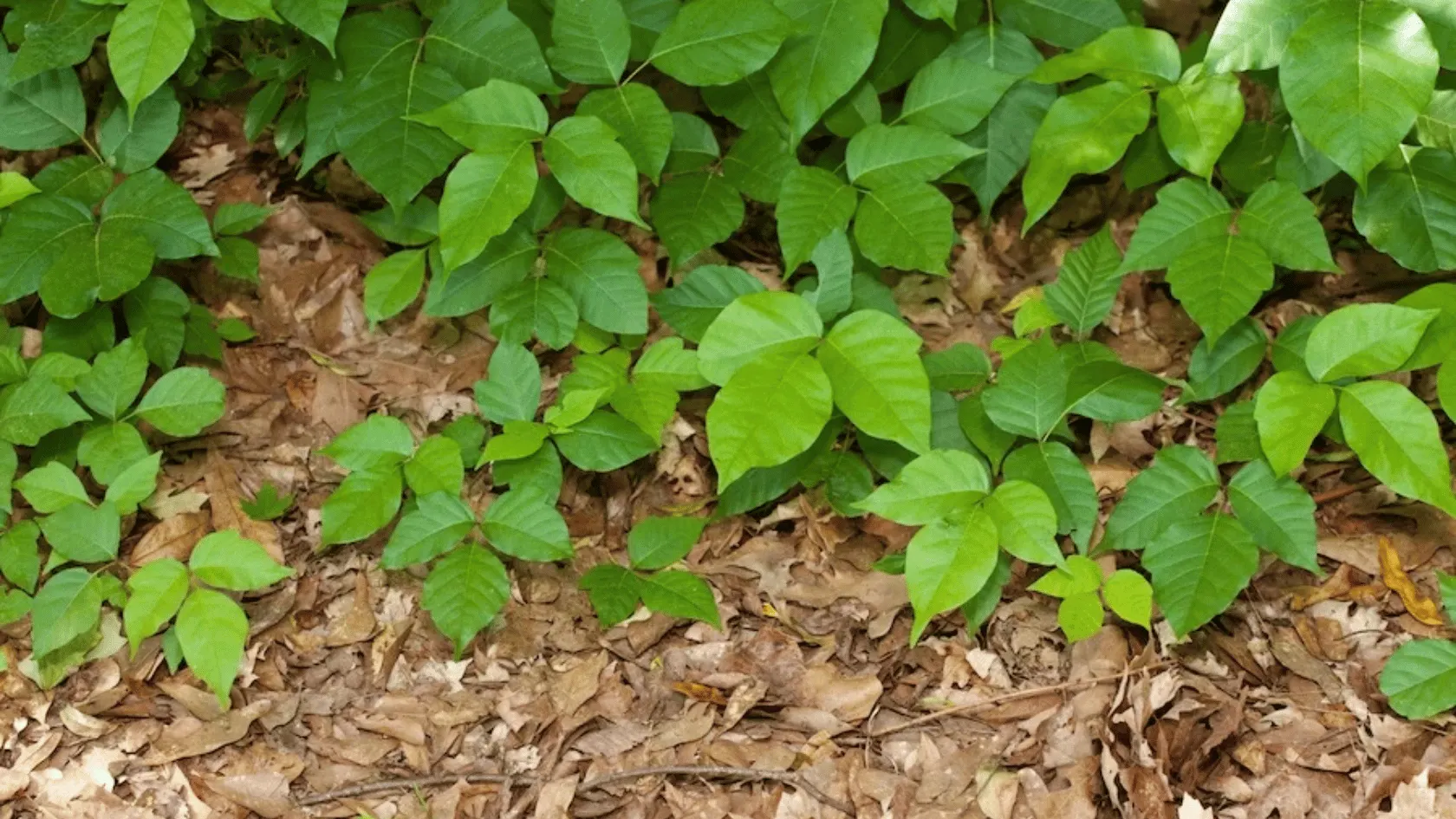
In shaded woodlands or along the unmowed fringes of a lawn, poison ivy spreads low to the ground instead of climbing or standing upright.
It forms dense, tangled mats that creep outward through underground rhizomes, often blending in with surrounding groundcover plants and making it one of the easiest forms to overlook.
A plant that’s easy to spot as a shrub in a neighbor’s yard can be nearly invisible as a groundcover tangled into ivy along a stone wall, which is exactly why knowing all three forms matters.
Does Poison Ivy Look Different in Different Seasons?
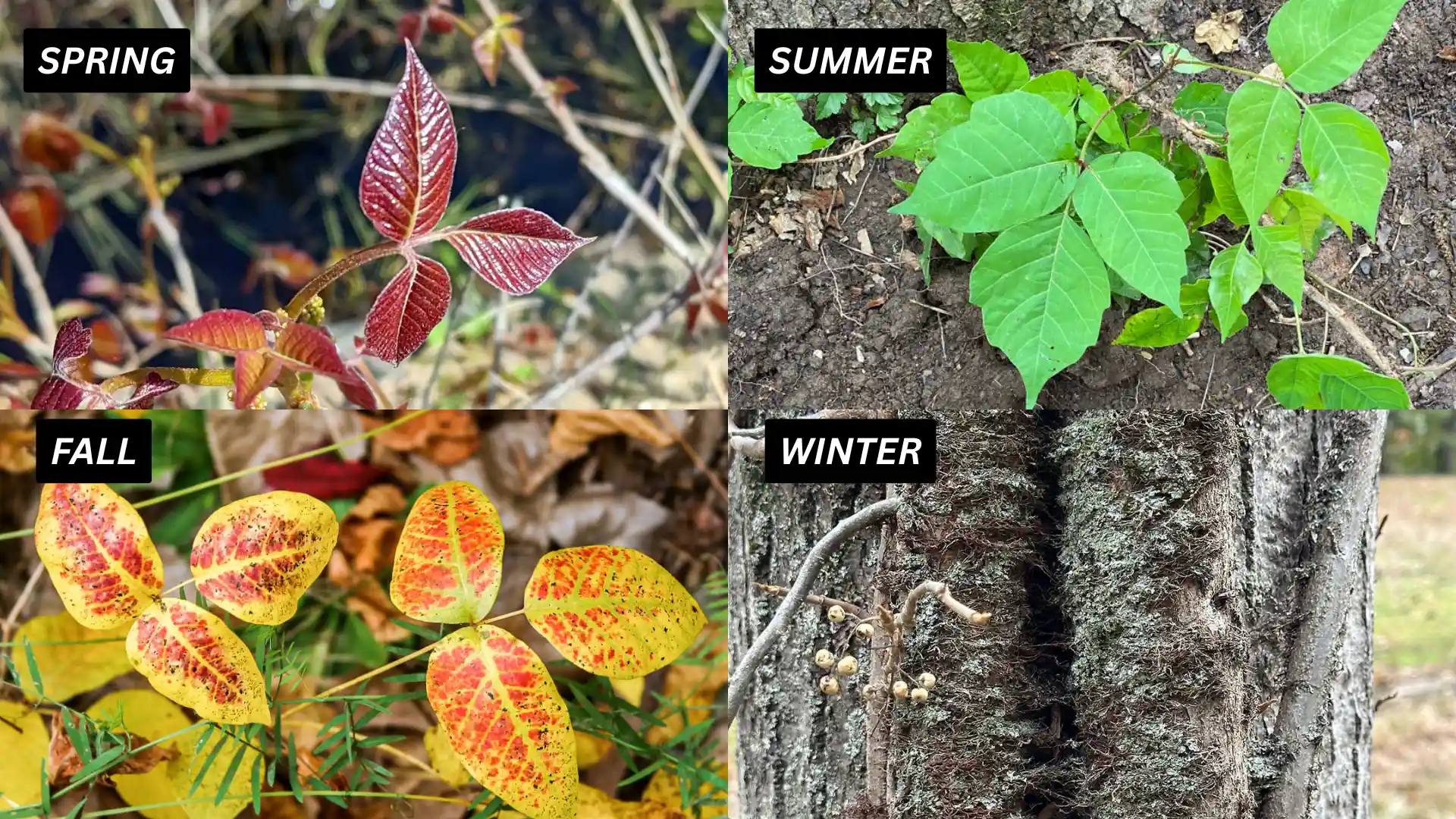
Yes, and this is exactly why so many people fail to recognize the plant outside of summer.
Poison ivy changes its appearance dramatically as the year progresses, which means the mental picture most people carry- glossy green leaflets- only holds true for a few months out of twelve.
Spring: New leaves emerge with a reddish or bronze tint and a slightly glossy surface, often mistaken for a different plant altogether since they haven’t turned green yet.
Summer: The leaves settle into their most familiar look, a deeper, matte-to-glossy green, while the plant also produces small clusters of white-green flowers that later become berries.
Fall: Leaves shift into bright yellow, orange, or deep red, making the plant easier to spot from a distance but just as capable of causing a rash on contact.
Winter: Leaves fall off completely, exposing the bare, hairy vines or the leafless stems. Though the plant then appears harmless, the urushiol oil stays active in the vine, roots, and stem throughout the year.
The point is that you can’t learn to identify poison ivy on the basis of how it looks in one season alone.
A hiker who has only learned to recognize its shiny summer leaves will simply walk past the plant in October or will touch its bare winter vine without pausing to think.
What the Vines and Berries Look Like When the Leaves Are Gone?
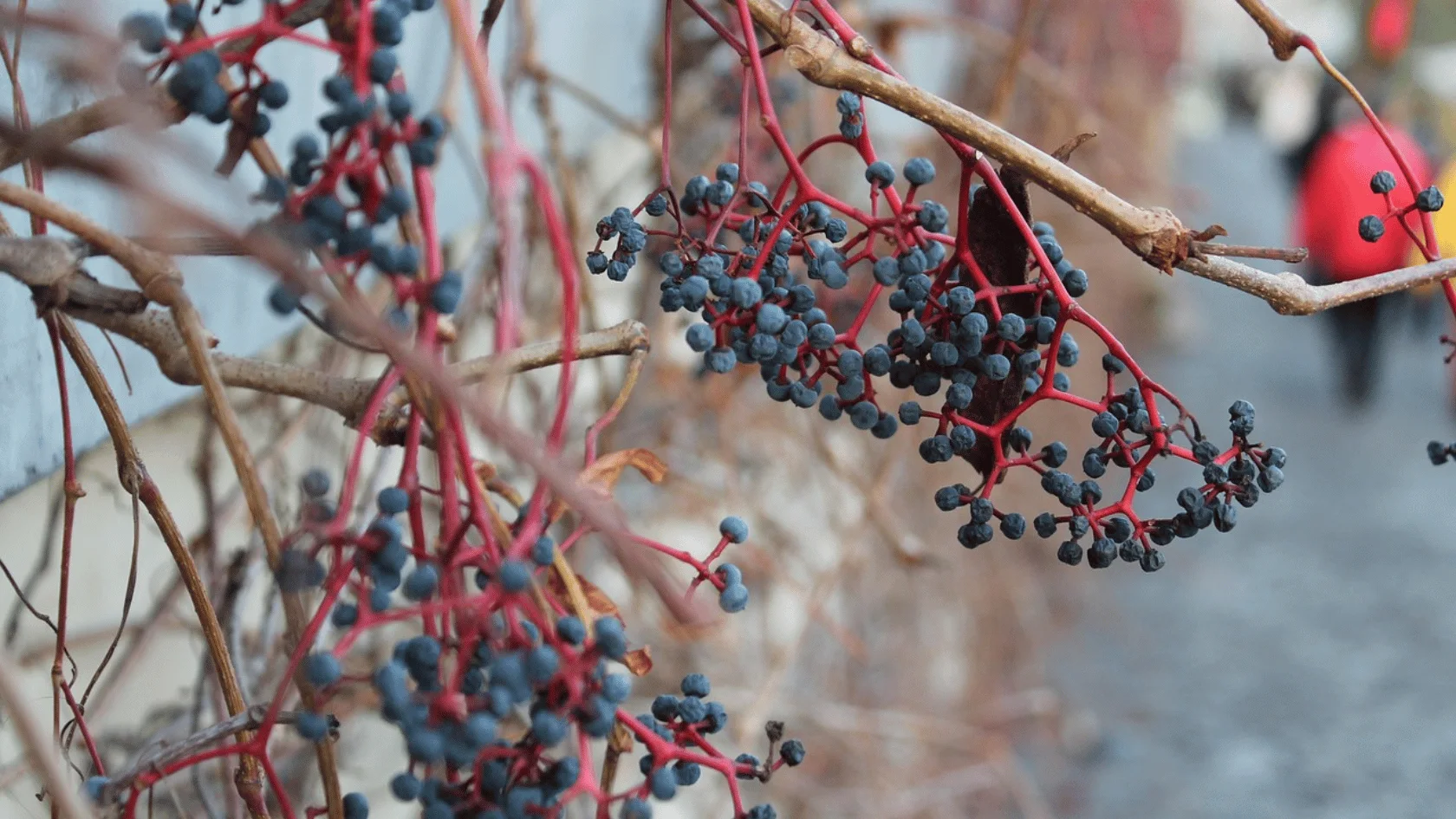
Leaves fall, but the vines do not, and it is probably safer to assume that a poison ivy vine with no leaves is more hazardous than one that has leaves, since it is more likely to be taken for something harmless.
The mature vines have small, root-like fibers that attach the plant to the surface it is climbing, giving the bark a rough, fuzzy appearance.
This is the reason for another common saying: ‘Hairy vin, no friend of mine’.
Although not all hairy vines are poison ivy, the shaggy texture is unusual enough among common climbing plants found in gardens and woodlands to serve as a real warning sign.
From mid-summer until autumn, the mature plants also produce small clusters of round, whitish-green berries; they are sometimes referred to as waxy or dull white.
Poison Ivy vs. the Plants People Mistake It For
A surprising number of poison ivy rashes are actually cases of mistaken identity working in reverse: someone avoids a harmless plant or handles poison ivy because it resembles something familiar.
Virginia Creeper
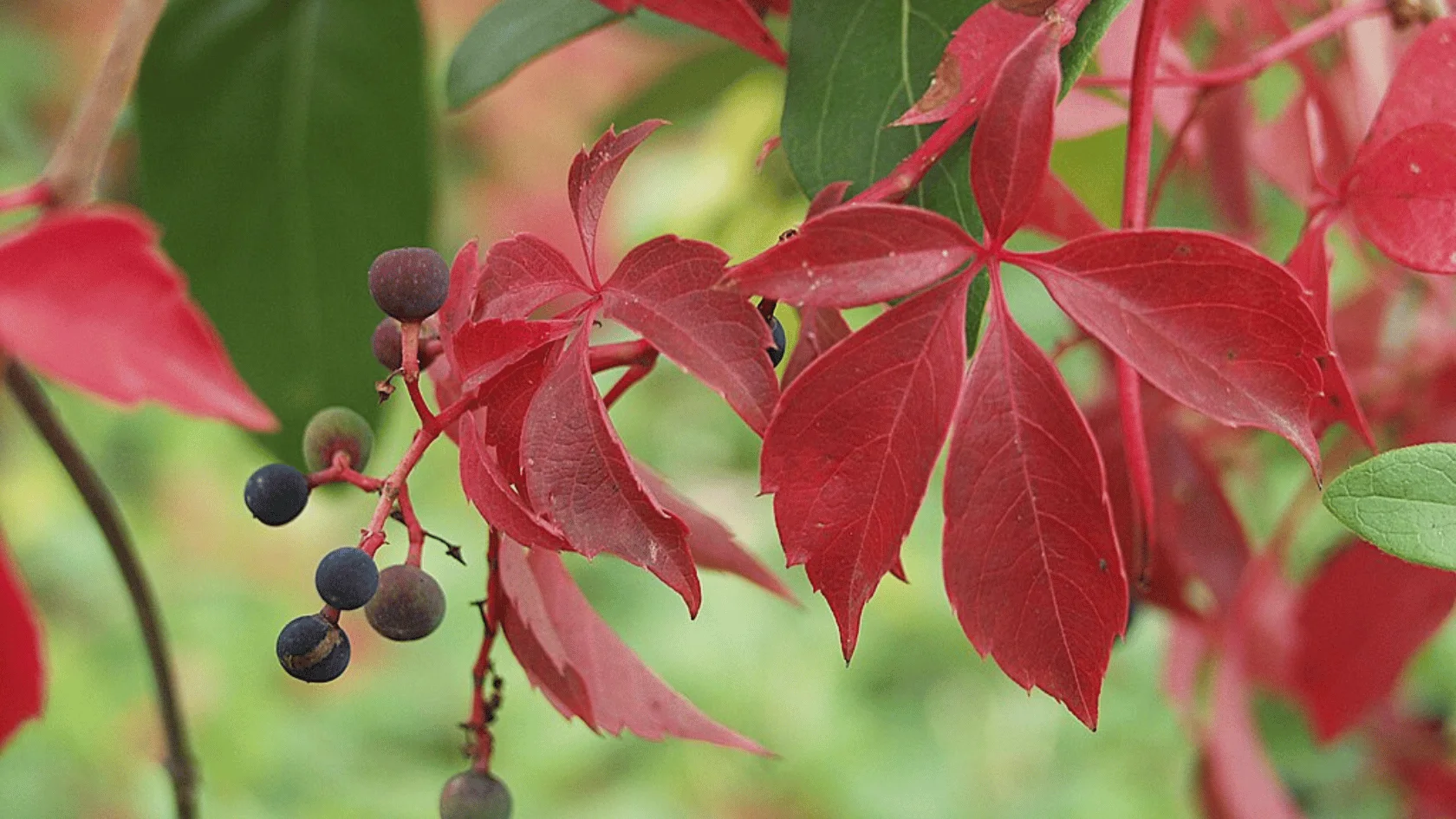
Virginia creeper shares poison ivy’s habit of climbing trees and structures, and its young leaves can carry a similar glossy sheen, which is where the confusion usually starts.
The real difference is leaflet count: Virginia creeper leaves have five leaflets radiating from a central point, not three, so a close look is worth the extra few seconds.
Boxelder Seedlings
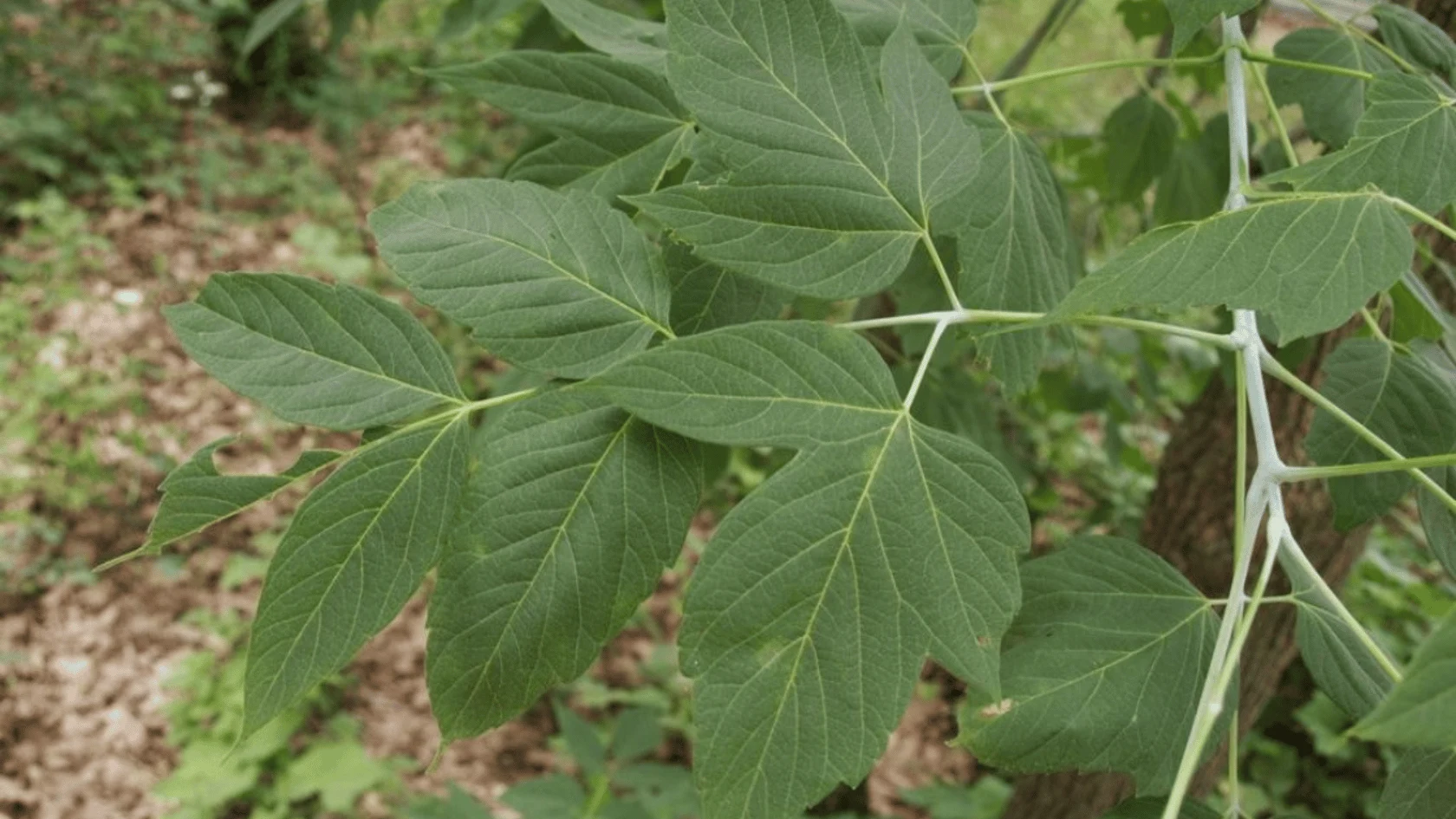
Young boxelder trees are especially deceptive because their first leaves also grow in clusters of three, closely mimicking poison ivy’s signature look.
The University of Maryland Extension points to branching structure as the reliable tell: boxelder leaflets sit directly opposite one another on the stem, while poison ivy’s leaflet clusters always alternate along the vine.
Atlantic Poison Oak
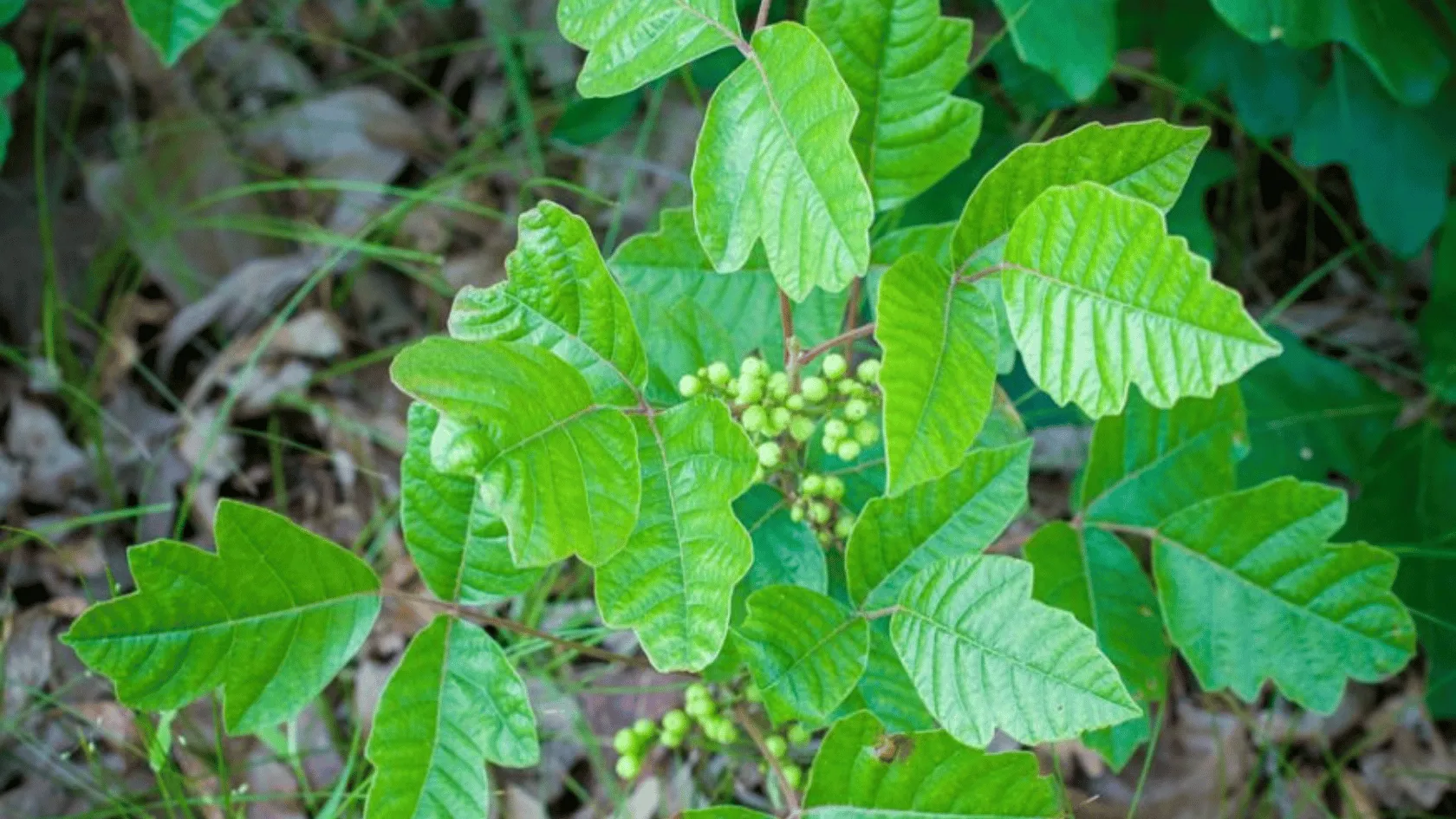
Found mainly in the Southeast, Atlantic poison oak is a close botanical relative of poison ivy, not a harmless look-alike.
It tends to grow more upright, with fine hairs covering both the upper and lower leaf surfaces, but it contains the same urushiol oil and causes an identical allergic reaction, so it deserves the same level of caution.
Brambles (Blackberry, Raspberry)
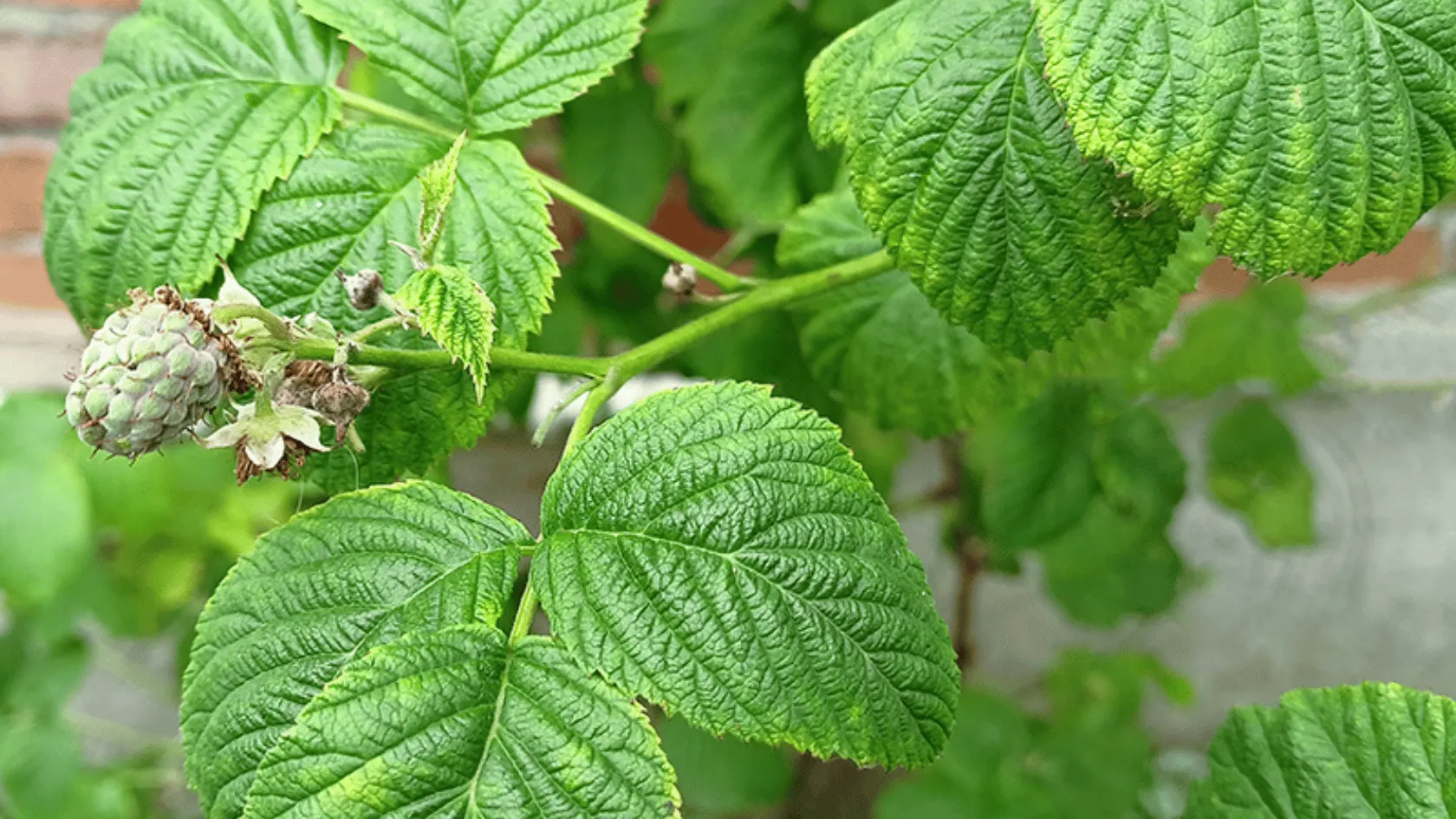
Blackberry and raspberry canes also produce compound leaves in groups of three, but a couple of details set them apart quickly.
Their leaf edges carry fine, saw-like serrations running the full length, and the stems themselves are armed with actual thorns, a feature poison ivy never has.
If a plant has three leaflets and you’re not sure which one it is, the safer move is always to leave it alone rather than get close enough to check for hairs or thorns.
Why the Plant is Dangerous Even When it Looks Dead?
The compound responsible for the rash is an oily resin called urushiol, and it’s present in every part of the plant: leaves, stems, roots, and even the bare, leafless vine in the middle of winter.
Urushiol on a dead vine or cut root can remain potent enough to cause a reaction for a year or more, which is why yard cleanup in late fall or winter is deceptively risky.
The oil doesn’t stay put, either. It transfers readily to other surfaces and can persist there for months if nothing washes it away, which is the mechanism behind most “I never touched the plant” rashes:
- Garden tools and pruning shears used on the plant the previous season
- Gloves and clothing, especially jacket sleeves and boot laces
- Pet fur, if a dog or cat brushed through a patch outdoors
Sensitivity to urushiol also isn’t universal, but it’s close. The Appalachian Mountain Club estimates that roughly 70 to 90 percent of people will develop an allergic reaction after contact.
Which means the safest assumption for nearly anyone spending time outdoors is that they’re susceptible, even if they’ve never reacted before.
What to Do in the First Few Minutes After Contact?
Timing matters more than almost anything else here. Urushiol starts binding to skin within minutes.
Clemson Extension notes that highly sensitive individuals may have as little as ten minutes to remove it before a reaction becomes unavoidable, while less sensitive people generally have a window of up to a few hours.
A few practical steps make a real difference:
- Wash the area with soap (dish soap or a specialized poison-ivy wash cuts through the oil best) and cool running water as soon as you can; plain water alone is less effective at removing the oil.
- If you have it on hand, rubbing alcohol is more effective than water alone at breaking down the oil.
- Wash anything that may have brushed the plant separately from the rest of the laundry, including gloves, boot laces, and leashes.
- Remember that the rash itself isn’t contagious. If new patches appear on someone else in the house, they likely touched a contaminated surface rather than the rash.
If a rash does develop, calamine lotion or hydrocortisone cream typically manages the itching, though widespread reactions, swelling near the eyes, or a rash that spreads rapidly are good reasons to call a doctor rather than wait it out.
The Takeaway on Poison Ivy Identification
Adapting to the identification of poison ivy doesn’t mean memorizing one photograph.
It’s a matter of picking out a pattern that remains consistent in all three growth forms, through the four seasons, and among a dozen different leaf shapes.
The longer central stalk, the alternating branching pattern, the hairy vines in winter, and the pale berries are the features you should remember when you’re out on the trail.
Frequently Asked Questions (FAQs)
1. Can You Get a Poison Ivy Rash from Smoke?
Yes. Burning poison ivy releases urushiol into the smoke, and inhaling it can cause a painful rash inside the lungs and airways.
2. Does Poison Ivy Grow in Shade or Sun?
Both. It tolerates deep forest shade and full sun equally well, which is part of why it turns up in so many different landscapes.
3. Can Poison Ivy Be Eaten by Animals Safely?
Yes. Deer, rabbits, and goats browse the leaves without reaction, and birds eat the berries; animals aren’t affected by urushiol the way humans are.
4. Does Washing with Hot Water Help Remove Urushiol?
Not particularly. Hot water can open pores and may spread the oil further; cool running water or rubbing alcohol works better.