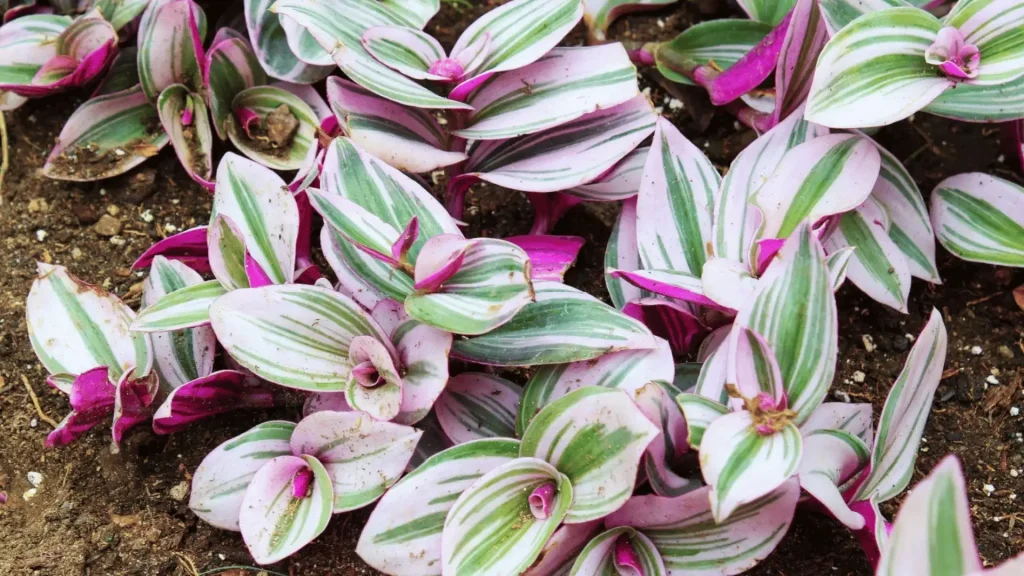
Very few houseplants that hang over the edges of pots are as reliable as the wandering jew.
Within a few weeks, its purple, silver, and green leaves spill over the edge of the pot. It grows so fast people call it the ‘inch plant’. That speed cuts both ways, though.
Get the light or watering slightly wrong for a couple of weeks, and a once-full plant turns thin and messy before you spot what went wrong.
The following breakdown of wandering jew plant care explains what to look after in simple terms, so you can catch trouble early and keep the foliage dense.
What is Wandering Jew Plant?
Wandering Jew is a common name applied to several trailing plants in the Tradescantia genus, native to Mexico, Central America, and parts of South America.
They’re grown for their fast-spreading habit and striped or solid-colored foliage, and they’ve become one of the most widely shared houseplants for exactly that reason.
Neighbors and friends often pass along a cutting instead of buying a new plant, since a single stem roots on its own within days.
Many garden centers now list it under Tradescantia instead.
How to Care for a Wandering Jew Plant Indoors?
These plants adapt well to normal indoor conditions, and they don’t ask for anything exotic to look good.
What they care about is light, drainage, and watering. Get those three right, and the rest- temperature, humidity, feeding- mostly takes care of itself.
Most of the trouble people run into traces back to one of these basics being slightly off for a few weeks too long, not to some rare disease or pest. Here’s what each part of its care actually looks like in practice.
Light
An east- or west-facing window is the sweet spot for these plants. Too little light and the color washes out fast, stems stretch toward the glass, new leaves come in smaller, and the purple striping fades to a dull green.
Morning sun is gentle enough to leave alone, but hold back on direct afternoon sun, since it can scorch the leaves in an hour or two.
Soil
A fast-draining mix matters more than any specific brand of potting soil. Take a standard bagged mix and work in some perlite or coarse sand so water moves through instead of sitting around the roots.
Skip this step and even careful watering can turn into root rot. The pot itself needs a drainage hole; no exceptions, or you’re just delaying the same problem.
Temperature
Most living rooms already sit in the 60–85°F range these plants are happy in, so temperature rarely needs extra thought.
The two spots to watch are a cold windowsill in winter, where a chilly draft can shock the leaves overnight, and a heat vent blowing dry air directly on the pot.
Move the plant a foot or two away from either one and it’ll be fine.
Humidity
These plants don’t demand a humidifier. Normal indoor air covers it most of the year, and the leaves hold up fine without misting.
The one exception is a dry winter with the heat running constantly; that combination can crisp up a few leaf tips. If you notice it, a tray of water nearby or grouping it with other plants usually clears it up.
Feeding
A light dose of balanced fertilizer once a month during spring and summer is enough to keep new growth coming.
Don’t feed on a schedule year-round, though; once winter slows the plant down, feeding it anyway just builds up salts in the soil without giving the plant anything to use. Skip it entirely from late fall through late winter.
Pruning
Pinching back the tips every few weeks is the one habit that keeps these plants looking full instead of stringy.
Skip it for a couple of months, and the stems keep growing longer without branching, which is exactly how this plant ends up sparse near the base.
Watering
There’s no fixed schedule that fits every home. Check the top inch of soil with a finger, and water only once it’s actually dry.
Yellowing leaves, soil that never dries out, and soft or mushy stems near the base mean it’s time to hold off and let the soil dry out. Drooping, curled leaves, soil pulling away from the pot’s edge, and crisp brown tips mean it’s time to water.
Growth slows down in the colder months, so cut back on frequency or the soil will stay wet long enough to invite root rot.
Types of Wandering Jew Plants
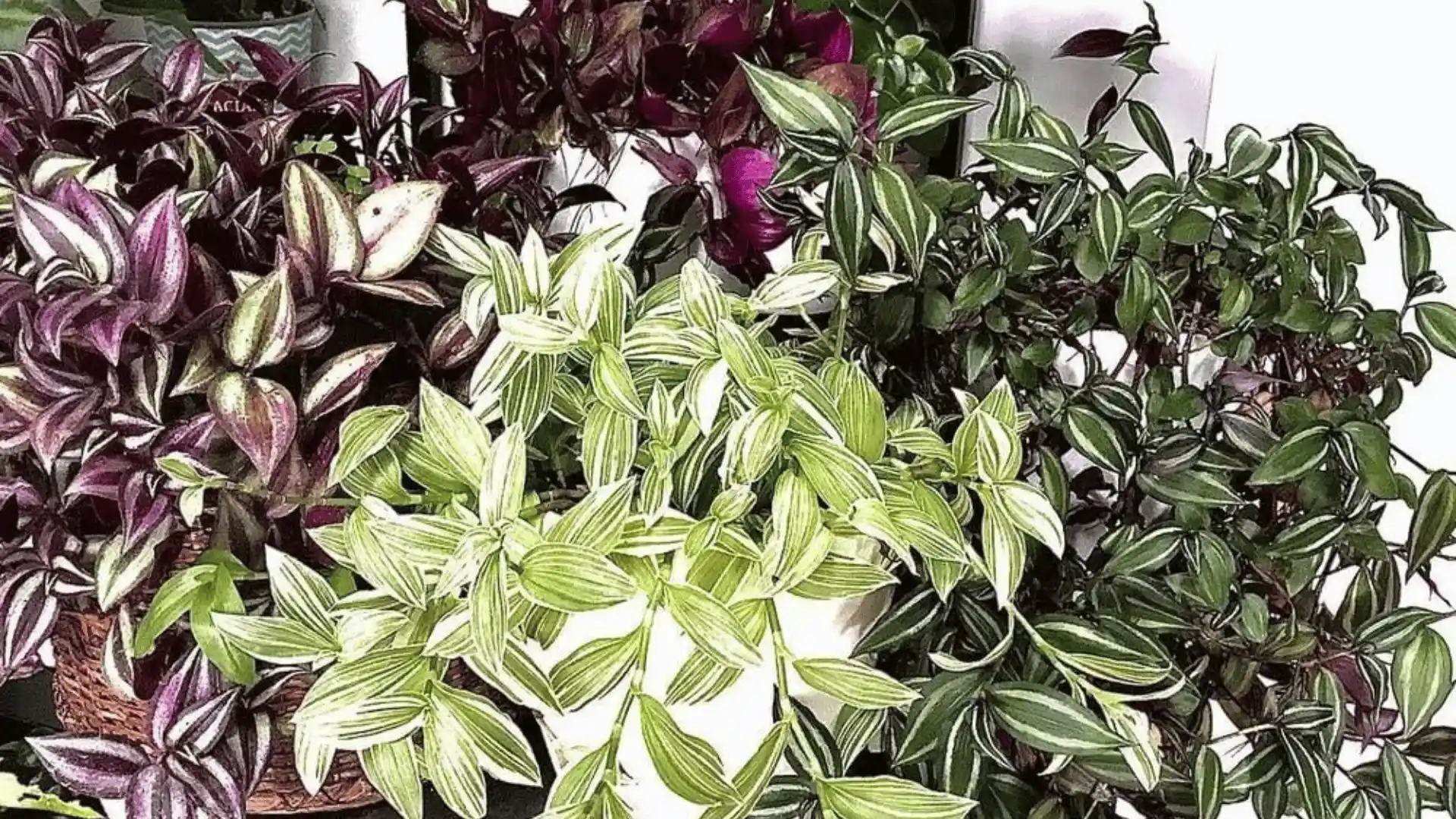
Not every wandering jew looks the same, since the name covers a handful of related species with different colors and growth habits.
Tradescantia Zebrina
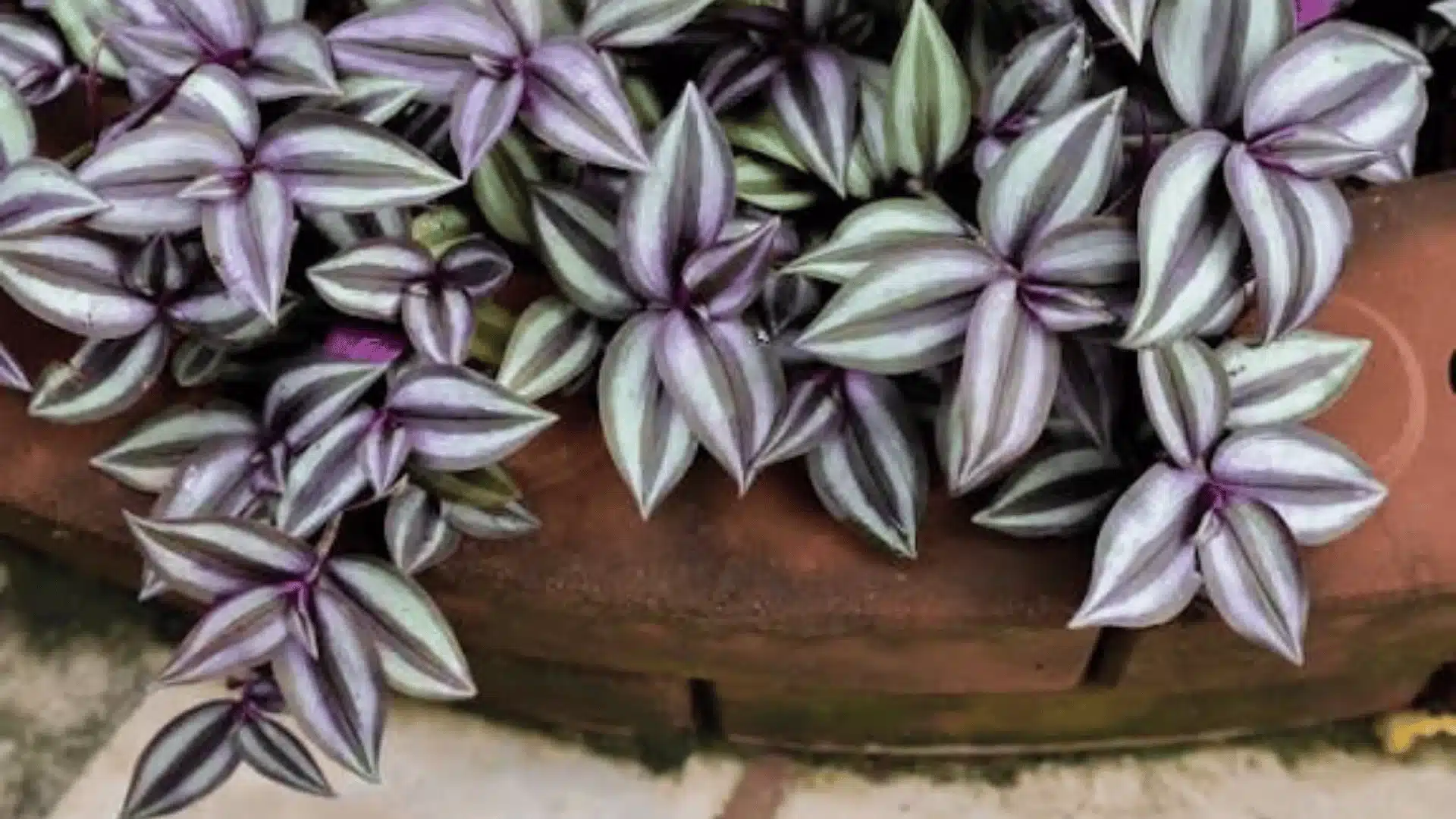
This is the variety most people picture when they hear about this plant.
The leaves carry silver and purple stripes on top with a deep purple underside, a combination that shows up best under bright, indirect light.
It trails fast, fills out a hanging basket within a season, and roots from almost any cutting you happen to snip off.
Tradescantia Fluminensis
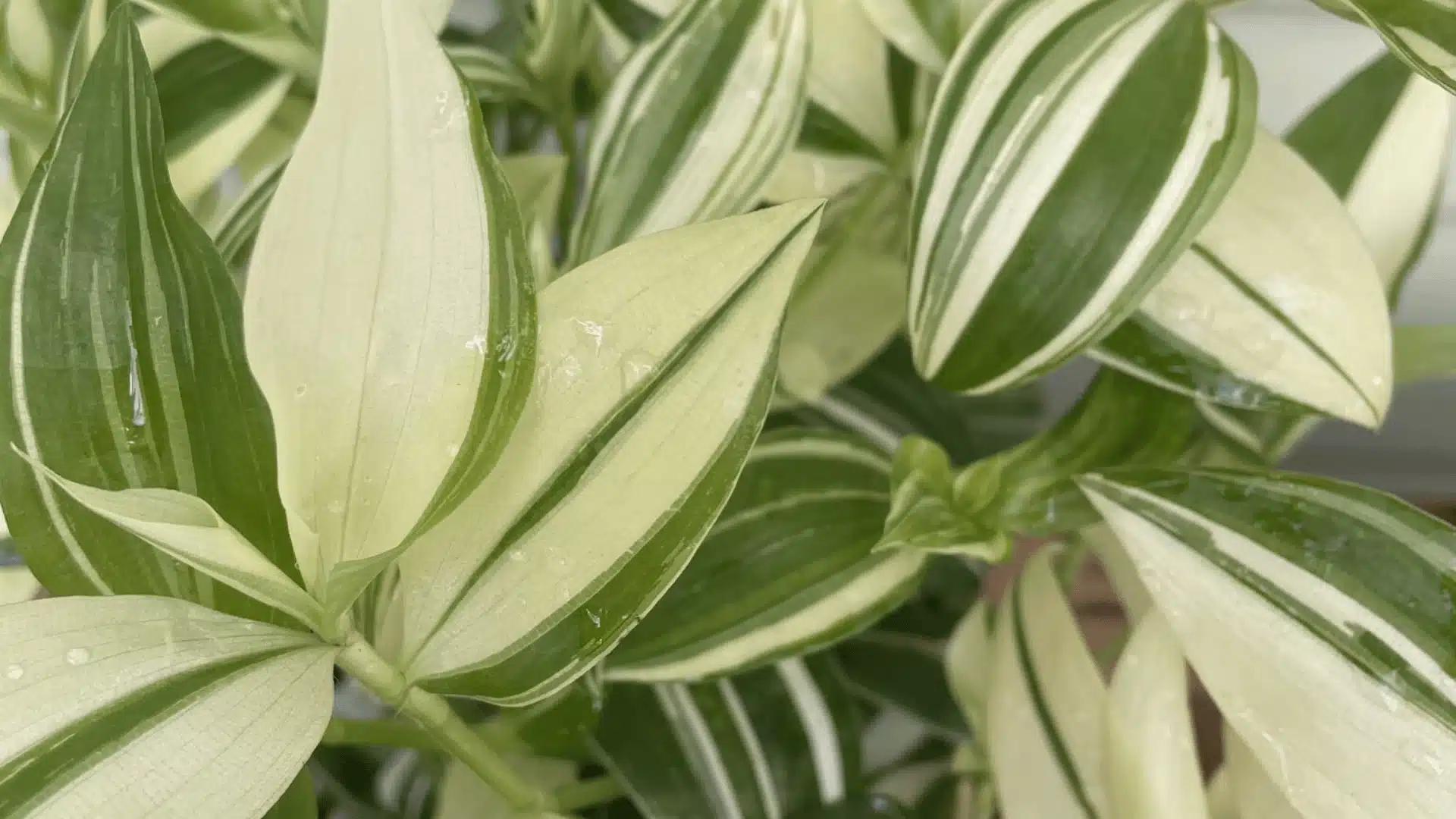
Sometimes called small-leaf spiderwort, this one skips the purple stripes entirely.
The leaves come in solid green or a light green-and-white variegation, and the growth rate matches T. zebrina, stem for stem.
If you want the same fast, trailing habit without the strong color contrast, this is the species to grow instead. It also tends to be a bit more forgiving in lower light.
Tradescantia Pallida
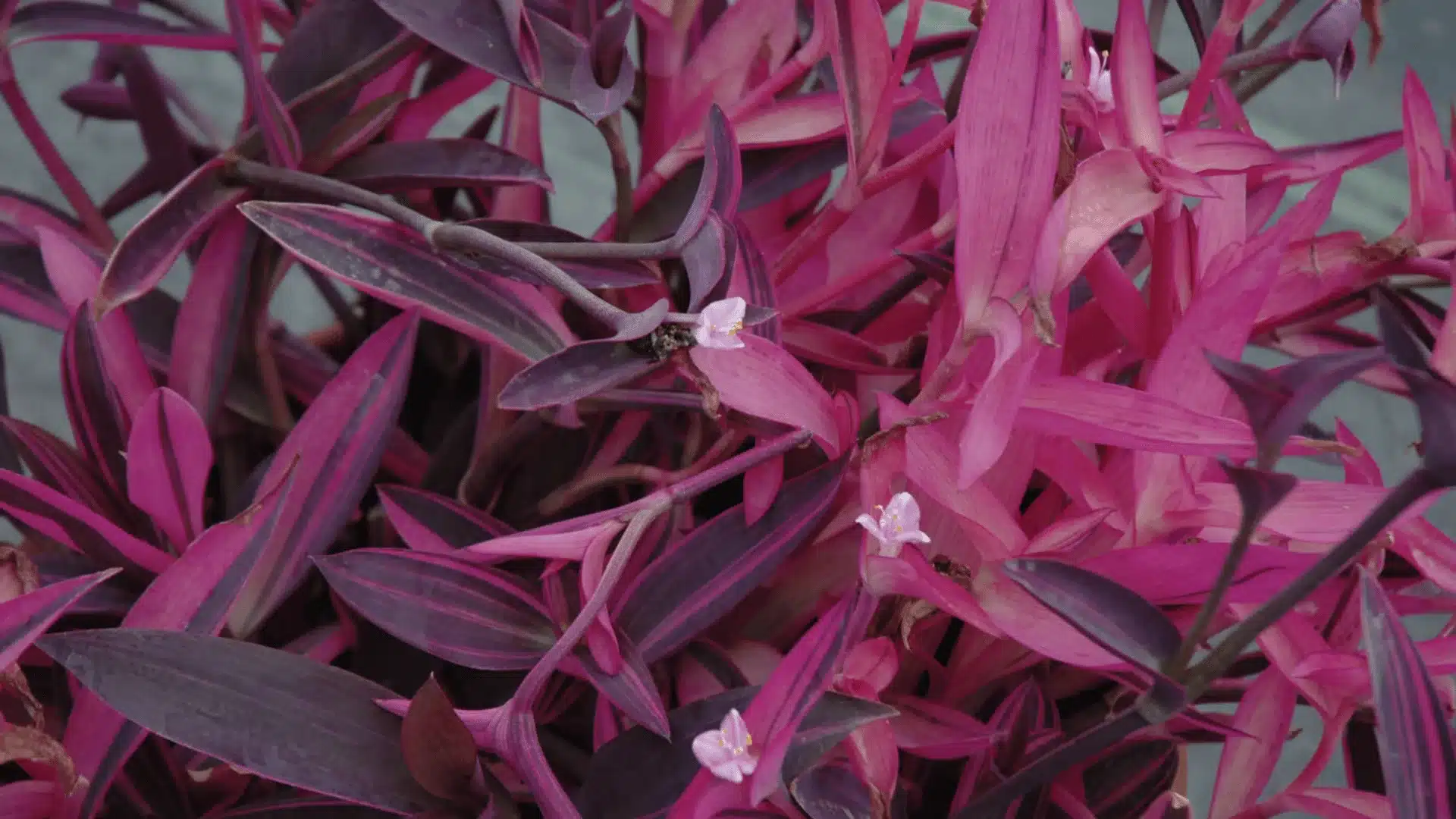
Sold under the name “purple heart”, this variety breaks from the trailing habit of the others. The leaves are a solid, deep purple from base to tip, and the stems grow more upright than they sprawl.
It still roots easily from cuttings and tolerates the same watering routine as the rest, but expect a plant that stands up in the pot rather than spilling over the side.
Tradescantia Spathacea
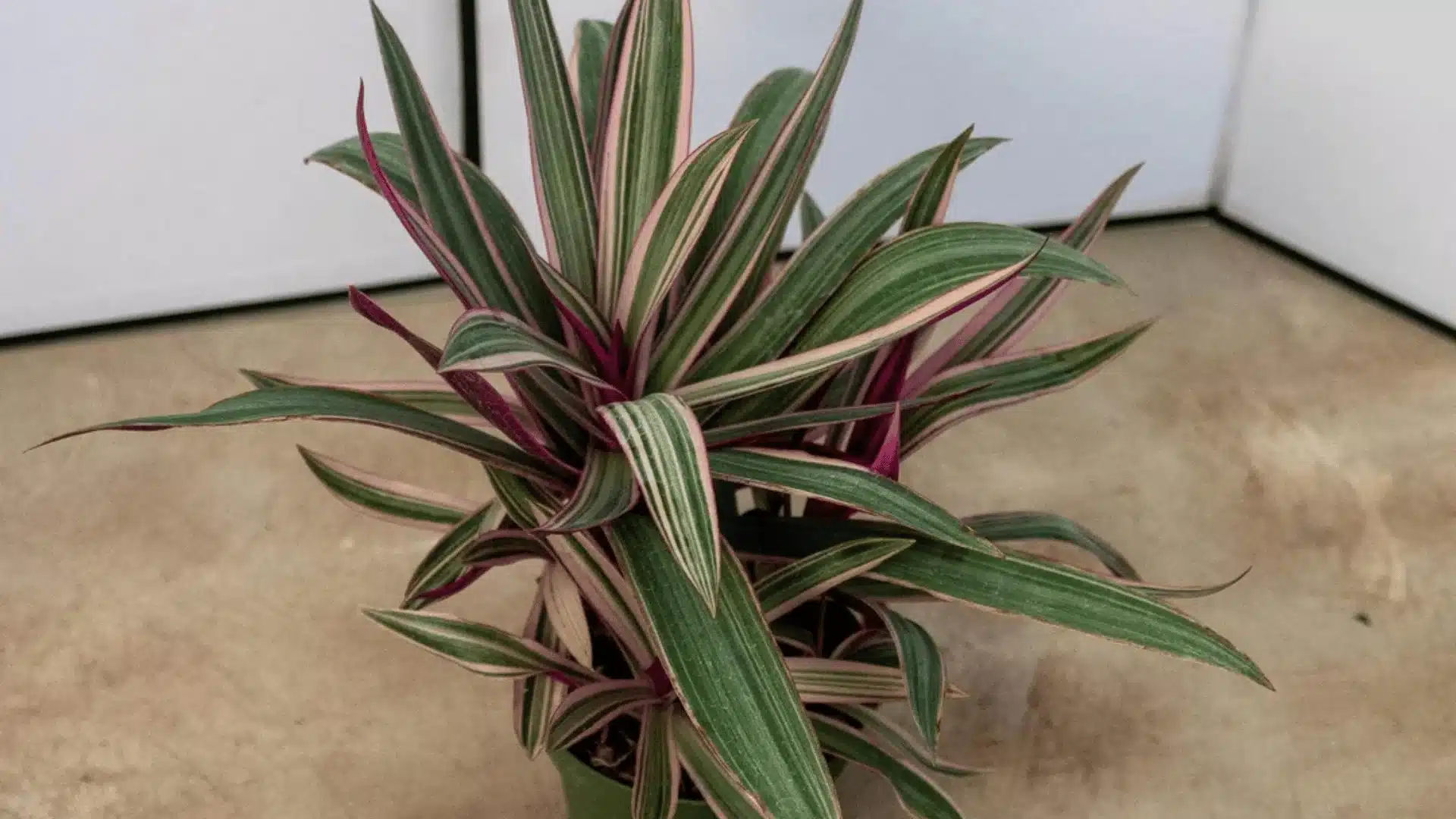
Known as the oyster plant, this species looks almost nothing like the trailing types on this list. The leaves are thick, boat-shaped, and arranged in a tight rosette instead of running along a vine.
It’s slower to spread, but handles neglect well, and the rosette shape makes it a better fit for a tabletop or shelf than a hanging pot.
How to Propagate a Wandering Jew Plant?
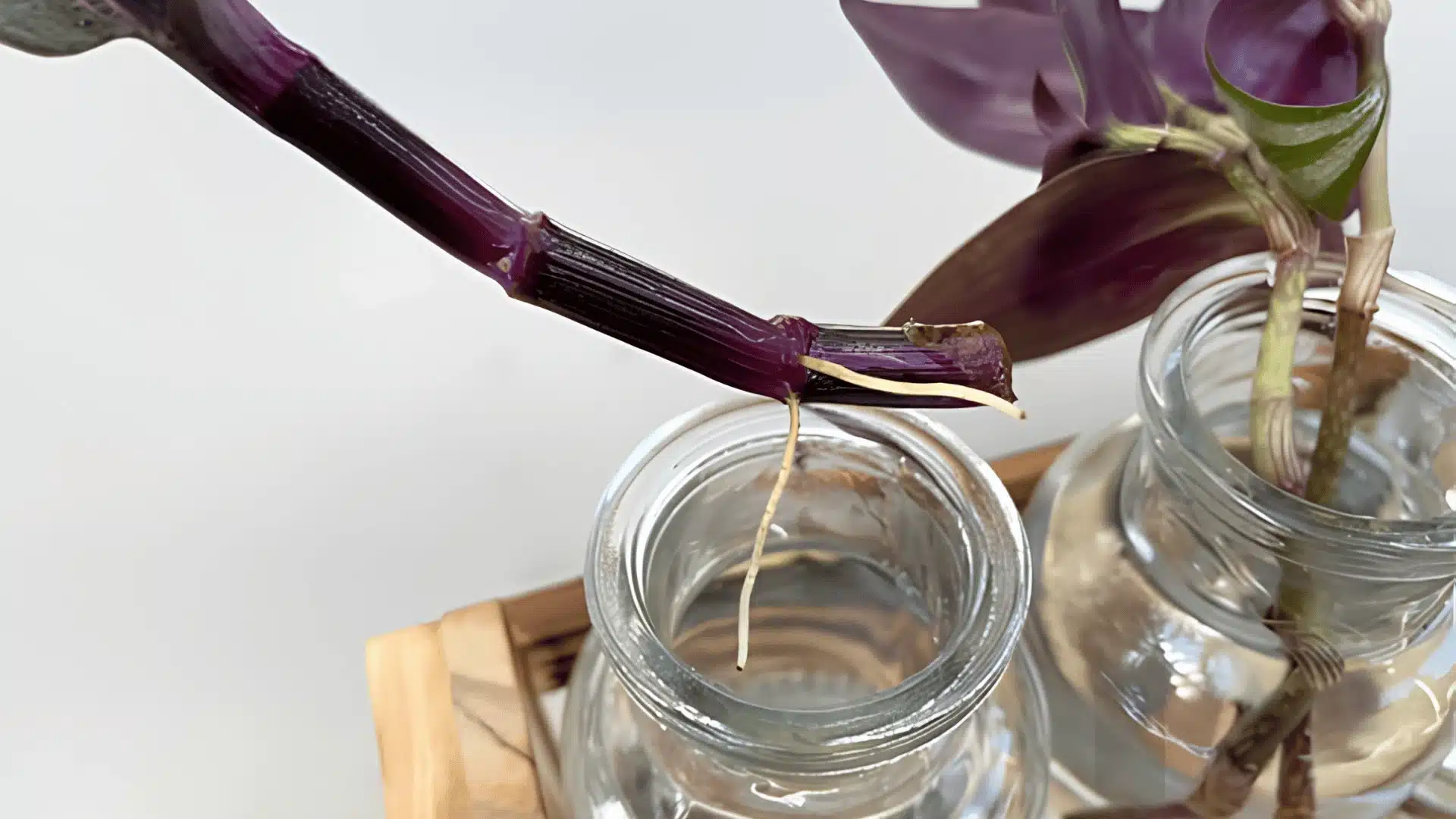
Propagation is where these plants genuinely make life easy. They root readily from almost any healthy stem cutting, which is why a single plant can turn into several within a season with barely any effort.
How to Propagate it in Water
Cut a healthy stem section close to a leaf node, strip off the lowest leaves so none sit underwater, and place the node in a glass of water in bright, indirect light.
Roots typically appear within a week to ten days. Once you see an inch or two of root growth, move the cutting into potting soil.
How to Propagate it Directly in Soil
Skip the water step entirely by inserting cuttings at least one node buried straight into lightly moist potting soil.
Keep the soil consistently damp while roots establish, and group several cuttings into one pot for a fuller-looking plant right from the start.
Is Water or Soil Propagation Better?
Neither has a clear edge. Water propagation lets you watch root development happen, which is satisfying and makes it easy to tell when a cutting is ready.
Soil propagation skips the eventual transition from water to soil, which can otherwise stress a cutting’s new roots. Both routes work reliably for this plant.
Can You Replant Cuttings into the Same Pot?
Yes, and this is arguably the fastest way to fix a sparse-looking plant.
Snip a few healthy stem tips, root them in water or tuck the cut nodes directly into moist soil, and plant them back into the thin spots of the same pot.
Because Tradescantia roots so readily from stem nodes, this trick fills gaps far quicker than waiting on new growth from the original stems.
Conclusion
Most wandering jew plant care questions come back to the same few basics: bright indirect light, watering based on soil feel rather than a calendar, well-draining soil, and regular pinching to keep new growth coming.
When something looks off, check the soil and light before reaching for fertilizer or a bigger pot; the cause is usually simpler than it looks.
A bit of regular pruning together with sometimes replanting the cuttings will keep your Tradescantia just as full as when you first took it home.
Frequently Asked Questions (FAQs)
1. Does a Wandering Jew Like Full Sun?
Indirect bright light is safer; while the gentle sunlight of the morning is generally tolerated, the intense sunlight of the afternoon can burn the leaves.
2. Why is My Plant Bare Near the Pot?
As the stems get older, they tend to lose their leaves; prune the stemless parts and replant the cuttings close to the crown.
3. Can a Wandering Jew Survive in Low Light?
Yes, but expect leggy growth and duller, less purple foliage over time.
4. How Do You Make It More Purple?
Increase the brightness of the indirect light slowly, and avoid exposing it to sudden, intense direct sunlight.