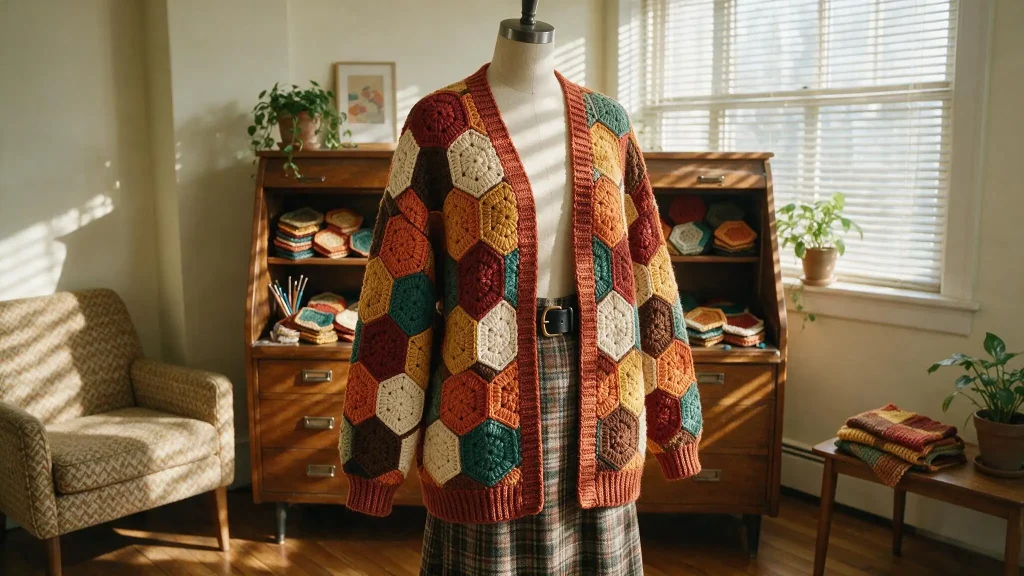
A hexagon cardigan sounds hard to make, but it is not.
This hexagon cardigan crochet pattern covers every part, from the first stitch to the last seam. Once it’s done, you have a full cardigan ready to wear.
The best part is that you only need two hexagons. A handful of simple stitches, and the shape builds itself round by round. Nothing is complicated or tricky. Just plain crochet, worked in the right steps.
No experience is needed to follow along, just a little patience. Grab a hook, and let the stitching begin.
What’s so Special About a Hexagon Cardigan?
A hexagon cardigan starts with a simple shape: the hexagon. Two of these hexagons, made the same size, form the entire cardigan.
Fold them the right way, and they turn into sleeves and a body. Stitch the edges together, and the cardigan is done.
It really is that simple. No shaping or extra pattern pieces to stress over. Just two hexagons, folded and joined together.
This style has become popular lately, and it’s easy to see why. The pattern repeats the same rounds over and over, so it’s simple to follow. Beginners pick it up fast, since there’s only one shape to learn.
It also fits almost any body type. The folded hexagons create loose, relaxed sleeves and a roomy body.
Adjust the hexagon size, and the fit changes with it. Bigger hexagons make a larger cardigan. Smaller ones make a snug one.
Before You Start: What You’ll Need to Know
A few quick things help before starting this hexagon cardigan crochet pattern:
- Crochet terms (US vs UK)
- Gauge
- Reading a pattern
Crochet terms change depending on where a pattern comes from. US terms and UK terms use different names for the same stitch.
For example, a US double crochet is a UK treble crochet. Always check which terms a pattern uses before starting, so the stitches match up correctly.
Gauge matters too; it refers to how many stitches and rows fit into a set space, usually four inches. It affects the final size of the hexagon and the cardigan overall.
A hook that’s too small or too large changes the gauge, so it’s worth testing a small swatch first.
Reading a pattern also takes a little practice. Patterns list stitches in a set order, often with abbreviations like “ch” for chain or “sc” for single crochet. Round numbers show where one row ends and the next begins.
Making a Hexagon Cardigan Crochet Pattern
This part covers the step-by-step process, so you can put it all together faster than it looks.
Step 1: Make the First Hexagon
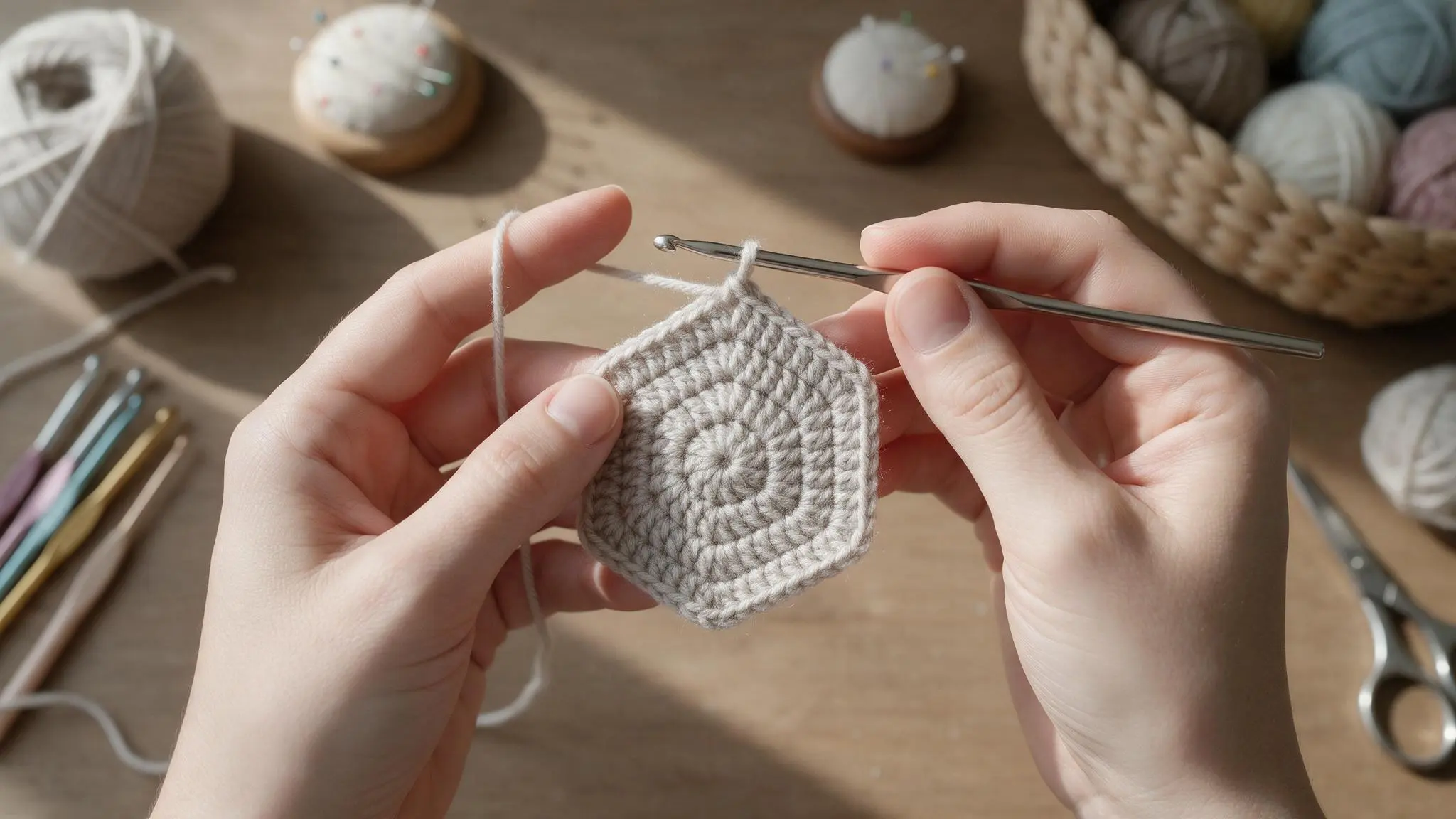
Start by making a small ring in the center, right where everything begins. From there, you’ll work outward in rounds, one after another.
Each round adds more stitches than the last, so the shape naturally grows wider as you go. Keep working until your hexagon reaches the exact size your pattern calls for. Don’t rush this; it’s the base every other round builds on.
Step 2: Make the Second Hexagon
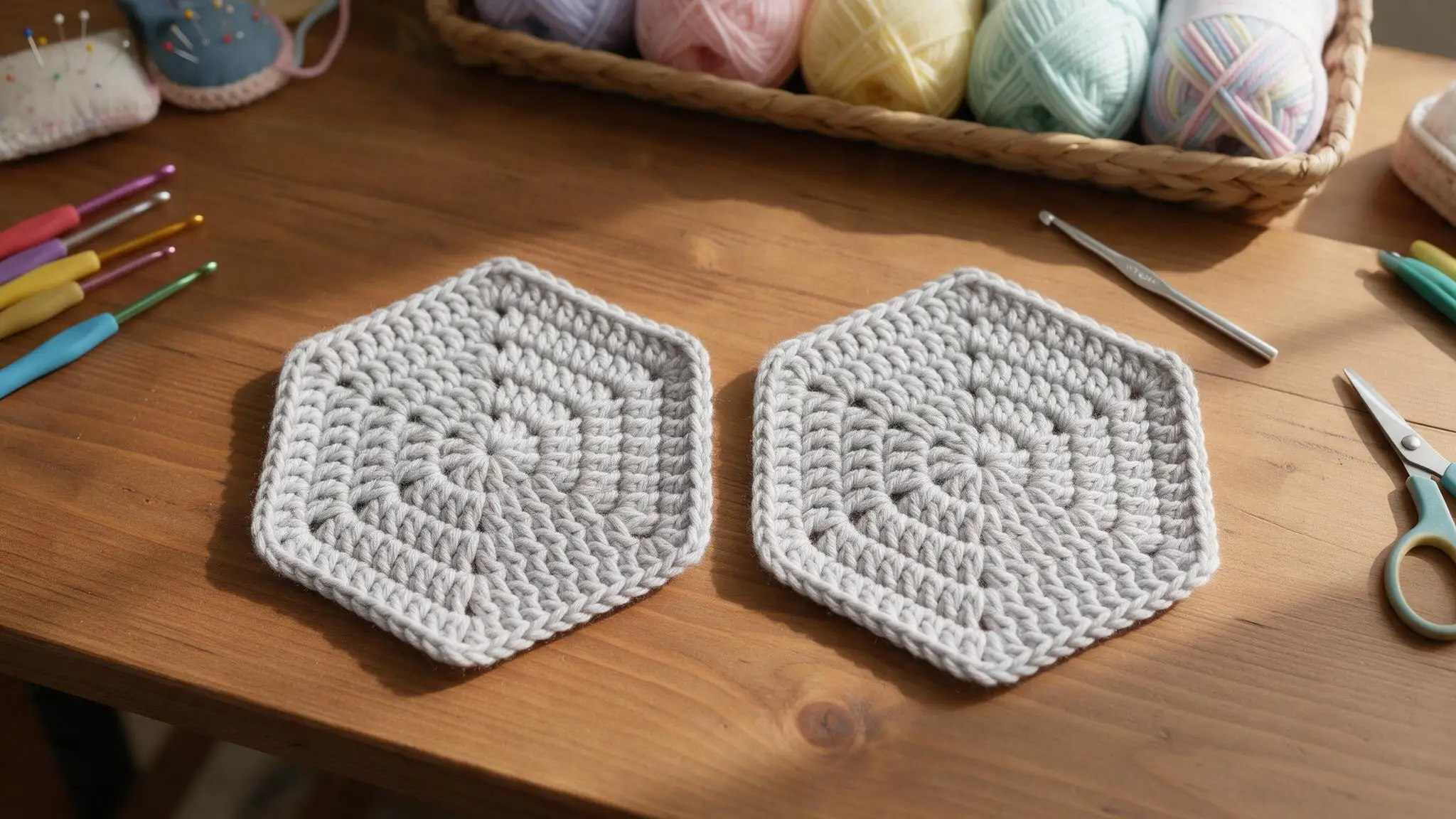
Now you’ll repeat the same steps to create a second hexagon. Try to match the size and stitch count exactly, since both hexagons need to line up later in the process.
This might feel repetitive, but it’s worth the effort. Once you’re done, you’ll have two identical hexagons in hand, and together, they form the base of your entire cardigan.
Step 3: Fold and Shape
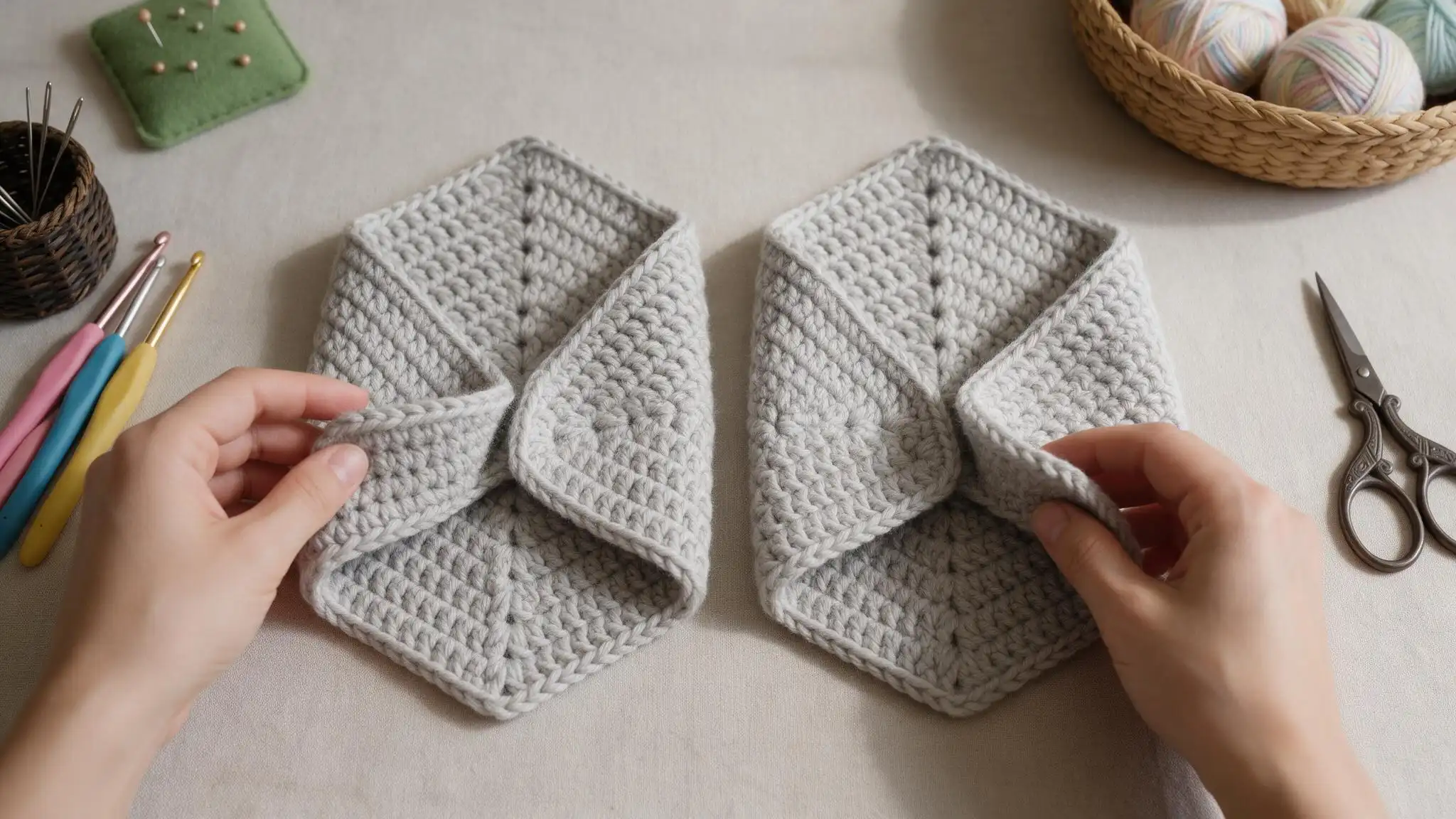
Lay both of your hexagons flat on a table, and take a good look at them. Fold each one along its center line, and you’ll start to see the shape emerge.
These folds are what create the sleeves, along with the front and back panels. Line up your two folded hexagons side by side, and you’ve got the basic outline of your cardigan already forming.
Step 4: Seam the Pieces Together
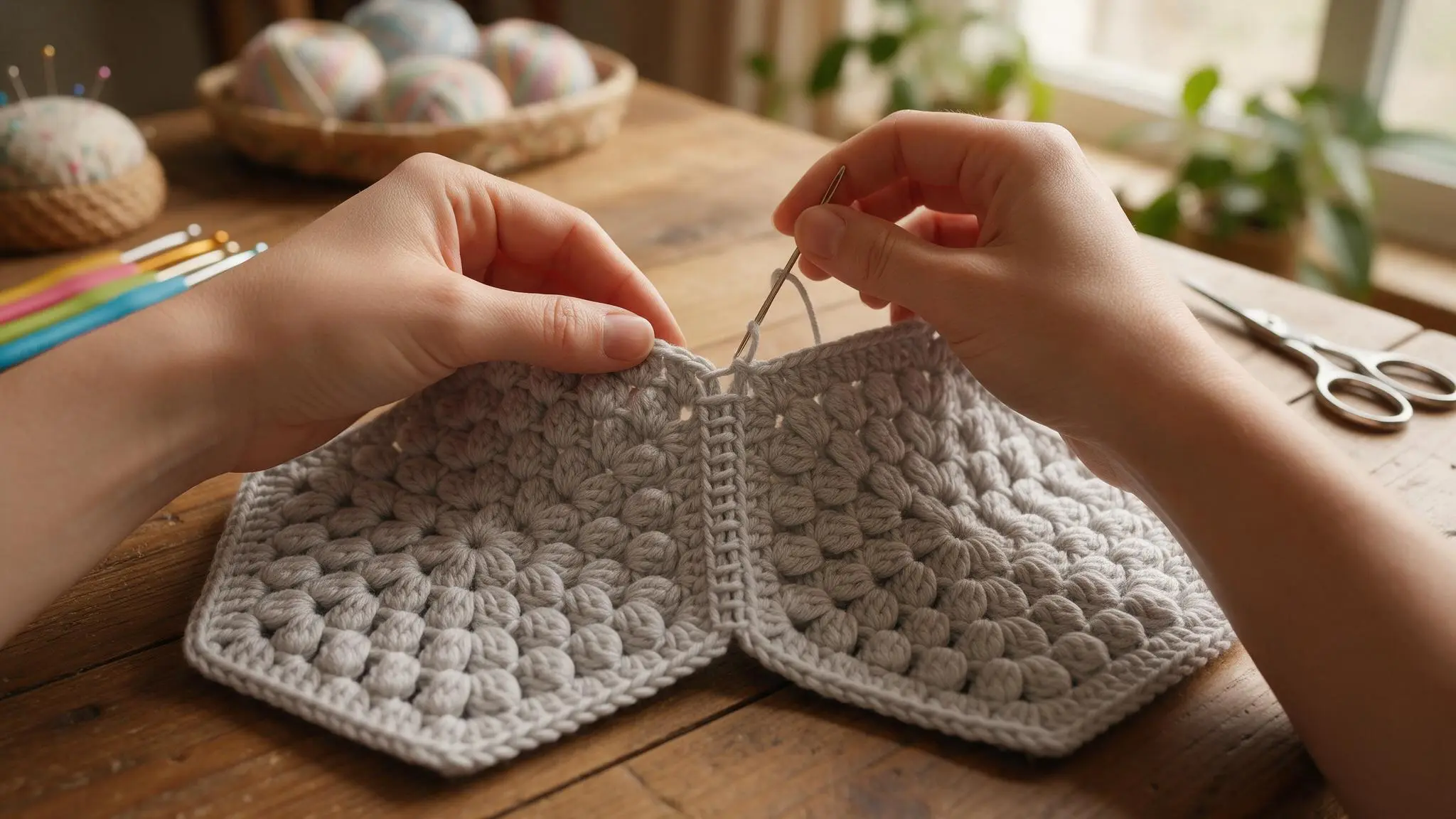
Grab a tapestry needle and some matching yarn, since you’ll need both for this step. Carefully stitch the pieces together, seaming along the top edges to close the shoulders and sleeves.
Leave the front open, though, since that’s where your cardigan will fasten. Take your time here, because even careful seaming makes a noticeable difference in how the final piece looks.
Step 5: Finish the Edges
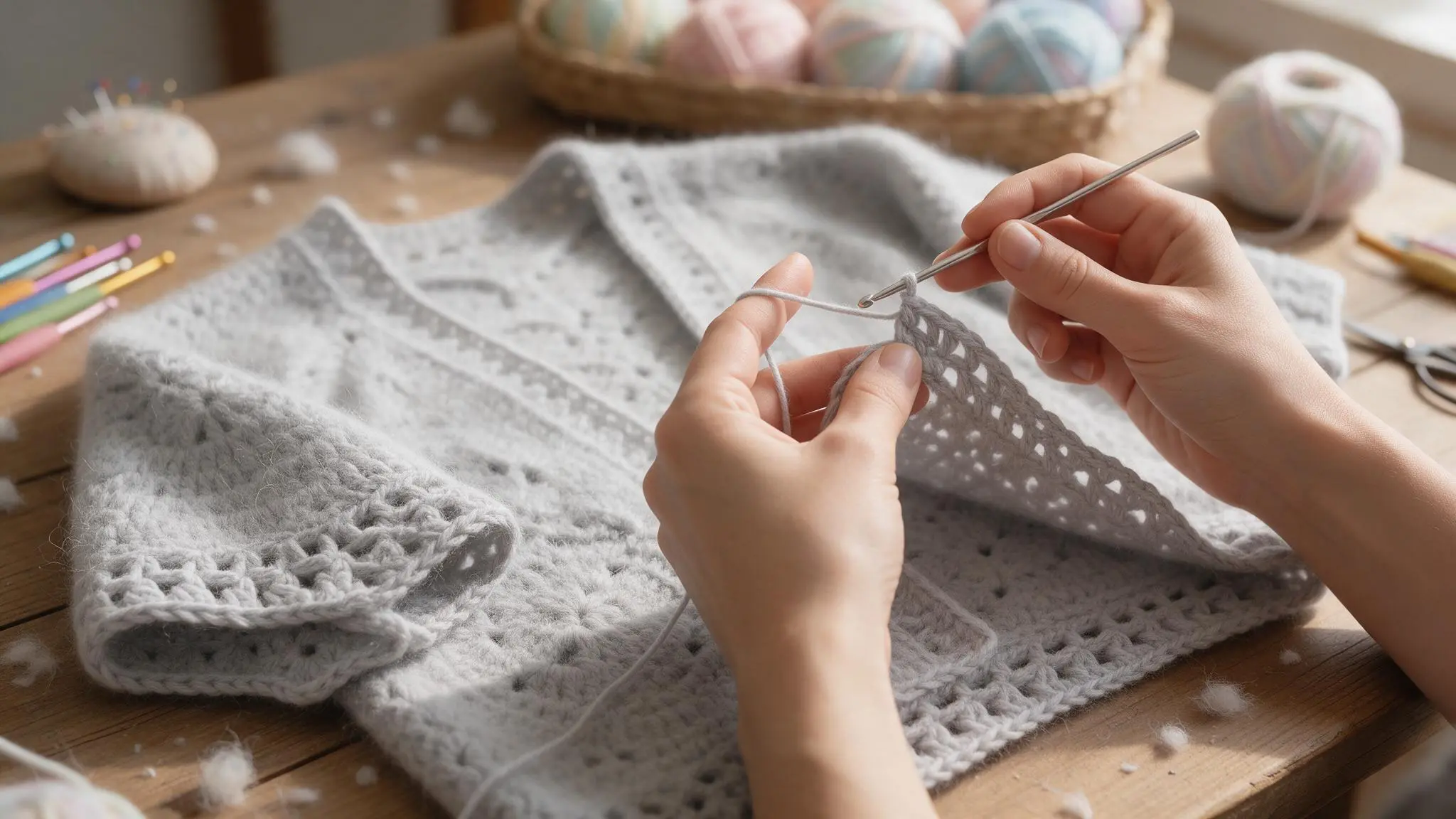
Add a border round along all the open edges, including the front, the cuffs, and the hem. You’ll notice this step smooths out any uneven spots you might have missed earlier.
It also gives your cardigan a clean finish. Once you’ve added this border, your project is nearly complete.
Once the seams and edges are done, your cardigan is ready to wear.
Size It Up or Down
Sizing for a hexagon cardigan comes down to one thing: hexagon size. The bigger the hexagon, the bigger the cardigan. The smaller the hexagon, the more fitted the result.
Most versions of this hexagon cardigan crochet pattern offer a size range, often from small through to 5XL. Each size uses a set hexagon width, usually measured across the flat edges. A small size might use an 18-inch hexagon, while a larger size stretches closer to 24 inches or more.
Before choosing a size, take two basic measurements: chest width and desired sleeve length. Compare these to the size chart in the pattern, and pick the closest match.
Since the fit is loose by design, sizing up slightly usually works fine and won’t ruin the drape. Adjusting size mid-pattern is simple too. Add extra rounds to the hexagon for a bigger fit, or stop a few rounds early for a smaller one.
Find Your Crochet Color
Color choice changes the entire feel of a hexagon cardigan, so it’s worth thinking through a few options first.
Solid Colors
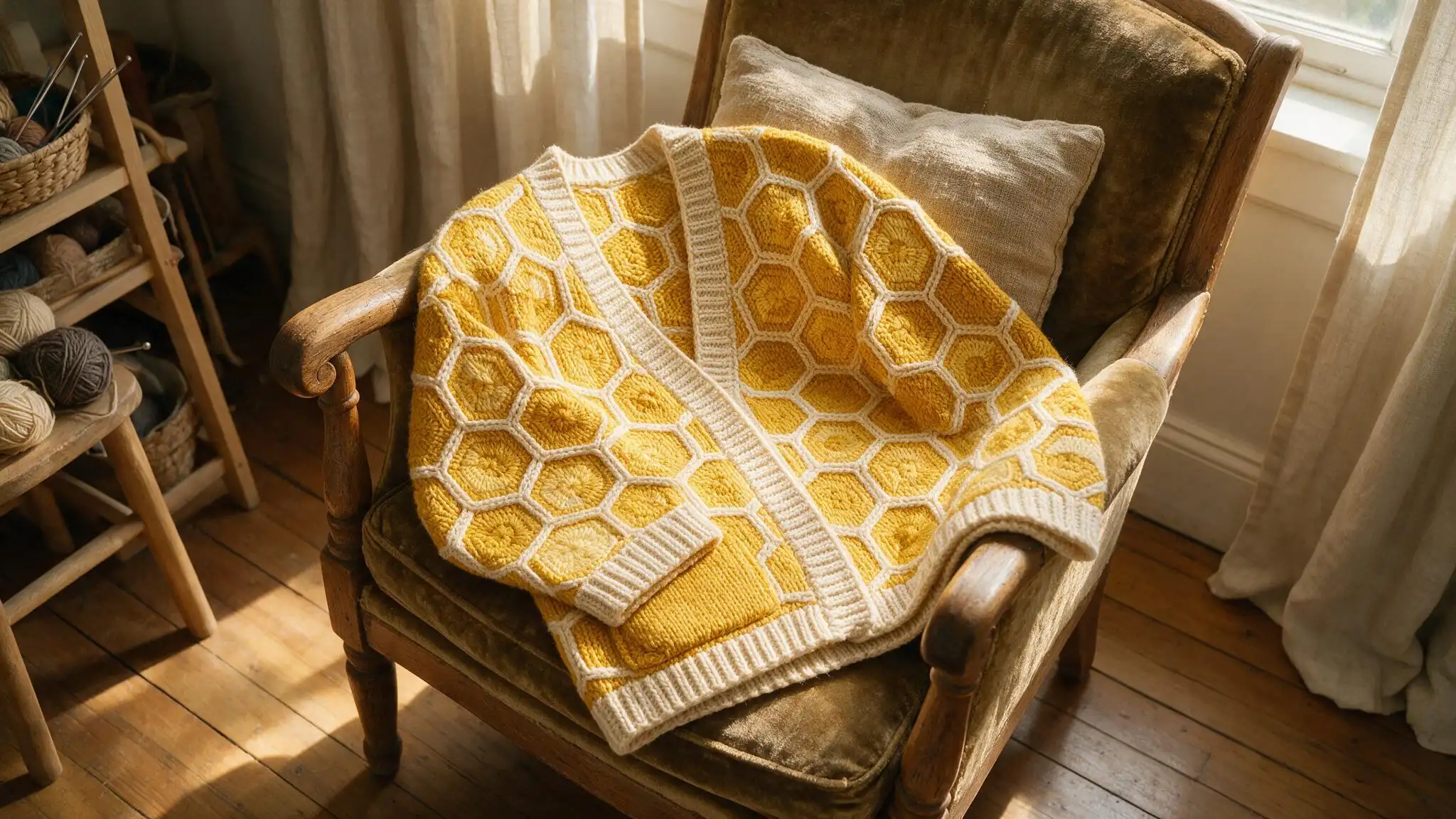
A solid color keeps things simple and classic. One shade throughout gives the cardigan a simple look that pairs easily with anything in a closet.
This option also hides gauge slips well, since there’s no pattern to break the flow.
Ombre Shades
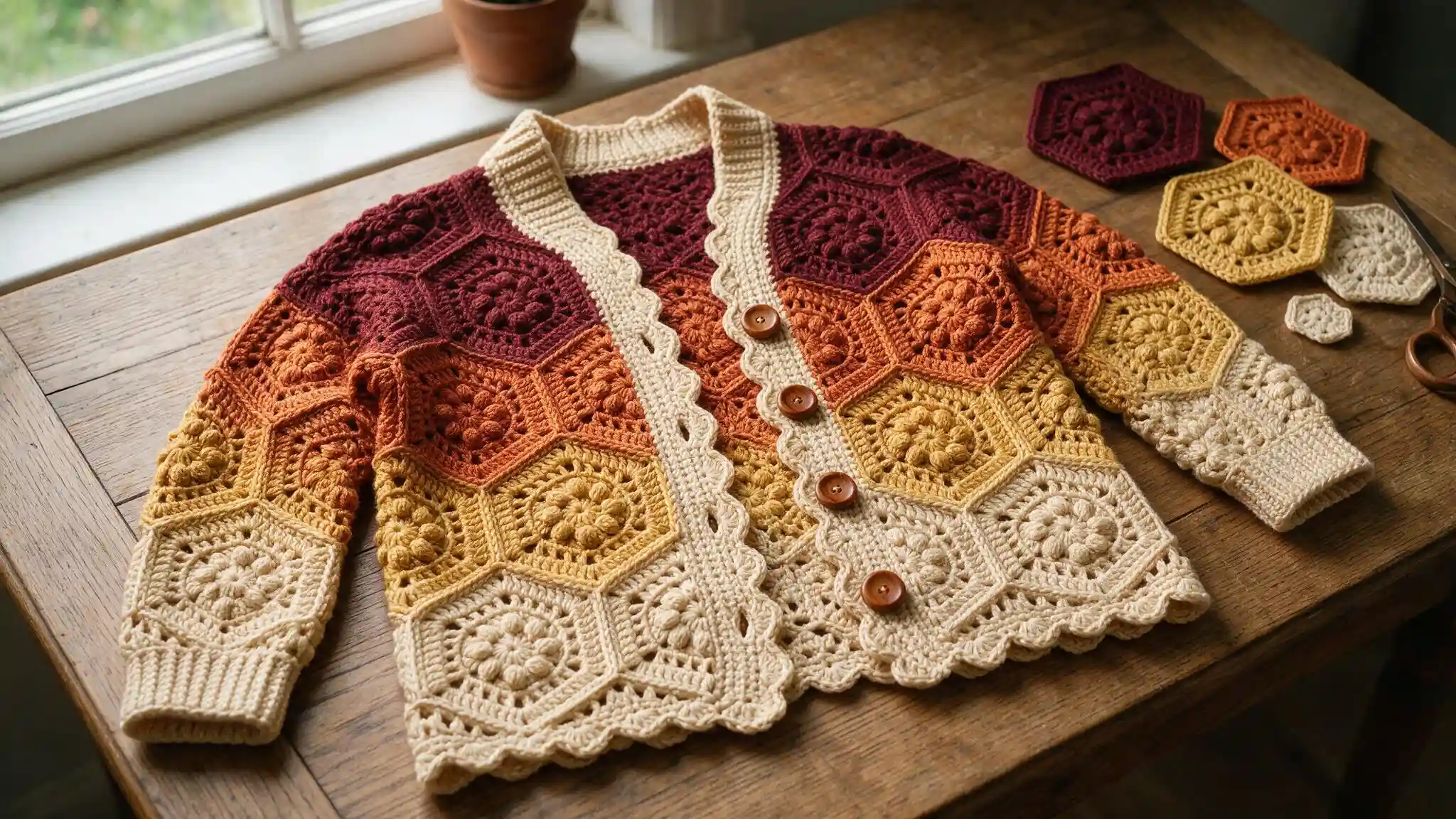
An ombre effect adds a bit more interest. Shift gradually from light to dark, or pick two shades of the same color family, and the hexagons blend smoothly from center to edge.
This style gives a gradient look without any harsh color breaks.
Bold Stripes
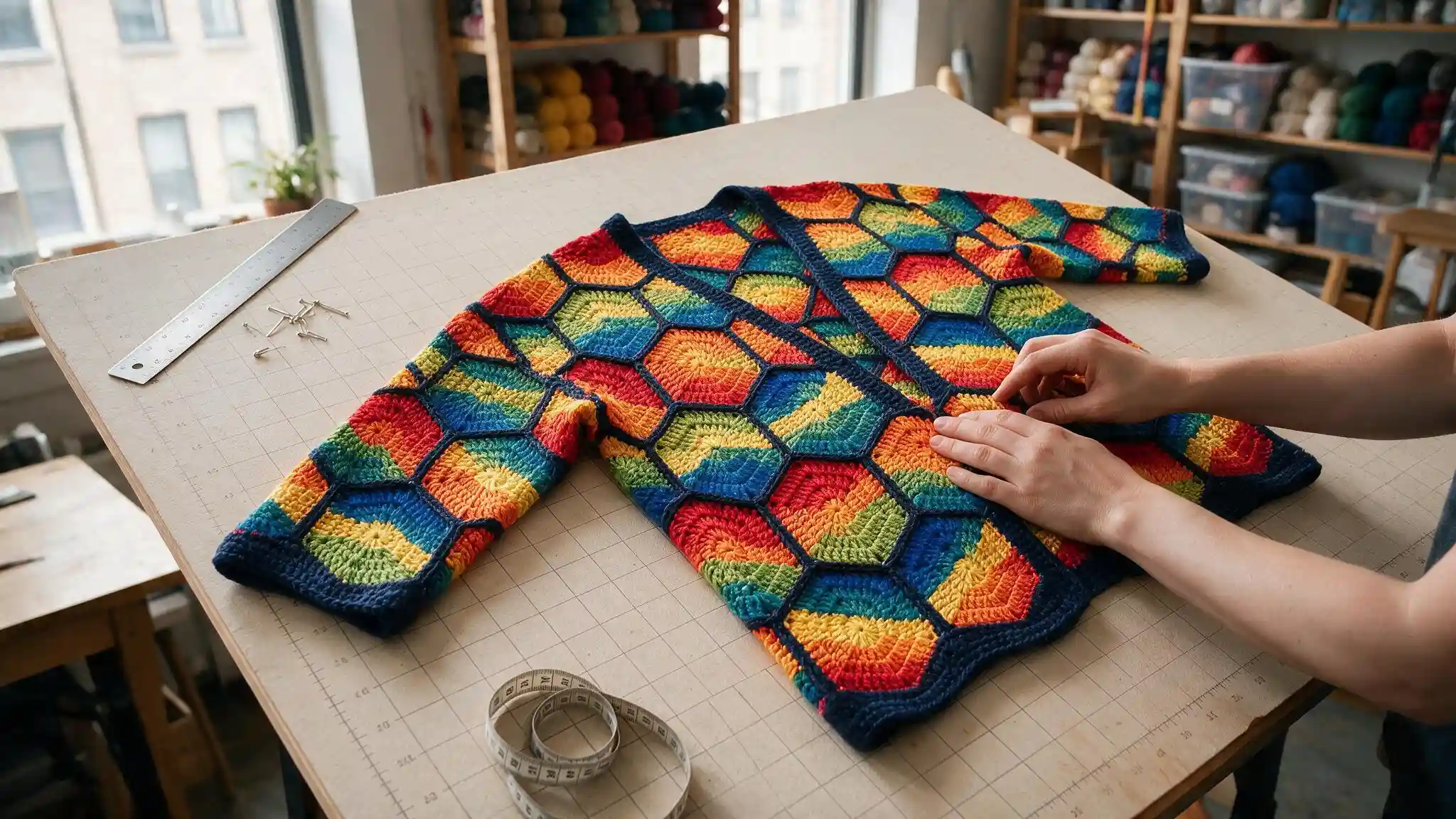
Stripes bring a bolder look. Change colors every few rounds, and the hexagon builds up in clear, defined bands.
This works especially well with bright or contrasting shades, since the repeating pattern draws the eye and makes the stripes pop.
Granny-Style Mix
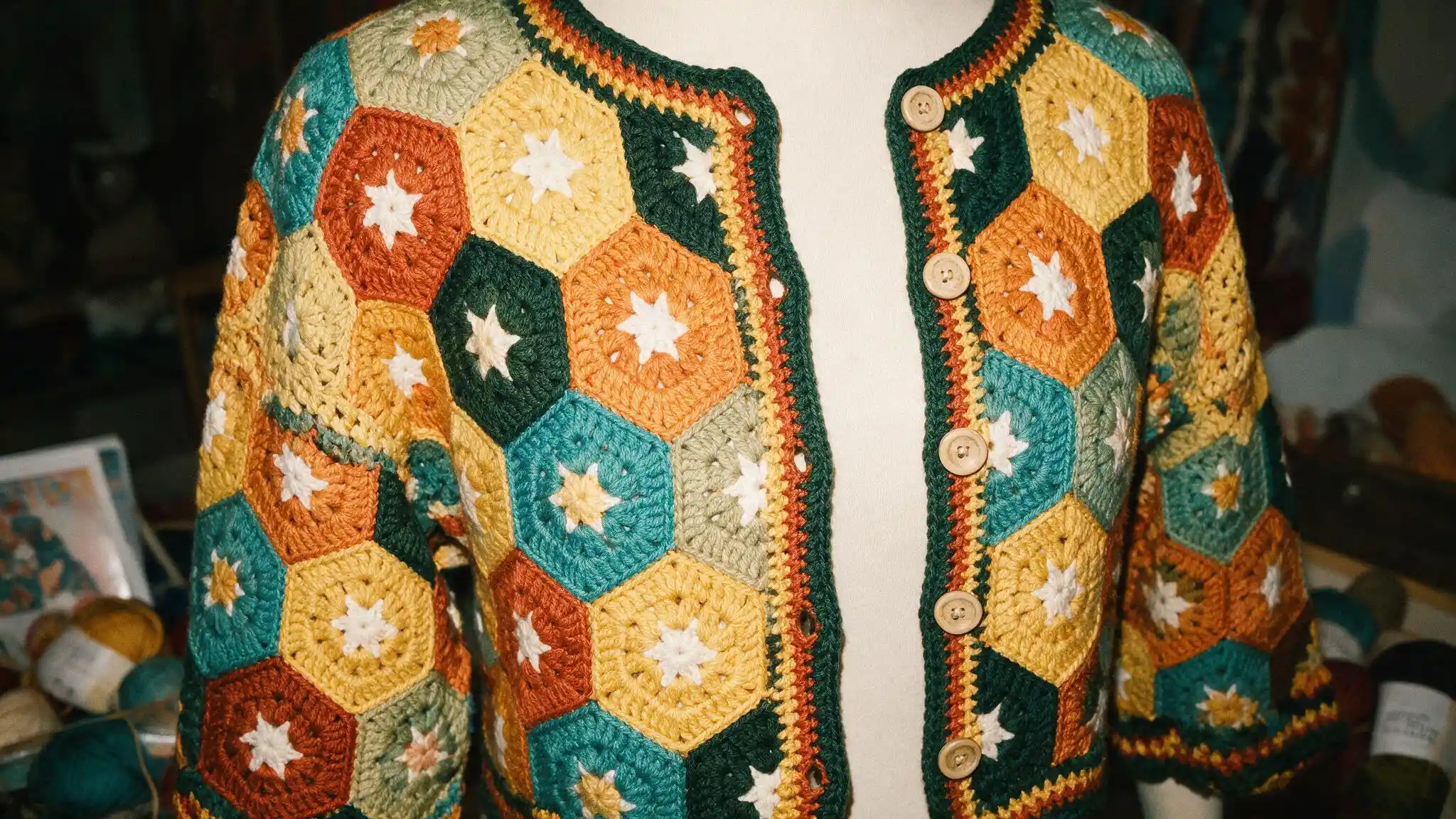
Granny-style color mixing offers the most variety. Switch colors often, almost round by round, using leftover yarn scraps. The result feels playful and a little unpredictable, since no two rounds match exactly. This option also makes good use of a scrap yarn stash.
Whether you’re seaming or slip-stitching the pieces together, both work well as long as the tension stays consistent from start to finish.
How to Care for Your Crochet Cardigan?
A little care keeps a hand-made cardigan looking good for years, so it’s worth doing right from the start.
Washing
Hand washing works best for most yarn types. Use cool water and a mild detergent, and avoid scrubbing or wringing the fabric. Instead, gently press out extra water, since twisting can pull stitches out of shape.
Drying
Lay the cardigan flat on a clean towel to dry. Hanging it up stretches the fibers over time, especially with heavier yarn. Reshape the piece while it’s damp, and let it air dry fully before wearing it again.
Storing
Fold the cardigan instead of hanging it in a closet. Folding keeps the shoulders and sleeves from stretching out of shape.
Store it in a drawer or on a shelf, away from direct sunlight, which can fade the color over time.
Keeping Stitches in Shape
Stitches can loosen with regular wear, especially around the seams. Check the seams every so often, and fix any loose spots early. A little upkeep now prevents bigger repairs later.
Conclusion
Two hexagons, a few folds, and a couple of seams. That’s really all this hexagon cardigan crochet pattern takes to turn yarn into a cardigan you can actually wear.
This pattern works at any skill level, and that’s the whole point. First-timers finish it without much trouble, and so do crocheters who’ve been at it for years.
Start by picking up a yarn, choosing a color, and making that first hexagon. Change the size if you want, mix in a new color, or finish it with a border that feels like yours. Small choices like these make the cardigan yours.
And once it’s done, it won’t just sit in a drawer. You’ll wear it again and again, just because you made it.
Frequently Asked Questions
1. How Much Yarn Do I Need for A Hexagon Cardigan?
It depends on yarn weight and size. Bulky yarn often needs around 400 to 450 yards per hexagon, while lighter yarns need more. Always check the specific pattern, since sizing changes the total amount.
2. Can I Use Any Yarn Weight for This Pattern?
Yes. This hexagon cardigan crochet pattern works with almost any yarn weight, from lightweight to super bulky. Heavier yarn creates a thicker, cozier cardigan, while lighter yarn gives a softer drape.
3. Do I Need to Know Special Stitches to Make This Cardigan?
Not really. Most hexagon cardigans rely on basic stitches, mainly double crochet and chain stitches. That’s what makes this pattern so approachable for beginners.
4. Why Does My Hexagon Ruffle Instead of Lying Flat?
Ruffling usually means you added too many stitches in a round. Check the stitch count against the pattern, and make sure increases match exactly what’s listed for each round.
5. Can I Adjust the Cardigan for A Child or A Smaller Size?
Yes. The pattern adapts easily by adjusting the hexagon size. Smaller hexagons create smaller garments, so the same basic method works for both kids and adults.
6. What Size Hook Should I Use?
Hook size depends on yarn weight. Worsted weight often pairs with a 5.5mm to 6mm hook, while bulky yarn may need something closer to 8mm.