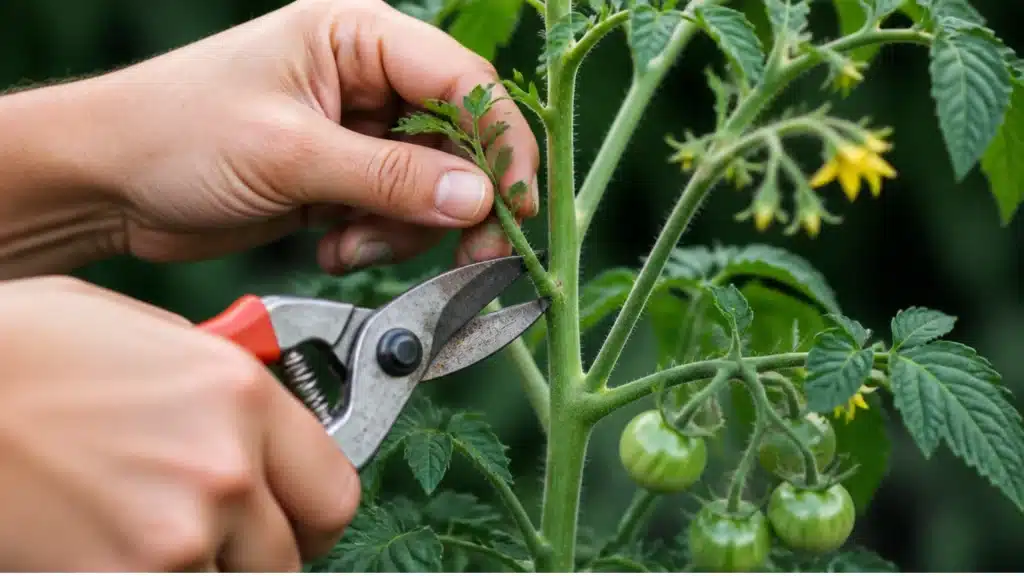
If neglected, a tomato plant quickly devolves into a tangle of leaves, feeble stems, and fruit concealed deep inside the foliage.
Pruning tomato plants helps by directing the plant’s energy to stronger stems rather than endless leaf growth.
This tutorial explains how to prune tomatoes step by step, starting with the necessary tools and ending with the routines that maintain plant health throughout the growing season.
Since different tomatoes require different treatments, it also clarifies the distinction between determinate and indeterminate kinds.
Determinate vs Indeterminate Tomatoes
Not every tomato plant requires the same pruning method.
Identifying the type is the first important step in the process because the variety’s development pattern dictates how much reduction it needs.
Determinate Tomatoes
These plants cease growing after they reach a set, compact size.
Heavy trimming is not necessary and may even reduce the crop because they produce almost all of their fruit in a short period of time.
Remove growth only if it is sick or damaged.
Indeterminate Tomatoes
Until frost strikes, these plants continue to produce fruit and grow taller.
Because of this continuous growth, they require frequent sucker removal and staking to stay upright and manageable.
They soon become a spreading, tangled vine if they are not pruned.
The simplest method to determine the type being cultivated before grabbing the shears is still to look at the seed packet or plant tag.
Supplies Needed
- Garden scissors or sharp pruning shears.
- Sterilizing blades between cuts with rubbing alcohol or a disinfectant spray.
- Garden gloves to shield hands from stains and sap.
- A little bag or bucket for gathering cuttings.
- Stems can be fastened to a stake or cage using soft wire or plant clips.
How to Prune Tomatoes: Step by Step
When tomato pruning is divided into simple, doable steps, it doesn’t have to be difficult.
Going through each stage sequentially keeps the plant healthy while it bears fruit and helps prevent cutting the wrong growth.
To reduce the chance of infection at cut sites, prune on a warm, dry day.
Step 1: Check the Plant Type First
Before making any cuts, make sure you know whether the tomato is determinate or indeterminate.
While indeterminate plants require constant care throughout the season, determinate plants require very little pruning.
Overpruning frequently results from omitting this step.
Step 2: Remove Lower Leaves
When the plant is about 18 inches tall, trim off any leaves that are within 6 to 12 inches of the ground.
Removing lower leaves reduces the possibility of soil-borne disease moving upward by preventing foliage from coming into contact with moist ground.
Step 3: Choose Main Stems
Depending on the type of cage or trellis being used, choose one or two sturdy leading stems to support. The plant can concentrate its energy on making bigger, healthier fruit when it has fewer main stems.
Step 4: Pinch Off Suckers
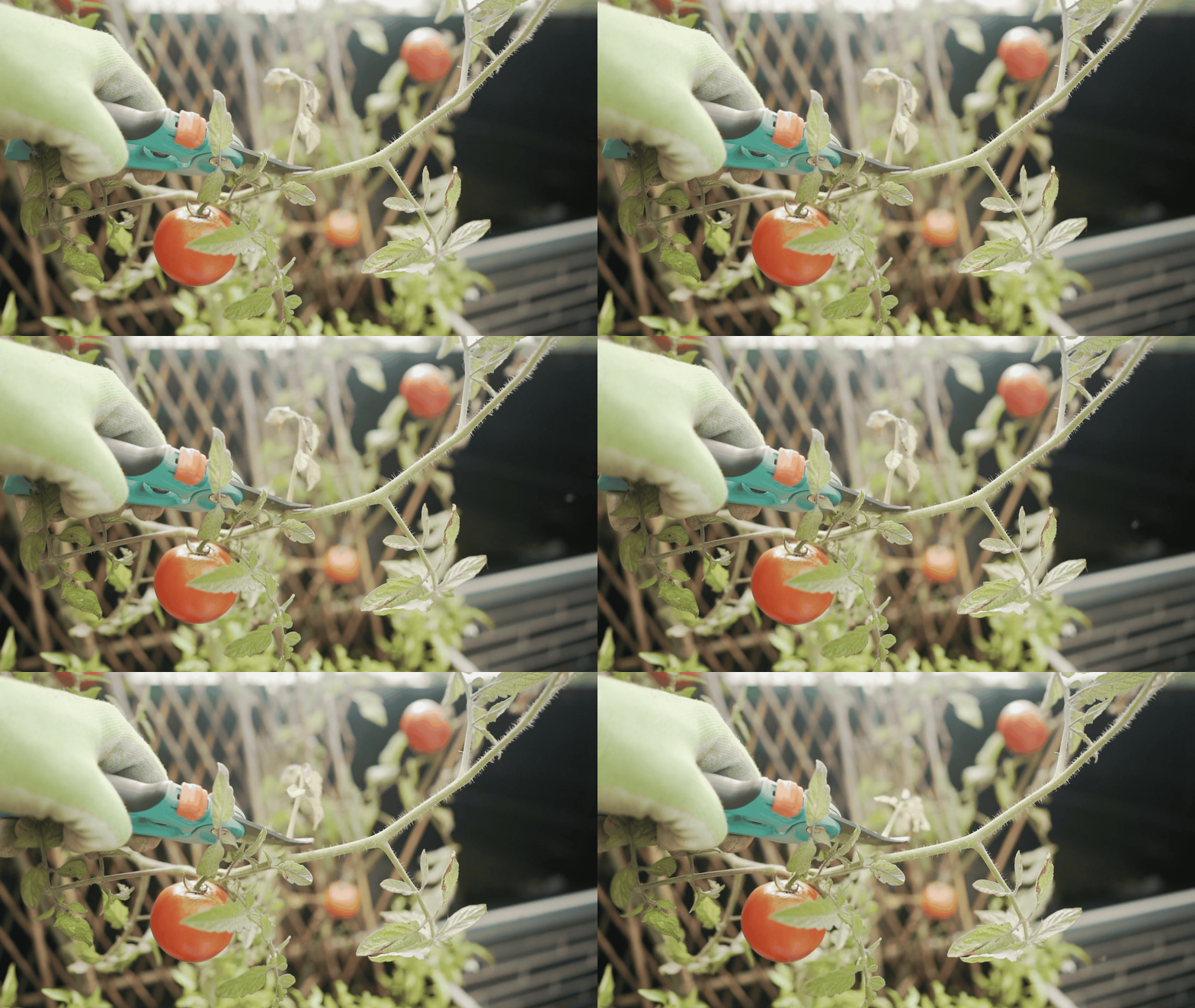
In the space between a leaf and the main stem, keep an eye out for tiny shoots.
When they’re small, pinch them off by hand, since larger suckers require shears and cause deeper wounds.
Sterilize shears between plants to prevent the spread of illness.
Step 5: Trim Crossing or Damaged Branches
Cut back any stems that rub against one another, obstruct sunlight, or exhibit symptoms of illness.
This improves ventilation around the fruit, keeps the canopy open, and lessens the likelihood that pests will settle in.
Step 6: Top the Plant Near Season’s End
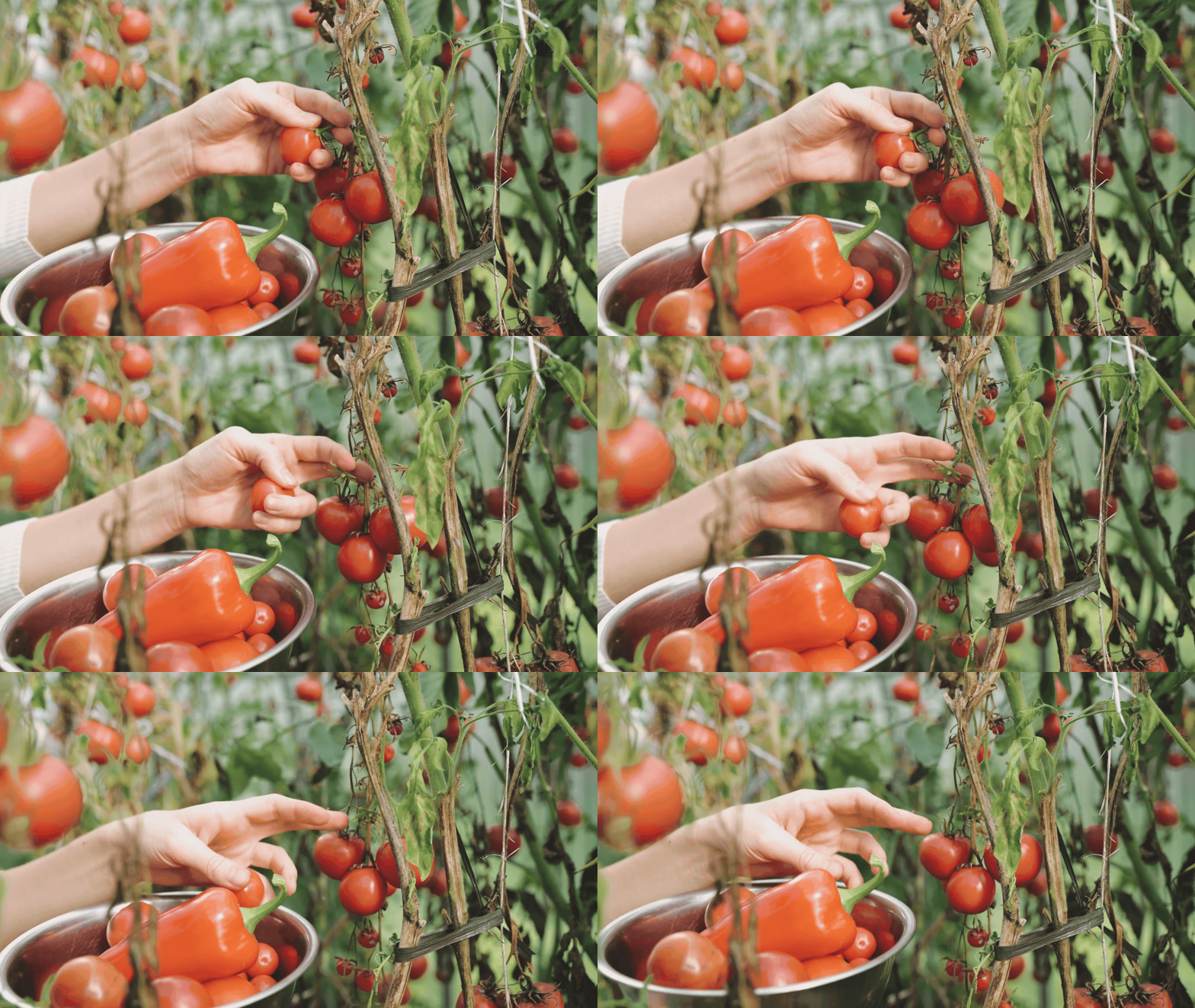
Cut off the growing tip three to four weeks before the first frost so the plant can focus its energy on ripening its current fruit rather than growing taller.
This stage helps you make the most of the final crop.
Why Tomato Plants Need Pruning?
When left on its own, a tomato plant focuses more of its energy on producing more leaves and side stems than on producing fruit.
The tomatoes compete with the extra vegetation for sunlight, water, and nutrients.
Additionally, dense, unpruned growth traps moisture between leaves, resulting in damp conditions that are conducive to the establishment of pests and fungal diseases.
Once established, disease spreads quickly through dense foliage once it takes hold.
Pruning tomato plants resolves both issues.
It allows air to flow freely through the canopy, lets sunlight reach the fruit for uniform ripening, and reroutes energy away from excess greenery and toward fewer, healthier tomatoes.
Advantages of Pruning Tomatoes
Frequent pruning does more than keep the plant neat. It produces tangible, quantifiable improvements in the plant’s growth and fruit production:
- Larger fruit: Instead of dispersing the plant’s energy over extra growth, it focuses it on producing fewer, larger tomatoes.
- Reduced illnesses: Increased leaf ventilation reduces the likelihood of fungal diseases developing.
- Even ripening: Gives developing fruit more exposure to sunshine, which promotes more uniform ripening.
- Simpler upkeep: Keeps plants small and makes them simpler to trellis, cage, or stake.
Less rot: By keeping tomatoes and lower branches above the ground, it lessens fruit rot.
Conclusion
Once you understand the fundamentals, pruning tomato plants is not difficult. First, determine the plant type. Next, the appropriate leaves and suckers must be removed, and each cut must be timed to correspond with the season.
Indeterminate cultivars benefit from consistent care from planting to frost, while determinate kinds require less care.
Small, regular changes greatly improve fruit size and plant health, rather than a single, massive cleaning.
Avoidable setbacks later in the season often come from skipping tasks like sterilizing instruments or identifying the plant type early on.
A crowded, low-yielding tomato vine can be transformed into a neat, productive one that maximizes each remaining stem with the correct pruning technique.
Frequently Asked Questions (FAQs)
1. How Often Should Tomato Plants be Pruned?
Indeterminate varieties benefit from weekly checks throughout the growing season.
2. Is it Okay to Prune Tomatoes After it Rains?
No, wet conditions increase the risk of spreading disease through cuts.
3. Does Pruning Affect Tomato Flavor?
Pruning mainly affects size and yield, not the taste of the fruit.