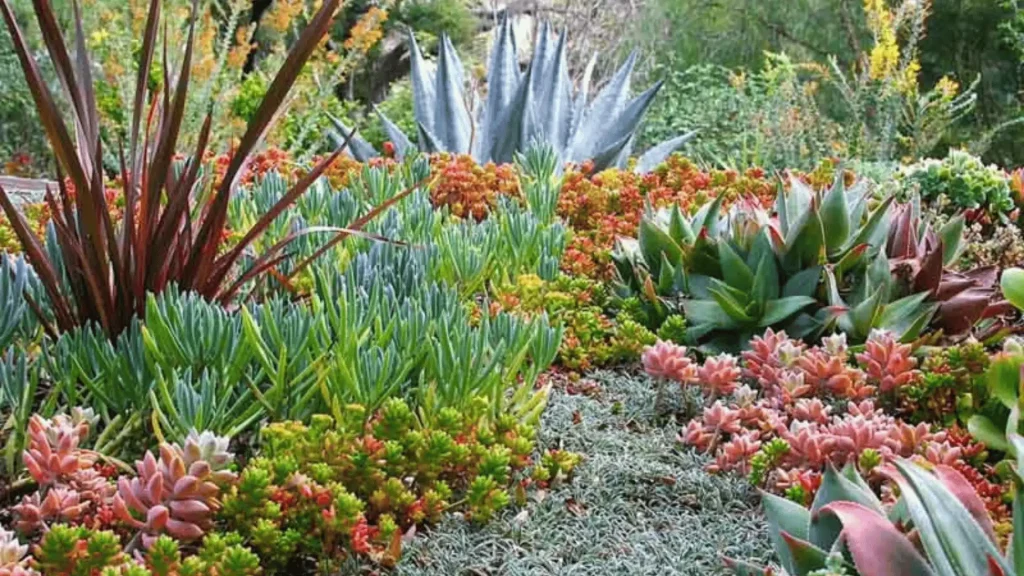
Succulents can store water in their thick, fleshy leaves or stems, enabling them to cope with occasional failures in watering and allowing them to flourish on a sunny windowsill.
They just need minimal care and attention.
Shapes, sizes, colors, and growth habits vary widely across the group.
Here’s a rundown of the varieties worth knowing, grouped by growth habit and water needs, plus a few hybrids that don’t get talked about enough.
How to Identify Different Succulents?
Look closely enough, though, and it’s usually possible to identify succulents.
Start with the leaves: Round, bead-like leaves suggest string of pearls, while flat, sword-shaped leaves may point to snake plant or agave.
Thickness, texture, color, and any spines or teeth narrow it down further.
Next, check the growth habit: Does it form a rosette, grow upright, or trail over the pot? Flowers and mature size help confirm their identity too.
Finally, consider size: a plant that stays consistently small may belong to a different species or cultivar than one that grows large, even if the leaf shape looks similar.
Put a few of these clues together and check them against the categories above; that’s usually enough to land on the right plant, even without a tag.
Popular Rosette Succulents
Rosette varieties arrange leaves in tight, circular layers around a central point, usually the first image that comes to mind when picturing this plant family.
The symmetry makes these popular for container gardens and gift arrangements alike.
1. Echeveria
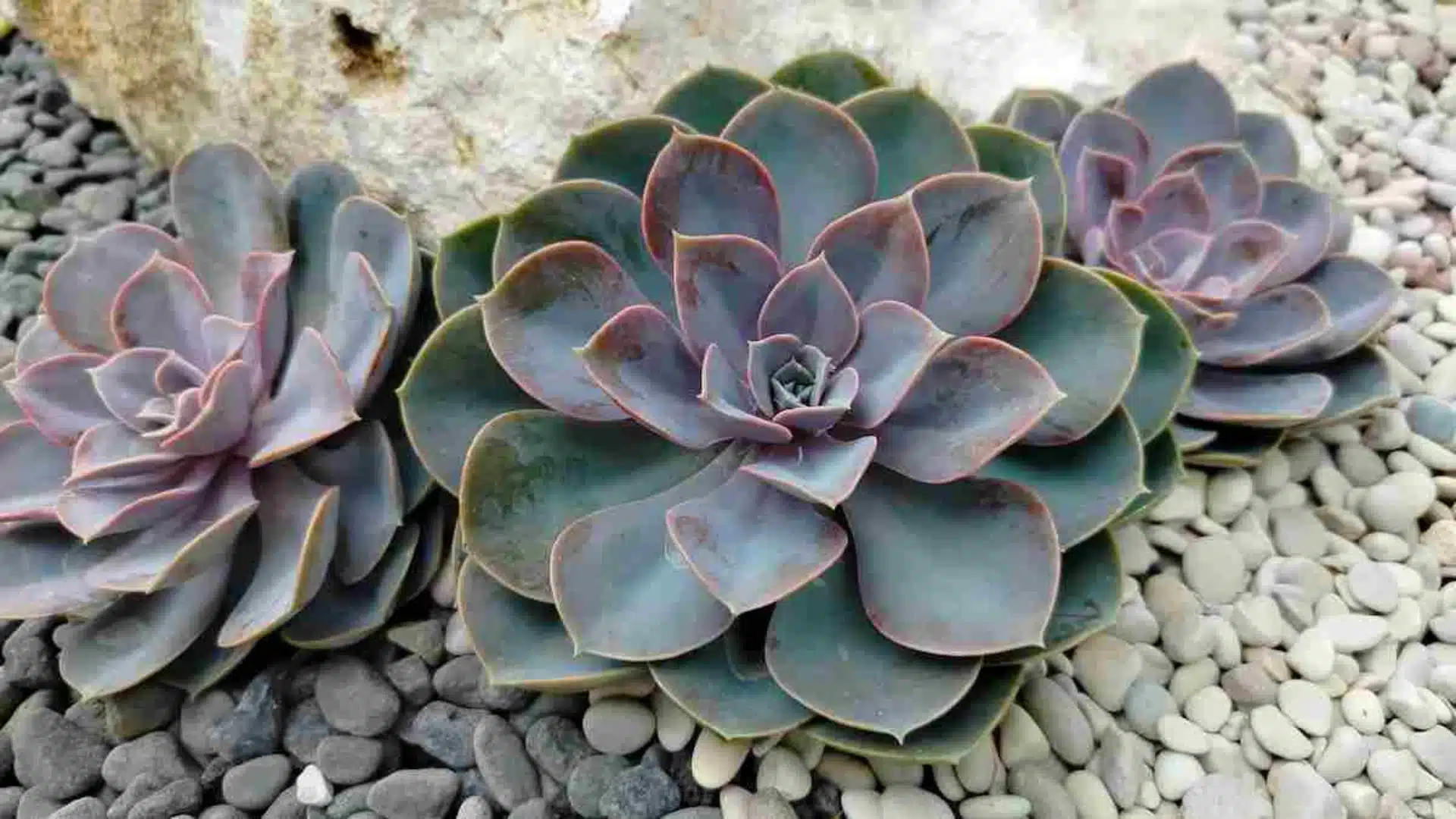
Echeveria forms a compact, almost geometric rosette, with leaves in blue-green, dusty pink, purple, or silver depending on the variety.
It’s one of the most photographed succulents.
- Botanical name: Echeveria spp.
- Light: Bright, indirect light or a few hours of direct sun
- Water: Low; let soil dry out between waterings.
- Best For: Indoor pots, wedding favors, mixed arrangements
2. Hens and Chicks
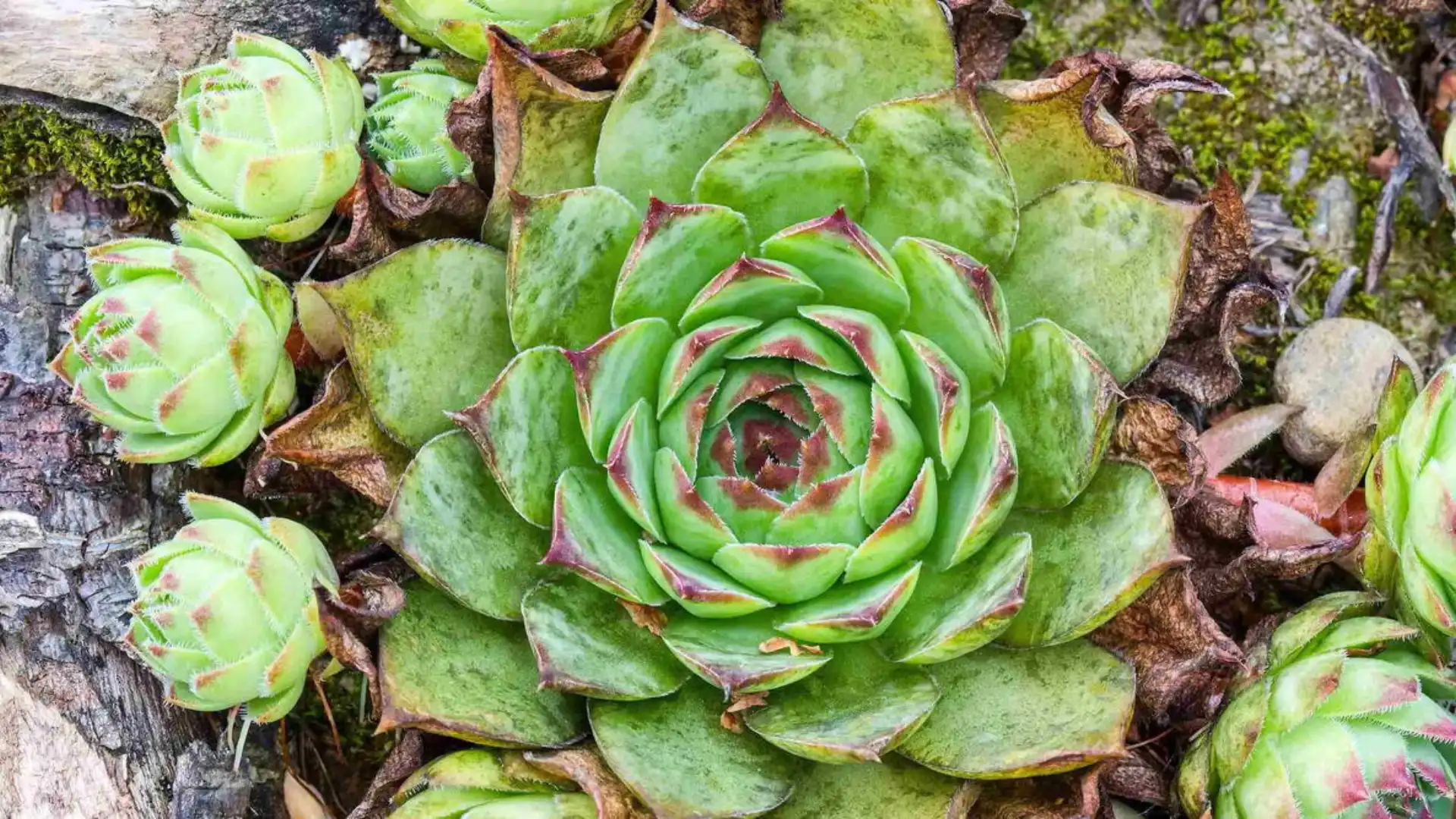
A central hen’s rosette constantly produces smaller offset chicks at its base, gradually forming a spreading mat.
Unlike some, it can tolerate frost and snow.
- Botanical name: Sempervivum tectorum
- Light: Full sun
- Water: Low
- Best For: Outdoor rock gardens, cold-climate borders
3. Black Rose
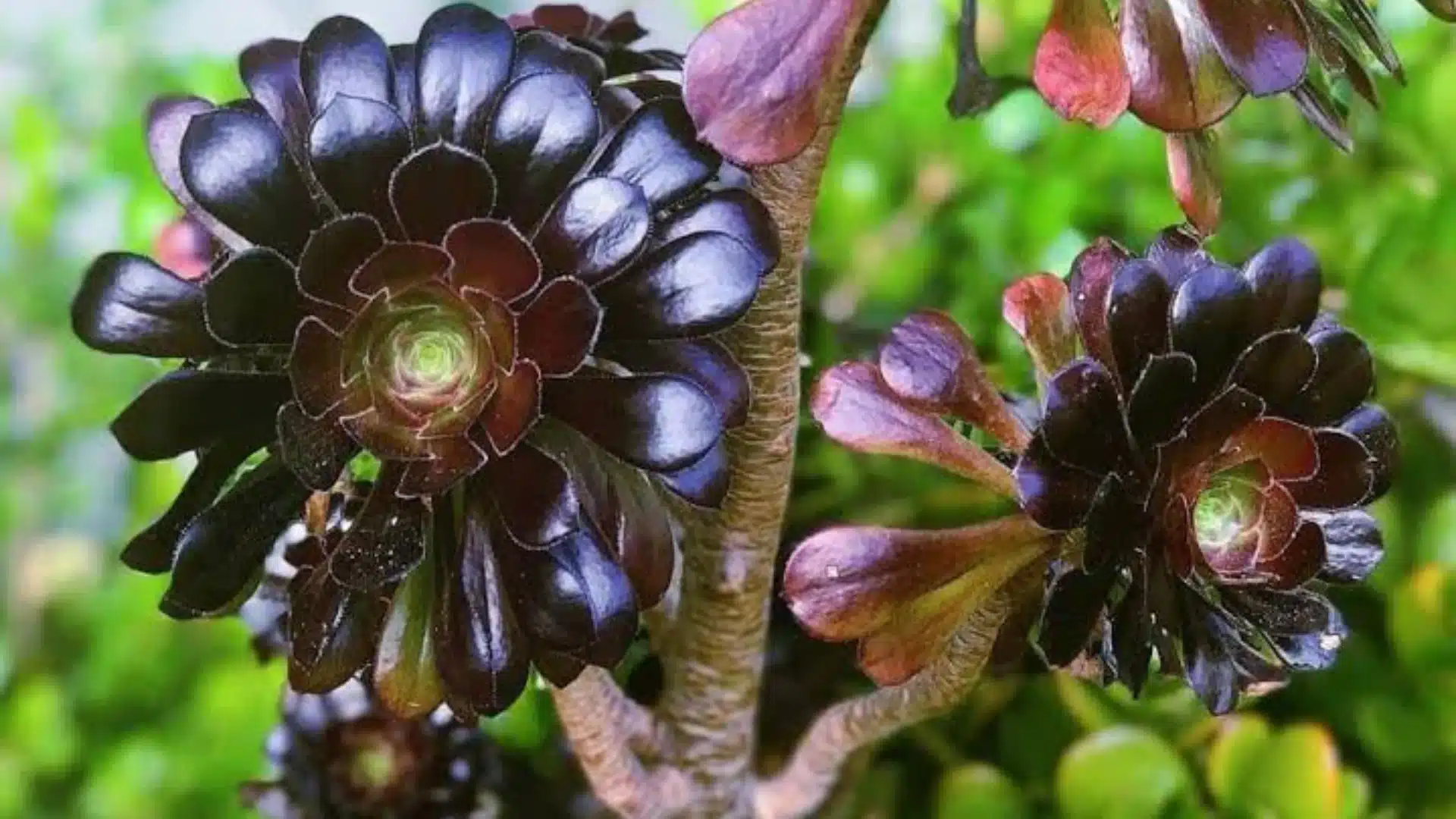
Black Rose stands out for its near-black, burgundy rosettes. Woody, branching stems can reach two to three feet tall, and the whole plant looks more like sculpture than a houseplant.
- Botanical name: Aeonium arboreum ‘Zwartkop’
- Light: Full sun to partial shade
- Water: Moderate, more than typical desert succulents
- Best For: Container accents, dramatic garden focal points
4. Mexican Snowball
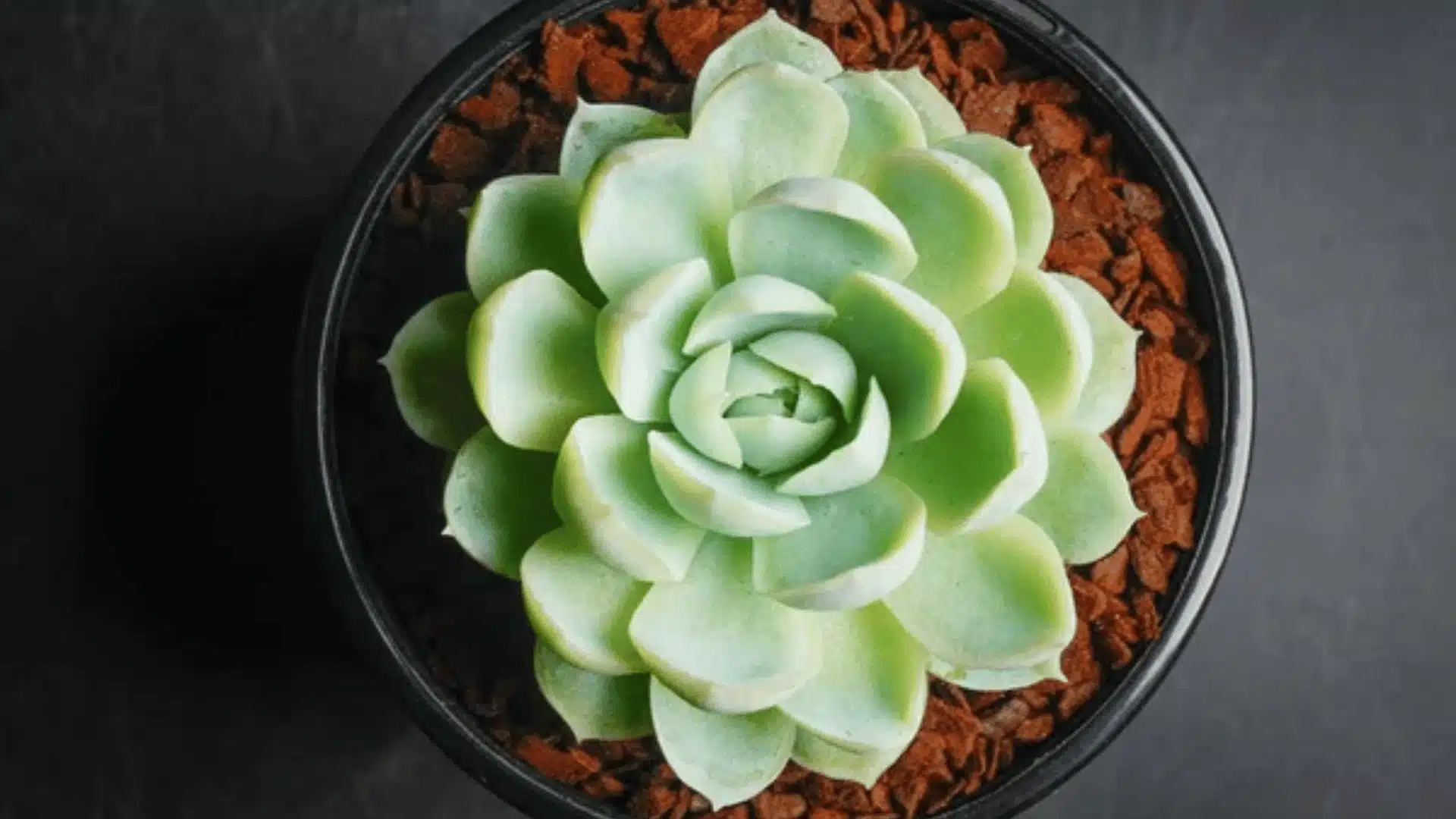
This pale, blue-green rosette forms a tight, rounded shape that looks almost carved from wax. It stays compact and rarely outgrows a small pot.
- Botanical name: Echeveria elegans
- Light: Bright light with some direct sun
- Water: Low
- Best For: Windowsills, small containers, beginner collections
5. Sunburst Aeonium
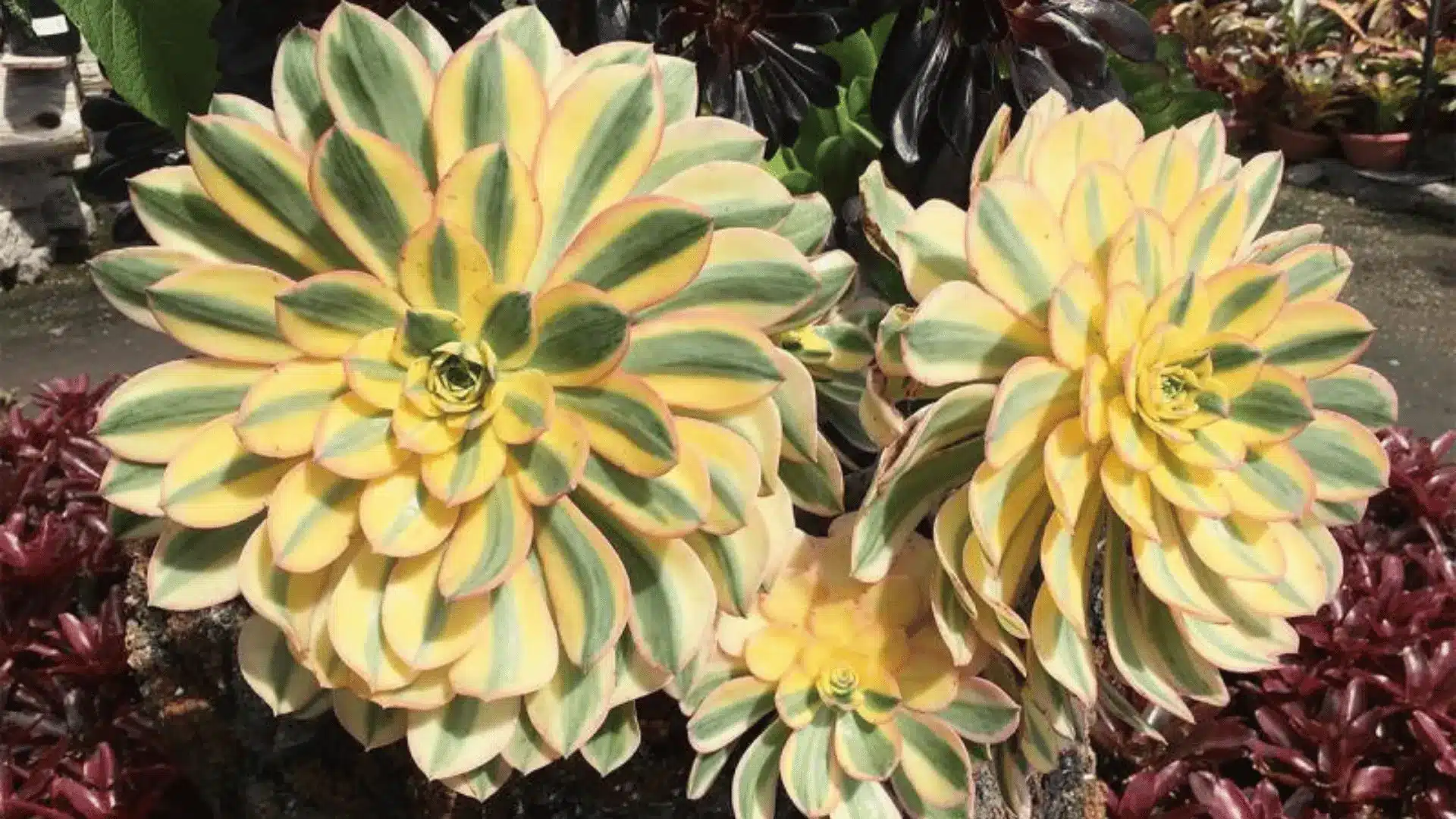
Each rosette is striped in green, cream, and yellow, with a thin pink edge that shows up more the harsher the sun gets. It’s one of the few variegated rosettes that gets more colorful with less shade, not more.
- Botanical name: Aeonium davidbramwellii
- Light: Full sun to bright light for the best color
- Water: Low
- Best For: Mixed bowls, color contrast against darker Aeoniums
Trailing and Hanging Succulents
Succulents of this kind produce long, cascading stems rather than growing upright, making them ideal for shelves, macramé hangers, and tall planters, since the growth can spill over the edges.
6. String of Pearls
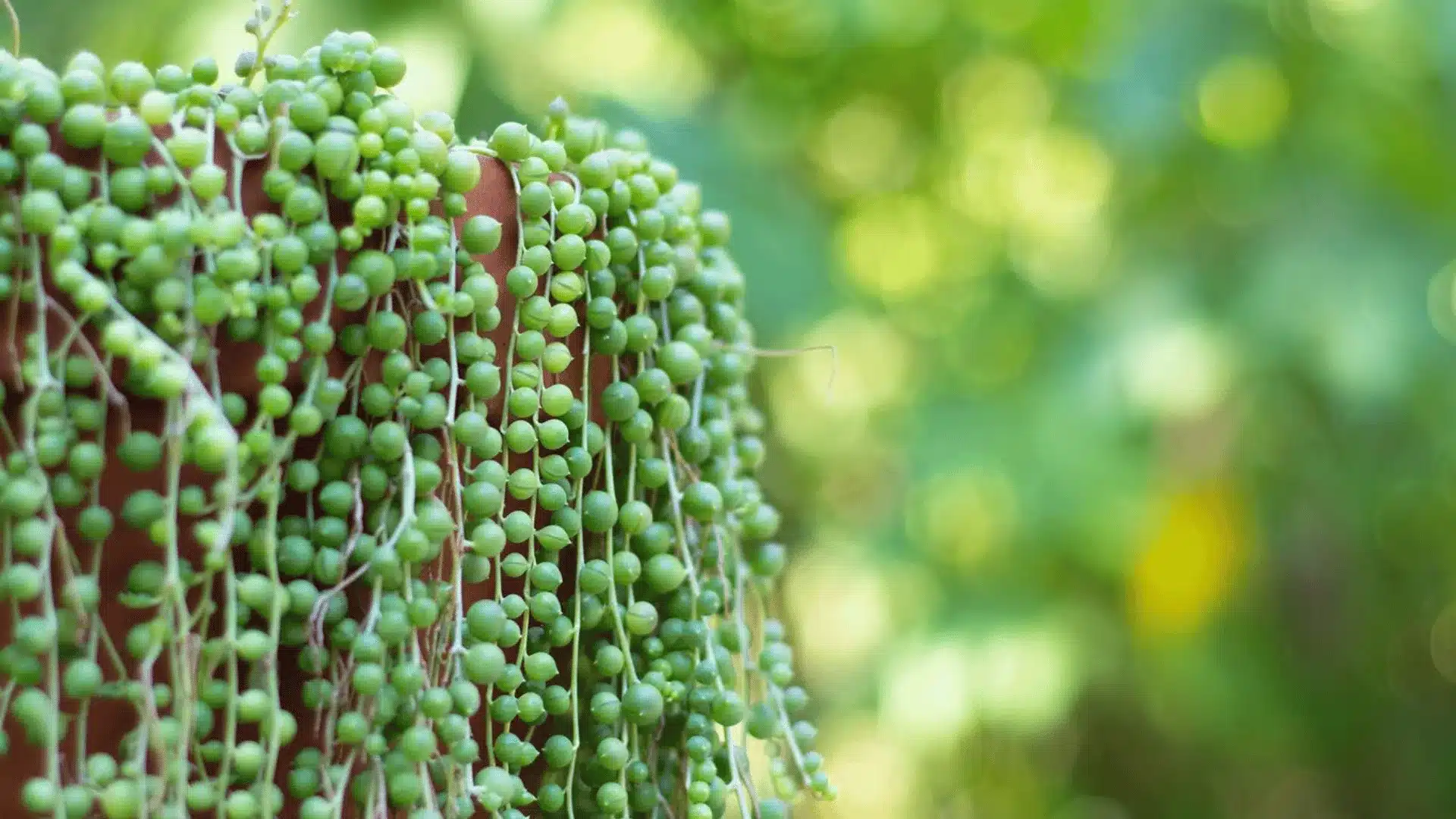
The stems have small, spherical leaves that look like a beaded necklace and can spread out over two to three feet with enough time.
- Botanical name: Curio rowleyanus
- Light: Bright indirect light
- Water: Low; overwatering rots the pearls quickly
- Best For: Hanging baskets, elevated shelves
7. Burro’s Tail
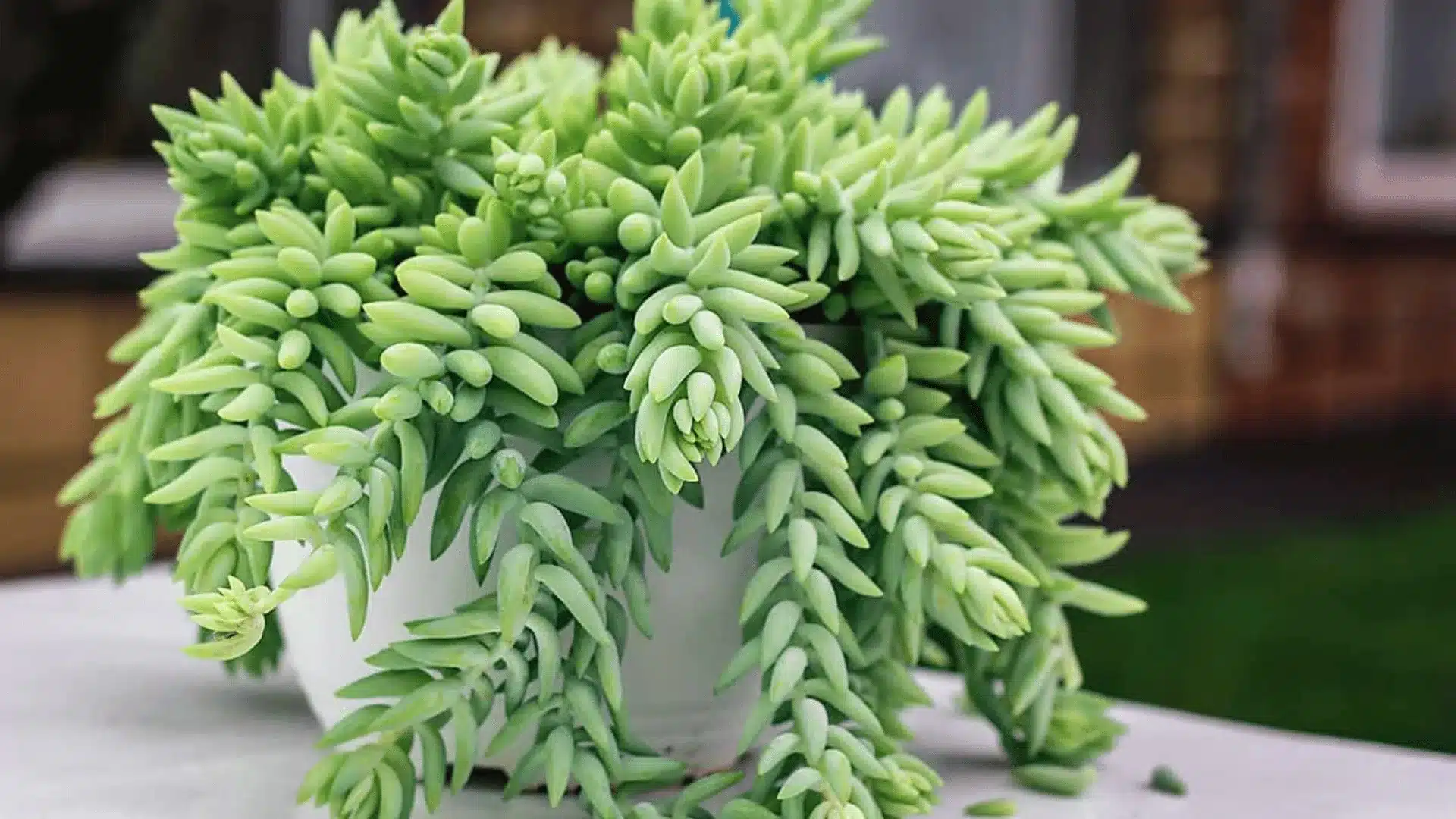
Thick, blue-green leaves overlap densely along heavy, rope-like stems, giving this plant its donkey-tail nickname. The leaves detach at the slightest touch, so it’s best kept somewhere it won’t get bumped.
- Botanical name: Sedum morganianum
- Light: Bright light, some direct sun
- Water: Low
- Best For: Hanging baskets, high shelves out of reach
8. String of Bananas
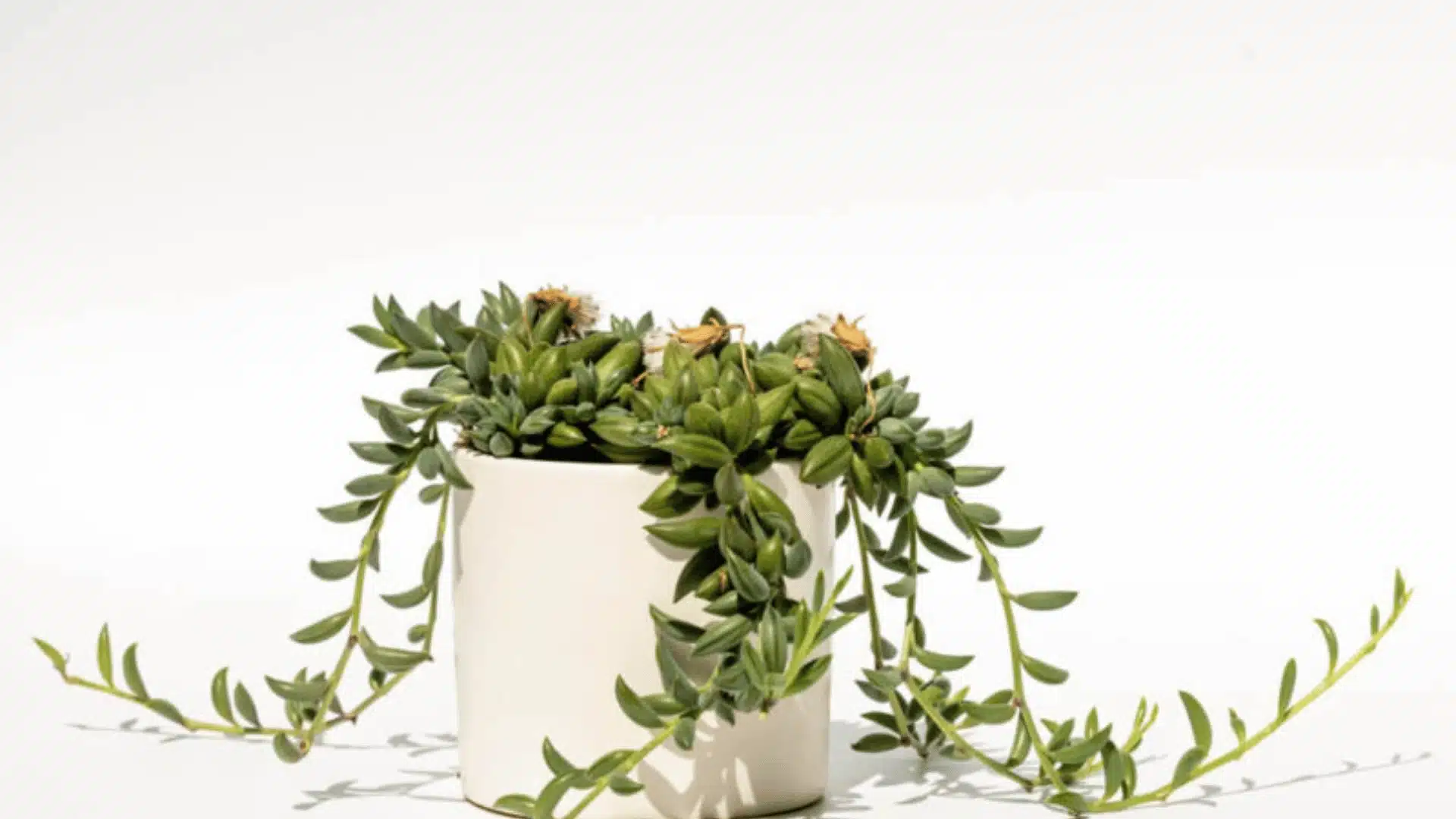
Close cousin to string of pearls, but its leaves curve into small banana shapes rather than spheres, giving the trailing stems a slightly different texture and a faster growth rate.
- Botanical name: Curio radicans
- Light: Bright indirect light
- Water: Low
- Best For: Hanging planters, mixed trailing displays
9. String of Hearts
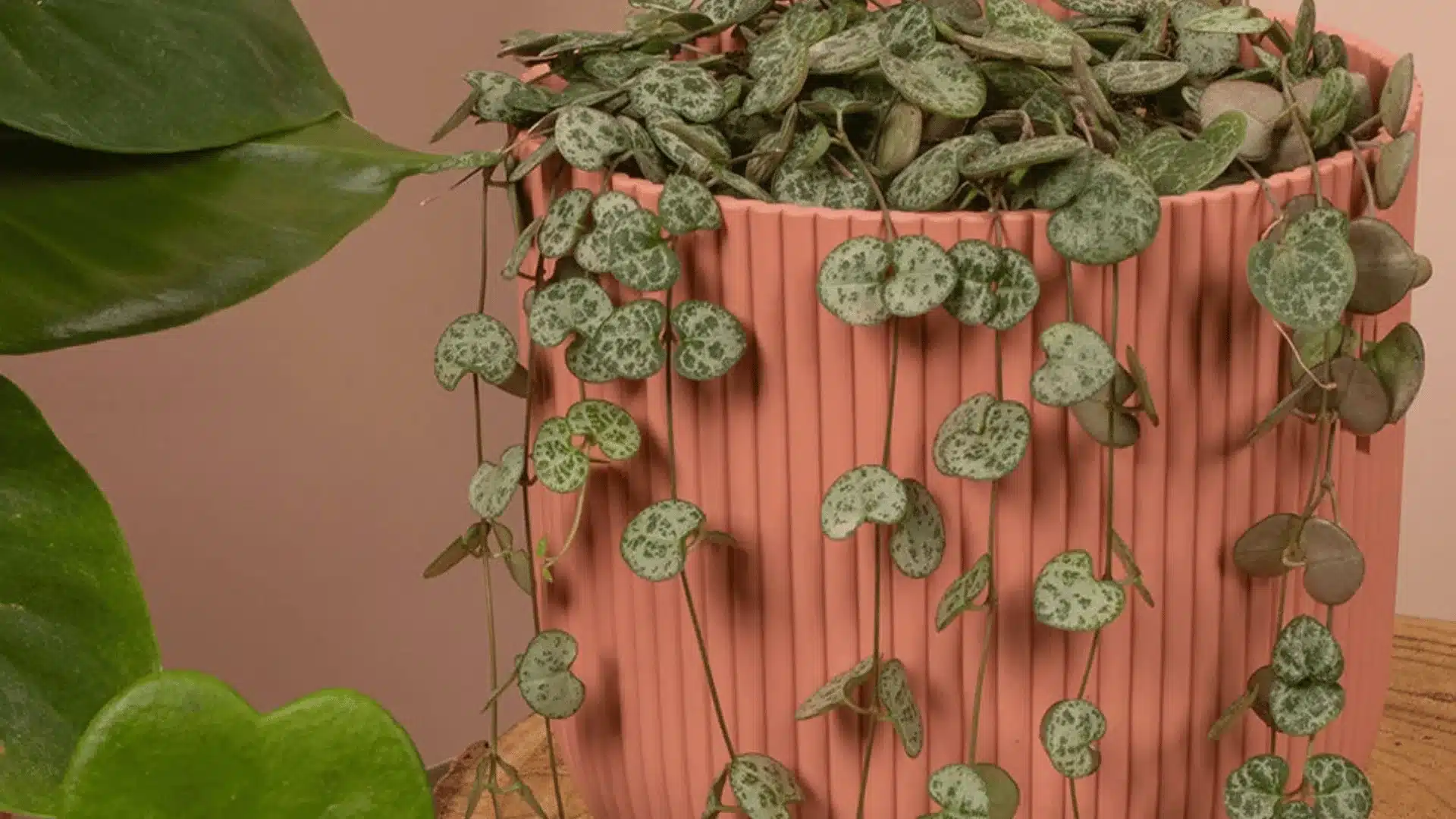
Thin, wiry vines carry small, heart-shaped leaves marbled in silver and green. It’s a delicate-looking plant that’s tougher than it appears.
- Botanical name: Ceropegia woodii
- Light: Bright indirect light
- Water: Low
- Best For: Hanging pots, desks, bookshelves
Unique and Textured Succulents
Some succulents earn a place in collections because of their strange leaf shapes, camouflage patterns, or odd surfaces, not because they form a classic rosette.
10. Zebra Haworthia
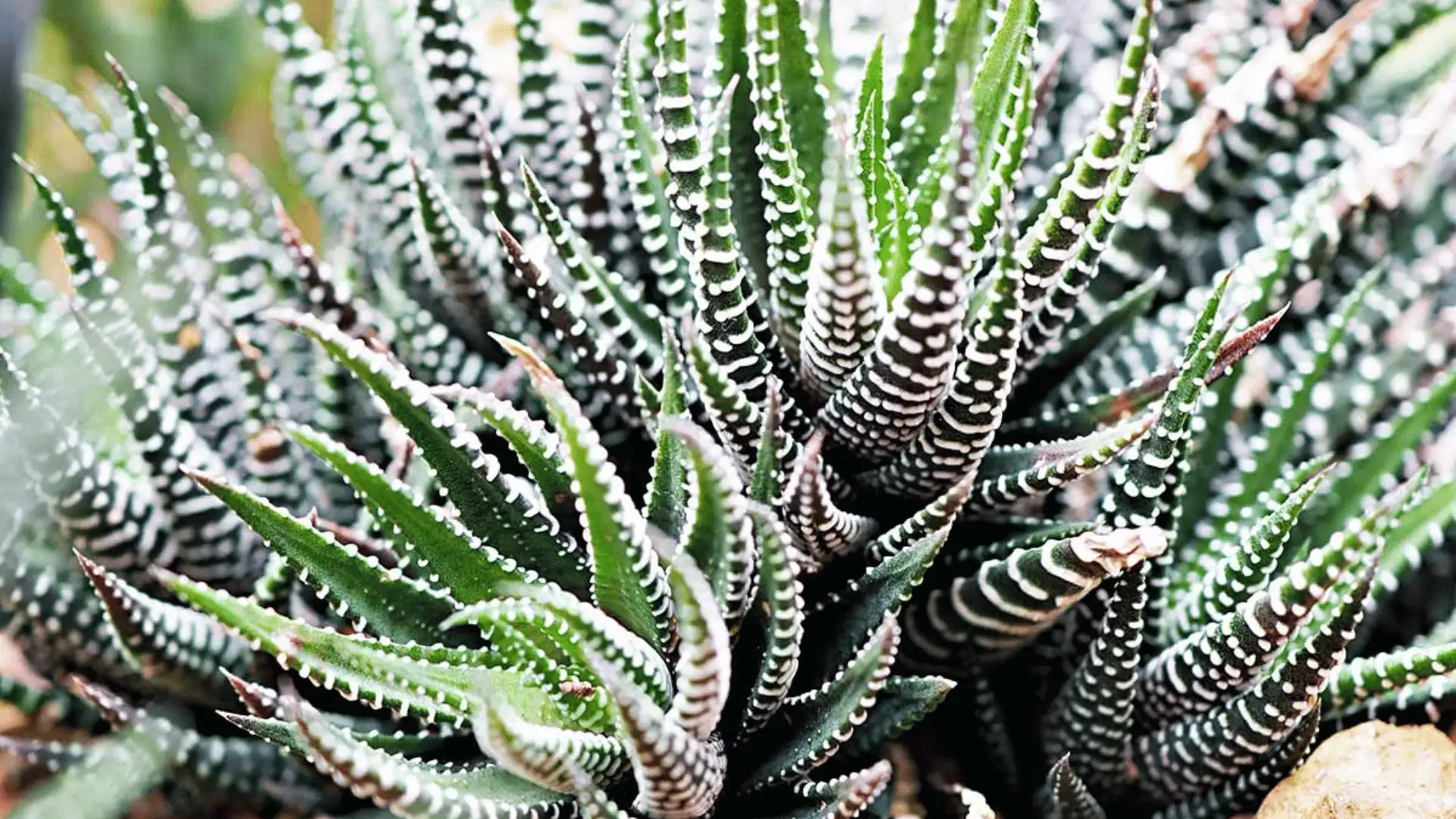
The leaves are sharp and dark green, with raised white stripes that look like zebra stripes. The plant remains small and tends to grow in clumps, making tidy clusters in a pot.
- Botanical name: Haworthiopsis attenuata
- Light: Bright indirect light; avoid harsh direct sun indoors
- Water: Low
- Best For: Desks, low-light indoor corners
11. Panda Plant
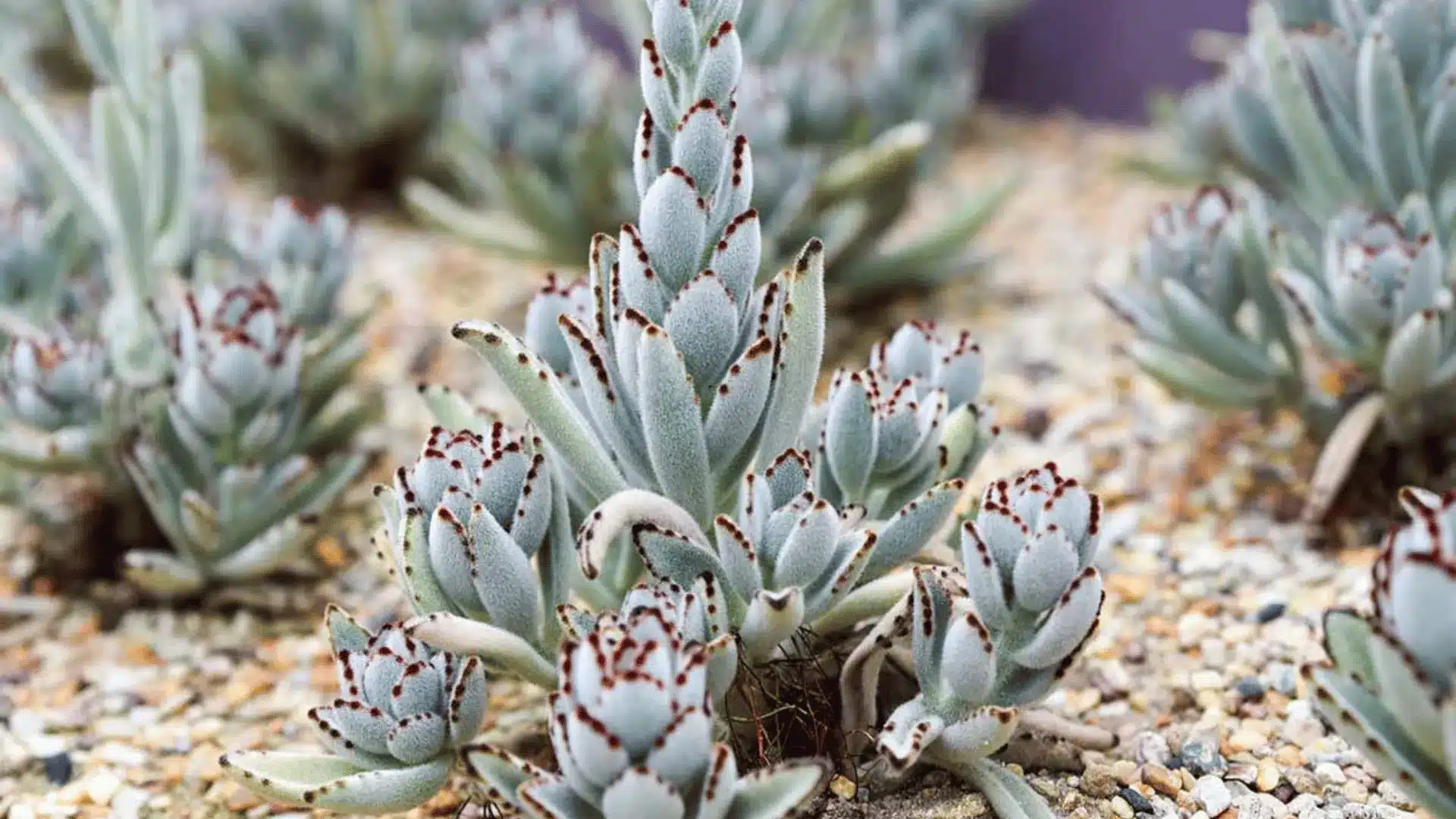
The leaves are soft, fuzzy and a silver-green color. They have a rust-brown’ fur’ along their edges, giving the plant a texture that is unlike any other on this list.
Both children and pet owners are attracted by its plush appearance.
- Botanical name: Kalanchoe tomentosa
- Light: Bright light, some direct sun
- Water: Low
- Best For: Indoor pots, tactile plant displays
12. Living Stones
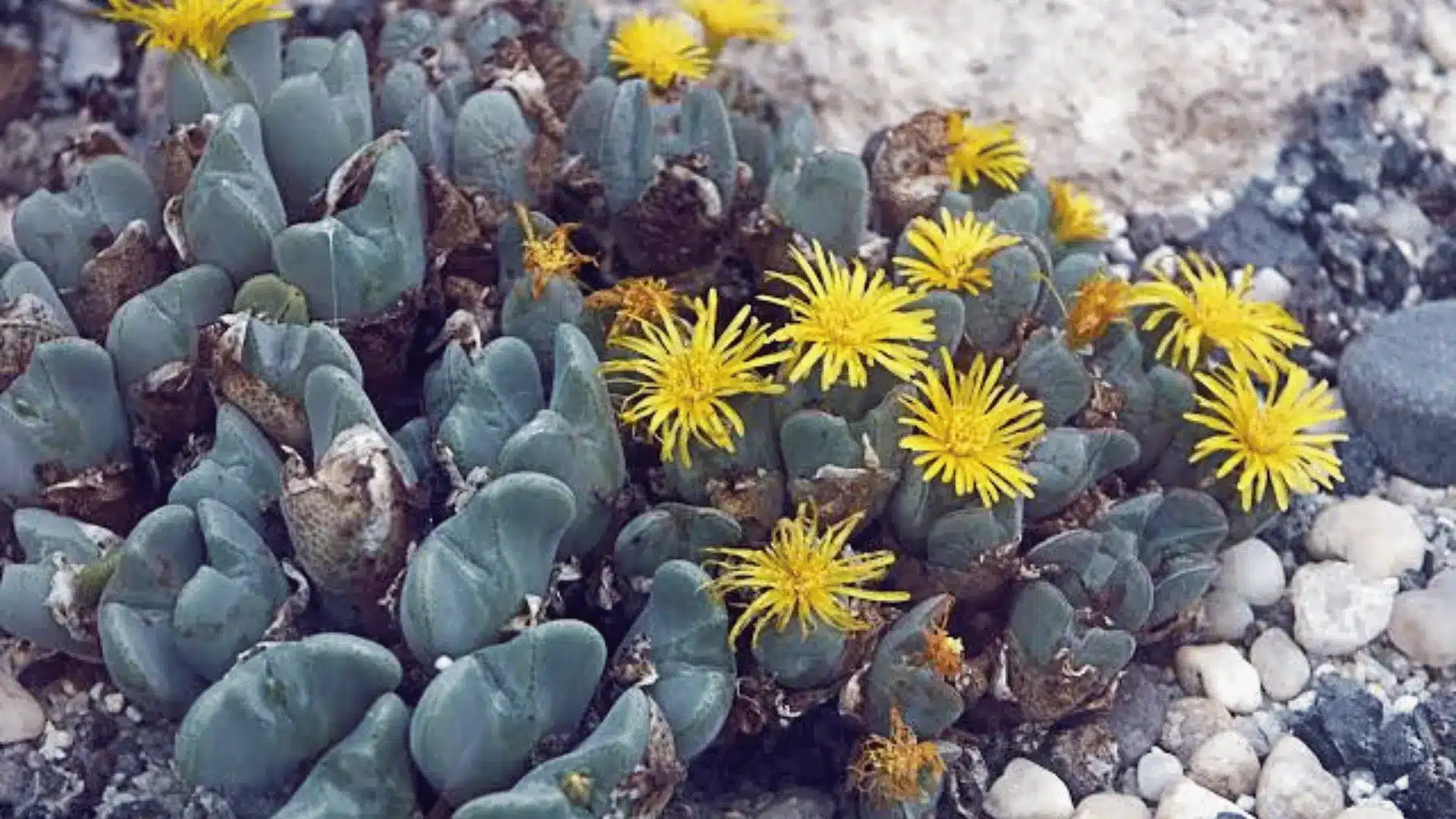
Each plant is a pair of fused, stone-like leaves that simulate pebbles so well they are often mistaken for rocks in the wild. The quickest way to kill it is by overwatering.
- Botanical name: Lithops spp.
- Light: Bright, direct sun
- Water: Very low; water sparingly and only when leaves wrinkle
- Best For: Novelty containers, arid-themed arrangements
13. Tiger Jaws
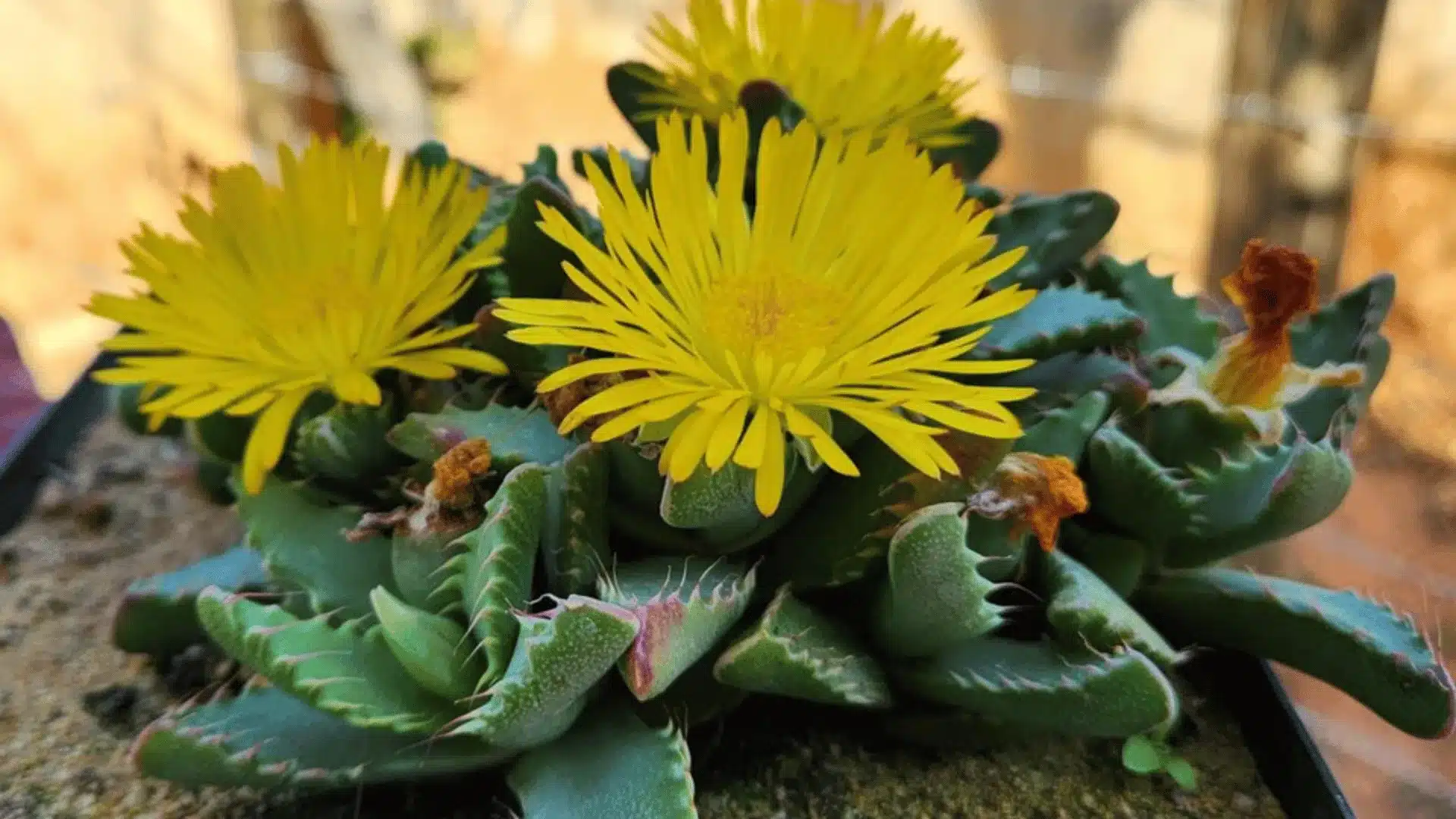
The leaves, which are thick and triangular, come in pairs and have soft, toothed edges that appear as if they’re about to close, even though they are harmless. In the fall, bright yellow, star-shaped flowers appear.
- Botanical name: Faucaria tigrina
- Light: Bright sun
- Water: Low
- Best For: Windowsills, novelty succulent collections
14. Ghost Plant
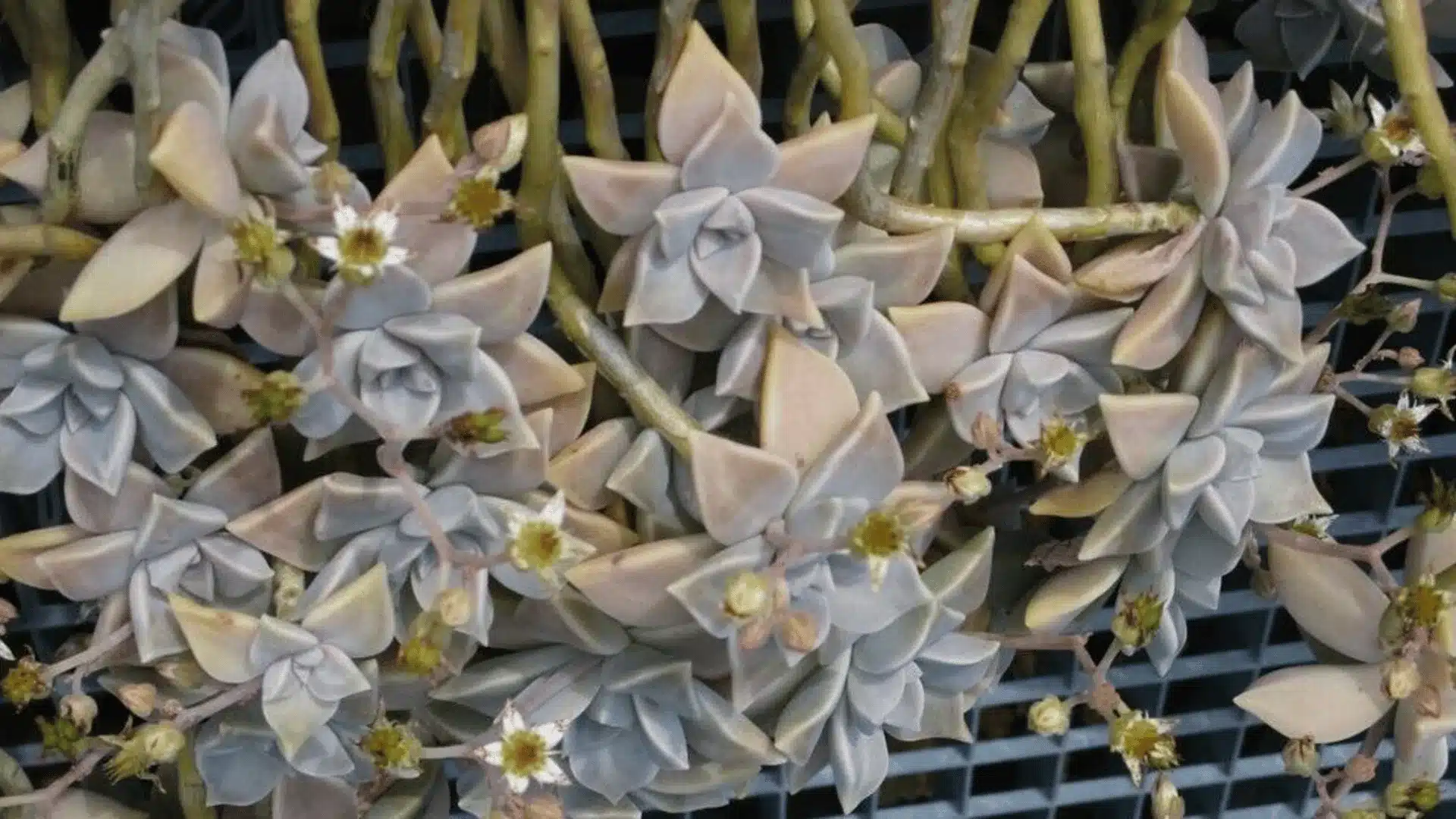
The rosettes are a chalky lavender-gray, almost translucent under the right light, spreading readily across a pot or the ground rather than staying put. Stems left too long tend to flop and root wherever they touch soil.
- Botanical name: Graptopetalum paraguayense
- Light: Bright light, some direct sun
- Water: Low
- Best For: Ground cover, spilling over pot edges
15. Gasteria
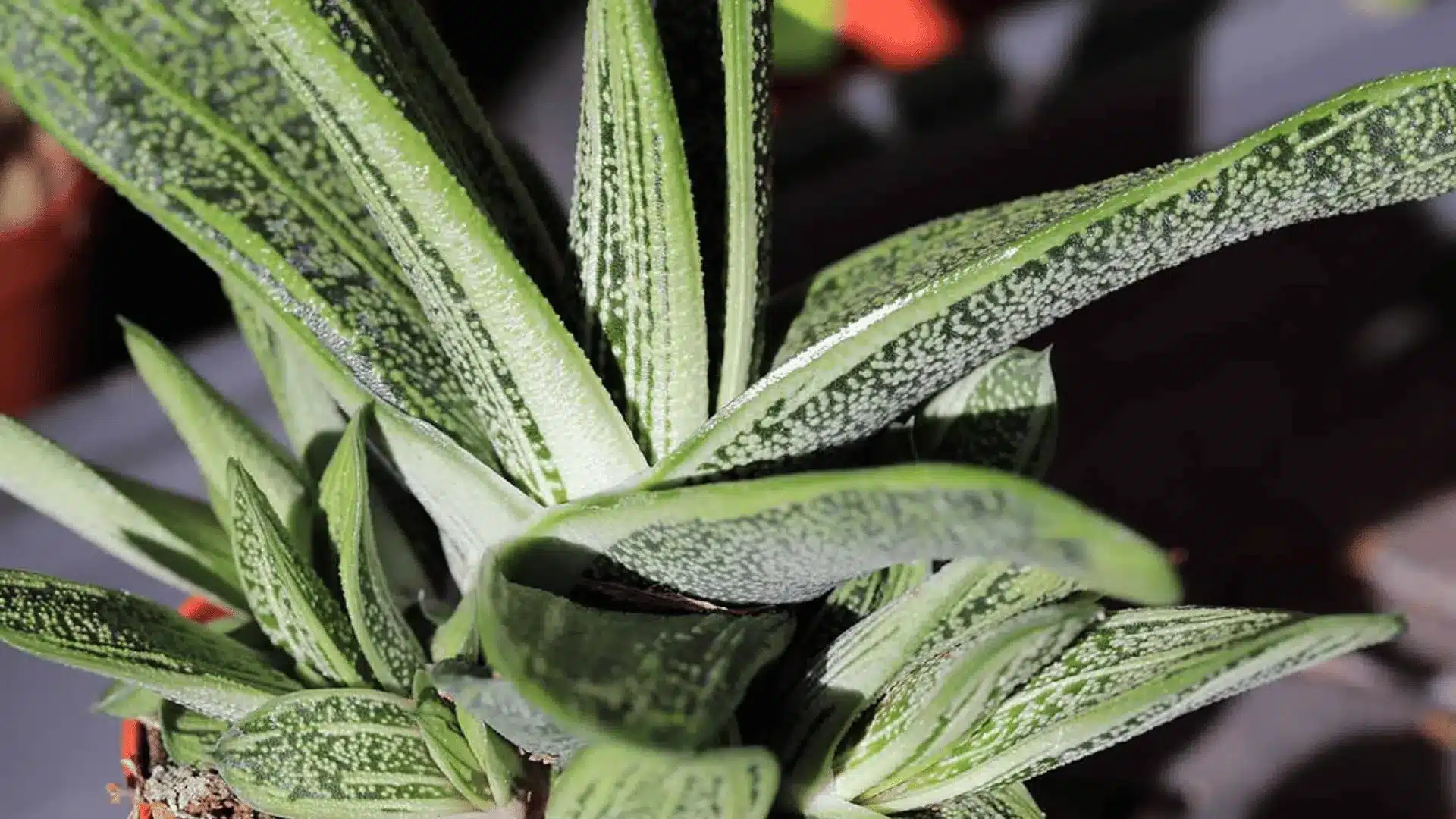
Thick, tongue-shaped leaves grow in two flat ranks instead of a rosette, often speckled with white spots like a lizard’s skin.
The name comes from the stomach-shaped flowers, an odd detail to hang a plant’s identity on, but there it is.
- Botanical name: Gasteria spp.
- Light: Tolerates low light to bright indirect light
- Water: Low
- Best For: Low-light corners, offices, beginners who’ve killed everything else
Common Indoor Succulent Types
The succulents you are ommon, low-maintenance, and easy to find.
16. Jade Plant
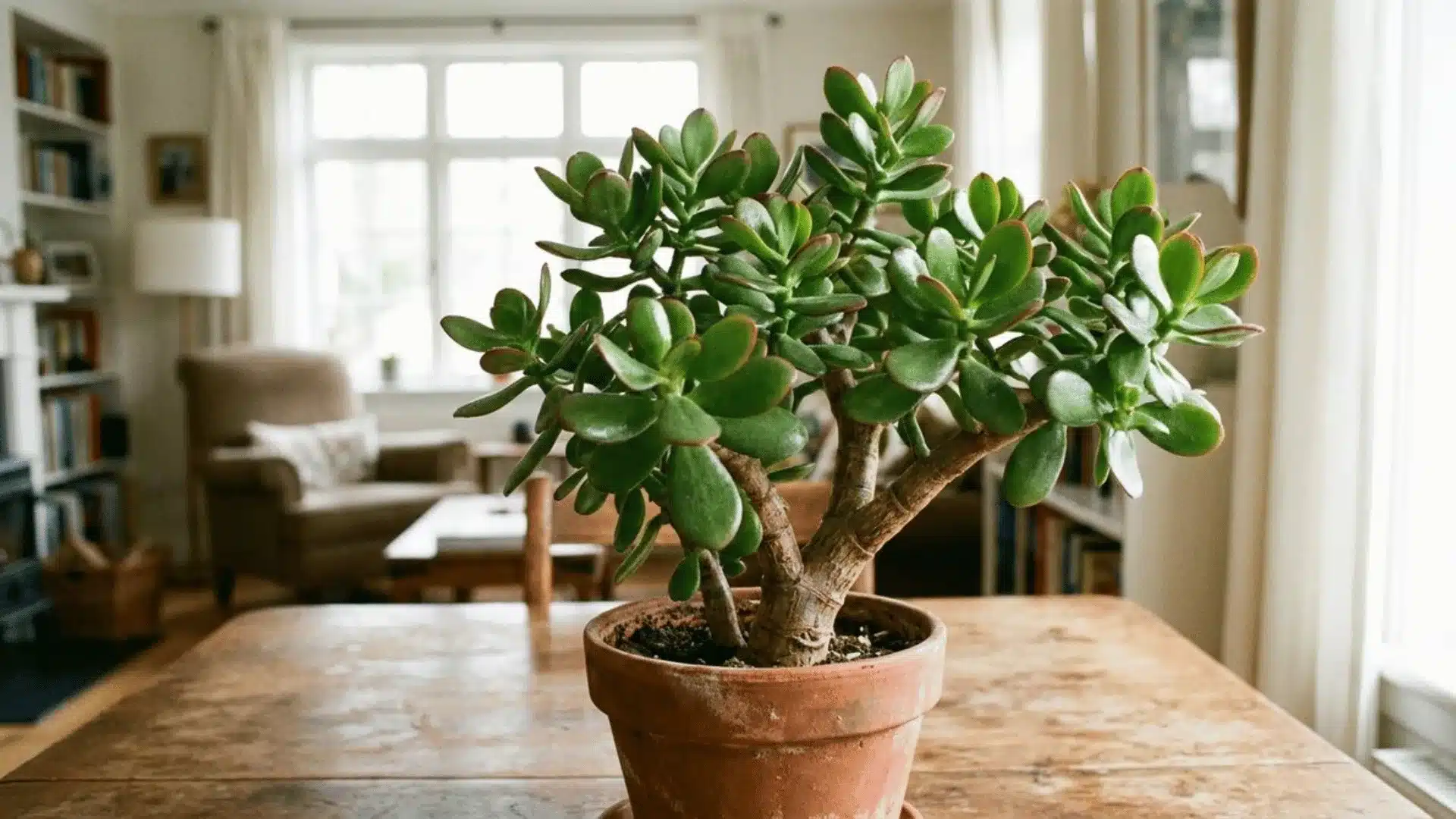
The leaves are thick, glossy, and oval, and appear on hardy stems that become thicker as the plants age, so mature plants take on a shape similar to that of a small tree.
Many of these plants live for decades and are therefore passed on as heirlooms.
- Botanical name: Crassula ovata
- Light: Bright light, several hours of direct sun
- Water: Low
- Best For: Houseplant collections, office desks
17. Aloe Vera
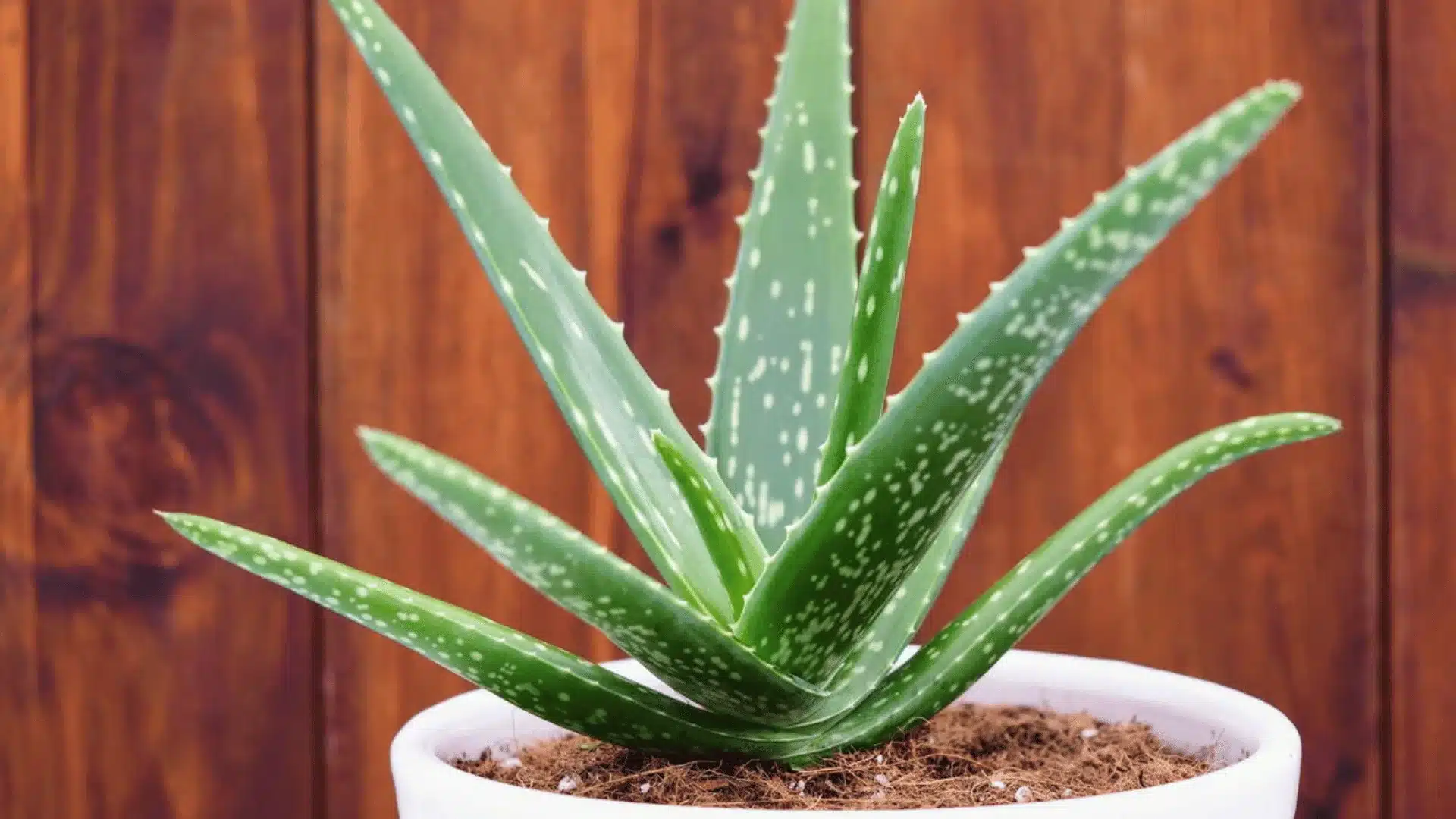
The plant has thick, pointed leaves filled with gel and grows in a loose rosette from a central base; it is one of the few succulents most households already know by name because of its skin-soothing gel.
- Botanical name: Aloe vera
- Light: Bright light, some direct sun
- Water: Low
- Best For: Kitchens, sunny windowsills
18. Snake Plant
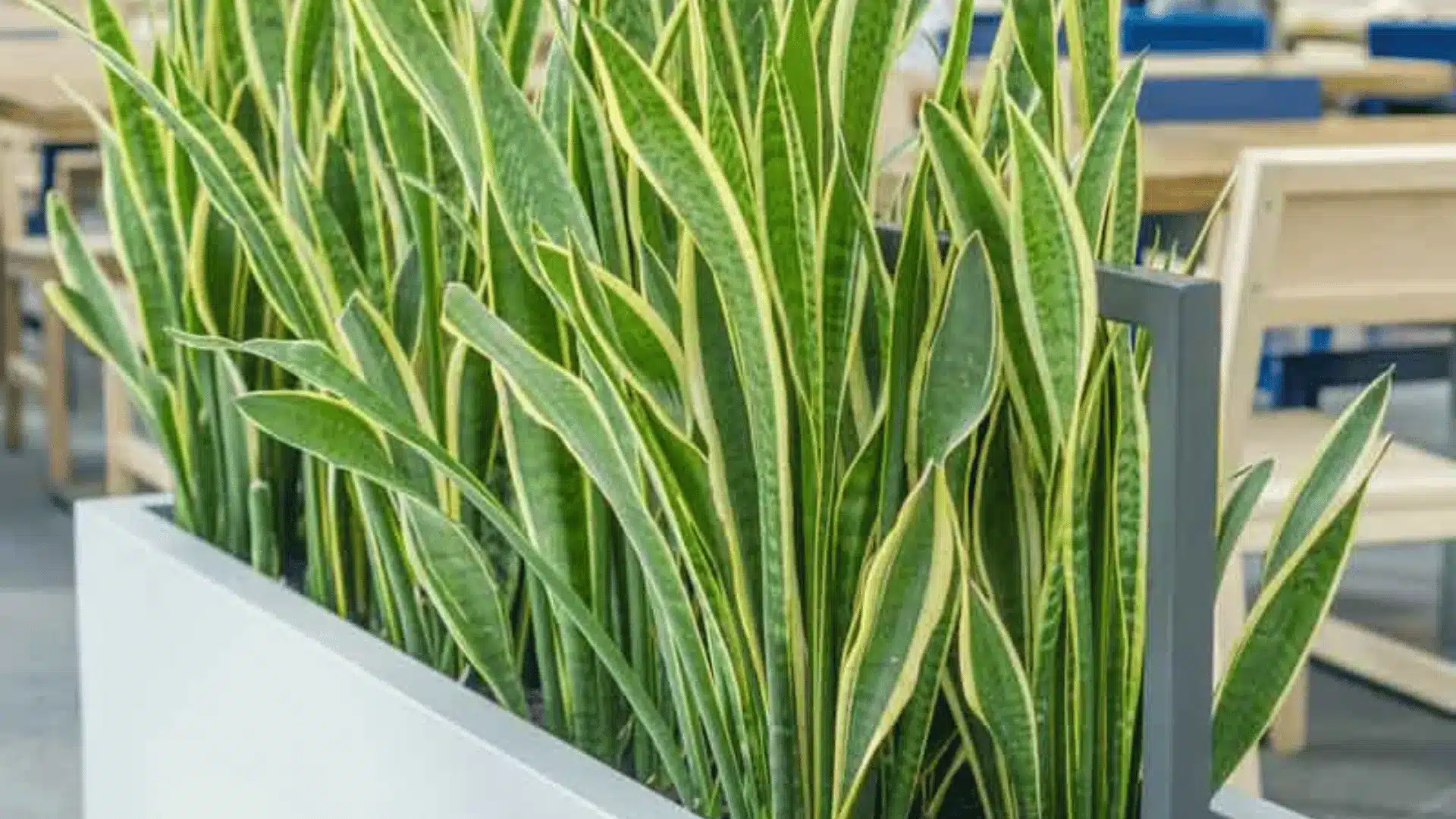
The leaves are tall and rigid, with a sword-like shape, and appear in patterns of green and yellow bands. It can handle low light better than almost any other succulent on the list.
- Botanical name: Dracaena trifasciata
- Light: Tolerates low light to bright indirect light
- Water: Low; let soil dry fully between waterings
- Best For: Bedrooms, low-light offices, beginners
Colorful and Flowering Succulents
Some common succulents earn their spot in a collection for their blooms as much as their leaves, adding seasonal color that goes beyond the usual green and gray palette.
19. Flaming Katy
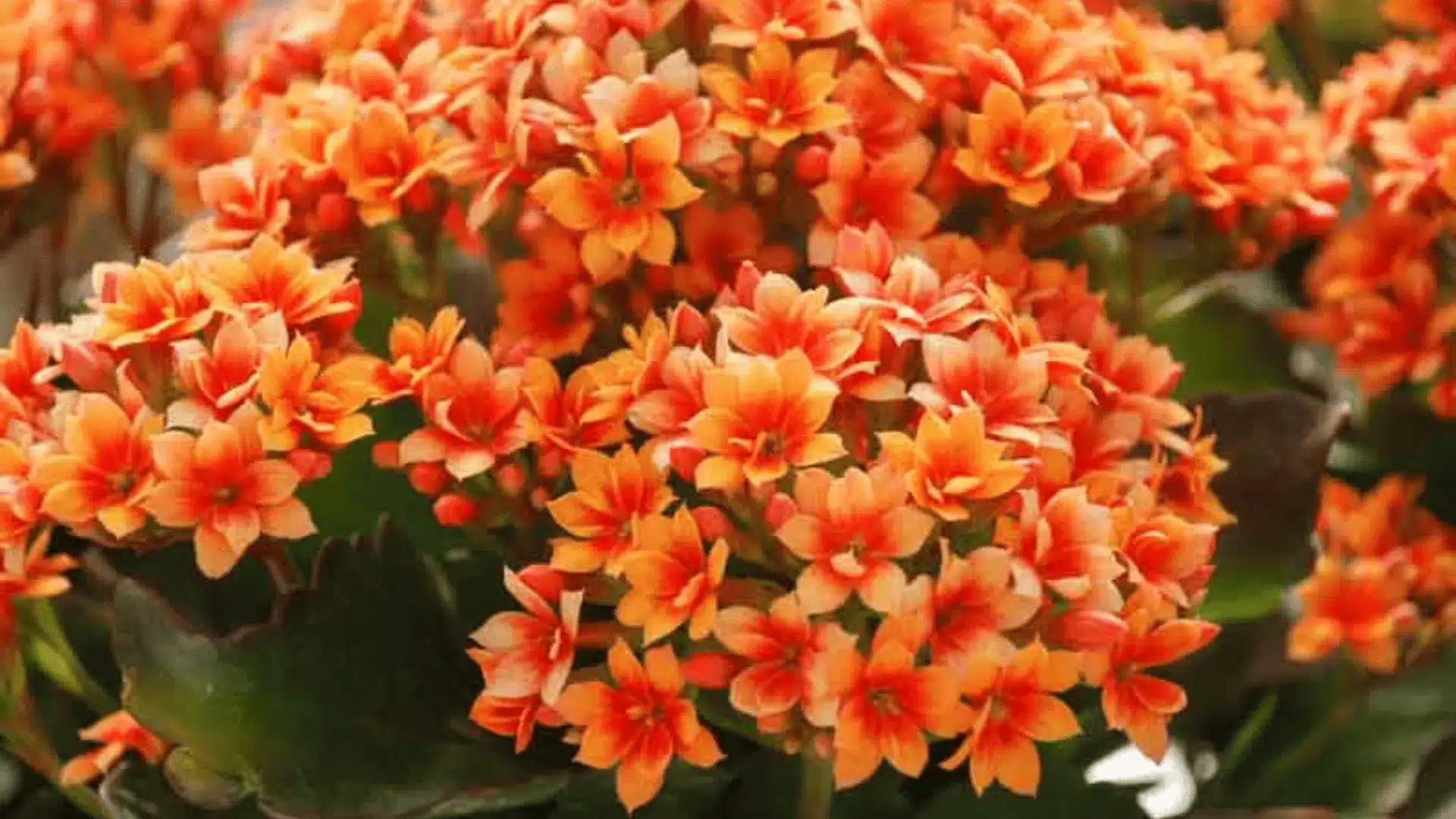
The plant produces groups of small, long-lasting flowers in red, pink, orange, yellow, or white atop thick, shiny green leaves.
The flowering process largely depends on getting enough continuous darkness at night.
- Botanical name: Kalanchoe blossfeldiana
- Light: Bright light for foliage; needs long dark nights to rebloom
- Water: Low
- Best For: Gifts, seasonal color, tabletop displays
20. Christmas Cactus
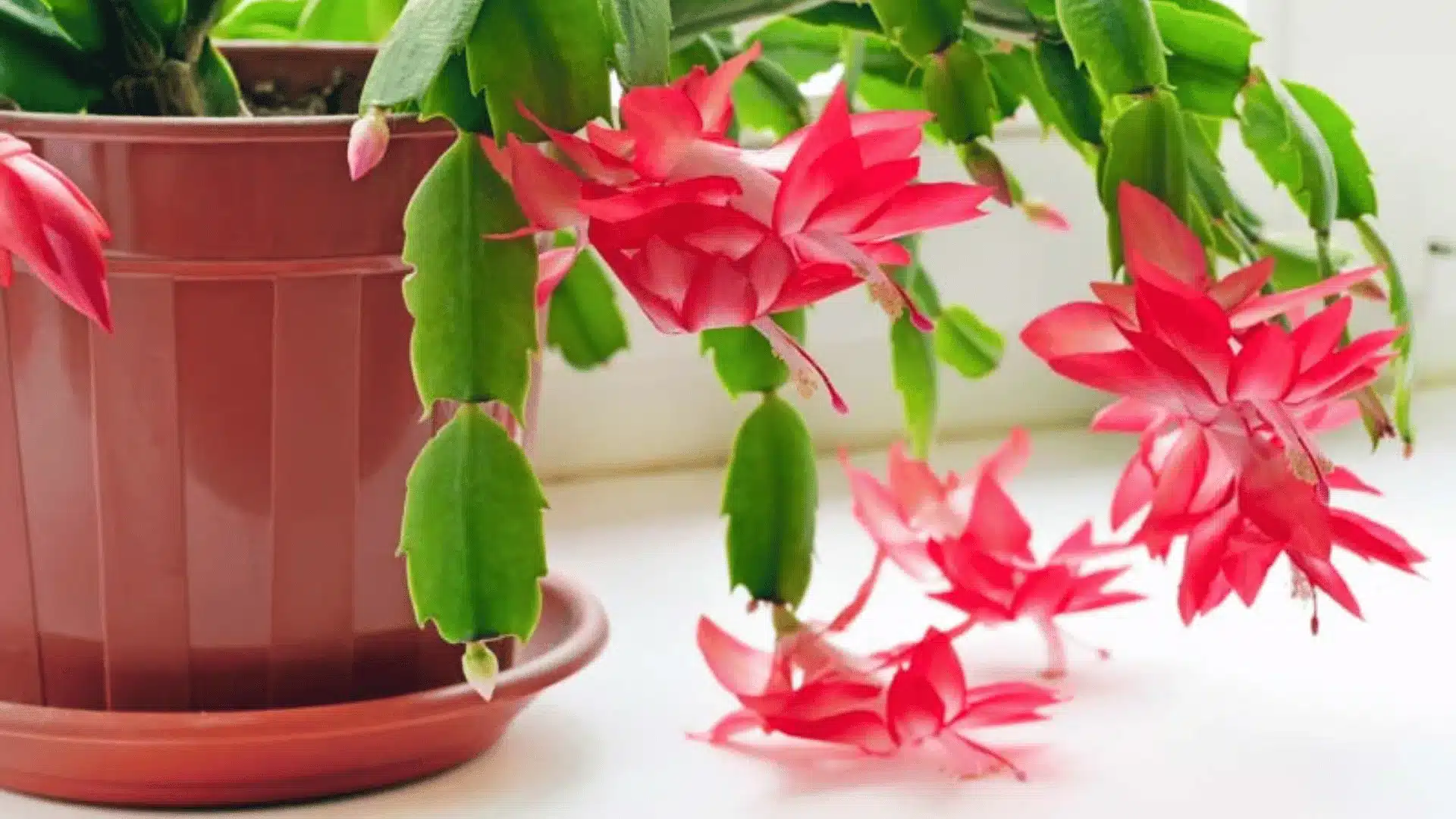
The stems, which are flat and segmented, bend outwards and bloom with bright pink, red, or white flowers in winter, precisely when most other plants have become dormant.
This plant requires more moisture than usual desert succulents.
- Botanical name: Schlumbergera × buckleyi
- Light: Bright indirect light
- Water: Moderate; keep lightly moist during bud formation
- Best For: Winter color, hanging pots, heirloom plants
21. Crown of Thorns
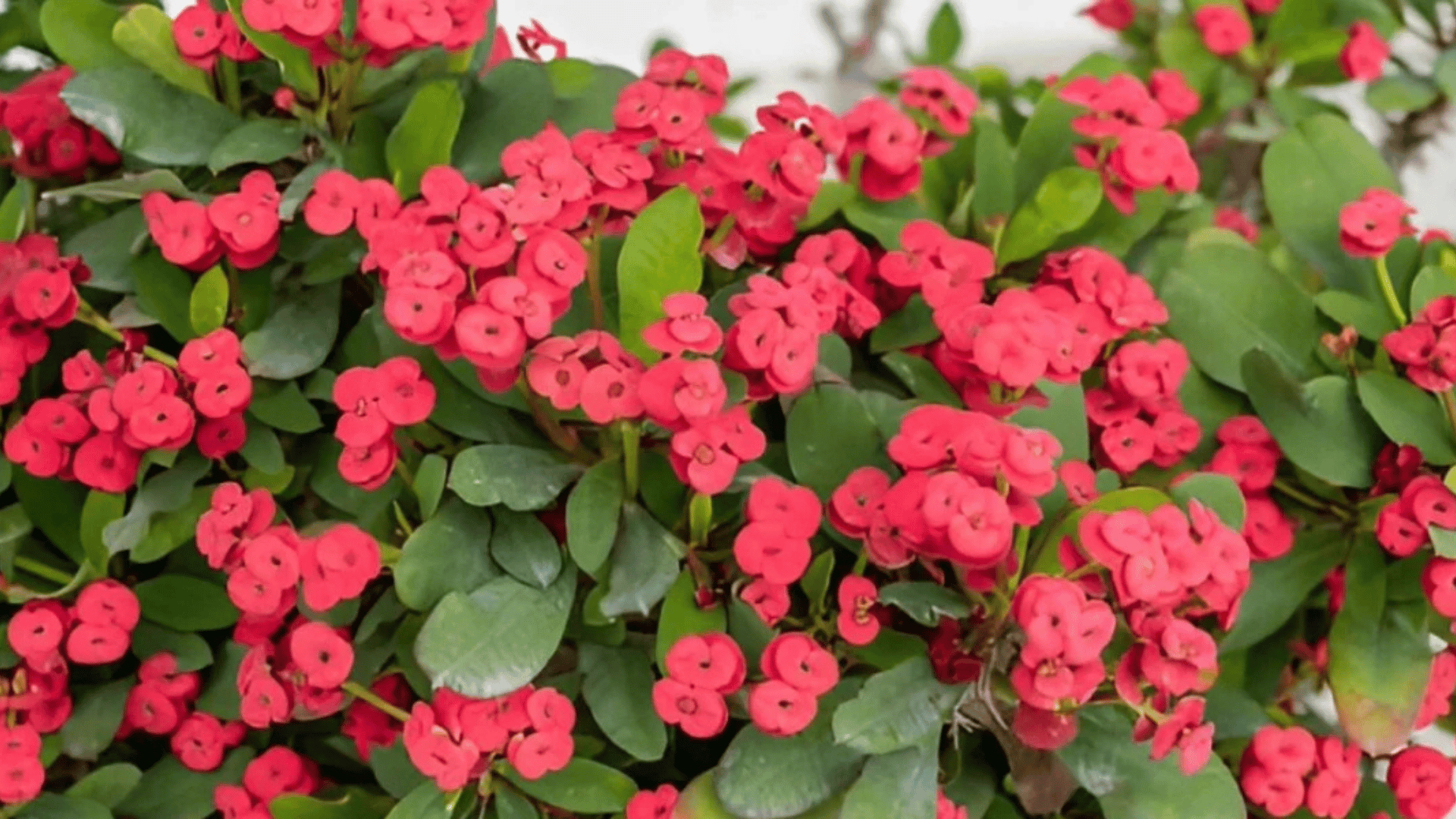
Sharp thorns line woody stems topped with small, colorful bracts that look like flowers and appear nearly year-round. The milky sap irritates skin, so gloves are worth using when handling it.
- Botanical name: Euphorbia milii
- Light: Full sun
- Water: Low
- Best For: Sunny patios, barrier plantings, long bloom displays
22. Ruby Glow Peperomia
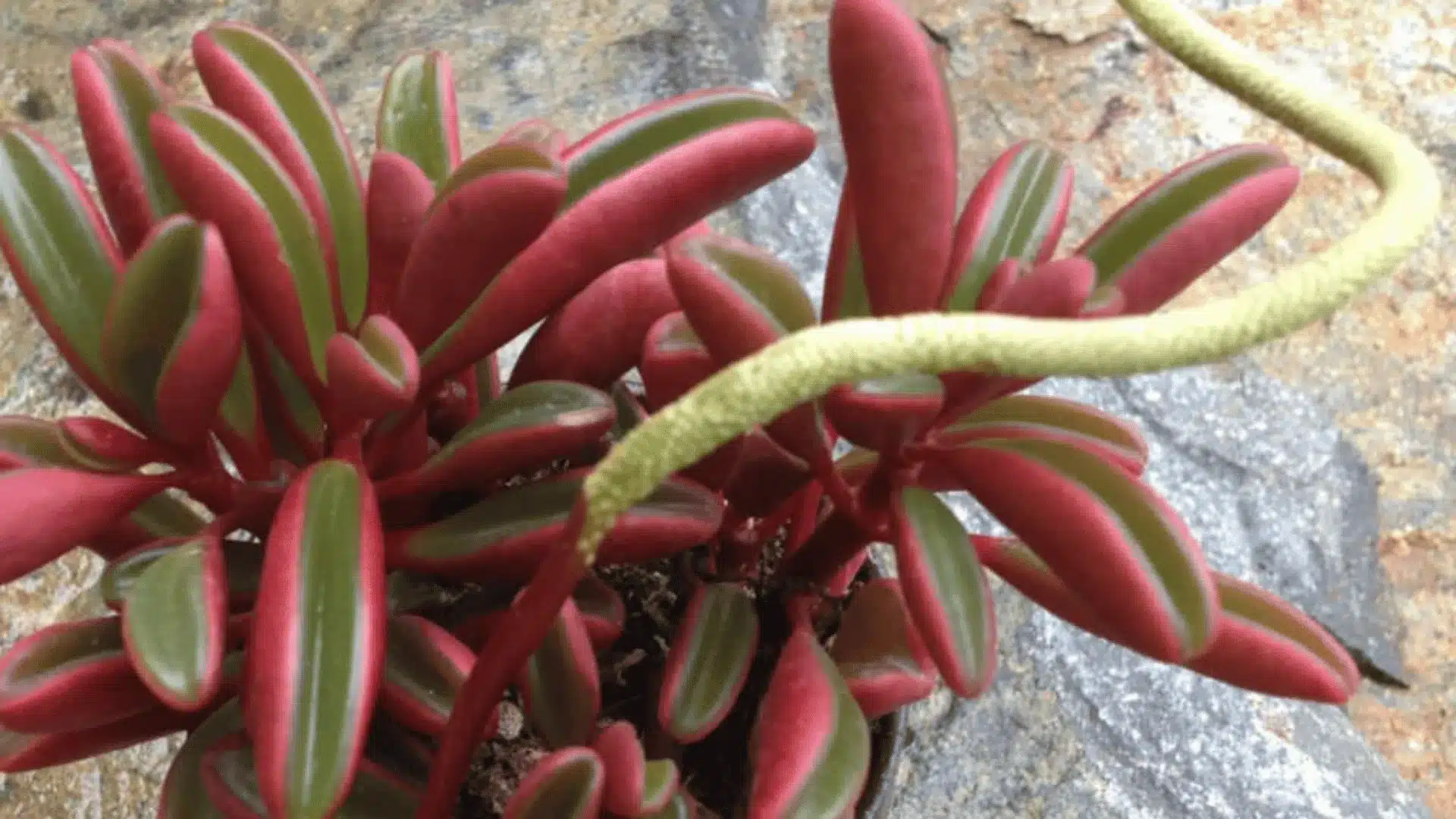
Small, canoe-shaped leaves are green on top and deep ruby-red underneath, glowing when backlit by the sun. It stays small enough for a desk but carries more color per square inch than most plants twice its size.
- Botanical name: Peperomia graveolens
- Light: Bright indirect light
- Water: Low to moderate; more sensitive to overwatering than true desert varieties
- Best For: Desks, terrariums, small pots
Sculptural and Outdoor Succulents
Larger, more architecturally striking succulent species work best as outdoor focal points, where their size and structure stand out.
23. Agave
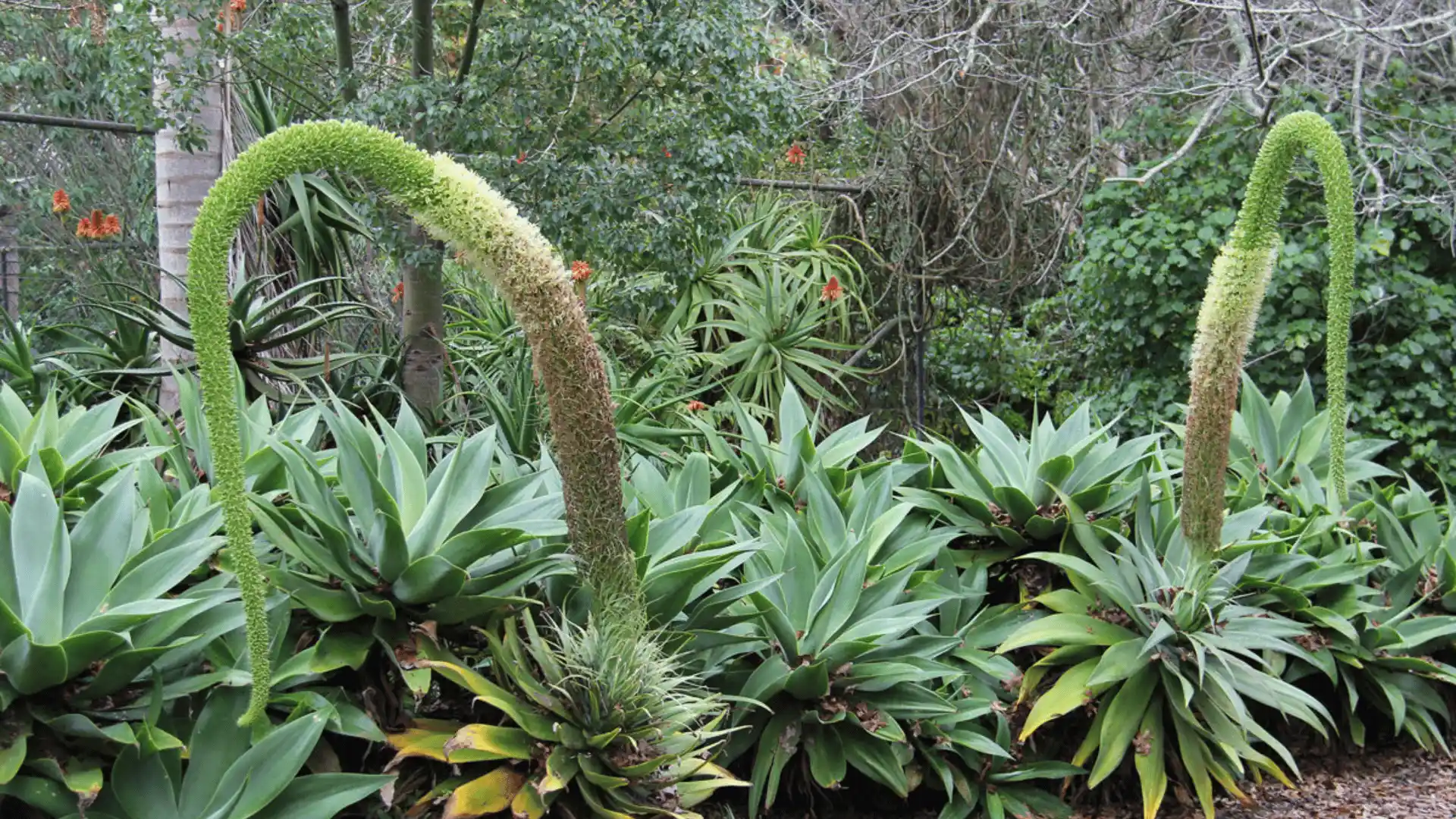
A big rosette made up of stiff, pointed leaves spreads out in all directions, the mature diameter varying from less than a foot to several feet according to the species. It requires good drainage in order to prevent root rot.
- Botanical name: Agave spp.
- Light: Full sun
- Water: Very low
- Best For: Xeriscapes, desert-style gardens, large containers
24. Golden Barrel Cactus
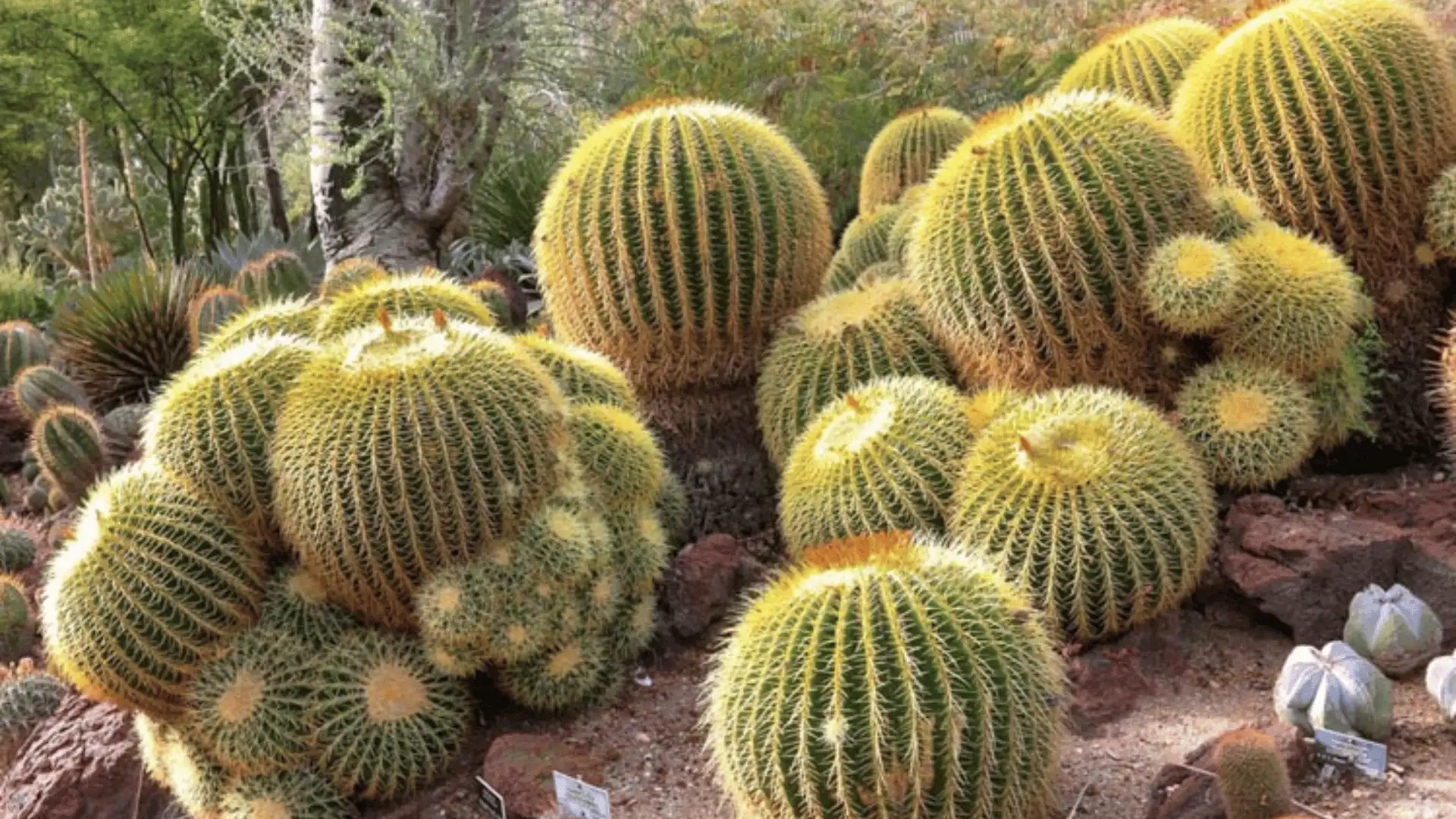
A sphere that is almost perfect, it has prominent ribs and golden-yellow spines, which give it a very architectural appearance in the landscape. Although it grows slowly, it can eventually reach a diameter of three feet.
- Botanical name: Echinocactus grusonii
- Light: Full sun
- Water: Very low
- Best For: Outdoor beds, container focal points, desert gardens
Hybrid Succulents
Cross two genera, and the result usually borrows traits from both parents, often a hardier grower with more dramatic color than either original.
Garden centers are stocking more of these every year, worth learning by name instead of pointing at “that pretty one in the pink pot.”
25. Fred Ives
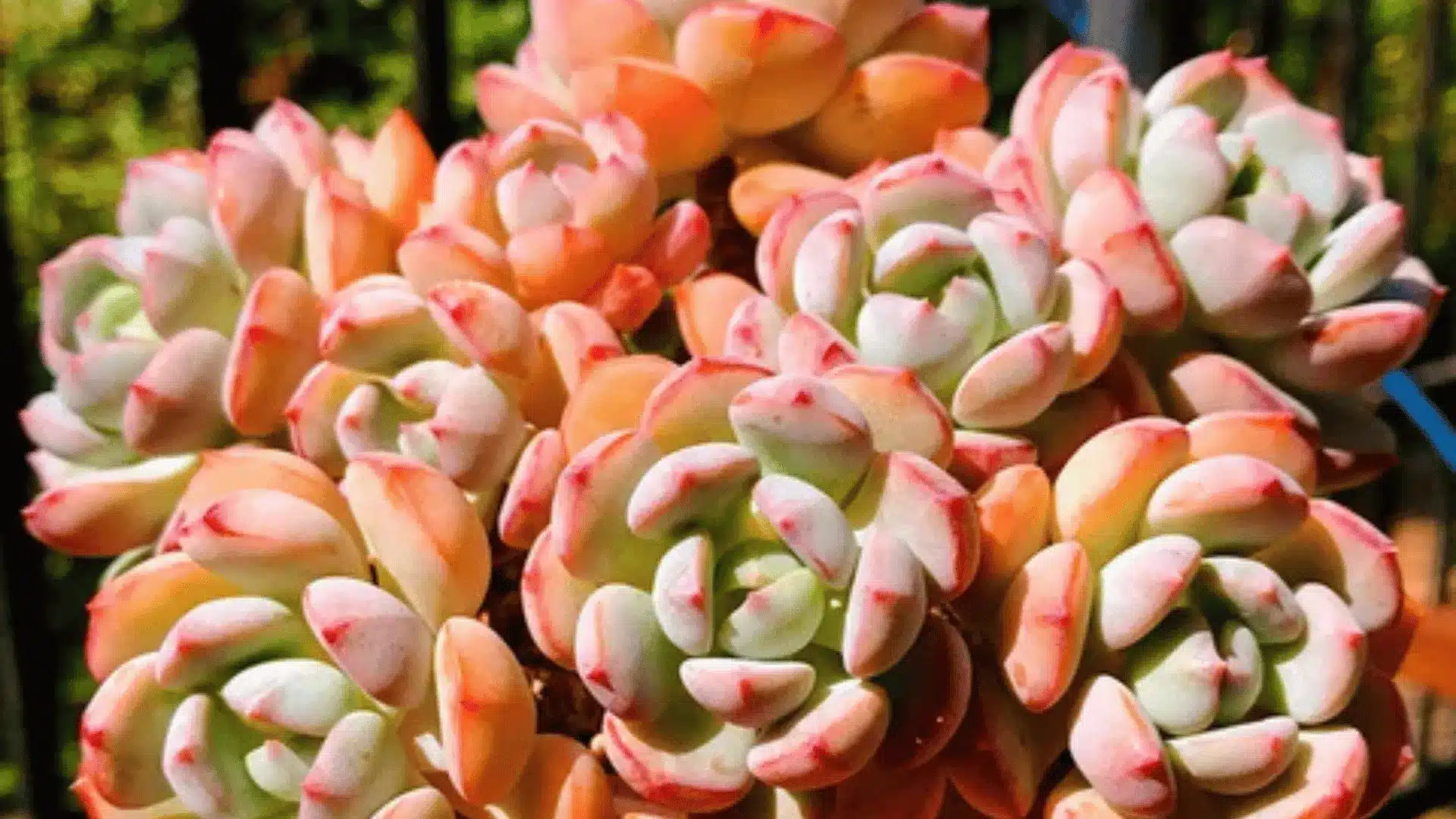
A cross between Graptopetalum and Echeveria, this one forms a large, loose rosette in dusty lavender-pink that shifts toward coral and peach with more sun exposure.
It’s one of the more forgiving crosses for a first attempt at hybrids.
- Botanical name: Graptoveria
- Light: Full sun to bright light
- Water: Low
- Best For: Container standouts, color contrast in mixed planters
26. Blue Elf
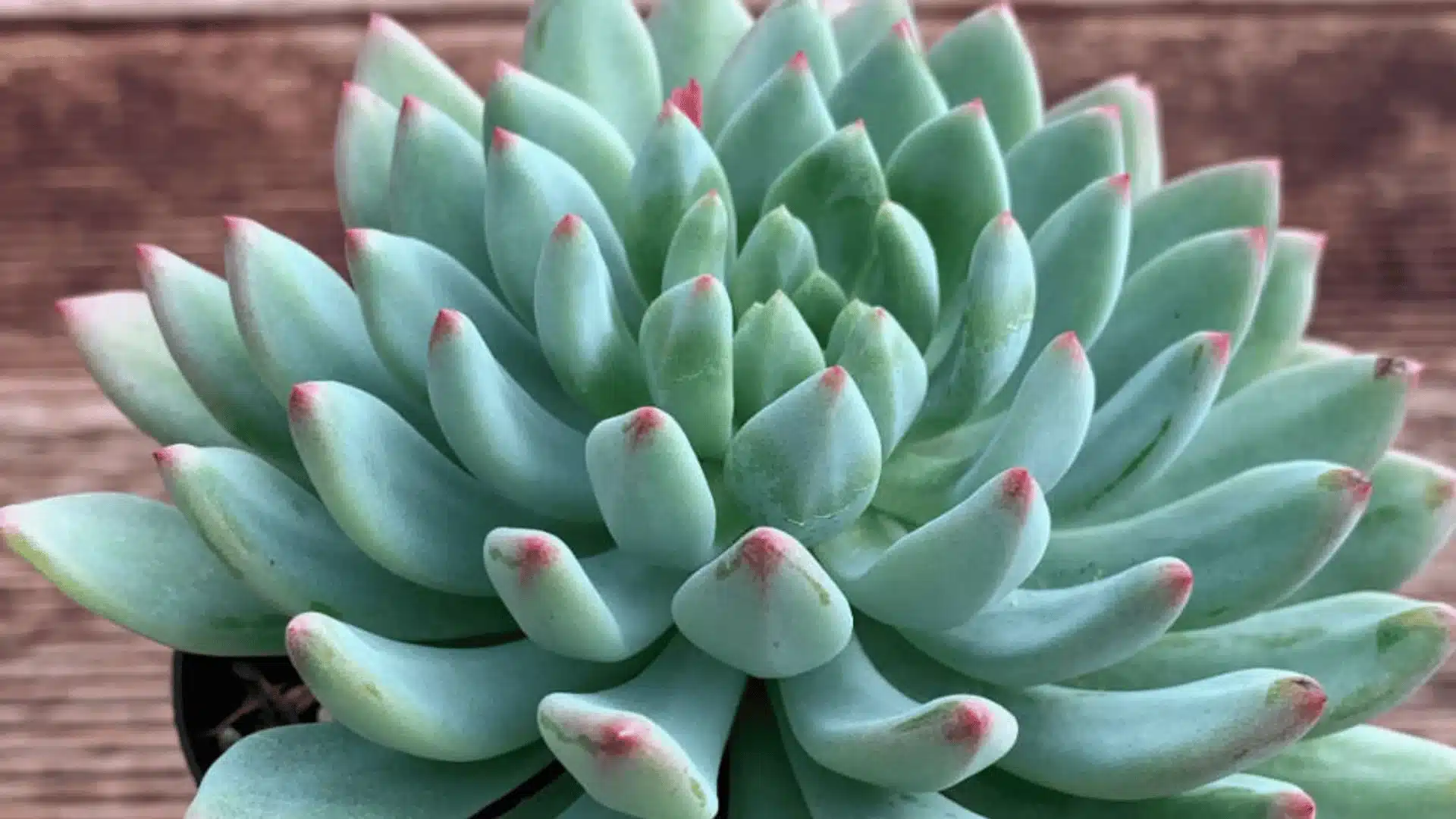
A Sedum-Echeveria cross that keeps Sedum’s clustering habit but takes on Echeveria’s tighter rosette shape, in a chalky blue-gray.
Offsets form fast, so one plant turns into a small colony within a season or two.
- Botanical name: Sedeveria
- Light: Full sun to bright light
- Water: Low
- Best For: Rock gardens, groundcover, beginner hybrids
27. Powder Puff
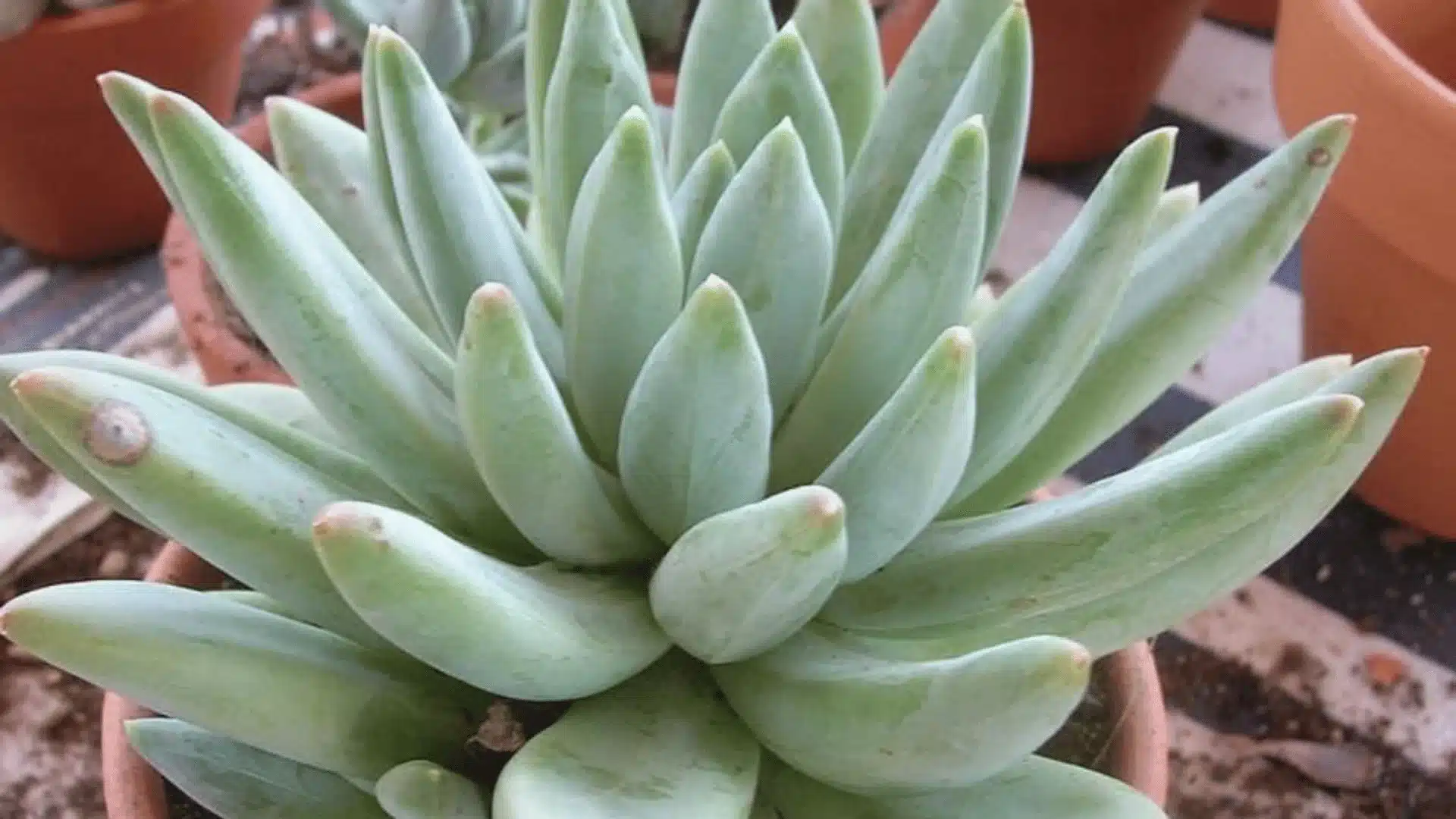
Pachyphytum crossed with Echeveria produces this chunky, pale blue-white rosette coated in a thick natural powder (farina) that protects against sun and rubs off permanently with too much handling.
Best kept somewhere hands won’t brush past it.
- Botanical name: Pachyveria glauca
- Light: Bright light, some direct sun
- Water: Low
- Best For: Display shelves away from foot traffic, collector pots
Conclusion
A Lithops on a north-facing desk will rot within a season no matter how carefully it’s watered. A snake plant in that same spot will hold up fine regardless.
That mismatch, not some lack of a “green thumb,” is behind most dead plants.
So skip whatever photographed well and start with the windowsill instead. Dim light calls for Snake Plant, Haworthia, or Gasteria.
A spot blasted with sun most of the day suits Echeveria, Agave, or one of the hybrids above, which will color up instead of stretching out. Get the light right first, and everything else takes care of itself.
Frequently Asked Questions (FAQs)
1. Are These Plants Safe to Keep Around Pets?
Depends on species. Haworthia and echeveria are pet-safe. Jade plant, aloe vera, and crown of thorns cause vomiting or skin irritation.
2. Why is My Succulent Stretching Out and Losing its Shape?
It is called etiolation, where the plant isn’t getting enough light and stretches toward it. It won’t reverse, so you have to move it to a brighter spot and propagate the top.
3. Can a Hybrid Succulent Revert Back to One of its Parent Plants?
Uncommon, but it happens after stress or when propagated from a section favoring one parent’s genes. Watch for different new growth and cut it away.
4. What is the Difference Between a Cactus and a Succulent?
All cacti are succulents, but not all succulents are cacti; cacti specifically have areoles that grow spines.